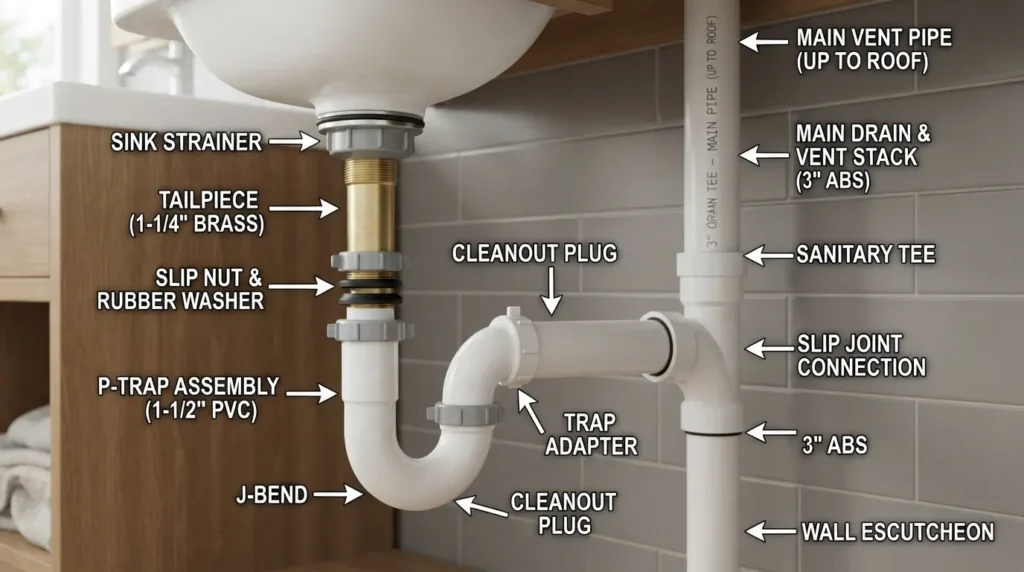
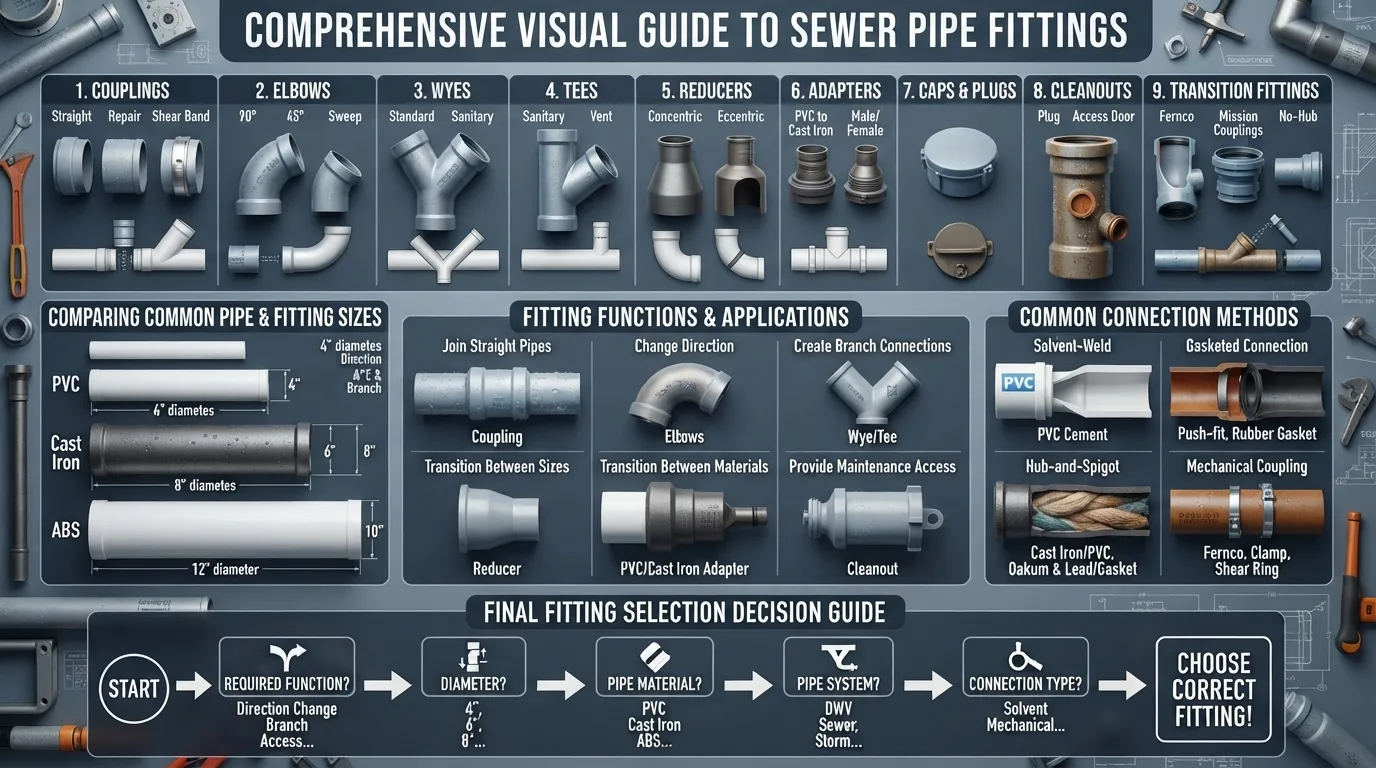
If you are looking at sewer pipe fittings and wondering which one actually fits your project, start with the job the fitting needs to perform—not its shape or color. A coupling joins straight pipe, an elbow changes direction, a wye creates a smoother branch, an adapter transitions between different pipe systems, and a cleanout gives you access for future maintenance.
Which Sewer Fitting Do You Need?
Match the fitting to five things: what you are trying to do, pipe diameter, pipe material, pipe system or standard, and connection type. A fitting marked “4 inch” is not automatically compatible with every 4-inch pipe, so verify the pipe markings and actual fitting specification before buying.
Start by looking at a coupling or an appropriate repair coupling.
Use the correct drainage elbow or bend for the direction and application.
A wye or another approved drainage branch fitting may be appropriate.
Look for a purpose-made reducer, adapter, transition fitting, or mechanical coupling.
The rest of this guide will help you identify the major types of sewer fittings, understand 4-inch and PVC options, avoid compatibility mistakes, and decide when you are dealing with a fitting problem versus a clogged or damaged drain line.
What Are Sewer Pipe Fittings?
Sewer pipe fittings are components used to join pipe sections, redirect flow, create branches, transition between sizes or materials, close an opening, or provide service access. They are part of gravity drainage and sewer systems that move wastewater away from a building.
You may see similar products described as sewer fittings, sewer and drain fittings, sewage pipe fittings, PVC drain fittings, DWV fittings, or septic pipe fittings. Those terms can overlap, but they should not be treated as automatically interchangeable. The correct fitting still has to match the specific pipe system.
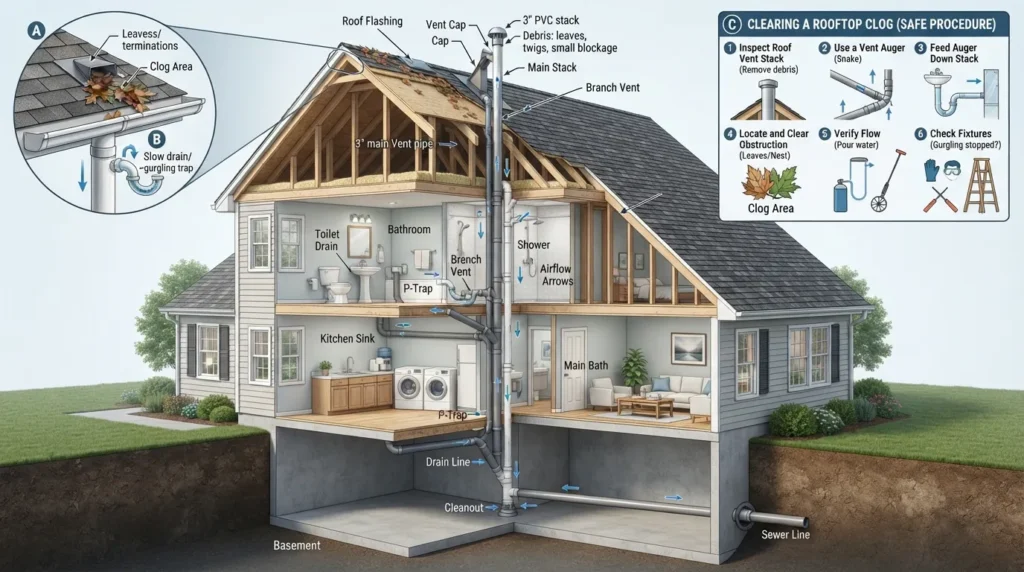
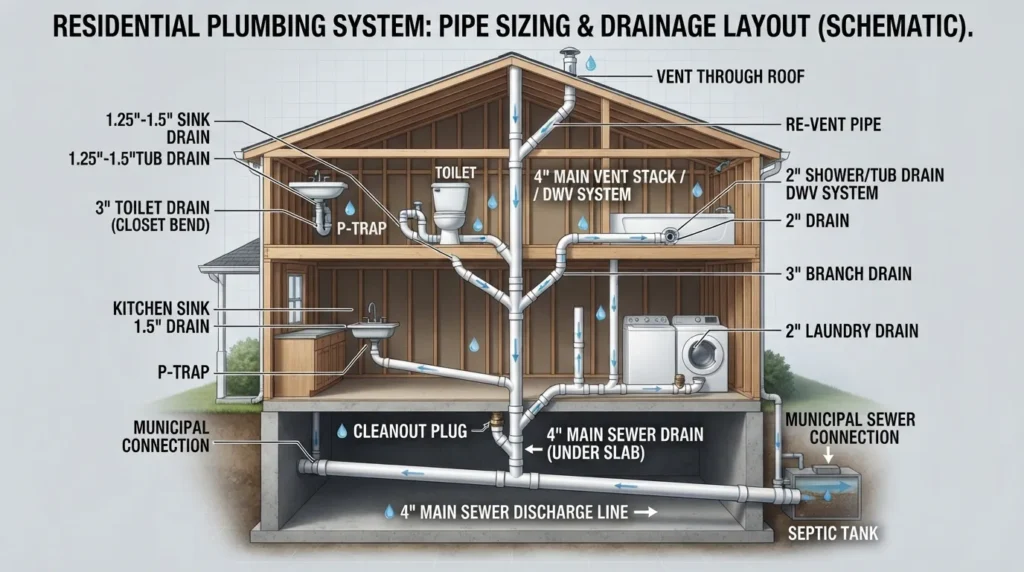
If you want to understand where these fittings sit within the rest of the plumbing network, this guide to how your home drainage system works provides the larger picture.
Common Types of Sewer Pipe Fittings and What They Actually Do
1. Couplings
A sewer pipe coupling joins two pipe sections together. A basic coupling is useful when you are extending a compatible straight run. Repair or slip-style couplings may be used in repair situations where movement of the existing pipe is limited.
The important question is not simply, “Do I need a coupling?” It is:
- Are both pipes the same diameter?
- Are they the same material?
- Do they have the same outside diameter and system specification?
- Is this a new installation or a repair?
- Is a rigid solvent-weld joint appropriate, or is an approved mechanical transition needed?
If you are connecting different materials—such as older pipe to newer plastic pipe—a standard same-system PVC coupling may not be the correct choice.
2. Elbows and Bends
Elbows change the direction of a pipe run. Sewer and drainage fittings are commonly available in different angles, including 22.5-degree, 45-degree, and 90-degree configurations.
Do not choose an elbow only because its angle appears to make the pipes meet. Drainage systems rely on gravity flow, so the fitting configuration and direction of flow matter. Gradual turns are often preferred where the drainage layout requires wastewater and solids to move through a change in direction with less abrupt disruption.
Do not make this selection mistake:
A fitting that physically connects two pipes is not necessarily the correct drainage fitting for that location. Flow direction, fitting orientation, pipe type, local plumbing requirements, and access for cleaning can all affect the correct choice.
3. Wyes
A wye is a Y-shaped branch fitting that introduces another pipe into the run at an angle. Wyes are particularly useful when a branch should enter a drainage line in the direction of flow rather than meeting it with an abrupt square turn.
If you are adding a branch to a horizontal drainage run, the difference between a wye, combination fitting, and tee can be important. Do not substitute one simply because the nominal pipe size matches.
4. Tees and Sanitary Tees
A tee connects three sections of piping. Sanitary tees are shaped for specific drainage and vent configurations, but they are not a universal substitute for a wye in every sewer layout.
This is one reason lists that say “there are four types of pipe fittings” can be misleading. There is no single four-item list that covers every sewer system. If you only want the four broad fitting families most homeowners encounter, think of them as:
- Couplings for joining pipe.
- Elbows or bends for changing direction.
- Tees and wyes for creating branches.
- Adapters and reducers for changing size, connection style, or pipe system.
Cleanouts, caps, plugs, crosses, bushings, and specialized transition fittings expand that list considerably.
5. Adapters, Reducers and Increasers
Adapters help connect components that do not share the same connection configuration. Reducers and increasers transition between different pipe diameters.
This category becomes especially important when you are dealing with:
- different nominal pipe sizes;
- Sewer & Drain pipe versus another PVC piping system;
- different connection ends;
- plastic-to-metal transitions;
- older sewer materials meeting newer replacement pipe.
Never assume you can solve a compatibility problem by forcing one pipe into another or filling an excessive gap with cement or sealant. Use a fitting designed for the specific transition.
6. Mechanical and Flexible Couplings
Mechanical couplings are useful when pipes cannot be joined with a normal rigid socket connection or when different materials must be transitioned. Depending on the coupling design, they can accommodate specific combinations of plastic, cast iron, clay, concrete, and other sewer pipe materials.
The key phrase is specific combinations. Flexible does not mean universal. Check the coupling manufacturer’s sizing chart and confirm the actual outside diameters of both pipes.
7. Caps and Plugs
Caps and plugs close a pipe end or an access opening. Their exact use depends on the fitting system: some cap the end of a pipe, while threaded plugs are commonly used with cleanout adapters.
8. Cleanouts and Cleanout Adapters
A cleanout provides access to the inside of a drain or sewer line so the line can be inspected or cleared without cutting open the piping.
A well-planned sewer system therefore does more than move wastewater today—it also allows practical access when maintenance is needed later.
4-Inch Sewer Pipe Fittings: What You Need to Know Before Buying
4-inch sewer pipe fittings are one of the most frequently encountered categories when shopping for residential drainage and sewer components. You will find 4-inch couplings, wyes, tees, elbows, adapters, caps, and cleanout fittings from many plumbing and drainage manufacturers.
But “4 inch” is a nominal description, not a promise that every product carrying that label shares the same dimensions or connection design.
Before Buying a 4-Inch Fitting, Check These 4 Things
- Read the pipe marking. Identify the material and system instead of relying on appearance.
- Confirm the nominal size. Make sure both the pipe and fitting are intended for that size.
- Confirm the actual system compatibility. A 4-inch Sewer & Drain product and a 4-inch Schedule 40 DWV product should not be assumed to have the same socket dimensions.
- Confirm the connection style. Check whether you need a hub, spigot, gasketed connection, solvent-weld socket, threaded cleanout connection, or approved mechanical transition.
What About Green Sewer Pipe Fittings?
People sometimes search specifically for green sewer pipe fittings because green pipe is commonly encountered in sewer applications. Color can help you recognize a product family, but it should never be your only compatibility test.
Read the printed pipe markings, manufacturer specification, nominal size, standard, and connection dimensions. A fitting should be chosen because it matches the pipe—not because the colors look alike.
PVC Sewer Pipe Fittings vs. Schedule 40 DWV: Why the Difference Matters
PVC is widely used in drainage and sewer piping, but “PVC” describes the material, not one universal dimensional system.
You may encounter:
- PVC Sewer & Drain fittings;
- SDR sewer pipe systems;
- Schedule 40 PVC DWV pipe and fittings;
- gasketed sewer systems;
- solvent-weld sewer systems;
- special adapters that transition between systems.
That distinction matters because two products can both be PVC and both be labeled with the same nominal size while still requiring an adapter or different fitting family.
Sewer & Drain / Sewer Pipe
Designed for specified sewer and drainage applications. Product families may include couplings, elbows, tees, wyes, reducers, caps, and cleanout fittings.
Schedule 40 DWV
A separate PVC drain-waste-vent piping system with its own dimensions and compatible fittings. Do not assume an S&D socket is interchangeable with a Schedule 40 DWV socket.
The Sewer Fitting Decision System: Choose by Situation, Not by Name
If I were standing with you in front of a shelf full of fittings, I would work through the decision in this order:
1. What are you trying to accomplish?
- Join a straight run → coupling family
- Repair a cut section → repair/slip/mechanical coupling as appropriate
- Turn the line → elbow or drainage bend
- Add a branch → wye or other approved drainage branch fitting
- Change diameter → reducer/increaser
- Change pipe system or material → purpose-made transition adapter/coupling
- Add maintenance access → cleanout fitting
- Close an opening → cap or plug
2. What pipe do you actually have?
Identify the material, markings, nominal size, outside diameter where required, and system designation.
3. How does the fitting connect?
Check whether the joint is solvent-welded, gasketed, threaded, hub/spigot, or mechanical.
4. Is that fitting correct for the flow path?
The pipe may physically fit while the fitting geometry is still wrong for the drainage configuration.
5. Does the work require professional or permit review?
Buried sewer modifications, sanitary line replacement, connections to a public system, and repairs involving uncertain materials or damaged lines can extend well beyond a simple fitting purchase.
How Are Sewer Pipes Connected?
The connection method depends on the pipe and fitting system. Common methods include:
Solvent-Welded Connections
Compatible plastic pipe and socket fittings can be joined using the primer and solvent-cement procedure specified for that piping system. Correct preparation and full insertion matter because this is intended to create a permanent joint.
Gasketed Connections
Some sewer pipe systems use factory-designed gasketed bells or fittings. These rely on the correct pipe end, gasket, insertion depth, cleanliness, and manufacturer installation procedure rather than solvent cement.
Mechanical Couplings
Mechanical couplings use an elastomeric sleeve and clamps or another engineered connection system. They can be especially useful for repairs and material transitions, but they must be selected for the exact pipe materials and outside diameters involved.
Understanding Mechanical Sewer & Drain Connectors
Can You Connect PVC to Cast Iron, Clay, or Another Older Sewer Pipe?
Yes, transitions between different sewer pipe materials are possible when the correct approved transition product is used. The challenge is that older materials may have different outside diameters even when they are described by the same nominal size.
If you are working with PVC, cast iron, clay, concrete, or another legacy sewer material, do not buy a flexible coupling based only on the words printed on the shelf label. Confirm the manufacturer’s compatibility chart and both pipe dimensions.
This is particularly important during repairs because the old pipe may also be deteriorated, distorted, cracked, or no longer provide a sound surface for a reliable connection.
What Type of Pipe Is Commonly Used for Residential Sewer Lines?
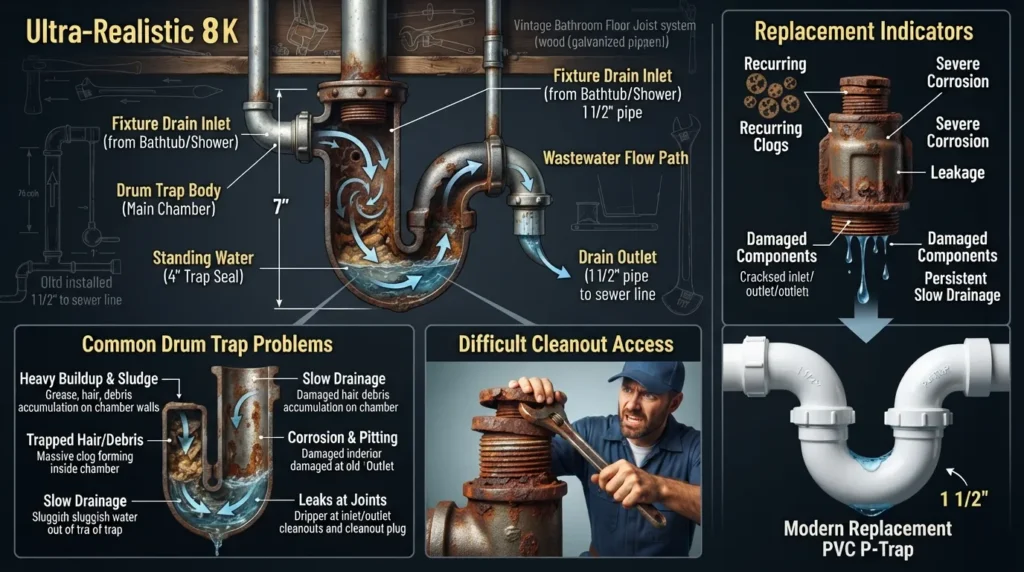
PVC is common in modern residential drainage and sewer work, but it is not the only material you may encounter. Existing homes can have cast iron, clay, ABS, and other older piping materials depending on the property’s age, location, and previous repairs.
The approved pipe type also depends on where the pipe is located and what it is doing. A building drain inside or beneath a structure, a building sewer outside the structure, a septic connection, and a municipal sewer connection are not automatically the same installation condition.
For that reason, the safest buying approach is to identify the existing pipe first rather than deciding that “residential sewer means 4-inch PVC” and purchasing around that assumption.
Sewer Line vs. Drain Pipe: What Is the Difference?
In everyday conversation, “drain pipe” can describe many pipes that carry wastewater away from sinks, toilets, showers, tubs, floor drains, and appliances. Those smaller drainage lines eventually feed larger portions of the drainage system.
The term main sewer line is commonly used by homeowners for the primary line carrying wastewater away from the house. Plumbing terminology may distinguish between the building drain within the building and the building sewer that continues outside toward a public sewer or private disposal system.
That distinction matters when you are choosing fittings because indoor DWV piping and buried sewer piping may use different approved products and connection systems.
What Is a Sewer Connection Called?
The pipe carrying wastewater from a property toward a public sewer is commonly referred to as a sewer lateral or service connection. The actual connection to a sewer main may involve a wye, tee, tap, saddle, or another utility-approved connection depending on the system design.
If you mean the connection between two sections of sewer pipe, the component may simply be a coupling, adapter, gasketed joint, or mechanical transition depending on the materials involved.
How Is a House Sewer Line Connected to the Main Sewer?
A private building sewer or lateral ultimately connects to the public sewer system at an approved connection point. This is not the same as joining two short sections of pipe in a yard.
The correct connection location, pipe size, fitting or tap method, inspection requirements, and permitting can be controlled by local plumbing rules and the sewer utility. Excavating and modifying a municipal sewer connection should therefore not be approached as a trial-and-error DIY fitting project.
For Miami-area properties, Miami-Dade County maintains current information about plumbing permits and sanitary line replacement requirements. Check the requirements that apply to your specific property and scope before starting work.
Sewer Fittings vs. Septic Pipe Fittings
If your property uses a septic system, many of the same fitting concepts still appear—couplings, bends, wyes, adapters, cleanouts, and transitions—but you should not assume every product sold as a sewer fitting is automatically correct for every septic installation.
Pipe material, diameter, connection method, slope, access, tank inlet/outlet requirements, and local onsite wastewater rules can affect the installation.
In other words, “septic pipe fittings” is a use case, not a reason to ignore pipe-system compatibility.
7 Sewer Fitting Mistakes That Cause Trouble Later
- Choosing by nominal size alone. The same nominal size does not guarantee two different piping systems have matching sockets or outside diameters.
- Choosing by color. Green, white, black, or another color can provide clues, but printed specifications matter more.
- Using the wrong branch fitting. A sanitary tee and a wye do not perform the same job in every drainage orientation.
- Forcing mismatched pipe systems together. If a transition adapter is required, use one designed for the transition.
- Ignoring flow direction. Sewer piping is not simply a collection of pieces that happen to fit together.
- Forgetting cleanout access. A layout that works today can become expensive to service later if there is no practical access.
- Replacing a fitting without diagnosing the line. Repeated backups or slow drainage may indicate a blockage or another line problem rather than a defective fitting.
Is It Really a Fitting Problem—or Does the Sewer Line Need Cleaning?
This is one of the most useful distinctions to make before buying parts.
A Fitting or Joint May Deserve Inspection If:
- you can see leakage around an exposed joint;
- a connection is visibly separated or damaged;
- a repair area contains mismatched materials;
- a fitting has cracked or shifted;
- the problem started after a recent piping modification.
The Line May Need Diagnosis or Cleaning If:
- several fixtures are draining slowly;
- backups keep returning;
- water backs up at a lower drain when another fixture is used;
- you hear repeated gurgling from multiple drains;
- there is no visible evidence that a particular fitting has failed.
Buying a new fitting will not clear an obstruction farther down the pipe. If the symptoms point toward a blockage rather than a broken connection, professional drain cleaning may be the more relevant next step.
A Practical Sewer Fitting Checklist Before You Buy
- What job must the fitting perform? Join, turn, branch, reduce, transition, cap, or provide cleanout access?
- What does the existing pipe say? Read material, size, schedule/SDR/system, and standard markings.
- What is the exact connection end? Hub, spigot, gasketed bell, threaded, or mechanical?
- Are the pipes actually compatible? Check manufacturer documentation when systems or materials differ.
- Is the fitting intended for sewer/drain service? Do not select a fitting solely because the diameter looks right.
- Does the fitting support the required flow direction? Especially important for branches and direction changes.
- Will the line remain serviceable? Consider cleanout access.
- Are local requirements involved? Check before replacing buried sanitary piping or modifying a connection.
Frequently Asked Questions About Sewer Pipe Fittings
What type of pipe is used for residential sewer lines?
PVC is common in modern residential sewer and drainage work, while existing homes may contain cast iron, clay, ABS, or other materials. The correct material depends on the location, application, local requirements, and existing system.
What are the four main types of pipe fittings?
There is no universal four-fitting classification, but four common groups are couplings, elbows/bends, tees/wyes, and adapters/reducers. Sewer systems also use caps, plugs, cleanouts, crosses, and specialized transition fittings.
How do you connect sewer pipes together?
The correct method depends on the piping system. Compatible pipes may use solvent-welded sockets, gasketed connections, or purpose-made mechanical couplings. Identify both pipes and follow the fitting manufacturer’s installation requirements.
What is a sewer connection called?
The pipe connecting a property toward a public sewer is commonly called a sewer lateral or service connection. A joint between two pipe sections may use a coupling, adapter, gasketed joint, or mechanical connector.
What is the difference between a sewer line and a drain pipe?
Individual drain pipes carry wastewater away from fixtures and feed larger drainage piping. The main sewer or building sewer carries combined wastewater away from the property toward a public sewer or private disposal system.
Are all 4-inch sewer pipe fittings the same?
No. Nominal size alone does not establish compatibility. Different PVC piping systems, pipe materials, wall dimensions, and connection types can require different fittings or transition adapters.
Can Sewer & Drain fittings connect directly to Schedule 40 PVC?
Do not assume they can. Sewer & Drain and Schedule 40 DWV are different product systems. When transitioning between them, identify the exact products and use a compatible manufacturer-specified adapter or transition fitting where required.
What are the three main types of sewer systems?
At a broad infrastructure level, sewer systems are commonly described as sanitary sewers, storm sewers, and combined sewers. A sanitary sewer carries wastewater, a storm sewer manages stormwater, and a combined system carries both in the same network.
What is the main sewer line in a house called?
Homeowners often call it the main sewer line. More specific plumbing terminology distinguishes the building drain within the building from the building sewer that continues outside toward the sewer or private disposal system.
When to Stop Shopping for Fittings and Call a Plumber
A straightforward compatible fitting is one thing. Excavated sewer repairs, unknown pipe materials, recurring backups, collapsed or shifted piping, municipal connections, and sanitary-line replacement are different projects entirely.
If you cannot confidently identify the existing pipe or determine why the sewer is failing, diagnosis should come before purchasing parts.
Need Help With a Sewer or Drain Problem in Miami?
A sewer fitting is only the right fix when the fitting or connection is actually the problem. If you are dealing with recurring backups, an uncertain pipe transition, a damaged sewer connection, or you simply cannot tell which component is failing, Miami Florida Plumbing can help you evaluate the next step.
Related Sewer Pipe Fitting Resources
If your intent is to compare products or confirm a specific fitting before purchasing, these manufacturer and retailer resources can help you review available sizes, fitting types, connection configurations, and product specifications. Availability and product selection can change, so verify the current manufacturer specifications before installation.
- Lowe’s Sewage Pipe Fittings — browse common sewer fitting types and sizes.
- The Home Depot Sewer & Drain Fittings — compare fittings by type, size, application, and connection features.
- NDS Sewer & Drain Fittings — manufacturer reference for couplings, elbows, tees, wyes, caps, and related drainage fittings.
- Reinders PVC Sewer Pipe Fittings — useful for comparing PVC sewer fitting configurations and adapters.
- McMaster-Carr Sewer Pipe Fittings — compare fitting and transition options across multiple piping materials.
- IPEX Sewer Pipe & Fittings — manufacturer information on solvent-weld and gasketed sewer systems.
- Fernco Flexible Couplings — manufacturer reference for mechanical pipe transitions and repair couplings.
The right sewer pipe fitting is not simply the one with the correct-looking shape or a matching “4-inch” label. Identify the job, pipe material, pipe system, diameter, connection method, and flow configuration first. When different materials, damaged buried piping, recurring blockages, or a public sewer connection are involved, getting the diagnosis right is more important than buying a fitting quickly.