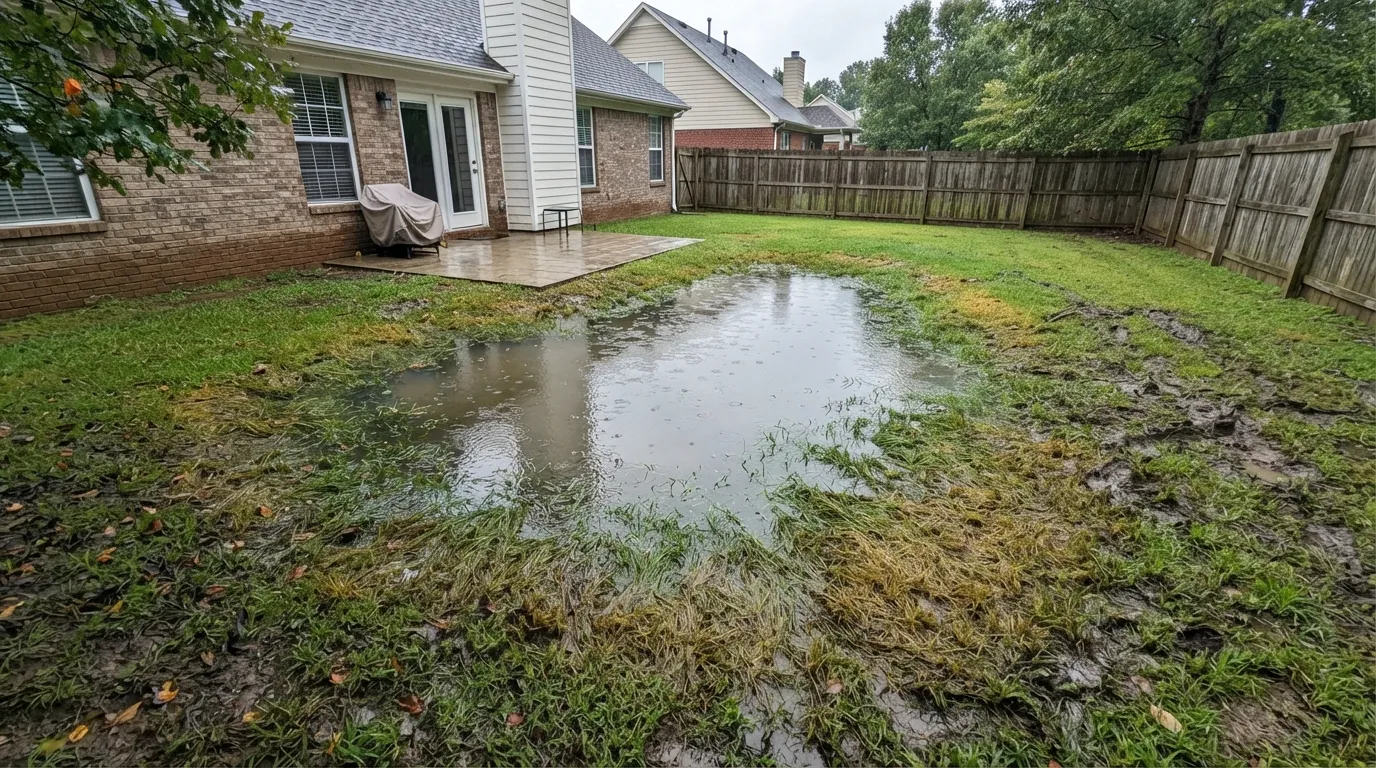
If you’ve been staring at puddles in your yard that just won’t disappear, you’re not imagining a problem — you have one. Standing water, soggy turf, and soaked patches near your foundation are all signs that water isn’t moving the way it should. The good news is that most yard drainage problems are fixable, and in this guide, I’ll walk you through exactly why it’s happening, what you can fix yourself, and when it’s time to bring in a professional.
To fix a drainage problem in your yard, first find where the water is pooling and where it should be draining to. Then extend your downspouts, regrade the soil so it slopes away from your home, aerate compacted areas, and for persistent problems, install a French drain or catch basin to carry water safely off your property.
Why Is Water Pooling in Your Yard?
Before you fix anything, it helps to understand what’s actually causing the problem. Most yard drainage issues come down to one or more of these:
- Compacted soil — foot traffic, construction, or heavy clay soil press the ground down so tightly that water can’t soak in.
- A flat or low-sloping yard — without a gentle grade, water has nowhere to go and just sits.
- Short or broken downspouts — if your gutters dump water two feet from your foundation instead of ten, that water is going straight back into your yard (and sometimes your basement).
- High water table or sandy, saturated soil — common in coastal and low-lying areas where the ground is already holding as much water as it can.
- Poor original grading — some yards were simply never sloped correctly when the home was built.
Here’s how to spot which one applies to you:
| Sign | Likely Cause |
| Puddles that last more than 24 hours | Compacted soil or flat grading |
| Soggy, spongy, or yellowing turf | Roots sitting in waterlogged soil |
| Water pooling near the foundation | Downspouts too short, or negative grading |
| Water still sitting even after light rain | High water table or poor subsurface drainage |
Why South Florida Yards Drain Differently
If you’re dealing with this in Miami or anywhere in South Florida, your situation isn’t quite the same as a homeowner in a drier, clay-heavy climate. A few things stack the odds against you here:
- Flat terrain. Much of South Florida has very little natural slope, so water doesn’t have gravity doing it any favors.
- A naturally high water table. In many areas, groundwater sits close to the surface, which means the soil is often already saturated before it even starts raining.
- Heavy, fast rainfall during wet season and hurricane season. Short, intense downpours can overwhelm a yard’s drainage capacity in minutes, even if the setup works fine most of the year.
- Sandy soil in some areas, dense fill soil in others. Neither drains as predictably as you’d expect, and it can vary block to block.
This combination is exactly why a drainage fix that works great in a different climate can fall short here. It also means a yard that drained fine for years can suddenly struggle once nearby construction, fill dirt, or landscaping changes the way water moves across a property.
DIY Fixes You Can Try First
For mild to moderate pooling, these fixes are worth trying before calling anyone:
1. Clean and Extend Your Gutters
Clear debris out of your gutters at least twice a year, and add downspout extensions or buried corrugated pipe to carry water at least 10 feet away from your foundation. This alone solves a surprising number of “wet yard near the house” complaints.
2. Aerate Compacted Soil
Using a core aerator to punch holes in compacted dirt lets rain soak deeper into the soil instead of running off the surface. This is especially helpful in high-traffic areas of the lawn.
3. Fill Low Spots
Small depressions where water collects can be leveled out with a mix of topsoil, sand, and compost. This won’t fix a systemic drainage issue, but it stops water from having an obvious place to pool.
4. Regrade Where You Can
The general rule is a slope of about 1 inch of drop for every 10 feet moving away from your home. If you can reshape the soil near your foundation to follow that slope, you’ll redirect a lot of water naturally.
Heads up: If your standing water is close to your home’s foundation, sits for more than a day or two, or keeps coming back no matter what you try, that’s usually a sign the problem is bigger than surface-level fixes can handle.
When DIY Isn’t Enough: French Drains & Catch Basins
If water keeps returning after DIY fixes, the problem is likely underground, not just on the surface. That’s when a dedicated home drainage system makes the difference. Here’s how the two most common solutions compare:
| Solution | Best For | How It Works |
| French Drain | Subsurface water and soggy soil | A gravel-and-fabric-wrapped trench with a perforated pipe pulls water away below the surface |
| Catch Basin | Surface pooling in low spots | A grated inlet box collects standing water and routes it underground to a safe exit point |
In many cases, the best setup actually uses both — catch basins to grab surface water in low areas, connected to French drain piping that carries everything away underground.
Concrete Drainage Problems in Your Yard
Concrete patios, driveways, and walkways add a layer of complexity that grass alone doesn’t have. Since concrete doesn’t absorb water at all, it simply redirects everything to whatever’s next to it — often your lawn or your foundation. Common issues include:
- Water pooling against a slab because the concrete was poured flat or sloped toward the house instead of away from it.
- Cracked or sunken concrete creating new low points that trap water.
- Runoff concentration — a large paved area sends a lot of water to one spot very quickly, overwhelming that area’s ability to absorb it.
Because concrete-related drainage issues often connect to what’s happening underground — including how water interacts with your home’s plumbing and drainage lines — this is one of those situations where it genuinely helps to have someone with plumbing knowledge look at it, not just a landscaper.
Watch: A Real Drainage Fix in Action
Seeing the process helps a lot of homeowners understand what’s actually involved before deciding whether to tackle it themselves or call a professional.
Does Water From a Neighbor’s Yard Count as Your Problem?
If water is flowing onto your property from a neighboring yard, you’re not necessarily stuck living with it. In most cases, the practical fix is the same regardless of where the water originates: redirect it before it reaches the areas you care about. A swale (a shallow, graded channel) along your property line, or a French drain positioned to intercept the flow before it spreads across your lawn, can stop the problem at the source. If the runoff is significant or ongoing, it’s also worth having a conversation with your neighbor, since regrading on their side may solve it for both of you.
Who Should You Actually Call for a Drainage Problem?
This is where a lot of homeowners get stuck, because “yard drainage” sits right at the overlap of a few different trades. Here’s a simple way to think about it:
Decision Guide:
- Landscaper: Good for surface-level fixes like regrading, low-spot filling, and lawn aeration.
- General contractor: Useful for larger regrading projects that involve structural or hardscape changes.
- Plumber: The right call when drainage connects to your home’s plumbing system — French drains tied near your foundation, sump pump questions, water near a slab, or anytime standing water might be linked to a broader water-management issue on your property.
If your yard drainage problem is close to your home, involves concrete, or you’re not sure whether it’s connected to your plumbing system, it’s worth having it properly assessed rather than guessing. That’s exactly the kind of job our drain cleaning and drainage service handles regularly for homeowners across the area.
What Does It Cost to Fix Yard Drainage?
Costs vary quite a bit depending on the scope of the problem — a small regrading and gutter extension job is a very different project from installing a full French drain and catch basin system across a yard. Soil type, the length of piping needed, and how much excavation is involved all factor in. Rather than guessing at a number that may not apply to your property, the most reliable way to know what your specific situation will cost is to have it assessed directly.
Frequently Asked Questions
What will soak up standing water in the yard?
Aerating the soil, adding organic matter like compost, and planting water-tolerant grass or ground cover in the affected area can all help absorb water faster. For larger amounts of standing water, a French drain or catch basin will do a more reliable job than soil amendments alone.
Can I dig a hole and fill it with gravel for drainage?
A gravel-filled hole (sometimes called a dry well) can help in a small, isolated area, but it only works if the surrounding soil can actually absorb the water it holds. In yards with a high water table or dense soil, a dry well can fill up and stop draining, so it’s not a universal fix.
Does forking a lawn help drainage?
Yes, forking (or aerating) breaks up compacted soil near the surface, which helps water soak in rather than pool. It’s a good maintenance step but won’t resolve deeper drainage issues on its own.
Do rocks help with drainage in a yard?
Rocks and gravel can improve drainage in specific spots by creating gaps for water to move through, especially around downspout outlets or dry creek beds. They work best as part of a larger drainage plan rather than a standalone solution.
How do I dry up a wet yard fast without installing drainage?
Aerating the soil, improving surface grading, and temporarily diverting water with a shallow swale can speed things up. These are short-term measures, though — if the wetness keeps returning, the underlying cause still needs to be addressed.
Do landscapers fix drainage problems?
Landscapers can handle surface-level fixes like regrading, aeration, and low-spot leveling. For issues that involve your home’s foundation, concrete, or plumbing connections, a plumber is better equipped to diagnose and fix the root cause.
Key Takeaways:
- Standing water lasting more than 24 hours usually means compacted soil, poor grading, or subsurface issues.
- South Florida’s flat terrain and high water table make drainage problems more common and often harder to fix with surface-level solutions alone.
- Start with DIY fixes — gutter extensions, aeration, low-spot filling — before investing in a full system.
- French drains and catch basins are the go-to solutions when water keeps coming back.
- If drainage is near your foundation, involves concrete, or might connect to your plumbing, get it professionally assessed.
Still Dealing With Standing Water?
If your yard drainage problem keeps coming back or you’re not sure whether it’s connected to your home’s plumbing, our team can take a look and give you a straight answer.
Explore more from Miami Florida Plumbing to learn how we can help with your home’s water and drainage systems.