If water is spreading across your floor right now, you don’t need a history lesson — you need clear steps and a fast, reliable way to get it stopped. This guide walks you through exactly what to do in the first few minutes, how professional 24 hour water removal actually works, what it costs, whether your insurance is likely to help, and when you can safely handle it yourself versus when you shouldn’t.
First 10 Minutes: What to Do Before Help Arrives
What you do in the first few minutes matters more than most people realize. This isn’t about fixing the problem yourself — it’s about limiting the damage until a professional team can take over.
- Stop the source if it’s safe and obvious — shut off the main water valve or the valve feeding the affected fixture.
- Move valuables, electronics, and furniture out of the water if you can do so without stepping into deep standing water.
- Take photos and short videos of the water level, affected rooms, and damaged items for your insurance claim.
- Call a 24 hour water removal team — the sooner extraction starts, the less the water spreads into walls, flooring, and subflooring.
- Avoid using a regular household vacuum on standing water — it isn’t built for it and can be dangerous.
How Professional 24 Hour Water Removal Works
Most reputable water removal companies follow a similar sequence, whether the damage came from a burst pipe, storm flooding, or an issue with your home’s drainage system. Understanding each step helps you know what to expect and what questions to ask.
1. Inspection and Water Category Assessment
A technician assesses how far the water has traveled, what materials are affected, and whether the water is clean, gray, or contaminated (black water), since that determines the safety precautions and cleanup approach.
2. Water Extraction
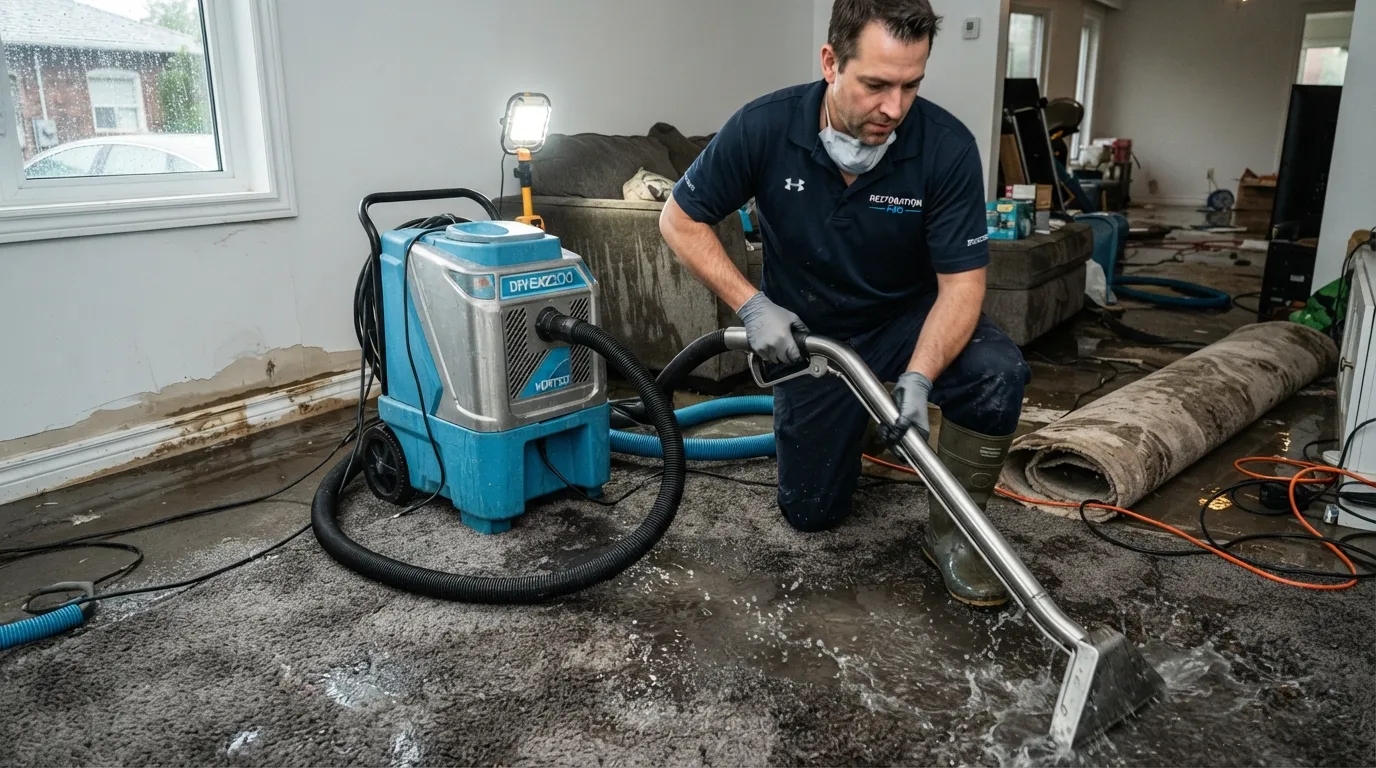
Standing water is removed using pumps and extraction equipment. This is the step most people mean when they ask “what machine removes water” — see the equipment breakdown below.
3. Structural Drying and Dehumidification
Even after visible water is gone, moisture remains trapped in flooring, drywall, and framing. Air movers and dehumidifiers run for days to dry these materials out fully — skipping this step is one of the most common causes of hidden mold later on.
4. Sanitizing and Restoration
Affected surfaces are cleaned and treated, and any materials that can’t be salvaged (like soaked carpet padding or drywall) are removed before repairs begin.
What Equipment Is Used for Water Removal?
If you’re wondering what a “water extractor” actually is, it’s simply the category of equipment built specifically to pull standing water out of carpet, flooring, and hard surfaces quickly. Common equipment includes:
- Submersible pumps — used for deep standing water, such as a flooded basement.
- Truck-mounted or portable water extractors — powerful vacuum-style units for pulling water out of carpet and padding.
- Air movers — high-velocity fans that speed up surface drying.
- Dehumidifiers — pull moisture out of the air and surrounding materials to prevent it from settling into walls and framing.
- Moisture meters — used to confirm materials are actually dry before closing out the job, not just dry to the touch.
Can You Do Water Remediation Yourself?
It depends on how much water there is and where it came from. Here’s a straightforward way to think about it:
| Situation | DIY or Professional? |
|---|---|
| Small spill, clean water, dry within hours | DIY is usually fine |
| Standing water covering a room or basement floor | Call a professional |
| Water from a sewer backup or drain issue | Call a professional — contamination risk |
| Water has been sitting more than 24 hours | Call a professional — mold risk increases |
| Water near outlets, panels, or appliances | Call a professional — safety risk |
If the water is coming from a clogged or backed-up drain rather than a burst pipe or outside flooding, it’s also worth having a drain cleaning service take a look, since removing standing water without fixing the underlying blockage means the same problem can come right back.
How Fast Does Mold Grow After a Basement Flood?
Mold needs moisture, warmth, and time to establish itself, and standing water combined with humidity creates exactly the conditions it needs. This is one of the main reasons speed matters more than almost anything else in a water emergency — the longer materials stay wet, the higher the risk that mold takes hold inside walls, flooring, and insulation where it’s much harder (and more expensive) to remove.
Does Homeowners Insurance Cover Water Removal?
This depends entirely on your specific policy and what caused the water damage. As a general pattern, sudden and accidental events — like a pipe bursting — are more commonly covered than damage from gradual leaks or lack of maintenance, and flood damage from outside water (storms, rising water) typically requires separate flood insurance rather than a standard homeowners policy. Because coverage varies so much policy to policy, the most reliable step is to call your insurance provider directly, and to document the damage with photos and videos before cleanup begins so you have a clear record for your claim.
How Much Does It Cost to Remove Water from a Basement?
Cost varies based on several factors, so there isn’t one flat number that applies to every situation. What typically affects the price includes:
- How much water is present and how large the affected area is
- Whether the water is clean, gray, or contaminated
- How long the water has been sitting before removal starts
- Whether drying and dehumidification equipment needs to run for multiple days
- Whether any materials (carpet, padding, drywall) need to be removed and replaced
Because these factors vary so much, the most accurate way to know your actual cost is to have a technician assess the situation and provide a quote based on your specific damage.
Frequently Asked Questions
What is it called when you remove water professionally?
It’s generally called water extraction or water mitigation — the process of removing standing water and drying out a structure to prevent further damage.
What is a water extractor?
A water extractor is a piece of equipment — often a truck-mounted or portable unit — designed specifically to pull water out of carpet, padding, and flooring quickly and efficiently.
How do I remove water quickly from my home?
Stop the water source if safe, avoid contact with any water near electrical sources, and call a 24 hour water removal team as soon as possible — professional extraction equipment removes water far faster and more thoroughly than household tools.
What machine removes water from a flooded area?
Submersible pumps are typically used for deep standing water, while portable or truck-mounted water extractors are used for carpeted and flooring surfaces.
Don’t Wait for Water to Spread
Every hour water sits is another hour it can soak deeper into your floors, walls, and belongings. If you’re dealing with standing water right now, don’t wait it out.
Call Our Emergency Water Removal Team Now
Learn more about us at Miami Florida Plumbing.