A plumbing vent pipe is the air side of your home’s drain-waste-vent system. While drain pipes carry wastewater away, vent pipes allow air to move through the drainage system so water can flow properly and the water seals inside P-traps are less likely to be disturbed.
Most plumbing vents ultimately communicate with outdoor air, commonly through a pipe extending above the roof. Florida’s plumbing code specifically addresses plumbing vent systems and vent termination requirements.
When venting is restricted, homeowners may notice symptoms such as:
- Gurgling sinks or toilets
- Slow or inconsistent drainage
- Toilet bowl water moving when another fixture drains
- Recurring sewer-gas odors
- Several nearby fixtures acting up at the same time
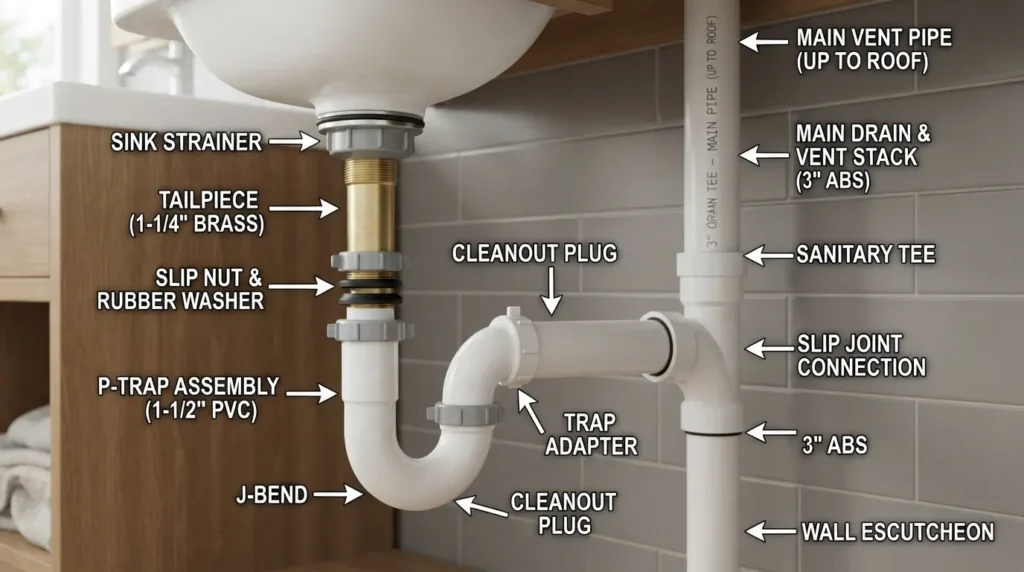
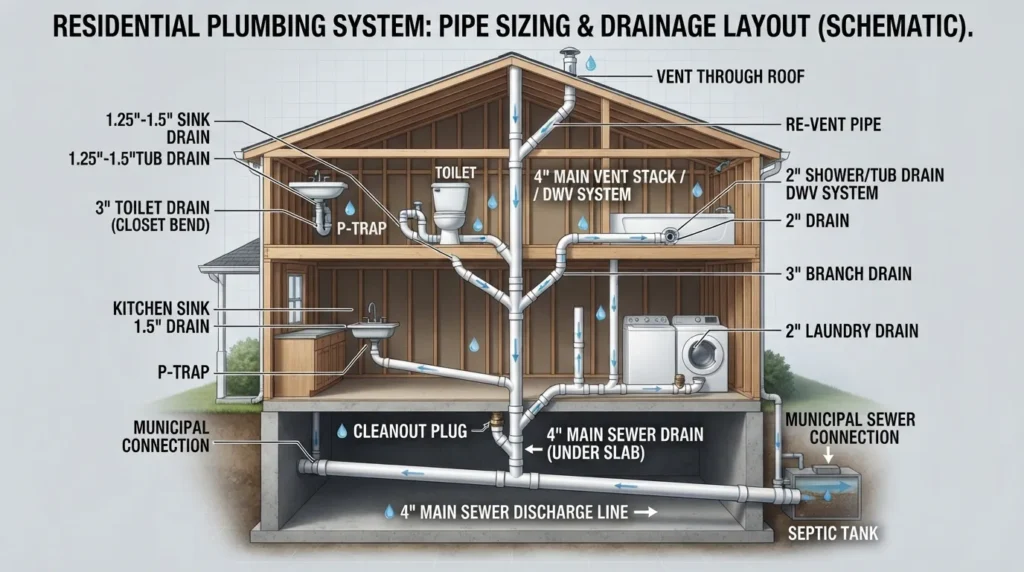
However, a plumbing vent clogged by debris is only one possible cause. A partial drain blockage, damaged trap, improper drain slope, or deeper sewer problem can produce similar symptoms. This distinction is important because cleaning the roof vent will not solve a blockage located inside the drain line. Your main plumbing drain parts guide explains how vents, traps, branch drains, waste stacks, and other DWV components work together.
For Miami homeowners, roof vents deserve particular attention after severe weather or when roof work has recently been performed. Debris around an exposed vent opening or a problem at the roof penetration can require inspection—but accessing a roof should never be treated as routine DIY plumbing.
What Is a Plumbing Vent Pipe and How Does It Work?
A plumbing vent pipe, sometimes called a plumbing air vent or drain vent pipe, provides a path for air to move through the drainage system.
The easiest way to understand it is to imagine pouring liquid quickly from a bottle. Without enough incoming air, the liquid tends to gulp and surge. Plumbing drainage can experience similar pressure changes.
When water leaves a sink, shower, tub, or toilet, it displaces air inside the piping. Proper venting helps stabilize that pressure while wastewater moves toward the building drain and sewer.
Why Plumbing Vents Matter
A properly designed vent system performs several important jobs.
1. It helps maintain smooth drainage
Air can enter the DWV system as wastewater leaves, reducing disruptive pressure changes.
2. It helps protect trap seals
The P-trap beneath a sink, shower, or other fixture holds water. That water creates a barrier between the room and the drainage system.
Excessive negative pressure can contribute to siphoning water from a trap, while positive pressure can disturb the seal in other ways. Proper venting helps protect that water barrier. The site’s existing pillar content likewise explains that vents balance pressure and help protect fixture trap seals.
3. It provides a controlled path associated with sewer gases
The drainage system must be designed so sewer gases are not released through indoor fixture openings during normal operation. Traps provide the immediate water seal, while the vent system communicates with outdoor air.
That is why sewer odor should never simply be covered with air freshener. The source should be identified.
Plumbing Vent Pipe Anatomy: Drain Vent, Sewer Vent Pipe and Vent Stack
Plumbing terminology can become confusing because homeowners often use several names for connected parts of the same system.
Here is the practical difference.
Drain Vent Pipe
A drain vent pipe is vent piping associated with a fixture drain or branch drainage system.
For example, a bathroom sink may connect through:
Sink → P-trap → trap arm → branch drain
A vent connection rises from the drainage system and eventually connects to a larger vent or terminates outdoors according to the approved design.
Plumbing Air Vent
Plumbing air vent is a general homeowner-friendly term for the venting portion of the DWV system.
It is not the same thing as:
- A bathroom exhaust fan duct
- A dryer vent
- An HVAC vent
- An attic vent
A plumbing vent is directly associated with your sanitary drainage system.
Sewer Vent Pipe
The term sewer vent pipe is commonly used for plumbing vent piping that ultimately allows the drainage system to communicate with outdoor air.
It does not mean sewage should normally be flowing through the exposed roof vent.
Under normal conditions, that upper portion of the vent system primarily handles air and gases rather than fixture wastewater.
Vent Stack and Stack Vent
These terms are related but technically different.
A vent stack is primarily a vertical vent pipe used to provide ventilation to the drainage system.
A stack vent is the continuation of a soil or waste stack above the highest connected fixture.
In everyday homeowner conversations, both are frequently called the “main plumbing vent.”
What Is a Toilet Vent Stack?
Homeowners searching for a toilet vent stack often expect to find a separate pipe attached directly to the toilet.
That is not always how the system is arranged.
A toilet may connect to a bathroom drainage branch whose venting is shared or configured with other bathroom fixtures according to the plumbing design. The vent connection then rises through the structure and ties into the building’s vent system.
So a bathroom with one toilet does not necessarily have one dedicated roof pipe directly above that toilet.
Where Are Plumbing Vents Located?
If you are wondering “where are plumbing vents located?”, begin with the roof.
In many homes, one or more plumbing vent terminals penetrate the roof and appear as open vertical pipes.
The vent pipe itself may travel through:
- Bathroom walls
- Plumbing chases
- Interior partitions
- Attic spaces
- Utility walls
- Areas near vertical waste stacks
Much of this piping is concealed, so you usually cannot trace the entire vent without plans, attic access, or professional inspection.
How to Identify a Plumbing Vent on the Roof
A plumbing roof vent generally looks like a vertical round pipe projecting through the roofing material.
Depending on the home’s plumbing system, you may see:
- One larger vent
- Several smaller vents
- Multiple vent pipes tied together below the roof
- Different vent locations serving separate plumbing groups
Do not assume every roof penetration is plumbing. Homes may also have exhaust ducts, HVAC penetrations, attic ventilation components, or other rooftop equipment.
Does the Vent Have to Go Through the Roof?
Florida’s plumbing code regulates vent terminals and includes methods for venting to the outdoors. The exact permitted termination, dimensions, location, and configuration depend on the system and applicable code provisions.
For homeowners, the important point is simple:
Do not cut, cap, shorten, relocate, or cover a plumbing vent because it seems unnecessary.
Vent modifications can affect several fixtures that appear unrelated to the pipe being changed.
Common Plumbing Vent Pipe Problems
Most vent pipe plumbing problems fall into one of several categories.
1. Debris Blocking the Roof Opening
An exposed roof terminal can potentially become obstructed by:
- Leaves
- Twigs
- Organic debris
- Nesting material
- Foreign objects
- Debris displaced during roof work
A restriction near the top of the vent is one of the easier vent problems to understand, although safe access can still make professional service necessary.
2. Obstruction Deeper Inside the Vent
A blockage does not have to sit directly at the opening.
Material can become lodged farther down the pipe or near an offset.
A visual inspection from the top therefore does not always rule out a clogged vent.
3. Incorrect or Inadequate Venting
Sometimes the vent is not clogged at all.
Problems can arise from:
- Improper vent configuration
- Undersized piping
- Incorrect fixture connections
- Remodeling that altered the original plumbing
- Abandoned or capped vent piping
- Problems created when fixtures were added
These are installation or design problems rather than cleaning problems.
4. Damaged Vent Pipe or Connections
Older or modified plumbing systems can develop:
- Cracked piping
- Separated fittings
- Corrosion in older metal DWV systems
- Poor transitions between materials
- Concealed leaks or openings
These conditions may create odor problems without producing an obvious roof blockage.
5. Roof Penetration Problems
The plumbing pipe and the roof flashing around it perform different jobs.
The pipe handles plumbing ventilation. The flashing helps keep rainwater from entering around the roof penetration.
If you see water staining around a plumbing vent after rain, the problem could involve the roof boot or flashing rather than the plumbing vent being clogged.
Signs of a Clogged Plumbing Vent
No single symptom conclusively proves you have a blocked vent pipe plumbing problem.
Look for a pattern.
Gurgling Sounds From Drains
A sink that makes a “glug-glug” sound after draining may be experiencing abnormal air movement.
Pay particular attention when:
- The toilet gurgles as a bathtub drains
- A sink bubbles when the toilet flushes
- Multiple fixtures make similar noises
The interaction between fixtures is often more informative than a single noisy drain.
Slow-Draining Sinks, Tubs or Toilets
Restricted venting can contribute to drainage problems, but a slow drain by itself is much more commonly investigated first for a localized blockage.
For example:
One slow bathroom sink: check the stopper, trap and fixture drain first.
Several nearby fixtures suddenly slow or gurgle: investigate the branch drain, stack and venting system.
Multiple fixtures back up with wastewater: treat it as a possible drainage or sewer blockage rather than assuming the roof vent is responsible.
The existing Miami Florida Plumbing pillar guide follows the same diagnostic principle: start with accessible fixture components and move toward larger portions of the drainage system.
Sewer Gas Smell Inside the House
Recurring sewer odor deserves prompt investigation.
Possible sources include:
- Dry P-trap
- Failed toilet seal
- Loose drain connection
- Damaged pipe
- Improper venting
- Disturbed trap seal
- Vent-system problem
A sewer vent pipe issue is therefore possible, but it is not the only explanation.
If an unused shower, floor drain, or sink smells, first check whether its trap simply dried out.
Toilet Water Level Changes
Watch the toilet bowl while another nearby fixture drains.
Unexpected bubbling or significant movement can indicate pressure disturbances in the drainage system.
Again, this symptom may point toward either venting or drainage restrictions, so diagnosis should consider both.
Symptoms Started After Roofing or Remodeling
This is an important diagnostic clue.
If plumbing symptoms begin immediately after:
- Roof replacement
- Bathroom remodeling
- Kitchen remodeling
- Wall relocation
- Plumbing additions
tell the plumber.
A vent may have been altered, disconnected, obstructed, or improperly reconfigured during the work.
Is It a Clogged Vent or a Clogged Drain?
This is one of the most useful distinctions a homeowner can make.
| Symptom | More Likely First Check |
|---|---|
| One sink drains slowly | Stopper, P-trap or fixture drain |
| One shower drains slowly | Hair/debris in shower drain |
| Toilet alone flushes poorly | Toilet trapway or toilet drain |
| Multiple fixtures gurgle | Branch drain or venting |
| Wastewater backs up in another fixture | Drain/sewer blockage |
| Sewer smell from unused drain | Dry or compromised trap |
| Problems started after roof work | Roof vent/vent alteration |
| Several fixtures affected together | Shared drainage or vent system |
A vent problem should not be diagnosed solely because a drain is slow.
That mistake often causes homeowners to clean a roof vent while the actual obstruction remains inside the drainage system.
How to Fix or Clear a Clogged Plumbing Vent
Before attempting to clear a clogged plumbing vent pipe, determine whether roof access is actually necessary.
Roof work involves fall hazards, wet surfaces, heat exposure, ladders, electrical hazards, and possible damage to roofing materials. If the vent cannot be reached safely without climbing onto the roof, use a qualified professional.
Step 1: Confirm More Than One Symptom
Look for combinations such as:
- Gurgling plus slow drainage
- Sewer odor plus trap-water movement
- Several fixtures reacting to one another
- Symptoms beginning after roof work
If only one sink drains slowly, start at that sink instead.
Step 2: Check Fixture Traps
Look beneath accessible sinks.
Confirm that:
- The P-trap is installed
- Connections are intact
- There are no obvious leaks
- The fixture has not been unused long enough for its trap to dry out
For an unused fixture, running water may restore a dry trap seal.
Step 3: Determine Whether Several Fixtures Share the Problem
Flush a toilet while observing a nearby sink or tub.
Run a sink while listening at the toilet.
If fixtures affect one another, note exactly which ones are involved. That information can help a plumber identify the common branch or stack.
Step 4: Inspect the Vent Opening From a Safe Location
If the roof vent is visible safely from the ground, window, or another protected location, look for obvious obstruction.
Do not lean from a window, walk on a wet roof, or use an unstable ladder just to inspect the vent.
Step 5: Remove Only Easily Accessible Surface Debris
If a vent opening is safely accessible without hazardous roof work, loose material sitting directly at the opening may sometimes be removed mechanically.
Wear gloves and eye protection.
Do not blindly push objects deep into the vent.
Step 6: Use the Correct Mechanical Cleaning Equipment
A plumber may clear deeper obstructions with an appropriate drain or vent auger.
The tool must be used carefully because the vent can contain:
- Directional fittings
- Older piping
- Connections to branch vents
- Material transitions
Aggressive mechanical cleaning can damage compromised piping.
Step 7: Use Water Only With Caution
Water may sometimes help confirm or clear a vent obstruction, but flooding a vent with a garden hose is not a universal solution.
If water rises instead of flowing away, stop.
Do not continue forcing water into the system because it may enter areas where it should not or worsen an existing drainage problem.
Step 8: Avoid Chemical Drain Cleaner in the Roof Vent
Do not pour caustic drain cleaner into a plumbing vent.
It may:
- Fail to reach the actual obstruction
- Create chemical exposure hazards
- Damage some plumbing components
- Make subsequent professional service more dangerous
A mechanical diagnosis is preferable.
When Should You Call a Plumber?
Professional diagnosis is appropriate when:
- Several drains are slow
- Toilets and sinks gurgle together
- Sewer odor repeatedly returns
- Wastewater backs up
- The vent is not safely accessible
- A snake cannot pass through the vent
- Water backs up when the vent is tested
- Symptoms began after remodeling
- The vent appears damaged or incorrectly installed
- The problem returns after cleaning
Recurring symptoms often mean the issue is deeper than a few leaves at the roof opening.
A plumber can determine whether the restriction is in the vent, fixture drain, branch line, waste stack, or building sewer before recommending repairs.
Plumbing Vent Pipes and Miami Homes
Miami plumbing systems operate under the Florida Building Code together with applicable Miami-Dade requirements. Miami-Dade publishes plumbing-specific code guidance and local amendments, so permanent vent alterations should be evaluated against the requirements applicable to the property rather than copied from a generic online diagram.
That matters particularly when a project involves:
- Moving bathroom fixtures
- Adding a bathroom
- Installing an island sink
- Relocating a toilet
- Replacing major DWV piping
- Rerouting plumbing during renovation
- Altering roof penetrations
A vent that appears inconvenient inside a wall may be serving several fixtures.
Before cutting or rerouting it, the complete drainage layout needs to be understood.
How to Prevent Plumbing Vent Problems
Vent systems normally require less routine maintenance than fixture drains, but a few practices can reduce trouble.
- Do not intentionally cap an open plumbing roof vent.
- Keep roofing materials and construction debris away from vent openings.
- Have vent penetrations inspected when roofing work is performed.
- Investigate recurring gurgling rather than repeatedly treating the fixture with drain cleaner.
- Keep rarely used fixture traps filled with water.
- Mention plumbing symptoms to your roofer or plumber if they begin immediately after renovation work.
- Have repeated sewer odors professionally diagnosed.
Most importantly, treat the plumbing vent and drain system as one connected DWV system rather than separate components.
Frequently Asked Questions About Plumbing Vent Pipes
Where is my plumbing vent?
Your plumbing vent is usually concealed inside walls or plumbing chases before connecting to vent piping that communicates with outdoor air. In many homes, one or more vent pipes terminate above the roof.
If you are looking for the vent serving a particular toilet or sink, the roof penetration may not sit directly above that fixture because branch vents can join together before reaching the roof.
What happens if a plumbing vent is clogged?
A clogged plumbing vent can interfere with normal air movement inside the drainage system.
Possible symptoms include:
- Gurgling drains
- Slow or irregular drainage
- Toilet bowl bubbling
- Water movement in fixture traps
- Recurring sewer odors
However, these symptoms can also result from a clogged drain or other DWV problem, so the vent should be diagnosed rather than assumed to be the cause.
Can I unclog a plumbing vent pipe myself?
You may be able to remove obvious debris if the vent is safely accessible, but climbing onto a roof solely to clear a plumbing vent can create a serious fall hazard.
For deeper blockages, inaccessible vents, recurring odors, multiple affected fixtures, or suspected drainage problems, professional plumbing equipment and diagnosis are safer and more reliable.
How do I know if my toilet vent is clogged?
A toilet may gurgle, bubble, flush inconsistently, or react when another nearby fixture drains.
Those symptoms do not automatically mean the toilet vent is clogged. A toilet or branch-drain obstruction can cause similar behavior.
If several fixtures interact with one another, the shared drain and vent system should be checked.
Can a blocked plumbing vent cause sewer smell?
It can contribute to conditions that disturb trap seals or interfere with the venting system, but sewer odor has several possible causes.
Always check for:
- Dry traps
- Failed toilet seals
- Loose drain connections
- Damaged drain or vent piping
- Improperly installed plumbing
Persistent sewer odor should be professionally investigated.
Does every toilet have its own vent pipe through the roof?
Not necessarily.
Fixtures can connect to a larger venting system, and multiple vent connections may join before reaching the roof. The exact configuration depends on the plumbing layout and approved venting method.
Need Help With a Plumbing Vent Pipe in Miami?
If your toilet gurgles when a sink drains, several fixtures are draining slowly, or sewer odors keep returning, avoid assuming the problem is simply a clog at the roof.
The fastest repair starts with identifying where the pressure or drainage problem actually is.
A professional plumber can inspect the fixture drains, traps, branch lines, vent connections, vent stack, and main drainage system to determine whether you have a plumbing vent clogged, a blocked drain, or another DWV problem—and fix the correct component instead of guessing.