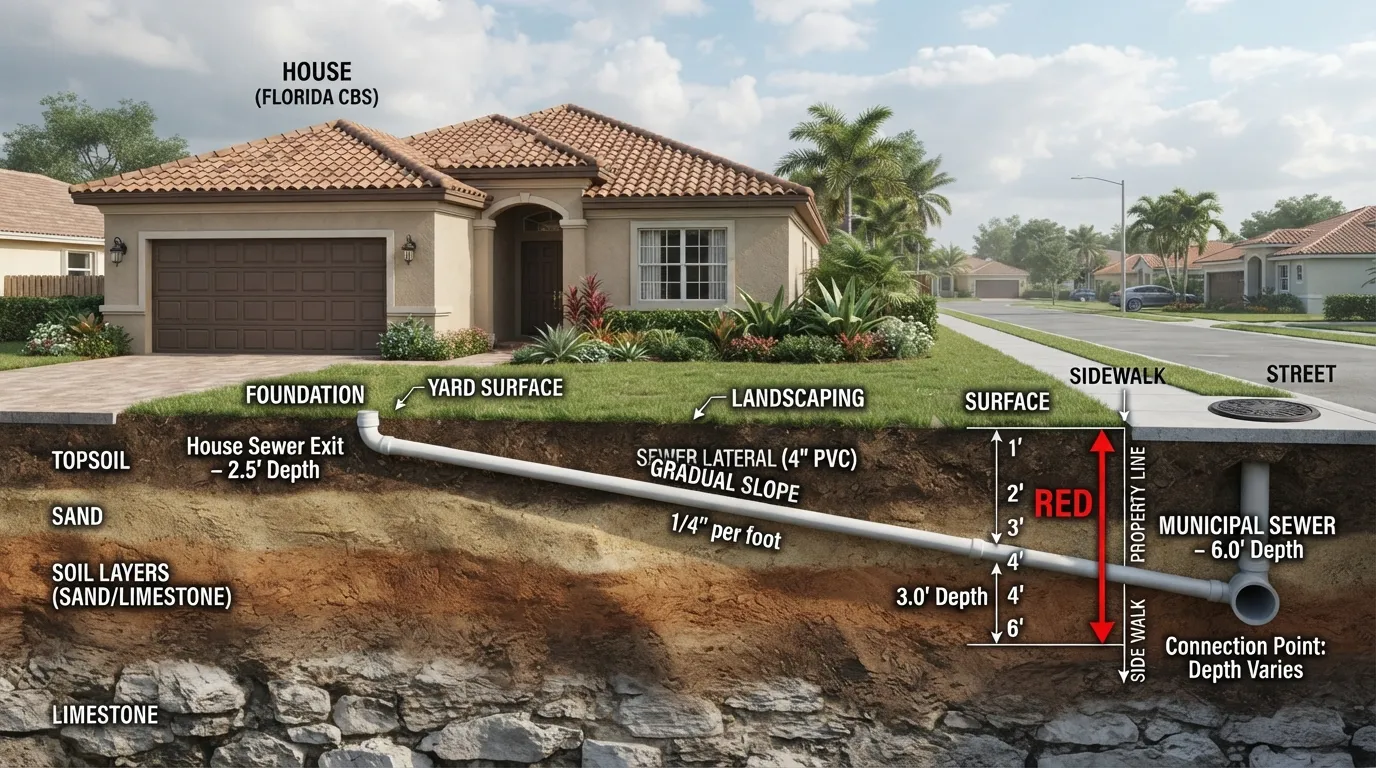
There is no single depth that applies to every residential sewer line. Homeowner guides commonly give broad ranges of roughly 18 inches to several feet underground, but that is only a general estimate—not a safe number to use before digging.
In Miami-Dade, local residential plumbing inspection guidance checks for a minimum 12 inches of cover over the top of a sewer pipe. Your actual line can be much deeper because of pipe slope, property grade, foundation conditions, and the elevation of the sewer connection.
If you searched “how deep is sewer line buried?”, you probably want more than a national average. You want to know how far down the pipe could be in your yard, what determines that depth, and how to locate it without digging in the wrong place.
I would not treat any online depth chart as an excavation measurement. Sewer depth can change from one end of the same property to the other, so the useful answer is to understand the factors that control depth and then verify your particular line.
How Deep Are Residential Sewer Lines Usually Buried?
A residential sewer line may be relatively shallow near one part of the home and several feet below grade farther along its route. Broad ranges such as 18 inches to 6 feet appear frequently in homeowner guidance, but no single range can tell you the exact depth of your property’s pipe.
The reason is simple: a gravity sewer is not normally installed at one perfectly level depth. It must travel downhill toward its connection point. As the pipe runs farther from the house, its depth can gradually increase.
That distinction matters. A statement that a city sewer main is seven, eight, or more feet below the street does not mean your private sewer line is that deep everywhere in your yard.
First, Know What “Sewer Line Depth” Actually Means
This is one of the biggest reasons sewer-depth information online can seem contradictory. People use the words depth, cover, invert, and trench depth as though they mean the same thing. They do not.
So if one document says “12 inches of cover” and another drawing says “3 feet to invert,” those statements are measuring different points. They are not automatically contradictory.
How Deep Is a Sewer Line Buried in Florida and Miami?
Florida is a good example of why you should be careful with websites that give one fixed “state sewer depth.” The applicable rules involve more than one number.
- The 2023 Florida Residential Code lists Section P2603.5.1, “Sewer depth,” as Reserved, rather than providing one statewide residential sewer-depth number in that section.
- Miami-Dade residential plumbing inspection guidance checks for a minimum 12-inch cover over the top of the water service pipe/sewer pipe under FBC (R) 2604.3.
- Actual installation depth still depends on approved plans, slope, grade, connection elevation, support, local utility requirements, and site conditions.
This is why I would not tell a Miami homeowner, “Your sewer is exactly 2 feet” or “Florida requires every sewer to be 2.5 feet deep.” A minimum cover requirement is not the same thing as the actual depth at every point along a sewer lateral.
Miami-Dade also publishes a standard gravity sewer service lateral detail for what it calls a “shallow” sewer. That drawing identifies the sewer as less than 7 feet deep, shows a 6-inch minimum service lateral, a minimum downward slope of 1/8 inch per foot, and a connection shown at 3 feet minimum to invert or deeper as required.
That Miami-Dade drawing is a utility standard detail for a specific sewer-service configuration. It should not be interpreted as proof that every residential sewer line in Miami must be 3 feet deep.
What Determines How Far Down a Sewer Line Is?
1. The required pipe slope
Most residential sanitary sewer systems depend on gravity. The pipe needs enough downward grade for wastewater and solids to move toward the sewer main or other approved disposal point.
That means a long sewer run can end significantly deeper than it started.
2. The elevation of the sewer connection
Your house cannot choose the elevation of an existing public gravity sewer. The lateral has to reach the available connection while maintaining the required slope. A deeper connection can therefore require a deeper private line.
3. The grade of your property
Ground level may rise or fall while the pipe follows its designed slope. Because depth is measured relative to the ground above it, the amount of cover can change even when the pipe itself follows a consistent grade.
4. Climate and frost depth
In colder parts of the country, freezing conditions can strongly influence burial depth and plumbing design. That is why national sewer-depth articles frequently discuss frost lines.
In Miami, freezing is not normally the dominant design issue it is in northern climates. Local grade, connection elevations, support, groundwater and site conditions are generally more relevant to the depth question.
5. Soil, bedding and groundwater conditions
A buried sewer pipe needs stable support. Soil conditions, excavation conditions, groundwater and approved bedding/backfill practices can affect how a line is installed and repaired.
6. Foundations, slabs and vehicle loads
A pipe close to a footing, below a slab, under a driveway or in another loaded area may require different protection and installation details than a pipe running through an open lawn.
How Sewer Slope Changes Trench Depth
A simple example makes this easier to understand.
If a particular design requires a slope of 1/8 inch per foot:
The downstream end would therefore be about 10 inches lower than the upstream end before you even account for changes in the ground elevation above the pipe.
This is why asking only “How deep is the sewer line?” can be misleading. A better question is, “How deep is it at the exact point where I plan to dig?”
Also, do not assume every sewer should have a 1/4-inch-per-foot slope. Required slope varies with pipe size, system type and the applicable code. The correct design should be verified for the actual installation.
How Do I Tell How Deep My Sewer Line Is?
If you need the depth of your own sewer line rather than a national estimate, I would use this order of operations.
- Confirm whether the property uses public sewer or septic. In Miami-Dade, the iWASD GIS tools can help you determine whether sewer service information is available for a property.
- Look for utility records before digging. Miami-Dade Water and Sewer allows customers to request records including as-builts, atlas information and sewer lateral location information.
- Locate the sewer cleanout. A cleanout gives a plumber a practical access point and can help establish the route of the building sewer.
- Use a sewer camera and electronic locator when exact field location matters. A camera equipped with a locating transmitter can help trace the route from above ground and estimate the position or depth at specific points.
- Physically expose the pipe only when necessary and after safe-digging requirements have been handled. Do not excavate based only on an online average.
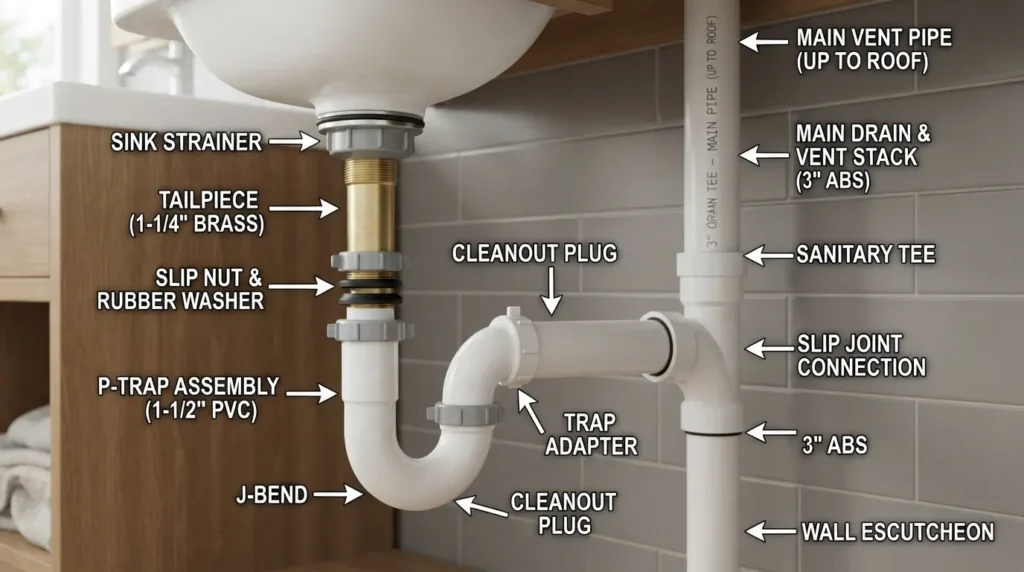
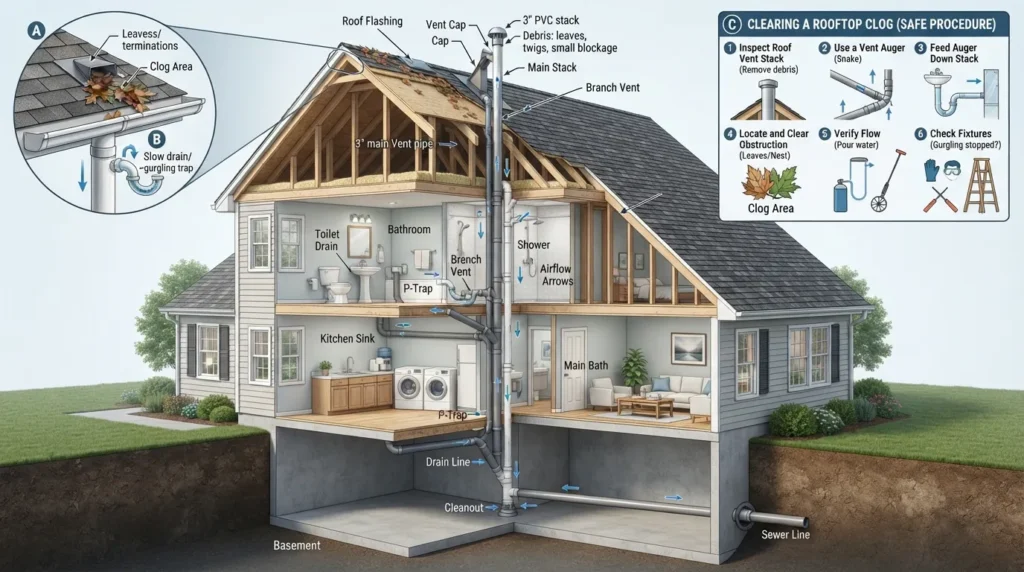
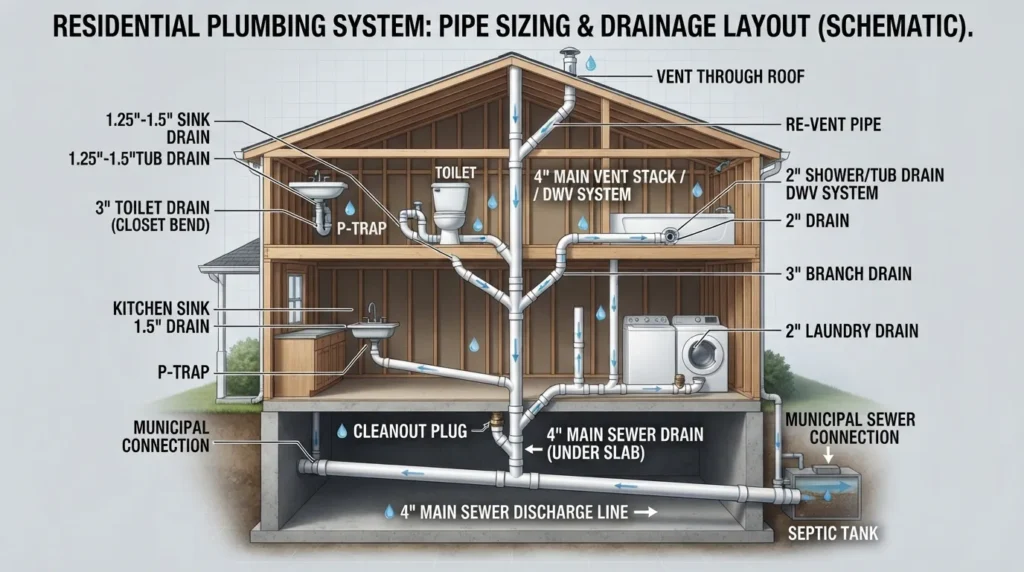
If you are not sure how the building sewer connects with the drains inside your house, this guide to how a home drainage system works explains the relationship between fixture drains, branch lines, the main drain and the sewer connection.
How to Locate Underground Sewer Lines Before Digging
Locating the line and confirming its depth are related, but they are not exactly the same job.
In Florida, Sunshine 811 instructs homeowners to submit a locate request at least two full business days before digging. The service notifies participating utility operators so the underground facilities they own can be marked.
Utility owners generally mark facilities they own and maintain. Privately owned underground lines on your property may require a private locator or a plumber with appropriate locating equipment.
That distinction is especially important when the work area is between your home and the public connection. A utility mark near the street does not necessarily map every foot of your privately maintained building sewer.
Can You Determine Sewer Depth From the Cleanout?
A cleanout can give you useful clues about the route and access point, but the height of the cleanout cap does not tell you the depth of the horizontal pipe by itself. The cleanout often includes a vertical riser between the surface and the actual sewer line.
For an accurate location, a plumber can inspect through the cleanout with a camera and, when appropriate, use a transmitter and electronic locator from the surface.
This method is usually more useful than randomly digging test holes because it can help identify the route while also checking for blockages, roots, offsets, damage or other conditions inside the pipe.
Is a 3-Inch Sewer Line Okay?
A 3-inch drain can be acceptable in some plumbing configurations, but you should not assume that means a 3-inch pipe is automatically acceptable for every residential building sewer or municipal connection.
Required pipe size depends on factors such as fixture load, slope, the portion of the drainage system being sized, local plumbing requirements and utility connection standards.
For local context, Miami-Dade’s published gravity sewer service lateral standard detail identifies a 6-inch minimum sewer lateral for the connection shown in that drawing. That does not mean every pipe inside your home must be 6 inches; it shows why interior drain sizing and public sewer service-lateral sizing should not be confused.
Is It Okay to Bury PVC Sewer Pipe Underground?
Yes, approved PVC piping is commonly used for underground sanitary drainage when the material is approved for the application and installed correctly.
The important part is not simply that the pipe says “PVC.” Underground performance also depends on:
- Using pipe and fittings approved for the intended sanitary application
- Correct slope
- Proper joints
- Stable bedding and support
- Suitable backfill
- Adequate cover and protection
- Avoiding damaging point loads
- Following approved plans and local code requirements
How long will PVC pipe last when buried?
There is no responsible single replacement age that tells you when every buried PVC sewer must be replaced. A properly installed pipe can remain serviceable for a long time, while a poorly supported or damaged line can develop problems much sooner.
For a homeowner, the pipe’s condition is more useful than its birthday. A sewer camera can identify cracks, separated joints, deformation, root intrusion, standing water and other defects that may affect the repair decision.
Do You Need Gravel Under a Sewer or Drain Pipe?
Not automatically. The correct bedding depends on the pipe material, soil, approved plans, code requirements and installation conditions.
Miami-Dade residential sewer inspection guidance calls for the pipe to be laid on firm soil bed or adequate support and also checks the backfill and grade. That is a better rule to follow than assuming every sewer pipe needs the same layer of gravel.
If a trench has unsuitable soil or has been over-excavated, the approved method may require additional bedding or support. The solution should match the installation—not a generic internet rule.
Which Pipe Should Not Be Buried Underground?
Do not bury a pipe simply because its diameter appears correct. Underground sanitary piping should be made from material that is approved and listed for that use under the applicable plumbing requirements.
Interior-only products, damaged pipe, inappropriate fittings or materials that are not approved for underground sanitary service should not be substituted just because they physically fit.
Can You Drive Over a Buried PVC Sewer Pipe?
You should not assume that buried PVC is safe for vehicle loading simply because it is underground.
Whether a pipe can tolerate traffic depends on its depth of cover, pipe characteristics, soil compaction, bedding, trench construction and expected load. A shallow sewer under a driveway may need a different design or protection method than the same pipe under a landscaped yard.
If you do not know how the sewer beneath a driveway or work area was installed, do not use the fact that it is “buried PVC” as proof that heavy vehicles or equipment are safe to place over it.
What About the Minimum Depth of a Sewer Pipe Under a Slab?
A sewer pipe below a slab should not be assigned the same generic depth you might use when discussing a pipe in an open yard.
Under-slab drainage has to coordinate with the foundation, pipe support, trenching, slab penetration and approved building plans. The distance below the finished floor can therefore vary significantly from one building to another.
If you are planning a new installation or modifying under-slab drainage, use the applicable approved plans and current local requirements rather than trying to apply a general “18 inches” or “3 feet” rule.
How Often Do Sewer Pipes Need to Be Replaced?
Sewer lines do not need replacement on a fixed schedule simply because a certain number of years have passed.
Replacement is normally a condition-based decision. A functioning pipe with good structural condition does not automatically need to be excavated because it is old. Likewise, a newer line with poor installation, movement or physical damage can need attention sooner than expected.
Signs your sewer line may need more than routine cleaning
- Backups that keep returning after the immediate blockage is cleared
- Multiple fixtures backing up at the same time
- Camera evidence of a collapsed or badly cracked pipe
- Severely separated or offset joints
- Persistent root intrusion associated with structural defects
- A significant belly or low section holding wastewater
- Confirmed leakage or loss of pipe integrity
A slow drain by itself does not prove that your buried sewer needs replacement. The issue may be a blockage that can be diagnosed and cleared. If you are dealing with repeated slow drains or backups, you can learn about professional drain cleaning in Miami before assuming excavation is necessary.
When Does Sewer Depth Matter During a Repair?
Depth matters because it can change how accessible the line is, how excavation has to be protected, how much material must be removed and how the surrounding utilities, foundation or pavement affect the work.
But depth should not be the first thing you guess when you have a sewer problem. I would first determine:
- Where the blockage or defect is located
- Whether the problem is inside the pipe or caused by its structure
- The route and approximate depth of the affected section
- Whether cleaning can restore normal flow
- Whether a repair or replacement is actually justified
Frequently Asked Questions
If you have a blockage, recurring backup or need help identifying the sewer route before deciding what to do next, a proper inspection is more useful than guessing from an average burial depth.
You can contact our Miami plumbing team or speak with a local plumber.
Official Resources for Miami-Dade Homeowners
- Miami-Dade Utilities Information Request — request sewer lateral location, atlas and as-built information.
- Miami-Dade iWASD GIS Service Maps — review available water, sewer and septic service information.
- Miami-Dade Plumbing Inspection Guidelines — local inspection guidance covering sewer pipe cover, grade, support and related requirements.
- Miami-Dade Gravity Sewer Service Lateral Standard Detail — technical reference showing a local shallow-sewer service connection example.
- 2023 Florida Building Code, Residential — Chapter 26 — official code reference for general plumbing requirements.
- Sunshine 811 Homeowner Resources — Florida safe-digging information and utility-locate request guidance.
A sewer line does not have one universal burial depth. If you only need a rough idea, expect the depth to vary from shallow cover to several feet. If you are planning to dig, repair or replace a sewer, stop relying on averages and determine the location and depth at the exact work area using records, proper locating methods and the requirements that apply to your property.