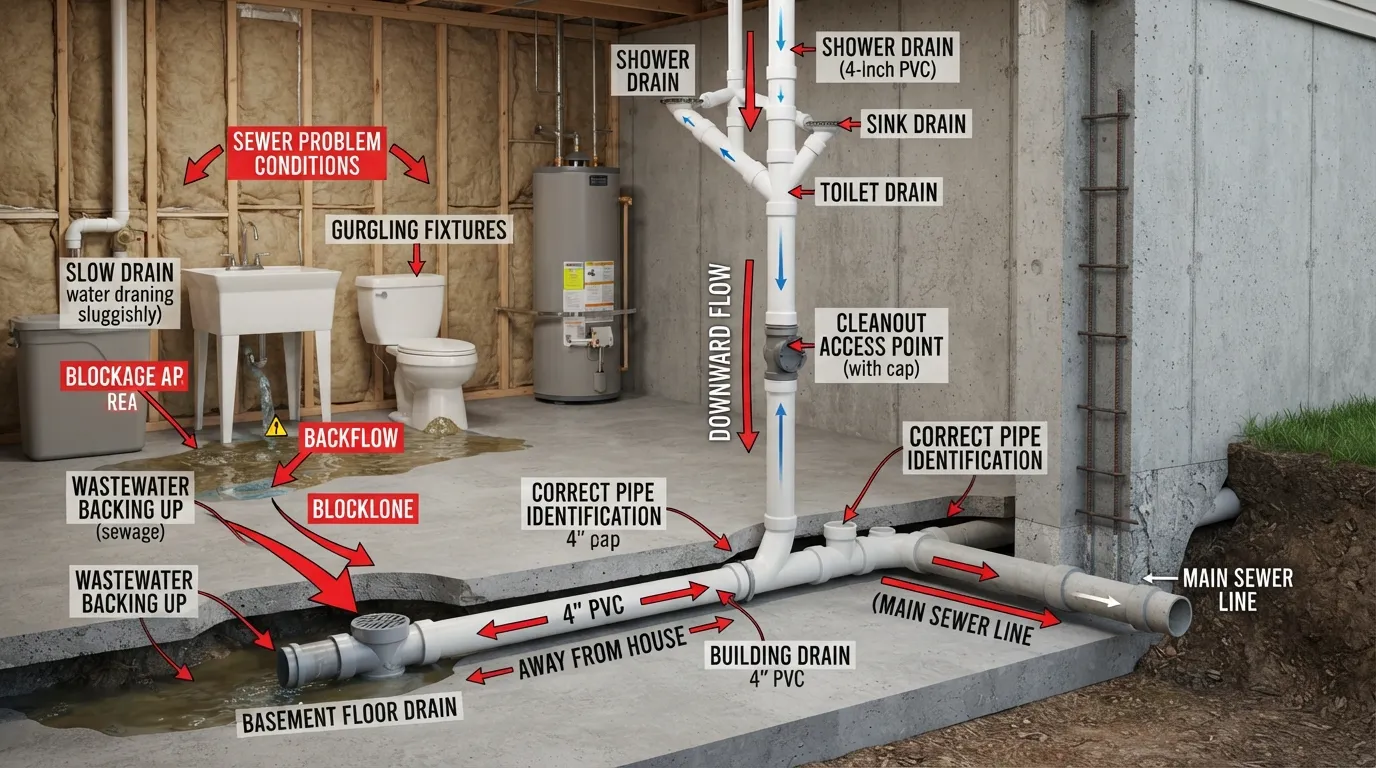
If you are looking for the main sewer line in your basement, start by finding the large drain or soil stack that carries wastewater down from the bathrooms and other fixtures above you. Follow that pipe toward the basement floor. In many homes, it connects to a horizontal main drain that disappears beneath the slab or exits through a foundation wall before continuing toward the public sewer or a septic system.
The challenge is that a basement can also contain floor drains, cleanouts, sump systems, branch drains, traps, and other pipes that look related. I’ll show you how to tell them apart, trace the sewer line from your house toward the street, recognize different basement layouts, and know what to do if the line is backing up.
Where Is the Main Sewer Line in a Basement?
Look for the main vertical plumbing stack and follow it downward. Near the bottom, it normally joins the main house drain. That drain then runs beneath the basement floor, horizontally across the basement, or through the foundation wall before becoming the sewer line outside.
- A large vertical stack is an important clue, but it is not necessarily the exterior sewer lateral itself.
- A capped fitting may be a cleanout that provides access to the main drain.
- A grated basement floor drain is not the main sewer pipe, although it may connect to the drainage system.
- A sump pit or foundation drainage system should not automatically be confused with the sanitary sewer.
- If sewage is already backing up, stop using water before trying to locate or access the line.
What Is the Main Sewer Line in a House?
Your home has several different sections of drainage piping, and homeowners often use the term “main sewer line” for more than one of them.
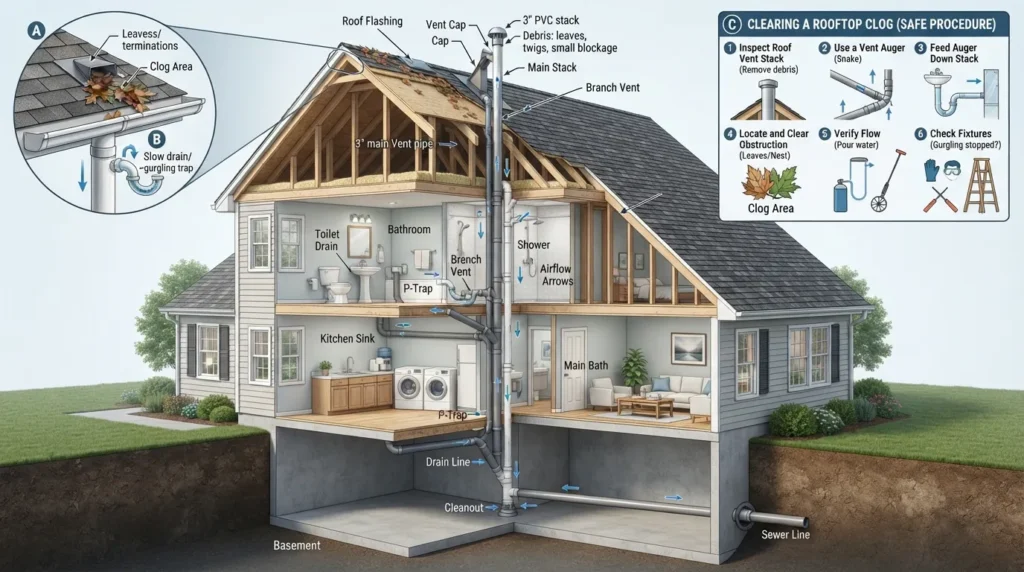
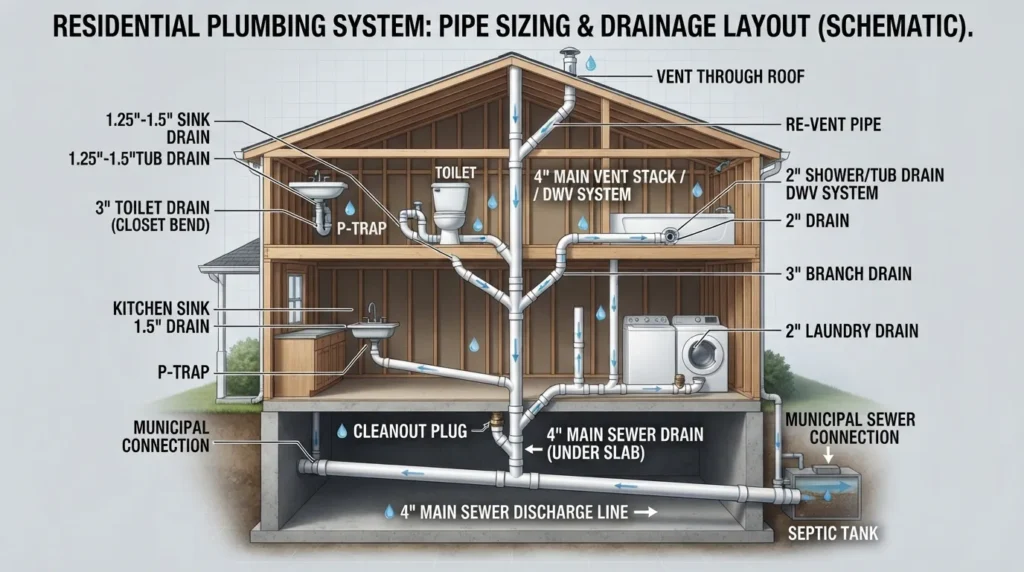
Wastewater begins at toilets, sinks, showers, tubs, washing machines, and other connected fixtures. Smaller branch drains carry that wastewater into larger drain piping. A vertical soil or waste stack can bring wastewater from upper floors down to the lowest level. The main building drain then carries the combined flow toward the exterior of the house.
Once the drainage pipe passes outside the building, the private pipe running toward a public sanitary sewer is commonly called the building sewer, sewer service line, or sewer lateral. If the property uses a septic system, the house drainage instead continues toward the septic tank.
How Wastewater Usually Travels Through the House
or
House Sewer → Septic System
If you want to understand how this line fits with the rest of the pipes and drains around your property, this guide to your home drainage system explains the larger drainage layout.
How to Find the Main Sewer Line in Your Basement
You usually do not need to start by opening walls or breaking concrete. First trace the visible plumbing logically.
1. Find the Main Vertical Drain Stack
Look for one of the larger vertical drainage pipes running down from the floors above. It may be near a bathroom group, mechanical area, utility room, or another part of the basement where several drain lines converge.
Do not identify a pipe solely by its color or material. Plumbing materials vary by the age of the house, renovations, and local requirements.
2. Follow the Stack Toward Its Lowest Point
Follow the stack downward. You are looking for the point where wastewater transitions toward the pipe that carries it out of the building.
The stack may:
- disappear directly into the basement slab;
- turn and run horizontally before going underground;
- continue toward a foundation wall;
- connect into an exposed horizontal main drain; or
- be part of a less common raised or “hung” sewer arrangement.
3. Look for a Sewer Cleanout
A cleanout is an access opening that allows drain-cleaning or inspection equipment to enter the drainage system. Depending on the house, you may find one:
- near the base of a stack;
- on an exposed horizontal drain;
- at or near the basement floor;
- close to the foundation wall; or
- outside along the route of the sewer lateral.
A cleanout normally has a removable cap or plug. Finding one is a useful clue because it can reveal the route of the main drain, but the cleanout itself is an access point, not the entire main sewer line.
Important: Do Not Open a Cleanout During an Active Backup
If sewage is already backing up or the drainage system may be full, do not casually remove a cleanout or house-trap plug. Wastewater may be standing behind it and can discharge into the basement when the plug is loosened. Stop using water and have the blockage evaluated safely.
4. Determine Whether the Line Leaves Through the Floor or Wall
Many homeowners assume every sewer line must disappear into the basement floor. That is not true.
Your drainage layout can depend on the elevation of the public sewer, the age and design of the house, whether the home uses septic, and whether basement plumbing was added later.
If the main drain disappears beneath concrete, note the direction it was traveling before it entered the slab. If it exits through the wall, note that location from outside the house. Either clue can help you estimate the exterior route.
5. Use Plumbing Fixtures as Additional Clues
Look at where toilets, bathrooms, kitchens, laundry drains, and other fixtures are located. Branch drains generally have to connect back toward the main drainage path.
The objective is not to trace every small pipe. You are trying to find the point where the drainage branches converge and the combined wastewater begins moving out of the house.
6. Check Plans, Utility Records, or Sewer Maps
If the sewer line disappears below concrete and its route is not obvious, property records may help. Depending on what records exist for the property, useful documents can include plumbing plans, permitted drawings, as-built information, or sewer lateral records.
For properties in Miami-Dade County, the county provides iWASD GIS Service Maps that can help determine water and sewer service information. Miami-Dade also provides a Utilities Information Request process that includes requests for sewer lateral location, atlas information, and as-built records.
7. Confirm the Route With a Sewer Camera and Locator When Needed
If records and visible plumbing do not answer the question, a professional can often inspect the line with a sewer camera. Locating equipment can be used with compatible camera equipment or a transmitter to help identify the route and position of underground piping.
This is especially useful when the line runs beneath a finished floor, crosses the yard in an unexpected direction, or needs to be located before repair work.
Common Main Sewer Line Layouts in Basements
One reason this topic is confusing is that two basements can have completely different drainage layouts. These are some of the important configurations to recognize.
Through the Basement Slab
The stack or main drain disappears into the concrete floor. The building drain may continue beneath the slab before exiting the foundation underground.
Through the Foundation Wall
An exposed horizontal drain may run across part of the basement and pass through an exterior wall before continuing underground.
Raised or Hung Sewer
The building drain may remain above the basement floor and leave through the wall at a higher elevation. Basement fixtures below that elevation may need a pumped drainage arrangement rather than gravity alone.
Septic System Layout
Instead of connecting to a public sewer main, the house sewer runs toward a septic tank and onsite wastewater system.
What If the Basement Bathroom Is Below the Sewer Line?
Gravity drainage only works when wastewater has an appropriate downhill route. If a basement toilet, shower, or sink sits below the elevation needed to drain into the building sewer, the plumbing design may use a sewage ejector or similar pumped system to lift wastewater into the gravity drainage line.
This is one reason you should not assume that every basement toilet drain runs directly underneath the floor to the street.
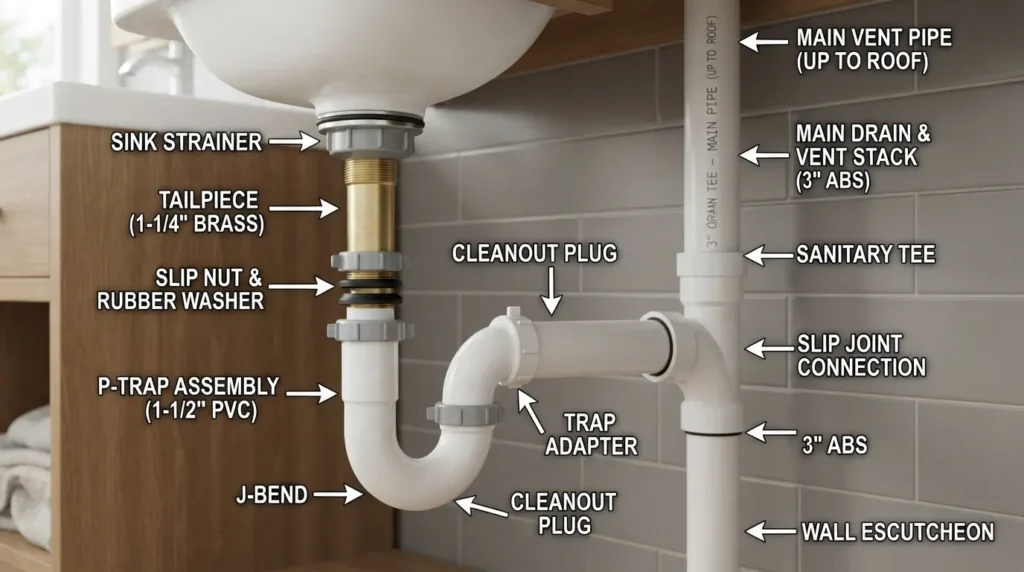
How to Tell the Main Sewer Line From Other Basement Plumbing
Main Soil/Waste Stack
A major vertical drainage pipe receiving wastewater from fixtures on one or more floors. Following it downward is one of the best ways to find the building drain.
Main Building Drain
The major drainage piping carrying combined wastewater toward the point where it leaves the building.
Private Sewer Lateral
The section outside the building that carries wastewater from the property toward the public sewer connection.
Cleanout
A capped access point used for inspection and maintenance. It gives access to drainage piping but is not a separate drain system.
Basement Floor Drain
A grated plumbing fixture designed to receive water at floor level. It may connect into sanitary drainage where permitted and designed that way, but the grate itself is not the main sewer line.
Sump/Foundation Drainage
A sump pit or foundation drainage system manages groundwater or drainage around the foundation. Do not assume it is part of the sanitary sewer simply because it is located in the basement.
How to Find the Sewer Line From Your House to the Street
Once you identify where the main drain leaves the house, you have a useful starting point for locating the sewer line in the yard.
- Mark the foundation exit point. Identify where the drain enters the slab or passes through the wall.
- Look outside for a cleanout. An exterior capped cleanout can provide another known point along the sewer route.
- Identify the likely sewer connection direction. The public sewer may be along the street, alley, easement, or another utility corridor depending on the property.
- Check available records. Sewer maps, as-builts, utility information, or permitting records may reveal the lateral location.
- Use professional locating equipment if accuracy matters. Do not rely on an estimated straight line if you need to excavate or repair the pipe.
Planning to Dig?
Do not dig merely because you think you know where the sewer runs. Florida homeowners should contact Sunshine 811 before excavation so participating utility operators can respond regarding their buried facilities.
Also remember that privately owned underground facilities may require a private locator. An 811 request should not be treated as a guarantee that every private sewer or drain line on the property has been marked.
What Size Is a Main Sewer Line in a Basement?
You should not identify the main sewer line by diameter alone.
Major building drains are generally larger than individual sink, tub, or shower branches because they carry wastewater from multiple fixtures. However, the required pipe size depends on the drainage load, system design, applicable plumbing code, and the fixtures connected to the line.
The current Florida Plumbing Code sizes building drains and building sewers according to drainage fixture-unit load rather than using one universal diameter for every house. That means a pipe that “looks big enough” is not proof that you have found the main sewer line.
Material is not a reliable identifier either. Depending on the age and history of the property, you may encounter cast iron, plastic drainage piping, or other approved materials in different portions of the system.
How Do You Know If the Main Sewer Line Is Clogged?
A single slow sink does not automatically mean the sewer lateral is clogged. The stronger clue is a pattern involving multiple fixtures or the lowest drains in the house.
Use the Symptoms to Narrow Down the Problem
One fixture is slow
A local fixture trap or branch drain problem is more likely than a whole-house sewer blockage.
Several fixtures are affected
A shared drain or main-line problem becomes more likely, especially if different rooms are involved.
Basement drain backs up
The lowest opening can become the place where wastewater appears even when the actual blockage is farther downstream.
Toilet or drains gurgle
Air movement and restricted drainage can signal a developing problem, particularly when other fixtures are also acting abnormally.
Warning signs of a main drain or sewer problem can include:
- multiple slow or clogged drains at the same time;
- water or sewage coming up through a basement floor drain;
- toilets bubbling or gurgling when another fixture drains;
- water appearing in a shower or tub when a toilet is flushed or a washing machine drains;
- repeated backups after the line has already been cleared;
- persistent sewer odors combined with other drainage symptoms; and
- unexpected wet or problematic areas along the exterior sewer route.
Why Does Sewage Back Up Through a Basement Floor Drain?
The location where sewage appears is not always the location of the clog.
A basement floor drain is often one of the lowest drainage openings in a house. If wastewater cannot continue downstream because of a main-line restriction, it may rise through the lowest available opening. That can be a floor drain, basement shower, toilet, or another low fixture.
This is why repeatedly cleaning only the visible floor drain may fail to solve the real problem.
What Causes a Main Drain Line to Back Up?
There is no single cause. A professional diagnosis should distinguish a removable blockage from an actual pipe defect.
Possible causes include:
- Accumulated debris or waste: material can restrict the interior of the drain and eventually stop normal flow.
- Grease and inappropriate items: materials that do not belong in the drainage system can contribute to restrictions.
- Tree-root intrusion: roots can enter through defects or vulnerable joints in underground piping.
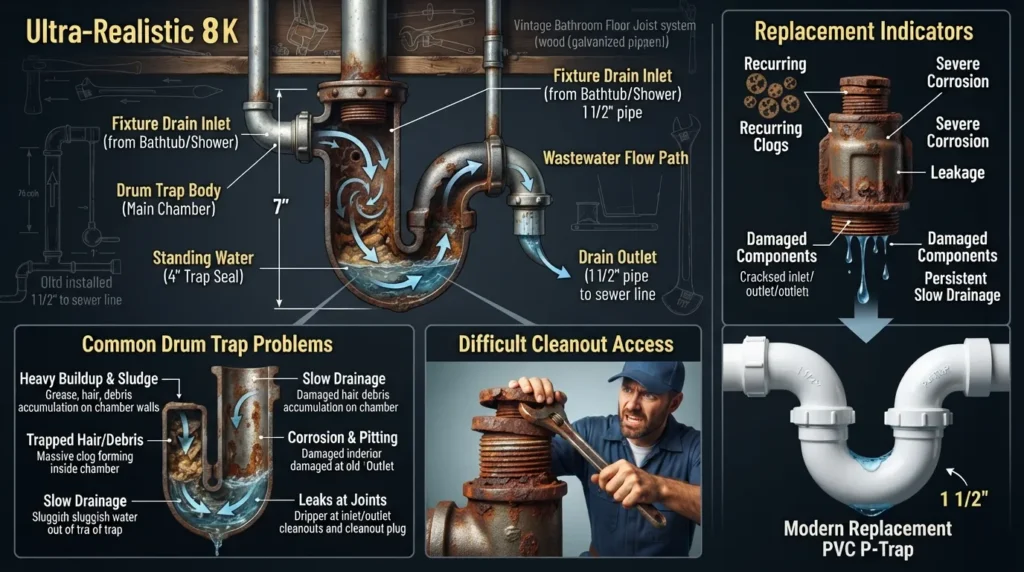
- Damaged or deteriorated pipe: cracking, separation, corrosion, collapse, or other structural problems can interfere with flow.
- Improper slope or a deformed section: a pipe that does not drain correctly can retain solids and develop recurring problems.
- Septic-system trouble: homes using onsite wastewater treatment can experience backups when the septic system is not accepting wastewater properly.
- Municipal sewer conditions: in some situations the problem can involve the public system rather than only the private house drain.
- Pump-system failure: basement fixtures that depend on a sewage ejector or other pump can back up if that system stops operating correctly.
What Should You Do If the Sewer Is Backing Up Into the Basement?
If Sewage Is Coming Up Right Now
- Stop using water throughout the house. Do not flush toilets, run sinks, take showers, use the washing machine, or operate other water-using fixtures unnecessarily.
- Keep people and pets away from sewage. Raw wastewater can contain harmful pathogens.
- Do not casually open a backed-up cleanout. The line may contain standing wastewater.
- Avoid entering a flooded area if electrical equipment or wiring may be energized.
- Get the drainage problem diagnosed. The blockage may be downstream from where the sewage is appearing.
- After the source is controlled, clean and disinfect affected areas using appropriate public-health guidance.
The U.S. Environmental Protection Agency notes that sewage overflows and backups can threaten public health because wastewater may contain disease-causing organisms. You can review the EPA’s information on sanitary sewer overflows for additional health and wastewater guidance.
How Is a Main Sewer Line Unclogged?
The right method depends on what is actually blocking the pipe and whether the pipe itself is structurally sound.
A drain professional may use:
- a properly sized drain-cleaning machine to remove or break through a blockage;
- a sewer camera to inspect accessible portions of the pipe;
- electronic locating equipment to identify the route or problem location;
- water-jetting equipment when appropriate for the pipe and type of buildup; or
- repair or replacement when cleaning cannot correct a structural defect.
A camera inspection is particularly valuable when a blockage repeatedly returns because simply restoring flow does not always reveal why the problem keeps happening.
If several fixtures are affected or sewage is entering the basement, professional drain cleaning and main-line diagnosis can help determine whether you are dealing with a removable obstruction or a sewer-line problem that needs further investigation.
Can You Unclog the Main Sewer Line Yourself?
First determine whether you actually have a main-line problem.
A local clog affecting one sink or toilet may be appropriate for ordinary fixture-level troubleshooting. A suspected main sewer blockage is different. Powered sewer-cleaning machines can be difficult to control, the cleanout may be under wastewater pressure, and a broken pipe cannot be fixed simply by pushing a cable through it.
If multiple drains are backing up, sewage is present, the cleanout cannot be accessed safely, or the problem keeps returning, stop treating it as a simple fixture clog.
Cleaning vs. Sewer-Line Repair: How Do You Know Which One You Need?
Cleaning restores flow through a usable pipe. Repair addresses a physical problem with the pipe itself.
For example, clearing may be enough when an otherwise serviceable pipe contains a removable blockage. Repair may need to be considered when inspection identifies conditions such as a collapsed section, significant damage, separated piping, or another defect that continues to interfere with drainage.
Four Signs the Sewer Line May Need More Than Routine Clearing
- The same main-line backup repeatedly returns after clearing.
- A camera inspection identifies a structural defect or damaged section.
- The pipe cannot maintain normal flow even after removable material is cleared.
- There are recurring problems concentrated around the same underground location.
How Much Does Main Sewer Line Repair Cost?
There is no responsible single price for every sewer-line problem. Cost can change substantially depending on whether the job requires only clearing or inspection, how long the affected section is, its depth and location, accessibility, pipe condition, excavation requirements, repair method, restoration work, and permitting requirements.
A diagnosis should come before a major repair estimate. Otherwise, you may be comparing prices for different solutions to different problems.
Can a Basement Sewer Backup Make You Sick?
Yes. Raw sewage should be treated as contaminated wastewater rather than ordinary household water.
The EPA explains that sanitary sewer overflows can contain bacteria, viruses, parasites, and other biological contaminants. Exposure can occur through direct contact with sewage and contaminated surfaces. Avoid unnecessary contact, keep children and pets out of the affected area, and use appropriate cleanup precautions after the plumbing problem has been controlled.
Is It Safe to Stay in a House With Sewage in the Basement?
That depends on the extent and location of contamination and whether other hazards are present, but you should not treat an active sewage backup as a harmless inconvenience.
Keep people away from contaminated areas. If sewage has spread widely, entered occupied spaces, affected HVAC equipment, created an electrical hazard, or cannot be safely isolated, seek appropriate professional cleanup and safety guidance rather than continuing to use the affected area normally.
Does Homeowners Insurance Cover Sewer Pipes or Sewer Backups?
Do not assume that it does.
Sewer-backup coverage and coverage for damage to the underground service line itself can be different insurance issues. The National Association of Insurance Commissioners notes that sewer or drain backup protection may be offered as additional coverage, while the exact protection available depends on the policy and insurer.
Before a problem occurs, ask your insurer specifically:
- Is water or sewage backup from a sewer or drain covered?
- Is that protection included automatically or does it require an endorsement?
- Does the policy cover physical failure of an underground service line?
- What exclusions apply to wear, deterioration, roots, flooding, or maintenance-related damage?
- What deductible and coverage limits apply?
You can review general consumer guidance from the National Association of Insurance Commissioners, but your own policy language controls your actual coverage.
How to Reduce the Chance of Another Main Sewer Backup
You cannot prevent every pipe failure, but good drainage habits can reduce avoidable problems.
- Flush only appropriate toilet waste and toilet paper.
- Keep grease, cooking fats, and inappropriate solid waste out of drains.
- Pay attention when several fixtures begin draining differently at the same time.
- Do not ignore a main-line blockage that repeatedly returns.
- Know where accessible sewer cleanouts are located before an emergency happens.
- Keep records from previous camera inspections or sewer repairs.
- If root intrusion or pipe damage is identified, address the cause rather than repeatedly treating only the symptom.
- Ask a qualified plumber whether a backwater valve or other protective measure is appropriate for your specific drainage system and local requirements.
A Simple Basement Sewer-Line Decision Guide
I see a large vertical pipe going into the floor.
Follow it to the slab and look nearby for cleanout access. The main building drain may continue below the concrete.
The large drain exits through the basement wall.
Mark the exterior exit location. That gives you a strong starting point for tracing the sewer toward the yard, public sewer, or septic system.
I found a capped fitting.
It may be a cleanout. Use it as a location clue, but do not remove the cap if you suspect an active backup.
I only see a grated floor drain.
Do not assume that the floor drain itself is the main line. Look for the main stack and trace where the building drainage converges.
The sewer line appears higher than my basement bathroom.
The fixtures may depend on a sewage ejector or another pumped arrangement rather than direct gravity drainage.
I cannot find the pipe route at all.
Check available plans and utility records, then consider professional camera inspection and locating equipment if you need the route confirmed.
Sewage is already backing up.
Stop using water first. Locating the pipe is no longer the immediate priority; preventing additional wastewater from entering the backed-up system is.
Frequently Asked Questions
Where is the main sewer line in a house with a basement?
Start with the main vertical soil or waste stack and follow it downward. It typically joins the main building drain, which then runs beneath the basement floor, horizontally through the basement, or through the foundation wall on its way outside.
How do I find the main drain in my house?
Find where the larger fixture drains and vertical stacks converge at the lowest level. Then trace that piping toward the point where it enters the slab or leaves the foundation.
How do I find the sewer line on my property?
Identify the point where the house drain exits the building, look for exterior cleanouts, review available sewer or as-built records, and use professional electronic locating if the exact underground route matters.
How do I find the sewer line from my house to the street?
Use the foundation exit and any exterior cleanouts as known points, then check utility records or sewer maps. Do not assume the pipe runs in a perfectly straight line if excavation or repair depends on knowing the exact route.
How do I know if my main sewer line is clogged?
Multiple affected fixtures, gurgling, abnormal interaction between fixtures, and wastewater appearing at the lowest basement drains are stronger main-line clues than a single clogged sink or toilet.
How do you unclog a main sewer line in a basement?
The line must first be accessed safely, usually through an appropriate cleanout, and the blockage then cleared with equipment suited to the pipe and obstruction. If sewage is actively backed up, do not open a cleanout casually; stop using water and have the system evaluated.
What should I do if my sewer line is backing up into my basement?
Stop household water use, keep people and pets away from sewage, avoid opening a pressurized or full cleanout, and arrange diagnosis of the drainage system. Treat contaminated wastewater as a health hazard.
Can a backed-up sewer in the basement make you sick?
Yes. Raw sewage can contain disease-causing microorganisms. Avoid direct exposure and follow appropriate public-health precautions for cleanup after the plumbing source has been controlled.
What are four signs that a sewer line may be broken?
Recurring main-line backups, a known structural defect on camera inspection, drainage that remains unreliable after clearing, and repeated problems at the same underground location can justify investigating for physical pipe damage.
Does homeowners insurance cover underground sewer pipes?
Coverage varies by policy. Sewer-backup protection and coverage for physical damage to an underground service line are not necessarily the same coverage, so check your policy and ask your insurer specifically about both.
The Most Useful Way to Think About Your Basement Sewer Line
Instead of searching for one mysterious pipe labeled “main sewer,” think about the path the wastewater has to follow.
Start with the fixtures, find where their drains converge, follow the main stack or building drain toward the foundation, identify any cleanout access, and then trace the exterior sewer toward the public system or septic tank.
That approach works even when the plumbing does not match a simple diagram. It also helps you distinguish between a local fixture clog, a main drainage restriction, a sewer lateral problem, and a basement plumbing layout that uses pumps or other equipment.
Need Help Locating or Clearing a Main Sewer Line?
If you cannot identify the sewer route, several drains are backing up, or sewage is entering the basement, the next step should be diagnosis rather than guesswork.
You can learn more about plumbing help for Miami homes, or Call for Plumbing Help.