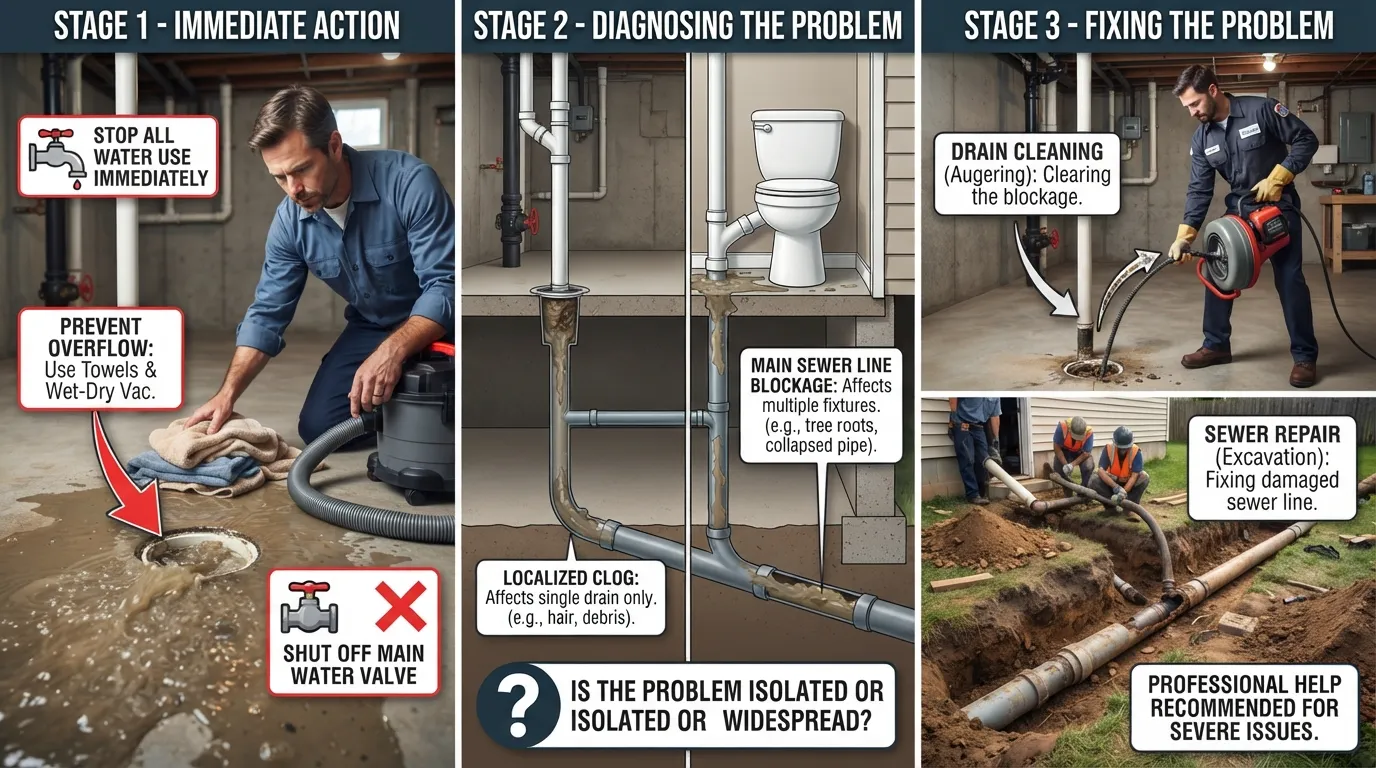
If a drain is backing up in your house right now, stop using water first. Do not flush toilets, run sinks, take a shower, start the dishwasher, or use the washing machine until you know whether you have a simple fixture clog or a blockage deeper in the drainage system.
A single backed-up sink or shower can point to a nearby clog. But when several drains are affected, a toilet gurgles when another fixture runs, or wastewater comes up through the lowest drain in the house, the problem may be in the main drain or sewer line.
If Your Drain Is Backing Up Right Now
- Stop using water throughout the house.
- Keep children and pets away from wastewater or sewage.
- Do not pour chemical drain cleaner into a drain that is backing up.
- If water is near electrical outlets, appliances, extension cords, or a flooded electrical area, do not enter the water.
- Check whether the problem affects one fixture or multiple drains.
- If sewage is entering the home, multiple fixtures are affected, or the backup keeps returning, arrange professional diagnosis promptly.
What Is a Drain Backup?
A drain backup happens when wastewater cannot continue flowing normally through the drainage system and begins moving back toward a fixture or another drain opening.
The important question is where the restriction is located.
If only one bathroom sink backs up, the clog may be close to that fixture. If water from a washing machine causes a floor drain or shower to overflow somewhere else, the restriction may be farther downstream. And if toilets, tubs, sinks, and floor drains are all reacting to one another, the main drain or sewer line deserves immediate attention.
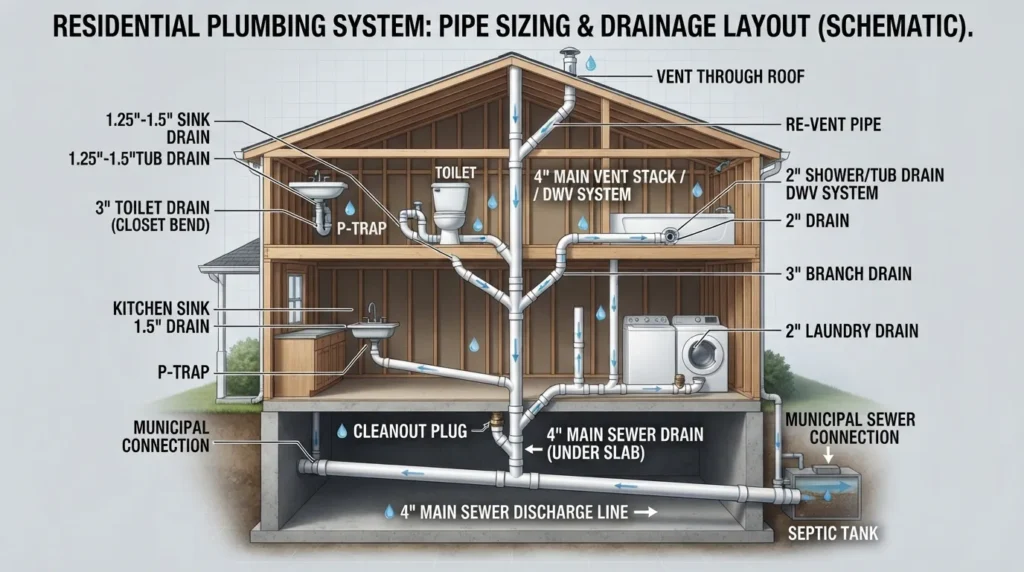
Understanding how your home drainage system works makes this easier: several fixture drains eventually connect to larger branch lines and, ultimately, the home’s main sewer connection.
Is It One Clogged Drain or a Main Sewer Line Backup?
This is the most useful distinction you can make before trying to fix anything. I recommend looking at what backs up, when it happens, and what other fixture was being used at the time.
How Do You Know If Your Sewer Is Backed Up?
No single symptom proves that the main sewer line is blocked, but several symptoms together make a main-line problem much more likely.
- More than one drain becomes slow or backs up at the same time.
- A toilet gurgles when a sink, shower, or washing machine drains.
- Water comes up through a low shower, tub, or floor drain when another fixture is used.
- You notice sewage or a strong wastewater odor around a drain.
- The same backup returns shortly after the line has been cleared.
- Fixtures on the lower level react before fixtures higher in the house.
The pattern matters more than any single symptom. A clogged bathroom sink is one problem. A bathroom sink, toilet, shower, and floor drain reacting to each other is a very different problem.
What Causes Drains to Back Up in a House?
1. A Local Drain Clog
Soap residue, hair, food debris, grease, or other material can build up inside an individual fixture drain or nearby branch pipe. These clogs usually affect a smaller part of the plumbing system.
2. Grease, Fats, Oils, and Debris
Grease and oils can accumulate inside drainage and sewer piping instead of simply disappearing after they go down the drain. Wipes and other materials that do not break apart easily can add to the restriction.
This matters locally as well. Miami-Dade treats fats, oils, and grease as an important sanitary-sewer concern because buildup can contribute to blocked pipes and sewer overflows.
3. Tree Root Intrusion
Roots can enter vulnerable sewer piping through cracks, joints, or damaged areas. Once inside, they can catch debris and gradually reduce the space available for wastewater to move through the line.
4. Damaged, Shifted, or Deteriorated Pipe
Clearing a blockage does not repair a damaged pipe. If a sewer line has a structural problem, wastewater may continue collecting at the same location and cause recurring backups.
5. A Main Sewer Line Restriction
When the restriction is after several fixture drains have already joined together, multiple parts of the house can be affected. This is why water may appear in a completely different fixture from the one you are using.
6. Heavy Rain or a Public Sewer Problem
Not every backup starts inside your house. Heavy rainfall and problems within a public wastewater system can contribute to sewer conditions outside a private property. That is why it is useful to look beyond your own fixtures when a backup appears during severe weather or when nearby properties are also affected.
Important:
Do not assume that repeatedly clearing the same drain has solved the problem. If the backup keeps returning, the real question is no longer only “How do I unclog it?” It is “Why does this line keep becoming restricted?”
What Should You Do If Drains Are Backing Up?
Step 1: Stop Adding Water
This is the most important immediate action. Every flush, shower, laundry cycle, and running faucet can add more wastewater behind a blockage.
Step 2: Identify How Many Fixtures Are Affected
Walk through the house without running additional water. Note which fixtures are already slow, gurgling, holding water, or showing signs of backup.
Step 3: Think About What Triggered the Backup
Did the problem appear when you flushed a toilet? When the washing machine pumped out? After someone showered upstairs? During heavy rain?
The trigger can help locate the problem.
Step 4: Keep Away From Sewage
If wastewater contains sewage, avoid direct skin contact. Keep children and pets away from the affected space and use appropriate protective equipment if you must enter the area.
Step 5: Avoid Chemical Drain Cleaners
A chemical product does not tell you whether the blockage is in the fixture trap, a branch drain, or the main sewer line. In a backed-up system, chemicals may also remain sitting inside the pipe and create an additional hazard for anyone who later opens or services the line.
Step 6: Get the Correct Type of Help
A simple local clog may sometimes be handled with appropriate mechanical clearing. But when several drains are affected, sewage is entering the home, or the same line repeatedly backs up, professional diagnosis becomes much more valuable than repeatedly treating the visible symptom.
For a blockage that requires professional clearing, learn more about professional drain cleaning and how the right service can address the location and nature of the restriction.
How Is a Backed-Up Sewer Line Actually Fixed?
The correct repair depends on the cause. There is no single method that is right for every sewer backup.
A professional diagnosis may involve:
- Confirming the symptoms and determining which fixtures are connected to the problem.
- Locating an appropriate access point to the drainage or sewer line.
- Clearing the restriction using a method suitable for the type and location of the blockage.
- Checking whether normal flow has returned.
- Investigating recurring problems further when there is reason to suspect roots, damage, buildup, or another underlying defect.
- Repairing the pipe itself if clearing the line cannot correct a structural problem.
This distinction is important: clearing a clog restores flow; repairing a damaged line addresses the reason the clog may keep returning.
Why Does My Sewer Keep Backing Up?
If your plumbing keeps backing up after it has already been cleared, do not automatically assume that you just have bad luck with clogs.
Recurring backups can point to an unresolved condition such as:
- material repeatedly collecting in the same section of pipe;
- grease or debris buildup that was not fully removed;
- root intrusion;
- a damaged or deteriorated sewer line;
- a drainage configuration or flow problem that needs further investigation;
- or an issue outside the private plumbing system.
This is where a more complete diagnosis can provide much more value than another temporary clearing.
Why Does My Floor Drain Back Up When the Washing Machine Runs?
This is a useful diagnostic clue.
A washing machine releases a significant volume of water into the drainage system in a relatively short period. If a downstream pipe is restricted, that water may reach the blockage faster than it can pass through it. The wastewater then looks for another available opening, often a lower fixture such as a floor drain, shower, or tub.
If this happens:
- stop the washing machine;
- avoid using other fixtures;
- check whether toilets or other drains are also gurgling or slow;
- and treat multiple-fixture symptoms as a possible main-drain or sewer-line issue.
A Simple Rule to Remember
Think local clog first.
Think deeper drainage or main-line problem.
Consider a utility-side issue too.
Is It Safe to Stay in a House With a Sewage Backup?
Sewage-contaminated water should be treated differently from an ordinary clean-water spill. Avoid direct contact with it and keep children and pets away from the affected area.
Whether you need to leave the entire home depends on the size and location of the backup and whether other hazards are present. Pay particular attention to:
- sewage spreading through occupied living areas;
- water near electrical equipment or energized components;
- an area that cannot be safely isolated;
- people in the home who may be more vulnerable to contamination;
- and a backup that is continuing because wastewater is still entering the system.
If electrical equipment may be involved, do not walk into standing water to investigate it yourself.
How Do You Clean and Sanitize After a Sewer Backup?
First fix or stop the source of the backup. Cleaning while wastewater is still entering the space only exposes you to more contamination and may cause the same area to flood again.
Once the plumbing problem is under control:
- Keep people and pets out of the affected area.
- Use suitable protective gloves, footwear, and other protection for contaminated cleanup.
- Remove sewage solids and contaminated debris carefully.
- Clean hard surfaces to remove visible dirt before disinfecting them.
- Use a disinfectant that is appropriate for the specific surface and follow the product label exactly.
- Dry the area thoroughly and address materials that cannot be safely cleaned.
What Is the Best Disinfectant After a Sewer Backup?
There is no single product that is best for every surface. Use a properly labeled disinfectant suitable for the material you are cleaning and follow its directions for dilution, contact time, ventilation, and protective equipment.
Do not mix cleaning chemicals.
How Long Do Sewer Bacteria Live on Surfaces?
There is no useful universal number because survival depends on the organism, surface, moisture, temperature, and other environmental conditions. The safer approach is not to wait for contamination to “die off.” Treat affected materials as contaminated until they have been properly cleaned, disinfected, dried, or removed.
Can Carpet Be Cleaned After a Sewer Backup?
Carpet and padding are porous, which makes sewage contamination much harder to remove reliably than contamination on a nonporous surface. If carpet or padding has been saturated with sewage, professional remediation or removal may be necessary rather than ordinary carpet cleaning.
How Do You Clean a Shower After a Sewer Backup?
If sewage backed up into a shower, stop the plumbing problem first. Then remove visible contamination, clean the shower surface, rinse as appropriate, disinfect it with a product suitable for that surface, follow the required contact time on the label, and allow the area to dry thoroughly.
Who Is Responsible for a Sewer Backup in Miami?
The answer depends on where the problem is located.
A blockage or defect within privately owned plumbing or a private sewer lateral is generally different from a problem involving the public sewer main. The exact responsibility can depend on the property, utility boundaries, and the location of the failure.
Miami Sewer Backup: Who Should You Contact First?
Only your property is affected
If several drains inside your house are backing up but there are no obvious public-sewer symptoms outside, start by having the private plumbing system evaluated.
“`
A public manhole is overflowing
Report the public sewer condition to the appropriate Miami-Dade utility or local wastewater authority.
Nearby properties are affected too
A wider sewer-system problem becomes more plausible, although your private line may still need to be checked.
“`
The practical goal is to determine whether the obstruction is on the house side or the public-system side. That prevents you from repeatedly treating the wrong part of the system.
How Much Does a Sewer Backup Cost to Fix?
There is no responsible single price for every sewer backup because “sewer backup” describes a symptom, not one specific repair.
The total cost can change significantly depending on whether the problem is:
- a small localized drain clog;
- a main sewer blockage that needs professional clearing;
- a recurring blockage that requires further inspection;
- tree-root intrusion;
- a broken or deteriorated pipe that requires repair;
- or a sewage event that also requires cleanup and restoration inside the home.
A useful estimate should therefore come after the cause and location are identified, not before.
How to Prevent Drains and Sewer Lines From Backing Up
- Keep grease and cooking oils out of drains.
- Do not treat wipes and other non-dissolving materials like toilet paper.
- Pay attention to recurring gurgling, slow drains, or multiple fixtures becoming sluggish together.
- Do not ignore a backup simply because the water eventually drains away.
- Investigate repeated problems instead of repeatedly clearing the same line without finding the cause.
- If your property has known sewer-backflow risks, ask a qualified professional whether additional backflow protection is appropriate for your system.
Drain Backup Questions Homeowners Commonly Ask
When a drain backs up, do not focus only on the drain where you see the water. Focus on the pattern across the plumbing system.
One clogged fixture may be a local problem. Several fixtures reacting to one another can point to a deeper drain or main sewer restriction. A backup that returns after repeated clearing needs a cause diagnosis, not another temporary fix. And if sewage is entering the home, safety comes before troubleshooting.
The fastest useful question is:
“Is this one drain, several drains, or a problem beyond my property?”
Once you answer that, the correct next step becomes much clearer.
Dealing With a Drain Backup in Miami?
If several drains are backing up, sewage is entering your home, or the same problem keeps returning, a proper diagnosis can help identify whether you are dealing with a local clog, main-line restriction, or a deeper sewer problem.
Visit Miami Florida Plumbing to learn more about local plumbing help, or speak with a local plumber.