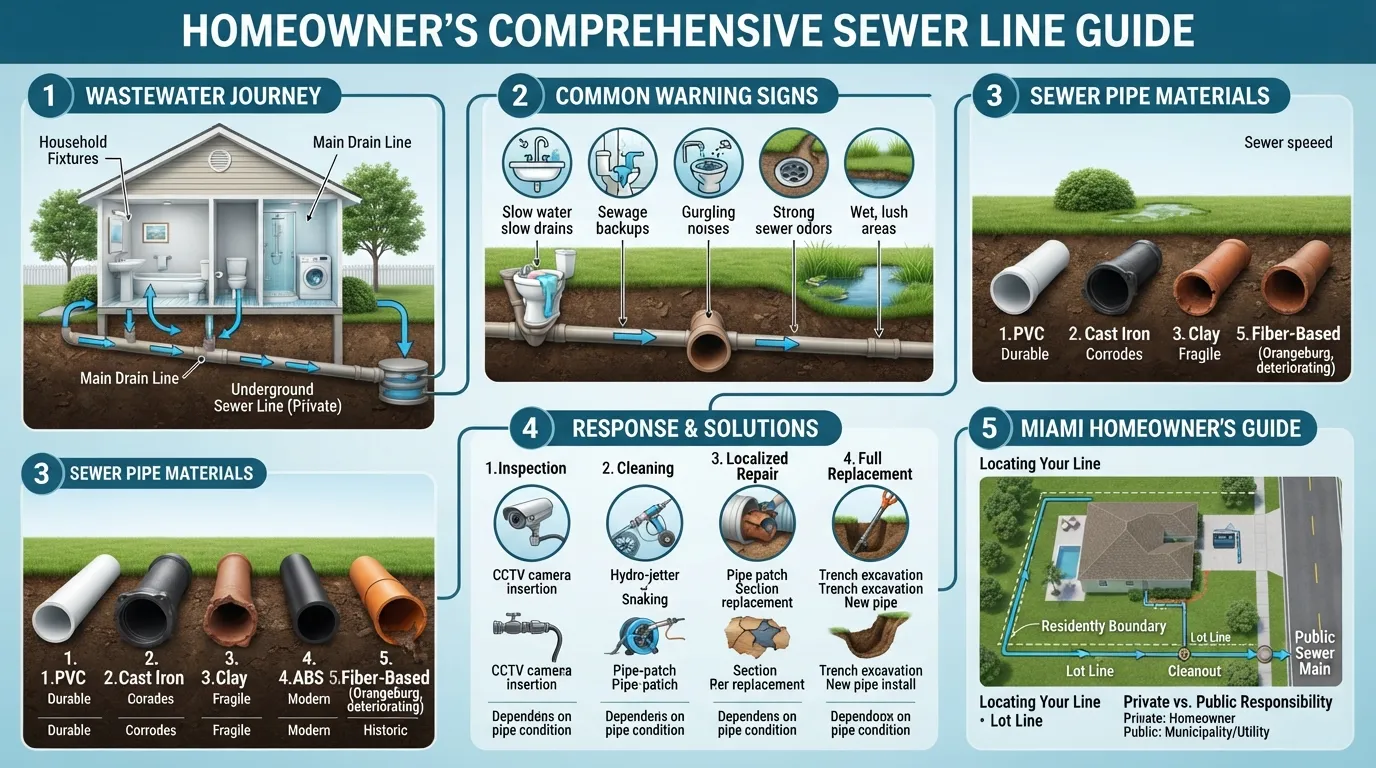
A sewer line is the underground pipe that carries wastewater from your home’s plumbing system toward a public sanitary sewer main. If your property uses a septic system instead of public sewer service, wastewater follows a different path to the septic tank rather than a municipal sewer network.
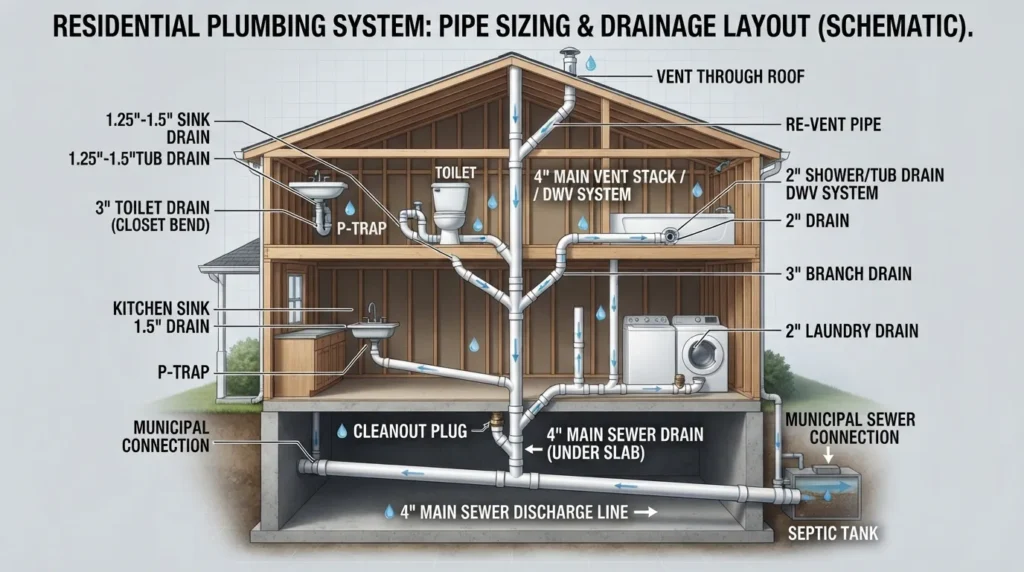
Your sewer line is the final major drainage route leaving your home. Wastewater from toilets, sinks, showers, tubs, washing machines, and other connected fixtures eventually enters this line and moves toward the public sewer system, usually by gravity.
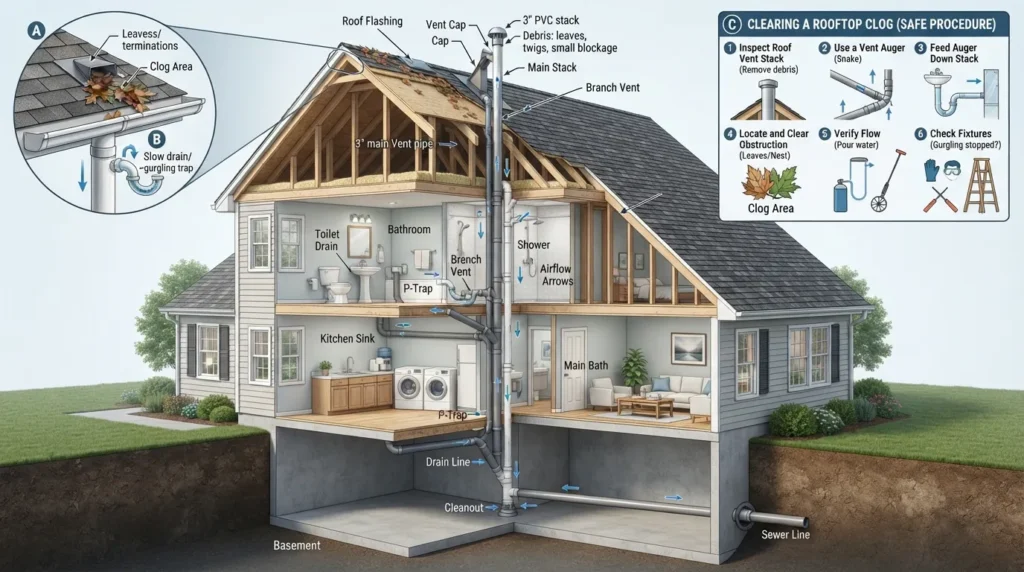
If several drains slow down together, sewage backs up, toilets gurgle, or the same blockage keeps returning after cleaning, the problem may be farther downstream in the main drainage or sewer line rather than in one individual fixture.
In this guide, I’ll show you how sewer lines work, where yours may be located, what different pipe materials mean, how to recognize trouble, and how to decide whether a line needs cleaning, inspection, repair, or replacement. I’ll also explain several Miami-Dade-specific details that can help you locate a sewer lateral and understand where private-property responsibility may begin.
In This Guide
What Is a Sewer Line?
A residential sewer line is an underground wastewater pipe connecting a building’s drainage system with the next part of the sanitary sewage system. In a property connected to municipal sewer service, that generally means wastewater leaves the house through the building sewer or private sewer lateral and eventually enters a larger public sewer main.
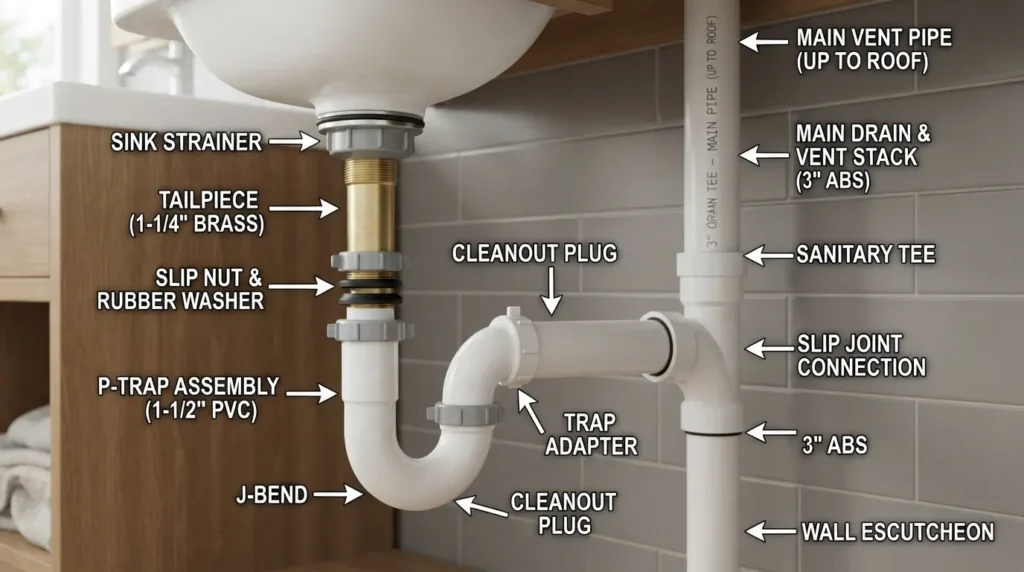
Inside the house, smaller drain pipes serve individual fixtures. Those drains combine into larger drainage piping before wastewater exits the structure. You can see the broader relationship in our guide to how your home drainage system works.
How Does a Sewer Line Work?
Most sanitary sewer systems are designed to move wastewater downhill by gravity wherever practical. The pipe must maintain appropriate slope so wastewater continues moving instead of collecting in low areas. Where gravity alone cannot move sewage through the larger public system, utilities may use pump or lift stations.
For a typical sewer-connected home, the wastewater path looks like this:
Toilets, sinks, tubs, showers and appliances
Smaller pipes collect wastewater
Waste streams combine inside the building
Wastewater leaves the property
Larger municipal collection pipe
Wastewater continues through the utility network
Sanitary Sewer vs. Storm Sewer vs. Septic System
Sanitary sewer
Carries wastewater from plumbing fixtures toward a wastewater collection and treatment system.
Storm drainage
Handles rainwater and surface runoff. It should not be treated as the same system as a home’s sanitary sewer connection.
Septic system
Treats wastewater on or near the property through a private septic system instead of sending it into a municipal sewer network.
Watch: A Homeowner Sewer-Line Overview
If you prefer a visual explanation, this video provides additional context about residential sewer lines and common homeowner concerns.
Main Sewer Line, Building Sewer, Lateral: What Do These Terms Mean?
Sewer terminology can be confusing because homeowners, plumbers, municipalities, and plumbing codes do not always use the same everyday wording.
- Branch drain: A smaller drain carrying wastewater from one or more fixtures.
- Main building drain: The larger drainage pipe collecting flow from multiple branches inside the building.
- Building sewer: A term commonly used for drainage piping after it leaves the building.
- Sewer lateral: The pipe connecting a property to a public sewer main. Ownership boundaries vary by utility and jurisdiction.
- Sewer main: A larger public or utility-operated sewer that receives wastewater from multiple properties.
- Sanitary sewer: The wastewater collection system designed for sewage rather than stormwater.
- Sewerage: A broader term that can refer to sewer infrastructure and the overall wastewater collection system rather than one individual pipe.
How Do I Find the Sewer Line on My Property?
You do not need to start digging to determine where a sewer line probably runs. Begin with records and visible plumbing clues, then use professional locating equipment when the exact path matters.
- Find the main drain exit point. Look at the plumbing layout and determine where the largest drain line appears to leave the building.
- Look for sewer cleanouts. A cleanout is an access fitting that may help indicate the route of the building sewer or lateral. Do not assume every visible cap is a sewer cleanout without confirming it.
- Check property and utility records. As-built plans, utility maps, prior plumbing records, surveys, or sewer connection documentation may identify the lateral or public main.
- Use a sewer camera with locating equipment when necessary. A camera can travel through an accessible line while compatible locating equipment helps identify the pipe’s route and problem location from above ground.
Finding a Sewer Lateral in Miami-Dade
Miami-Dade Water and Sewer Department provides a Utilities Information Request for information that can include as-built records, atlas information, and sewer lateral locations. The county specifically advises checking for an existing sewer lateral before starting certain sewer-service connection requests.
County records are useful, but they should not automatically be treated as a substitute for field verification. Miami-Dade also notes that discrepancies can exist between records and actual field conditions.
Planning to dig?Do not excavate simply because you think you know where the sewer runs. Florida homeowners should contact Sunshine 811 before digging so participating underground utility owners can mark their facilities. Private lines may require separate locating.
Common Types of Residential Sewer Pipe
The material in your sewer line often reflects the age of the property, local construction practices, previous replacements, and the portion of the system being inspected. A single property can also contain more than one material because repairs and additions may have been completed at different times.
PVC
Modern PVC sewer pipe is smooth, lightweight, and resistant to corrosion. It can still experience problems from poor installation, separated joints, crushing, ground movement, or other structural conditions.
ABS
ABS is another plastic drain, waste, and vent material found in some systems. Whether it is appropriate for a specific installation depends on applicable code, design, and local requirements.
Cast Iron
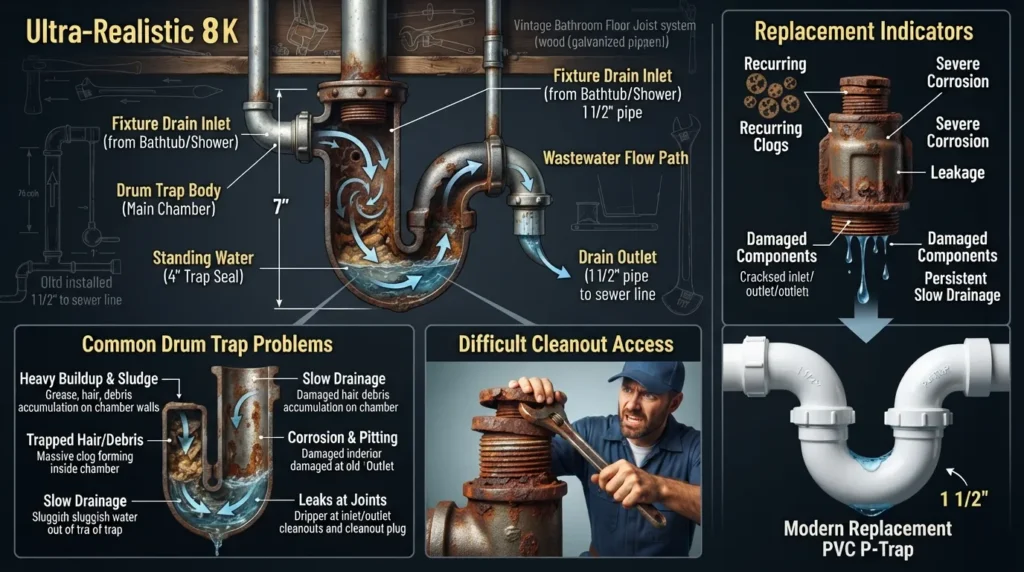
Cast iron is strong and common in many older plumbing systems, but age and corrosion can reduce its internal diameter or weaken pipe walls over time.
Clay / Terracotta
Clay pipe can remain structurally useful for a long time, but older jointed clay systems may be vulnerable to cracks, joint displacement, and root intrusion where openings develop.
Orangeburg
Orangeburg is a historic bituminized fiber pipe associated with some mid-century installations. Aging Orangeburg is known for deformation and structural deterioration, so its presence deserves careful condition assessment.
How Long Do Sewer Lines Typically Last?
Sewer lines commonly remain in service for decades, but age alone cannot tell you whether a pipe is good or bad. Published homeowner references often estimate cast iron and clay or cement lines at roughly 75–100 years, Orangeburg at around 50 years, and PVC at 100 years or more. Treat those figures as broad planning ranges rather than guarantees.
Actual service life can change substantially based on:
- installation quality and pipe slope;
- soil and groundwater conditions;
- corrosion;
- tree-root exposure;
- ground settlement or movement;
- joint condition;
- previous repairs;
- what has been flushed or discharged into the system; and
- structural loading above the buried pipe.
A camera inspection showing a sound older pipe can be more useful for a repair decision than simply assuming replacement is necessary because of age.
What Are the Signs of a Bad or Broken Sewer Line?
The most useful clue is not just which symptom you have, but whether several fixtures are affected and whether the problem keeps returning.
Four Major Warning Signs
- Multiple drains are slow at the same time. One slow sink may be a local clog. Several slow fixtures can point to a restriction farther downstream.
- Sewage backs up through a low fixture or floor drain. This deserves prompt attention because wastewater is not leaving the system normally.
- Toilets or drains repeatedly gurgle. Gurgling can indicate abnormal airflow caused by a drainage restriction, although venting and fixture-specific problems are also possible.
- You have recurring clogs, sewer odors, or suspicious wet areas outside. Repeated symptoms after temporary clearing may justify inspecting the pipe instead of repeatedly treating the symptom.
Other clues can include unexpected depressions in the yard, wet soil along a suspected sewer route, or unusually vigorous vegetation in a localized area. None of these alone proves a sewer leak, but they can justify further investigation.
If sewage is actively backing up:
Reduce unnecessary water use so you are not adding more wastewater to a restricted system. Avoid repeatedly flushing toilets or running appliances while the backup is unresolved. If you need immediate guidance, you can talk with a local plumber.
What Causes Sewer Lines to Fail?
Tree-Root Intrusion
Roots are attracted to moisture and can exploit openings at damaged joints, cracks, or deteriorated pipe sections. Once inside, root growth can trap debris and progressively restrict flow.
Grease, Wipes, and Foreign Material
Cooking fats and grease can cool and accumulate inside drainage piping. Wipes, paper towels, hygiene products, and other materials can combine with buildup and make restrictions worse. A product being marketed as “flushable” does not mean it will break apart as readily as toilet paper in every plumbing system.
Corrosion and Deterioration
Metal pipe can corrode over time. Other older materials can weaken, deform, crack, or lose structural integrity depending on their condition and environment.
Pipe Belly or Improper Slope
A sewer belly is a low section where wastewater and solids can collect instead of continuing through the pipe as intended. Cleaning may remove accumulated material, but cleaning alone does not correct the underlying pipe geometry.
Cracked, Shifted, or Separated Pipe
Ground movement, settlement, installation defects, external loads, and aging joints can change pipe alignment. Offset or separated sections can restrict flow and may provide openings for soil or roots.
Sewer Line Problem Decoder: What Your Symptoms May Mean
This is the part many general sewer guides miss. A symptom list tells you what to watch for; a diagnostic pattern helps you understand the next logical step.
One Drain Is Slow
More likely: A local fixture or branch-drain issue.
Next step: Start with that fixture rather than immediately assuming the underground sewer line has failed.
Several Drains Are Slow
Possible meaning: A restriction in a larger shared drain or sewer line.
Next step: Determine which fixtures are affected and where they connect before choosing a cleaning method.
Clog Returns After Cleaning
Possible meaning: Roots, scale, a belly, damaged pipe, or another condition may be recreating the blockage.
Next step: A camera inspection can help identify why the same problem keeps returning.
Sewage at the Lowest Fixture
Possible meaning: Wastewater is being blocked downstream and finding another path out.
Next step: Limit water use and investigate promptly.
Wet or Smelly Area in the Yard
Possible meaning: A buried pipe leak is one possibility, but irrigation, drainage, groundwater, and other sources must also be considered.
Next step: Locate the line and confirm the source before excavating.
Gurgling + Multiple Slow Drains
Possible meaning: A downstream restriction becomes more plausible when several connected fixtures show symptoms.
Next step: Diagnose the shared drainage path rather than treating each fixture separately.
How Do Plumbers Diagnose a Sewer Line Problem?
A useful diagnosis should answer three questions:
- Where is the problem?
- What is causing it?
- Is the pipe structurally sound after the obstruction is removed?
Sewer Camera Inspection
A sewer camera can reveal visible conditions such as roots, heavy buildup, offsets, cracks, deformation, standing water, or a collapsed section where access and visibility allow. A camera is diagnostic equipment; it does not automatically mean the pipe needs replacement.
Electronic Locating
When compatible equipment is used, a camera head or transmitter can help locate the approximate position and depth of a problem from above ground. That information can make a repair more targeted.
Cleaning as Part of Diagnosis
If buildup prevents the camera from seeing the pipe clearly, cleaning may be necessary before the structural condition can be evaluated properly.
A better decision sequence:
Locate the problem → identify the cause → clear the obstruction when appropriate → inspect structural condition → choose the least invasive repair that actually addresses the cause.
Does Your Sewer Line Need Cleaning, Repair, or Replacement?
These are different solutions for different problems. Replacing a pipe that only needs cleaning wastes money, while repeatedly cleaning a structurally failed pipe can leave the root cause unresolved.
Cleaning
May be appropriate when the main issue is removable buildup, debris, or a blockage and the underlying pipe remains serviceable.
Localized Repair
May make sense when damage is limited to a specific section and the surrounding line is otherwise in usable condition.
Replacement
May be considered when there is collapse, severe deformation, extensive deterioration, multiple significant failures, or another condition that cannot be reliably solved with a limited repair.
Trenchless methods such as lining or pipe bursting may be options in some circumstances, while other problems require excavation. The correct choice depends on pipe material, structural condition, access, alignment, location, and applicable requirements.
When Does a Sewer Line Need to Be Cleaned?
There is no universal rule saying every residential sewer line must be cleaned every one or two years. A better maintenance schedule is based on the property’s actual risk and history.
More frequent inspection or preventive cleaning may be worth discussing when a property has:
- repeated sewer or main-drain clogs;
- a history of root intrusion;
- older or rough interior pipe surfaces;
- known buildup problems;
- previous sewer repairs; or
- commercial or unusually heavy drainage use.
If a line has no history of problems, choosing an arbitrary cleaning interval without considering its condition can provide little value.
When the problem is primarily an obstruction rather than a structural failure, professional drain cleaning may be part of the solution.
Who Is Responsible for the Sewer Line: You or the City?
This is one of the most important questions to answer before authorizing work.
In general, a property owner is commonly responsible for at least the private portion of the sewer lateral serving the property, while the public sewer main is maintained by the utility or municipality. However, the exact ownership boundary is not universal. It can depend on the utility, municipality, right-of-way, local policy, and the specific portion of the connection.
Miami-Dade Responsibility
Miami-Dade regulations state that portions of a sewage lateral identified as the private property owner’s responsibility must be operated, maintained, and repaired by that owner. Where no separate public-system policy or ordinance identifies the boundary, the county code addresses portions of the lateral located on privately owned real property as the owner’s responsibility.
That does not mean every property throughout Miami-Dade has the same service arrangement. If the issue is close to a property line, public right-of-way, or municipal connection, verify the applicable utility’s responsibility before assuming the repair belongs to you.
Before Paying for an Underground Sewer Repair
- Confirm where the defect is located.
- Identify whether it is on private or public infrastructure.
- Check your utility’s ownership/responsibility rules.
- Determine whether permits or utility coordination are required.
- Get the diagnosis and proposed repair scope in writing.
What Does Sewer Line Repair Cost?
There is no single average price that accurately predicts what a specific Miami property will cost to repair. A straightforward cleaning, a small accessible spot repair, a deep excavation under hardscape, trenchless rehabilitation, and full sewer-line replacement are fundamentally different projects.
The largest cost drivers can include:
- the exact cause and length of damage;
- pipe depth and accessibility;
- pipe material and diameter;
- excavation requirements;
- driveways, slabs, landscaping, or other surfaces above the pipe;
- whether the damaged section is on private property or within an area requiring utility coordination;
- permit requirements;
- whether trenchless repair is technically appropriate; and
- restoration work after the plumbing repair.
For that reason, the most useful estimate usually comes after the problem has been located and the repair scope is known. A low quote based only on the symptom “my sewer is backed up” may not be comparing the same work as a quote based on an actual camera diagnosis.
Will Homeowners Insurance Pay for Sewer Line Replacement?
Sometimes, but you should not assume that a sewer repair or replacement is covered.
Coverage depends on the policy, the cause of the loss, exclusions, endorsements, and the type of damage being claimed. Standard homeowners insurance generally does not cover routine wear, deterioration, or maintenance problems. Sewer backup coverage may also require a separate endorsement rather than being included automatically in a standard policy.
The Insurance Information Institute advises homeowners to check their specific policy because sewer backup and maintenance-related losses can be treated differently from covered sudden events. You can review its general explanation of homeowners insurance coverage and exclusions.
Insurance tip:
If you may file a claim, document the condition and keep inspection reports, photos, video, invoices, and repair estimates. For an active sewage backup, protecting the property from further damage takes priority; discuss policy-specific coverage with your insurer or qualified insurance professional.
How Can You Reduce Sewer Line Problems?
- Keep grease out of drains. Let cooking fats cool and dispose of them appropriately instead of pouring them into the plumbing.
- Flush only appropriate waste. Toilets should not be treated as garbage disposals for wipes, paper towels, hygiene products, or other objects.
- Pay attention to patterns. A recurring blockage deserves a diagnosis instead of endless temporary clearing.
- Know where your cleanout is. Easy access can save time during diagnosis or cleaning.
- Be careful with large trees near older sewer routes. Roots do not magically break into every intact pipe, but existing openings and weak joints can become intrusion points.
- Do not ignore slow changes. Repeated gurgling, multiple slow drains, or increasing backup frequency can be early clues.
- Inspect before major decisions when condition is unknown. A camera can provide information that pipe age alone cannot.
Frequently Asked Questions About Sewer Lines
What is the main sewer line called?
Homeowners often say “main sewer line,” while technical terms may include building sewer or sewer lateral for the pipe connecting a property toward the public sewer main. The exact terminology depends on the location and jurisdiction.
What is another word for sewer?
Related terms include sanitary sewer, sewer main, sewage system, and sewerage system. They are not always exact synonyms: a sewer can mean an individual conduit, while sewerage often refers more broadly to the collection infrastructure.
How do I find sewer lines on my property?
Start with cleanouts, the building’s main drain exit, plumbing records, utility information, and as-built plans. In Miami-Dade, the Water and Sewer Department offers utility-information requests for sewer lateral and infrastructure records. Use professional locating equipment when you need the actual field location.
How long do sewer lines typically last?
Many sewer pipes remain useful for several decades. Broad published ranges vary by material, with PVC generally expected to outlast materials such as Orangeburg, while clay and cast iron can also remain in service for many decades. Actual condition matters more than age alone.
What are four signs that a sewer line may be broken or blocked?
Four important signs are multiple slow drains, sewage backup, repeated gurgling from connected fixtures, and recurring clogs or suspicious wet/odorous areas along the sewer route.
How can I tell if I have a bad sewer line instead of a normal clog?
A single fixture problem is more likely to be local. Multiple affected fixtures, repeated blockages after cleaning, sewage at a low drain, or visible structural defects on a camera inspection make a main-line problem more plausible.
How often does a sewer line need to be cleaned?
There is no universal cleaning interval for every home. Base preventive cleaning on the line’s material, condition, root exposure, prior clogs, buildup history, and professional inspection findings rather than automatically cleaning it on a fixed schedule.
How do I know when sewer pipes need replacing?
Replacement becomes more reasonable when inspection reveals severe collapse, widespread deterioration, major deformation, repeated structural failures, or damage that cannot be reliably corrected with cleaning or a limited repair. Do not replace a pipe based on age alone.
Will homeowners insurance cover sewer line replacement?
It depends on your policy and the cause. Routine aging and maintenance-related deterioration are generally treated differently from sudden covered losses, and sewer-backup protection may require an endorsement. Review the exact policy and speak with your insurer.
What is the average cost to repair a sewer line?
A single average is not very useful because repair scope can range from clearing an obstruction to excavating and replacing a buried section. Location, depth, material, access, surface restoration, permits, and repair method all affect the final price. Diagnose the line first, then compare written estimates for the same scope of work.
Useful Miami-Dade Sewer Resources
- Miami-Dade Utilities Information Request — for information such as sewer lateral locations, as-builts, and utility atlas records.
- Miami-Dade Water and Sewer Development Services — connection and infrastructure information.
- Sunshine 811 for Florida Homeowners — underground public-utility locate requests before digging.
A sewer line problem should be diagnosed before the solution is chosen. One slow fixture may be a local clog. Multiple slow drains, recurring backups, repeated blockages, or structural defects can point to a larger problem that deserves closer inspection.
The most useful approach is simple: identify which part of the drainage system is affected, locate the problem, determine what caused it, confirm whether the pipe is structurally sound, and then decide whether cleaning, repair, or replacement actually solves the cause.
For Miami-Dade properties, official utility records can also help establish where a sewer lateral is located and which part of the connection may fall under private-property responsibility.
Not Sure Whether You’re Dealing With a Drain Clog or Sewer-Line Problem?
Start with the symptoms rather than assuming you need the most expensive repair. If several fixtures are affected, the same clog keeps returning, or sewage is backing up, the next useful step may be to locate and diagnose the restriction.
You can learn more about Miami Florida Plumbing, or speak with a local plumber about what you’re seeing.