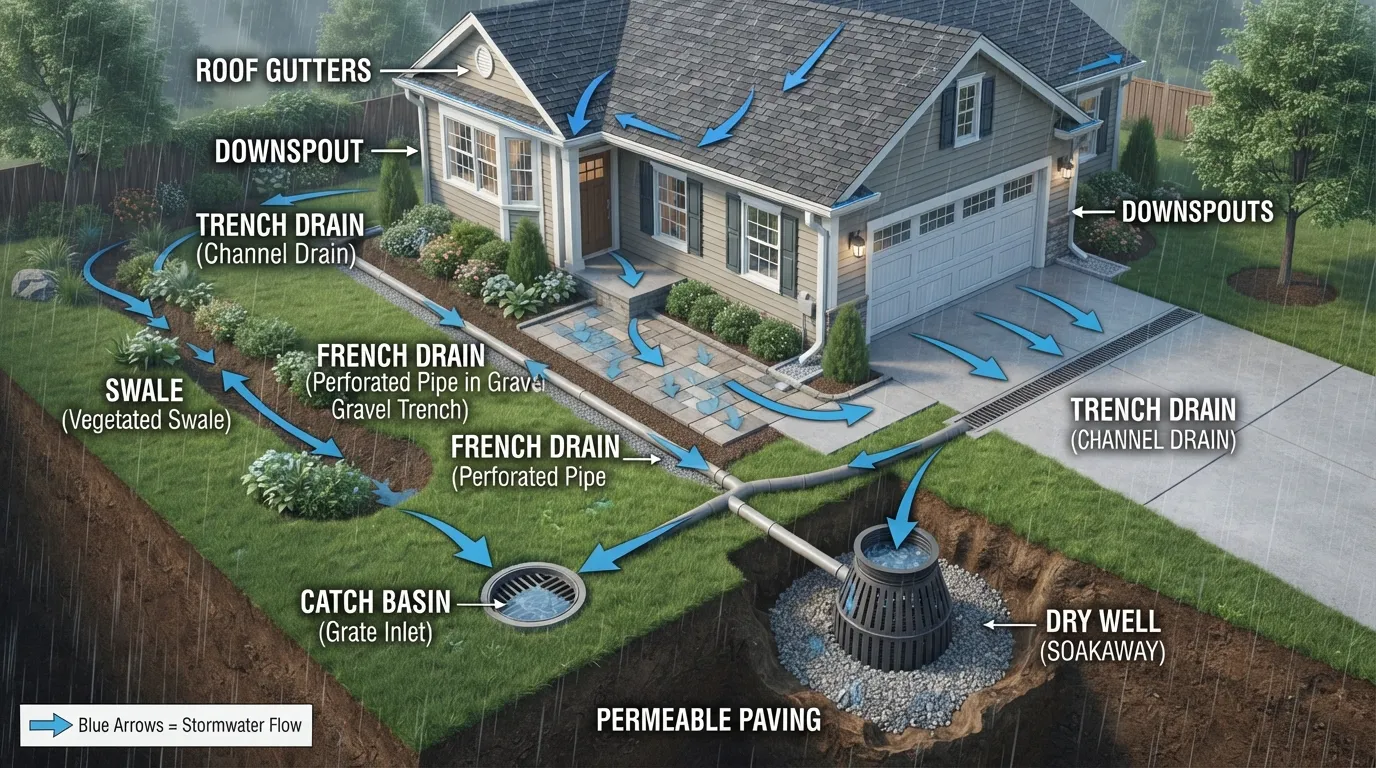
If rainwater keeps collecting around your yard, driveway, patio, or foundation, the right stormwater drainage system can help move, collect, slow, store, or absorb that water before it becomes a bigger problem.
The confusing part is that you may see articles talking about two, four, five, six, or even more types of stormwater drainage systems. They are not necessarily contradicting each other. They are often classifying drainage in different ways.
Stormwater drainage can be broadly divided into surface drainage and subsurface drainage. Around residential properties, common solutions include swales, catch basins, trench drains, slot drains, French drains, downspout drainage, slope drains, culverts, soakaways or dry wells, permeable surfaces, and rain gardens. Separate and combined systems describe the larger drainage network rather than a single drain installed at your home.
In this guide, I’ll separate those categories clearly so you can understand how each system works, where it fits, and which options may make sense for common residential drainage problems.
What Is a Stormwater Drainage System?
A stormwater drainage system manages rainwater runoff from surfaces such as roofs, driveways, patios, lawns, parking areas, and other parts of a property.
Depending on the design, the system may collect runoff at a specific point, move it through an open or underground channel, allow it to soak into suitable soil, temporarily store it, or direct it toward an approved drainage outlet.
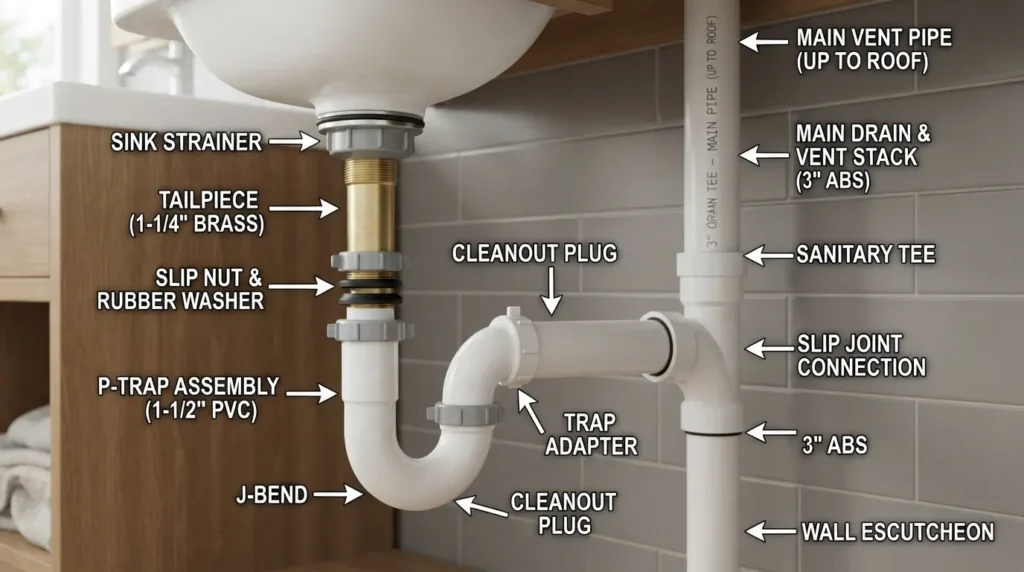
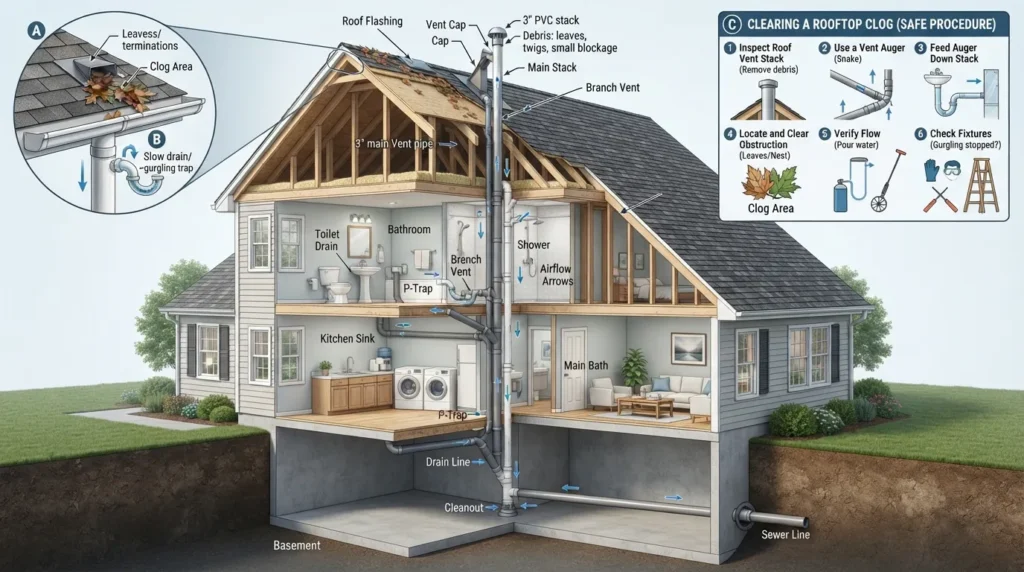
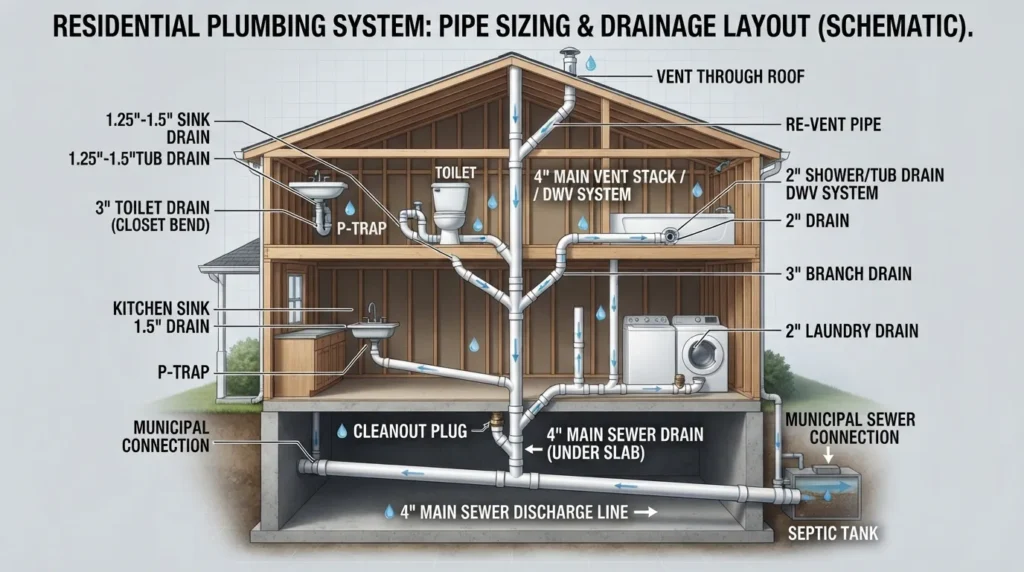
Stormwater drainage is different from sanitary plumbing. Household wastewater from toilets, sinks, showers, and similar fixtures belongs to the sanitary drainage system, while stormwater drainage is intended to manage rainwater. If you want to understand how these systems fit together, see our guide to a home drainage system.
Why Do Different Sources Give Different Numbers of Stormwater Drain Types?
There is no single universal number because stormwater systems can be classified in several different ways.
By Location
Surface and subsurface drainage describe where water is collected or controlled.
By Conveyance
Open and closed systems describe whether runoff travels through an exposed channel or enclosed piping.
By Function
Some systems capture, convey, infiltrate, slow, or temporarily store stormwater.
By Network
Separate and combined systems describe how stormwater and sanitary sewage are handled across a larger infrastructure network.
This distinction matters. A French drain, for example, is a specific subsurface solution. A surface drainage system is a broad category. A separate sewer system is a network configuration. Treating all three as equivalent “types” creates unnecessary confusion.
Main Types of Residential Stormwater Drainage Systems
1. Swales and Drainage Ditches
A swale is a shallow channel shaped into the landscape to guide surface runoff in a controlled direction. It may be covered with grass or other vegetation, while a ditch may be more clearly defined and sometimes lined.
Best suited for: Managing sheet flow across yards or larger landscaped areas.
How it works: The slope of the ground moves water through the channel instead of allowing it to spread randomly or collect in low spots.
Watch for: Poor grading, erosion, accumulated debris, or landscaping that blocks the intended flow path.
2. Catch Basins and Point Drains
A catch basin or point drain collects runoff at a specific low point and directs it into connected drainage piping.
You may see this approach in yards, patios, driveways, courtyards, and other places where water naturally concentrates in one location.
Best suited for: Localized pooling where proper grading already directs water toward a collection point.
How it works: Water enters through a grate or opening and then moves through an outlet pipe. Some basin designs can also collect a portion of sediment or debris before it enters the line.
Watch for: Leaves, dirt, trash, roots, and other material that can restrict the inlet or downstream piping.
3. Trench or Channel Drains
A trench drain is a long, narrow surface channel usually covered by a grate. Instead of collecting water at one point, it intercepts runoff across a wider line.
Best suited for: Driveways, garage entrances, patios, pool-adjacent hardscape, walkways, and other paved surfaces where water moves across a broad area.
How it works: Runoff enters along the length of the channel and is carried toward an outlet.
Watch for: Sediment inside the channel, clogged grates, poor slope, or an obstructed discharge line.
4. Slot Drains
A slot drain performs a similar job to a trench drain but uses a narrower surface opening. The drainage channel sits below the surface while runoff enters through the slot.
Best suited for: Paved areas where linear water collection is needed and the design calls for a narrow inlet.
How it works: Water is intercepted along a line and moves through the concealed channel below.
Watch for: Accessibility for cleaning and whether the system can handle the expected runoff volume for the site.
5. French Drains
A French drain is a subsurface drainage system commonly built with a perforated pipe surrounded by free-draining material such as gravel. Filter fabric may also be used as part of the installation.
Best suited for: Subsurface water in suitable locations, including areas where water is moving through saturated soil rather than simply sitting on top of pavement.
How it works: Water enters the gravel-filled drainage zone and perforated pipe, then moves toward an appropriate outlet or discharge point.
Watch for: Soil conditions, insufficient slope, sediment intrusion, roots, poor outlet design, and using a French drain where a surface collection system would solve the problem more directly.
Important: A French drain is not automatically the best solution for every wet yard or foundation problem. The source of the water, grading, soil, available outlet, and local site conditions should be understood first.
6. Downspout Drainage Systems
Roof gutters collect rainwater and send it into downspouts. From there, the water needs to be discharged far enough from vulnerable areas or connected to an appropriate private stormwater drainage system where allowed.
Best suited for: Managing roof runoff.
How it works: Gutters concentrate roof water into downspouts, and the downspout system carries or releases that runoff toward a suitable location.
Watch for: Clogged gutters, disconnected extensions, crushed underground piping, improper discharge locations, and water being released directly beside the foundation.
7. Slope Drains
Slope drains use pipes, lined channels, or similar conveyance methods to carry runoff down an incline in a controlled path.
Best suited for: Sloped properties where uncontrolled runoff could cause erosion or wash soil toward lower areas.
How it works: The drain captures or receives water near the upper area and conveys it down the slope without allowing it to cut its own uncontrolled path.
Watch for: Erosion around the inlet or outlet, damaged pipe sections, and discharge that simply creates a new problem farther downhill.
8. Culverts
A culvert is an enclosed passage that carries water beneath a driveway, road, path, or similar obstruction.
Best suited for: Locations where an existing ditch, swale, or natural drainage path must continue underneath a crossing.
How it works: Runoff enters one end of the pipe or structure and exits on the other side without flowing over the driveway or roadway.
Watch for: Blocked inlets, sediment buildup, collapsed sections, erosion around the outlet, and undersized or improperly positioned structures.
9. Soakaways and Dry Wells
A soakaway or dry well receives collected stormwater and allows it to infiltrate into surrounding soil instead of immediately carrying it off-site.
Best suited for: Sites where soil and groundwater conditions allow infiltration and where the design complies with local requirements.
How it works: Water enters an underground chamber, pit, or stone-filled area and gradually disperses into suitable surrounding soil.
Watch for: Poorly draining soil, sediment clogging, high groundwater conditions, inadequate capacity, and local restrictions.
10. Permeable Pavement
Permeable pavement is designed to allow some stormwater to pass through the surface instead of immediately becoming runoff.
Best suited for: Appropriate driveways, walkways, patios, parking areas, and other hardscape projects where infiltration is practical.
How it works: Water passes through openings or porous material into an underlying drainage layer before being stored, infiltrated, or conveyed according to the system design.
Watch for: Sediment that reduces infiltration, unsuitable soils, poor base preparation, and installing the surface without a complete drainage plan beneath it.
11. Rain Gardens and Bioretention Areas
Rain gardens and bioretention areas use landscaped depressions, vegetation, engineered soil, and drainage layers to receive runoff and slow or filter it.
Best suited for: Suitable landscaped areas where roof, driveway, or yard runoff can be directed safely into a designed planting zone.
How it works: Water temporarily collects in the landscaped area and then infiltrates, evaporates, or moves through designed drainage layers.
Watch for: Poor placement, unsuitable soil, standing water that does not drain as intended, and using ordinary landscaping in place of a properly planned stormwater feature.
Stormwater Drainage Systems Compared by Problem
Instead of choosing a drain by name, start with the water problem you are trying to solve.
Water pooling in a driveway
Depending on grading and the outlet, a catch basin, trench drain, slot drain, or grading correction may be worth evaluating.
Roof water collecting near the house
Start by checking gutters, downspouts, discharge location, surface grading, and any connected underground line.
Wet soil or subsurface water
A subsurface drainage option such as a properly designed French drain may be considered after the source of the moisture is identified.
Runoff crossing a large yard
Grading, a swale, surface channel, or another controlled conveyance method may help guide water away from vulnerable areas.
Water moving down a steep slope
A slope drain or stabilized open drainage path may be needed to control both runoff and erosion.
Runoff from a wide paved area
Linear drainage, point drainage, permeable pavement, or a combination may be appropriate depending on the site.
A Better Way to Choose
Ask four questions before choosing a drainage system: Where is the water coming from? Where is it collecting? Where can it legally and safely go? What happens during a heavy rain? Those answers are usually more useful than starting with a product name.
How Does a Stormwater Drainage System Work?
Different systems look different, but most follow the same basic process:
- Rain falls on the property. Roofs, driveways, patios, compacted ground, and other surfaces generate runoff.
- Water follows gravity. Proper grading directs it toward a safe drainage path or collection point.
- The system captures or intercepts the runoff. This may happen through a gutter, swale, grate, basin, trench, or permeable surface.
- Water is conveyed, stored, or infiltrated. Pipes, channels, drainage layers, basins, or infiltration systems manage the collected water.
- Water reaches an appropriate destination. The final outlet depends on the property’s design and applicable local drainage infrastructure and requirements.
The entire path matters. A large drain inlet will not solve the problem if the downstream pipe is blocked, the outlet is poorly located, or the surrounding ground slopes in the wrong direction.
Watch: Stormwater Drainage Overview
Surface vs. Subsurface Drainage
Surface Drainage
Surface drainage manages water that is flowing or collecting on top of the ground. Swales, ditches, trench drains, slot drains, catch basins, and surface grading all fit within this broad category.
It is often useful when the problem is visible runoff, ponding, or water crossing paved or landscaped surfaces.
Subsurface Drainage
Subsurface drainage manages water below the ground surface. French drains and some underground infiltration or collection systems fall into this category.
It may be appropriate where soil remains saturated or water is moving through the ground, but it should not be treated as a substitute for correcting an obvious surface-grading or roof-runoff problem.
Open vs. Closed Stormwater Drainage
An open drainage system moves runoff through exposed features such as swales, ditches, and open channels.
A closed drainage system moves water through enclosed pipes or underground structures connected to inlets, basins, or other collection points.
Many properties use a combination. For example, surface grading may guide runoff into a catch basin, and the basin may then discharge through an underground pipe.
Separate vs. Combined Drainage Networks
This classification applies to the larger infrastructure network rather than simply the drain in your yard.
- Separate systems use different networks for stormwater and sanitary wastewater.
- Combined systems carry stormwater and sanitary sewage through the same network. These are associated with some older urban infrastructure.
For a homeowner, the important takeaway is not to assume that every outdoor drain connects to the sanitary sewer. The destination depends on the property and local drainage system.
What Miami Homeowners Should Know About Stormwater Drainage
Stormwater management is particularly important in South Florida because intense rainfall can place a large amount of water on a property in a short period.
Miami-Dade County explains that impervious surfaces such as rooftops and parking areas contribute to stormwater runoff. The county’s drainage infrastructure is intended to help manage that runoff and reduce flooding.
For you as a homeowner, that makes a few practical details especially important:
- Keep gutters, grates, catch basins, and visible drainage openings free of leaves and debris.
- Pay attention to where roof runoff is discharged.
- Look for water repeatedly collecting beside foundations, walkways, driveways, and low areas.
- Do not assume a larger drain alone will fix a grading or outlet problem.
- Avoid directing pollutants, yard waste, chemicals, oils, or other debris into storm drains.
- Check applicable local requirements before making significant drainage or property alterations.
Stormwater Is Also a Water-Quality Issue
Runoff can pick up sediment, litter, oil, fuel residues, fertilizers, pesticides, bacteria, and excess nutrients as it moves across developed surfaces. Keeping pollutants out of storm drains helps protect downstream waterways.
For official local information, you can review Miami-Dade County’s Stormwater Utility guidance and stormwater flood-protection information.
How to Tell Whether You Have a Drainage Design Problem or a Clog
Not every standing-water problem means the drainage system needs to be redesigned. Sometimes the basic layout is fine and the water simply cannot move through it.
Signs a blockage may be involved
- A drain worked normally before but now empties slowly.
- Water sits over a grate even after nearby debris has been cleared.
- Multiple connected drainage points appear to back up together.
- Water exits from an unexpected opening when another drain receives runoff.
- A previously functioning underground line has stopped carrying water properly.
Signs the overall drainage design may need evaluation
- Water has always collected in the same low area.
- Runoff flows toward the house because of the surrounding grade.
- A drain has no practical outlet for the amount of water it receives.
- New paving or landscaping changed the way water moves across the property.
- A drainage feature solves one area but creates pooling somewhere else.
If an appropriate private drain line is clogged rather than poorly designed, a professional drain cleaning service may help restore flow after the cause and type of line are identified.
Important distinction: A plumber can work on appropriate private plumbing and drainage systems on your property. Problems involving public road drains, municipal structures, or public stormwater infrastructure should be reported to the responsible local authority.
What Should You Consider Before Installing a Stormwater Drain?
The right solution depends on the property, not simply on which drain type is most popular online.
Before choosing a system, consider:
- Source of the runoff: Roof, driveway, neighboring grade, yard, slope, or another area.
- Amount of water: A small roof section and a large paved driveway create very different drainage demands.
- Surface slope: Water has to reach the drain before the drain can collect it.
- Soil conditions: Infiltration systems depend heavily on whether the surrounding soil can accept water appropriately.
- Available outlet: Collected water needs a safe and permitted destination.
- Maintenance access: Basins, channels, pipes, and inlets need to remain serviceable.
- Property improvements: New patios, driveways, additions, landscaping, and grading changes can alter runoff patterns.
- Local requirements: Some drainage alterations may require professional design, approvals, or permits.
Common Stormwater Drainage Mistakes
Installing a drain without correcting the grade
A drain cannot collect water that never reaches it. Surface slope and drain placement need to work together.
Choosing a French drain for every drainage problem
French drains are useful in the right setting, but they are not automatically the correct answer for driveway runoff, roof discharge, or poorly graded pavement.
Ignoring the outlet
Collecting stormwater is only half the job. You also need to know where the water will go after it enters the system.
Making the inlet large but the downstream line inadequate
Every part of the drainage path needs to work together. An oversized grate cannot compensate for a blocked, poorly sloped, damaged, or otherwise inadequate downstream route.
Forgetting maintenance
Leaves, sediment, roots, trash, and landscaping material can reduce drainage performance over time. A system that cannot be accessed for inspection or cleaning may become difficult to maintain.
Frequently Asked Questions
What are the different types of storm drains?
Common storm drain solutions include catch basins, point drains, trench drains, slot drains, swales, French drains, downspout drainage, slope drains, culverts, and infiltration systems such as dry wells. The exact list depends on how the systems are being classified.
What are the different types of drainage systems?
In the broadest residential sense, drainage can include sanitary wastewater drainage and stormwater drainage. Within stormwater management, systems can be classified as surface or subsurface, open or closed, and by specific functions such as collection, conveyance, storage, and infiltration.
What are the different types of stormwater systems?
Stormwater systems include surface channels such as swales, point collection systems such as catch basins, linear drains such as trench and slot drains, subsurface systems such as French drains, roof-runoff systems, infiltration systems, permeable surfaces, and larger storage or drainage-network systems.
What are four types of stormwater drainage?
There is no universal four-type classification. A useful functional grouping is surface drainage, subsurface drainage, conveyance systems, and storage or infiltration systems. Other sources may group the same infrastructure differently.
What are the two main categories of stormwater drainage systems?
The simplest broad classification is surface drainage and subsurface drainage. Surface systems manage runoff above ground, while subsurface systems collect or move water below the surface.
What is the most common type of drainage system?
There is no single stormwater system that is best or most common for every property. Homes often use several methods together, such as gutters and downspouts, surface grading, collection drains, and underground piping. The correct combination depends on the site and the source of the water.
What are two basic types of drains?
For stormwater management, the broadest two categories are surface drains and subsurface drains. Individual systems such as trench drains, catch basins, swales, and French drains fall within or combine these broader categories.
What are eight common stormwater pollutants?
Common pollutant categories that runoff can carry include:
- Sediment and silt
- Litter and debris
- Oil
- Gasoline and other fuel residues
- Fertilizer nutrients such as nitrogen
- Excess phosphorus
- Pesticides
- Bacteria
The best way to understand the types of stormwater drainage systems is not to memorize one fixed list. Start with the larger categories, then identify the specific drainage feature that matches your property’s water problem.
Surface systems handle visible runoff. Subsurface systems manage water below ground. Point and linear drains collect runoff where it concentrates. Swales and pipes convey it. Dry wells, permeable surfaces, and bioretention areas can help manage water through infiltration where site conditions allow it.
The right system also needs proper grading, a suitable outlet, enough capacity for the site, and a realistic maintenance plan. If any one of those pieces is missing, simply adding another drain may not solve the problem.
Need Help With a Drainage Problem in Miami?
If you are trying to determine whether a drainage issue is caused by a clog, damaged private drain line, or another plumbing-related problem, our Miami plumbing team can help you evaluate the next practical step.