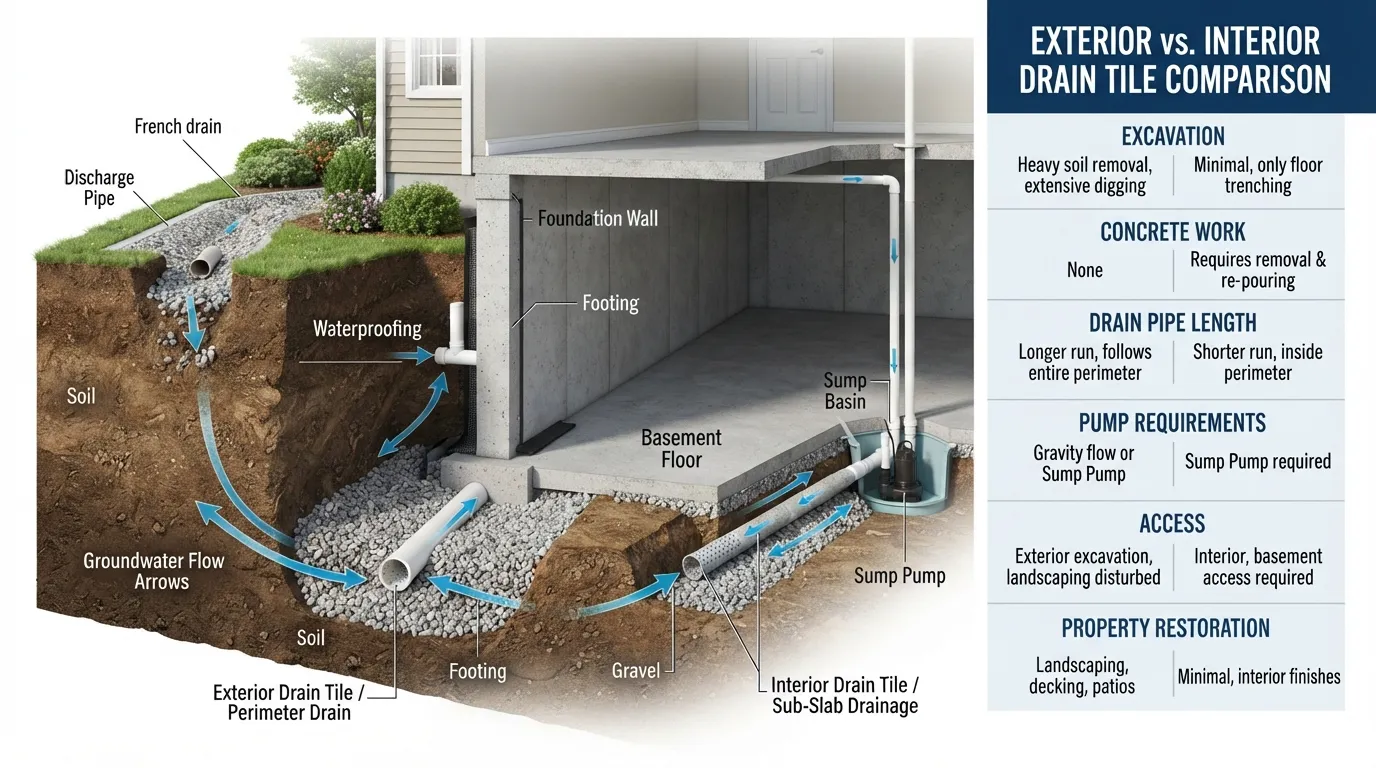
If water keeps appearing around your basement floor, foundation walls, or wall-floor joint, a basement drain tile system may be part of the solution. But before you install one, it is important to understand where the water is actually coming from. Drain tile is designed primarily to manage groundwater and relieve water pressure around a foundation; it is not a universal fix for every wet-basement problem.
A basement drain tile system uses a perforated drainage pipe installed near the foundation footing, either inside or outside the basement perimeter. Water enters the pipe through openings, moves through the drainage system, and is directed to a sump basin, suitable gravity outlet, or another approved discharge point. Its main job is to control groundwater before that water can build pressure and enter the basement.
In this guide, I’ll show you how basement drain tile works, how interior and exterior systems differ, what installation usually involves, what affects cost, how a sump pump fits into the system, and—most importantly—how to decide whether drain tile matches the water problem you actually have.
What Is Basement Drain Tile?
Basement drain tile is a foundation drainage system that collects groundwater around or beneath a basement and carries it to a controlled drainage point.
Despite the name, modern drain tile normally does not consist of individual ceramic “tiles.” Most modern systems use perforated plastic drainage pipe, rigid perforated PVC in some designs, or purpose-built perimeter drainage channels.
The drain is typically positioned near the foundation footing, where groundwater tends to accumulate. Gravel or washed stone around the drainage line creates space for water to move toward the pipe instead of pressing directly against the foundation.
You may also hear the same general type of system described as a:
- Foundation drain
- Perimeter drain
- Interior drain tile
- Exterior drain tile
- Weeping tile
- Foundation drainage system
- Interior perimeter drainage system
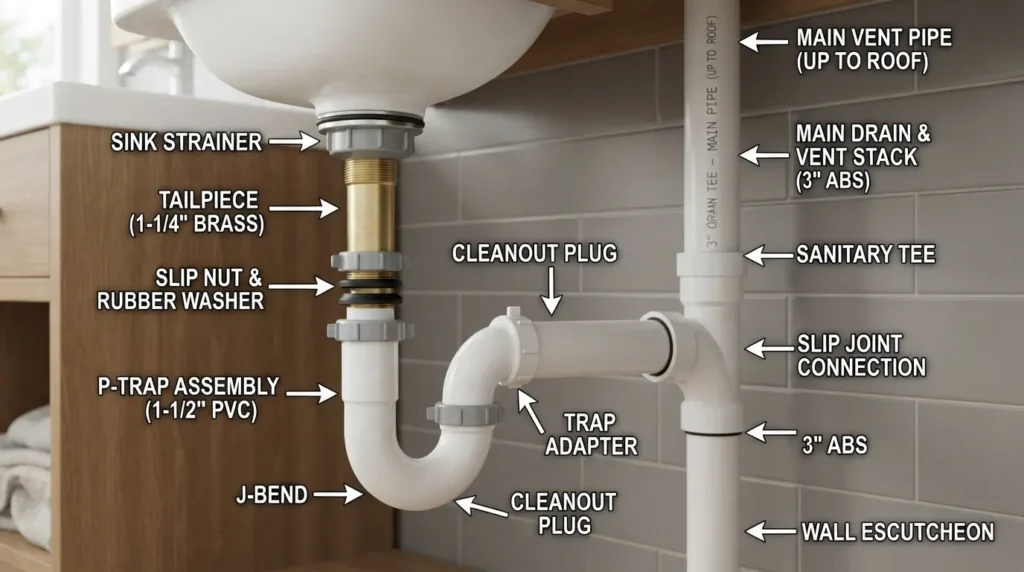
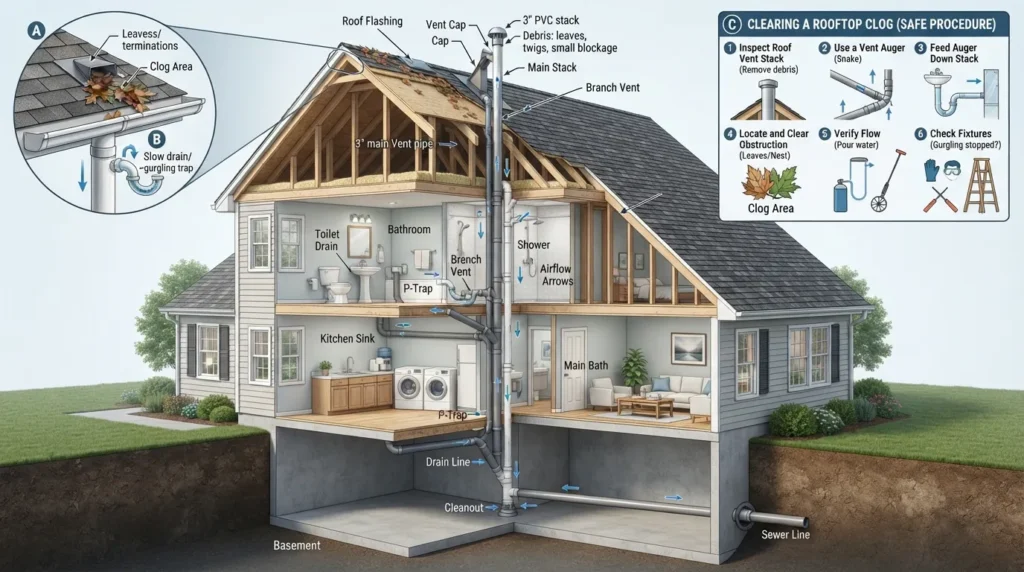
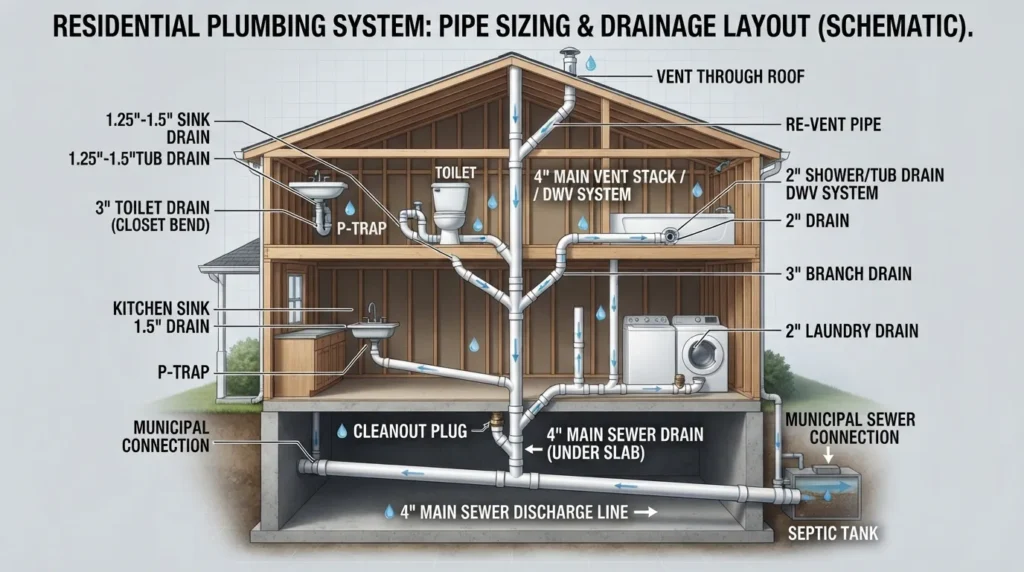
These terms are related, but the exact design and installation location can differ. If you want to understand how foundation drainage connects with the rest of a property’s plumbing and water-management network, see this guide to a home drainage system.
How Does a Basement Drain Tile System Work?
The basic principle is simple: give groundwater an easier, controlled path to follow.
After heavy rain or when the surrounding soil becomes saturated, groundwater can accumulate beside or beneath a foundation. Water pressure against the structure is often described as hydrostatic pressure. If the water finds a vulnerable path, it may enter through cracks, joints, porous masonry, or the point where the basement wall meets the floor.
A properly designed drain tile system intercepts that water and moves it away before pressure continues building around the basement.
Basement Drain Tile Flow Diagram
Water accumulates around or beneath the foundation.
Washed stone creates a path for water to move.
Water enters openings in the drain tile.
The drainage line carries water to a collection or discharge point.
Collected water is moved safely away from the foundation.
What Are the Main Parts of a Drain Tile System?
A basement drain tile system is more than one perforated pipe. Several components have to work together.
Perforated Drain Pipe
This is the main drainage line. Openings in the pipe allow surrounding groundwater to enter rather than remain trapped beside the foundation.
Washed Gravel or Stone
Free-draining stone around the pipe creates space for water to move toward the drainage line and helps keep heavy soil directly away from the pipe.
Filter Material
Depending on the system design, filter fabric or other filtration components may be used to reduce soil and sediment movement into the drainage zone.
Foundation Footing
The drainage system is normally associated with the lower portion of the foundation, near the footing, because this is where groundwater management becomes especially important.
Sump Basin
An interior system often drains into a sump basin or sump pit. Water collects there before being pumped out.
Sump Pump and Discharge Line
If gravity cannot move collected water to an approved outlet, a sump pump lifts the water from the basin and sends it through a discharge line to an appropriate location away from the foundation.
Interior vs. Exterior Basement Drain Tile
One of the biggest decisions is whether the drainage system should be installed inside or outside the foundation. Both approaches are designed to manage water, but they intercept it at different points.
Interior Drain Tile
Location: Beneath the basement floor near the inside perimeter of the foundation.
Common purpose: Collect groundwater that reaches the foundation area or rises beneath the slab.
Retrofit impact: Usually requires cutting or breaking a strip of basement concrete around the perimeter.
Exterior disruption: Usually little or no excavation around the entire outside foundation.
Typical drainage destination: Frequently connected to a sump basin and sump pump.
Exterior Drain Tile
Location: Outside the foundation near footing level.
Common purpose: Intercept groundwater before it remains against the exterior foundation wall.
Retrofit impact: Can require substantial excavation to reach the foundation footing.
Exterior disruption: Landscaping, patios, walkways, decks, utilities, or access conditions may affect the project.
Typical drainage destination: A suitable gravity outlet, sump system, or another approved drainage point depending on the property.
Do You Actually Need Basement Drain Tile?
This is the question I would answer before choosing a product or installation method.
A wet basement does not automatically mean the drain tile is missing or defective. Water can enter a property for several completely different reasons.
Use the Water Source to Guide the Solution
Groundwater or pressure around the foundation may be involved. Drain tile can be relevant, but the complete drainage system still needs to be evaluated.
Groundwater beneath the slab may be involved. An interior drainage and sump strategy may be considered after diagnosis.
Drainage pressure may contribute, but the crack itself may also require repair. Installing drain tile without addressing the actual entry point may leave part of the problem unresolved.
Surface runoff, grading, a blocked exterior drain, or poor water routing may be the primary issue. Foundation drain tile alone may not solve it.
That points more toward a plumbing drainage or sewer problem than foundation groundwater. A professional drain cleaning service may be more relevant than installing foundation drain tile.
That is a plumbing leak. Drain tile cannot repair a leaking supply or drain pipe.
Humidity, condensation, ventilation, groundwater, or multiple factors may be involved. Diagnosis should come before excavation.
The problem may involve the pump, discharge route, system capacity, power supply, or another part of the existing drainage setup—not necessarily the drain tile alone.
Signs a Basement Drain Tile System May Be Worth Investigating
You may want the foundation drainage system evaluated if you notice one or more of these conditions:
- Recurring water along the basement perimeter
- Seepage at the wall-floor joint
- Water entering after prolonged or heavy rain
- Persistent dampness along lower foundation walls
- Water appearing beneath or through the floor slab
- White mineral deposits or moisture staining on masonry
- A sump pump that receives significant groundwater during wet conditions
- An older drainage system with suspected blockages or deterioration
- A basement that repeatedly becomes wet even after surface drainage problems have been corrected
These signs can justify further investigation, but they do not prove that a new drain tile system is the correct repair.
What Basement Drain Tile Can—and Cannot—Fix
Drain Tile Can Help Manage
- Groundwater around the foundation
- Water pressure near the footing
- Groundwater reaching the wall-floor perimeter
- Some under-slab groundwater conditions
- Water that needs to be collected and directed to a sump system
Drain Tile Does Not Directly Repair
- A broken plumbing pipe
- A sanitary sewer backup
- A leaking water-supply line
- Roof leaks
- Water entering an exterior doorway
- Poorly directed downspouts
- Surface runoff by itself
- Structural foundation damage
- A failed sump pump
- Indoor condensation by itself
This distinction matters because a drainage system can perform exactly as designed while water still enters from another source. The goal should be to identify the water pathway first and then choose the repair that matches it.
How Is an Interior Drain Tile System Installed?
An interior drain tile retrofit is labor-intensive because the drainage line usually sits below the basement slab near the foundation footing. The exact procedure varies by building and system design, but the general process may include the following steps.
- Identify the water source and drainage route. The installer determines which perimeter areas are affected and where collected water can be safely directed.
- Remove the perimeter section of concrete. A strip of basement floor is cut or broken to create access near the foundation.
- Excavate the drainage trench. Material beneath the slab is removed to create space for the drainage line and stone.
- Address foundation-wall drainage where appropriate. Certain masonry-wall systems may require drainage details such as weep openings so trapped water can reach the perimeter system. This is not appropriate for every foundation type.
- Install the drain tile. Perforated pipe or a purpose-built drainage channel is positioned so collected water reaches the planned outlet or sump basin.
- Add washed stone or specified drainage material. The pipe is surrounded by material that allows water to move freely toward the system.
- Connect the sump basin if required. Systems that cannot discharge by gravity commonly route water to a sump pump.
- Restore the floor. The open perimeter trench is finished according to the installation design, which can include concrete restoration and wall-floor drainage details.
- Test the system. The drainage path, sump operation, pump discharge, and visible connections should be checked before the work is considered complete.
Video: Interior Drain Tile Installation Example
This video can help you visualize the demolition, trenching, drainage-pipe, stone, and restoration stages commonly associated with an interior basement drainage project. Installation details still vary by foundation and property.
How Is Exterior Drain Tile Installed?
Exterior drain tile is installed outside the foundation near the footing. When it is added to an existing home, reaching that location can require substantial excavation.
A typical exterior project may involve:
- Evaluating grading, utilities, access, foundation condition, and discharge options
- Excavating beside the foundation to the required depth
- Inspecting and preparing the exterior foundation surface
- Completing required waterproofing or drainage-membrane work
- Installing perforated foundation drainage at the appropriate footing location
- Placing washed drainage stone and specified filter material
- Connecting the system to the planned drainage or sump outlet
- Backfilling carefully
- Restoring disturbed landscaping, walkways, or other exterior surfaces as required
Exterior work can be a strong option when access to the outside foundation is already available or when exterior waterproofing also needs attention. For an existing finished property, however, excavation and restoration can become a major part of the project.
Drain Tile and Sump Pump: How Do They Work Together?
A drain tile system collects water. A sump pump moves that collected water when gravity alone cannot discharge it safely.
Think of the system as two separate jobs:
- Drain tile: intercepts and transports groundwater.
- Sump pump: pumps the collected water out of the basin and away from the structure.
If the drain tile works but the sump pump fails, water can accumulate in the basin. If the pump works but the drainage line is blocked or poorly designed, water may never reach the sump efficiently.
That is why the whole system should be evaluated as one water-management path rather than treating the pipe and pump as unrelated components.
Questions to Ask About the Sump Setup
- Where will the sump pump discharge?
- Can discharged water flow back toward the foundation?
- Is the discharge line protected from blockage or damage?
- What happens during a power outage?
- Is a backup pump or backup power source appropriate for the property?
- Can the sump basin be accessed for inspection and maintenance?
Basement Drain Tile Cost: What Actually Changes the Price?
There is no single trustworthy price for every basement drain tile installation. A small, accessible interior project and a full exterior excavation are completely different scopes of work.
Major Cost Factors
- Total linear footage of drainage required
- Interior vs. exterior installation
- Depth of excavation
- Concrete cutting and removal
- Ease of access to the work area
- Finished walls, flooring, or basement features that must be protected or removed
- Foundation type
- Sump basin and sump pump requirements
- Length and complexity of the discharge route
- Waterproofing or drainage-membrane work
- Exterior landscaping or hardscape restoration
- Permit or inspection requirements where applicable
- Existing foundation damage or other repairs discovered during the project
If you are comparing estimates, do not look only at one total number. Ask each contractor to explain exactly what is included so you are comparing the same scope of work.
A Better Way to Compare Drain Tile Quotes
Ask whether each proposal includes:
- Demolition and debris removal
- Drainage pipe or channel specifications
- Drainage stone
- Sump basin
- Sump pump
- Discharge piping
- Concrete restoration
- Wall drainage details
- Waterproofing materials
- Exterior restoration
- Cleanup
- Permit-related work if required
- Warranty terms and exclusions
A low quote that excludes several of these items may not actually be less expensive once the entire project is completed.
Do Basement Drain Tiles Really Work?
Yes—when the problem is the type of groundwater intrusion the system is designed to control, and when the system is properly designed, installed, discharged, and maintained.
The important qualification is the water source.
A drain tile system can effectively collect groundwater around the footing and move it away. But it cannot stop water from entering through an open exterior doorway, repair a burst pipe, clear a sewer blockage, fix failed gutters, or correct every grading problem.
If a system appears not to be working, the next step should not automatically be “install more drain tile.” The existing drainage route, sump pump, discharge, surface drainage, foundation condition, and actual entry point all deserve inspection.
Why Basement Drain Tile Systems Fail or Underperform
A drainage system is hidden for much of its length, so failures are not always immediately obvious. Common possibilities include:
- Sediment entering or restricting the drainage path
- A damaged or collapsed section of drainage pipe
- An improperly connected drainage line
- A sump pump that has failed
- A sump pump that cannot keep up with incoming water
- A blocked or damaged discharge line
- Water being discharged too close to the foundation
- Surface water entering from a location the drain tile was never designed to control
- Changes in grading or exterior drainage
- Foundation cracks or waterproofing defects that require separate repair
How to Maintain a Basement Drain Tile and Sump System
Drain tile itself is largely hidden, but the accessible parts of the drainage system should not be ignored.
Useful maintenance checks include:
- Test the sump pump according to its manufacturer’s instructions.
- Keep the sump basin accessible for inspection.
- Check the visible discharge line for damage or blockage.
- Confirm discharged water is not immediately returning toward the foundation.
- Inspect gutters and downspouts because excessive roof runoff can overload the area around a foundation.
- Watch for new settlement or grading changes that direct surface water toward the structure.
- Pay attention to changes in pump activity, especially during wet weather.
- If the system includes accessible cleanouts or inspection ports, keep them available rather than permanently covering them.
- Investigate recurring seepage instead of repeatedly drying the same area without finding the source.
Drain Tile vs. French Drain: Are They the Same?
The terms are sometimes used loosely, but they should not automatically be treated as identical.
A basement drain tile is specifically associated with managing water around a foundation or basement footing.
A French drain is a broader drainage concept that commonly uses a gravel-filled trench and perforated pipe to intercept and redirect water. French drains can be installed in yards, landscapes, along structures, or in other drainage locations.
The important question is not the label alone. You need to know:
- Where the drainage line is installed
- What water source it is supposed to intercept
- Where that water will go
- Whether the discharge location is appropriate
What Is PVC Drain Tile?
PVC drain tile generally refers to perforated PVC drainage pipe used to collect groundwater. The openings allow water to enter the pipe, while the pipe carries it toward a sump basin or other discharge point.
Not every basement drainage system uses the same pipe material. Some systems use rigid perforated pipe, some use corrugated drainage pipe, and others use proprietary perimeter drainage channels. The correct material depends on the system design, installation location, accessibility, drainage requirements, and applicable local requirements.
Should Drain Tile Be Installed Inside or Outside?
Use the following decision framework rather than choosing based on one feature.
Interior Drain Tile May Make More Sense When:
- Groundwater is entering around the basement perimeter or beneath the slab.
- Excavating the entire exterior foundation would be highly disruptive.
- The basement already relies on or can accommodate a sump system.
- The main goal is managing water after it reaches the foundation area rather than exposing the exterior wall for additional waterproofing.
Exterior Drain Tile May Make More Sense When:
- The exterior foundation is already exposed during construction or another repair.
- Exterior waterproofing also needs to be installed or repaired.
- The site provides a practical drainage and discharge route.
- Excavation can be completed without unacceptable damage to surrounding structures or property features.
Some properties may also require a combination of foundation drainage, sump pumping, surface grading, gutters, downspouts, and localized repairs rather than one single solution.
A South Florida Note on Foundation Drainage
Foundation drainage should always be designed around local site conditions rather than copied from a generic diagram.
For a South Florida property, the assessment should consider groundwater conditions, heavy-rain drainage, site elevation, surrounding hard surfaces, lot grading, available discharge locations, existing plumbing drainage, and how water moves around the structure during storms.
That means the first question should not be, “Which drain tile should I buy?” It should be, “What is the actual source and path of this water?”
Drain Tile, Surface Drainage, or Plumbing Problem?
This is where homeowners can lose money by treating different drainage problems as though they are the same.
Foundation Groundwater
Think about drain tile, waterproofing, sump systems, footing drainage, and hydrostatic pressure.
Surface Water
Think about grading, downspouts, exterior drains, walkways, patios, low spots, and runoff pathways.
Plumbing Drainage
Think about fixture backups, floor drains, sewer lines, clogged drains, broken drainage piping, and plumbing-system diagnosis.
The categories can overlap, but separating them early prevents you from paying for a foundation drainage solution when the actual problem is somewhere else.
Questions to Ask Before Approving a Drain Tile Installation
A contractor should be able to explain the reasoning behind the proposed system—not only the product being installed.
- Where do you believe the water is entering?
- What evidence shows groundwater is the main source?
- Why are you recommending interior or exterior drain tile?
- Where exactly will the drainage line be installed?
- What pipe or drainage-channel material will be used?
- Where will the collected water discharge?
- Will the system use a sump pump?
- What happens if the pump loses power?
- How will the discharge be prevented from returning toward the foundation?
- Does any foundation crack or wall defect need separate repair?
- What concrete, landscaping, flooring, or wall finishes will be disturbed?
- What restoration is included in the price?
- How can the finished system be inspected or maintained?
- What work is specifically excluded from the proposal?
- What warranty applies, and what conditions can void it?
Frequently Asked Questions About Basement Drain Tile
A basement drain tile system can be an effective way to manage groundwater, relieve pressure around a foundation, and move collected water toward a controlled discharge point. But the pipe itself is only one part of the solution.
The best result comes from identifying the water source first, then evaluating the foundation, interior or exterior drainage route, sump system, discharge location, surface grading, and any separate plumbing or structural problems.
If water is coming from groundwater around the footing, drain tile may be exactly the system you need. If the water is coming from a plumbing backup, roof runoff, doorway, broken pipe, or another source, installing foundation drainage without fixing that source can leave you with the same problem after an expensive project.
Not Sure Which Drainage Problem You Have?
A proper diagnosis can help separate foundation groundwater from surface drainage and plumbing problems before you commit to the wrong repair. You can learn more about our Miami plumbing and drainage team, or speak with a plumbing professional.