If you have ever watched water disappear down a sink, shower, floor drain, or yard drain and wondered where it actually goes, the basic idea is surprisingly simple: a drainage system gives water a controlled path from where it enters the system to a safe discharge point.
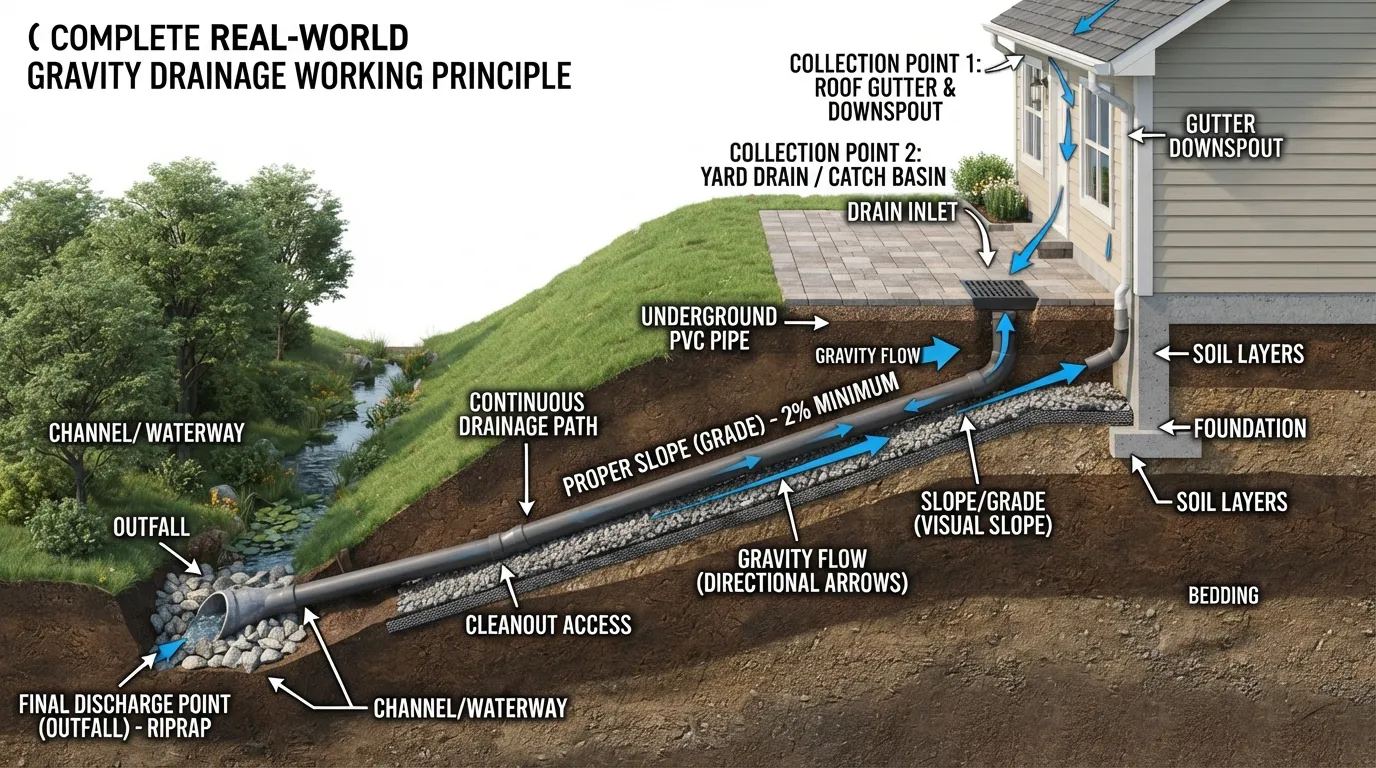
Drainage works mainly through gravity, proper slope, connected drain piping or channels, and a clear outlet. Inside a home, wastewater passes from a fixture through a trap or trapway, into branch piping, then toward the building drain and sewer or septic system. Plumbing vents help the system manage air pressure and protect trap seals. Outdoors, grading, catch basins, French drains, and similar systems collect rainwater or groundwater and direct it away from areas where it could cause problems.
The important part is that indoor plumbing drainage and outdoor yard drainage are not the same system. They can rely on some of the same physical principles, especially gravity and slope, but they collect different types of water and may send that water to completely different destinations.
I’ll walk you through both so you can understand not only what the parts are, but how water actually moves through the system and how to recognize when that process is failing.
What Is the Drainage Working Principle?
The drainage working principle is based on creating a reliable route that allows water to move from a higher point toward a lower or otherwise suitable discharge point.
Five things make that possible:
- Gravity: Water naturally moves downward when a usable path is available.
- Slope or grade: Drain pipes, channels, and ground surfaces are arranged so water has a direction in which to travel.
- A continuous pathway: Pipes, drains, channels, gravel beds, or other drainage components give water a controlled route.
- Air movement in plumbing drainage: Venting helps the sanitary drainage system handle pressure changes and helps protect the water seals in plumbing traps.
- A usable outlet: Collected water must eventually reach an appropriate destination, such as a sanitary sewer, septic system, stormwater route, approved discharge area, or another part of the drainage design.
In other words, a drain does not simply “pull” water away. The system has to provide the right conditions for water to keep moving.
Follow One Drop of Water Through a House Drainage System
The easiest way to understand household drainage is to follow the water from the moment it leaves a fixture.
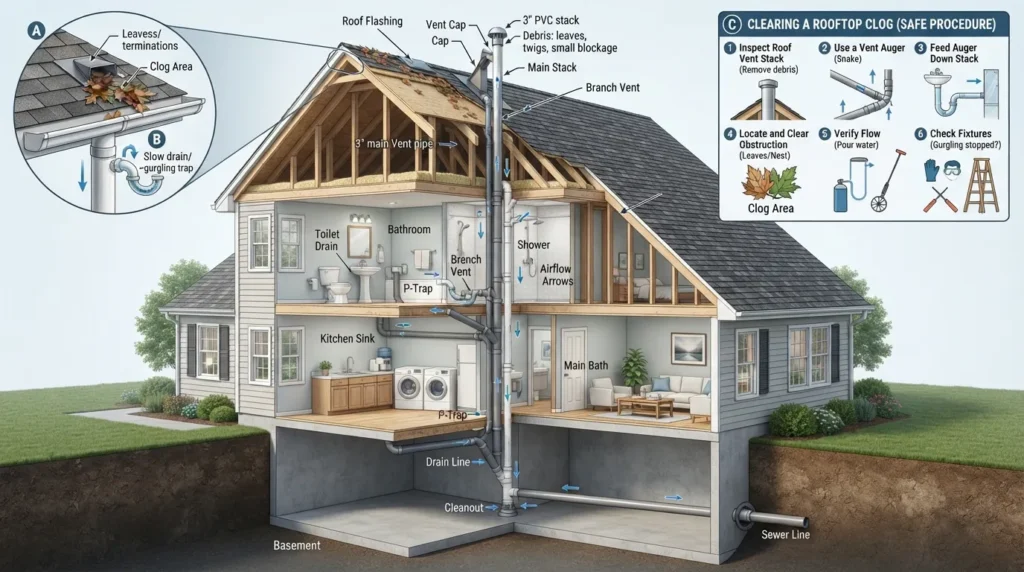
At the same time: the plumbing vent system connects with the drainage network to help manage pressure changes and protect trap seals while wastewater moves through the pipes.
1. Water leaves the fixture
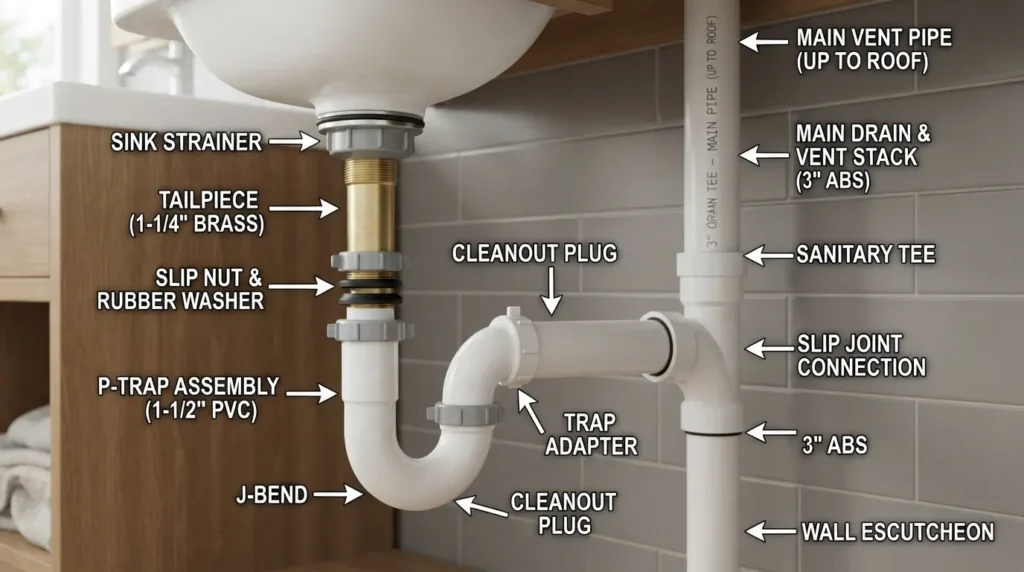
When you open a sink drain, take a shower, flush a toilet, or run an appliance that discharges wastewater, that water enters the fixture’s drainage connection.
Sinks, tubs, and many other fixtures normally drain through a trap arrangement. A toilet is slightly different because its trapway is built into the toilet itself.
2. The water passes through a trap or trapway
The curved trap under a sink is not there just to change the direction of the pipe. It is designed to retain a small amount of water after the fixture drains.
That retained water creates a trap seal, forming a barrier between the room and the sanitary drainage system.
Wastewater can pass through the trap when the fixture is used, while the remaining water helps prevent sewer gases from freely entering the living space.
3. Water enters a branch drain
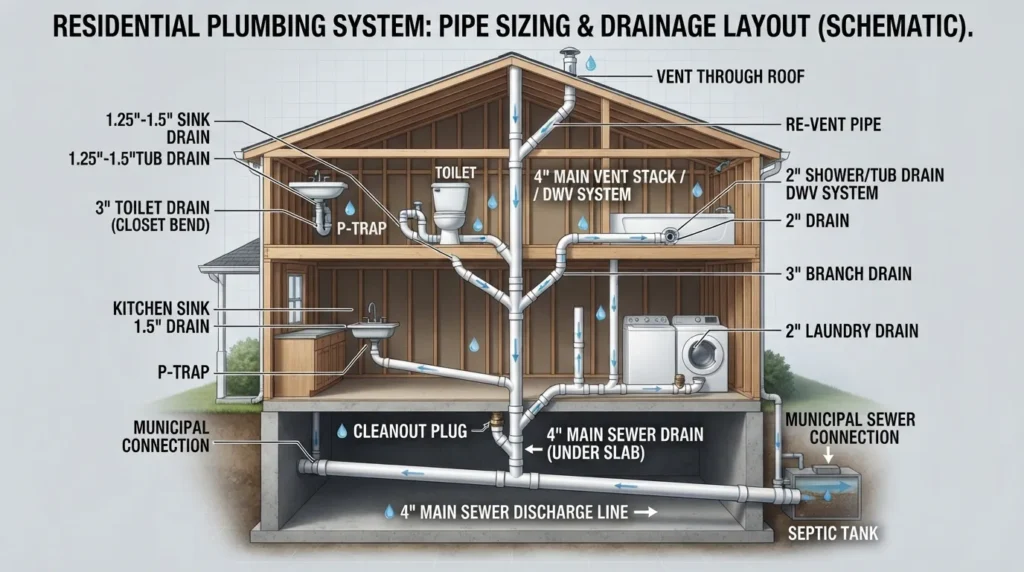
After passing the trap, wastewater travels into branch piping. Several fixtures may eventually connect to larger drainage piping as the water continues through the building.
This is where slope becomes important. Horizontal drainage piping needs a workable grade so gravity can continue moving wastewater toward the next part of the system.
4. Larger drains combine the flow
As smaller fixture and branch drains connect with larger piping, wastewater from different parts of the home moves toward the building drain.
The exact pipe arrangement varies from one home to another, so you should think of this as a flow path rather than assume every house uses the exact same layout.
5. The building drain carries wastewater out
Eventually, the drainage system carries wastewater beyond the occupied portion of the home toward the property’s sanitary sewer connection or septic system.
That is the full journey: collection, controlled flow, larger combined drainage, and final discharge.
What Do Plumbing Vents Actually Do?
Vents are one of the most misunderstood parts of a drainage system.
A vent does not normally act like a fan that pushes wastewater through the pipe. Instead, the vent system allows air to interact with the drainage network as wastewater moves through it.
This matters because moving water changes pressure conditions inside the piping. Proper venting helps the drainage system function without unnecessarily disturbing the water seals that protect individual fixtures.
Important: If a drain gurgles, drains slowly, or produces an odor, do not automatically assume the vent is the problem. Restrictions, trap issues, damaged piping, and other drainage faults can create overlapping symptoms.
Indoor Drainage vs. Yard and Stormwater Drainage
This distinction is especially important because a search for “drainage working” can refer to either one.
Sanitary / Household Drainage
Collects: Wastewater from sinks, showers, tubs, toilets, and connected appliances.
Typical components: Fixture drains, traps, branch drains, vents, larger drain piping, building drain, sewer or septic connection.
Main purpose: Move wastewater safely away from the home.
Yard / Stormwater Drainage
Collects: Rainfall, surface runoff, or groundwater.
Typical components: Grading, gutters, downspouts, catch basins, channels, French drains, perforated pipe, gravel, and sometimes pumps.
Main purpose: Keep unwanted water from pooling around structures or problem areas.
If you want a broader breakdown of the parts, types, common problems, and maintenance considerations for residential systems, see our complete guide to home drainage systems.
How Does Yard Drainage Work?
Outdoor drainage follows the same basic idea—collect water and give it a better route—but the components are different.
Surface drainage
Surface drainage uses the shape and slope of the ground, paved areas, channels, or catch basins to move rainwater away from places where it would otherwise collect.
Instead of allowing water to sit beside a foundation, on a patio, or in a low section of a yard, the system guides that runoff toward a more suitable drainage path.
Subsurface drainage
Subsurface systems deal with water below or within the soil.
A French drain is a common example. Water moves through the surrounding gravel and enters perforated drainage pipe, which then provides a lower-resistance route toward an outlet or another part of the drainage design.
Visual explanation: How a French drain works
This video is useful if you want to visualize how water moves through gravel and into a subsurface drainage path.
Does Every Drain Work Only by Gravity?
No.
Gravity is the main driving force in many household and outdoor drainage systems, but there are situations where water cannot reach its intended destination by gravity alone.
Depending on the system, a pump may be used to lift or move water to a point where it can continue toward the proper discharge location.
Sump pump systems are a familiar outdoor or below-grade example. Certain wastewater installations can also require pumping when fixtures are located below the elevation needed for normal gravity drainage.
The key principle stays the same: water needs a complete route from collection point to discharge point. Gravity may provide that route naturally, or the system may need mechanical assistance.
How Can You Tell if Drainage Is Working Properly?
You usually do not need to see inside the pipe to know whether the system is behaving normally. The pattern of symptoms gives you useful clues.
Signs the System Appears to Be Working
- Water clears from fixtures at a normal, consistent rate.
- Using one fixture does not repeatedly cause another fixture to back up.
- You are not hearing persistent gurgling from multiple drains.
- You are not noticing recurring sewer-type odors from fixtures.
- Wastewater is not returning through lower drains.
- Outdoor drainage does not leave persistent unwanted pooling in the same problem area after routine rainfall conditions.
Signs Something May Be Wrong
- Slow drainage that keeps returning.
- Water backing up into another fixture.
- Several fixtures becoming slow at the same time.
- Repeated gurgling or bubbling.
- Persistent sewer-type odors.
- Frequent clogging after temporary fixes.
- Standing water or repeated pooling around the property.
One symptom does not always identify the exact cause. What matters is the pattern.
A Simple Way to Locate the Likely Drainage Problem
Only one sink or shower is slow
The restriction may be close to that fixture, its trap, or the nearby branch connection.
Two nearby fixtures are affected
A shared branch drain becomes more likely than two completely separate fixture problems.
Several fixtures across the home are slow or backing up
The problem may be deeper in a larger shared drain or main drainage path.
A lower fixture backs up when another fixture is used
That can indicate wastewater is meeting resistance farther downstream instead of leaving the home normally.
Only the yard is holding water after rain
Start by thinking about outdoor drainage: grading, catch basins, downspouts, French drains, blocked outlets, or soil conditions rather than automatically assuming an indoor plumbing clog.
This type of symptom mapping is useful, but it is not a substitute for inspecting the actual system when the cause is unclear.
Why Does a Drainage System Stop Working?
A drainage failure is not always “just a clog.” Several different problems can interrupt the water journey.
1. Buildup or blockage
Hair, soap residue, grease, food debris, foreign objects, excessive paper products, and other material can reduce the open space inside a drain.
In larger underground lines, root intrusion or accumulated debris can also interfere with flow.
2. Poor or disrupted flow path
Drainage depends on a continuous path. If piping is damaged, displaced, sagging, or otherwise unable to move wastewater as intended, the system may drain poorly even when there is no simple removable clog.
3. Trap problems
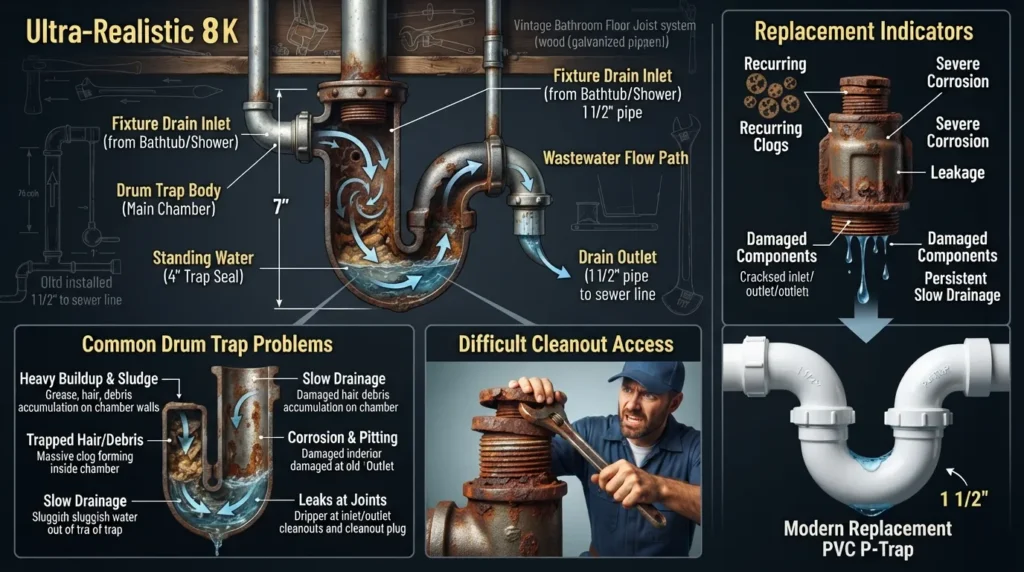
A trap can become blocked, leak, or lose its protective water seal under certain conditions. That may create drainage or odor symptoms that need to be diagnosed rather than repeatedly covered up.
4. Venting or pressure-related issues
Because the drainage and vent systems work together, faults affecting the venting arrangement can sometimes contribute to gurgling, trap-seal problems, or abnormal drainage behavior.
5. Outdoor drainage blockage or poor routing
Catch basins, drain inlets, downspout outlets, French drains, and other yard-drainage components can stop performing properly if water cannot enter the system, move through it, or reach the intended outlet.
If a clog or recurring restriction appears to be the cause, professional drain cleaning and diagnosis can help determine whether the problem is local to one fixture or farther down the drainage system.
My Yard Drainage Is Not Working. What Should I Check?
If rainwater keeps collecting in the same area, start with the visible parts of the system before assuming the entire drainage design has failed.
- Check whether gutters and downspouts are overflowing or blocked.
- Look for debris covering catch basins or surface drain openings.
- See whether a visible discharge outlet is blocked.
- Notice whether water is being directed toward the foundation rather than away from it.
- Check whether the problem happens only during unusually intense rainfall or during ordinary rain as well.
- Look for repeated settlement, erosion, or low spots where water naturally collects.
Use caution before digging: Underground utilities, buried piping, drainage easements, neighboring properties, and local discharge rules can affect what is safe or appropriate. A drainage fix should move water to a suitable location, not simply transfer the problem somewhere else.
What Drainage Means for a Miami Home
In Miami, the word “drainage” can describe two very different homeowner problems:
- Indoor plumbing drainage: A sink, shower, toilet, branch drain, or larger sanitary drain is slow, clogged, backing up, or producing unusual symptoms.
- Outdoor drainage: Rainwater is collecting in the yard, around paved areas, or near the structure instead of moving through the intended stormwater or property-drainage path.
Heavy rain can make outdoor drainage problems much more noticeable, while an indoor sanitary drain problem may appear even when it has not rained at all.
That is why the first question should not simply be “Is my drainage bad?” It should be:
Which water is failing to move: household wastewater or rainwater?
Once you identify that, the troubleshooting path becomes much clearer.
Can Poor Drainage Become a Health or Sanitation Problem?
It can, depending on the type of drainage failure.
A sanitary sewer backup can bring contaminated wastewater into areas where people should not be exposed to it. Persistent sewer-type odors may also indicate a trap, drain, venting, or sewer-related problem that deserves investigation.
Outdoor standing water can create its own sanitation and property concerns, especially when water remains for long periods instead of draining away normally.
Instead of trying to diagnose a specific disease from a drainage symptom, focus on the underlying problem: where the water is coming from, why it is not moving, and whether contaminated wastewater is involved.
How Much Does Drainage Work Cost?
There is no useful single price for “drainage work” because that phrase can describe completely different jobs.
For example, these are not comparable projects:
- Clearing a local fixture clog.
- Cleaning a larger drain line.
- Inspecting an underground pipe for damage.
- Repairing or replacing damaged drainage piping.
- Correcting an outdoor grading problem.
- Installing or repairing a catch basin or French drain.
- Adding a pump-assisted drainage solution.
The actual cost depends on the cause, location, accessibility, length of the affected system, type of repair, materials, excavation requirements, and whether additional diagnosis is needed.
A good estimate starts with identifying which part of the drainage path has failed instead of pricing the symptom alone.
The Most Useful Way to Think About Any Drainage Problem
Instead of memorizing dozens of plumbing parts, ask five questions:
- Where does the water enter the system?
- What path is it supposed to follow?
- What makes it move—gravity, slope, a pump, or a combination?
- Where should that water ultimately discharge?
- At what point is the normal flow being interrupted?
Those questions work whether you are looking at a slow sink, a backed-up shower, a main drain problem, a catch basin, or a French drain.
Drainage Working FAQs
How does drainage work?
Drainage works by collecting water and giving it a controlled route toward a suitable discharge point. Household wastewater normally moves through sloped drain piping by gravity, while traps protect fixtures from sewer gases and vents help the system manage air-pressure changes. Outdoor drainage uses grading, channels, catch basins, subsurface drains, or pumps to move rainwater and groundwater away from problem areas.
What are the main signs of poor drainage?
Common warning signs include slow drains, repeated clogs, gurgling, sewer-type odors, water backing up into another fixture, several fixtures becoming slow together, or persistent outdoor pooling where water should normally drain away.
How can I tell if my drainage system is working?
Look at both speed and interaction between fixtures. Water should clear consistently without repeated backup, strong odors, persistent gurgling, or one fixture causing wastewater to rise in another. Outdoor systems should direct water through their intended path rather than repeatedly leaving unwanted standing water.
Does a drain need air to work?
Household sanitary drainage systems include venting because moving wastewater affects pressure inside the piping. Vents help the system manage those pressure changes and protect trap seals. That does not mean every slow drain is caused by a blocked vent; physical restrictions and other drainage defects can create similar symptoms.
Why does my drain gurgle?
Gurgling usually means air and water are interacting abnormally somewhere in the drainage path. A restriction, developing clog, trap issue, or venting-related problem can be involved, so the surrounding symptoms matter.
Why is more than one drain slow at the same time?
When multiple fixtures are affected together, the problem may be located in piping shared by those fixtures rather than at each individual drain opening. The more fixtures involved, the more important it becomes to consider a deeper branch or main drainage restriction.
How much does it cost to fix drainage?
It depends entirely on what has failed. A local clog, damaged underground sewer line, yard-grading correction, French drain installation, and pump-assisted drainage system are different projects with different labor and material requirements. Diagnosis should come before a meaningful estimate.
What should I do if my yard drainage is not working?
Check visible inlets, gutters, downspouts, catch basins, discharge points, low areas, and obvious debris first. If water repeatedly collects near the structure or the source of the problem is unclear, the property may need a more complete drainage assessment rather than a temporary surface fix.
Final Takeaway
The simplest way to understand drainage is to stop thinking of a drain as one hole in a sink or one grate in a yard.
A drainage system is a complete water pathway.
Inside your home, wastewater travels from fixtures through traps, branch piping, larger drains, and eventually to the sewer or septic system. Gravity and slope provide the main flow, while venting helps the sanitary drainage system operate under proper pressure conditions and protect trap seals.
Outside, rainwater and groundwater may move across graded surfaces, through catch basins, or into subsurface systems such as French drains before reaching an appropriate outlet.
When drainage stops working, the most useful question is not simply “What is clogged?” It is:
Where in the normal water journey has the flow been interrupted?
That distinction can help you decide whether you are dealing with a fixture problem, a shared branch restriction, a larger sewer-line issue, or a completely separate outdoor drainage problem.
Drainage Problem in Your Miami Home?
If one drain keeps clogging, several fixtures are slowing down together, or wastewater is backing up, the next step is to identify where the normal drainage path is being blocked or disrupted.
Our Miami plumbing team can help you determine whether the problem is local to one fixture or deeper in the system.