If several drains are slowing down, wastewater is backing up, or the same clog keeps returning after it has been cleared, the problem may be deeper than a sink or toilet drain. Your building sewer or sewer lateral is the larger wastewater line that carries discharge from the home toward the public sanitary sewer system.
Sewer line services can include diagnosing a recurring backup, clearing an obstruction, inspecting the pipe with a sewer camera, repairing a damaged section, rehabilitating a suitable pipe with a trenchless method, or replacing a failed sewer line. The right solution depends on what is actually wrong with the pipe—not simply on how severe the backup looks from inside your home.
At EZ Plumbing, our goal is to help you separate a temporary drainage problem from a structural sewer problem before a repair or replacement decision is made. If you need broader plumbing help beyond the sewer system, you can also visit our local Miami plumbing team page.
Dealing with an active sewer backup?
Stop running water where possible and get the system evaluated before additional wastewater enters the affected line.
Is It a Drain Clog or a Main Sewer Line Problem?
This is the first decision that matters. A single slow sink does not automatically mean you need main sewer line repair. The pattern of affected fixtures can help narrow down where the problem may be.
One Fixture Is Affected
A slow sink, shower, or tub may point to a localized fixture drain, trap, or nearby branch-line blockage rather than the building sewer.
Several Fixtures Are Affected
When toilets, showers, tubs, or floor drains begin backing up together, the restriction may be farther downstream in a shared drain or main sewer line.
The Problem Keeps Returning
A clog that returns after clearing deserves further diagnosis because roots, pipe damage, offsets, heavy buildup, or a low section of pipe may be contributing to the recurrence.
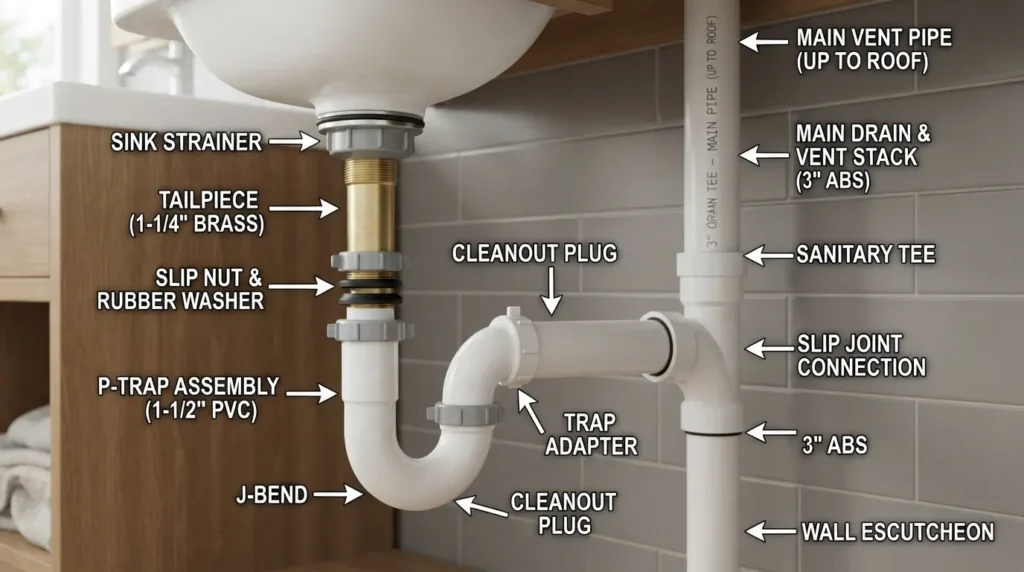
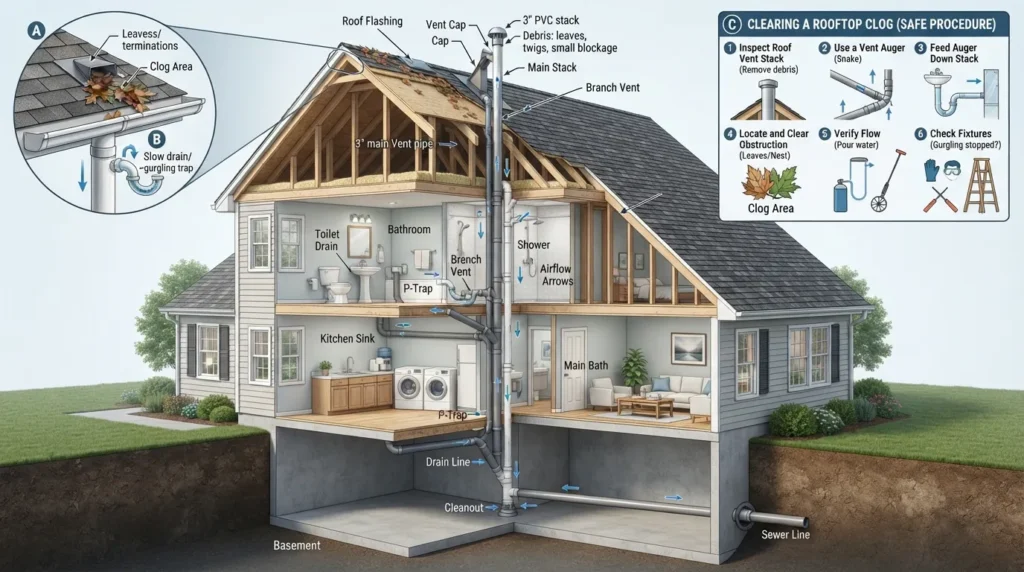
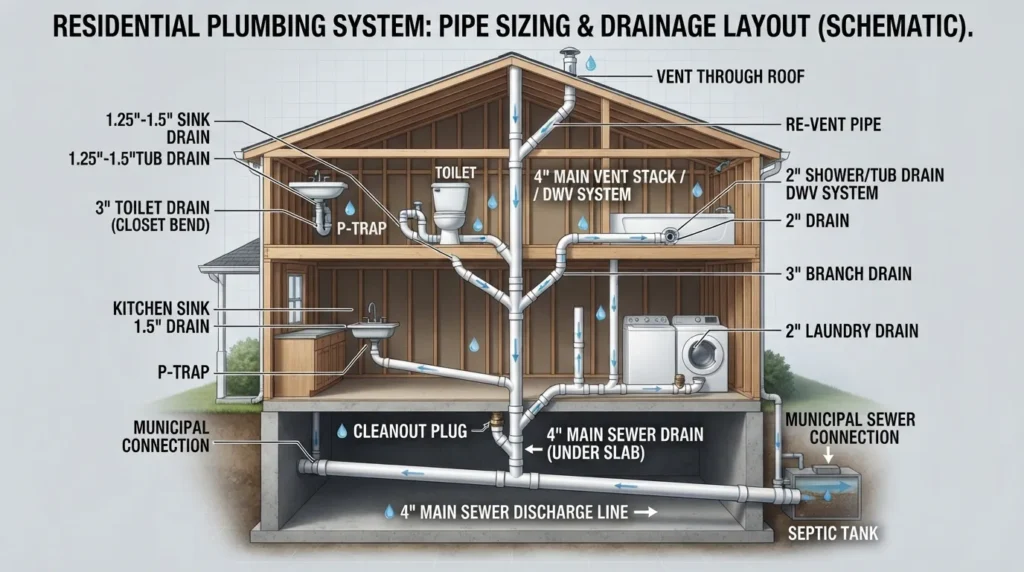
If you want to understand the entire path from a fixture drain to the building sewer, our guide to how a home drainage system works explains the system in more detail.
Common Signs You May Need Sewer Line Service
No single symptom proves that an underground sewer pipe is broken. Look at the pattern and persistence of the problem rather than diagnosing the line from one sign alone.
- Multiple slow drains: several fixtures lose drainage performance at roughly the same time.
- Wastewater backing up: sewage or dirty water rises through a tub, shower, floor drain, or toilet.
- Recurring blockages: flow improves after clearing but the same problem repeatedly returns.
- Gurgling fixtures: toilets or drains make unusual sounds when other fixtures discharge.
- Sewer odors: persistent sewage odors may justify checking traps, drainage piping, vents, or the sewer line depending on where the odor appears.
- Suspected root intrusion: roots can enter vulnerable joints or damaged sections of buried sewer piping.
- Visible pipe defects on camera: cracks, offsets, corrosion, heavy scale, a sagging section, or a collapse can change the job from cleaning to repair.
EZ Plumbing’s drain-service information likewise distinguishes localized clogs from situations where several fixtures or recurring backups can indicate a deeper main-line problem.
What Sewer Line Services Can Include
Sewer Line Diagnosis
Good sewer work starts with diagnosis. The plumber should consider which fixtures are affected, whether the issue is constant or intermittent, previous clog history, available cleanouts, and what happens when water is used throughout the property.
Sewer Camera Inspection
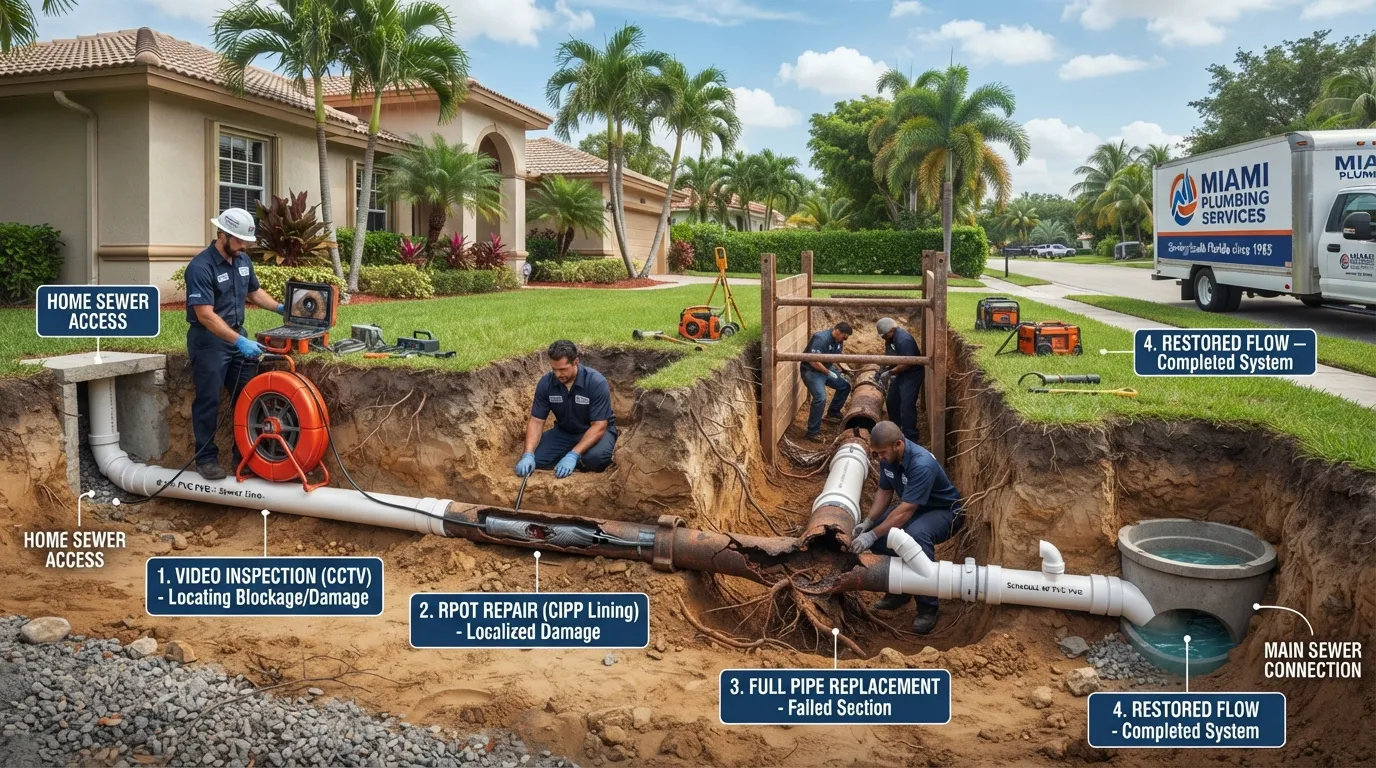
A sewer camera can provide a direct view inside accessible piping and help identify conditions such as root intrusion, displaced joints, cracks, corrosion, heavy deposits, low sections, or an obstruction that cannot be properly understood from the surface. Camera findings can also help determine whether further cleaning, repair, or replacement should be considered.
Main Sewer Line Cleaning
If the pipe itself is serviceable and the primary problem is an obstruction or buildup, cleaning may be the correct first step. Depending on the blockage and pipe condition, methods can include mechanical clearing or hydro jetting. If your problem is primarily a clog rather than damaged pipe, our professional drain cleaning service explains those options in more detail.
Main Sewer Line Repair
Repair may make sense when damage is limited enough that restoring a section or rehabilitating the existing pipe is practical. The condition, alignment, accessibility, material, and remaining structural integrity of the line all influence what methods are suitable.
Residential Sewer Line Replacement
Sewer replacement becomes a stronger consideration when damage is extensive, the line has collapsed, alignment or slope cannot be corrected through a simple repair, or repeated failures make continued spot repairs impractical.
Cleaning vs. Repair vs. Replacement: Which One Do You Actually Need?
A practical decision framework
Cleaning
Best considered when an obstruction or buildup is restricting an otherwise serviceable pipe.
Repair
May fit when a defined defect can be corrected without replacing the entire line.
Replacement
May be appropriate when deterioration, collapse, alignment problems, or widespread damage make a limited repair a poor long-term choice.
The most important point is that a backup does not automatically mean the sewer line needs replacement. Likewise, repeatedly clearing a structurally damaged line may only address the symptom. Diagnosis should come before the most expensive solution.
How a Sewer Camera Changes the Repair Decision
A sewer camera is most useful when it answers a specific question. For example: Is there still an obstruction? Are roots entering through a joint? Is the pipe cracked? Has one section shifted? Is there a low point where wastewater repeatedly collects? Is the line open but internally deteriorated?
A camera does not replace every other diagnostic step, and a video image must be interpreted in context. But when a recurring backup cannot be explained by a simple localized clog, visual inspection can reduce unnecessary guesswork.
Ask this before approving major sewer work
“What did you find in the line, where is the problem, and why does that finding support cleaning, repair, or replacement?” A clear diagnosis should connect the visible condition to the recommended work.
Trenchless Sewer Repair vs. Traditional Excavation
Not every broken sewer line has to be repaired in the same way. The existing pipe condition and property layout help determine whether a trenchless option or open excavation is more appropriate.
CIPP Pipe Lining
Cured-in-place pipe lining places a resin-based liner inside a suitable existing pipe and cures it to form a new internal lining. It can reduce the need for continuous trench excavation when the host pipe and job conditions make lining appropriate. EZ Plumbing currently lists CIPP among its sewer repair options.
Pipe Bursting
Pipe bursting replaces an existing line by breaking or displacing the old pipe while pulling a replacement pipe through the established route. Access points are still required, and suitability depends on the site and existing utilities. EZ Plumbing also lists pipe bursting as a sewer replacement method.
Traditional Excavation
Open-trench work provides direct access to the pipe and may still be needed when alignment, slope, collapse, access, surrounding utilities, or other site conditions make a trenchless approach unsuitable.
The least disruptive method is not automatically the best method. A repair should fit the actual defect and site conditions rather than forcing every property into the same technique.
When Is Full Sewer Line Replacement More Reasonable?
Residential sewer line replacement may make more sense than another temporary repair when inspection reveals a problem affecting a substantial portion of the line or an issue that a localized repair cannot correct.
Situations that can push the decision toward replacement include:
- a collapsed or severely deformed pipe;
- widespread deterioration rather than one isolated defect;
- multiple failed sections along the same run;
- alignment or grade problems that prevent reliable drainage;
- a repair history showing repeated failure in different areas;
- conditions that make the existing pipe unsuitable for a particular rehabilitation method.
The decision should be based on what will restore reliable wastewater flow and structural function—not simply on whether a newer repair technology is available.
What Determines Sewer Line Repair or Replacement Cost?
There is no responsible single price for every main sewer line repair. Two homes with similar symptoms can require very different work once the line is located and inspected.
The estimate can change based on:
- the exact location of the defect;
- how much pipe is affected;
- pipe depth and accessibility;
- existing pipe material and condition;
- whether the problem is a clog, crack, offset, collapse, root intrusion, deterioration, or grade issue;
- the repair or replacement method selected;
- access beneath a slab, driveway, landscaping, or other finished surface;
- nearby utilities or site constraints;
- permit and inspection requirements;
- restoration needed after excavation or access work.
A useful estimate should explain what was found, what work is proposed, and why that method fits the condition of your line. Avoid choosing between repair methods from an internet price alone.
Miami-Dade Sewer Line Permits and Local Requirements
Permit requirements depend on the scope and location of the work. Miami-Dade County specifically provides a plumbing-permit process for sanitary line replacement and identifies sanitary line replacement under plumbing permit Category 0025. Properties inside a municipality can also be subject to that municipality’s applicable permitting process.
This is one reason a replacement project should be planned around the actual property and jurisdiction rather than treated as a generic digging job.
Important
Permit, inspection, pipe-layout, and connection requirements can vary with the project. Do not use general online plumbing advice as a substitute for the requirements that apply to your specific property.
Where Does Your Private Sewer Line End?
It helps to understand the basic wastewater path:
Fixtures → Branch Drains → Building Drain → Building Sewer / Lateral → Public Sewer System
A private sanitary sewer lateral connects private plumbing to the public sewer network. Exactly which portion is privately maintained and how a connection is configured should be verified for the property rather than assumed from where the street or sidewalk appears to be. Miami-Dade also provides a utility-information process for locating an existing sewer lateral.
Can two houses share the same sewer line?
Shared arrangements can exist in certain property configurations, but you should never assume two separate homes can simply be tied into one private sewer service. Miami-Dade’s current service-installation guidance says each building on a parcel generally connects individually to the public sewer system and sets additional requirements for certain shared-service situations such as duplexes.
Sewer Line Depth, Slope, Angles & Gravity: Common Questions Explained
How deep does a sewage line need to be?
There is no single depth that applies to every residential sewer line. Depth depends on factors such as the elevation of the building drain, destination connection, required protection and cover, route, property grade, other utilities, and applicable local requirements. The correct depth should be established from the actual site and approved installation requirements rather than copied from a general internet answer.
How do sewer lines go uphill?
A normal gravity sewer relies on a downhill flow path. If wastewater must be moved from a lower elevation to a higher discharge point, the system generally needs a pumping or lift arrangement rather than expecting gravity to push sewage uphill.
Can a sewer pipe have too much slope?
Drainage piping should be installed at the grade required for its size and application. “Steeper must be better” is not a safe design rule. Correct sizing, uniform alignment, fittings, support, grade, and connection details all need to work together.
What is the correct slope for a 3-inch or 4-inch sewer pipe?
The required slope should be confirmed against the code and jurisdiction governing the project. Florida plumbing provisions specify minimum grades by drainage-pipe size, so an installer should use the currently applicable code rather than choosing a slope by guesswork. For an existing line, its actual route and elevations also matter when diagnosing a recurring drainage problem.
Can a sewer line have a 45-degree angle?
Changes in direction can be made with approved drainage fittings, but whether a particular 45-degree fitting or combination is appropriate depends on where it is being used, the direction of flow, access requirements, and applicable plumbing rules. A fitting is not correct merely because the pipe ends physically connect.
Can a sewer pipe run above ground?
Buried building sewers are typical, but plumbing and utility systems can have specialized exposed or above-grade sections when designed and protected for that application. For a residential sewer project, do not improvise an exposed waste line as a workaround for depth, slope, or excavation problems.
Why Sewer Lines Do Not Stay Clog-Free Forever
A sewer line is designed to move wastewater, but it is not immune to obstruction or structural deterioration. Problems can develop from materials sent down drains, grease and solids accumulating inside the pipe, roots entering vulnerable points, damaged joints, internal corrosion or scale, shifted piping, or a low section that repeatedly retains waste.
This is why prevention has two parts:
- Control what enters the drains. Avoid treating toilets and kitchen drains as garbage disposal routes for materials the drainage system is not designed to carry.
- Investigate recurring symptoms. If the same main-line blockage repeatedly returns, consider whether there is an underlying condition that cleaning alone does not correct.
Sewer Line vs. Water Line Replacement
A sewer line and a water service line perform opposite jobs. The water line brings potable water toward the building, while the sanitary sewer carries wastewater away.
That distinction matters when people search for sewer and water line replacement. A wet yard, pressure problem, unusual water bill, sewer odor, and wastewater backup do not all point to the same pipe. If both systems are suspected, each should be diagnosed separately so a water-service leak is not mistaken for a sewer failure—or vice versa.
What to Expect From a Well-Planned Sewer Service Visit
- Describe the symptom pattern. Identify which fixtures are affected, when the problem began, and whether it has happened before.
- Narrow down the location. Fixture behavior and available access points help determine whether the issue is local or farther downstream.
- Clear an obstruction when appropriate. If blockage is the immediate problem, flow may need to be restored before the pipe can be meaningfully evaluated.
- Inspect when deeper diagnosis is justified. Recurring or unexplained main-line issues may call for camera inspection.
- Connect the finding to the solution. Cleaning, repair, trenchless rehabilitation, or sewer replacement should follow from the condition found.
- Check local requirements. Replacement or significant alteration should account for applicable permits, inspections, and connection requirements.
- Verify operation after the work. The goal is not simply to finish the excavation or repair—it is to restore a functioning wastewater path.
A Helpful Look at How a Home Sewer Connects to the Public System
If you want a visual explanation of one type of house-sewer connection to a public sewer, the following educational video provides additional context. It is included for general understanding; the actual connection at your Miami property may be different.
The second video supplied during research focuses on drafting a sewer layout in AutoCAD rather than helping a homeowner diagnose or choose sewer service, so it has intentionally not been included here.
Frequently Asked Questions About Sewer Line Services
The Best Sewer Solution Starts With the Right Diagnosis
If you take one idea from this guide, make it this: do not start with “Which sewer repair should I buy?” Start with “What is actually happening inside my line?”
A localized clog, a root obstruction, a cracked section, a collapsed pipe, and a line with poor grade can create overlapping symptoms while requiring very different solutions. A useful sewer service process identifies the problem first and then explains whether cleaning, main sewer line repair, trenchless rehabilitation, or residential sewer line replacement is justified.
Need help deciding what your sewer line actually needs?
Tell EZ Plumbing what is happening—whether you have recurring clogs, several fixtures backing up, suspected root intrusion, or a sewer line that may need repair or replacement. The next step should be based on the condition of the system, not a one-size-fits-all recommendation.
Helpful Miami-Dade Sewer & Permit Resources
For homeowners who want to verify local requirements or understand the public sewer connection process, these official resources are useful starting points:
- Miami-Dade County Plumbing Permits — current County information on plumbing permits, including sanitary line replacement.
- Miami-Dade Utilities Information Request — includes requests related to locating an existing sewer lateral.
- Miami-Dade Water & Sewer Development Services — information related to sewer connections, laterals, and Water and Sewer Department development processes.