If several drains in your home are slowing down, toilets are gurgling, or wastewater is backing up, the problem may be deeper than a single clogged sink or shower. A blockage in the main sewer line can affect multiple fixtures at once and may require professional sewer drain cleaning rather than another round of plunging.
This guide helps you work through that decision without guessing. I will show you the warning signs to watch for, what professional cleaning actually involves, the difference between snaking and hydro jetting, when DIY makes sense, what affects sewer drain cleaning cost, and when cleaning alone may not solve the underlying problem.
Is the Problem in One Drain or the Main Sewer Line?
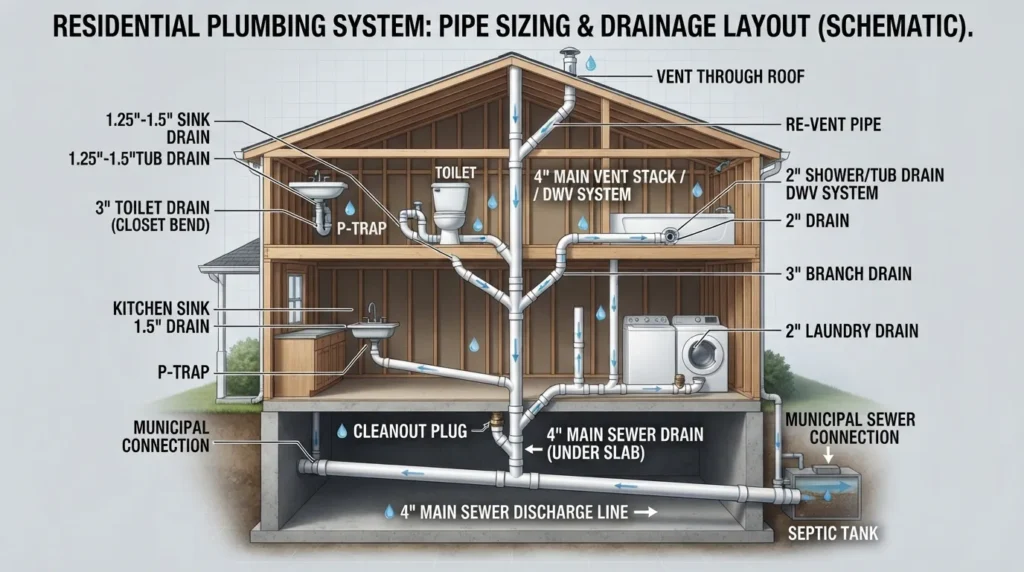
This is the first question I would answer before choosing any cleaning method. A clogged bathroom sink and a blocked sewer lateral are very different problems, even though both may initially look like “a slow drain.”
One fixture is slow
A single slow sink, shower, tub, or toilet may point to a localized blockage in that fixture or branch drain.
Several fixtures are slow
When multiple fixtures begin draining poorly around the same time, the restriction may be farther downstream in a shared line or the main sewer line.
Water backs up elsewhere
If using one fixture causes water or sewage to appear in another low fixture, such as a shower or floor drain, treat that as a stronger warning of a shared drainage problem.
A sewer camera can help locate obstructions and reveal conditions such as roots, cracks, misaligned sections, grease buildup, leaks, or other problems inside the line without immediately excavating the property.
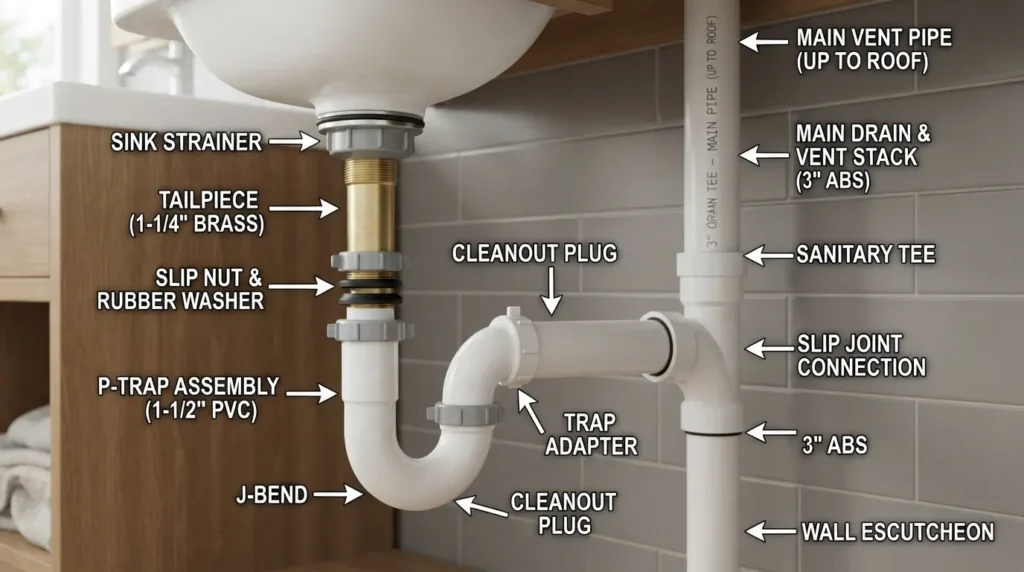
If you want a clearer picture of how fixture drains, branch lines, and the main drain connect, see our guide to how your home drainage system works.
Common Signs You May Need Sewer Drain Cleaning
A sewer problem does not always begin with an obvious sewage overflow. Smaller warning signs can appear first.
- Several sinks, tubs, or showers draining slowly
- Recurring clogs that return after being cleared
- Gurgling sounds from toilets or drains
- Water rising in a shower or floor drain when another fixture is used
- Unpleasant sewage odors around drains
- Toilets repeatedly struggling to flush normally
- Wastewater backing up into low fixtures
- A known history of roots or heavy buildup inside the sewer lateral
These symptoms do not prove that the main sewer is clogged, but the pattern matters. The more fixtures involved, the more important it becomes to diagnose the shared drainage system instead of treating each fixture separately.
What Causes Residential Sewer Lines to Clog?
There is no single cause of every sewer blockage. The right cleaning method depends heavily on what is actually restricting the pipe.
Fats, Oils and Grease
Grease can enter a kitchen drain as a liquid and later cool and accumulate inside the plumbing system. Miami-Dade County specifically warns residents that fats, oils and grease can damage sewage pipes and contribute to plumbing repairs and sewage backups.
That issue is locally relevant. In a November 2025 announcement, Miami-Dade Water and Sewer Department reported responding to more than 600 grease- and debris-related clogs during the preceding year, including blockages involving improperly flushed items such as wet wipes.
Wipes and Other Improperly Flushed Material
Items that do not break down like normal toilet paper can collect inside a drain or become caught on an existing obstruction. Miami-Dade specifically identifies wet wipes as material that should not be flushed.
Tree Roots
Roots can enter vulnerable sewer lines through openings, joints, cracks, or damaged areas. Once inside, they may catch debris and gradually reduce the usable diameter of the line. A camera inspection can help determine whether roots are present and whether cleaning alone is enough.
Scale, Sludge and Long-Term Buildup
A line can sometimes remain partially open while buildup accumulates around the pipe wall. That distinction matters because creating a passage through a clog is not always the same as thoroughly cleaning the inside of the pipe.
A Damaged or Misaligned Sewer Pipe
Sometimes the blockage is only a symptom. Cracks, displaced joints, corrosion, collapsed sections, or other structural defects may repeatedly catch waste or reduce flow. A sewer camera is particularly useful when a clog keeps returning despite previous cleaning.
Sewer Clearing vs. Sewer Cleaning: They Are Not Always the Same
Clearing a blockage means restoring a pathway so wastewater can move through the line again.
Cleaning the line may involve removing more of the grease, sludge, scale, roots, or debris attached to the pipe interior.
The best approach depends on the obstruction, the condition of the pipe, access to the line, and whether the problem is recurring.
This is one reason a drain that starts flowing after snaking can still clog again later. If substantial buildup or a structural defect remains, restored flow does not necessarily mean the underlying cause has disappeared.
How Is a Sewer Drain Professionally Cleaned?
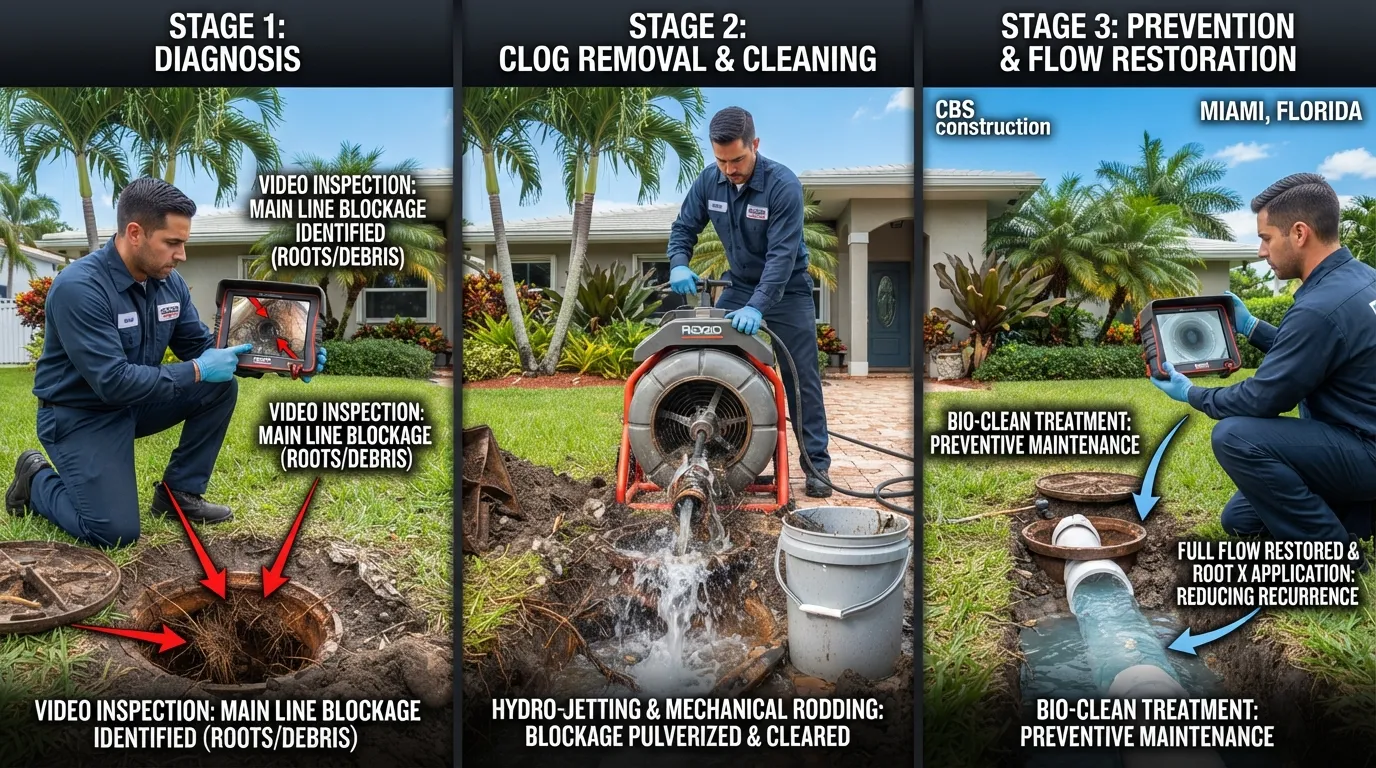
A good sewer cleaning process should begin with diagnosis rather than automatically using the same tool on every blockage.
- Identify the symptom pattern. Determine whether the problem affects one fixture, several branch drains, or the main sewer line.
- Locate suitable access. A sewer cleanout may provide access to the main line without dismantling indoor plumbing.
- Assess the blockage. The plumber may use the symptoms, cable feedback, or a sewer camera depending on the situation.
- Select the cleaning method. Mechanical snaking, root cutting, or hydro jetting may be appropriate depending on the obstruction and pipe condition.
- Restore and verify flow. After cleaning, the line should be checked to confirm that wastewater is moving normally.
- Investigate recurring problems. If the same clog repeatedly returns, a camera inspection may be needed to look for roots, damage, heavy buildup, or another persistent cause.
Professional drain-cleaning companies commonly combine mechanical equipment, high-pressure water cleaning, and camera inspection depending on the problem rather than relying on one universal method.
Snaking vs. Hydro Jetting vs. Camera Inspection
Mechanical Snaking
Often useful for: localized clogs and physical obstructions that can be opened or cut with a cable.
Main limitation: opening a path may not remove all material coating the pipe wall.
Hydro Jetting
Often useful for: substantial grease, sludge, buildup, and some root or debris conditions when the pipe is suitable.
Main consideration: pipe condition should be evaluated before high-pressure cleaning is selected.
Camera Inspection
Often useful for: recurring clogs, suspected roots, suspected pipe damage, or situations where the cause is uncertain.
Main purpose: diagnosis rather than physically clearing the obstruction.
Hydro jetting uses high-pressure water to clean the pipe interior and is commonly used for grease, sludge, roots, and other buildup, while mechanical snaking uses a cable and cutting or clearing head.
Is Hydro Jetting Better Than Snaking?
Neither method is automatically “better.” The better choice is the one that matches the blockage and the condition of your sewer pipe.
Snaking can be appropriate when the immediate goal is to break through or remove a localized obstruction. Hydro jetting can provide more thorough wall cleaning when grease, sludge, scale, or similar buildup is a major part of the problem. If the sewer line may be damaged, heavily deteriorated, or structurally compromised, inspection should come before assuming that high-pressure cleaning is appropriate.
A useful decision rule
If a clog keeps returning, do not focus only on finding a stronger cleaning tool. First ask why the same section keeps becoming restricted. Persistent roots, damaged pipe, misalignment, or heavy wall buildup may require a different solution.
When Should a Sewer Camera Be Used?
You do not necessarily need a camera for every slow drain, but it becomes much more useful when the problem is difficult to explain or keeps returning.
Consider camera inspection when:
- the same sewer clog returns after previous cleaning;
- several fixtures are affected repeatedly;
- tree-root intrusion is suspected;
- you need to distinguish buildup from physical pipe damage;
- a plumber needs to confirm whether a cleaning method is appropriate;
- there may be cracks, misalignment, corrosion, or another structural defect.
A sewer inspection camera can reveal root intrusion, cracks, punctures, corrosion, misaligned sections, grease buildup, leaks, and obstructions inside the line.
Can You Clean a Main Sewer Line Yourself?
It depends on what you mean by “clean” and how confidently you understand the problem.
Rental drain-cleaning machines are available for main sewer lines. For example, Home Depot lists rental machines designed for larger drain and sewer lines.
But equipment availability is not the same as saying every sewer blockage is a good DIY project. Main-line machines are powerful, and you may still need to identify the correct access point, understand where the line runs, select the proper cable or head, and recognize when the obstruction may actually be caused by pipe damage.
I would be especially cautious about DIY work when:
- raw sewage is already backing up into the home;
- multiple fixtures are affected;
- you cannot identify the sewer cleanout;
- the line has a history of root intrusion or structural damage;
- previous attempts have not solved the problem;
- you are considering professional-grade hydro jetting equipment.
Professional hydro jetting requires specialized high-pressure equipment and is not the same thing as using an ordinary pressure washer or garden-hose attachment.
When Should You Stop DIY and Call a Plumber?
You may be dealing with a smaller local clog if:
- only one fixture is affected;
- there is no sewage backup;
- other fixtures drain normally;
- the problem has not been recurring throughout the home.
Professional diagnosis becomes more important if:
- multiple drains are backing up;
- sewage is entering the home;
- the clog repeatedly returns;
- you hear widespread gurgling;
- roots or damaged sewer pipe are suspected.
If the issue appears to involve your home’s private-side sewer line, Miami-Dade has stated that clogs or backups within private-side wastewater lines are the homeowner’s responsibility to repair.
For a public sewer emergency such as an overflowing manhole or a backed-up public sewer line, Miami-Dade Water and Sewer Department maintains a 24-hour emergency contact.
How Much Does Sewer Drain Cleaning Cost?
There is no responsible single price that applies to every sewer drain cleaning job. A simple accessible obstruction and a recurring main-line blockage involving roots or damaged piping are not the same scope of work.
Pricing can change based on factors such as:
- where the blockage is located;
- how severe or dense the obstruction is;
- whether suitable cleanout access exists;
- the length and configuration of the sewer line;
- whether snaking or hydro jetting is required;
- whether a sewer camera inspection is needed;
- whether cleaning reveals a damaged pipe that requires repair.
Even large national drain-cleaning companies describe pricing as dependent on the type of drain, clog, job size, required equipment, snaking or hydro jetting, and whether camera inspection is necessary rather than publishing one universal sewer-unclogging price.
Before approving sewer cleaning work, ask:
- What do you believe is causing the blockage?
- Are you clearing the clog or cleaning significant buildup from the line?
- Why is snaking, hydro jetting, or camera inspection being recommended?
- Could there be a structural problem?
- What work is included in the quoted scope?
How to Keep a Sewer Line Cleaner After Service
The best preventive strategy is usually not something you pour into the sewer every month. It is controlling what enters the drainage system in the first place.
Keep Fats, Oils and Grease Out of Drains
Miami-Dade recommends keeping fats, oils and grease out of the sewer system because they can accumulate and contribute to clogs and backups.
Do Not Treat a Toilet Like a Trash Can
Wet wipes and other unsuitable materials can contribute to sewer blockages. “Flushable” marketing should not be confused with knowing how a particular item behaves in your home’s plumbing and the public wastewater system. Miami-Dade specifically advises against flushing wipes.
Investigate Recurring Clogs Instead of Repeatedly Resetting Them
If the same sewer problem returns again and again, repeated clearing may only be addressing the symptom. A camera inspection can help determine whether roots, pipe damage, misalignment, grease, or another persistent obstruction is involved. :contentReference[oaicite:17]{index=17}
What Should You Do If Sewage Is Backing Up Right Now?
Treat an active sewage backup differently from an ordinary slow drain.Reduce water use inside the property so you are not intentionally sending more wastewater toward a blocked line. Avoid repeatedly flushing toilets or running appliances that discharge water. If multiple fixtures are backing up or wastewater is entering the home, arrange professional diagnosis rather than continuing to experiment with chemicals or repeated DIY attempts.
For local plumbing help, you can learn more about our professional drain cleaning service. You can also explore the broader Miami plumbing help available for homeowners when the issue extends beyond a simple clog.
Not Sure Whether You Have a Drain Clog or Main Sewer Problem?
If several fixtures are affected, the blockage keeps returning, or sewage is backing up, getting the line diagnosed can help you avoid treating the wrong problem.
Frequently Asked Questions About Sewer Drain Cleaning
How do you clean out a sewer drain?
A sewer drain is typically cleaned by first locating suitable access, identifying the probable obstruction, and then using the method appropriate for the problem. Mechanical snaking may break through or remove an obstruction, while hydro jetting can clean substantial buildup from the pipe interior. A camera may be used when the cause is uncertain or the clog keeps returning.
How much does it cost to unblock a sewage drain?
The cost depends on the blockage location, severity, access, cleaning method, pipe length, and whether inspection or repair is needed. An on-site diagnosis is more useful than assuming one universal price.
Is hydro jetting better than snaking?
Not in every situation. Snaking can be effective for breaking through localized obstructions. Hydro jetting is often selected when more thorough removal of grease, sludge, roots, or wall buildup is needed and the pipe condition is suitable.
How do professionals hydro jet a sewer line?
The line is accessed through an appropriate opening or cleanout, and specialized equipment sends high-pressure water through the sewer line to remove buildup. Pipe condition and the nature of the obstruction should be considered before jetting is selected. }
How much does it cost to hydro jet a drain line?
There is no single hydro-jetting price that fits every property. Severity, pipe length, location, accessibility, and the condition of the drainage system can all affect the scope and final cost.
What can I put in my sewer line to keep it clean?
Prevention is usually more about what you keep out of the sewer than what you add to it. Avoid sending fats, oils, grease, wipes, and inappropriate waste into the drainage system. Miami-Dade specifically warns about FOG and improperly flushed debris contributing to clogs.
Can you do hydro jetting yourself?
Professional hydro jetting is not a casual DIY cleaning method. It uses specialized high-pressure equipment, and pipe condition needs to be considered. Attempting high-pressure sewer cleaning without proper equipment or knowledge can create unnecessary risk.
What dissolves toilet paper clogs in a sewer line?
Ordinary toilet paper is designed to break apart in water, but a sewer blockage involving toilet paper may also contain wipes, grease, roots, or another obstruction. If the main sewer is blocked, adding more chemicals is not a substitute for identifying what is actually stopping the flow.
How much does Roto-Rooter charge to unclog a sewer line?
Roto-Rooter does not present one universal drain-cleaning price that applies to every job. Its own pricing information says cost varies according to factors including the drain, clog, job size, equipment, snaking, hydro jetting, and whether camera inspection is needed.
How long will hydro jetting last?
There is no fixed number of months or years that applies to every sewer line. How quickly another clog develops depends on the original cause, pipe condition, continued grease or debris entering the system, root growth, and whether a structural defect remains. Hydro jetting can clean substantial buildup, but it cannot permanently correct a broken or misaligned pipe.
The most useful way to approach sewer drain cleaning is to diagnose first and clean second. One slow fixture may be a local clog. Multiple slow drains, gurgling fixtures, recurring blockages, or sewage backup deserve closer attention because the restriction may be in a shared drain or main sewer line.
From there, the goal is not simply to choose the strongest tool. It is to choose the right response for the actual problem: mechanical clearing for certain obstructions, hydro jetting for appropriate buildup, camera inspection when the cause is uncertain, and pipe repair when cleaning cannot correct a structural defect.
For Miami homeowners, keeping grease and unsuitable flushed materials out of the drainage system is especially important, and recurring problems should be investigated rather than repeatedly reset. That approach gives you a better chance of solving the cause instead of temporarily reopening the line.
Related Sewer Drain Cleaning Resources
These third-party resources can help if you want to research local sewer guidance, professional cleaning methods, or DIY equipment options in more detail.