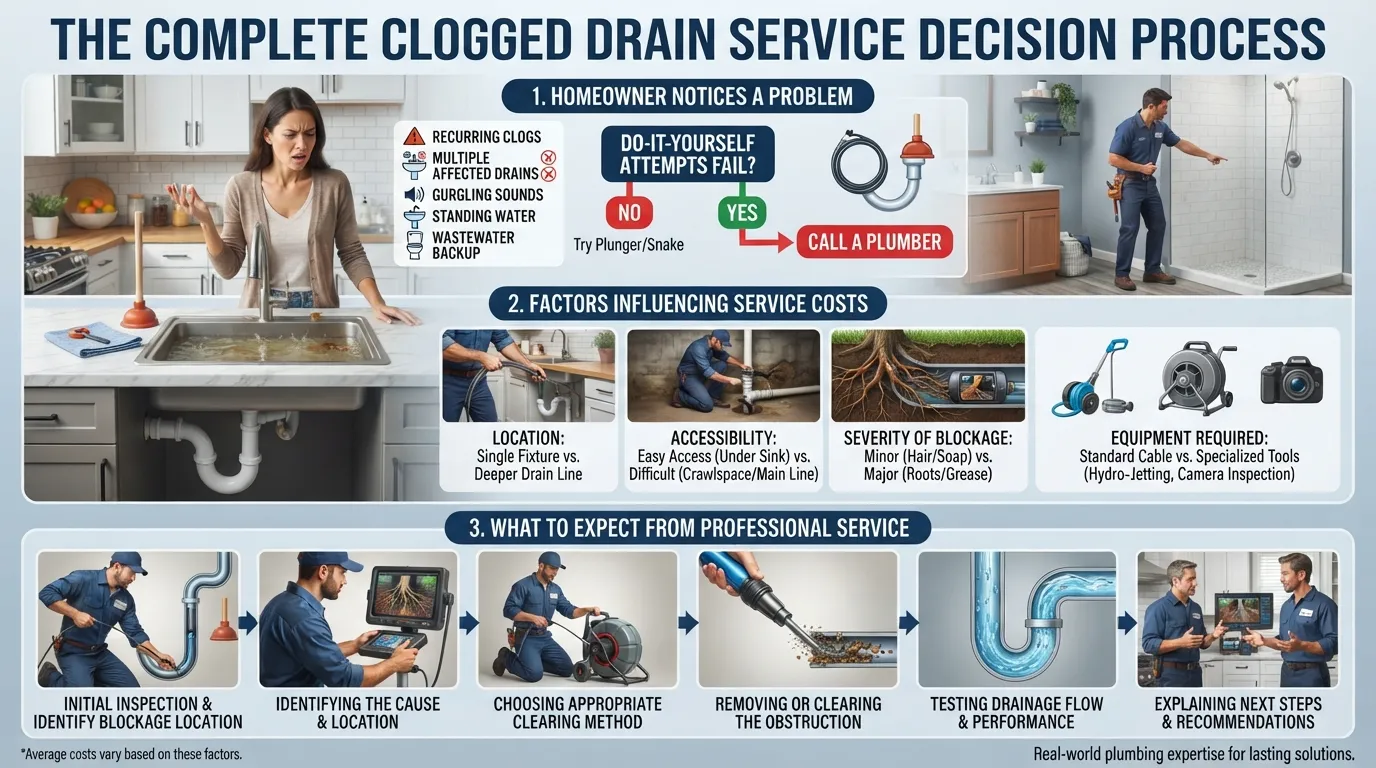
A clogged drain does not always mean you need an emergency plumber. If only one sink, tub, or shower is draining slowly, the blockage may be close to that fixture and a simple homeowner-level fix may be reasonable. If several drains are slow, one fixture backs up when another is used, or wastewater is coming back into the home, the problem may be farther down a shared drain or main sewer line and professional clogged drain service becomes much more important.
Do you need a clogged drain service?
If one fixture is affected, start with safe, simple troubleshooting. If multiple fixtures are affected, the clog keeps returning, you hear widespread gurgling, smell persistent sewer odors, or wastewater is backing up, stop treating it as an ordinary sink clog. A plumber may need to locate the restriction and determine whether drain snaking, deeper cleaning, camera inspection, or a pipe repair is actually appropriate.
The goal is not simply to make water disappear for the next hour. You want to understand where the problem is likely located, how urgent it is, and which solution matches the cause.
Where Is Your Clog Likely Located?
Before you pour anything into a drain or start taking plumbing apart, look at the pattern. How many fixtures are affected often tells you more than the word “clog.”
Only one fixture is slow
Think local first: the stopper, strainer, trap, fixture drain, or nearby branch may be restricted. Hair, soap residue, food debris, grease, or a foreign object are common possibilities.
Two nearby fixtures are slow
A shared branch drain becomes more suspicious. For example, a bathroom sink and nearby shower slowing at the same time can point farther downstream than either fixture alone.
Several drains are affected
A larger shared drain, building drain, or sewer-side restriction should be considered. Adding more water can make a backup worse.
Wastewater rises elsewhere
If flushing a toilet or draining a sink causes water to rise in another fixture, stop unnecessary water use. That cross-fixture reaction can indicate a downstream restriction that deserves prompt diagnosis.
This does not diagnose the clog by itself. Hair, grease, foreign objects, scale, tree roots, damaged piping, poor drainage conditions, venting problems, and other issues can create overlapping symptoms. The pattern simply helps you choose a smarter next step.
When Is a Clogged Drain an Emergency?
A slow bathroom sink usually gives you more time to think than sewage entering a shower. Treat the situation as urgent when the consequences of continuing to use the plumbing could affect sanitation or property.
Stop adding unnecessary water and get professional help if:
- Raw wastewater or sewage is backing up through a toilet, shower, tub, or floor drain.
- Several fixtures throughout the home suddenly stop draining normally.
- Water rises in one plumbing fixture when another is used.
- A clog returns repeatedly after being cleared.
- You suspect a main drain or sewer-line obstruction rather than a single-fixture clog.
- There is active overflow that could damage flooring, cabinets, walls, or belongings.
If the backup involves wastewater, keep people and pets away from the affected area and avoid repeatedly flushing toilets or running faucets to “test” the drain.
Can You Unclog the Drain Yourself Before Calling a Plumber?
Sometimes, yes. The key is knowing where the reasonable DIY boundary ends.
For one localized fixture, you can start with:
- Remove accessible debris. Clean a removable sink strainer or pull visible hair from a shower or tub drain if it can be reached without dismantling hidden plumbing.
- Use the correct plunger. A properly used plunger can sometimes move a simple localized obstruction.
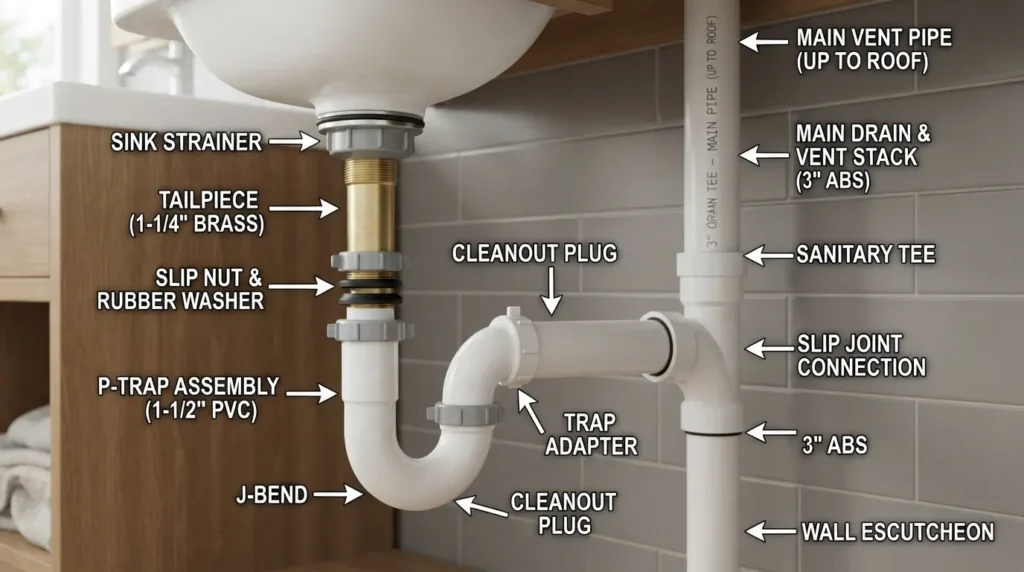
- Check an accessible sink trap only if you are comfortable doing so. Place a container underneath and remember that opening plumbing containing chemical cleaner can create a safety hazard.
- Consider a small manual drain snake for an appropriate, accessible fixture. Do not force a cable through old, damaged, or unfamiliar piping.
- Watch what happens next. If drainage improves briefly and then becomes slow again, recurring buildup or a deeper restriction may still exist.
Know when to stop
Do not keep experimenting if multiple fixtures are involved, sewage is backing up, the clog repeatedly returns, a snake will not pass, or you suspect a damaged or main sewer line. Also avoid mixing drain-cleaning chemicals with other household chemicals. If you have already used a chemical drain cleaner, tell the plumber before work begins.
What Usually Causes a Clogged Drain?
The likely cause changes depending on where the blockage appears.
Bathroom sink, tub, and shower clogs
Hair, soap residue, personal-care products, and debris around stoppers or strainers often create localized bathroom restrictions. If several bathroom fixtures react together, however, the problem may be in a shared branch rather than at one drain opening.
Kitchen sink clogs
Cooking grease, fats, food residue, and debris can gradually restrict kitchen drainage. A garbage disposal can also complicate the diagnosis because a disposal problem and a drain blockage can produce similar symptoms.
Toilet clogs
Some toilet clogs are limited to the fixture and can be cleared with the appropriate plunger or auger. A toilet that repeatedly clogs, gurgles with other fixtures, or causes water to rise in a nearby tub or shower deserves a broader drainage diagnosis.
Main drain and sewer-line clogs
When the restriction is farther downstream, multiple parts of the house can be affected. Possible causes include accumulated waste, grease, intrusive roots, foreign material, or a problem with the pipe itself. Clearing flow is not always the same as fixing the underlying cause.
Drain Clearing, Drain Cleaning, or Drain Repair: Which Do You Actually Need?
These terms are often used interchangeably in advertising, but they describe different levels of work.
Drain Clearing
The immediate goal is to open a path through an obstruction so the fixture can drain again. This may be enough for some straightforward clogs.
Drain Cleaning
Cleaning may address a broader layer of accumulated material inside the pipe when simply opening the obstruction is unlikely to solve a recurring buildup problem.
Drain or Sewer Repair
If inspection finds a damaged, collapsed, badly deteriorated, displaced, or otherwise defective section of pipe, more cleaning may not solve the actual problem. Repair becomes a separate decision.
A good clogged drain service should therefore begin with the problem, not with a predetermined piece of equipment.
Drain Snake vs. Hydro Jetting vs. Camera Inspection
You do not need to become an expert in drain-cleaning equipment. You only need to understand why a plumber might recommend one method instead of another.
Drain snake or auger
A mechanical snake or auger can be useful for many localized obstructions and for physically breaking through or retrieving certain clogs. The size and type of machine should match the drain being serviced.
Hydro jetting
Hydro jetting uses high-pressure water and may be considered where heavier buildup, grease, or certain recurring restrictions require more extensive pipe cleaning. It is not automatically the correct choice for every clogged drain; the pipe condition and suspected cause matter.
Sewer camera inspection
A camera can add diagnostic value when the clog is recurring, the cause or location is uncertain, a main line is involved, or there is concern about roots or pipe condition. A camera does not clear a clog by itself—it helps answer the question, “What are we actually dealing with?”
A better question than “Do I need hydro jetting?”
Ask: What evidence shows where my clog is and why this method is the right solution for it? That question keeps the conversation focused on diagnosis instead of upselling equipment.
How Much Should It Cost to Unclog a Drain?
There is no honest single price for every clogged drain. A straightforward sink blockage and a deep main sewer obstruction are different jobs.
As a national reference—not a guaranteed Miami quote—2026 pricing guides place many ordinary professional drain-cleaning jobs roughly in the $100 to $350 range. Simple sink, tub, shower, or toilet clogs are commonly on the lower side of professional drain-cleaning costs, while main sewer lines, difficult access, hydro jetting, camera diagnostics, emergency work, or discovered pipe problems can cost substantially more.
Clog location
A fixture-level blockage is usually easier to access than an obstruction deep in a building drain or sewer lateral.
Severity
A slow drain, complete blockage, recurring clog, and sewage backup can require very different amounts of work.
Method required
Manual clearing, powered augering, hydro jetting, and camera inspection involve different equipment and scopes.
What is found
If the real issue is damaged piping rather than buildup alone, cleaning and repair become separate costs.
How to judge a $49, $69, or $99 drain-cleaning special
A low advertised price is not automatically bad, but it should not be the only thing you compare. Before accepting a promotional clogged drain service, ask what that price actually includes.
- Is the advertised price for opening the drain, fully cleaning it, or only an initial service step?
- Is there a limit on cable length, service time, or number of fixtures?
- Are equipment, trip, diagnostic, or after-hours charges separate?
- Does the quote change if the clog is in the main line?
- Is a sewer camera included or optional?
- What happens if the initial method does not clear the restriction?
- Is any return-service guarantee included, and what does it cover?
- Will you receive the total approved scope before additional work begins?
This is a better way to compare a “cheap drain cleaning service” than choosing by the headline number alone.
Who Should You Hire for a Clogged Drain?
Not every search containing the word “drainage” needs the same type of professional.
- Indoor sink, shower, tub, toilet, or branch-line clog: a plumbing or drain-cleaning professional is usually the relevant starting point.
- Multiple indoor fixtures or suspected main sewer blockage: look for a plumber or sewer-and-drain professional equipped to diagnose and service larger drain lines.
- Septic-system symptoms: the problem may require septic-specific evaluation rather than ordinary indoor drain cleaning.
- Yard flooding, French drains, landscape drainage, or surface water: that is an exterior drainage problem and may require a different drainage contractor.
- Roof or storm-drain problems: do not assume an indoor sanitary drain-cleaning service is automatically the correct trade.
- Damaged underground sewer piping: cleaning may be only the diagnostic or first step before sewer repair options are considered.
For Florida work that requires a licensed contractor, you can also verify contractor information through the state’s official license search before approving a larger repair.
What Should Happen During a Professional Clogged Drain Service?
A professional visit should give you more than “we ran a machine and the water went down.” The useful outcome is a clearer understanding of the problem and what was done about it.
- You describe the symptoms. Tell the technician which fixtures are affected, when the problem started, whether it is recurring, and what happens when other fixtures are used.
- The likely clog location is narrowed down. A single slow sink is approached differently from several fixtures backing up together.
- The plumber selects an access point and clearing method. The equipment should fit the suspected location and pipe.
- The blockage is serviced. Depending on the problem, that may involve an auger, larger drain machine, hydro jetting, or another appropriate method.
- Flow is tested. The affected fixture and connected drainage should be checked rather than assuming the job is complete because standing water disappeared.
- Recurring or suspicious problems are investigated further. A camera inspection may be recommended if the symptoms suggest a deeper cause.
- You receive the next-step explanation. If damage is found, the plumber should distinguish the cleaning already performed from any separate repair being proposed.
What to Tell the Plumber Before They Arrive
A few observations can save diagnostic time and help the technician bring the right equipment.
- Which fixture became slow or blocked first?
- Is the drain completely stopped or just slow?
- Are other fixtures in the same room affected?
- Are fixtures in other rooms affected?
- Does flushing a toilet make a shower, tub, or sink react?
- Do you hear gurgling?
- Is there a persistent sewer-like odor?
- Has this same clog happened before?
- Have you already used a plunger, snake, or chemical drain cleaner?
- Is there any visible wastewater backup or overflow?
A simple description can be extremely useful:
“The kitchen sink started draining slowly yesterday. Today it is completely blocked, but the bathrooms are normal.” That tells a plumber much more than simply saying, “My drains are clogged.”
Miami Drain Problems: Sanitary Clog or Exterior Drainage Issue?
In Miami, it is especially important not to use “drainage problem” as a catch-all diagnosis. Indoor sanitary drainage and exterior stormwater drainage perform different jobs.
A toilet, kitchen sink, shower, or bathtub backup belongs to the sanitary plumbing side of the property. Pooling rainwater in a yard, patio, driveway, or around exterior drains belongs to a different drainage category. Heavy rain can make both types of problems noticeable around the same time, but they should not automatically be treated as the same clog.
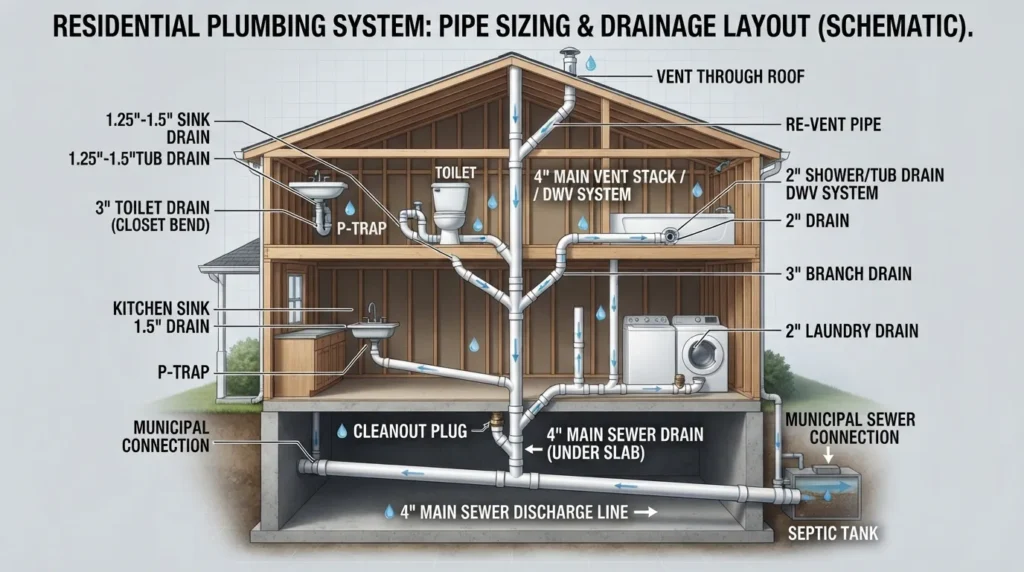
If you want to understand how fixture drains, traps, branch lines, building drains, sewer laterals, vents, storm drainage, and septic systems fit together, see our guide to how your home drainage system works.
For larger alterations or sanitary-line replacement, permit and inspection requirements can also depend on the exact scope and jurisdiction. Miami-Dade maintains official plumbing permit guidance for applicable work.
How to Prevent the Next Clogged Drain
No maintenance routine can guarantee that a drain will never clog, but simple habits can reduce avoidable buildup.
- Keep food scraps, fats, oils, and grease out of kitchen drains.
- Use strainers where appropriate to catch hair and debris before it enters the drain.
- Remove accessible hair and residue before a shower or tub becomes completely blocked.
- Do not use a toilet as a trash can for wipes, hygiene products, or other non-flushable items.
- Pay attention when one drain repeatedly becomes slow; recurring symptoms are useful diagnostic information.
- Do not ignore several fixtures slowing at the same time.
- If roots, damaged piping, or heavy internal buildup are identified, follow the specific maintenance or repair plan for that condition rather than relying on generic drain-cleaning tips.
See What a Difficult Professional Drain-Cleaning Job Can Involve
Simple fixture clogs and deep sewer restrictions are not the same job. The third-party video below is useful as a visual example of the equipment and troubleshooting that may be involved when an ordinary drain snake is not enough.
Questions to Ask Before Hiring a Drain Cleaning Company
If you are searching for a clogged drain service near you, these questions help you compare the actual service instead of just the ad.
- Do you give the price or approved scope before work starts?
- Is the problem likely a fixture clog, branch clog, or main-line restriction?
- What method are you recommending, and why?
- What is included in the quoted price?
- Will additional work require my approval first?
- When would you recommend a camera inspection?
- What happens if the clog returns?
- If damaged pipe is discovered, will you show me what was found before recommending repair?
Need Clogged Drain Help in Miami?
If your drain is still blocked after reasonable troubleshooting—or the symptoms point to a shared or main-line problem—the next step is diagnosis rather than more guesswork.
EZ Plumbing Repair Services is a local Miami plumbing team serving homeowners and businesses across Miami-Dade. If you need a plumber to diagnose and clear the blockage, you can review our professional drain cleaning in Miami service.
Drain Still Backed Up?
If multiple fixtures are affected, wastewater is backing up, or the clog keeps returning, we can help you identify the next appropriate step.
Frequently Asked Questions About Clogged Drain Service
How much should it cost to unclog a drain?
As a broad national 2026 reference, many ordinary professional drain-cleaning jobs fall around $100 to $350, while main-line, difficult, diagnostic, or hydro-jetting work can cost more. Your actual price depends on the clog location, severity, access, method, and whether damaged piping is discovered.
How much does it normally cost to unblock a drain?
A simple fixture clog generally costs less than a blockage involving multiple fixtures or the main sewer line. Rather than relying on one advertised number, ask what the quote includes and whether it covers the complete scope needed for your specific drain.
How much does it cost to clean a blocked drain?
National pricing guides show that cost varies significantly by fixture, clog depth, severity, and cleaning method. A localized sink or toilet blockage can be much less involved than main-line cleaning, hydro jetting, or a job that requires additional diagnostics.
How much does Roto-Rooter charge to clear a clogged drain?
There is no single nationwide price that applies to every Roto-Rooter drain call. Brand-specific pricing can vary by market, clog location, severity, and service scope. Ask the local provider for the full written estimate and compare what is included rather than relying on a national number.
How can I tell if my main drain line is clogged?
Warning patterns include several fixtures draining poorly at the same time, a toilet causing water to rise in a shower or tub, widespread gurgling, or wastewater backing up at a lower fixture. These symptoms do not prove the exact cause, but they justify looking beyond a single sink or toilet clog.
Is Roto-Rooter too expensive?
Price alone cannot tell you whether a drain service is expensive or fair. Compare the actual scope: clearing versus cleaning, equipment included, diagnostic work, guarantee terms, additional fees, and what happens if the first method does not solve the problem.
What will unclog a drain fast?
For a simple single-fixture clog, removing accessible debris or correctly using a plunger may work quickly. A manual snake can help with some appropriate clogs. If several fixtures are affected or sewage is backing up, the fastest safe move is usually to stop adding water and have the restriction properly located.
How much does Mr. Rooter charge to snake a drain?
There is not one universal Mr. Rooter drain-snaking price for every location. Local pricing depends on the clog, drain, equipment, and market. Ask your local provider for an upfront quote tied to the specific work being recommended.
Related Resources
If you want to compare national pricing, verify a Florida contractor, or understand local plumbing requirements, these third-party resources can help:
- Angi: 2026 Drain Cleaning Cost Guide — national cost ranges by clog location and service type.
- HomeGuide: Drain Cleaning Cost Guide — additional national pricing ranges for fixtures, main lines, and cleaning methods.
- Florida DBPR License Search — verify regulated Florida professionals and contractors.
- Miami-Dade Plumbing Permit Information — official local guidance for plumbing work that may involve permits or inspections.