If you are searching for a clog snake, you probably do not need a long definition of a plumbing tool. You need to know whether a drain snake will actually clear your clog, which type to use, how long the cable should be, and when pushing a snake farther into the pipe can create more trouble than it solves.
A clog snake—more commonly called a drain snake, plumber’s snake, plumbing snake, or drain auger—uses a flexible cable to reach into a drain and break through, loosen, or retrieve an obstruction. The best snake is not simply the longest or most powerful one. Choose it according to the fixture, likely clog location, type of debris, pipe size, and access point. A small localized shower clog and a blockage affecting several fixtures are not the same problem.
I will help you diagnose the clog first, then choose the tool. That order matters because the pattern of affected fixtures often tells you more than the word “clog.”
What Is a Clog Snake?
Yes, a drain snake is a real plumbing tool. The name “clog snake” is often used informally for a flexible drain-cleaning cable. Depending on the design, you may feed the cable by hand, rotate a drum manually, attach certain models to a drill, or use a powered drain-cleaning machine.
The cable travels through the drainage path until it reaches resistance. Its tip may then break through soft buildup, snag hair or debris, or create an opening through an obstruction so the drain can flow again.
However, a snake does not diagnose every drainage problem. Roots, damaged pipe, an offset joint, heavy grease coating, a collapsed section, or another structural problem can produce symptoms that return after a cable is removed.
First, Diagnose Where the Clog Probably Is
Before buying a 15-foot, 25-foot, 50-foot, or 100-foot drain snake, look at what the plumbing system is telling you.
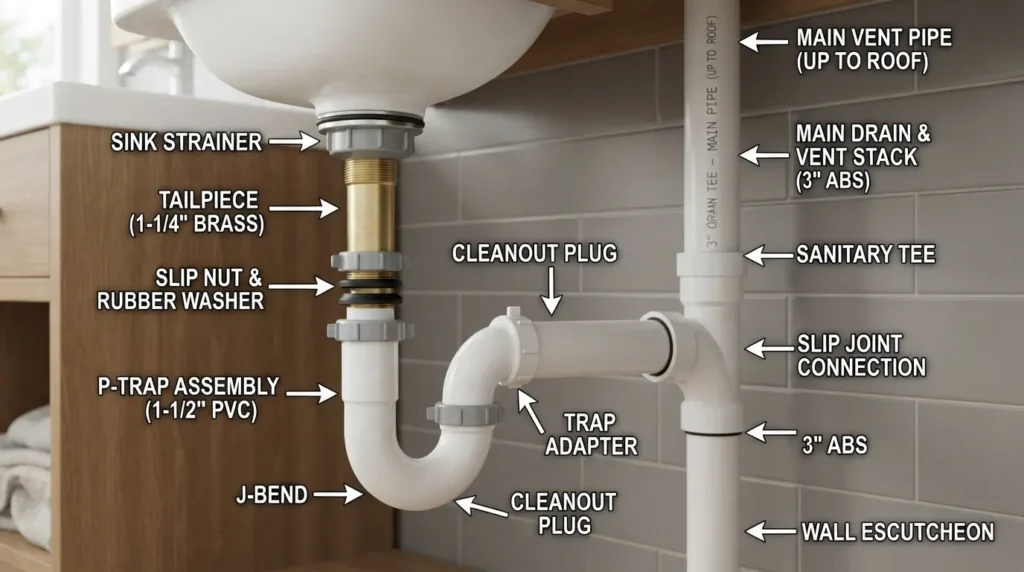
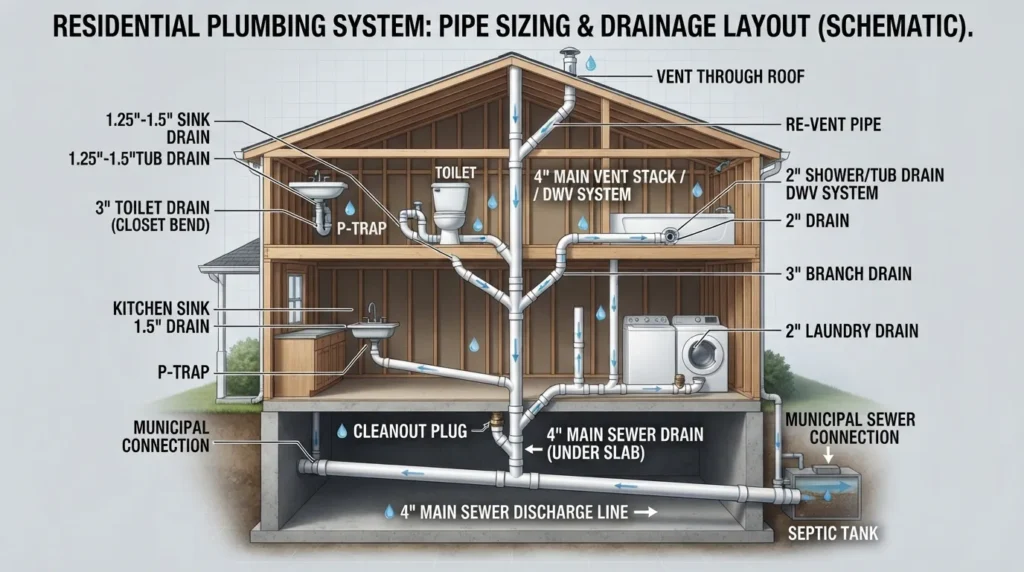
If you want to understand how fixture drains, traps, branches, stacks, building drains, cleanouts, and sewer connections fit together, see our guide to the home drainage system and how to locate drainage problems.
Which Drain Snake Should You Use?
There is no universal “best drain snake.” A tool that makes sense for hair near a shower opening may be wrong for a toilet or too small for a deeper shared drain.
Plastic Hair Snake
A short flexible plastic tool with barbs is useful when the blockage is close to the opening, especially hair wrapped around a shower, tub, or bathroom-sink drain assembly. It is a retrieval tool more than a deep-drain cleaning machine.
Hand or Drum Auger
A hand auger stores a flexible cable in a drum and lets you rotate the cable as it advances. Common consumer models are sold for sinks, tubs, and showers, and some designs can also be operated with a compatible drill. Always follow the instructions for the specific tool rather than assuming every drain snake operates the same way.
Toilet or Closet Auger
Use a toilet-specific auger for a toilet clog rather than treating an ordinary metal drain cable as interchangeable. Toilet augers are shaped for the fixture’s trap and commonly include a protective tube or guard intended to reduce the chance of scratching the porcelain.
Powered Drain Snake
Powered machines provide more cable length and torque, but more power does not automatically mean a better DIY solution. Equipment must match the drain diameter, obstruction, cable, cutting head, and access point. A cable that binds, kinks, or is forced into the wrong line can turn a clog into a more complicated service problem.
How Long of a Drain Snake Do You Need?
This is one of the most useful questions to answer before buying a snake. Retailers sell cables in many lengths, including commonly seen 15-foot, 25-foot, 50-foot, 75-foot, and 100-foot configurations. But cable length by itself does not tell you which tool is right.
- Which fixture is affected?
- Is only that fixture affected?
- Can you see or reach the debris near the opening?
- Is there an accessible P-trap or cleanout?
- Are nearby or multiple fixtures also slow?
- Has the same clog already returned after being cleared?
If hair is immediately below a shower cover, a 50-foot machine is unnecessary. If several fixtures are backing up together, buying a longer household snake simply because the shorter one did not work may also be the wrong decision. The clog could be farther downstream, but the cause and correct access point still need to be identified.
Think in terms of access and diagnosis, not “longer is always better.”
How to Use a Drain Snake on a Sink, Tub, or Shower
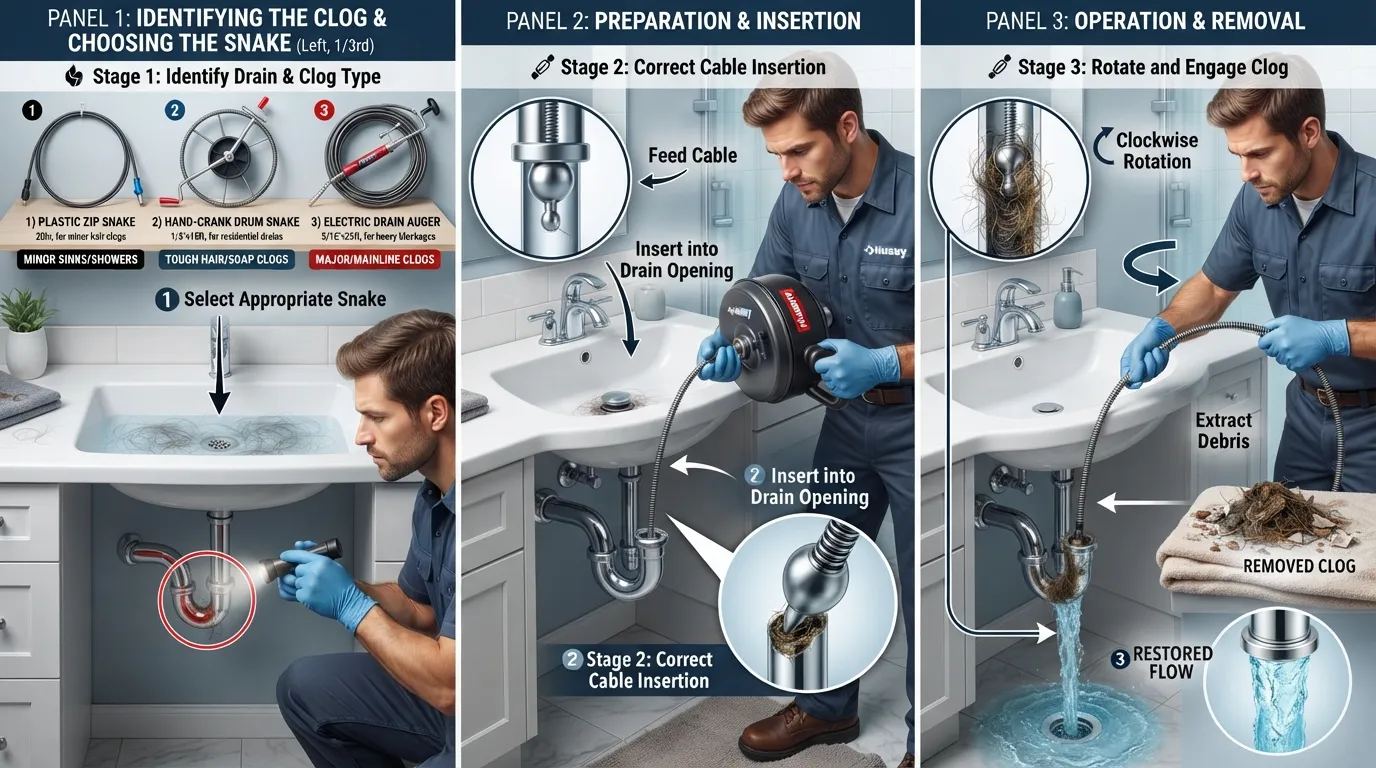
The exact procedure depends on the tool and fixture, so follow the manufacturer’s directions first. For a typical manual drain snake, the basic process looks like this:
- Remove accessible debris first. Clean the strainer, stopper, or visible hair before reaching deeper into the pipe.
- Choose the safest access point. Depending on the fixture, this may be through the drain opening, through accessible piping after the trap is removed, or through a proper cleanout.
- Feed the cable slowly. Do not aggressively shove the cable into the drain.
- Rotate as directed by the tool manufacturer. Controlled rotation helps the cable negotiate bends and engage the obstruction.
- Pay attention when resistance changes. Resistance can be a clog, but it can also be a bend or fitting. Do not automatically assume harder pushing is the answer.
- Work the obstruction gradually. Depending on the snake head, the goal may be to retrieve debris or create a path through the blockage.
- Withdraw the cable carefully. Expect dirty material on the cable and protect surrounding surfaces.
- Test the drain gradually. Start with a limited amount of water rather than immediately filling the fixture.
- Clean and store the tool according to its instructions. Drain cables contact wastewater and should be handled accordingly.
If the cable will not advance, repeatedly binds, kinks, or stops at the same location, stop and reassess. You may be encountering a fitting, using the wrong access point or cable, or dealing with a condition that requires different equipment or diagnosis.
Watch: How a Clogged Drain Is Snaked
If you learn better by watching the process, this demonstration from Ask This Old House shows drain-snaking techniques in a practical plumbing context.
Which Snake Is Best for a Shower Clog?
For many shower clogs, start with the least aggressive tool that matches the likely obstruction.
- Hair at the drain opening: remove the cover if appropriate and try a simple hair-removal tool.
- Hair or soap buildup farther inside: a small hand or drum auger may provide the needed reach.
- Shower and another nearby fixture are both slow: consider that the restriction may be in shared branch piping rather than immediately below the shower.
- The shower backs up when another fixture is used: stop treating it as an isolated shower clog and investigate the downstream drainage system.
Can I Pour Boiling Water Down a Shower Drain?
I would not use boiling water as a universal clog-clearing recommendation. Drain systems can contain different materials and components with different temperature limits, and very hot water does not physically retrieve a hair mass. If you want to rinse a drain after removing debris, ordinary hot water is the more conservative choice unless the pipe or product manufacturer specifically says otherwise.
What Is the Best Drain Snake for a Kitchen Sink?
Kitchen sink clogs require different thinking from shower hair clogs because grease, food residue, soap, and debris can accumulate in the drain path.
Before snaking, check whether the blockage is accessible around the strainer, disposal if present, or P-trap. If the obstruction is farther into the branch, a properly sized hand or drum auger may help.
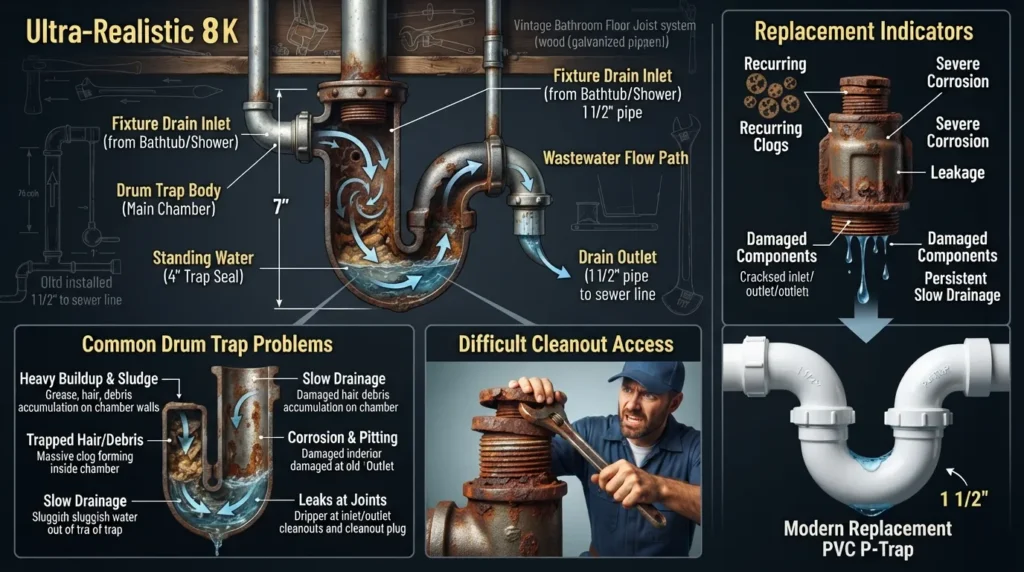
A snake can punch through or retrieve some obstructions, but it does not necessarily clean grease or residue from the entire inside surface of the pipe. If the drain repeatedly clogs because material coats the pipe wall, simply creating another temporary opening may not solve the underlying buildup.
Drain Snake vs. Toilet Auger: Do Not Treat Them as the Same Tool
A toilet has an internal trapway that differs from an ordinary sink or shower drain. A closet auger is designed specifically to enter that path and commonly has a protective guide between the cable and porcelain.
- Commonly used for sinks, tubs, showers, and drain lines
- Available in different cable lengths and diameters
- Not automatically suitable for exposed contact with toilet porcelain
- Purpose-built for toilet trapways
- Provides controlled cable guidance through the fixture
- Often includes protection intended to reduce porcelain scratching
Should You Snake an Outside Drain?
“Outside drain” can mean very different things, so identify the system before inserting equipment.
- An exterior sanitary cleanout may provide access to building drain or sewer piping.
- A yard, patio, catch-basin, or storm drain handles rainwater rather than household sanitary wastewater.
- A clogged sewer lateral requires a different diagnostic approach from a blocked surface drain.
Do not assume that every outdoor pipe opening is an appropriate access point for a drain snake. Identify what the line serves first.
Drain Snake vs. Plunger vs. Chemical Drain Cleaner
Instead of asking which method is “strongest,” ask what type of obstruction you are trying to remove.
Why Do Some Plumbers Prefer Mechanical Clearing Before Drain Cleaner?
Chemical drain cleaners are not automatically wrong in every application. Manufacturers sell products formulated for particular types of drains and clogs, and their label directions matter. The problem is treating a bottle of drain cleaner as a diagnosis.
A chemical cannot tell you whether the real problem is a foreign object, a root intrusion, damaged piping, a repeated branch-line restriction, or a larger sewer problem. There is also an important practical concern: if a drain remains blocked and later needs to be opened or mechanically cabled, the technician needs to know whether chemicals are sitting in the fixture or pipe.
When a Drain Snake Is the Wrong Next Step
Knowing when not to keep snaking is just as important as knowing how to use the tool.
- Several fixtures are backing up at once.
- Wastewater appears in a shower, tub, floor drain, or another fixture when you use water elsewhere.
- The same clog returns shortly after you clear it.
- The snake stops at the same location every attempt and cannot be advanced safely.
- The cable repeatedly binds, twists, or kinks.
- You suspect roots, damaged piping, or a foreign object that cannot be retrieved safely.
- You do not know what type of outside drain or cleanout you are accessing.
- A strong chemical cleaner is still sitting in the backed-up drain.
- Sewage is overflowing into occupied space.
At that point, the goal changes from “find a bigger snake” to “identify where the restriction is and choose the correct clearing method.” Professional drain cleaning may involve a correctly sized cable, a different head, hydro jetting when appropriate, or a sewer camera when the cause or location is unclear.
Why Did the Clog Come Back After Snaking?
A drain flowing again does not always mean the underlying cause is gone.
A snake may:
- pull out a hair mass;
- break apart a soft obstruction;
- retrieve a piece of debris;
- or create a passage through accumulated material.
But recurring clogs can also involve grease or residue along the pipe wall, roots, scale, pipe damage, an offset, a belly, or another condition that a basic cable pass does not correct.
Did I remove the cause, or did I only restore an opening through it? If the same drain repeatedly slows again, that distinction becomes important.
Drain Snaking vs. Hydro Jetting vs. Camera Inspection
Useful for many localized obstructions that a cable can break through or retrieve. It may not remove all residue coating the pipe wall.
Uses high-pressure water to clean heavier buildup from a broader portion of the pipe surface when the line and its condition are suitable.
Adds visibility when the location or cause is uncertain or the blockage keeps returning. It can help identify conditions that cannot be confirmed from symptoms alone.
How to Prevent the Next Drain Clog
Once the drain is open, prevention should match what caused the blockage.
- Use a hair catcher or suitable strainer in showers and tubs.
- Clean sink stoppers and strainers before buildup travels farther into the pipe.
- Keep cooking grease and fats out of kitchen drains.
- Do not treat toilets like trash cans; flush only appropriate waste and toilet paper.
- Address recurring slow drainage instead of repeatedly waiting for a complete blockage.
- Pay attention when more than one fixture begins showing symptoms.
Frequently Asked Questions About Clog Snakes
What is the best snake to unclog a drain?
The best snake is the one matched to the fixture, drain size, clog location, and obstruction. A small hair tool may be best for a shallow shower clog, a drum auger may suit a sink or tub branch, and a closet auger is the more appropriate tool for a toilet. Multiple-fixture backups should be diagnosed before simply choosing a longer snake.
Is a drain snake a real thing?
Yes. Drain snake, plumber’s snake, plumbing snake, and drain auger are common names for mechanical tools that feed a flexible cable into drainage piping to engage an obstruction.
Can I pour boiling water down a shower?
Boiling water should not be treated as a universal drain-clearing method because plumbing materials and components have different temperature limitations. It also does not physically retrieve a hair clog. After mechanically removing debris, hot water rather than boiling water is a more conservative rinse unless the manufacturer of your plumbing system says otherwise.
Does Dawn dish soap really unclog drains?
Dish soap may help lubricate some soft material in specific situations, but it is not a reliable solution for hair masses, solid foreign objects, roots, damaged piping, or deeper drain restrictions. If the clog needs mechanical removal, soap does not replace a plunger, snake, or proper diagnosis.
What is the strongest drain unblocker?
There is no single “strongest” option that is best for every clog. The correct method depends on what is blocking the pipe. Hair, grease, a foreign object, roots, and a structural pipe problem require different solutions. Choose by problem rather than by the strongest-sounding product.
Why do people say not to use baking soda and vinegar for a clog?
Baking soda and vinegar create a visible fizz, but that reaction is not the same thing as mechanically removing a compact hair mass, retrieving a foreign object, or correcting a deeper restriction. Some product manufacturers suggest the mixture for certain light cleaning applications, while others do not consider it a substitute for a purpose-made clog remover. For a real blockage, diagnose what is in the pipe instead of assuming the fizz proves the clog has been removed.
What do plumbers recommend instead of Drano?
There is no single plumber-approved replacement for every clog. Depending on the problem, the next step may be removing visible debris, using a plunger, cleaning an accessible trap, using the correct drain snake, or professionally diagnosing a deeper restriction. If you use any chemical drain cleaner, follow its label exactly and never mix products.
Should I pour salt down the drain every night?
There is no need to make nightly salt pouring your main drain-maintenance strategy. Preventing hair, grease, food debris, and inappropriate materials from entering the drain is more directly connected to the common sources of household clogs.
Can I pour vinegar down a drain to unclog it?
Vinegar may be used in some household cleaning routines, but it should not be expected to retrieve hair, remove foreign objects, or correct a significant mechanical blockage. If water is barely moving or not moving at all, identify the clog rather than relying on vinegar alone.
Can a 50-foot drain snake clear any household clog?
No. A 50-foot cable provides more reach, but length does not determine suitability by itself. Cable diameter, pipe size, access point, obstruction type, fixture, and tool design all matter. A longer cable can still be the wrong tool for the job.
Do I need a 100-foot drain snake?
A 100-foot machine is generally aimed at deeper drain or sewer access rather than a simple hair clog near a sink or shower. If your symptoms suggest a blockage that far into the system, determining the proper access point and line condition can be more useful than simply buying the longest machine available.
Diagnose First, Snake Second
If only one shower, tub, or sink is slow and the blockage appears localized, a simple clog snake can be an effective DIY tool. Start with the smallest appropriate option, use it gently, and confirm that the drain continues flowing after the obstruction is removed.
If multiple fixtures are involved, wastewater is backing up elsewhere, or the same clog keeps returning, stop thinking only about the fixture. The restriction may be farther into the drainage system, and the better next step is to locate the problem before repeatedly running a longer or more powerful cable through the pipe.
If you are in Miami-Dade and a drain snake is not solving the problem, EZ Plumbing can help determine whether the restriction needs professional snaking, another drain-cleaning method, or further diagnosis. You can also explore our Miami plumbing services for related plumbing problems.
Related Drain Snake Shopping Resources
If your clog appears suitable for a DIY drain snake and you want to compare available tool types, cable lengths, and designs, these major retailers maintain drain-snake and drain-auger listings. Product availability and specifications can change, so verify the manufacturer’s instructions and intended pipe applications before choosing a tool.
- Home Depot — Drain Snakes & Augers
- Amazon — Drain Augers
- Lowe’s — Drain Snake Tools
- Target — Plumbing Snake Search