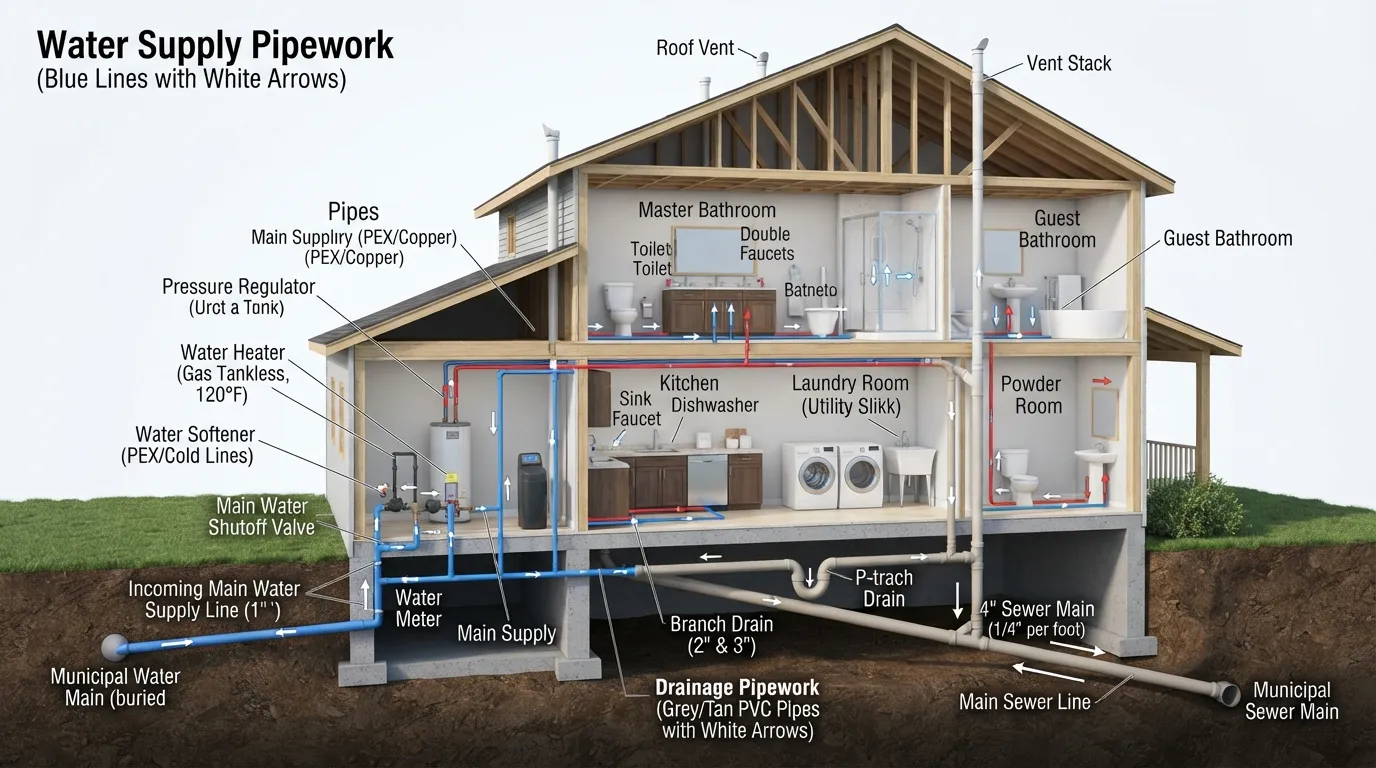
Water pipework is the network of pipes, fittings, valves, and connections that moves water through a building. One side brings clean, pressurized water into your home and distributes it to faucets, showers, toilets, appliances, and other fixtures. A separate drainage system then carries used water and waste away from those fixtures.
If you are trying to understand what pipes you have, which material is suitable for a particular job, what the main water line does, or how water supply pipework differs from drainage, this guide walks you through the complete system instead of giving you another simple list of pipe names.
Water pipework has two main jobs: supply piping moves potable water toward fixtures under pressure, while drain, waste, and vent piping manages wastewater after you use that water. Common water-supply materials include PEX, copper, and CPVC. Depending on the application and local requirements, underground service piping may also use approved PEX, PE-RT, HDPE, copper, or other listed materials. Drainage systems commonly use materials such as PVC, ABS, or existing cast iron.
How Water Actually Travels Through a House
The easiest way to understand water pipework is to follow the water rather than memorize pipe names.
The basic water journey
- Public water main or private source: Water begins outside the home.
- Water service/building supply line: A buried line brings potable water toward the property and building.
- Meter and main shutoff: The system includes points for measuring and controlling water flow where applicable.
- Cold-water distribution: The supply branches through the building toward fixtures and equipment.
- Water heater: Part of the cold supply enters the water heater and leaves through hot-water piping.
- Fixture supply lines: Hot and/or cold water reaches sinks, showers, tubs, toilets, washing machines, dishwashers, hose connections, and other outlets.
- Fixture drains: Once water has been used, it enters a completely different piping network.
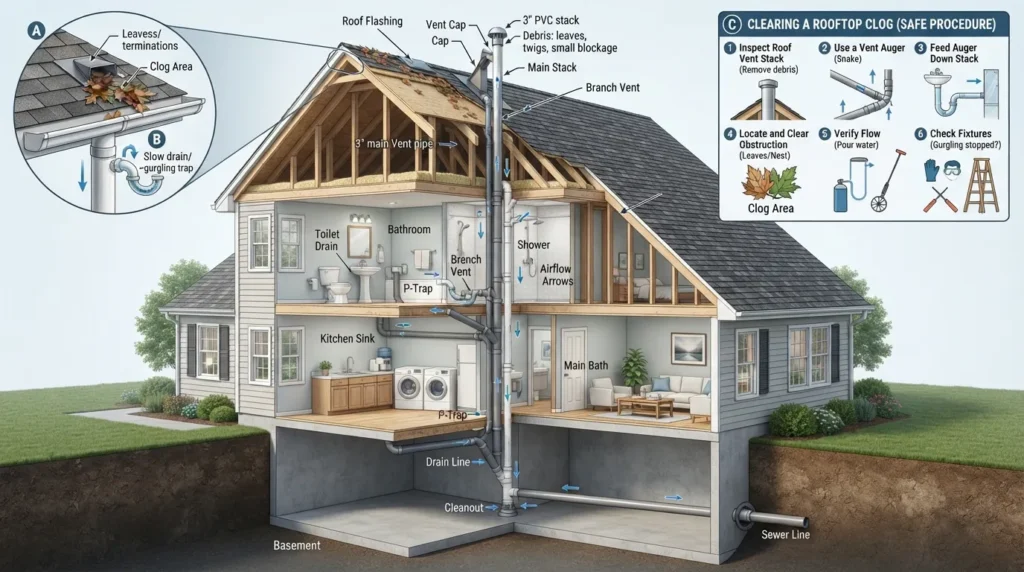
- DWV system: Drain and waste piping carries wastewater away while vent piping supports proper drainage-system operation.
The Plastic Pipe Institute distinguishes a buried water service line from the building supply portion that carries water from the property-line area into a building. Exact ownership, terminology, materials, and installation requirements can vary by utility and jurisdiction.
Water Supply Pipework vs. Drainage Pipework
This distinction solves much of the confusion around terms such as water pipe, drain water pipe, waste pipe, and plumbing pipe.
If you want to follow wastewater from a sink, toilet, shower, or appliance all the way to the sewer or septic system, our guide to the complete home drainage system explains traps, branches, stacks, vents, building drains, and the final waste route in more detail.
What Types of Pipes Are Used for Water Supply?
There is no single “best” pipe material for every part of every house. A good choice depends on whether the pipe is indoors or buried, whether it carries hot or cold water, the existing system, connection method, accessibility, product listing, and applicable plumbing requirements.
PEX
PEX, or cross-linked polyethylene, is flexible tubing used in many modern hot- and cold-water distribution systems. Its flexibility can reduce the number of directional fittings needed compared with a rigid system, and different approved connection systems are available.
PEX may also be manufactured and listed for water-service applications. Do not choose it based on color alone. Product markings, listing, pressure/temperature rating, connection system, and intended use matter more than whether the tubing appears red, blue, or white.
Copper
Copper is a rigid metal piping material with a long history in potable-water systems. It can be used for hot and cold distribution when the tubing type, fittings, joining method, and installation are appropriate for the application.
You may encounter Type K, Type L, and Type M copper tubing. These designations relate to wall thickness, but they should not be treated as a DIY “good, better, best” scale. The correct type depends on where and how the tubing will be used and what the applicable code allows.
CPVC
CPVC, or chlorinated polyvinyl chloride, is a rigid plastic piping material manufactured for hot- and cold-water distribution when the specific product is approved for that use. It should not be confused with ordinary PVC simply because both are plastic.
PVC
PVC is extremely common in plumbing, but its correct application matters. You will frequently see it in drain, waste, and vent systems and in certain cold-water, service, irrigation, or exterior applications where the product and local requirements permit it.
Standard PVC should not simply be substituted for piping specifically intended for hot-water distribution.
PE-RT and HDPE
PE-RT and HDPE are important entities when the conversation moves from pipes inside a wall to buried water-service and utility applications. The Plastic Pipe Institute identifies PEX, PE-RT, and HDPE among materials used in water-service/building-supply applications, subject to the appropriate product standards and approvals.
Galvanized Steel and Other Older Pipework
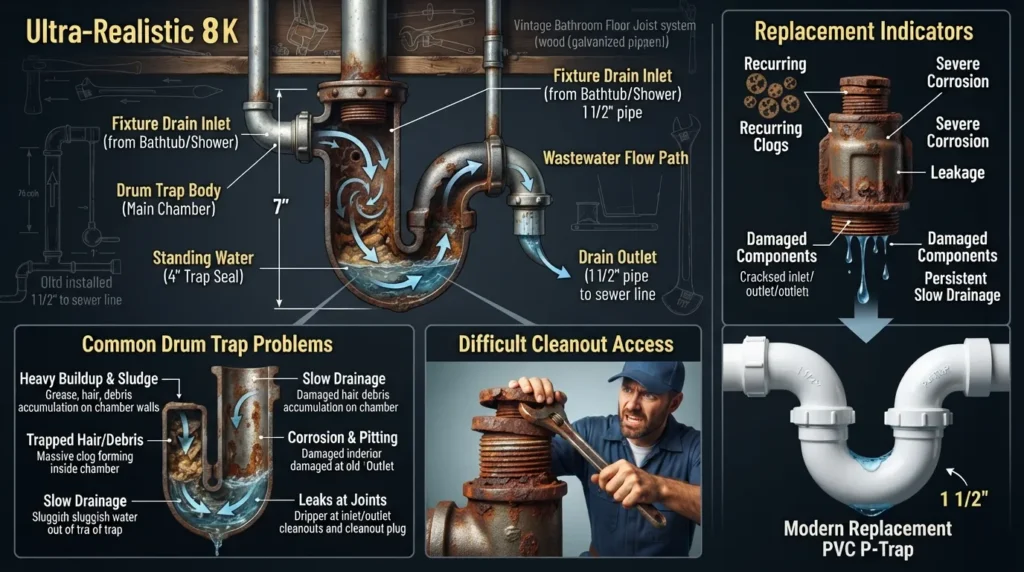
Older homes may still contain galvanized steel water lines or other legacy materials. Aging metal piping can develop internal deposits, corrosion, restricted flow, leaks, or connection problems, but age alone does not tell you whether a whole system must be replaced. Condition should be evaluated in context.
What Is the Best Pipe for Water Supply in a Home?
There is no universal winner.
PEX may be attractive when flexibility and routing are important. Copper may make sense where a rigid metal system is preferred or needs to match an existing installation. CPVC can be appropriate for approved rigid hot- and cold-water distribution. Underground service piping introduces a different set of materials and requirements. The right answer is based on the specific location and job, not on a generic ranking of pipe materials.
For hot- and cold-water distribution, recognized plastic piping systems can include PEX, CPVC, PE-RT, and other specifically listed products. Piping layout also matters: some systems use traditional trunk-and-branch designs, while flexible tubing may also be installed in home-run or zoned arrangements.
Choosing Pipework by Use Case
Instead of asking “Which pipe is best?” ask “Which pipe is appropriate for this specific part of the system?”
What Type of Pipe Is Used for a Main Water Line?
The phrase main water line can mean different things to different homeowners. You may be referring to the buried line bringing water from the utility side toward the building, or to the main distribution pipe inside the house before it branches to fixtures.
For buried water-service and building-supply lines, approved materials can include PEX, PE-RT, HDPE, copper, and other products accepted for that application. The appropriate material depends on the specific product listing, jurisdiction, utility requirements, connection method, and installation conditions.
That is why copying a material recommendation from another state—or even another project in the same city—is not a substitute for verifying what is approved for your installation.
How Can You Tell What Type of Water Pipe You Have?
You can often narrow down the material by appearance, but never rely on appearance alone before cutting, connecting, or replacing a pipe.
- PEX: Flexible tubing. It is commonly seen in red, blue, white, or other colors. Read the printed markings because color alone does not establish its rating or intended use.
- Copper: Rigid metallic tubing with a copper-colored surface when new; older exposed sections can look darker or develop surface discoloration.
- CPVC: Rigid plastic typically associated with potable hot- and cold-water distribution. Check printed markings to distinguish it from other plastics.
- PVC: Commonly white rigid plastic, particularly familiar in drainage and other approved cold-water applications. Again, markings matter.
- ABS: Commonly black rigid plastic associated with DWV systems in places where it is used.
- Galvanized steel: Rigid metal pipe, often with threaded connections in older systems.
- Cast iron: Heavy dark metal commonly encountered in older drain and waste systems rather than modern fixture water-supply branches.
Do not identify pipe by color alone
Paint, aging, previous repairs, different manufacturers, and similar-looking plastic materials can make visual identification unreliable. Look for manufacturer markings and determine what the pipe actually serves before selecting fittings or planning a repair.
What About Plumbing Pipe Sizes?
Pipe sizing is one area where a generic chart can create more problems than it solves.
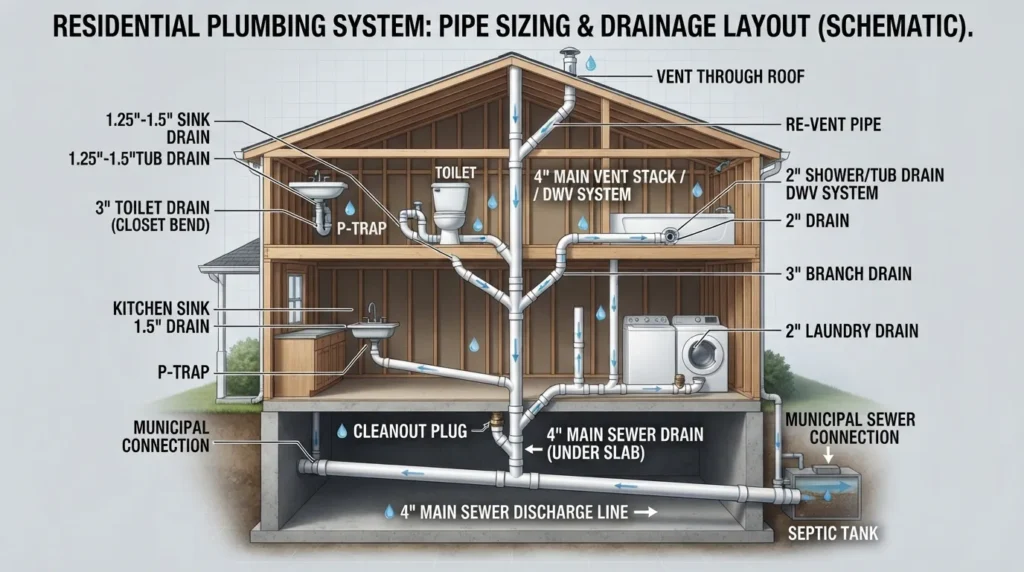
A water line is not correctly sized simply because another house uses the same diameter. Supply sizing can depend on factors such as available pressure, developed pipe length, elevation, fixture demand, material, system layout, and applicable code provisions. Drain sizing is a different calculation based on drainage load, configuration, and the part of the DWV system being served.
In practical terms, the main supply path is often larger than individual fixture branches, but the exact size should be determined from the system rather than guessed from a search result.
What Is a Drain Water Pipe?
A drain pipe carries used water and waste away from a plumbing fixture. It does not perform the same job as a pressurized potable-water supply pipe.
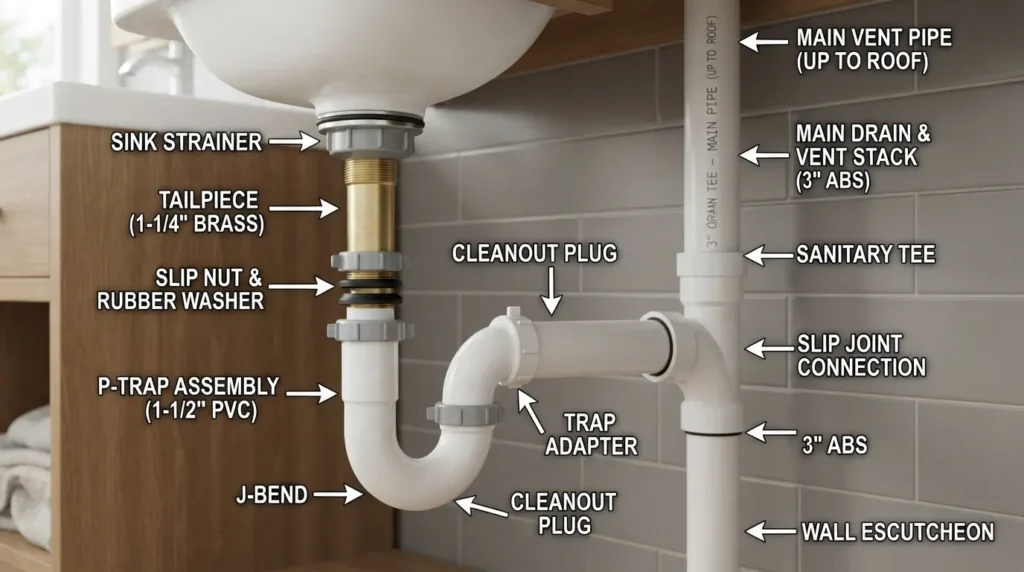
Once water leaves a sink, tub, shower, toilet, or connected appliance, it enters drainage piping. Fixture drains connect into larger branches, and those branches eventually feed the building’s larger sanitary drainage system.
What is a wastewater pipe called?
The correct term depends on where that pipe is located. You may hear drain pipe, waste pipe, branch drain, soil or waste stack, building drain, or building sewer/sewer lateral. These terms describe different functions or locations and are not perfectly interchangeable.
What is another word for a drainpipe?
“Drainage pipe” and “waste pipe” are common related terms, but the technically correct name depends on what the pipe carries and where it sits in the system.
What are the two types of drainage piping?
This question has more than one possible meaning. Inside a home’s DWV system, you can broadly think about drain/waste piping, which carries discharge, and vent piping, which provides an air pathway that supports drainage-system operation. At the property level, another important distinction is between sanitary drainage, which handles household wastewater, and stormwater drainage, which manages rainwater.
Those systems should not be confused simply because they all involve “drains.”
Why Fittings and Connections Matter as Much as the Pipe
A plumbing system is only as useful as the way its components work together. Two pipes can both be suitable materials but still require a specific approved transition or joining method.
Depending on the piping system, connections may involve crimp or expansion fittings, compression-style connections, push-fit fittings, soldered joints, solvent-welded plastic fittings, threaded fittings, or manufacturer-specific systems.
The important point is not to choose a fitting because it physically appears to fit. It needs to be compatible with the pipe material, dimensions, pressure/temperature conditions, intended service, and product requirements.
Common Water Pipework Problems
Understanding the system makes troubleshooting easier because symptoms can point to very different parts of the plumbing network.
Leaks
A leak may occur at a fitting, valve, fixture connection, damaged pipe section, or concealed supply line. The first task is locating the actual source rather than assuming the visible wet spot is directly beneath the failure.
Corrosion or deterioration
Metal piping, valves, and connections can deteriorate under certain conditions. Plastic systems avoid metal corrosion, but they still have installation, exposure, support, temperature, and compatibility requirements of their own.
Reduced water flow
Low flow at one fixture can indicate a localized issue such as an aerator, fixture valve, supply connection, or branch problem. Low flow throughout the building calls for a broader look at the supply system, valves, pressure, piping condition, and other possible causes.
Recurring drain backups
Repeated clogs are a drainage problem rather than a potable-water supply problem. If multiple fixtures are slow, backing up, or repeatedly clogging, the obstruction may be farther downstream than an individual fixture trap. In that situation, professional drain cleaning and diagnosis can make more sense than repeatedly treating the symptom at one sink or tub.
Repair a Section or Repipe the House?
A damaged section of pipe does not automatically mean you need a whole-house repipe. At the same time, repeatedly patching a broadly deteriorated system may not address the underlying problem.
Questions that help separate repair from repiping
- Is the failure isolated or appearing in multiple locations?
- What material is currently installed?
- What condition is the remaining accessible piping in?
- Are leaks recurring after previous repairs?
- Is water flow restricted throughout the house or only at one fixture?
- Will a repair require difficult or questionable transitions between old and new materials?
- Are walls, ceilings, floors, or slabs already being opened for renovation?
- What work requires permits, inspection, or code upgrades?
How much should a whole-house repipe cost?
There is no responsible universal price without knowing the property. Repipe cost can change with home size, number of fixtures, number of floors, access to piping, chosen material, amount of demolition and restoration, existing system conditions, permit requirements, and the scope of related plumbing work.
A useful estimate should therefore describe the scope and material instead of giving you a single internet price that may have little connection to your home.
Water Pipework in Miami: What Homeowners Should Keep in Mind
For Miami homeowners, good pipework decisions should combine general plumbing principles with local conditions and current local requirements.
Miami-Dade County explains that the Biscayne Aquifer provides most of the drinking water used across South Florida. After source water is treated and distributed through the public system, your building’s service and supply pipework handles the final part of that journey inside your property.
That local context does not mean every Miami home should use the same pipe material. Existing plumbing, building construction, outdoor exposure, installation location, connection method, and current code requirements all need to be considered.
You can also see why condition matters in real installations by looking through our Miami plumbing work and services, which includes examples of an outdoor water-line inspection, shutoff-valve work, and copper/PVC piping connections.
Before replacing or rerouting plumbing in Miami-Dade
Check the current permit and code requirements for the exact work being performed. Miami-Dade maintains specific plumbing-permit information and also directs property owners to verify whether a particular project qualifies for an exemption. Do not assume that a repipe, sanitary-line replacement, or major plumbing alteration is automatically permit-free.
A Better Way to Choose Water Pipework
If you are planning a repair, renovation, or new installation, work through the decision in this order:
- Identify the pipe’s job. Is it potable-water supply, hot water, cold water, buried service, drainage, venting, irrigation, or another application?
- Identify the existing material. Do not make a transition until you know what you are connecting to.
- Check the environment. Is the line buried, concealed, exposed outdoors, inside a wall, near heat, or in another demanding location?
- Consider the full system. Pressure, route length, fittings, water demand, valves, accessibility, and future servicing all matter.
- Verify the product. Read markings and confirm that pipe and fittings are actually approved for the intended application.
- Verify local requirements. Codes and permit rules should be checked for the current project and jurisdiction.
- Choose for the application—not the trend. The material that works well in one location is not automatically the correct material everywhere else in the house.
Watch: How a Home Plumbing System Works
If you understand the system better visually, this third-party video gives a useful overview of how water supply and waste piping work together in a house.
Frequently Asked Questions About Water Pipework
What is a water pipe in plumbing?
A water pipe is piping used to convey water from one part of a plumbing system to another. In a home, the phrase commonly refers to potable-water supply piping, although plumbing as a whole also contains separate drainage pipes for used water and waste.
What comes through plumbing pipes?
Supply pipes carry potable hot or cold water toward fixtures. Drain and waste pipes carry used water and waste away. Vent pipes mainly provide an air pathway for the DWV system rather than serving as a water-supply route.
What type of pipe is used for water?
PEX, copper, and CPVC are common potable-water distribution materials. Depending on the location and application, approved PEX, PE-RT, HDPE, copper, or other listed materials may be considered for water-service piping. There is no single correct material for every installation.
What type of pipe is used for underground main water lines?
Underground service-line materials vary by jurisdiction, utility requirements, product approval, and installation conditions. PEX, PE-RT, HDPE, copper, and other approved products may be used in appropriate applications. Always verify what is accepted for the specific property.
Is PEX better than copper?
Not universally. PEX provides flexibility and different routing options, while copper provides a rigid metal system and may be preferred in other circumstances. Existing plumbing, installation location, fittings, exposure, budget, accessibility, and local requirements all influence the decision.
Can PVC be used for water supply?
PVC can be used in certain cold-water and service applications where the specific product and local requirements allow it, and it is also widely associated with DWV systems. Standard PVC should not be assumed suitable for hot-water distribution simply because it is a plumbing pipe.
How do I know whether a pipe is supply or drainage?
Look at what it connects to and how the system behaves. Small pressurized lines leading toward faucet valves, toilets, appliances, and other fixtures are usually supply piping. Larger piping connected to traps, fixture drains, stacks, and cleanouts is part of the drainage system. If identification is uncertain, verify before opening or modifying the line.
Should I replace all my old pipes at once?
Not necessarily. The answer depends on material, condition, failure history, access, water-flow problems, renovation plans, and whether deterioration is isolated or widespread. An inspection can help separate a localized repair from a broader repiping problem.
Key Takeaways
- Water supply and wastewater drainage are separate parts of your plumbing system.
- PEX, copper, and CPVC are common choices for potable-water distribution, but each application needs its own evaluation.
- Underground water-service piping may use different approved materials than piping inside the house.
- PVC, ABS, and cast iron are important drainage-system materials, not interchangeable substitutes for every water-supply application.
- Pipe color or appearance alone is not enough for reliable identification.
- Pipe sizing should be based on system design and applicable requirements rather than copied from a generic chart.
- The “best pipe” is the material, fittings, and installation method that are appropriate for that exact job.
- For Miami-Dade plumbing alterations, confirm current permit and code requirements before starting regulated work.
Trusted Water Pipework Resources
If you want to go deeper into standards, local water supply, or permit requirements, these sources provide useful technical and government information:
- Plastic Pipe Institute — Water Service & Building Supply Lines
- Plastic Pipe Institute — Hot & Cold Water Plumbing Distribution
- Miami-Dade County — Water Supply and Treatment
- Miami-Dade County — Plumbing Permits
- Florida Building Code — Current Code Resources
Not Sure What Pipework You Have?
If you are dealing with an unexplained leak, deteriorated water line, recurring flow problem, damaged pipe, or you need help deciding whether a section should be repaired or replaced, the safest next step is to identify the material and problem before choosing a solution.