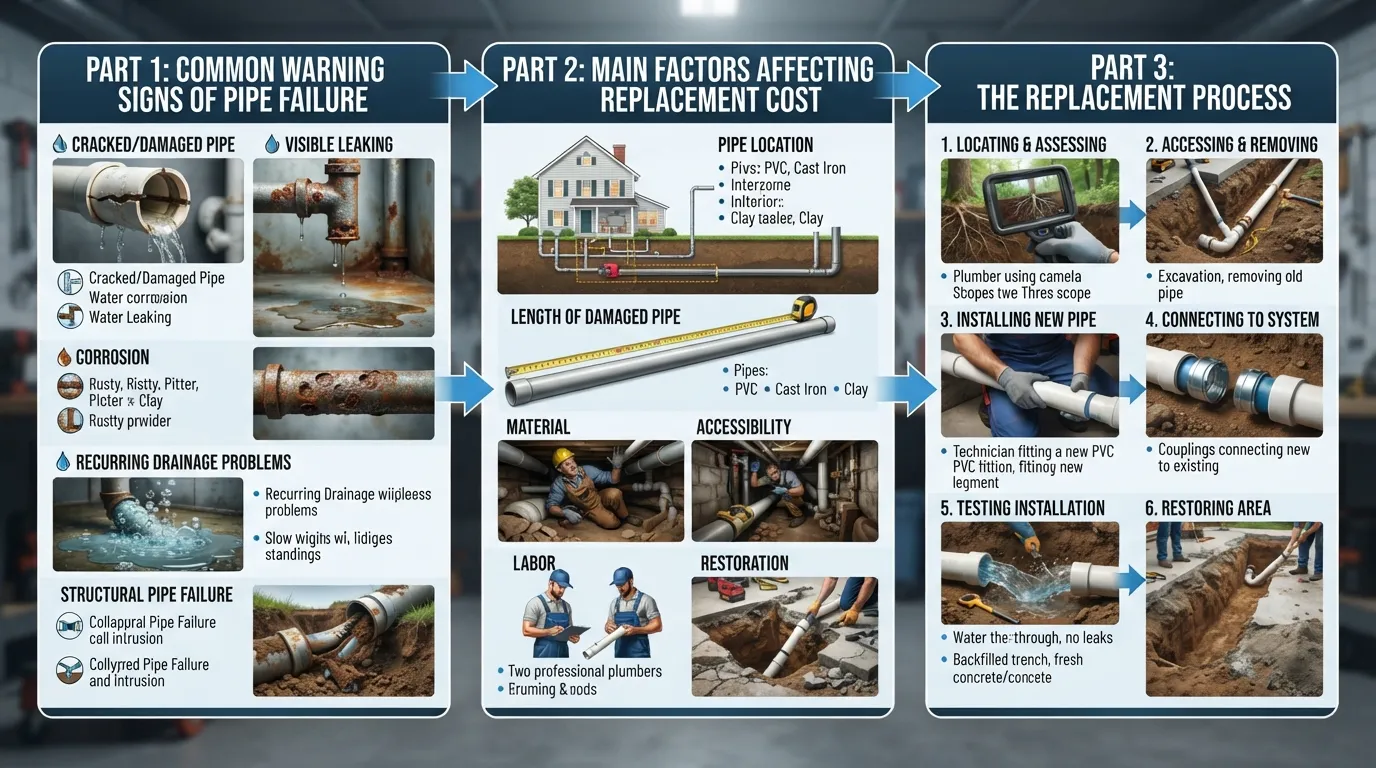
A slow drain or small leak does not automatically mean you need a drain pipe replacement. Sometimes the right solution is simply clearing a blockage. Other times, one damaged fitting or a short section of pipe can be repaired. Replacement becomes more likely when the pipe itself is cracked, collapsed, badly corroded, repeatedly failing, or otherwise unable to carry wastewater reliably.
That distinction matters because replacing an accessible pipe under a kitchen sink is a completely different project from replacing a drain line inside a wall, beneath a concrete slab, or underground.
In this guide, I’ll help you figure out what type of problem you may be dealing with, when cleaning or repair may be enough, when replacement makes more sense, what the replacement process involves, what affects cost, and which jobs should be left to a plumber.
Drain pipe replacement is usually appropriate when the pipe has structural damage rather than a removable blockage. Cracks, severe corrosion, collapsed sections, persistent leaks, or repeated problems in a deteriorated line can justify replacing part or all of the affected pipe. If the pipe is structurally sound and the problem is buildup or a clog, cleaning may be the better first step.
Do You Actually Need to Replace the Drain Pipe?
Before discussing materials, costs, or how to cut out a pipe, start with the most important question: does the pipe actually need replacement?
Many drainage symptoms overlap. A slow fixture may have a localized clog. Repeated backups can point to an obstruction farther down the line. A visible leak beneath a sink can come from a loose slip-joint connection rather than a failed pipe. Sewer odors or gurgling may also have more than one possible cause.
This is why the symptom should guide the diagnosis, but it should not be treated as proof of structural pipe failure.
Drain Problem Decision Guide
Drain Cleaning vs. Repair vs. Replacement
One of the easiest ways to overspend on a drainage problem is to treat every symptom as a replacement problem. I would separate the decision into three possible solutions.
1. Clean
If the pipe is structurally sound but wastewater cannot move properly because of buildup or an obstruction, clearing the line may solve the actual problem.
2. Repair
A localized joint problem, limited leak, or isolated damaged section may sometimes be repaired without replacing a much larger section of the drainage system.
3. Replace
Replacement becomes more reasonable when the pipe has meaningful structural deterioration, cracking, collapse, extensive corrosion, repeated failure, or damage that cannot be reliably corrected with a smaller repair.
If your main symptom is a clog or slow-moving drain and structural damage has not been confirmed, start by understanding whether professional drain cleaning in Miami is the more appropriate solution.
Signs a Drain Pipe May Need Replacement
No single symptom proves that a pipe needs to be replaced, but the following conditions deserve closer investigation:
- Visible cracks, holes, splits, or significant deterioration in exposed drain piping
- Persistent leaking that returns after appropriate joint or localized repairs
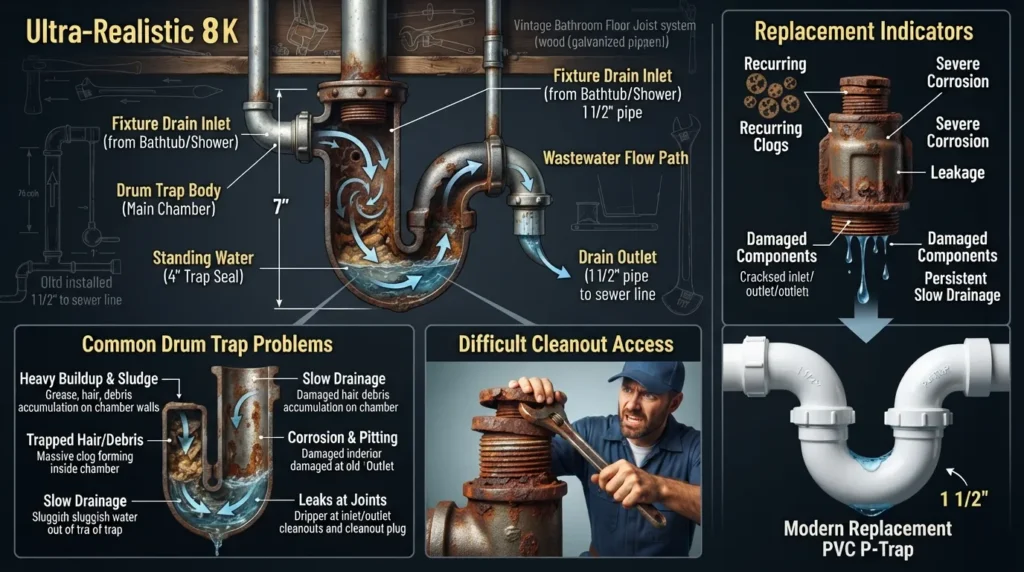
- Severe corrosion or weakened older metal drainage pipe
- A section of pipe that has collapsed, deformed, or lost structural integrity
- Recurring clogs that continue because of a confirmed defect in the pipe itself
- Repeated failures occurring along the same deteriorated drainage run
- Wastewater escaping from a concealed drain line
- A camera inspection showing structural damage inside a larger drain line
Important:
Slow drains, odors, gurgling, and backups can justify an inspection, but they do not automatically prove that replacement is necessary. The goal is to identify the cause before choosing the most disruptive solution.
Which Drain Pipe Are You Replacing?
The phrase drain pipe replacement covers several very different projects. First identify where the damaged section is located.
Kitchen Sink Drain Pipe
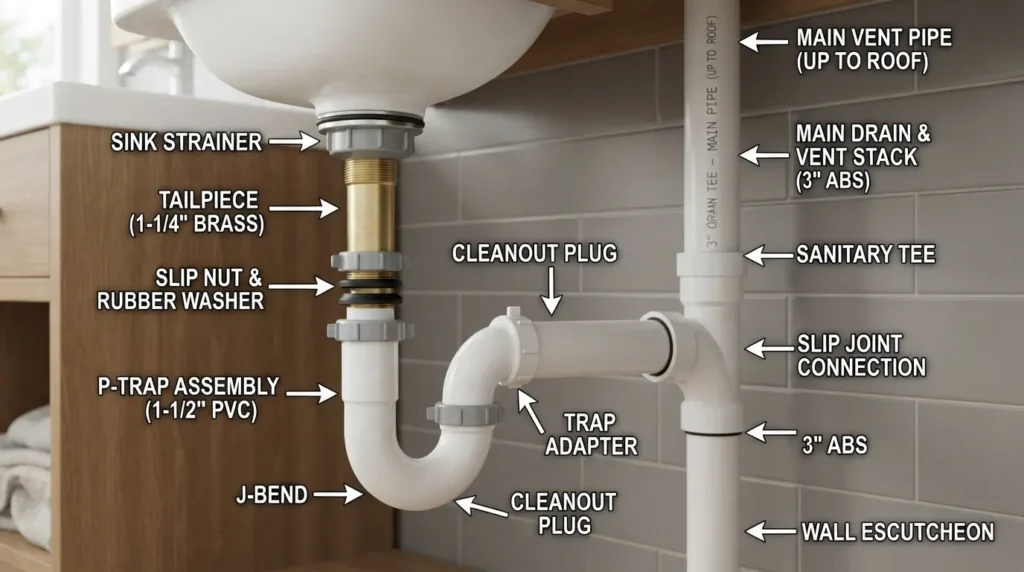
Under-sink drainage is usually the most accessible scenario. The assembly may include a sink tailpiece, P-trap, trap arm, slip-joint fittings, disposal connections, or other components depending on the sink setup.
If the leak is confined to an accessible fitting or tubular drain component, the project can be much simpler than replacing pipe hidden behind the cabinet or wall.
Bathroom Sink Drain Pipe
Bathroom sink drain replacement may also involve accessible components beneath the sink. The scope changes significantly when the damaged drainage pipe continues into the wall and the concealed section is the actual source of the problem.
Drain Pipe Inside a Wall or Ceiling
Once a drain line is concealed, access becomes part of the project. The plumbing work may require opening and later repairing drywall, cabinetry, ceilings, flooring, or other finished surfaces.
The price is therefore not simply the cost of a few feet of pipe.
Drain Pipe Under a Slab
Under-slab drainage is a different category. Diagnosis, access, concrete work, restoration, and permit or inspection requirements can all influence the project.
A homeowner should know exactly what section has failed and why before approving major demolition.
Underground or Main Drain Line
A larger building drain or sewer-side problem should not be confused with a basic sink drain replacement. Underground work may involve inspection, excavation, pipe-access planning, restoration, and a much larger scope.
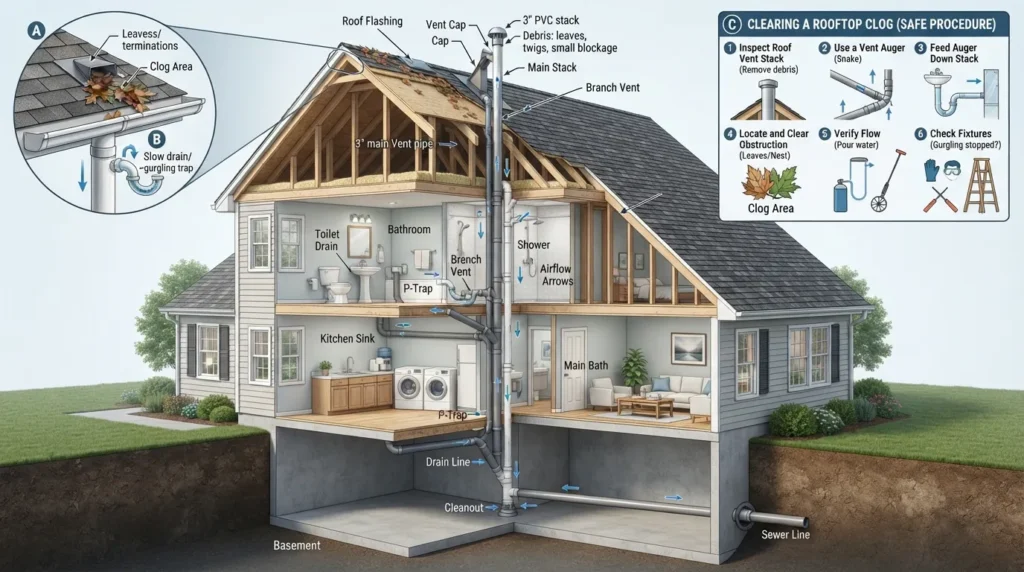
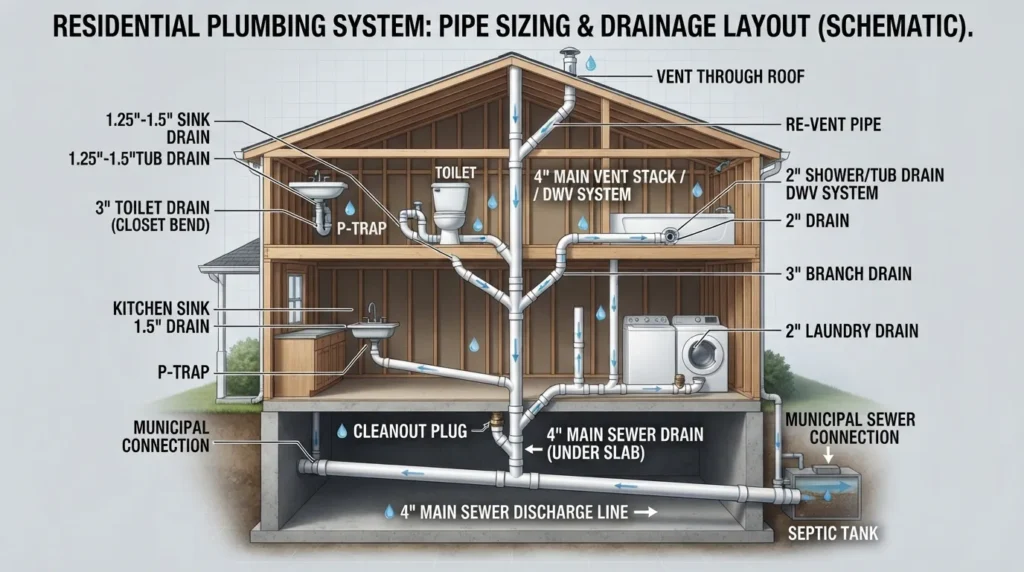
If you want to see how fixture drains, branches, stacks, building drains, vents, and the sewer connection relate to each other, our guide to the home drainage system explains the complete wastewater path through a house.
What Should Happen Before a Major Drain Line Replacement?
A good replacement decision starts before any pipe is removed.
- Identify the symptoms. Determine whether the problem affects one fixture, several fixtures, or a larger portion of the drainage system.
- Locate the affected line. An exposed sink drain and a buried building drain require completely different approaches.
- Identify the pipe material. PVC, ABS, cast iron, copper, galvanized metal, and older sewer materials are not handled identically.
- Confirm the nature of the damage. A clog should not be treated the same way as a crack, collapsed section, or severe corrosion.
- Determine how much pipe is affected. The problem may require one fitting, one section, several sections, or a larger replacement.
- Choose the appropriate repair method. Compare cleaning, localized repair, sectional replacement, conventional replacement, or other suitable methods based on the actual condition.
- Account for access and restoration. Walls, floors, concrete, cabinets, landscaping, or other surfaces may affect the total scope.
How Do You Replace a Drain Pipe?
The exact method depends on the pipe location and material, but a professional drain line replacement generally follows a logical sequence.
- Confirm the damaged section and planned replacement boundaries.
- Provide safe access to the existing pipe.
- Remove or isolate the damaged section without unnecessarily disturbing sound piping.
- Prepare the remaining pipe for a compatible transition or connection.
- Install the replacement pipe with appropriate fittings, alignment, support, and drainage grade.
- Check joints and connections for leaks and proper drainage.
- Complete required inspections and restore opened surfaces where applicable.
That sounds straightforward when the pipe is visible under a sink. It becomes substantially more involved when the damaged pipe is inside a wall, beneath a slab, or underground.
How Do You Connect a New Drainage Pipe to an Existing Pipe?
The connection method depends on the material, diameter, location, and configuration of both the old and new drainage pipe. You cannot assume that any fitting that physically slides onto two pipes creates an acceptable drainage connection.
A proper transition needs to account for:
- Compatible pipe and fitting materials
- Correct nominal pipe size
- An approved transition method where materials differ
- Proper drainage direction and grade
- Secure pipe support
- Accessible, correctly assembled joints where required
- Applicable local plumbing requirements
This is especially important when transitioning from older cast iron or other legacy piping to a newer plastic drainage material.
Common Drain Pipe Materials
PVC
PVC is widely used in modern drainage applications. It is lightweight, does not rust like metal, and has a broad range of fittings for drainage layouts.
ABS
ABS is another plastic drainage material found in some plumbing systems. Whether it is appropriate for a particular replacement depends on the existing system and applicable local requirements.
Cast Iron
Cast iron is common in many older drainage systems and still exists in numerous homes. Its condition should be evaluated rather than assumed from age alone. When an older cast-iron section is failing, a plumber may need to determine whether the damage is isolated or part of broader deterioration.
Copper and Galvanized Metal
Metal drainage piping also appears in older plumbing systems. Material identification matters because replacement methods, transitions, corrosion patterns, and labor can differ from modern plastic drainage systems.
How Much Does Drain Pipe Replacement Cost?
There is no responsible single price for every drain pipe replacement. An exposed bathroom sink connection and an under-slab drainage line may both involve “replacing a drain pipe,” yet the labor, access, disruption, and total project scope are completely different.
National Cost Reference Points
Published national consumer cost guides provide useful context, but they should not be treated as a Miami quote.
- HomeAdvisor has reported a typical drain pipe replacement project range of roughly $225 to $1,169, while noting that substantially larger projects can cost much more.
- HomeGuide has published a national replacement reference of about $150 to $250 per linear foot for drain pipe replacement, depending on the project.
- Accessible kitchen drain work is generally far less expensive than work requiring access beneath foundations, inside finished surfaces, or underground.
The more useful question is not “What is the average?” but “What is driving the cost of my particular replacement?”
A Better Way to Understand the Price
1. Pipe Location
Accessibility is one of the biggest cost differences. Replacing a visible sink drain requires far less access work than reaching a concealed pipe behind tile or beneath concrete.
2. Length of Damaged Pipe
A short failed section may require a sectional replacement, while widespread deterioration can involve much more pipe and labor.
3. Pipe Material and Transitions
The cost is affected not just by the new pipe but by how it must connect to the remaining plumbing.
4. Access and Demolition
Opening drywall, flooring, cabinetry, concrete, or soil can add significant labor before the replacement pipe itself is installed.
5. Restoration
Ask whether the quote includes repairing the wall, floor, slab, landscaping, or other finishes disturbed during access.
6. Inspection and Permit Requirements
Concealed, sanitary-line, under-slab, or larger drainage work may be subject to permit and inspection requirements. In Miami-Dade, requirements can also depend on the specific jurisdiction and scope, so they should be verified before the project begins.
Why Two Drain Pipe Quotes Can Be Thousands of Dollars Apart
Homeowners sometimes compare two quotes and assume the lower number automatically represents the same project. It may not.
One contractor may be quoting a localized repair. Another may be quoting replacement of a larger deteriorated run. One price may include concrete access and restoration; another may exclude them. A camera inspection may also reveal damage extending beyond the location where symptoms first appeared.
Before Accepting a Replacement Quote, Ask:
- What exact section of pipe is damaged?
- How was the damage confirmed?
- Is the problem isolated or visible in multiple sections?
- Why is cleaning or a smaller repair not appropriate?
- How many feet of pipe are being replaced?
- What existing material is being removed?
- What material will replace it?
- How will new pipe connect to the existing system?
- Does the price include access work?
- Does it include permits or required inspections?
- Does it include drywall, concrete, flooring, or landscape restoration?
- How will the new installation be tested before the project is closed?
Can You Fix a Leaking Drain Pipe Without Replacing It?
Sometimes, yes. It depends on what is actually leaking.
A leak can come from a loose connection, deteriorated seal, improperly assembled joint, damaged fitting, or a limited defect rather than widespread pipe failure. In those cases, repairing the specific cause may be more reasonable than replacing a larger section.
A repair sleeve or coupling may be appropriate in certain situations, but it is not a universal solution for every cracked, corroded, concealed, or structurally compromised drain line.
If the pipe material itself is failing across a broader area, repeatedly patching individual points can become less practical than addressing the deteriorated section correctly.
Can I Replace My Own Drain Pipe?
It depends heavily on the scope.
A Small Accessible Sink Drain Is Not the Same as a Sewer Pipe
A handy homeowner may be comfortable replacing certain exposed, removable under-sink drainage components. Even then, correct sizing, alignment, washers, seals, fittings, trap configuration, and leak testing matter.
A concealed branch drain, cast-iron stack, under-slab pipe, underground building drain, or sewer-side replacement is a different level of work.
Potentially DIY-Friendly Scope
- Accessible under-sink tubular components
- Clearly identified removable fitting
- No wall, floor, slab, or underground access
- No major drainage layout alteration
- You understand the existing configuration and can test it properly
Better Left to a Professional
- Pipe hidden inside walls or floors
- Under-slab drainage
- Main building drain or sewer line
- Heavy cast-iron cutting or removal
- Unknown drainage layout
- Repeated backups involving several fixtures
- Work requiring permits or inspections
Can I Replace My Own Sewer Pipe?
For most homeowners, replacing a buried sewer or major building drain is not comparable to swapping an under-sink drain kit. You may be dealing with excavation, pipe depth, slope, existing utility conflicts, structural access, connection requirements, inspections, and restoration.
If the suspected problem is in a main drain or sewer-side line, diagnosis should come before excavation.
Drain Pipe Replacement in Miami: What Changes Locally?
Miami homeowners should pay particular attention to the location and scope of a drainage replacement. An accessible fixture connection may be straightforward, while sanitary-line or under-slab work can involve additional permitting, inspection, access, and restoration considerations.
For projects within Miami-Dade County, permit requirements should be verified based on the exact property jurisdiction and the work being performed before construction begins. This becomes especially important when a sanitary line is being replaced or concrete must be opened and repaired.
Do not assume that because one minor plumbing repair does not require major permitting, a concealed or structural drainage-line replacement will be treated the same way.
How Long Does Drain Pipe Replacement Take?
There is no meaningful universal timeline because access often determines the project more than the pipe itself.
An exposed under-sink component may be handled relatively quickly. Concealed pipe can require opening and restoring finished surfaces. Under-slab or underground drainage can add inspection, access, excavation or concrete work, testing, and restoration.
When comparing estimates, ask for the plumbing duration and the restoration duration separately so you understand what “completion” actually includes.
Should You Replace One Section or the Entire Drain Line?
Replacing every pipe because one section failed can be unnecessary. Replacing only a few inches when the surrounding pipe is also seriously deteriorated can create another problem soon afterward.
The right scope depends on:
- Where the failure occurred
- Condition of the surrounding pipe
- Pipe material
- Whether deterioration is isolated or widespread
- Accessibility
- History of repeated problems
- What an inspection shows beyond the obvious failure point
The goal should be the smallest scope that reliably solves the structural problem—not automatically the smallest invoice and not automatically the biggest replacement.
If you want to understand what cutting out and replacing an accessible drain pipe section can look like, the following demonstration provides useful visual context. Treat it as educational material rather than a substitute for evaluating your own plumbing layout and local requirements.
Frequently Asked Questions About Drain Pipe Replacement
How much does it cost to replace drain pipes in a house?
The cost depends on how much pipe needs replacement, its material, accessibility, labor, demolition, permits where applicable, and restoration. National cost guides commonly show smaller drain pipe projects in the hundreds of dollars, while extensive concealed, under-slab, or whole-house drainage work can cost thousands. Get a scope-specific estimate rather than applying one national average to every project.
How much does a new drain pipe cost?
The pipe itself can be only a small part of the total project. Fittings, labor, access, cutting or excavation, transitions to existing plumbing, testing, permits, and restoration can cost considerably more than the raw pipe material.
Do drain pipes need to be replaced?
Not simply because a drain is slow or clogged. Replacement is more likely when the pipe has confirmed structural problems such as significant cracking, collapse, severe deterioration, persistent leakage, or repeated failure. Structurally sound pipes with blockages may need cleaning instead.
How do you replace a drain pipe?
The damaged section is identified and accessed, the failed pipe is removed, remaining connections are prepared, a compatible replacement is installed with correct drainage alignment and support, and the system is tested. Concealed, under-slab, and underground replacements require additional access and restoration planning.
How do I connect a new drainage pipe to an existing pipe?
Use a connection appropriate for the existing and replacement materials, pipe sizes, drainage configuration, and local plumbing requirements. Transitions between different materials require particular attention to compatible fittings or approved transition couplings.
How can I fix a leaking drain pipe without replacing it?
First determine whether the leak comes from a connection, seal, fitting, or the pipe body. A loose or failed connection may be repairable without replacing the surrounding line. A cracked or severely deteriorated pipe may require sectional replacement instead of a temporary patch.
How do you properly install a drain pipe?
Proper drainage installation requires compatible materials and fittings, suitable pipe sizing, correct routing and grade, secure support, properly assembled joints, appropriate connections to the existing system, and compliance with applicable plumbing requirements.
Can I replace my own sewer pipe?
Major sewer and building-drain replacement is generally not a beginner DIY project. Underground access, depth, drainage grade, connections, inspections, excavation, and restoration can make professional involvement the safer and more practical option.
The smartest drain pipe replacement starts with diagnosis, not demolition.
If the pipe is structurally sound, cleaning may solve the problem. If the damage is localized, repair or sectional replacement may be enough. If the pipe is cracked, collapsed, extensively corroded, or repeatedly failing, a larger replacement may be justified.
Most importantly, compare solutions based on the actual damaged section, pipe condition, access requirements, replacement method, and restoration scope. That gives you a much better basis for making a decision than a generic online price alone.
Not Sure Whether Your Drain Needs Cleaning, Repair, or Replacement?
If you are dealing with recurring backups, a leaking drainage line, damaged pipe, or a problem you cannot confidently identify, the next useful step is to locate the cause before committing to major work.
Learn more about our Miami plumbing services, or speak with a local plumber about the symptoms you are seeing.
Related Drain Pipe Resources
If you are still researching parts, costs, or other homeowners’ experiences, these resources can help you compare the different sides of a drain pipe replacement project.
- Lowe’s under-sink plumbing parts — useful for seeing common P-traps, tailpieces, extension tubes, and other accessible sink-drain components.
- Home Depot drain parts — useful for comparing common drain components and materials used for kitchen, bathroom, tub, and other drainage applications.
- HomeGuide drain pipe repair and replacement cost guide — national consumer pricing context for different drain locations, materials, and repair scopes.
- Homeowner discussion about main drain replacement — anecdotal experiences that illustrate why project scope and quotes can vary widely. Treat individual comments as personal experiences rather than universal pricing guidance.
“`