
If your drain keeps backing up over and over, you’re not dealing with a simple one-time clog. A recurring backup almost always points to something deeper in your plumbing system, and cleaning the drain once usually isn’t enough to stop it from happening again. In this guide, I’ll walk you through why this keeps happening, how to tell what’s really going on based on where the backup is occurring, what to do right now to protect your home, and when it’s time to stop troubleshooting and call a professional.
A drain that keeps backing up is usually caused by a partial clog building back up over time (grease, hair, or sludge) or a deeper blockage in your main sewer line from tree roots or debris. If more than one fixture is backing up at once, stop using water immediately and treat it as a main line issue, not a single clogged drain.
Common Reasons a Drain Keeps Backing Up
Before you can fix a recurring backup, it helps to understand what’s actually causing it. Here are the most common culprits:
- Grease and sludge buildup — Soap, hair, fats, and food waste gradually stick to the inside of your pipes, narrowing the passage until water can no longer flow through properly.
- Tree roots — Roots naturally seek out moisture and can grow into underground pipes through tiny cracks or joints. Once inside, they catch debris and slowly choke off the line.
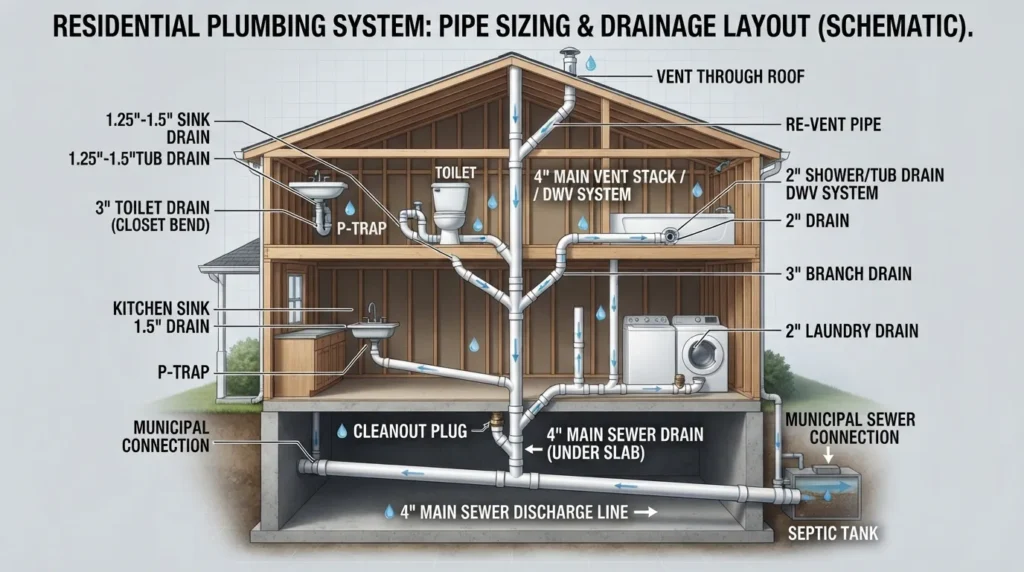
- A blocked main sewer line — If more than one drain is affected — for example, your toilet, tub, and sink are all backing up around the same time — the blockage is likely in the main line that all your fixtures drain into.
- Foreign objects — Wipes, hygiene products, or small items flushed or washed down can lodge in the pipe and create a partial blockage that keeps trapping more debris.
- Aging or collapsed pipes — In older homes, pipes can shift, sag, or partially collapse over time, creating a low point where waste and water collect instead of flowing through.
Where Is It Backing Up? Match Your Symptom to the Likely Cause
The location and pattern of the backup tells you a lot about what’s actually happening underground. Here’s how to read the signs:
Only one drain is backing up
This is usually a localized clog in that branch line — most often grease, hair, or soap scum. It’s the most DIY-friendly scenario.
Multiple drains back up together (toilet, tub, or sink)
This points to a blockage in your main sewer line rather than one fixture. Snaking a single drain won’t solve this — the whole line needs to be inspected.
Basement floor drain keeps backing up
Basement drains sit at the lowest point of your plumbing system, so they’re often the first place a main line blockage shows up — even if the actual clog is elsewhere in the house.
Backs up when running the washing machine
Washing machines discharge a large volume of water quickly. If your line already has a partial blockage, that sudden surge is often what pushes water back up through your basement or laundry drain.
Backs up after heavy rain or storms
Heavy rainfall can overwhelm municipal sewer systems or push groundwater into cracked pipes, causing backups that seem to appear out of nowhere after a storm. This is a common pattern in Miami’s rainy season, especially in older homes.
Toilet or bathroom drain keeps backing up
Toilets are directly connected to the main line, so a gurgling or slow-draining toilet is often an early warning sign of a bigger blockage before it fully backs up.
Outside drain keeps backing up
Outdoor drains are especially prone to tree root intrusion and yard debris. If yours keeps backing up, roots are one of the first things worth ruling out.
⚠ If Multiple Drains Are Backing Up, Act Fast
- Stop using water immediately. Don’t run sinks, showers, or flush toilets — this only adds pressure to the blocked line.
- Locate your main cleanout. This is usually a capped pipe outside your home or in the basement. Do not open it unless you know what you’re doing — sewage under pressure can spray out forcefully.
- Call a licensed plumber. A recurring, multi-fixture backup needs a video camera inspection to find the exact location and cause of the blockage before it’s cleared.
Can a Sewer Backup Make You Sick?
Yes, a sewage backup can pose a real health risk. Backed-up wastewater can carry bacteria and contaminants, and standing water in a basement can also lead to mold growth if it isn’t cleaned up quickly. Avoid direct contact with backup water, keep children and pets away from the affected area, and ventilate the space if possible while you wait for the issue to be resolved.
Should You Try to Fix It Yourself, or Call a Plumber?
This depends entirely on the pattern of the backup. Here’s a straightforward way to decide:
DIY May Be Enough If:
- Only one drain is affected
- It drains slowly rather than fully backing up
- A plunger or basic drain snake clears it temporarily
- There’s no gurgling from other fixtures
Call a Professional If:
- Multiple drains back up at the same time
- The problem keeps coming back after you clear it
- You see water backing up from the lowest drain in the house
- You suspect tree roots or an aging sewer line
If you’re dealing with a recurring problem rather than a one-off clog, it’s worth having your home’s drainage system properly inspected rather than repeatedly treating the symptom.
Sewer Backup Cost and Who’s Responsible
Cleanup and repair costs vary depending on how severe the blockage is, whether it’s on your property or in the public line, and what method is needed to clear it (snaking, hydro jetting, or a camera inspection). As a general rule, homeowners are typically responsible for the lateral line running from their house to the property line, while the municipality is usually responsible for the main line beyond that point. Responsibility can vary by city and property, so if you suspect the issue is on the public side of the line, it’s worth confirming directly with your local water or sewer authority.
Watch: How to Clear a Backed-Up Drain
Here’s a helpful demonstration of how a stubborn drain line can be cleared safely:
Key Takeaways
- One drain backing up = likely a local clog. Multiple drains at once = likely a main line issue.
- Stop using water immediately if more than one fixture is affected.
- Basement and floor drains often show problems first because they sit at the lowest point.
- Backups after heavy rain, storms, or washing machine use point to an existing partial blockage being pushed over the edge.
- A recurring backup needs a camera inspection, not repeated snaking of the same symptom.
Frequently Asked Questions
Why does my basement drain keep backing up?
Basement drains sit at the lowest point in your plumbing system, so they’re usually the first place a main line blockage shows up, even when the actual clog is somewhere else in the house.
How do I fix a drain that keeps clogging?
If it’s a single drain, start with a plunger or a basic drain snake. If the same drain clogs again shortly after, the buildup is likely further down the line and needs professional snaking or hydro jetting rather than a surface-level fix.
How can I tell if a basement drain is clogged?
Signs include slow drainage, gurgling sounds when other fixtures are used, a foul odor near the drain, or water pooling around the drain during normal household water use.
How do I stop a drain from backing up?
Clear the immediate clog, then address the root cause — whether that’s grease buildup, tree roots, or an aging pipe — so it doesn’t return. Repeated backups usually mean the underlying cause hasn’t actually been fixed yet.
What dissolves sludge in drains?
Enzyme-based drain treatments can help break down organic buildup like grease and soap scum over time. They work best for mild, early-stage buildup rather than a full blockage, and they won’t clear a root intrusion or a collapsed section of pipe.
How do I unclog the main sewer line myself?
This isn’t usually a safe or effective DIY job. Main line clogs require a professional-grade drain snake or hydro jetting equipment, and a camera inspection is often needed first to identify exactly where and what the blockage is.
Can a backed-up sewer in your basement make you sick?
Yes. Backed-up sewage can carry bacteria and contaminants, and standing water can lead to mold growth if not cleaned up promptly. Avoid direct contact and ventilate the area while you wait for it to be addressed.
How do I tell if a sewer line is clogged or collapsed?
A clog usually clears with snaking and the problem improves right away. If backups keep recurring despite repeated clearing, or a camera inspection shows a section of pipe that’s sagging or misaligned, that points to a collapsed or damaged section rather than a simple clog.
What can I pour down my basement drain to unclog it?
A mixture of hot water with a mild enzyme-based cleaner can help with light buildup. Avoid harsh chemical drain cleaners in recurring-backup situations, since they can damage older pipes and won’t resolve a deeper blockage like roots or a collapsed line.
Drain Keeps Backing Up? Let’s Find the Real Cause.
If the problem keeps coming back, snaking the same spot again won’t fix it. Our team at Miami Florida Plumbing can inspect the line, find the actual source, and clear it properly with our professional drain cleaning service.