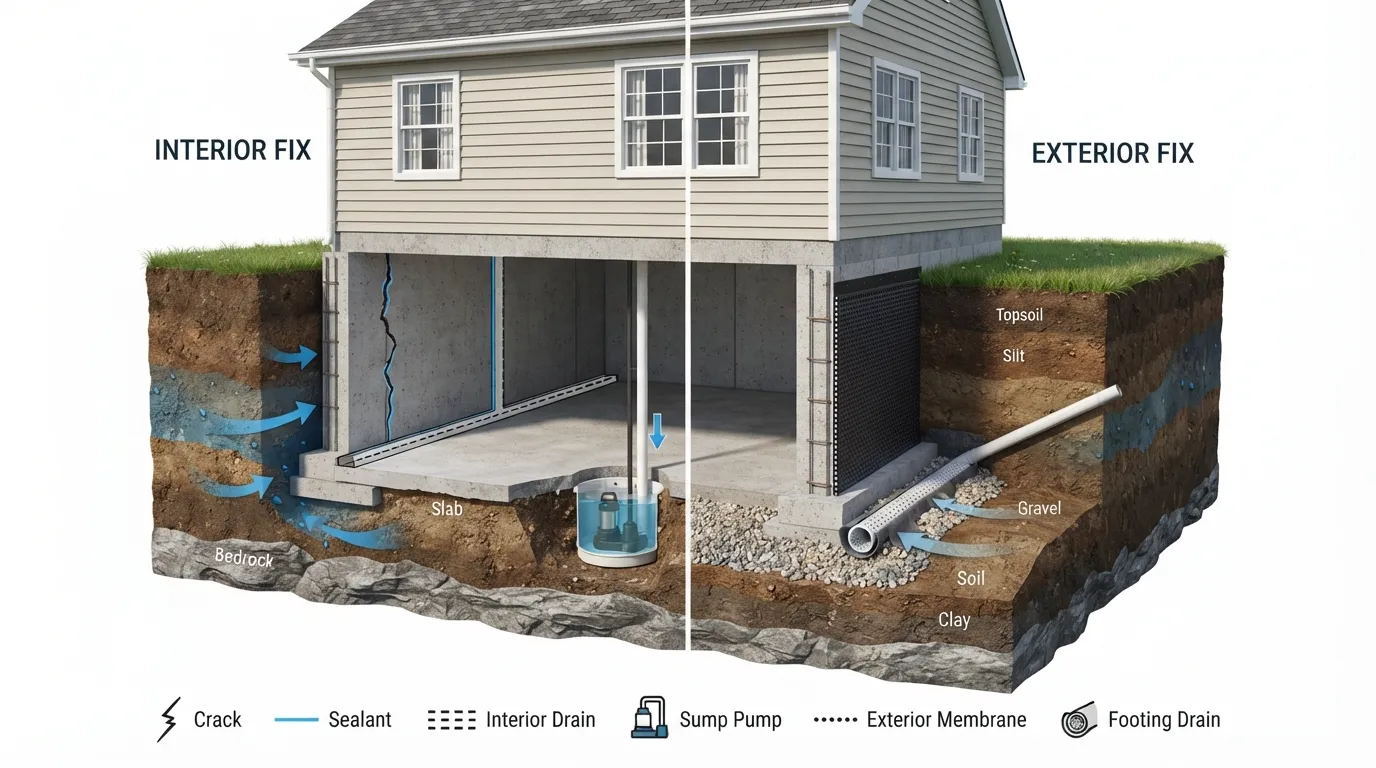
If water is finding its way into your basement, you’re probably dealing with two things at once: the mess in front of you, and the worry about what’s causing it. The good news is that basement leaks are one of the most common home issues, and in almost every case, there’s a clear reason behind them and a clear path to fixing them.
In this guide, I’ll walk you through why basements leak, how to tell what kind of leak you’re dealing with, how to fix it from the inside or the outside, what it typically costs, and when it’s time to bring in a professional instead of tackling it yourself.
Most basement water leaks are caused by hydrostatic pressure pushing groundwater through walls, cracks, or the wall-floor joint. Minor leaks can often be sealed from the inside with hydraulic cement or an interior drainage system, while larger or recurring leaks usually need exterior excavation or a professional interior French drain system to solve the problem permanently.
Why Is Your Basement Leaking?
Before you can fix a basement leak, it helps to understand where the water is actually coming from. Most leaks trace back to one of these causes:
- Hydrostatic pressure – When the soil around your foundation becomes saturated, it pushes water against your basement walls and floor with enough force to seep through even tiny cracks or porous concrete.
- The clay bowl effect – The soil backfilled around a foundation during construction is often looser than the surrounding native soil, so it acts like a bowl that collects and holds water right against your basement walls.
- Clogged or damaged drain pipes – If the exterior footing drain around your foundation is clogged with sediment or has collapsed over time, water has nowhere to go except into your basement.
- Cracks in the foundation wall or floor – Settling, temperature changes, and pressure over time can create cracks that become entry points for water.
- Leaks at the wall-floor joint – This is one of the most common leak points, since it’s where water pressure naturally concentrates as it moves downward through the surrounding soil.
Why Basements Leak More After Heavy Rain
If you’ve noticed your basement only leaks after a heavy storm, that’s not a coincidence. Heavy rainfall saturates the soil around your foundation faster than it can drain away naturally, which spikes hydrostatic pressure very quickly. In humid, storm-prone areas, this cycle repeats often enough that even a small crack or weak spot can turn into a recurring leak every time it rains hard. If this pattern sounds familiar, it’s usually a sign that your home’s drainage system isn’t moving water away from the foundation efficiently enough, rather than a one-time fluke.
Signs You Have a Basement Water Leak
Not all basement water problems show up as an obvious puddle. Watch for these warning signs:
- Damp or discolored patches on walls or flooring
- A musty, persistent odor even after cleaning
- White, chalky mineral deposits on concrete (called efflorescence)
- Peeling paint or bubbling on basement walls
- Visible cracks with moisture around the edges
- Puddling near the base of walls, especially after rain
Catching these early makes a real difference. A small seep is far easier and cheaper to address than a leak that’s had months to worsen the surrounding concrete or invite mold growth.
How to Fix a Leaky Basement Wall From the Inside
Interior repairs are usually the first thing homeowners try, especially for smaller, isolated leaks. Here’s the general process:
- Identify the source. Trace the water back to where it’s actually entering — a crack, the wall-floor joint, or a porous section of wall — rather than just where it pools.
- Clean and prep the area. Remove loose debris, dust, and any efflorescence so the repair material can properly bond to the concrete.
- Seal cracks with hydraulic cement or an epoxy injection. Hydraulic cement expands as it cures, which helps it plug active leaks even while water is still present.
- Install an interior drainage channel if needed. For ongoing seepage along the wall-floor joint, an interior French drain system captures water below the floor and routes it to a sump pump before it can spread.
- Add a sump pump if you don’t already have one. This gives collected water somewhere to go, rather than letting it sit and re-saturate the area.
Good to know: Interior sealants alone rarely stop a leak permanently if the underlying pressure problem isn’t addressed. They work best combined with proper interior drainage, not as a standalone fix for recurring leaks.
How to Fix a Basement Leak From the Outside
Exterior repairs go after the root cause rather than just sealing the symptom. This typically involves:
- Excavating around the foundation to expose the affected wall section
- Applying a waterproof membrane or coating directly to the exterior wall
- Installing or repairing exterior footing drains so groundwater is redirected away from the foundation before it can build up pressure
- Regrading the soil around the home so surface water slopes away from the foundation instead of toward it
Exterior work is more disruptive and typically requires professional equipment, but it addresses the pressure problem at its source rather than managing water after it’s already inside.
Inside vs. Outside Repair: Which One Do You Need?
Interior Repair
Best for: Isolated cracks, minor seepage, wall-floor joint leaks
Disruption: Low — work stays inside the basement
Speed: Usually completed faster
Limitation: Manages water rather than eliminating outside pressure
Exterior Repair
Best for: Recurring leaks, foundation-wide seepage, drainage failures
Disruption: Higher — involves excavation around the home
Speed: Longer project timeline
Advantage: Addresses the water pressure problem directly at the source
Emergency Checklist: What to Do Right Now If Water Is Coming In
⚠ If your basement is actively leaking or flooding:
- Move electronics, furniture, and stored items away from the water and off the floor.
- Do not touch electrical outlets, switches, or appliances if water is near them.
- If it’s safe, shut off electricity to the affected area at the breaker.
- Use towels, a wet vacuum, or a portable pump to remove standing water where possible.
- Take photos of the damage for insurance purposes before cleanup.
- If the leak is significant or you’re unsure of the source, call a plumbing professional right away rather than waiting to see if it stops.
How Much Does Basement Water Leak Repair Cost?
There’s no single price that applies to every basement, because cost depends heavily on a few key factors:
- The extent of the problem — a single hairline crack costs far less to fix than seepage along an entire wall
- Interior vs. exterior repair — exterior excavation involves more labor, equipment, and time than an interior sealant or drainage fix
- Whether a sump pump or drainage system needs to be installed alongside the repair
- Accessibility — landscaping, patios, or structures near the foundation can add complexity to exterior work
- Whether the damage has spread to flooring, drywall, or insulation, which adds restoration costs on top of the repair itself
The most reliable way to know what your specific repair will cost is to get an on-site inspection, since two basements with the same symptom can have very different underlying causes.
When to Call a Professional
DIY sealing is worth trying for small, isolated cracks you can clearly identify. But it’s time to call in a professional when:
- The leak keeps coming back after a DIY repair
- Water is entering from multiple spots or along an entire wall
- You notice bowing, cracking, or structural movement in the wall
- The leak coincides with a musty smell or visible mold
- You’re not sure whether the issue is a wall leak, a drainage failure, or a plumbing issue
If the leak turns out to be tied to a clogged or damaged drain line rather than the foundation itself, a professional drain cleaning service can clear the blockage and get water moving away from your home the way it’s supposed to. Our team at Miami Florida Plumbing can inspect the source of the leak and walk you through the most practical fix for your specific situation — you can give us a call whenever you’re ready to get it looked at.
Watch: Understanding Basement Water Leak Repair
If you’d rather see the process in action, this video walks through what a basement leak repair typically looks like from start to finish:
How to Prevent Future Basement Leaks
- Keep gutters and downspouts clean, and extend downspouts so they discharge well away from the foundation
- Grade soil around the home so it slopes away from the walls rather than toward them
- Check and maintain your sump pump before rainy season
- Seal small cracks as soon as you notice them, before they widen
- Have your exterior drainage inspected periodically, especially if your home is older or has had leaks before
Frequently Asked Questions
How expensive is it to fix a leaky basement?
Cost varies widely based on whether the fix is a simple interior seal or a full exterior excavation, plus how much damage has already spread. An in-person inspection is the only reliable way to get an accurate figure for your situation.
Can a leaky basement be fixed from the inside?
Yes, for many leaks — especially isolated cracks or wall-floor joint seepage — an interior seal or drainage system can effectively stop the water. Larger or recurring leaks often need an exterior fix as well.
Why is my basement leaking after heavy rain?
Heavy rain saturates the soil around your foundation quickly, which raises hydrostatic pressure and pushes water through any weak points in the wall or floor. It usually points to a drainage issue rather than a one-time event.
What soaks up water in a basement?
For small amounts of standing water, towels, a wet/dry shop vacuum, or a portable water pump work well. For larger amounts, a sump pump is the most effective and fastest option.
How do I stop water from seeping through my basement walls?
Seal visible cracks with hydraulic cement, and if seepage continues, an interior drainage channel paired with a sump pump usually stops the water for good. Persistent, widespread seepage often points to an exterior drainage fix instead.
Will DampRid work in a basement?
DampRid and similar moisture absorbers can help reduce ambient humidity in the air, but they won’t stop an active water leak. They’re a helpful addition for general dampness, not a fix for a leaking wall or floor.
What is the best product to stop water leaks in a basement?
Hydraulic cement is one of the most reliable options for sealing active cracks, since it expands as it cures. For ongoing seepage, an interior drainage system paired with a sump pump is more effective than sealants alone.
How long can water sit in a basement?
The sooner standing water is removed, the better — mold can begin developing within 24 to 48 hours in damp conditions. Prompt cleanup and drying reduce the risk of structural and air quality issues.
What is the cheapest way to waterproof a basement?
Basic prevention steps — extending downspouts, grading soil away from the foundation, and sealing minor cracks early — are the most affordable ways to reduce leak risk before investing in a larger drainage or excavation project.
Dealing with a basement leak right now?
Our team can inspect the source of the leak and recommend the right fix for your home.