Commercial drainage is not simply about installing a bigger drain. The right solution depends on where the water comes from, where it collects, how quickly it needs to move, what kind of traffic the area handles, and where that water can safely go.
There is no single “best” commercial drainage system. Trench drains work well for collecting water across paved surfaces, catch basins collect runoff at low points, French drains manage certain subsurface-water problems, and detention or infiltration systems help manage larger volumes of stormwater. The correct choice starts with diagnosing the source of the water and the conditions of the property.
If you are responsible for a parking lot, restaurant, warehouse, office building, retail property, HOA, loading area, or another commercial site, this guide will help you understand the main commercial drainage solutions, when each one makes sense, what can go wrong, and when a drainage problem may actually require cleaning or inspection instead of a completely new system.
What Is a Commercial Drainage System?
A commercial drainage system is the combination of drains, channels, basins, pipes, grading, storage components, and discharge paths used to control water around or inside a commercial property.
The important part is that not every drainage problem involves the same kind of water.
Handles rainwater and runoff from roofs, parking lots, sidewalks, driveways, landscaped areas, and other exterior surfaces.
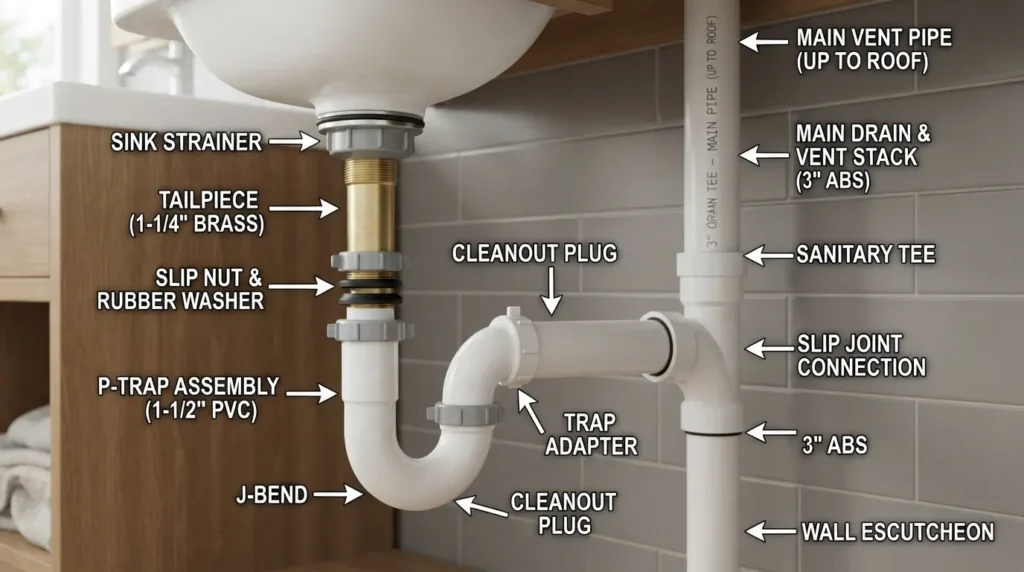
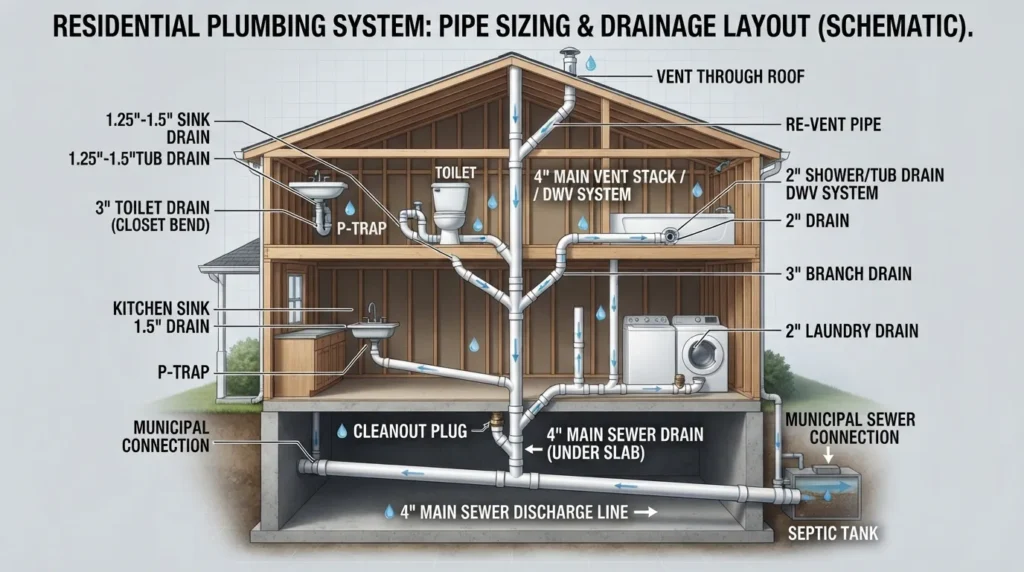
Carries wastewater from fixtures such as sinks, toilets, floor drains, kitchens, and other plumbing connections.
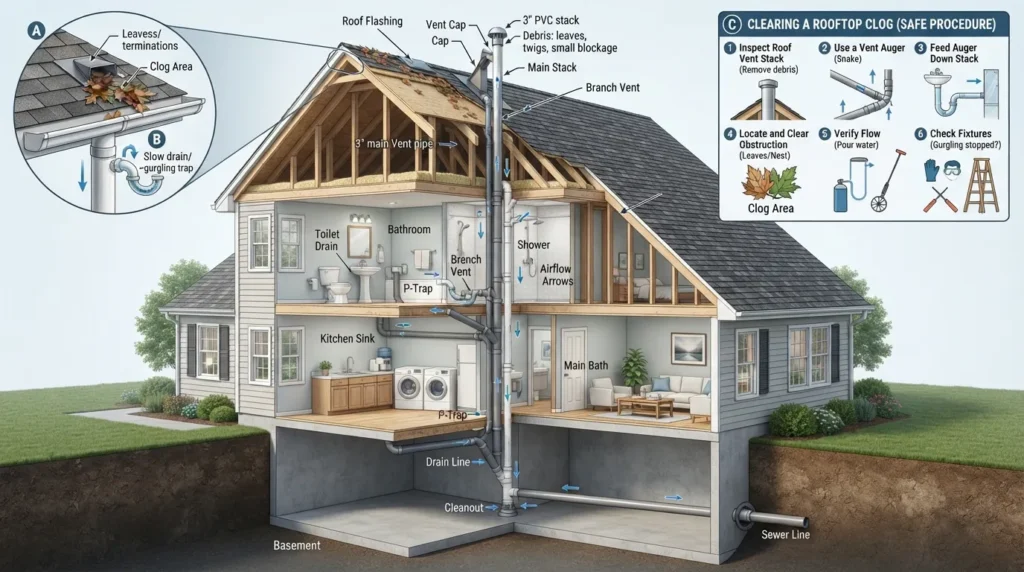
Helps redirect water moving through or accumulating in soil around foundations, landscaped areas, or other parts of a site.
That distinction matters because a parking lot that floods during heavy rain needs a very different investigation from a restaurant floor drain that keeps backing up.
If you want a broader explanation of how drainage works throughout a property, see our guide to understanding a home and property drainage system.
Start With the Problem, Not the Drain
One of the easiest mistakes is choosing a drainage product before identifying why water is accumulating in the first place.
Before deciding between a trench drain, catch basin, French drain, or another solution, ask these questions:
- Does water appear only during rainfall, or does it occur even when the weather is dry?
- Is the water collecting on the surface or coming through saturated soil?
- Does it accumulate at one low point or across a wide paved area?
- Is the issue outside the building or inside floor drains and plumbing fixtures?
- Does water drain eventually, or does it remain standing?
- Does the same drain repeatedly clog or back up?
- Will vehicles, delivery trucks, forklifts, or pedestrians travel over the drainage area?
- Where will collected water ultimately discharge or be stored?
Standing water or a backup can sometimes be caused by debris, grease, sediment, a restricted outlet, a damaged pipe, poor grading, or an existing drain line that needs cleaning. Diagnosing the cause first can prevent you from solving the wrong problem.
Common Commercial Drainage Solutions
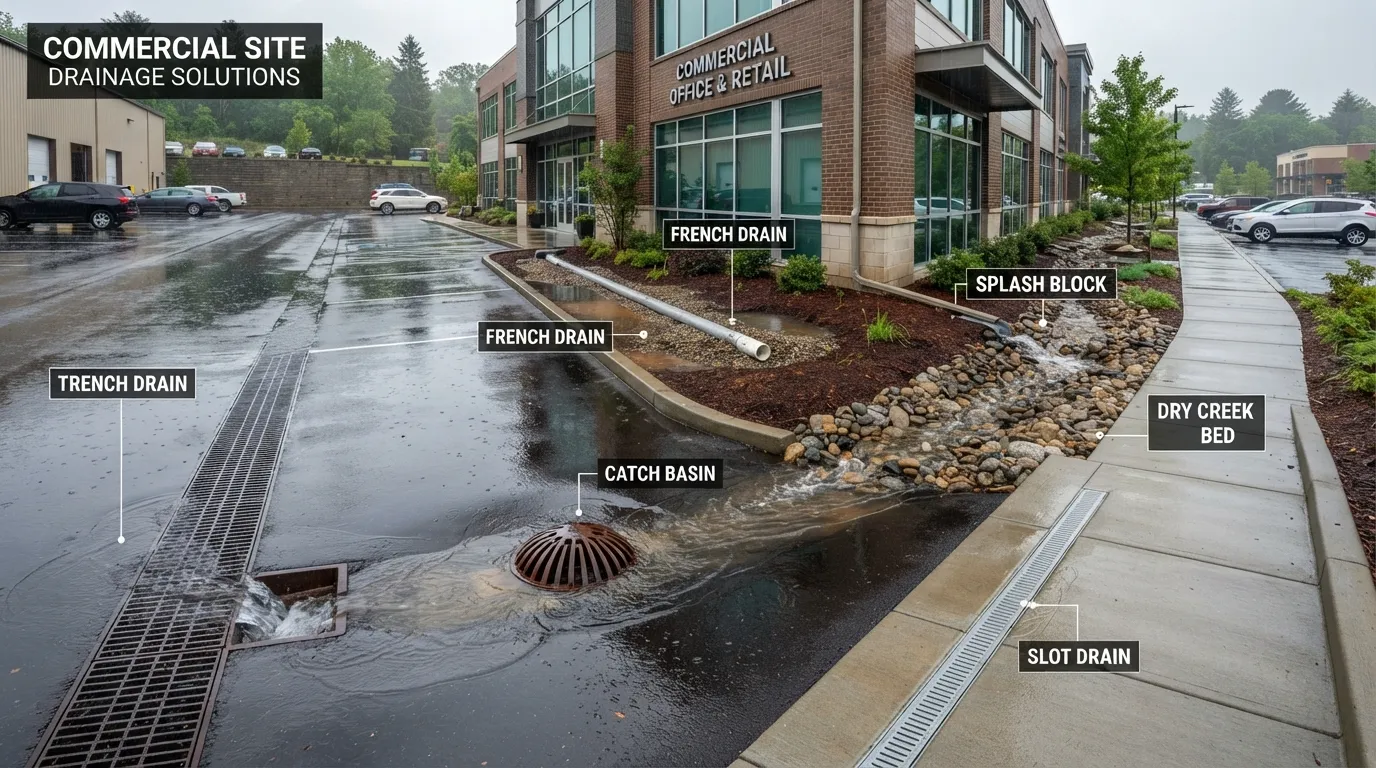
1. Trench Drains and Channel Drains
Trench drains are long drainage channels installed across or alongside a surface to intercept moving water. They are commonly considered where runoff needs to be collected across a wider area rather than at a single point.
They may be useful around:
- Parking areas
- Loading docks
- Garage entrances
- Driveways
- Service areas
- Commercial walkways
The grate, channel, outlet, surrounding slope, and expected traffic load all matter. A drainage channel in a pedestrian area does not have the same requirements as one exposed to commercial vehicles.
Best evaluated when: water moves across a broad paved surface and needs to be intercepted before reaching a building, doorway, or low area.
Common weakness: installing a channel does not fix the problem if the outlet is undersized, blocked, poorly located, or unable to accept the collected water.
2. Catch Basins
A catch basin collects runoff at a low point and transfers it into connected drainage piping. Many designs also provide space for sediment and debris to settle before that material enters downstream piping.
Catch basins are often considered for:
- Parking lots
- Courtyards
- Landscaped commercial areas
- Low spots in paved areas
- Locations receiving runoff from several directions
Best evaluated when: water naturally converges toward a specific low point.
Common weakness: a basin can lose performance when debris and sediment are allowed to accumulate or when the connected drain line becomes restricted.
3. French Drains
A French drain typically uses a gravel-filled trench and perforated pipe to collect and redirect water moving through the surrounding soil.
It may be considered when dealing with:
- Persistently wet soil
- Water accumulating near certain foundation areas
- Landscape drainage problems
- Subsurface seepage
A French drain should not automatically be chosen simply because water is visible. If the main issue is fast-moving surface runoff across concrete or asphalt, another collection method may be more appropriate.
Best evaluated when: the problem involves water within the soil rather than only water moving across a hard surface.
Common weakness: performance depends heavily on site conditions, the outlet, installation details, and the ability of the surrounding area to accept or convey water.
4. Slot Drains
Slot drains use a narrow surface opening to collect water while keeping most of the drainage channel below the finished surface.
They may be considered where drainage performance and a less visually prominent surface opening are both important.
Potential locations include:
- Commercial entrances
- Plazas
- Pedestrian areas
- Architecturally sensitive spaces
The suitability of a slot drain depends on expected water volume, maintenance access, surface design, and load conditions.
5. Swales and Grading
Not every drainage solution needs to begin underground. Proper grading helps move water away from structures and toward an appropriate drainage or storage area.
Swales are shallow, shaped channels that direct runoff across landscaped areas. Depending on the property and design, they may help control the path and speed of surface water.
Best evaluated when: the site has enough space to manage runoff through surface contours.
Common weakness: poor slope, settlement, landscaping changes, or an inadequate discharge point can reduce effectiveness.
6. Bioretention and Landscape-Based Stormwater Solutions
Some commercial sites use landscaped stormwater features such as bioswales or bioretention areas to slow, collect, filter, or manage runoff as part of a larger site design.
These systems may be useful when stormwater management is being integrated into landscaping or redevelopment rather than handled solely through pipes and drains.
They require site-specific design. Soil conditions, available space, drainage characteristics, maintenance, and local requirements all influence whether they are appropriate.
7. Detention and Retention Systems
Large commercial sites may need to temporarily store or manage substantial stormwater volume rather than immediately send all runoff downstream.
Detention systems generally hold runoff temporarily and release it in a controlled manner.
Retention systems are designed to hold water differently depending on the system and site design.
These solutions are more likely to be part of an engineered stormwater strategy for larger properties rather than a simple plumbing repair.
8. Underground Stormwater Chambers
Where above-ground space is limited, commercial developments may use underground storage or infiltration structures as part of a stormwater-management design.
These systems can provide storage beneath areas that still need to serve another purpose at the surface, but they require proper engineering, site evaluation, installation, inspection access, and an appropriate downstream or infiltration strategy.
Commercial Drainage Solution Comparison
Useful for: Water crossing wide paved areas
Watch for: Load rating, slope, debris, outlet capacity
Useful for: Runoff collecting at a low point
Watch for: Sediment, debris, clogged outlet piping
Useful for: Certain subsurface-water problems
Watch for: Soil conditions, outlet, sediment, installation
Useful for: Linear collection with a discreet surface opening
Watch for: Cleaning access and required capacity
Useful for: Directing runoff through surface contours
Watch for: Slope, erosion, settlement, discharge location
Useful for: Larger-volume stormwater management
Watch for: Engineering, site constraints, inspection and maintenance
Which Commercial Drainage System Is Best?
The most effective drainage system is the one matched to the actual source and movement of water.
If water travels across a large paved surface:
Evaluate grading plus a trench or channel-style collection system.
If water collects at one low point:
A catch basin or point-drain strategy may deserve evaluation.
If soil remains wet or water moves below the surface:
Evaluate subsurface drainage conditions before choosing a French drain or similar system.
If a large site produces more runoff than can be discharged immediately:
An engineered detention, retention, infiltration, or underground storage strategy may be appropriate.
If an interior floor drain or sanitary line repeatedly backs up:
Investigate the existing plumbing and drain line before assuming you need a new stormwater system.
Choose the Solution Based on the Property Area
Parking Lots
Parking lots create large paved areas where runoff can move quickly and collect at low points. Drainage planning may involve grading, catch basins, trench drains, underground piping, and larger stormwater-management components depending on the site.
The design should also account for the type of traffic using the property and the amount of sediment or debris reaching the drains.
Loading Docks and Service Areas
Loading areas can require linear collection because water may move across a wide paved surface. Drainage components also need to be selected with the expected vehicle loads and maintenance conditions in mind.
Restaurants
Restaurants can have two completely different drainage concerns: exterior stormwater and interior sanitary drainage.
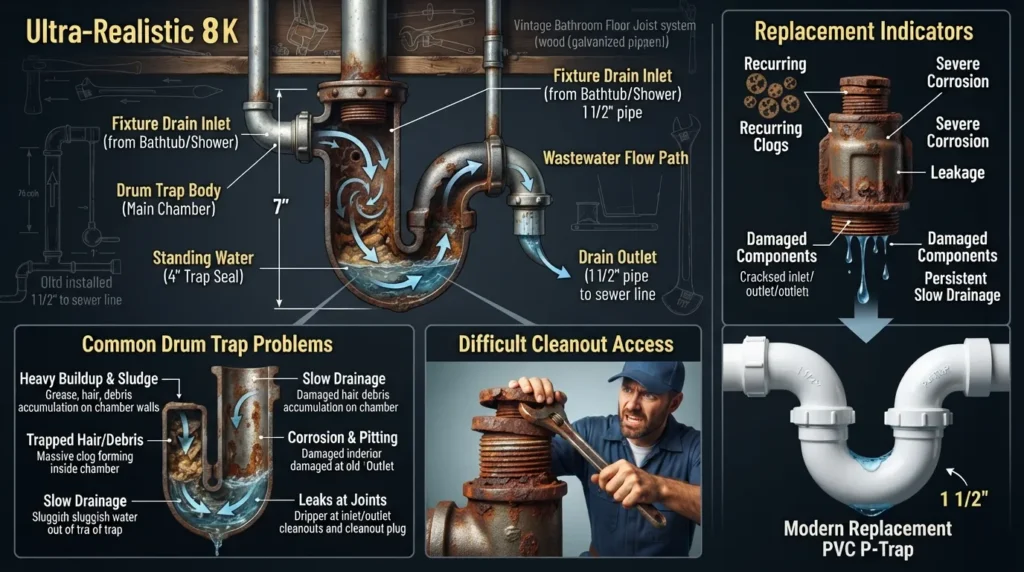
If the issue involves slow sinks, backed-up floor drains, grease-related restrictions, or recurring plumbing blockages, the problem may belong to the sanitary drain system rather than the site’s stormwater infrastructure.
Warehouses and Industrial Properties
Warehouses may have loading areas, roofs, parking surfaces, floor drains, and service zones that each behave differently. Identifying whether water is stormwater, process-related water, or sanitary wastewater is essential before selecting a solution.
Retail, Office, and Mixed-Use Properties
These properties often need to manage water around entrances, sidewalks, parking areas, landscaped sections, and roof drainage. Standing water can also create access and maintenance problems, so drainage needs to be considered as part of how people use the site.
Commercial Drainage in Miami: Why Local Conditions Matter
Commercial drainage decisions in Miami and Miami-Dade should not be copied blindly from a drainage plan created for another region.
Heavy rainfall, extensive paved surfaces, site elevation, soil conditions, existing drainage infrastructure, and the property’s approved discharge strategy can all affect how water behaves.
During periods when the ground is already saturated, water may also have less opportunity to infiltrate into surrounding soil. That makes it especially important to evaluate the entire water path instead of assuming that sending runoff into the ground will always solve the problem.
Depending on the scope of work, commercial stormwater projects may involve site design, engineering, permitting, environmental requirements, or coordination beyond ordinary plumbing work. Before modifying a major commercial drainage or discharge system, confirm what applies to the specific property and project.
For local plumbing and drainage help, you can learn more about our Miami plumbing services.
Drainage Design Problem or Clogged Drain? Know the Difference
This distinction can save unnecessary work.
A property may appear to have an inadequate drainage system when the real problem is that the existing drainage path is restricted.
Signs that an inspection or cleaning issue may be involved include:
- A drain that worked normally in the past but has become progressively slower
- Recurring backups from the same floor drain
- Multiple connected drains slowing at the same time
- Water backing up instead of simply ponding on the surface
- Grease, sludge, sediment, or debris repeatedly affecting drainage
- A problem that returns shortly after basic clearing
Depending on the situation, professional diagnosis may involve drain cleaning, hydro jetting, or camera inspection to understand what is happening inside the line.
If your commercial property is dealing with recurring blocked or slow drains, our commercial drain cleaning service can help identify and clear problems within the existing drainage system.
What Causes Commercial Drainage Problems?
Commercial drainage problems are rarely caused by only one thing. Common causes can include:
- Debris accumulation
- Sediment buildup
- Grease or waste inside sanitary drain lines
- Improper grading
- Low spots created by settlement
- Restricted or damaged drain piping
- Blocked outlets
- Insufficient drainage capacity for the site conditions
- Changes to landscaping or paved areas
- Insufficient maintenance
That is why replacing one visible drain component without understanding the rest of the system can fail to correct the underlying problem.
Six Things Every Commercial Drainage Plan Should Address
You may see searches asking about the “six mandatory requirements” of a drainage system. There is not one universal six-item code checklist that applies to every commercial property, system, and jurisdiction.
For practical planning, however, I would make sure any commercial drainage strategy addresses these six questions:
- Collection: How will water enter the drainage system?
- Capacity: Can the system manage the expected volume and flow?
- Conveyance: How will water move through channels or pipes?
- Destination: Where will the collected water safely discharge, infiltrate, or be stored?
- Durability and access: Can the components handle site loads while remaining accessible for inspection and maintenance?
- Compliance: Does the design meet applicable property, engineering, environmental, and local requirements?
If one of those pieces is missing, even a high-quality drain component may not solve the overall problem.
What Are the Three Types of Drainage?
There is no single universal three-category classification used for every drainage context. For a commercial property owner, a useful way to think about drainage is:
- Surface drainage — manages runoff moving across pavement, roofs, landscaping, or other surfaces.
- Subsurface drainage — manages certain water conditions within the soil.
- Building and sanitary drainage — moves wastewater through plumbing and sewer or waste lines.
Large commercial properties may use elements from all three categories.
What Type of Pipe Should Be Used for Commercial Drainage?
There is no one pipe material that is automatically best for every drainage project.
The correct pipe should be selected according to factors such as:
- Whether it carries stormwater or sanitary wastewater
- Required pipe diameter and flow capacity
- Burial depth
- Soil and site conditions
- Vehicle and surface loads
- Connection requirements
- Installation method
- Applicable codes and project specifications
Instead of choosing a pipe because it is commonly sold for drainage, match the material and pipe specification to the entire system design.
How Much Does a Commercial Drainage System Cost?
There is no responsible single average price that applies to all commercial drainage systems. A short drain-cleaning job and a large engineered stormwater project are completely different scopes of work.
Commercial drainage cost can be affected by:
- Type of drainage solution
- Length and size of drainage channels or piping
- Excavation requirements
- Concrete or pavement removal and restoration
- Depth of underground components
- Vehicle load requirements
- Number of catch basins or inlets
- Existing underground utilities
- Site access
- Engineering or permitting requirements
- Outlet or storage requirements
- Condition of the existing drainage system
The cheapest system to install can become expensive if it does not solve the actual water problem, cannot handle the site’s conditions, or requires repeated repairs. Compare the complete solution, expected maintenance, durability, and suitability for the property.
How Much Does a 200-Foot French Drain Cost?
A reliable price cannot be determined from length alone.
Two 200-foot French drains can require very different amounts of work depending on excavation depth, access, soil, pipe specification, aggregate, disposal, nearby utilities, restoration, outlet design, and whether equipment can reach the installation area.
If you need an accurate figure, the property should be evaluated rather than applying a generic price-per-foot estimate from an unrelated project or location.
What Is the Cheapest Drainage Method?
The cheapest drainage solution depends on what is causing the problem.
In some situations, correcting grading or maintaining an existing drainage path may involve less work than constructing a new underground system. In other cases, those approaches will not be sufficient.
The better question is:
What is the least complex solution that reliably solves the actual drainage problem without creating another one downstream?
Commercial Drainage Maintenance Matters
Even a properly designed drainage system can lose performance when it is not maintained.
A maintenance plan may include:
- Removing leaves and debris from grates
- Cleaning sediment from catch basins
- Checking visible drains for slow flow
- Inspecting outlets for obstruction
- Watching for erosion or settlement around drainage areas
- Addressing recurring sanitary drain buildup
- Inspecting underground piping when recurring problems suggest a hidden restriction or defect
The right frequency depends on the property, drainage design, surrounding landscaping, business activity, and how much sediment, grease, or debris reaches the system.
When Should You Call a Plumber?
A commercial drainage problem deserves professional attention when you are dealing with:
- Recurring drain backups
- Slow commercial floor drains
- Several drains slowing at once
- Sewage or wastewater backing up
- Recurring grease or sludge restrictions
- A drain that needs repeated clearing
- Suspected damage inside an underground sanitary line
A broader civil, site-drainage, or stormwater specialist may be needed when the issue involves major grading, detention systems, large stormwater infrastructure, engineered site drainage, or substantial modification of how runoff leaves the property.
The key is getting the problem into the right category before paying for the solution.
If water is backing up through commercial drains or the same plumbing line keeps causing problems, start by identifying what is happening inside the existing system before assuming a full redesign is necessary.
Commercial Drainage Video: How a Catch Basin Works
If you want to see one of the common stormwater collection components in action, this video provides a useful visual reference for understanding catch basins and drainage flow.
Frequently Asked Questions About Commercial Drainage Solutions
What is the most effective drainage system?
The most effective system is the one matched to the source, volume, and path of the water. A trench drain may be effective for paved surface runoff, while a French drain may be more appropriate for certain subsurface-water problems. Large commercial sites may require engineered stormwater storage or detention.
Which drainage system is best for a commercial property?
There is no universal best system. The right solution depends on whether you are managing surface runoff, subsurface water, sanitary wastewater, a single low point, a large paved area, or a high-volume stormwater problem.
What are common commercial drainage problems?
Common problems include standing water, clogged drains, sediment buildup, restricted outlets, poor grading, recurring sanitary backups, inadequate drainage capacity, erosion, and damaged underground piping.
What is the best solution for standing water in a parking lot?
First determine why the water is standing. The solution may involve correcting grading, adding or improving catch basins, using trench drainage, clearing a blocked outlet, increasing conveyance capacity, or addressing a larger stormwater-management issue.
How often should commercial drains be cleaned?
There is no single cleaning schedule for every property. Frequency depends on the type of drain, business activity, debris or grease exposure, surrounding landscaping, past blockage history, and the design of the system. Properties with recurring buildup may need a more proactive maintenance plan.
Can a clogged drain cause commercial flooding?
Yes, a restricted drain or outlet can prevent water from moving through an existing system as intended. However, flooding can also be caused by grading, inadequate capacity, excessive runoff, or larger site-drainage problems, so the cause should be diagnosed before choosing a repair.
Related Commercial Drainage Resources
If you are researching commercial drainage products, system design, or stormwater-management options in more depth, these external resources can provide additional technical information. Product resources are listed for research purposes and are not a substitute for site-specific design or professional evaluation.
- NDS Commercial Drainage Applications — commercial stormwater collection, conveyance, detention, and infiltration solutions.
- Advanced Drainage Systems — drainage pipe, stormwater management, basins, and underground system resources.
- Trench Drain Systems — trench drains, channel systems, grates, load considerations, and commercial applications.
- Miami-Dade County Stormwater Information — local information about stormwater, runoff, and flood protection considerations.
Final Takeaway: Diagnose First, Then Choose the Drainage Solution
If you remember only one thing from this guide, make it this:
Do not choose a commercial drain by name. Identify where the water comes from, where it collects, why the existing path is failing, and where the water needs to go.
A trench drain, catch basin, French drain, slot drain, swale, detention system, or underground stormwater system can all be effective when used in the right situation. None of them is automatically the right answer for every property.
And when the problem is actually inside an existing commercial drain or sewer line, cleaning and inspection may solve an issue that a new exterior drainage system would never address.
Start with the diagnosis. Then choose the simplest, most appropriate solution that manages the water safely and fits the property.