If your drain is slow or completely clogged, you probably want one simple answer: What is the best drain cleaner?
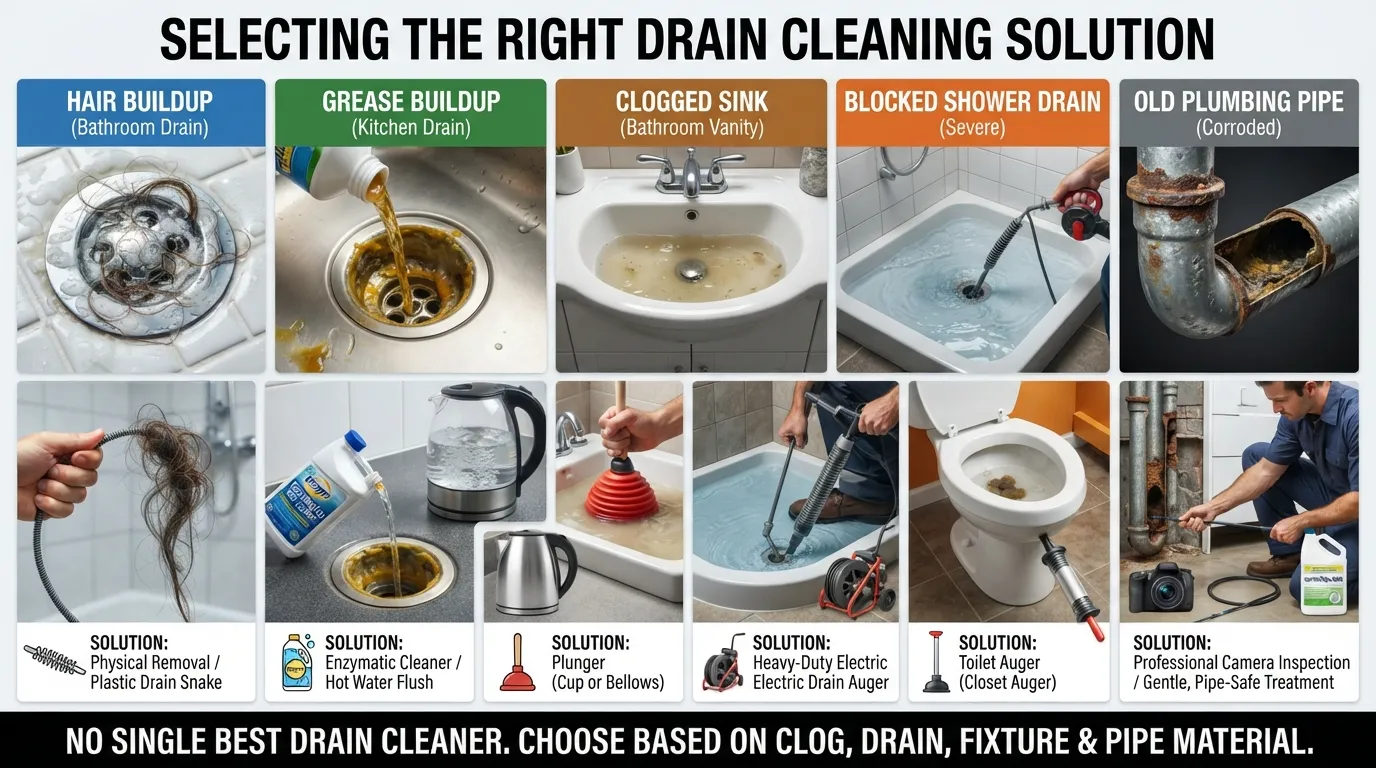
Here is the answer I would want you to know before you pour anything into the pipe: there is no single best drain cleaner for every clog. The right choice depends on what is blocking the drain, where the clog is located, the condition of the pipe, and whether you are dealing with a slow drain or a complete backup.
What Is the Best Drain Cleaner?
For reachable hair: remove it physically with a drain hair tool or snake first.
For a hair clog that needs a liquid product: use a product specifically labeled for hair, such as Liquid-Plumr Hair Clog Eliminator or a targeted hair-clog dissolver, only where the label permits.
For a general kitchen or bathroom sink clog: a gel designed to move through standing water, such as Drano Max Gel, may be an option when the clog and fixture match the label directions.
For a toilet: start with a toilet plunger or closet auger rather than assuming a sink drain cleaner belongs in the toilet.
For recurring grease or organic buildup: restoring flow and then using an appropriate enzyme or bacterial maintenance product may make more sense than repeatedly attacking the line with a strong chemical.
For recurring clogs, multiple backed-up fixtures, sewage, roots, or a deep main-line blockage: stop experimenting with bottles and diagnose the drainage system.
The key is to stop thinking only in terms of the strongest drain cleaner. A stronger chemical is not automatically a better solution. I would first identify the clog, then match the least-disruptive effective method to it.
Use This 60-Second Drain Cleaner Decision System
Before buying a drain unclogger, answer four questions.
1. Where Is the Clog?
Kitchen sink, bathroom sink, shower, bathtub, toilet, laundry drain, floor drain, or several fixtures at once?
2. What Is Probably Blocking It?
Hair, grease, food residue, soap scum, organic sludge, toilet paper, a foreign object, roots, or an unknown obstruction?
3. How Severe Is It?
Slow drainage, partial clog, standing water, complete blockage, or a problem that keeps returning?
4. What Is the Pipe Condition?
Modern PVC or ABS, metal piping, older cast iron, galvanized piping, repaired sections, or simply unknown?
This matters because a hair clog just below a shower strainer should not automatically be treated the same way as grease farther down a kitchen branch line or a main sewer blockage affecting several fixtures.
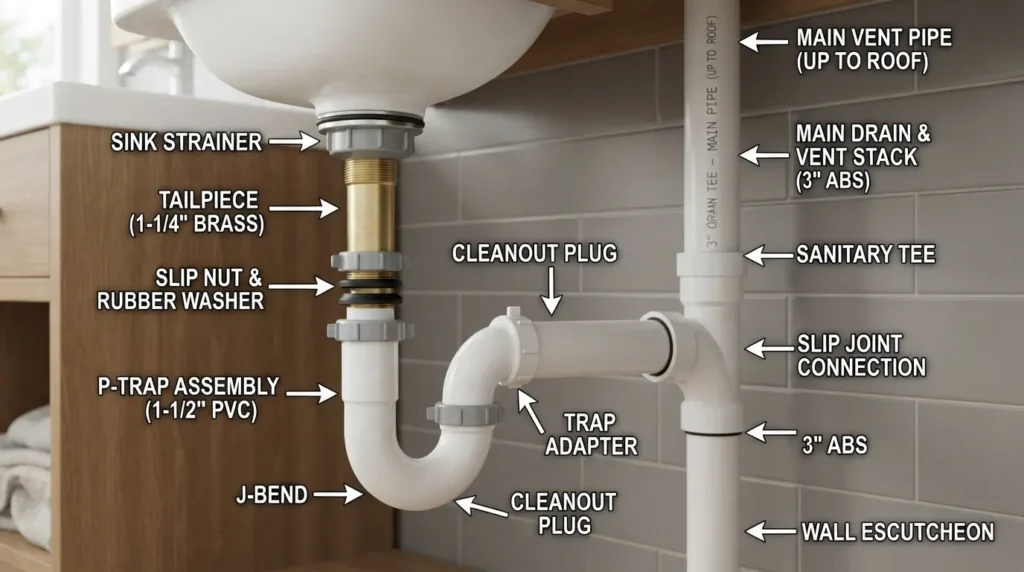
If you want to understand why one slow fixture can indicate a very different problem from several fixtures backing up together, our guide to the home drainage system and how it works explains the path from fixture drains and P-traps to branch lines, building drains, and the sewer or septic system.
Best Drain Cleaner by Clog Type and Location
Instead of forcing one product into every situation, here is how I would narrow the choice.
Best Drain Cleaner for Hair: Remove What You Can First
Hair is one of the most common reasons bathroom sinks, tubs, and shower drains slow down. It combines with soap residue and other buildup to form a dense obstruction near the stopper, strainer, trap, or nearby pipe.
If the hair is reachable, my first move would be physical removal. Take out the stopper or strainer if it can be safely removed, pull out visible hair, or use a plastic hair-removal tool or appropriately sized drain snake.
That approach has one major advantage: instead of trying to dissolve the blockage, you can actually remove it.
If you prefer a liquid bathroom drain cleaner, choose one specifically designed and labeled for hair. Liquid-Plumr markets its Pro-Strength Hair Clog Eliminator for dense hair clogs, while Green Gobbler offers a targeted hair-clog remover for sinks, showers, and tubs.
Best first choice for a shower or bathtub hair clog:
Remove accessible hair first. Use a hair-specific product only when physical removal does not solve the problem and the product label confirms it is appropriate for your fixture and plumbing.
Best Drain Cleaner for a Kitchen Sink
Kitchen drain clogs are different because the buildup may include grease, cooking oil, food residue, soap, and organic material.
Start by checking the strainer and disposal area if your sink has a garbage disposal. Avoid putting your hand into a disposal. If there is standing water and the blockage appears to be a typical organic kitchen-drain clog, a labeled gel drain clog remover may be one option.
Drano states that Max Gel is intended for kitchen and bathroom drains, can move through standing water, and can be used with plastic or metal pipes when its label directions are followed.
But a bottle is not automatically the best answer for every grease problem. A deep or recurring grease restriction may need mechanical cleaning or, when the pipe condition is appropriate, professional hydro jetting that removes accumulated material from more of the pipe wall.
Best Drain Cleaner for Grease Buildup
There is an important difference between clearing an active grease blockage and maintaining a drain that already flows.
If the sink is fully backed up, pouring maintenance products on top of the problem may not solve the underlying restriction. Restore flow first.
For ongoing organic and grease maintenance, bacterial and enzymatic products are worth separating from fast chemical clog removers. They are generally designed to work on organic material over time rather than provide the same rapid action as a caustic or oxidizing opener.
One plumber-supervised 60-day comparison published by Mother Modern Plumbing tested 14 products with a specific focus on grease and found bacterial products performed best for long-term grease management in that particular test. That does not mean the same winner is automatically best for hair, toilets, foreign objects, or every household drain.
Important distinction:
A maintenance treatment is not necessarily a clog opener. For example, Drano’s enzyme/bacteria-based FlowGuard Build-Up Remover is specifically described by the manufacturer as a preventive maintenance product that will not open an existing clog.
Best Drain Cleaner for a Bathroom Sink
Bathroom sink clogs frequently involve hair, soap residue, toothpaste, grooming products, and organic buildup around the stopper and P-trap.
- Remove and clean the stopper if it is easily accessible.
- Pull out visible hair and debris.
- Try a sink plunger if appropriate.
- Use a hair or organic-clog product only if the label fits the drain.
- If the same sink repeatedly clogs, investigate the trap or branch line instead of repeatedly adding cleaner.
A recurring bathroom sink clog is information. It tells you the problem may extend beyond the visible drain opening.
Best Drain Cleaner for a Shower or Bathtub
For a shower or tub, hair should be high on your suspect list. That is why a hair-removal tool or drain snake is often more logical than immediately reaching for the strongest chemical drain opener on the shelf.
Manufacturers also offer liquid products specifically formulated for hair. If you use one, read its directions before application, check fixture compatibility, provide the ventilation called for on the label, and never improvise by mixing it with another cleaner.
Liquid-Plumr’s own bathtub guidance recommends removing the stopper or strainer and physically removing as much buildup as possible before progressing to a clog-removal product.
Best Drain Cleaner for a Toilet
A toilet deserves its own rule. Do not assume a product that works in a kitchen sink or shower belongs in a toilet.
For a typical toilet clog, start with a properly sized flange plunger. If that does not work, a closet auger can physically reach an obstruction farther into the toilet trapway.
Drano’s own FAQ says several of its common clog-removal products, including Max Gel, are ineffective in toilets because of toilet trap configuration.
Do not treat a toilet like a sink.
A toilet plunger or closet auger is usually a more logical first tool. If the toilet backs up together with a shower, tub, or floor drain, the problem may be farther down the drainage system.
Best Drain Cleaner for Old Pipes
If you have old pipes, I would not choose a cleaner simply because the label or advertisement describes it as “industrial strength,” “professional strength,” or the “strongest drain opener.”
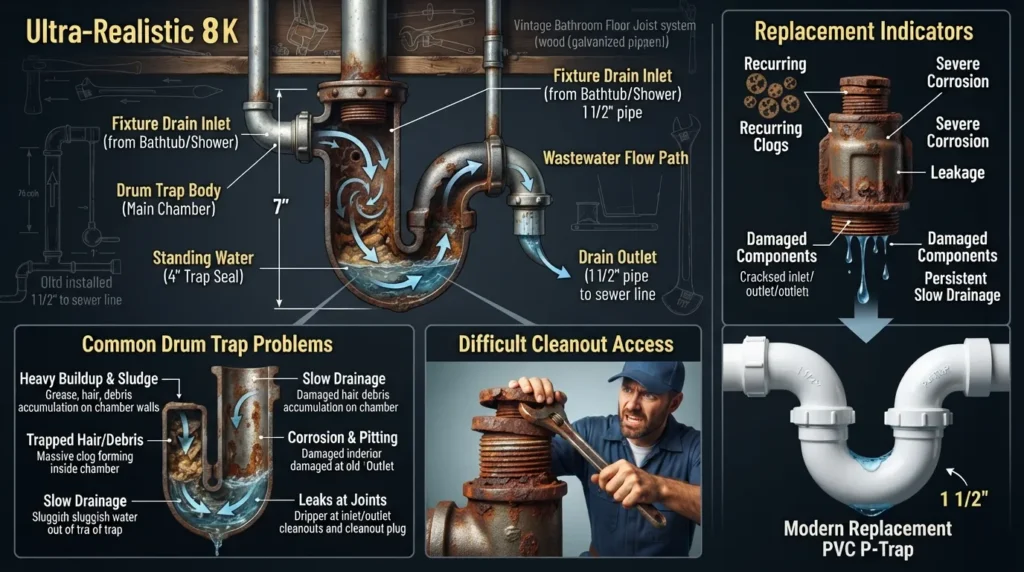
Older plumbing may include cast iron, galvanized steel, copper drainage piping, plastic repairs, mixed materials, corrosion, scale, or already weakened sections. Pipe condition matters as much as the name of the material.
Some manufacturers state that their products are compatible with common plastic and metal pipes when used exactly as directed. That is useful information, but it does not tell you whether an old, deteriorated, cracked, heavily corroded, or previously damaged line is healthy.
If the pipe condition is questionable or a clog repeatedly returns, diagnosis is more valuable than simply increasing chemical strength.
Best Drain Cleaner for a Smelly Drain
A bad drain smell does not automatically mean you need the strongest liquid drain cleaner.
Odor can be associated with organic residue and biofilm, but it can also involve a dirty stopper, buildup inside a P-trap, a dry trap, drainage problems, or other plumbing conditions.
Clean the accessible drain components first. If the drain flows normally and the problem is maintenance-related, an enzyme or bacterial maintenance product may be more appropriate than a powerful emergency clog opener.
If the odor comes back quickly, particularly with gurgling or drainage changes, investigate the cause rather than continually masking the symptom.
What About a Washing Machine Drain?
A washing-machine backup may involve the standpipe, trap, branch drain, lint, soap residue, or a restriction farther downstream.
Do not randomly pour drain cleaner into the washing machine itself. Check the appliance manufacturer’s instructions and determine where the actual restriction is located.
If the standpipe overflows when the washer discharges, the problem may need mechanical drain clearing rather than another bottle of liquid drain clog dissolver.
Chemical vs. Enzyme vs. Bacterial vs. Mechanical Drain Cleaning
The phrase “drain cleaner” covers products and methods that behave very differently.
Chemical Gel or Liquid
Best fit: certain hair, soap, food, or organic clogs when specifically allowed by the label.
Main advantage: convenience and potentially fast action.
Main caution: corrosive or reactive chemistry may be involved, so directions and chemical-mixing warnings matter.
Enzyme Cleaner
Best fit: ongoing organic buildup and drain maintenance where the product is labeled for that purpose.
Main advantage: maintenance-oriented approach rather than relying on aggressive chemistry.
Main caution: many maintenance formulas are not designed to open a fully blocked drain.
Bacterial Treatment
Best fit: certain organic and grease-maintenance situations.
Main advantage: useful long-term maintenance category when the drain already flows.
Main caution: not a substitute for removing a foreign object, root intrusion, structural defect, or severe main-line blockage.
Snake or Auger
Best fit: many physical obstructions and reachable hair clogs.
Main advantage: physically breaks, retrieves, or moves the obstruction.
Main caution: use the correct tool and technique for the fixture and pipe.
What Do Plumbers Recommend Instead of Drano?
There is no single replacement that every plumber uses for every drain. The more useful question is: what method matches the blockage?
Depending on the situation, non-chemical options include:
- Removing a sink stopper or shower strainer and cleaning accessible debris
- A plastic hair-removal tool
- A sink or toilet plunger
- A hand-crank drain snake
- A closet auger for toilets
- Professional drain cabling for deeper restrictions
- Hydro jetting for suitable lines with significant grease, sludge, or pipe-wall buildup
- Sewer camera inspection when the clog is recurring or its location is unclear
Professional drain cleaning is less about finding a magical liquid and more about matching the method to the clog, pipe, access point, and condition of the line.
Drano vs. Green Gobbler: Which One Is Better?
This comparison only makes sense after you identify the clog.
Drano Max Gel is positioned by its manufacturer as a fast general clog remover for kitchen and bathroom drains, including drains with standing water.
Green Gobbler sells several more targeted formulations, including hair-clog products and bleach-free options designed for particular drain applications.
The Better Question
Don’t ask only, “Is Green Gobbler better than Drano?” Ask, “What is blocking my drain, where is it located, and which product is actually labeled for that situation?” A hair clog, grease buildup, toilet obstruction, and recurring main-line blockage should not automatically receive the same treatment.
Is the Strongest Drain Cleaner Actually the Best?
No. “Strongest” and “best” are not synonyms.
A strong chemical may still be the wrong choice if the blockage is a foreign object, a root, an offset or damaged pipe, a toilet obstruction, or a wad of hair that can be physically removed in seconds.
Drain-opening chemicals can also contain corrosive ingredients, which is why careful handling, label compliance, ventilation, and avoiding chemical mixtures are critical.
My definition of the “best drain cleaner” is therefore:
The least-disruptive method that safely addresses the actual blockage without creating a bigger plumbing or chemical-safety problem.
Before You Pour Any Drain Cleaner: Safety Rules That Matter
Never Mix Drain-Cleaning Chemicals
Do not mix drain cleaner with bleach, vinegar, ammonia, another drain cleaner, or other household cleaning chemicals unless the product manufacturer explicitly instructs you to do so. Mixing household cleaning products can create dangerous reactions or irritating gases.
Also follow these basics:
- Read the entire product label before opening the container.
- Use only the amount and contact time the manufacturer specifies.
- Use protective equipment required by the label.
- Keep children and pets away from the work area.
- Do not combine products in an attempt to make them “stronger.”
- Do not assume a sink product is suitable for a toilet or appliance.
- If you already poured a chemical into the drain, tell anyone working on the drain exactly what you used.
Already Used Chemical Drain Cleaner and the Drain Is Still Clogged?
Do not keep stacking different products into the standing water.
Some drain-cleaner manufacturers specifically warn against plunging during or after product use because cleaner may remain in the drain and splash back if the clog did not clear. Drano gives this warning for Max Gel.
If you call a plumber, tell the dispatcher or technician which product you used and approximately when you used it. That allows the person opening or cabling the line to account for possible chemical exposure.
Do Baking Soda and Vinegar Really Unclog a Drain?
This is one of the most repeated DIY drain-cleaning tips online, but the fizz is more impressive than its ability to clear a serious blockage.
Baking soda and vinegar react and release carbon dioxide. But because a household drain is not an airtight container, the gas can escape instead of building the pressure needed to force out a tough clog. Poison Control also notes that the combination is unlikely to be strong enough to dissolve difficult oil and grease clogs.
That does not mean the mixture has no household cleaning use. It means you should not confuse visible fizzing with proven removal of a dense hairball, deep grease plug, root intrusion, foreign object, or main-line obstruction.
Does Dawn Dish Soap Really Unclog Drains?
Dish soap may help loosen or lubricate small amounts of soft greasy residue in some situations, but I would not treat it as a dependable drain unclogger.
It will not reliably remove a dense hair clog, solid foreign object, tree roots, damaged pipe, or deep main-line blockage.
If you have already used a chemical drain cleaner, do not start adding dish soap, vinegar, bleach, or homemade mixtures on top of it. Follow the drain-cleaner label instead.
Should You Pour Salt Down the Drain Every Night?
You do not need a nightly salt ritual to maintain normal household drains.
The preventive habits that matter more are simple: keep hair out of bathroom drains, keep cooking grease and oil out of kitchen drains, avoid flushing wipes and other non-flushable material, and deal with a slow drain before it becomes a complete backup.
A drain strainer or hair catcher can often prevent more trouble than repeatedly pouring household ingredients into the pipe.
Watch: A Practical Drain-Clearing Demonstration
If you learn better by watching the process, this video can help you visualize a mechanical approach before you decide whether a liquid cleaner is even necessary.
When a Drain Cleaner Is the Wrong Solution
A clogged drain can stop being a product-selection problem and become a plumbing-diagnosis problem.
Stop DIY Treatment and Investigate Further If:
- Several fixtures are draining slowly at the same time.
- A toilet flush causes water to rise in a tub or shower.
- Wastewater or sewage is backing up.
- The same drain clogs repeatedly after you clear it.
- You hear persistent gurgling from nearby drains or toilets.
- You suspect roots or a deeper sewer-line problem.
- A foreign object is lodged in the drain.
- The pipe is old, damaged, corroded, or in questionable condition.
- You have already used a chemical cleaner and the blockage remains.
Those symptoms can point to a restriction farther downstream than the fixture itself. Our professional drain cleaning service uses methods such as drain snaking, hydro jetting, and camera inspection when the symptoms and pipe condition justify them.
How to Prevent the Next Drain Clog
The best drain cleaner is the one you do not need to use repeatedly.
In the Bathroom
- Use a hair catcher in showers and tubs.
- Remove visible hair before it enters the drain.
- Clean sink stoppers and shower strainers regularly.
- Respond to slow drainage before the fixture becomes fully blocked.
In the Kitchen
- Keep cooking oil, fat, and grease out of the sink.
- Scrape food residue into the trash before washing dishes.
- Use the sink strainer to catch solids.
- Do not assume a garbage disposal makes every food item safe for the drainage line.
For Toilets
- Flush only appropriate waste and toilet paper.
- Keep wipes, hygiene products, and foreign objects out of the toilet.
- Address a frequently clogging toilet instead of treating every blockage as an isolated event.
Frequently Asked Questions About Drain Cleaners
What is the best drain cleaner for a clogged drain?
It depends on the clog. Reachable hair is often better physically removed. A labeled gel may work for certain organic kitchen or bathroom clogs. Toilets usually call for a plunger or toilet auger first. Recurring or multi-fixture backups should be diagnosed rather than repeatedly treated with chemicals.
What do plumbers recommend instead of Drano?
There is no universal replacement. Depending on the blockage, a plumber may favor physical removal, plunging, drain snaking, hydro jetting, or camera inspection rather than blindly adding another chemical.
What liquid do plumbers use to unclog drains?
Professional drain cleaning is not based on one universal liquid. Mechanical cables and augers are common tools, while high-pressure water may be used for hydro jetting when the pipe condition and blockage make it appropriate. The right treatment depends on what is actually inside the line.
What is the best liquid drain cleaner?
There is no liquid that wins every category. Drano Max Gel is designed as a general kitchen and bathroom clog remover, Liquid-Plumr offers a formula targeted specifically at hair, and Green Gobbler offers several targeted formulations. Choose according to clog type, fixture compatibility, and label directions rather than brand name alone.
What is the strongest drain opener?
Products marketed as industrial-strength or professional-strength exist, but chemical strength alone should not determine your choice. A powerful chemical cannot remove every foreign object, repair a damaged pipe, or solve root intrusion. The safest effective method for the actual obstruction is the better standard.
Does Dawn really unclog drains?
Dish soap may help with a small amount of soft greasy residue, but it is not a reliable solution for hairballs, foreign objects, deep grease plugs, roots, or major drain blockages.
Why shouldn’t you use baking soda and vinegar to unclog a drain?
The reaction produces visible fizz, but household drains are not airtight, so the gas escapes instead of building useful pressure. The mixture is also unlikely to dissolve a serious grease or oil clog.
Can I pour vinegar down the drain to unclog it?
Vinegar may have limited cleaning uses, but it should not be expected to remove a serious clog. More importantly, never add vinegar to a drain that contains bleach or a bleach-containing cleaner because mixing acids with bleach can release dangerous chlorine gas.
What happens if you mix vinegar and Dawn dish soap?
You create a soapy acidic cleaning mixture, not a professional-strength drain opener. It should not be poured on top of an existing chemical drain cleaner, and household cleaning products should not be casually combined unless their labels indicate the combination is appropriate.
What does apple cider vinegar and Dawn dish soap do?
For a clogged drain, it does not provide a reliable advantage over correctly diagnosing the blockage. It may create a general soapy cleaning solution, but it is not a dependable method for dissolving dense hair, deep grease, foreign objects, or main-line obstructions.
What should you not clean with white vinegar?
Vinegar is acidic and is not appropriate for every surface or cleaning situation, so follow the material or fixture manufacturer’s care instructions. For drain work, the critical rule is never to mix vinegar with bleach or an unknown chemical cleaner.
Why pour salt down the drain every night?
You do not need to. Preventing hair, grease, oil, wipes, and solid debris from entering the drain is a more practical maintenance strategy than relying on a nightly salt routine.
What is the best drain unclogger for a bathtub?
Because bathtub clogs commonly involve hair and soap buildup, start by removing the stopper and accessible debris, then use a hair tool or drain snake. If a liquid is still needed, select a hair-specific product labeled for tubs.
What works better than Drano?
Sometimes a drain snake works better because it physically removes the obstruction. In other situations, a hair-specific product, maintenance treatment, hydro jetting, or professional diagnosis may be more appropriate. “Better” depends on the cause of the clog.
If you remember only one thing from this guide, remember this: do not choose a drain cleaner before you choose the problem you are trying to solve.
A bathroom hair clog, kitchen grease buildup, toilet blockage, old pipe, smelly P-trap, and main sewer restriction are different problems. Treating all of them with the same bottle is convenient, but it is not good diagnosis.
My Drain-Cleaner Rule
- Identify where the clog is.
- Identify what is probably causing it.
- Remove accessible material physically when possible.
- Use a product only when its label matches the clog and fixture.
- Never mix cleaning chemicals.
- Stop DIY treatment when the symptoms point to a deeper or recurring plumbing problem.
If the problem goes beyond a simple fixture-level clog, our Miami plumbing team can help you determine whether the restriction is local to the fixture or farther into the drainage system.
Drain Still Clogged After DIY Treatment?
If the clog keeps returning, several fixtures are backing up, or you have already used a chemical cleaner without restoring flow, the next step should be diagnosis—not another random product.
Related Product, Buying & Safety Resources
If you want to compare currently available products after identifying your clog type, these resources can help you review product categories, manufacturer directions, retailer options, and safety information. A product appearing on a bestseller or highly rated list does not mean it is automatically the right choice for your specific drain.
- Amazon Best Sellers: Chemical Drain Openers — useful for comparing commonly purchased products and customer feedback.
- Home Depot Highly Rated Drain Cleaners — useful for comparing retail drain-cleaning products.
- Drano Max Gel Product Instructions — check official applications, compatibility, and directions before use.
- Liquid-Plumr Hair Clog Eliminator — manufacturer information for its hair-targeted formula.
- Green Gobbler Drain Clog Removers — compare targeted formulas for different drain applications.
- Home Depot Drain Snake Guide — practical information about mechanical drain clearing.
- Mother Modern Plumbing Grease Drain Cleaner Study — a plumber-supervised comparison focused specifically on grease buildup.
- Poison Control: What’s in Drain Cleaner? — important safety information about chemical drain cleaners and common DIY mixtures.