If you are trying to choose a leach field pipe, understand an existing septic drain field, or figure out why your yard is suddenly wet, the most important thing to know is that there is no single pipe that is automatically “best” for every septic system.
A conventional leach field normally uses perforated drainfield lines to distribute septic tank effluent into an absorption area where the surrounding soil completes much of the treatment process. Depending on the approved system design, those lines may be made from PVC, corrugated polyethylene, smooth-wall polyethylene, or replaced by a chamber or other gravelless dispersal system.
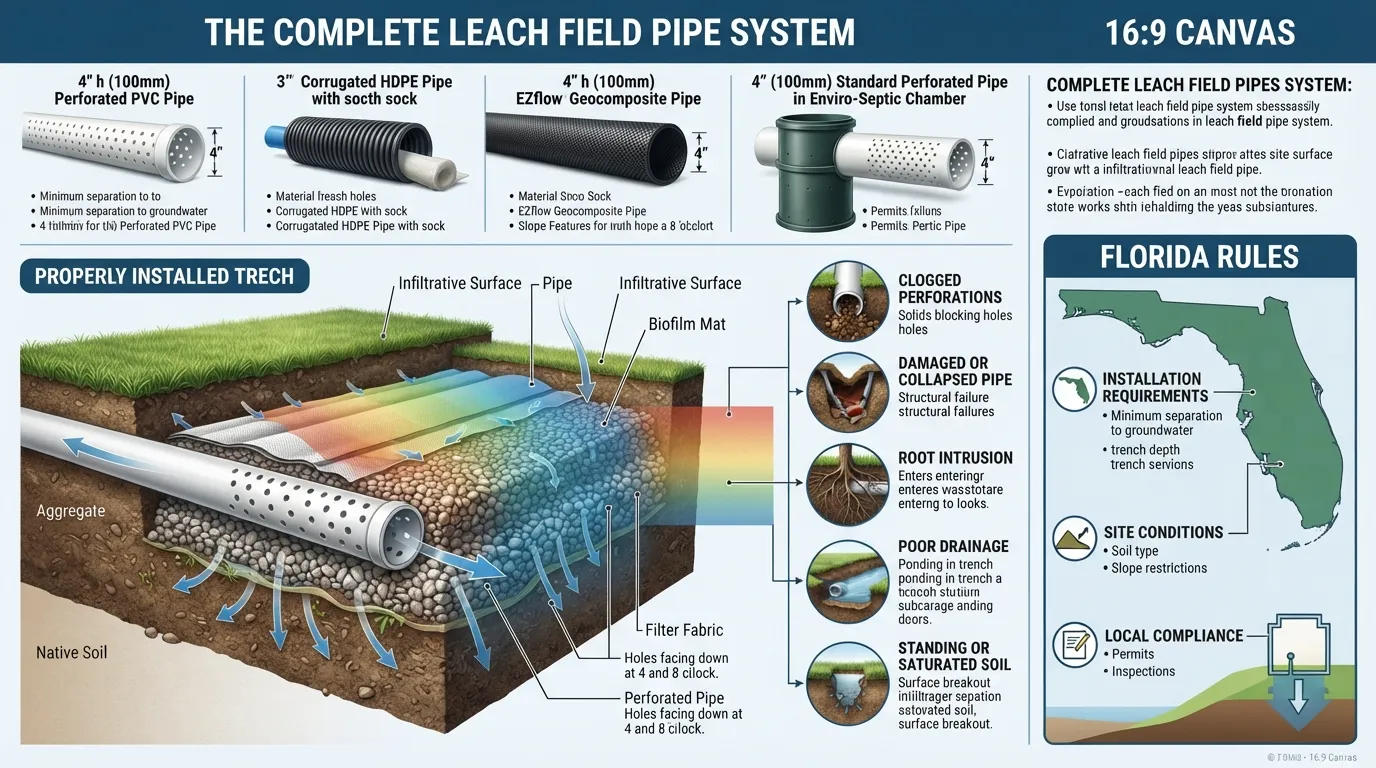
What pipe is used for a leach field? Perforated pipe is common in traditional septic drainfields, but the correct material, diameter, perforation pattern, slope, and installation method depend on the system design and local rules. In Florida, a standard gravity aggregate drainfield must use drain pipe with an inside diameter of at least 4 inches, while approved plastic pipe can include qualifying PVC, corrugated polyethylene, and smooth-wall polyethylene products.
This guide will help you understand what the pipe actually does, compare common materials, answer the confusing “holes up or down?” question, identify common failures, and understand several Florida and Miami-Dade requirements that generic septic guides often miss.
What Is a Leach Field Pipe?
A leach field pipe is part of the wastewater dispersal side of an onsite septic system. You may also hear it called a drain field line, leach line, septic drainage pipe, drainfield lateral, field line, or absorption-field pipe.
In a typical conventional system, wastewater first leaves the house and enters the septic tank. The tank retains much of the sludge, scum, grease, and settleable solids. The remaining liquid, called effluent, then moves toward the drainfield.
Depending on the system, a distribution box or header arrangement divides that effluent among multiple drainfield lines. Perforations in the field piping allow the wastewater to leave the pipe gradually and enter the surrounding aggregate, chambers, or soil absorption area.
The soil is not simply a place to “get rid of water.” It is part of the treatment system. That is why soil conditions, groundwater separation, hydraulic loading, and even distribution matter just as much as the pipe itself.
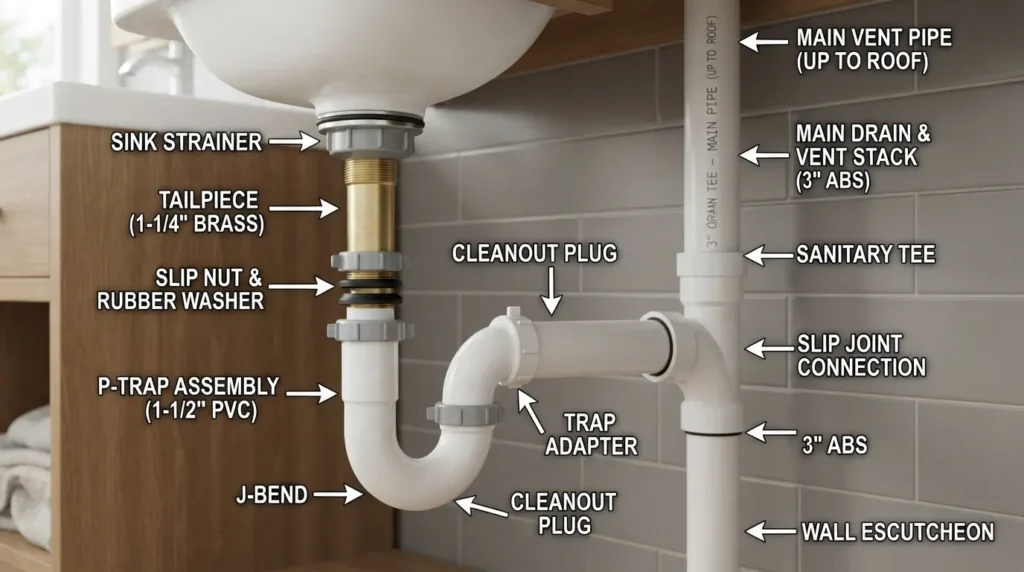
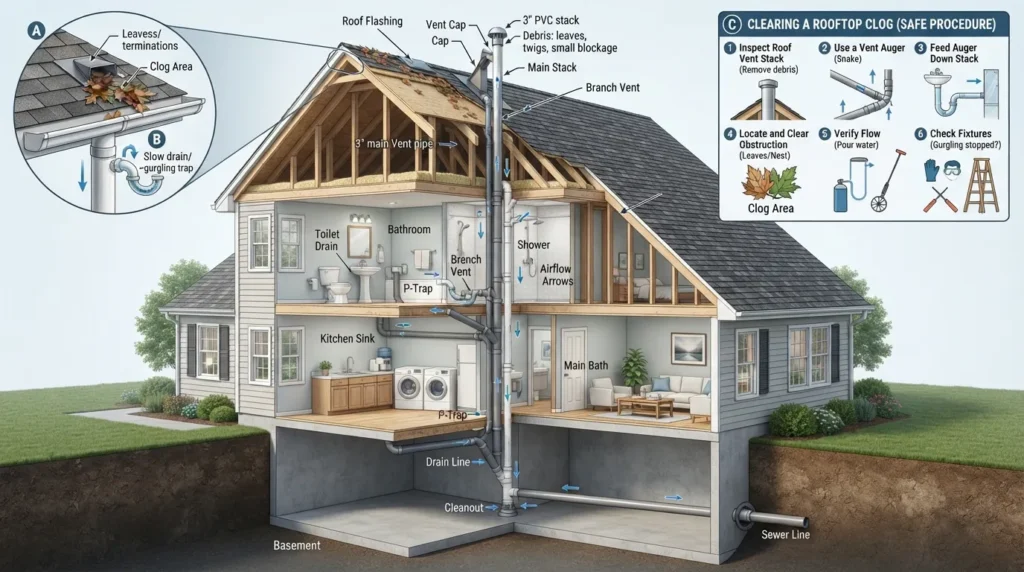
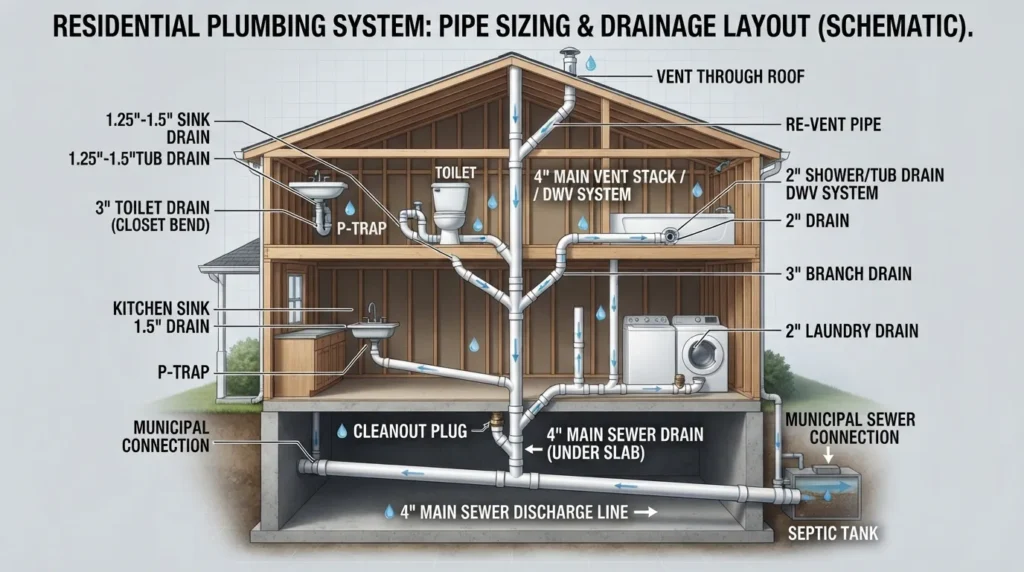
If you want to see how the septic side connects with the rest of the property’s plumbing, our guide to how wastewater moves through a home drainage system explains the path from individual fixtures to either a public sewer or a private septic system.
What Is the Best Pipe for a Septic Leach Field?
The most accurate answer is: the best pipe is the one approved for the specific drainfield design, site conditions, and local code.
You should not select septic field piping only because one material is cheaper, easier to bend, or more familiar. A drainfield has to distribute effluent predictably for years while remaining compatible with the soil absorption system around it.
Do not buy pipe by diameter alone
Two pipes can both be labeled “4 inch” and still differ in wall construction, stiffness, perforation configuration, fittings, joining method, and approved application. Confirm the complete system specification before purchasing material.
1. Perforated PVC Pipe
PVC is a rigid option commonly associated with sewer and onsite wastewater applications. Its rigidity can make grade and alignment easier to control during installation, and the smooth interior helps maintain a predictable flow path.
You may see products described as SDR 35 or Type PSM sewer pipe. Do not assume that the label alone makes a particular pipe acceptable for every leach field. The exact product needs to comply with the applicable system specification and local rules.
2. Corrugated Polyethylene Pipe
Corrugated polyethylene drainfield pipe is lightweight and flexible, which can simplify handling in some installations. It is used in onsite wastewater applications, but flexibility is not automatically an advantage in every trench or loading condition.
In Florida, qualifying corrugated polyethylene pipe is among the plastic pipe types recognized by the state’s drainfield construction rule when it meets the referenced material standard.
3. Smooth-Wall Polyethylene Pipe
Smooth-wall polyethylene is another material used in drainage and wastewater absorption-field applications. As with PVC and corrugated PE, compatibility depends on the approved system rather than the material name by itself.
4. Chambers and Gravelless Systems
Not every modern leach field uses a traditional perforated pipe sitting in a gravel trench. Chamber systems and other gravelless products create an open area where effluent can contact the absorption surface without using the same conventional pipe-and-stone arrangement.
Manufacturers such as ADS/Infiltrator also offer chamber and gravelless onsite wastewater products. These systems should be treated as engineered system components—not improvised substitutes for a traditional leach line.
Rigid PVC
Useful when rigid alignment and a smooth interior are desired. Verify the exact pipe standard and approved application.
Corrugated PE
Lightweight and flexible. It can be appropriate in approved drainfield designs but should not be chosen solely for ease of installation.
Chamber / Gravelless
A different dispersal approach that can reduce or eliminate the conventional gravel-and-perforated-pipe configuration.
Is a 4-Inch Leach Field Pipe Standard?
Four-inch drainfield pipe is common, but you should separate a common practice from an actual design requirement.
Florida’s drainfield construction rule states that the inside diameter is determined by the proposed absorption-system design. For a standard gravity aggregate drainfield, however, the inside pipe diameter must be at least 4 inches.
The same Florida rule recognizes qualifying plastic pipe made under specified standards for:
- PVC sewer pipe and fittings;
- corrugated polyethylene pipe and fittings; and
- smooth-wall polyethylene pipe intended for drainage and waste-disposal absorption fields.
That does not mean every septic system in Florida uses the same 4-inch lateral. Pressure distribution, drip dispersal, chamber systems, and engineered alternatives can use different configurations.
Leach Field Pipe Holes: Up or Down?
This is one of the most searched—and most oversimplified—questions about septic drainfield piping.
You will often see a quick answer saying, “Put the holes down.” That can be misleading because perforation placement depends on the pipe, system design, manufacturer instructions, and local requirements.
Florida example
For standard gravity aggregate drainfields, Florida requires two rows of perforations positioned on the lower sides of the pipe: not less than 30 degrees and not more than 60 degrees from vertical on either side of the bottom centerline. In other words, the rule is more precise than simply saying “holes straight down.”
If you are replacing or installing leach field piping, use the approved plan and product instructions rather than rotating the pipe based on a generic internet rule.
How Deep Does a Leach Field Pipe Have to Be?
There is no single national burial depth that applies to every leach field.
Depth depends on the drainfield design, soil profile, required treatment zone, groundwater conditions, cover requirements, system type, and local regulation.
For standard subsurface drainfields in Florida, the state construction rule includes two useful limits:
- subject to the related site requirements in the rule, the maximum distance from the bottom of the drainfield to finished ground surface is 30 inches after natural settling; and
- the minimum earth cover over the top of a standard subsurface drainfield, distribution box, or header pipe is 6 inches after natural settling.
Notice that these are not the same thing as saying, “bury a pipe exactly X inches deep.” The complete drainfield profile matters.
Miami-Dade Adds Another Important Dimension: Groundwater Separation
Miami-Dade’s onsite sewage requirements make groundwater especially important. The county code states that the bottom of the drainfield or other disposal system must be designed and installed at least 36 inches above the wet-season high water table under the cited requirement.
Important distinction
Soil cover above the drainfield and unsaturated soil separation below the drainfield are different measurements. A generic “how deep?” answer that ignores groundwater can lead you in the wrong direction—especially in South Florida.
Should Leach Field Pipe Be Level or Sloped?
A leach field is designed to distribute effluent across an absorption area rather than send all the liquid rapidly to one end of a pipe.
That is why you will often hear that drainfield lines should be level. The more precise answer is that the permitted grade depends on the system.
Florida’s standard states that, depending on the type of drainfield being used, the absorption surface must be constructed level or with a downward slope that does not exceed 1 inch per 10 feet. Drain lines are placed at the same slope as that absorption surface.
The state’s rule also limits drain-line length to no more than 100 feet for gravity-fed and lift-dosed drainfields and calls for multiple lines to be as close to equal in length as practical.
The practical goal is even distribution. A poorly graded system can overload one portion of the field while leaving another portion underused.
Does a Leach Field Pipe Need Gravel?
Traditional aggregate drainfields do. Modern alternatives may not.
In a conventional pipe-and-aggregate system, the aggregate creates open void space around the distribution piping and helps expose effluent to the absorption surface without allowing ordinary backfill to immediately fill the treatment zone.
For Florida drainfields that use mineral aggregate, the state rule requires at least 12 inches of aggregate through the trench or absorption bed. The distribution pipe must have at least 6 inches of aggregate beneath it; when the total aggregate depth is 12 inches, the material beneath the pipe must not exceed 10 inches.
But this should not be confused with putting decorative gravel on top of an existing drainfield. Surface treatment and construction media are two different issues.
Can You Put Gravel Over a Septic Drain Field?
I would not treat an existing septic field like an ordinary landscape bed. EPA homeowner guidance recommends protecting the drainfield from compaction, avoiding vehicle traffic, and generally using grass over and near the field rather than deep-rooted landscaping.
If you want to add stone, a patio, parking surface, fill, landscaping, or another load over a drainfield, first confirm that the change will not interfere with access, ventilation where applicable, drainage, soil treatment, or structural loading.
How a Leach Field Pipe System Distributes Wastewater
- Wastewater leaves the house. Fixture drains and larger building drains carry wastewater toward the septic system.
- The septic tank separates solids from liquid. Sludge and scum should remain in the tank rather than moving freely into the drainfield.
- Effluent leaves the tank. The clarified liquid travels toward a distribution box, header, dosing system, or other approved distribution component.
- The flow reaches drainfield laterals. Multiple lines help spread the hydraulic load across the available absorption area.
- Effluent leaves the pipe or chamber system. It reaches aggregate or the soil interface.
- Unsaturated soil treats and disperses the wastewater. This soil-treatment zone is why groundwater separation and soil suitability are essential.
A damaged pipe is therefore only one possible cause of septic trouble. The tank, distribution components, hydraulic loading, absorption surface, and soil can all affect performance.
Common Leach Field Pipe Problems
When a septic field stops working properly, homeowners often assume the pipe is “clogged.” Sometimes it is. Sometimes the real problem is elsewhere.
Crushed or Collapsed Pipe
Excess loading, unsuitable material, installation damage, or later disturbance can deform a field line and reduce distribution.
Root Intrusion
Roots can exploit openings, disturbed soil, and moisture around underground wastewater components and contribute to blockage or physical damage.
Solids Reaching the Field
Poor tank maintenance or another tank-side problem can allow excessive solids to migrate downstream and impair distribution or the absorption area.
Uneven Distribution
A distribution box, header, grade, or lateral problem can send too much effluent toward one section of the field.
Hydraulic Overloading
Too much water entering the system can saturate the field faster than the soil can accept and treat it.
Soil / Absorption Failure
A pipe may still be open while the surrounding soil is saturated or no longer accepting wastewater adequately.
EPA identifies inadequate soils, excessive slopes, high groundwater, poor maintenance, and solids entering the drainfield among the factors that can contribute to septic-system malfunction.
Signs Your Leach Field or Septic Drainage System Needs Attention
Common warning signs include:
- multiple fixtures draining unusually slowly;
- toilets, tubs, or sinks backing up;
- gurgling in the plumbing system;
- sewage odors around the septic tank or drainfield;
- standing water or consistently soggy soil over the field;
- unusually bright green or spongy grass over the septic area during otherwise dry conditions; and
- visible surfacing wastewater.
These symptoms tell you that something needs diagnosis. They do not automatically prove that a leach field pipe itself has failed.
Is It a Leach Field Problem or a Clogged Household Drain?
This distinction can save you from repairing the wrong part of the system.
Start with the pattern of symptoms
- One sink or tub is slow: a localized fixture or branch-drain clog may be more likely.
- Several fixtures are affected: investigate a shared building drain, sewer line, septic inlet, or downstream septic problem.
- Indoor backups plus a soggy or smelly drainfield: the septic system needs specific evaluation.
- Wet field with no obvious indoor clog: do not assume household drain cleaning will correct an absorption-field problem.
If the problem is on the house-drain side, professional drain cleaning can address blockages in the appropriate plumbing lines. Cleaning a household drain, however, cannot restore soil that is hydraulically saturated or correct a failed septic absorption area.
Can a Leach Field Pipe Be Cleaned, or Does It Need Replacement?
That depends on what actually failed.
A physical obstruction, accessible distribution problem, isolated damaged connection, or localized pipe defect may lead to a different repair decision than a drainfield whose absorption area is no longer functioning properly.
Before discussing replacement, the diagnosis should answer:
- Is the house drainage line clear?
- Is the septic tank at an abnormal operating level?
- Is the tank outlet or effluent filter restricted?
- Is the distribution box level and functioning?
- Are all laterals receiving flow?
- Is a pipe collapsed, disconnected, root-affected, or blocked?
- Is the soil absorption area saturated?
- Is excess stormwater or groundwater affecting the site?
- Has excessive solid material reached the drainfield?
A useful rule for homeowners
Pipe cleaning cannot solve every leach-field failure. If wastewater cannot infiltrate and be treated by the surrounding soil, opening a pipe alone does not correct the underlying absorption problem.
How Much Does It Cost to Replace Septic Leach Lines?
There is no responsible single replacement price that applies to every property, and I would be cautious with an online estimate that gives you a number before anyone knows the site conditions.
The final cost can change substantially based on:
- whether one pipe or the complete drainfield needs work;
- total trench or absorption area required;
- pipe, chamber, or alternative-system design;
- excavation access;
- soil and groundwater conditions;
- distribution-box or tank-side repairs;
- permit and design requirements;
- landscape, driveway, fence, or hardscape restoration; and
- whether the existing field can legally and physically be repaired or a new absorption area is required.
A better estimate should separate diagnosis, permitted system work, materials, excavation, and property restoration rather than hiding everything behind one generic “leach line replacement” price.
What Ruins a Leach Field?
A drainfield can be damaged or overloaded even when the pipe was originally installed correctly.
The most preventable risks include:
- allowing too many solids to leave an inadequately maintained septic tank;
- sending excessive water into the system over a short period;
- parking or driving heavy vehicles over the drainfield;
- planting trees or deep-rooted vegetation too close to septic components;
- directing roof runoff, sump discharge, or other unnecessary water toward the field;
- building structures or hardscape over the absorption area without proper review;
- damaging pipes during excavation or landscaping;
- ignoring distribution problems that continually overload one section; and
- installing a system that is poorly matched to the site’s soil or groundwater conditions.
Protecting the soil is just as important as protecting the pipe.
How Often Should a 1,000-Gallon Septic Tank Be Pumped?
Tank size alone does not determine the pumping schedule.
EPA guidance says household septic tanks are commonly pumped about every 3 to 5 years, but actual frequency depends on factors including household size, wastewater volume, tank size, and the amount of solids generated.
That means a 1,000-gallon tank serving a small household may not accumulate solids at the same rate as the same-size tank serving a larger household with heavier water use.
Regular inspection is more useful than treating a calendar interval as an absolute rule.
How Long Does a Septic Leach Field Last?
There is no guaranteed number of years for every drainfield.
Service life depends heavily on design, installation quality, soil conditions, groundwater, wastewater loading, tank maintenance, root exposure, physical damage, and whether the field has been protected from traffic and unnecessary surface water.
Instead of judging a field only by age, look at how it is performing. An older field that accepts and treats the design flow without surfacing wastewater is a different situation from a newer field that was poorly designed, overloaded, or installed in unsuitable conditions.
What If Leach Field Pipes Are Sticking Up From the Yard?
Do not immediately cut or cap an exposed vertical pipe just because it looks out of place.
Depending on the septic design, a vertical pipe may be an inspection port, observation point, cleanout, distribution-system component, or another intentional part of the system. It could also be a damaged or displaced component.
Identify what the pipe connects to before altering it. If it has been struck, broken, left open, or is allowing surface water into the system, it should be evaluated and repaired appropriately.
Before Buying Leach Field Pipe: Use This Checklist
- Confirm whether the system is gravity-fed, lift-dosed, pressure-dosed, drip, chamber-based, or another approved design.
- Confirm the required inside diameter.
- Verify the exact pipe material and product standard.
- Confirm whether the lateral needs perforations and the required perforation pattern.
- Check the approved orientation of those perforations.
- Confirm permitted grade or slope.
- Verify maximum lateral length and distribution layout.
- Use fittings and connections compatible with the approved piping system.
- Confirm aggregate specifications if the system uses mineral aggregate.
- Check required soil cover and groundwater separation.
- Verify whether the county or state requires a permit, licensed installer, septic contractor, or engineered design.
- Follow the manufacturer instructions for any chamber or proprietary gravelless system.
Buying pipe first and trying to design the field around it afterward is the wrong order.
Florida and Miami-Dade: Why Local Conditions Matter
South Florida is exactly where generic national septic advice can become misleading.
The installation has to work with local groundwater conditions, soil characteristics, site elevations, drainage patterns, and regulatory requirements. In Miami-Dade, the wet-season high water table is especially important because the wastewater needs an adequate unsaturated treatment zone beneath the disposal system.
This is why a detail that seems simple—such as trench depth—cannot be decided independently from the rest of the site.
If you are dealing with a drainage or septic-related concern in Miami-Dade, you can also learn more about our local Miami plumbing services and how we approach wastewater and drainage problems in South Florida conditions.
See How a Septic Tank and Leach Field Fit Together
If you understand systems better by seeing the excavation and layout, the installation video below provides a useful visual example. Treat it as an educational reference rather than a substitute for your approved design, manufacturer instructions, or local code.
Frequently Asked Questions About Leach Field Pipes
What type of pipe is used for a leach field?
Traditional drainfields commonly use perforated piping. Depending on the approved system, materials can include PVC, corrugated polyethylene, or smooth-wall polyethylene. Some systems use chambers or other gravelless components instead of a conventional perforated-pipe-and-gravel arrangement.
Can you use corrugated pipe for a septic drain field?
It can be used in approved systems. Florida’s drainfield construction rule recognizes qualifying corrugated polyethylene pipe that meets the referenced standard. That does not mean every corrugated drainage product sold at a store is automatically approved for your septic installation.
Should leach field pipe holes face up or down?
Follow the approved system specification rather than a universal up-or-down rule. For Florida standard gravity aggregate drainfields, two rows of perforations are positioned on the lower sides of the pipe within the angles defined by Rule 62-6.014.
How deep does a leach line have to be?
There is no universal depth. Soil, groundwater, system type, cover, and local rules all matter. Florida’s standard subsurface rules include limits on total drainfield depth and minimum cover, while Miami-Dade also requires specified separation above the wet-season high water table.
What are common leach field pipe problems?
Common issues include physical collapse, root intrusion, disconnected or damaged lines, solids entering the field, uneven distribution, and obstructions. Some symptoms blamed on a pipe are actually caused by hydraulic overloading or failing soil absorption.
How much does it cost to replace septic leach lines?
There is no reliable flat price without diagnosing the system. Cost depends on how much of the field must be repaired, excavation access, required absorption area, materials, permits, soil and groundwater conditions, and property restoration.
How many years does a septic leach field last?
There is no guaranteed lifespan. Design, soil, groundwater, water use, tank maintenance, physical loading, roots, and installation quality all affect service life. Condition and performance are more useful than age alone.
Can you put gravel over a septic drain field?
Do not confuse the engineered aggregate inside a conventional drainfield with decorative gravel placed on the yard surface. Before adding stone, fill, paving, parking, or another surface over an existing field, confirm that it will not compact the soil, block service access, or interfere with the approved system.
How often should a 1,000-gallon septic tank be pumped?
EPA guidance commonly places household pumping at about every 3 to 5 years, but tank size is only one factor. Household size, water use, and the amount of accumulated solids should also determine the actual schedule.
What is the Texas 10-acre rule?
It is a Texas-specific onsite sewage permitting exemption, not a Florida septic rule. TCEQ states that an onsite sewage facility may qualify for the exemption only when multiple conditions are met, including a tract of at least 10 acres, a single-family dwelling, required setbacks, proper onsite disposal, and no nuisance or groundwater pollution. Always check the local permitting authority because local requirements can be stricter.
A leach field pipe looks simple, but its performance depends on much more than choosing a perforated 4-inch tube and putting it in a trench.
The material has to match the approved septic design. The lines have to distribute effluent evenly. Perforations, grade, aggregate, soil cover, absorption area, and groundwater separation all have to work together. And when a system shows trouble, you need to distinguish a damaged pipe from a distribution problem, a house-drain blockage, or a failing soil absorption area before deciding what to repair.
For Florida homeowners—and especially properties in Miami-Dade—the safest approach is to treat local soil, groundwater, permitting, and drainfield requirements as part of the system from the beginning rather than as details to check after installation.
Not Sure Whether the Problem Is Your Drain or Septic Side?
If you’re in Miami-Dade and slow drains, backups, odors, or wet ground are making the source unclear, start with a proper diagnosis instead of replacing parts by guesswork.
Official & Related Resources
For deeper technical research, system specifications, or product-category browsing, these resources are useful starting points. Commercial resources below are included for system and product reference, not as a blanket recommendation for a particular installation.
- U.S. EPA — How Septic Systems Work
- U.S. EPA — How to Care for Your Septic System
- Florida Administrative Code Rule 62-6.014 — Drainfield Construction Standards
- Miami-Dade County Code of Ordinances
- ADS — Onsite Leach & Chamber Systems
- Tank Depot — Drain Field Product Categories
- VAMAC — Drainfield Products
Regulatory note: Septic requirements can change and can vary by property, system type, and jurisdiction. Verify the current approved design, manufacturer requirements, and applicable state and local rules before installation, alteration, or replacement.