A clogged drain can be as simple as hair caught below a shower stopper or as serious as a blockage in a shared drain or main sewer line. The fastest way to solve the problem is not to pour something into the drain and hope. First, figure out where the blockage is likely located, then match the clearing method to the symptoms and probable cause.
If only one sink, tub, or shower is affected, start with the drain opening, stopper, trap, plunging, or a small drain snake. If several fixtures are slow or backing up at the same time, or flushing a toilet makes water rise in a shower or tub, stop treating the fixtures individually. The obstruction may be farther downstream in a shared drain or main sewer line and may require professional diagnosis.
Start Here: Find the Likely Clog Location in About 60 Seconds
Before you choose a drain cleaner, plunger, snake, or plumber, look at the pattern. A plumbing drain is part of a larger network: the fixture connects to a trap and branch drain, branch drains join larger piping, and that wastewater eventually moves toward the building drain and sewer connection. You can see that full flow path in our guide to how a home drainage system works.
Only one drain is slow
The restriction is more likely near that fixture: the stopper, drain opening, trap, or nearby branch pipe.
Two nearby fixtures are affected
The clog may be in piping shared by those fixtures rather than directly below one drain opening.
Several drains are slow
A deeper shared drain or main-line restriction becomes more likely, especially when fixtures on different sides of the home are involved.
Toilet affects a shower or tub
Water rising or backing up in another fixture when you flush is an important warning that wastewater is being blocked farther downstream.
The clog keeps returning
A temporary opening may have restored some flow without removing the full obstruction or identifying an underlying pipe problem.
Sewage is backing up
Stop routine water use and treat this as more than an ordinary sink clog. Avoid contact with wastewater and get the drainage system evaluated.
What Usually Causes a Clogged Drain?
The most likely cause changes depending on the fixture. That matters because a method that helps with soft grease buildup may do very little against a compacted hair clog, foreign object, tree roots, or damaged pipe.
Kitchen sink clogs
Kitchen drains commonly collect food residue, fats, oils, grease, soap residue, and other material washed from dishes and cookware. Grease can be especially troublesome because it can coat the inside of drainage piping and trap additional debris.
Bathroom sink, shower, and tub clogs
Hair is one of the first things to check. Hair can tangle around a stopper or inside the drain while soap and personal-care products add buildup around it. If the blockage is near the opening, physically removing it is often more useful than repeatedly pouring mixtures into the pipe.
Toilet clogs
Excess toilet paper and items that should not have been flushed can obstruct a toilet or the drainage piping beyond it. If the toilet is only one of several fixtures having problems, however, the issue may be deeper than the toilet itself.
Floor drains and basement drains
Floor drains can collect dirt, sediment, hair, soap, and other debris depending on their location. A floor drain that suddenly receives wastewater when other fixtures are used can also be a symptom of a larger downstream blockage rather than a simple clog at the floor grate.
Deep drain and sewer-line clogs
Deeper restrictions can involve accumulated grease and waste, foreign material, roots entering damaged underground piping, heavy deposits, or physical problems with the pipe itself. These are different problems from debris sitting directly below a sink stopper, which is why diagnosing the location comes before choosing a fix.
How to Unclog a Drain Safely: Start With the Least Aggressive Fix
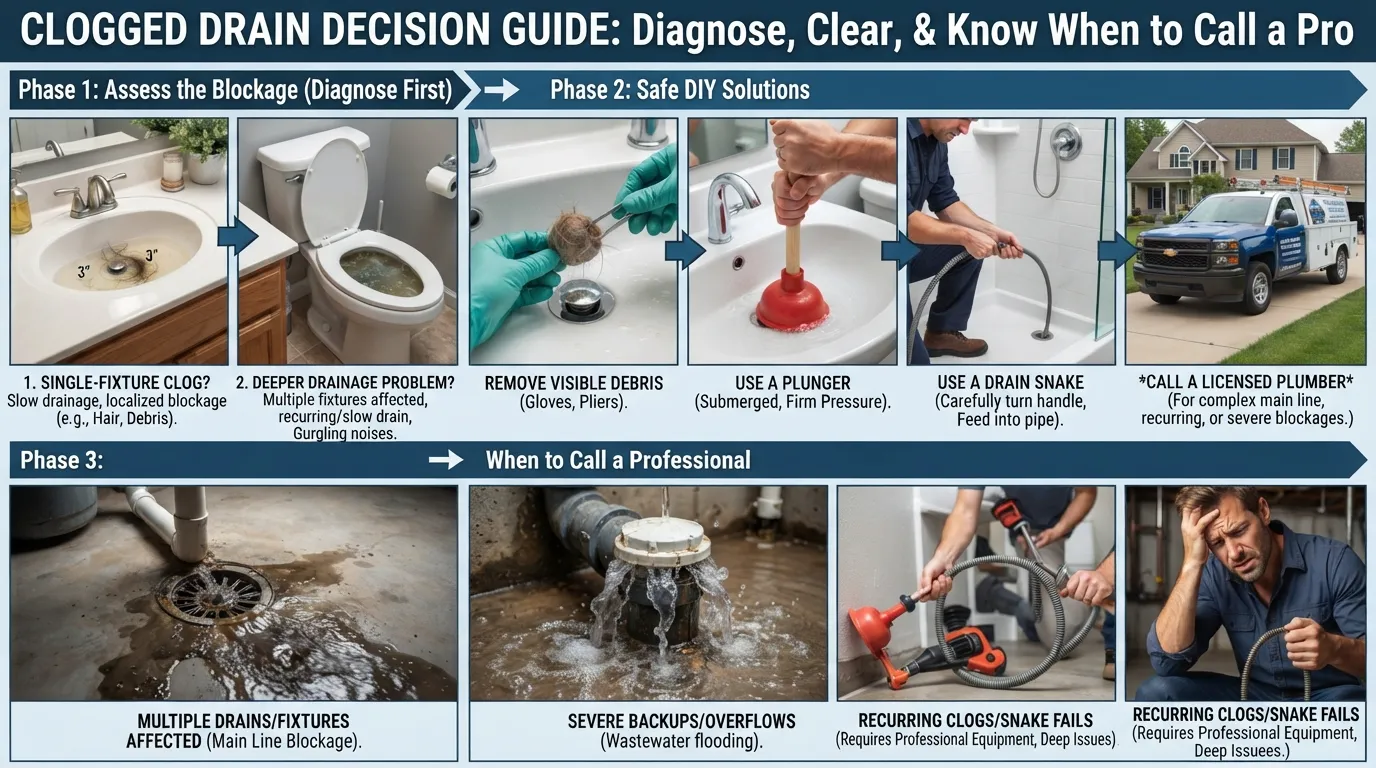
If the problem appears limited to one fixture and there is no sewage backup, you can work from the drain opening deeper into the line. Stop when the drain returns to normal flow; you do not need to perform every method.
1. Remove or control standing water
If the sink or tub is full, remove enough standing water to work without splashing. A cup, small container, or wet/dry vacuum may help depending on the situation.
If you have already poured a chemical drain opener into the drain, use extra caution. Do not immediately plunge, snake, or disassemble the trap unless the product instructions say it is safe to do so. Some drain-opener labels specifically warn against plunging after use because chemical product may remain in the drain and splash back.
Safety first
Never mix different drain-opening chemicals or combine a commercial drain cleaner with another cleaning chemical. Follow the exact product label, keep your face and skin away from the drain opening, and avoid creating splashback.
2. Check the stopper, strainer, and visible drain opening
Remove the strainer or stopper if it is designed to come out easily. Look for hair, food residue, soap buildup, or other visible debris. Wear gloves and remove what you can safely reach.
This simple inspection is especially useful for bathroom sinks, tubs, and showers because the clog may be sitting only a few inches below the drain opening.
3. Try a plunger when the drain is still restricted
A plunger is useful because it acts mechanically rather than relying on a chemical reaction. For sinks and tubs, use a plunger that can form a seal over the drain opening.
- Add enough water to cover the bottom edge of the plunger if necessary.
- Seal the plunger over the drain.
- Block an overflow opening with a damp rag where appropriate so you can create better pressure.
- Use controlled up-and-down strokes rather than extreme force.
- Remove the plunger and test the drain.
If the drain improves but remains noticeably slow, the obstruction may have shifted without being completely removed.
Want to see the plunging motion first?
This video can help you visualize the technique before you try it on your drain.
4. Use a hand drain snake for a clog deeper in the pipe
If you cannot reach the obstruction from the drain opening and plunging has not restored normal flow, a small hand auger or drain snake can help with some localized clogs.
- Feed the cable into the drain slowly.
- When you feel resistance, do not automatically assume you have reached the clog; bends and fittings can also create resistance.
- Rotate and advance the cable gently according to the tool instructions.
- Withdraw the cable slowly and remove any debris it brings back.
- Run water and test whether the fixture now drains normally.
Do not force a snake through resistance. The goal is to clear a blockage without damaging a trap, fitting, or pipe.
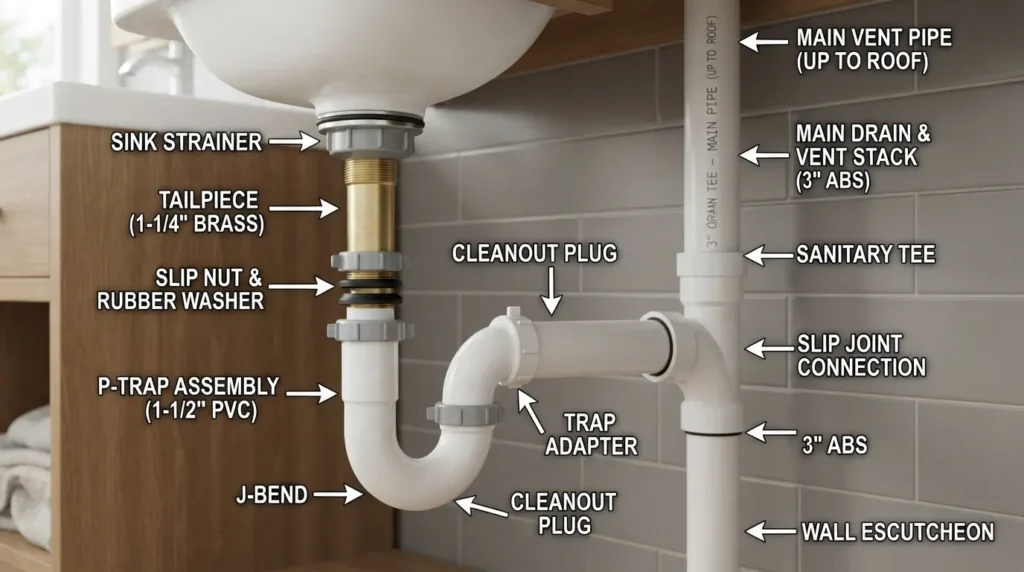
5. Check an accessible sink P-trap if you are comfortable doing so
If a sink remains clogged and the trap below it is accessible, debris may be lodged inside the curved trap or immediately beyond it. Put a bucket underneath before loosening anything because the trap holds water.
Skip this step if chemicals have recently been poured into the drain, if the fittings are corroded or difficult to move, or if you are not confident you can reassemble the connection without creating a leak.
Which Drain-Clearing Method Fits Your Clog?
Instead of trying every internet remedy in order, match the method to what you are actually seeing.
Visible hair near a shower or sink drain
Start with: Manual removal or a simple hair-removal tool.
Why: You can remove the actual obstruction instead of trying to dissolve it.
One fixture with standing water
Start with: Remove excess water, inspect the opening, then try controlled plunging.
Watch for: Chemical cleaner already present in the drain.
Gradually slowing kitchen sink
Possible cause: Food residue or grease buildup.
Start with: Clean the strainer, remove reachable debris, and use an appropriate mechanical method if flow remains restricted.
Clog deep past the trap
Start with: A suitable hand auger if the problem still appears localized.
Stop if: The cable cannot advance safely or the blockage keeps returning.
Multiple fixtures backing up
Possible cause: Shared drain or main-line restriction.
Best next step: Reduce water use and have the drainage system diagnosed rather than treating every fixture separately.
Recurring clog after DIY clearing
Possible cause: Part of the obstruction remains or there is a deeper pipe issue.
Best next step: Diagnose the cause instead of repeatedly reopening only a small path through the clog.
Do Boiling Water, Dawn, Vinegar, and Baking Soda Really Unclog Drains?
These remedies appear everywhere because they are easy to try. The more useful question is not whether they can ever help. It is what type of blockage they can realistically address.
Does boiling water help unclog a drain?
Very hot water may help soften some greasy or soap-like residue, but boiling water is not a universal drain-clearing method and it will not pull out hair, retrieve an object, remove roots, or repair damaged piping.
If you have PVC drainage piping or you are unsure what material is below the fixture, use hot water rather than making boiling water your default. Manufacturer drain-care guidance also cautions against boiling water on PVC piping.
Does Dawn or another dish soap unclog drains?
Dish soap can help disperse greasy residue in some situations when used with appropriately hot water, but it is not a mechanical clog remover. If the blockage is a wad of hair, a foreign object, heavy buildup, or something deep in the drainage system, soap alone is unlikely to solve the underlying problem.
Can vinegar unclog a drain?
Vinegar may be useful for light cleaning and residue, but a true blockage should be treated according to its cause. If hair is physically blocking the pipe, physically removing the hair is more direct. If several drains are backing up, vinegar poured into one sink does not address the likely location of the problem.
What about baking soda and vinegar?
Baking soda and vinegar create visible fizz, which makes the method feel powerful. That reaction may help disturb light residue, but it should not be treated as a guaranteed way to dissolve a stubborn drain blockage.
A useful rule is simple: if you can mechanically remove the clog, remove it. Do not rely on fizz to do the job of a hair tool, plunger, auger, or professional drain-cleaning equipment.
Is baking soda and vinegar better than Drano?
There is no universal winner because they are different approaches and different clogs require different solutions. More importantly, you should not start mixing multiple remedies in the same drain. If you use any commercial chemical drain opener, follow that product’s instructions exactly and do not add other cleaners or chemicals to it.
A better question to ask
“What is blocking my drain?” is more useful than “Which liquid should I pour into it?” Once you know whether you are dealing with hair, grease, a foreign object, a deeper branch-line clog, or a main-line problem, the correct next step becomes much clearer.
How to Tell If a Clogged Drain Is Deep in the Pipe
You cannot always see a blockage, but the symptoms can help you estimate how far downstream it may be.
Think of clog depth as a pathway
Drain opening / stopper
Visible hair, food, or debris may be reachable directly.
↓
Trap
A single fixture may remain clogged even after the opening is clean.
↓
Fixture or branch drain
A snake may reach some localized obstructions beyond the trap.
↓
Shared branch
Two or more connected fixtures may begin showing symptoms.
↓
Building drain / sewer line
Multiple fixtures, cross-fixture backups, floor-drain sewage, or widespread drainage problems can point farther downstream.
If you have cleaned the visible drain, checked an accessible trap, and a small auger cannot resolve a localized blockage, the clog may simply be beyond the reach or capability of a homeowner tool. Repeatedly forcing a cable deeper is not automatically the safest answer.
Signs the Problem May Be in the Main Sewer Line
A main sewer-line clog behaves differently from a normal hair clog in one bathroom sink. Pay attention to how fixtures interact.
- Several drains become slow around the same time.
- More than one fixture backs up.
- Flushing a toilet causes water to rise in a tub or shower.
- Running a washing machine or another high-flow fixture affects toilets or other drains.
- Sewage or dirty wastewater appears at a floor drain.
- A sewer cleanout has standing wastewater or is overflowing.
- You hear unusual gurgling together with other drainage symptoms.
Do not keep testing a suspected main-line clog with more water
If wastewater has nowhere to go, continuing to run faucets, appliances, showers, or toilets can create more backup. Reduce water use until the cause is identified.
Why Miami Homeowners Should Pay Special Attention to Grease
Fats, oils, and grease are more than a generic plumbing warning in Miami-Dade. Miami-Dade County’s FOG guidance explains that fats, oils, and grease can stick to sewer-pipe walls, harden, restrict wastewater flow, and contribute to clogged sewer pipes and sewage overflows.
For your kitchen, prevention is straightforward:
- Do not pour cooking oil, grease, gravy, or fatty sauces down the sink.
- Wipe greasy cookware before washing it.
- Put food scraps in the trash instead of rinsing them into the drain.
- Do not assume a garbage disposal makes grease safe for a drainage system.
Miami-Dade specifically advises residents to let fats, oils, and grease cool, seal them in a suitable container, and dispose of them with household trash rather than putting them into a sink, garbage disposal, or storm drain.
How Do You Know the Clog Is Actually Gone?
A drain moving faster for a few seconds does not always mean the obstruction has been completely removed. Before you put everything away, test the result.
- Run water at a normal flow rate.
- Watch whether the basin begins filling again.
- Listen for continued gurgling.
- Check nearby fixtures for unexpected movement or backup.
- If you removed a trap, inspect the connections carefully for leaks.
- Pay attention over the next several uses to see whether slow drainage quickly returns.
If the same drain repeatedly needs plunging or snaking, I would stop treating each episode as a brand-new clog. Recurrence is useful information: something may still be inside the line, buildup may be more extensive than it appears, or a pipe condition may need to be identified.
What Do Plumbers Use to Unclog Drains?
There is no single tool that professional plumbers use for every clogged drain. The appropriate method depends on the location, cause, severity, accessibility, and condition of the piping.
Professional drain snakes and augers
Mechanical cables can break through or retrieve many obstructions. Professional equipment can reach and handle jobs beyond a small homeowner hand snake, but the exact cable and attachment depend on the drain and blockage.
Sewer-camera inspection
If a clog is recurring, unusually deep, or difficult to identify, a camera can help inspect accessible piping and locate conditions such as persistent obstructions or visible pipe defects.
Hydro jetting
Hydro jetting uses high-pressure water and can be useful for appropriate drainage systems with heavy grease, sludge, or buildup. It is not automatically the first treatment for every clog; the pipe and problem should be evaluated before choosing the method.
Pipe repair
Cleaning equipment cannot permanently solve every drainage problem. If the underlying issue is damaged, displaced, collapsed, or otherwise defective piping, the repair may need to address the pipe rather than simply reopen the blockage.
When Should You Stop DIY Drain Clearing and Call a Plumber?
Simple fixture clogs are reasonable DIY territory for many homeowners. The line becomes clearer when symptoms move beyond one accessible drain.
DIY may be reasonable when:
- Only one fixture is affected.
- The clog is near the drain opening.
- You can remove visible hair or debris safely.
- A normal plunger restores full drainage.
- The problem does not immediately return.
Call for help when:
- Several fixtures are affected.
- Wastewater backs up into another fixture.
- Sewage is appearing indoors.
- The clog repeatedly returns.
- A snake cannot reach or clear the blockage safely.
- You suspect a main sewer-line problem.
- You suspect damaged piping.
- Drain chemicals are present and further work could create splash or exposure.
How to Prevent Another Clogged Drain
The best prevention depends on what enters that particular drain.
Kitchen
- Keep fats, oils, and grease out of the sink.
- Scrape dishes and cookware before washing them.
- Use a strainer to catch food particles where appropriate.
- Do not treat the garbage disposal as a trash can.
Bathroom
- Use a hair catcher in showers and tubs.
- Clean hair from stoppers before it works farther into the drain.
- Do not flush wipes, paper towels, hygiene products, or other non-toilet materials.
Whole-home drainage
- Do not ignore recurring slow drains.
- Pay attention when multiple fixtures begin behaving differently.
- Treat gurgling as a clue that deserves context, not a diagnosis by itself.
- Investigate repeated backups before they become a larger wastewater problem.
Frequently Asked Questions About Clogged Drains
What is the fastest way to unclog a clogged drain?
The fastest method depends on the clog. Remove visible hair or debris first. For a localized sink or tub blockage, controlled plunging is often a logical next step. If the clog is deeper, a drain snake may be appropriate. If multiple fixtures are backing up, skip repeated fixture-level fixes and investigate the shared or main drain.
Does pouring boiling water down a drain help unclog it?
Hot water can sometimes help with soft greasy residue, but boiling water is not appropriate for every pipe material and will not remove many physical blockages. If you are unsure what piping you have, use appropriately hot water rather than boiling water and focus on identifying the clog.
Can a drain blockage clear itself?
A small piece of loose debris may move, but you should not count on a true blockage clearing itself. Hair, grease buildup, foreign objects, roots, and pipe problems can remain or worsen even if drainage temporarily improves.
Can I pour vinegar down the drain to unclog it?
Vinegar may help with light residue, but it is not a reliable answer for every clog. Visible hair should be physically removed, and deep or multiple-fixture blockages need a different approach.
Does Dawn really unclog drains?
Dish soap may help loosen some greasy material when used appropriately, but it cannot retrieve hair, remove a foreign object, clear roots, or repair a damaged drain pipe.
What do plumbers use instead of Drano?
Depending on the problem, plumbers may use mechanical drain snakes or augers, sewer cameras, hydro jetting, cleanout access, or another professional method. The important difference is that the method can be selected after considering where the blockage is and what may be causing it.
Why should you never use baking soda and vinegar to unclog a drain?
“Never” is too broad. The mixture can fizz and may help with light residue, but it should not be mistaken for a guaranteed clog remover. A hair mat, foreign object, deep obstruction, or main sewer clog normally needs a method that actually reaches or removes the blockage.
Why shouldn’t you pour boiling water down the drain?
Boiling water is not safe for every plumbing material, and it also creates a burn and splash risk around a backed-up fixture. It is better to identify the clog and choose a method suited to the pipe and obstruction.
What do plumbers use to unclog drains?
Common professional options include drain snakes and augers, camera inspection, hydro jetting, and access through a sewer cleanout. If the pipe itself is defective, cleaning alone may not be the final repair.
How do I clear a clogged drain with standing water?
First remove enough standing water to work safely, inspect and clean the drain opening, then use an appropriate plunger if no hazardous drain chemical is present. If plunging fails, a mechanical tool may be the next step for a localized clog. Multiple backed-up fixtures require a different diagnosis.
How can I find a blockage in a wastewater pipe?
Start with the symptom pattern. One fixture points you toward its drain, trap, or nearby branch. Several affected fixtures suggest shared piping farther downstream. Professionals can use cleanout access and, where appropriate, camera inspection to investigate deeper lines.
How do I know if the clog is in the main sewer line?
Multiple slow or backed-up fixtures are an important clue. Water coming up in a tub or shower when a toilet flushes, sewage appearing at a floor drain, or wastewater around a sewer cleanout are stronger warning signs that the problem is farther downstream than one fixture.
When you have a clogged drain, do not begin by asking which internet remedy is strongest. Start by asking which fixture is affected, whether other fixtures are involved, where the blockage is likely located, and what material is probably causing it.
A visible hair clog, greasy kitchen buildup, deep branch-line obstruction, and main sewer blockage are four different situations. Diagnosing that difference first can save you from wasting time on a method that never had a realistic chance of solving the problem.
Still dealing with a blocked drain in Miami?
If the clog keeps returning, several fixtures are affected, or the blockage is deeper than you can safely reach, you do not have to keep experimenting. The team at our local Miami plumbing company can help identify what is happening and choose the appropriate next step.
For a blockage that needs professional equipment, learn more about our professional drain cleaning service.