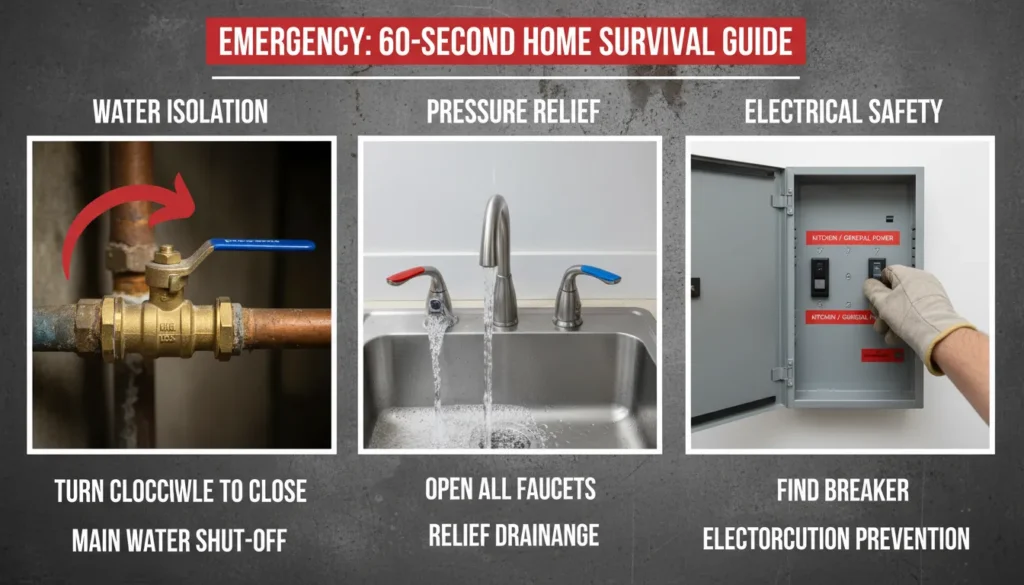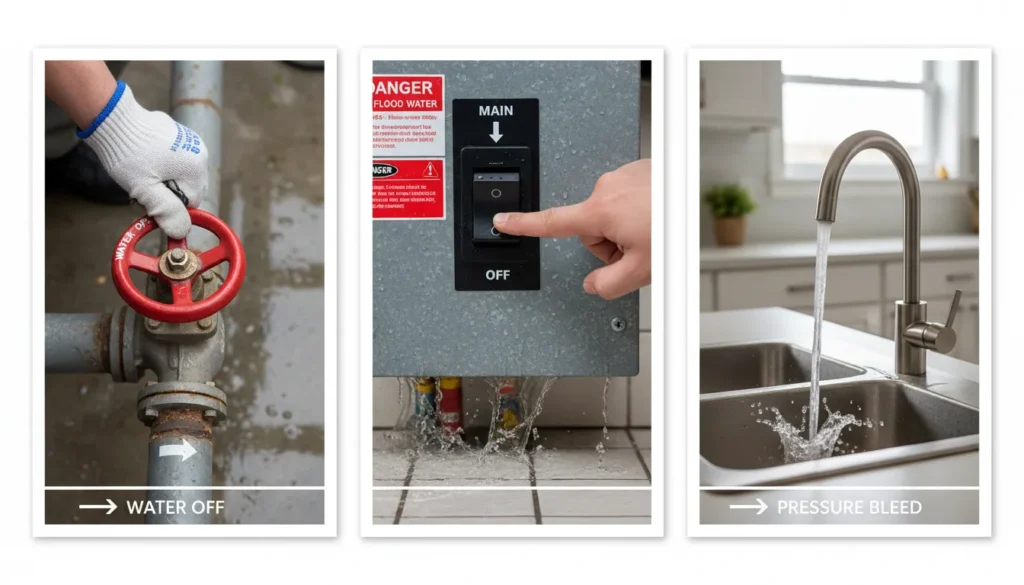
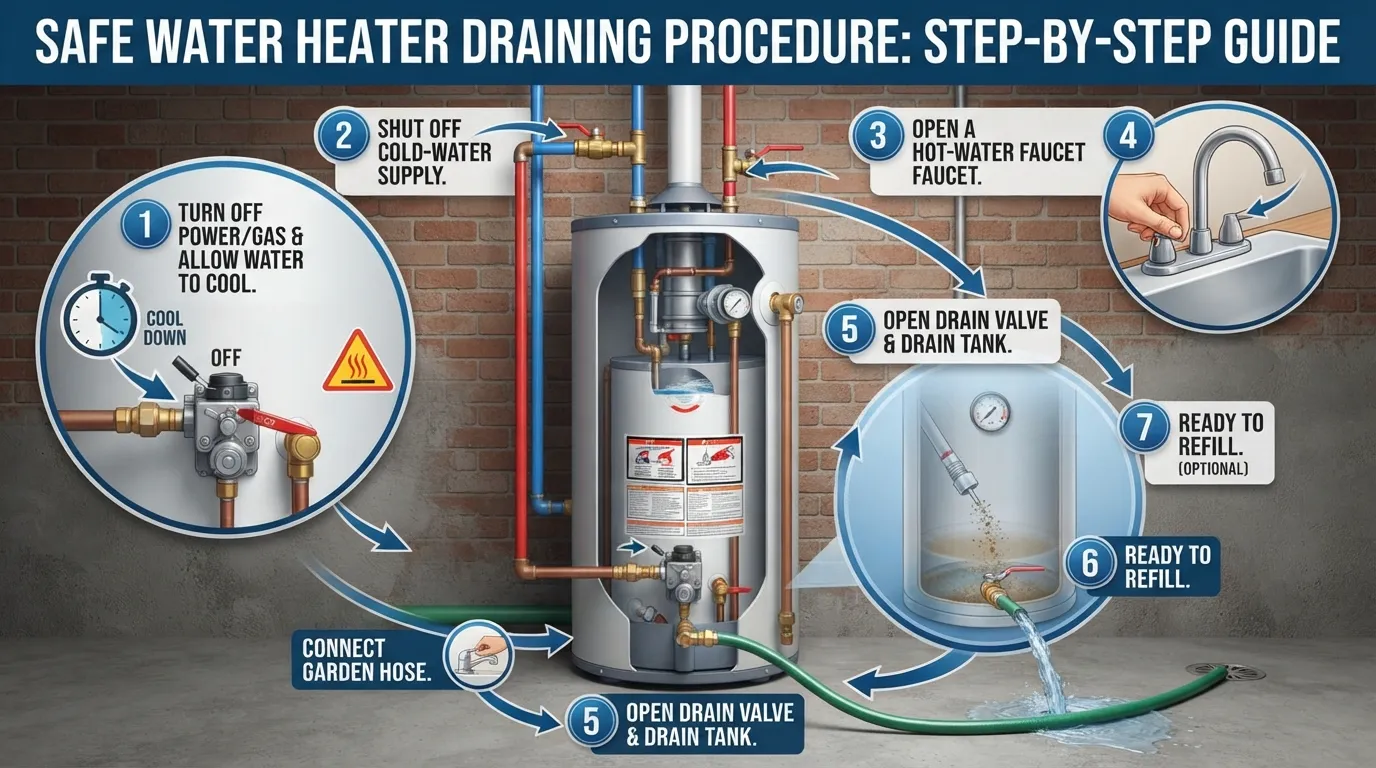
If you want to know how to drain a water heater, the basic process is straightforward: shut down the heater safely, let the water cool, turn off the cold-water supply, connect a garden hose to the drain valve, open a hot-water faucet, and drain the tank.
But there is an important part many quick guides leave out: draining and flushing are not exactly the same thing. If your goal is routine maintenance, removing sediment, or dealing with rumbling and popping noises, you may want to flush the tank as well.
To drain a tank-style water heater, turn off the energy source, allow the water to cool, shut off the cold-water inlet, attach a garden hose to the drain valve, open a nearby hot-water faucet, and open the drain valve. Once the tank is empty, you can flush sediment if needed. Before restoring power or heat, make sure the tank is completely full.
Safety First
Water inside a recently operating water heater can be hot enough to cause serious burns. Do not begin draining a hot tank. If you have a gas appliance, are unsure how its controls work, see signs of a gas problem, or cannot safely identify the shutoffs, stop and contact a qualified professional.
What Does Draining a Water Heater Actually Do?
A storage water heater holds water in a tank. Over time, minerals and sediment can settle at the bottom of that tank. Draining removes the stored water, while flushing uses fresh water to help move sediment out through the drain.
This distinction matters because simply emptying the tank does not necessarily remove everything that has accumulated on the bottom.
Manufacturers commonly provide draining and flushing procedures as part of water-heater maintenance, but the exact procedure can vary by model. Your owner’s manual should always take priority over a general guide.
Why Drain a Water Heater?
There are several reasons you may need to drain or flush a hot water tank:
- Routine maintenance
- Removing accumulated sediment or mineral deposits
- Preparing the tank for certain repairs or component replacement
- Investigating rumbling, popping, or other unusual tank noises
- Preparing a water heater for an extended shutdown when the manufacturer’s instructions call for draining
- Helping restore normal operation when sediment buildup is affecting the tank
If you are asking why drain a water heater, the main maintenance reason is sediment control. Sediment and mineral deposits can interfere with efficient operation and may contribute to noise and premature wear.
What You Need Before You Start
For a typical tank-style water heater, gather:
- A garden hose that fits the drain valve
- A suitable floor drain, outdoor discharge location, or other safe place for the water, depending on your setup
- A bucket or container if needed for testing the water flow or catching small amounts of water
- Protective gloves
- A flathead screwdriver if your drain valve requires one
- A flashlight if the heater is located in a dark utility area
Before connecting anything, identify these components:
- Cold-water inlet: normally supplies fresh water into the tank.
- Drain valve: located near the bottom of the tank.
- Hot-water outlet: carries heated water into the home’s plumbing system.
- Energy controls: an electrical disconnect/breaker for many electric units or gas controls for gas-fired models.
- Temperature and pressure relief valve: a safety component that should not be treated as the normal drain valve.
Before You Open the Drain Valve
Know where the water is going. A full tank can release a large amount of water, and the initial discharge may still be hot. Secure the hose and make sure its outlet cannot move unexpectedly.
How to Drain a Water Heater Step by Step
1. Turn Off the Water Heater Safely
Start by shutting down the heater’s energy source.
For an electric water heater, switch off the appropriate circuit breaker or disconnect. For a gas water heater, follow the manufacturer’s instructions for placing the gas control in the appropriate safe position before draining.
Do not rely on simply turning the thermostat down. The goal is to prevent the heater from operating while the tank is being drained.
2. Let the Water Cool
Run a nearby hot-water faucet until the water is no longer hot, or otherwise follow the cooling procedure specified by your water-heater manufacturer.
This is one of the most important safety steps. Opening a drain valve on a tank containing very hot water can create a burn hazard.
3. Shut Off the Cold-Water Supply
Locate the cold-water shutoff above or near the water heater and close it.
Closing this valve prevents new water from continuously entering the tank while you are trying to drain it.
4. Connect a Garden Hose to the Drain Valve
Attach one end of the garden hose firmly to the water heater’s drain valve.
Place the other end somewhere that can safely handle the discharged water, such as an appropriate floor drain or suitable outdoor location where permitted.
Do not assume any outdoor discharge location is safe or permitted. Avoid areas where hot water could damage surfaces, landscaping, electrical equipment, or create a slipping hazard.
5. Open a Nearby Hot-Water Faucet
Open a nearby hot-water faucet. This helps relieve pressure and allows air to enter the plumbing system as water leaves the tank.
Keep the faucet open while the tank drains unless your manufacturer’s instructions specify otherwise.
6. Open the Water Heater Drain Valve
Open the drain valve slowly.
Depending on the model, the valve may have a handle or may require a flathead screwdriver. Water should begin flowing through the hose.
If the flow is weak or stops, do not immediately assume the tank is empty. Sediment can collect around the drain opening and restrict flow.
Never Use the T&P Relief Valve as Your Normal Drain
The temperature-and-pressure relief valve is a safety device, not a substitute for the tank’s drain valve. If you have a problem with the relief valve itself, follow the manufacturer’s instructions or have it inspected by a qualified professional.
7. Let the Tank Drain Completely
Allow the water to continue flowing until the tank is empty.
The amount of time required depends on the tank size, hose length, drain valve, water pressure, and whether sediment is restricting the outlet. Do not judge the tank’s condition solely by how quickly the water initially comes out.
How to Flush Sediment From a Water Heater
If your purpose is maintenance, draining alone may not be enough. Flushing introduces fresh water through the tank to help carry sediment out through the drain.
Once the tank has drained, a common flushing approach is:
- Keep the drain hose securely connected.
- Open the cold-water supply briefly to allow fresh water into the tank.
- Let the water flow out through the drain until it becomes cleaner.
- Close the cold-water supply again if your manufacturer’s procedure calls for it.
- Repeat the process as necessary until the discharged water is reasonably clear.
Some manufacturers describe slightly different flushing procedures, so follow the instructions for your specific water heater.
Drain vs. Flush
How to Refill a Water Heater After Draining
This is the step you absolutely do not want to rush.
- Close the drain valve.
- Remove the garden hose carefully.
- Open the cold-water supply to the tank.
- Keep a nearby hot-water faucet open while the tank fills.
- Wait until water flows steadily from the hot-water faucet rather than spurting air.
- Check around the drain valve and connections for leaks.
- Only after the tank is confirmed full should you restore the heater to normal operation according to the manufacturer’s instructions.
Critical Refill Warning
Do not restore electrical power to an electric tank until the tank is completely full. Energizing heating elements without sufficient water around them can damage the elements. For gas models, follow the exact relighting and startup procedure in the manufacturer’s manual.
How to Drain an Electric Water Heater
The overall draining process is similar for a standard electric tank, but the energy-supply step is especially important because the heating elements must not operate while the tank is empty.
Your basic sequence is:
- Turn off the electrical supply at the appropriate breaker or disconnect.
- Allow the water to cool.
- Close the cold-water inlet.
- Attach and secure the garden hose.
- Open a hot-water faucet.
- Open the drain valve.
- Drain and flush as appropriate.
- Close the drain valve and refill the tank completely.
- Confirm steady water flow from an open hot-water faucet.
- Restore electrical power only after the tank is full.
How to Drain a Gas Water Heater
Gas water heaters require extra attention because the unit has a gas control system and combustion equipment.
Follow the manufacturer’s instructions for placing the gas control in the correct position before draining and for returning the appliance to service afterward.
If you smell gas, see a damaged gas connection, have trouble operating the gas controls, or are unsure about the correct shutdown or startup procedure, do not improvise. Leave the work to a qualified professional.
Can You Drain a Hot Water Tank Without Turning Off the Water?
This is one of the common questions people have when searching for how to drain a hot water tank.
For normal tank draining, you should follow the manufacturer’s procedure, which generally involves shutting off the cold-water supply before allowing the tank to drain. Leaving the supply open can allow new water into the tank while you are trying to empty it and can interfere with the process.
If you are asking because the shutoff valve is inaccessible, damaged, or will not close, that is a different situation. Do not force a corroded valve or create a plumbing leak trying to complete the job yourself.
How to Open a Water Heater Drain Valve
First identify the actual drain valve near the bottom of the tank. Some valves have a handle; others may use a screwdriver-operated design.
Open the valve slowly and watch the hose connection carefully.
If the valve is stuck, leaking around its body, broken, or difficult to operate, avoid excessive force. A damaged drain valve can turn a routine maintenance job into an uncontrolled water leak.
If the valve itself needs replacement, draining the tank is only one part of the job and the correct replacement procedure depends on the heater and valve design.
What If the Water Heater Drain Valve Is Clogged?
A common sign of sediment around the drain valve is little or no water flow after the valve has been opened.
Before troubleshooting:
- Make sure the tank has been shut down safely.
- Make sure the water has cooled.
- Confirm the cold-water supply is positioned according to the manufacturer’s draining instructions.
- Check that the hose is not kinked.
- Confirm the hose outlet is not blocked.
If the drain valve remains blocked, do not aggressively insert tools into the valve or damage the fitting. A plumber may need to diagnose the blockage or replace the valve safely.
How Often Should You Drain a Water Heater?
There is no single maintenance interval that is perfect for every home and every water heater. Water quality, mineral content, heater design, usage, and the manufacturer’s recommendations all matter.
Some manufacturers recommend periodic draining and flushing, while others provide model-specific maintenance schedules. Your owner’s manual is the best starting point.
If you live in an area with hard water or notice increasing sediment-related symptoms, more frequent maintenance may be appropriate.
Signs Your Water Heater May Have Sediment Buildup
Sediment can be difficult to see while the tank is operating, but there are clues worth paying attention to:
- Rumbling or popping sounds while the heater operates
- Cloudy or discolored water during maintenance
- Reduced hot-water performance
- Slow draining during maintenance
- Visible mineral or sediment material in discharged water
- Repeated problems associated with an older tank
These symptoms do not automatically prove that sediment is the cause. A water heater can make unusual noises or lose performance for several different reasons.
What to Do If Your Water Heater Makes Rumbling or Popping Sounds
Rumbling and popping can be associated with sediment or mineral deposits at the bottom of a tank. When water is heated around deposits, the trapped water can behave differently and produce noticeable sounds.
A proper flush may help when sediment is the underlying problem, but persistent noise should not be treated as a guaranteed sediment issue.
If the tank is old, leaking, repeatedly shutting down, or showing other signs of failure, flushing may not solve the underlying problem.
When You Should Not Drain the Water Heater Yourself
DIY maintenance is not appropriate for every situation.
- You smell gas or suspect a gas leak.
- The tank is leaking from the body itself.
- The drain valve is broken or badly corroded.
- You cannot safely identify the water, gas, or electrical shutoffs.
- The tank contains very hot water and you cannot safely cool it.
- The drain will not flow and you suspect a serious blockage.
- You need to remove or replace internal components.
- You are uncomfortable restarting a gas appliance.
- The heater is installed in a location where a water release could cause significant damage.
When in doubt, it is better to stop before creating a larger plumbing, electrical, gas, or water-damage problem.
Common Mistakes to Avoid When Draining a Water Heater
Turning the Heater Back On While the Tank Is Empty
This is particularly dangerous for electric tank heaters because exposed heating elements can be damaged.
Opening the Drain While the Water Is Scalding Hot
Always prioritize cooling the water before draining.
Using the Pressure-Relief Valve as a Drain
The T&P valve is a safety device. Use the designated drain valve for normal draining.
Forcing a Stuck Drain Valve
Too much force can damage the valve or fitting and create a much bigger leak.
Assuming Draining Automatically Means Flushing
Emptying the tank and actively flushing sediment are related but different maintenance actions.
Ignoring the Manufacturer’s Instructions
Water heaters differ by model. The manufacturer’s instructions should take priority whenever they conflict with a general procedure.
How to Know When the Water Heater Is Full Again
After draining, reopen the cold-water supply and keep a nearby hot-water faucet open.
At first, the faucet may spit and release air. As the tank fills and air is purged from the plumbing, the flow should become steady.
A steady stream of water from the open hot-water faucet is a useful practical indication that the tank has filled, but always follow the manufacturer’s refill instructions for your particular model.
The Simple Rule to Remember
Drain → Flush if needed → Refill completely → Confirm steady water flow → Restore the heater.
Quick Water Heater Draining Checklist
Frequently Asked Questions
How do I drain a water heater?
Turn off the heater’s energy source, allow the water to cool, close the cold-water inlet, attach a garden hose to the drain valve, open a nearby hot-water faucet, and open the drain valve. Let the tank drain completely, then flush it if needed before refilling.
How do I drain a hot water tank?
A hot water tank is drained through its designated drain valve. Shut down the heater safely, cool the water, close the cold-water supply, connect a hose, open a hot-water faucet, and then open the drain valve.
Why should I drain my water heater?
Draining can be part of routine maintenance, repairs, or preparation for an extended shutdown. Flushing can additionally help remove sediment and mineral deposits that accumulate at the bottom of the tank.
Can I drain a water heater with a garden hose?
Yes. A garden hose is commonly connected to the tank’s drain valve for draining and flushing. Make sure the connection is secure and the discharge end is placed somewhere capable of safely handling the water.
How do I drain an electric hot water heater quickly?
The safest approach is not simply to prioritize speed. Shut off electrical power, cool the water, close the cold-water supply, use a properly connected hose, and allow the tank to drain. If the flow is unusually slow, investigate the hose and drain valve rather than bypassing safety steps.
Can I drain a hot water tank without turning off the water?
For normal tank draining, follow the manufacturer’s procedure, which generally requires controlling the cold-water supply so new water does not continuously enter the tank. If your shutoff valve will not close, have the problem evaluated rather than forcing the valve.
How do I open a water heater drain valve?
Identify the designated drain valve near the bottom of the tank. Depending on the model, it may have a handle or require a screwdriver. Open it carefully after the heater has been safely shut down and the water has cooled.
What if my water heater drain valve will not open?
Do not force a corroded or damaged valve. Excessive force can cause the valve or fitting to fail. A plumber can determine whether the valve needs service or replacement.
What if no water comes out of the drain valve?
Check the hose for kinks and confirm the draining setup is correct. Sediment can restrict the drain opening. If the valve remains blocked, avoid aggressive probing or forcing it and have the valve and tank assessed.
How do I know when the water heater is full?
After reopening the cold-water supply, keep a nearby hot-water faucet open. When air stops coming out and water flows steadily, the tank is generally full. Follow your heater manufacturer’s specific refill instructions before restoring operation.
How often should I flush my water heater?
Follow the maintenance schedule in your water heater’s manual. Homes with significant mineral or sediment issues may require more attention, but there is no universal schedule that fits every heater.
When Draining Is Not Enough
If you are draining your water heater because it is leaking, producing persistent unusual noises, failing to provide enough hot water, repeatedly shutting down, or showing signs of serious corrosion, maintenance may not solve the underlying problem.
In those situations, a professional inspection can help determine whether the issue involves sediment, the drain valve, heating components, controls, the tank itself, or another part of the plumbing system.
Need Help With a Water Heater Problem?
If your water heater drain valve is stuck, the tank will not drain, you have a leak, or you are not comfortable shutting down and restarting the appliance, getting professional plumbing help can be the safer option.
Related Water Heater Resources
If draining reveals a larger problem with the unit, you may need to look at the bigger water-heater picture rather than treating the drain alone.
Learn more about water heater replacement options if your tank is repeatedly failing, leaking, or no longer making sense to repair.
You can also explore our plumbing services if the issue goes beyond routine water-heater maintenance.
Final Takeaway
Learning how to drain a water heater is useful, but doing it safely matters more than doing it quickly. Shut down the energy source, cool the water, control the cold-water supply, use the proper drain valve and hose, and never restore the heater until the tank is completely refilled.
If your goal is maintenance, consider flushing as well as draining so that loose sediment can be carried out of the tank. And if the drain valve is stuck, the tank is leaking, gas is involved, or you are unsure about the shutdown or restart procedure, stop before turning a routine maintenance task into a larger problem.
For help with a water-heater or plumbing issue, speak with a plumbing professional.