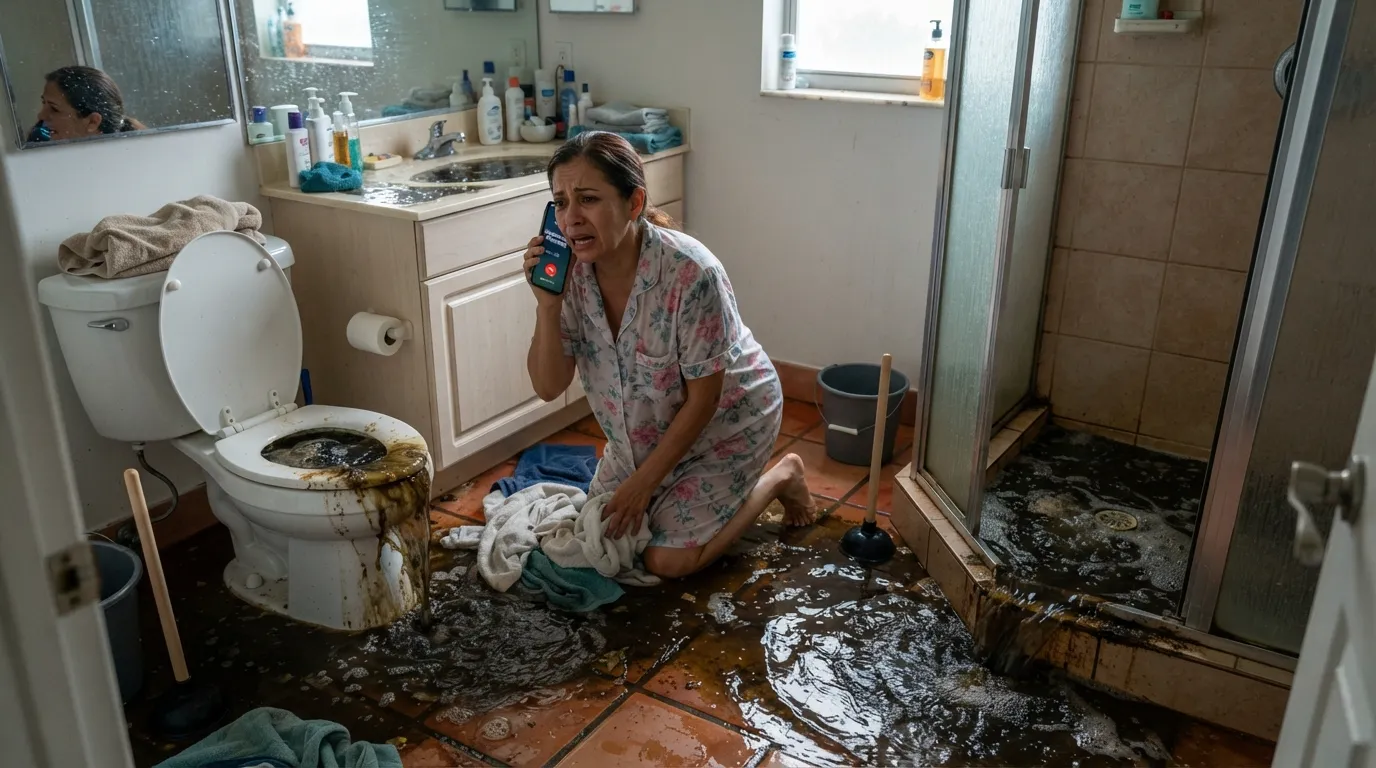
A blocked drain becomes an emergency when sewage or wastewater is backing up into the property, several fixtures are affected at once, an overflow is spreading, or you cannot safely use essential plumbing. Stop using water through the affected system and arrange professional help. One isolated slow drain with no backup or flooding is usually less urgent, but recurring or worsening symptoms should still be investigated.
If you are searching for a drainage emergency callout, you probably do not want a long lesson on plumbing before getting an answer. You want to know whether the problem is serious, what you should do right now, and who you should call.
I use one simple rule: judge the situation by the type of water, the number of fixtures affected, and whether the problem is actively getting worse. A slow bathroom sink is very different from sewage coming up through a shower when you flush a toilet.
This guide will help you make that decision quickly, avoid actions that can worsen the backup, understand what an emergency drain plumber may need to diagnose, and distinguish a private plumbing problem from a possible public sewer or stormwater issue in Miami.
Is a Blocked Drain an Emergency?
Not every blocked drain requires an emergency callout. The urgency depends on what the blockage is doing to the rest of your plumbing system.
🔴 Emergency: Call Now
- Raw sewage is backing up through a toilet, shower, tub, or floor drain.
- Multiple sinks, toilets, or drains are blocked at the same time.
- Wastewater is actively overflowing into the property.
- Water is spreading toward electrical outlets, appliances, or equipment.
- You cannot use essential plumbing without triggering another backup.
🟠 Urgent: Same-Day Attention
- Several fixtures are draining unusually slowly.
- A toilet gurgles when another fixture drains.
- Water rises in another fixture when you flush.
- A blockage keeps returning after it is cleared.
- Sewer odors appear together with drainage problems.
🟢 Usually Less Urgent
- Only one sink or shower is draining slowly.
- All other fixtures are working normally.
- There is no sewage, overflow, or active flooding.
- The blockage appears limited to visible hair or debris near a strainer.
This is a practical triage guide rather than a remote diagnosis. If symptoms spread to other fixtures, sewage appears, or an isolated clog keeps returning, the level of urgency changes.
What to Do in the First 5 Minutes of a Drain Emergency
If wastewater is already backing up, your first priority is not finding the perfect unclogging method. It is stopping more water from entering a drainage system that may already be overwhelmed.
- Stop using sinks, toilets, showers, tubs, dishwashers, and washing machines. Every additional gallon sent into a blocked line can worsen a backup.
- Keep people and pets away from sewage or contaminated water. Do not treat wastewater like an ordinary spill.
- Watch for electrical hazards. Do not enter standing water that is near outlets, appliances, extension cords, electrical panels, or other energized equipment.
- Check whether one fixture or several fixtures are affected. This can help indicate whether the obstruction is local or farther downstream.
- Decide whether you need a plumber, utility assistance, or flooding support. Not every drainage problem belongs to the same system.
Do not keep flushing to test the blockage. If flushing one toilet already causes wastewater to rise in a shower, tub, or floor drain, you have enough information to stop using the plumbing.
The 60-Second Drain Emergency Decision Test
If you are unsure whether to request emergency drain service, answer these five questions in order.
1. What is coming back up?
Slow-moving water is one problem. Dirty wastewater or visible sewage entering the property is a much more urgent one.
2. How many fixtures are affected?
One fixture may indicate a localized clog. Several fixtures can point toward a shared branch drain, building drain, or sewer-line restriction.
3. Does using one fixture affect another?
If flushing a toilet makes water rise in a shower, tub, or floor drain, stop using the plumbing.
4. Is water actively spreading?
Overflow that is moving into finished rooms, cabinetry, flooring, electrical areas, or occupied spaces increases urgency.
5. Is the problem limited to your property?
If neighbors, streets, or a broader area are affected, public sewer or stormwater infrastructure may also be involved.
One Slow Drain or a Main-Line Problem?
The pattern of affected fixtures often gives you more useful information than the word “clog.”
One sink or shower
The restriction may be close to that fixture, such as hair, grease, soap buildup, or debris in the trap or nearby branch.
Several nearby fixtures
A shared branch line may be restricted, especially if one fixture affects another.
Fixtures throughout the home
A restriction farther downstream, including a building drain or sewer lateral, becomes more likely.
Toilet use causes another drain to back up
This is a stronger warning that wastewater cannot move normally through a shared portion of the drainage system.
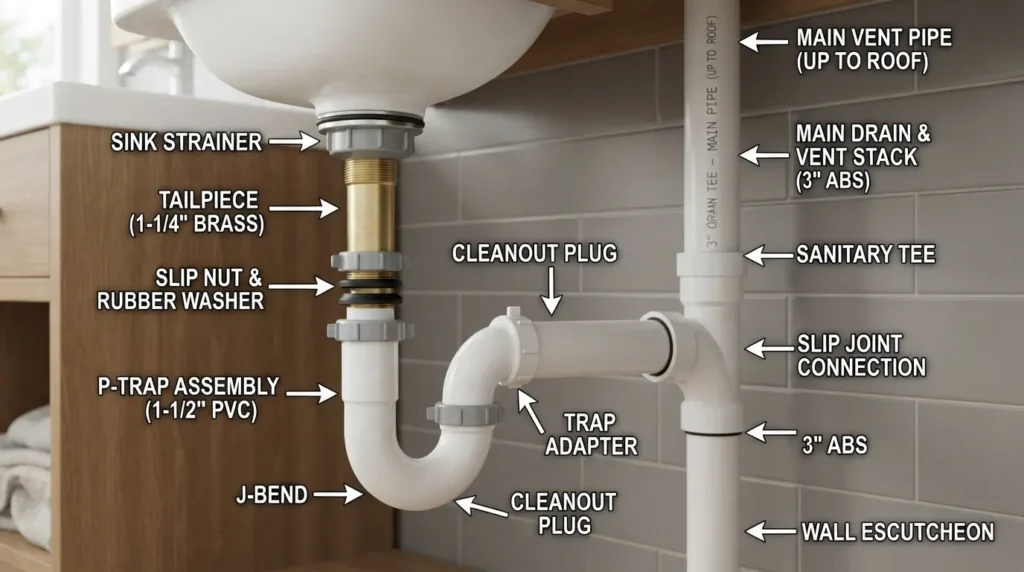
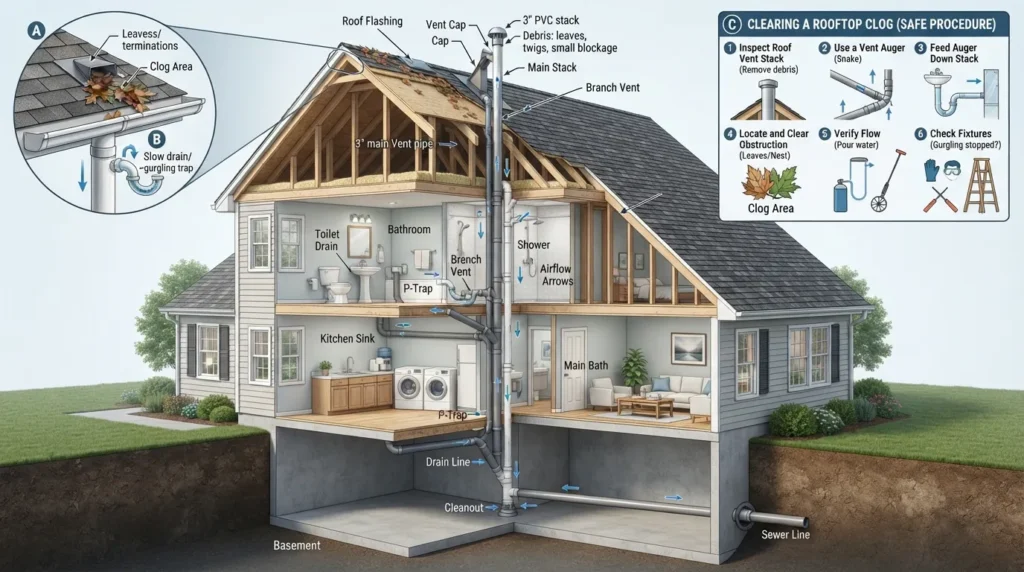
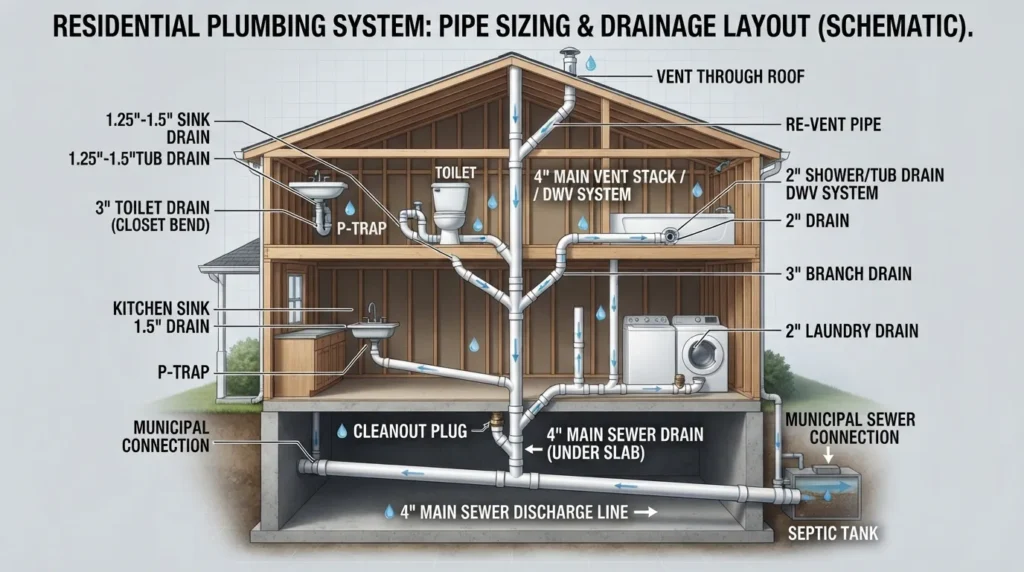
If you want to understand how fixture drains, branch lines, building drains, traps, vents, and sewer connections work together, see our guide to the home drainage system.
Signs Your Main Drain or Sewer Line May Be Clogged
A main drain problem often creates several related symptoms instead of one isolated slow fixture.
- Several sinks, showers, tubs, or toilets drain slowly at the same time.
- A toilet bubbles or gurgles when another fixture is used.
- Water rises in a shower, tub, or floor drain after a toilet is flushed.
- Dirty water or sewage appears at a low-level drain.
- A blockage returns shortly after being cleared.
- Sewer odors appear together with slow drainage or backups.
These signs cannot tell you the exact location or cause by themselves, but they are good reasons to investigate the shared drainage system rather than treating each fixture as an unrelated clog.
What Causes Emergency Drain Backups?
There is no single cause behind every blocked drain. What commonly causes trouble depends on which part of the plumbing system is affected.
Fats, Oils, and Grease
Kitchen waste containing fats, oils, and grease can build up inside drain lines and contribute to restricted flow. This is especially important in homes, restaurants, and commercial kitchens where grease enters the drainage system repeatedly.
Hair, Soap, and Bathroom Debris
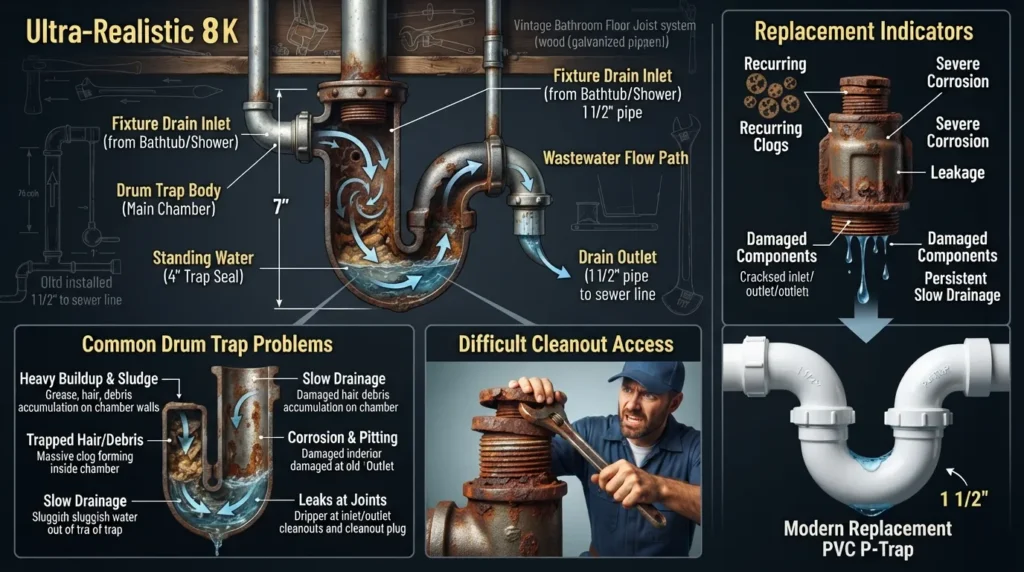
Hair and residue can collect in bathroom drains, traps, and branch lines. These clogs are often more localized than a main sewer problem, although a completely blocked branch can still create an overflow.
Wipes and Other Non-Flushable Materials
Wipes, sanitary products, and foreign objects can contribute to toilet and sanitary drain blockages. A toilet may appear to clear temporarily while material remains farther down the line.
Tree Roots and Pipe Problems
Buried sewer lines can develop recurring problems when roots enter damaged areas or when sections of pipe are displaced, deteriorated, or structurally compromised. In these cases, reopening the line may not address the underlying defect.
The useful question is not only “What clogged the drain?” For a recurring emergency, you also want to know where the restriction is, why it formed, and whether the pipe itself is contributing to the problem.
What Not to Do During a Drainage Emergency
When a drain backs up, some common DIY reactions can add more water, expose you to contaminants, or make diagnosis harder.
- Do not repeatedly flush a blocked toilet. More water will not help if the downstream line cannot carry it away.
- Do not run several fixtures to test the system. You can turn a warning sign into a larger overflow.
- Do not run a dishwasher or washing machine. Both discharge water into the drainage system.
- Do not mix chemical drain cleaners. Different chemical products can react dangerously.
- Do not assume chemicals will solve a suspected main-line blockage. They cannot correct roots, structural damage, or many large obstructions.
- Do not enter sewage-contaminated standing water without appropriate protection.
- Do not assume the problem is permanently solved because water starts moving again. Recurring clogs deserve further investigation.
Can You Unclog an Emergency Drain Yourself?
Sometimes a minor isolated clog is reasonable to address yourself. If one shower is slow and you can see hair at the strainer, removing that debris may solve the problem. An isolated fixture clog with no sewage backup may also respond to a basic plunger when used appropriately.
I would stop DIY troubleshooting and call a professional when:
- Multiple fixtures are affected.
- Sewage or wastewater is entering the property.
- The blockage keeps coming back.
- Using one fixture causes another to back up.
- You suspect a main drain or sewer-line obstruction.
- You cannot use essential plumbing without creating an overflow.
- You suspect roots, pipe damage, or another structural issue.
A useful decision point: Once several fixtures are involved, the problem is no longer simply “What can I pour down this drain?” The more important question becomes “Where is the shared restriction?”
What an Emergency Drain Plumber Should Determine
A good emergency drainage response starts with diagnosis. The right equipment depends on where the problem is and what is causing it.
- Which fixtures are affected? This helps separate a local fixture clog from a shared drainage problem.
- Where is the restriction likely located? The blockage may be in a fixture drain, branch drain, building drain, or sewer lateral.
- What clearing method fits the situation? Mechanical drain cleaning, augering, or another technique may be appropriate depending on access and the type of obstruction.
- Is further inspection needed? Recurring problems or suspected structural issues may justify a camera inspection.
- Has normal flow actually been restored? The system should be checked after clearing rather than assuming the first sign of movement means the problem is resolved.
If your problem needs professional clearing, you can learn more about our drain cleaning service.
Drain Snake, Hydro Jetting, Camera Inspection, or Repair?
These services solve different problems. One method is not automatically better than another.
Mechanical Drain Cleaning
Can be used to break through or remove certain obstructions. The correct equipment depends on pipe size, access, and blockage type.
Hydro Jetting
May be appropriate for certain types of buildup when the pipe condition, access, and nature of the obstruction make high-pressure cleaning suitable.
Camera Inspection
Can help investigate recurring clogs, roots, pipe damage, displaced sections, or other conditions that cannot be identified from symptoms alone.
Drain or Sewer Repair
If the pipe is damaged or structurally defective, clearing the obstruction may restore temporary flow without fixing the underlying problem.
Miami Drain Emergency: Do You Call a Plumber, the County, or Report Flooding?
This distinction matters in Miami because sanitary plumbing, public sewer infrastructure, and stormwater drainage are different systems.
Call a plumber when:
- The problem appears limited to your home or business.
- Indoor plumbing fixtures are backing up.
- Several drains inside the property are affected.
- A private drain or sewer-lateral problem is suspected.
- The same drainage problem keeps returning on your property.
A public sewer or utility issue may be involved when:
- The apparent sewer problem extends beyond your property.
- Several neighboring properties are experiencing similar symptoms.
- There are signs of a broader public sewer or water-system problem.
Stormwater reporting may be appropriate when:
- Street or neighborhood flooding follows heavy rain.
- Water is accumulating outdoors independently of your household plumbing use.
- The problem appears related to public stormwater infrastructure rather than an indoor sanitary drain.
A private plumber can diagnose plumbing on your property, but a plumbing contractor cannot repair a public sewer main or municipal stormwater system. If you are unsure who is responsible, pay attention to where the water is appearing, whether plumbing use triggers the problem, and whether nearby properties are affected too.
Sanitary Sewer Backup vs. Stormwater Flooding
These issues can happen at the same time during severe weather, but they are not the same thing.
Sanitary drainage carries wastewater from toilets, sinks, showers, tubs, washing machines, and other plumbing fixtures toward the property’s wastewater connection.
Stormwater drainage manages rainfall and surface runoff.
More consistent with a sanitary drain problem
Flushing a toilet or running a fixture causes wastewater to rise through another indoor drain.
More consistent with a stormwater problem
A street or outdoor area floods during heavy rain while indoor plumbing otherwise functions normally.
What If the Property Uses a Septic System?
Not every property handles wastewater in exactly the same way. If your property uses a septic system, slow drainage, sewage backup, wet areas, or wastewater surfacing outside may require a different diagnosis than a conventional sewer-lateral clog.
Heavy rain and saturated ground can also complicate septic-system problems. If you do not know whether the property is connected to a sewer or septic system, establish that before assuming a standard drain-clearing service will solve the issue.
Commercial Drainage Emergencies
A commercial drain blockage can become urgent quickly because one shared line may affect customers, employees, tenants, food-service areas, restrooms, or multiple units.
Commercial warning signs include:
- Several restrooms becoming unusable at once.
- Floor drains backing up during normal operations.
- Wastewater entering occupied or customer-facing areas.
- Repeated grease-related drainage problems.
- A shared line affecting multiple suites or fixtures.
- An overflow that prevents normal use of part of the property.
When several commercial fixtures are affected, it is usually more useful to stop adding wastewater to the line and arrange diagnosis than to continue testing fixtures individually.
How Much Does an Emergency Drain Callout Cost?
There is no honest single price for every emergency drain callout. The cost can vary because the work required for a local fixture clog is very different from diagnosing a recurring main sewer-line problem.
Factors that can affect the final cost include:
- Whether service is requested during regular or after-hours periods.
- The location and accessibility of the blockage.
- Whether the problem is local, in a branch line, or farther downstream.
- The equipment required to clear the obstruction.
- Whether a camera inspection or additional diagnosis is needed.
- Whether pipe repair is necessary after the blockage is identified.
Before approving additional work, ask what has been diagnosed, what service is being recommended, and what is included. A precise quote is more useful after the scope of the problem is understood.
Before the Plumber Leaves, Ask These 4 Questions
Getting the water moving again is important. Understanding why the blockage happened can be just as valuable if you want to avoid another emergency.
- Where was the blockage? Was it near one fixture, in a shared branch, or farther down the drainage system?
- What appears to have caused it? Grease, hair, wipes, roots, debris, and pipe defects do not all require the same prevention strategy.
- Was the line only reopened, or was the cause investigated? This matters when the same clog has happened before.
- Is the problem likely to return? Ask whether any follow-up inspection, cleaning, maintenance, or repair is recommended and why.
How to Reduce the Risk of Another Drain Emergency
You cannot prevent every drainage failure, but you can reduce many avoidable blockages.
- Keep fats, oils, and grease out of kitchen drains.
- Use strainers where appropriate to catch hair and food debris.
- Avoid flushing wipes and other products that do not break down like toilet paper.
- Pay attention when several fixtures begin draining slowly at the same time.
- Do not ignore a clog that repeatedly returns.
- Investigate recurring sewer-line problems instead of repeatedly treating only the symptom.
- Know whether your property uses a public sewer connection or septic system.
For broader plumbing information and help in the Miami area, visit our Miami plumbing services and resources.
Drainage Emergency Callout FAQs
Is a blocked drain an emergency?
A single slow drain usually is not an emergency. Sewage backup, multiple blocked fixtures, active overflow, or the inability to use essential plumbing safely can make the situation urgent.
Should I call a plumber for a blocked drain?
Call a plumber when the blockage affects multiple fixtures, repeatedly returns, causes wastewater to back up, or appears to involve a shared drain or sewer line.
Will a blocked drain clear itself?
Do not rely on it. A drain may temporarily begin flowing again, but recurring or complete blockages often have an underlying restriction that can return.
How can I tell if my main drain line is clogged?
Multiple fixtures draining slowly or backing up, a toilet causing water to rise in another fixture, and sewage appearing through a low drain are stronger warning signs than a clog limited to one sink.
Does pouring boiling water down a drain unclog it?
Boiling water is not a dependable solution for a serious blockage or suspected main-line clog. If you do not know the pipe material or cause of the restriction, avoid treating boiling water as an emergency fix.
Why do people pour salt down the drain?
Salt is sometimes promoted as a household cleaning trick, but it is not a reliable way to remove serious drain or sewer blockages. Proper disposal habits and diagnosis of recurring problems are more useful.
What can I pour down a drain to unblock it?
If you suspect a main drain or sewage backup, stop using the plumbing instead of adding chemicals. A serious blockage needs diagnosis. For a minor isolated clog, simple mechanical removal is often a more controlled first step.
What is the biggest cause of blocked drains?
There is no single cause for every drain. Kitchen lines commonly collect fats, oils, grease, and food debris; bathroom drains often collect hair and residue; toilets can be affected by wipes and foreign objects; and buried sewer lines may also have root intrusion or pipe defects.
How much does an emergency plumber charge for a drain callout?
The price depends on the timing, location of the blockage, access, equipment, diagnostic work, and whether the pipe requires repair. Ask what has been diagnosed and what the quoted work includes.
Is a sewer smell alone a drainage emergency?
Not always, but persistent sewer odor should not be ignored, especially when it appears together with gurgling, slow drainage, sewage backup, or multiple affected fixtures.
When You Need Emergency Drain Help in Miami
If sewage is entering the property, several fixtures are backing up, or continued water use causes another overflow, stop using the plumbing and focus on preventing additional damage. You do not need to identify the exact cause before asking for professional help.
Need Help With an Active Drain Backup?
If multiple drains are blocked, sewage is backing up, or wastewater is actively overflowing, stop using the affected plumbing and describe the symptoms when you call so the problem can be assessed properly.
Related Miami-Dade Resources
If the problem appears to involve public infrastructure rather than only your property’s plumbing, these local resources may help:
- Miami-Dade Water and Sewer contact and emergency information
- Miami-Dade guidance on fats, oils, and grease
One slow drain may be inconvenient. Sewage backup, several affected fixtures, active overflow, or wastewater spreading through the property is different. Stop adding water, keep people away from contaminated areas, identify whether the issue appears private or public, and get the right help before the problem becomes more damaging.