A floor drain can look like a simple hole in the floor, but a dirty drain, a slow drain, a bad-smelling drain, and a drain that is backing up are not always the same problem. That distinction matters because the right fix depends on where the problem actually is.
If your floor drain is simply dirty, routine cleaning may be all you need. If water is draining slowly, you may have a localized restriction. If the drain smells but still flows normally, the trap may need attention. And if water rises from a basement floor drain when another fixture is used, the blockage may be farther downstream rather than at the floor drain itself.
What Is the Best Way to Clean a Floor Drain?
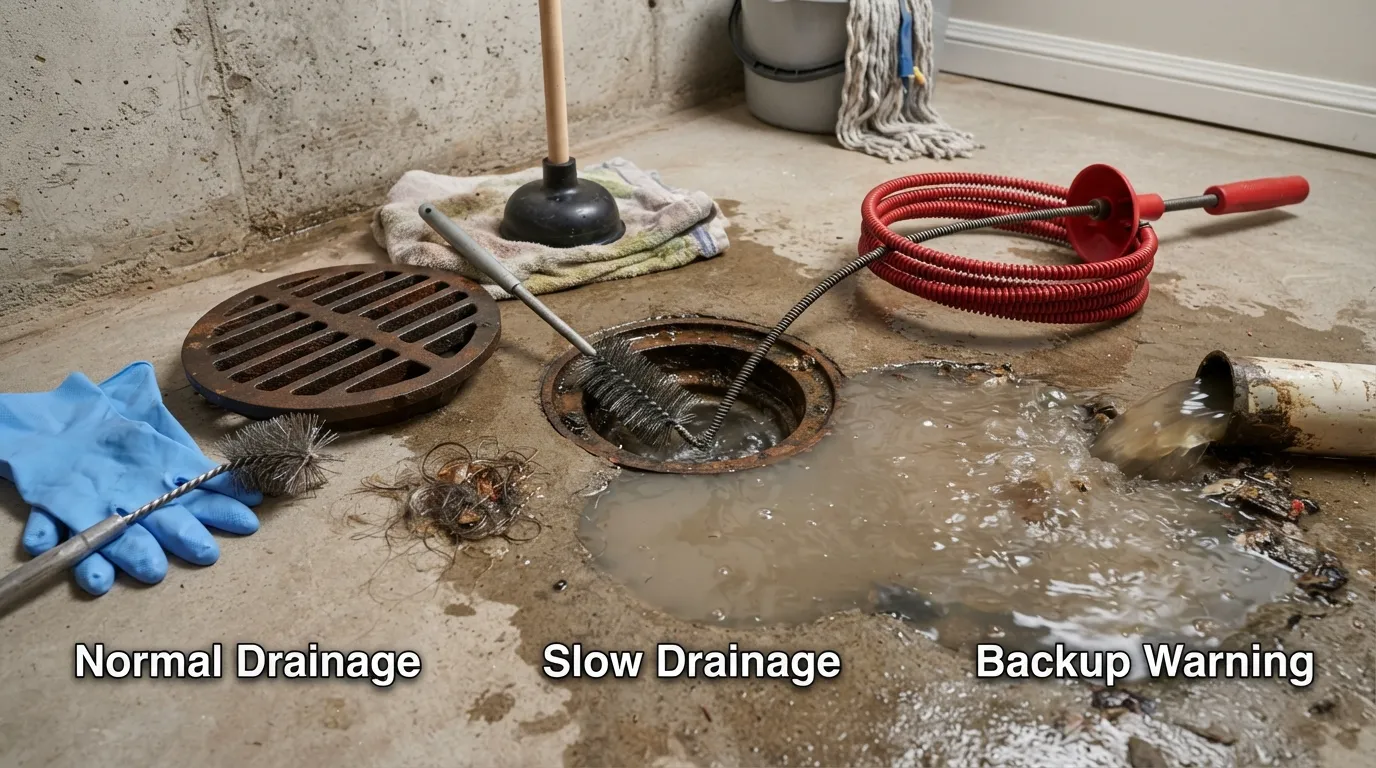
For routine floor drain cleaning, remove the grate, pull out visible debris, scrub the grate and accessible drain surfaces, rinse away loosened grime with warm water, and make sure a trapped drain contains enough clean water to maintain its water seal.
If the drain is slow, completely blocked, or backing up when other plumbing fixtures are used, diagnose the cause before repeatedly pouring cleaners into it. A deeper branch or main drain problem requires a different approach.
Before You Clean It: Identify Which Floor Drain Problem You Have
This is the step I would not skip. Many floor-drain guides jump directly from “remove the grate” to “use a plunger or snake.” A better approach is to first identify what the drain is telling you.
Dirty but Draining Normally
Likely issue: Surface grime, hair, dirt, lint, sediment, or debris around the grate and drain opening.
Start with: Routine cleaning.
Draining Slowly
Likely issue: A localized buildup or obstruction may be restricting flow.
Start with: Cleaning, then controlled mechanical clearing if needed.
Smells but Drains
Likely issue: A dry or poorly maintained trap is one possibility, although grime or another plumbing problem can also cause odor.
Start with: Cleaning and checking the trap seal.
Water Is Backing Up
Likely issue: The restriction may be deeper in a shared branch, building drain, or sewer line.
Start with: Diagnosing what other fixtures are doing before treating it as a simple floor-drain clog.
Floor Drain Cleaning vs. Unclogging: They Are Not the Same Job
Cleaning
Cleaning removes dirt, grime, hair, lint, sediment, soap residue, and other material from the grate and accessible parts of the drain.
Unclogging
Unclogging restores restricted flow by removing or breaking through an obstruction inside the drainage piping.
Main-Line Clearing
If several fixtures are affected or water comes up through the floor drain when another fixture drains, the problem may be beyond the floor drain and require professional diagnosis.
How to Clean a Floor Drain Step by Step
If the floor drain still moves water normally and you are dealing with ordinary dirt, residue, or odor, start with the simplest cleaning method.
What You May Need
- Rubber or waterproof gloves
- Flashlight
- Screwdriver or appropriate tool for the grate, if required
- Small container or disposable bag for debris
- Stiff nylon cleaning brush
- Dish soap or another appropriate mild cleaner
- Bucket of clean warm water
- Wet/dry vacuum, plunger, or hand auger only if additional clearing becomes necessary
1. Remove the Floor Drain Grate
Lift the grate or remove its fasteners if necessary. Do not force badly corroded hardware. Once the cover is off, use a flashlight to inspect the opening before reaching inside.
Look for hair, lint, mud, leaves, sediment, small debris, or a visible layer of sludge around the drain walls.
2. Remove Loose Debris First
Pick out accessible debris while wearing gloves. Removing solid material before flushing is important because pushing more debris into the pipe can turn a surface-cleaning problem into a deeper blockage.
If the drain is in a garage, basement, utility room, or concrete floor, pay particular attention to grit and sediment. These materials can settle rather than simply wash away.
3. Scrub the Grate and Accessible Drain Surfaces
Use a stiff nylon brush with warm water and a suitable mild cleaner to loosen grime from the grate and the accessible upper walls of the drain.
Do not treat household cleaning mixtures as substitutes for removing a physical obstruction. A liquid may help with light surface residue or odor, but it cannot reliably remove hair, a solid object, compacted sediment, roots, or a blockage farther down the line.
4. Rinse and Test the Drain
Pour clean warm water into the drain and watch how quickly it disappears.
- Water disappears normally: routine cleaning may have been enough.
- Water drains but noticeably slowly: a partial restriction may remain.
- Water barely moves: stop adding water and move to clog diagnosis.
- Water rises instead of draining: the blockage may be deeper than the visible drain opening.
5. Restore Water to the Trap if Needed
Many floor drains use a trap that retains water. That water creates a barrier between the room and gases from the drainage system.
If a rarely used floor drain has dried out, adding clean water may restore the trap seal. However, if the odor quickly returns, do not assume that simply adding more water has solved the cause. The trap, drain, venting, seal, or another part of the system may need inspection.
Important: Never Mix Drain-Cleaning Chemicals
Do not mix different drain cleaners, bleach, acids, vinegar, or other chemicals in a clogged drain. If a chemical product has already been used and the drain remains blocked, avoid adding another product and tell anyone who works on the drain what was poured into it.
How to Unclog a Floor Drain That Is Still Draining Slowly
If cleaning the visible portion does not restore normal flow, work from the least aggressive method toward more involved mechanical clearing.
Start With a Wet/Dry Vacuum if Debris Is Reachable
A wet/dry vacuum can sometimes remove loose material near the drain opening without forcing it farther into the pipe. This can be particularly useful for grit, sludge, or small debris that is close enough to extract.
Use only equipment designed for wet pickup and follow the manufacturer’s instructions.
Try a Plunger for a Localized Restriction
If the drain opening allows you to form a useful seal, a plunger may help move a localized clog. Add only enough water to help form the seal, then use controlled plunging rather than excessive force.
If plunging causes water to appear somewhere else or multiple fixtures begin reacting, stop and reassess. You may be dealing with a shared drainage problem rather than an isolated floor-drain clog.
Use a Hand Auger Only When the Drain Configuration Allows It
A hand-operated drain auger can help with some obstructions beyond the drain opening. Feed the cable gradually and do not force it when it meets hard resistance.
Floor drains can include traps, turns, internal cleanout openings, or other components, so difficulty advancing a cable does not automatically mean you should push harder.
A Good DIY Rule
If you cannot identify what the tool is encountering, stop before force becomes the strategy. A tougher machine is not automatically the right solution. The obstruction may be farther downstream, the access point may be wrong, or the piping may need to be inspected first.
Why Common Floor-Drain Fixes Sometimes Do Not Work
This is where many homeowners get stuck. They clean the grate, pour something into the drain, plunge it, or try a small snake—and the problem remains.
That does not necessarily mean you need a stronger version of the same remedy. It may mean you are treating the wrong part of the system.
- The blockage is deeper than the floor drain. A clear-looking drain opening does not mean the downstream pipe is open.
- Compacted sediment is present. Heavy grit and sludge may not respond to a simple liquid treatment.
- The restriction is in a shared branch. Other fixtures may begin showing symptoms as the restriction worsens.
- The main building drain or sewer line is affected. The floor drain may simply be the lowest place where backed-up water becomes visible.
- The problem is not a normal clog. Pipe damage, roots, displaced piping, or another drainage-system issue may require inspection rather than repeated DIY clearing.
Is the Floor Drain Clogged—or Is the Main Drain Clogged in the Basement?
This distinction can save you a lot of wasted effort.
Signs the Problem May Be Local to the Floor Drain
- Only the floor drain is slow.
- Other nearby fixtures drain normally.
- Visible debris or buildup is present near the drain.
- Cleaning or light mechanical clearing noticeably improves flow.
Signs the Problem May Be Farther Downstream
- Water rises from the floor drain when a toilet, washer, shower, or other fixture discharges.
- More than one drain is slow or backing up.
- The floor drain repeatedly backs up after being cleared.
- Dirty wastewater or sewage comes up through the drain.
- A hand auger clears the immediate drain but the problem quickly returns.
When several fixtures interact with one another, stop thinking only about the visible floor drain. The restriction may be in a pipe that those fixtures share.
Floor Drain vs. Cleanout: What Is the Difference?
A floor drain and a plumbing cleanout may be located near one another, especially in a basement, but they serve different purposes.
Floor Drain
A floor drain is an inlet designed to receive water from the floor or surrounding area and carry it into an appropriate drainage system.
Cleanout
A cleanout is an access point used to inspect or service drainage piping. It is not meant to collect ordinary floor water.
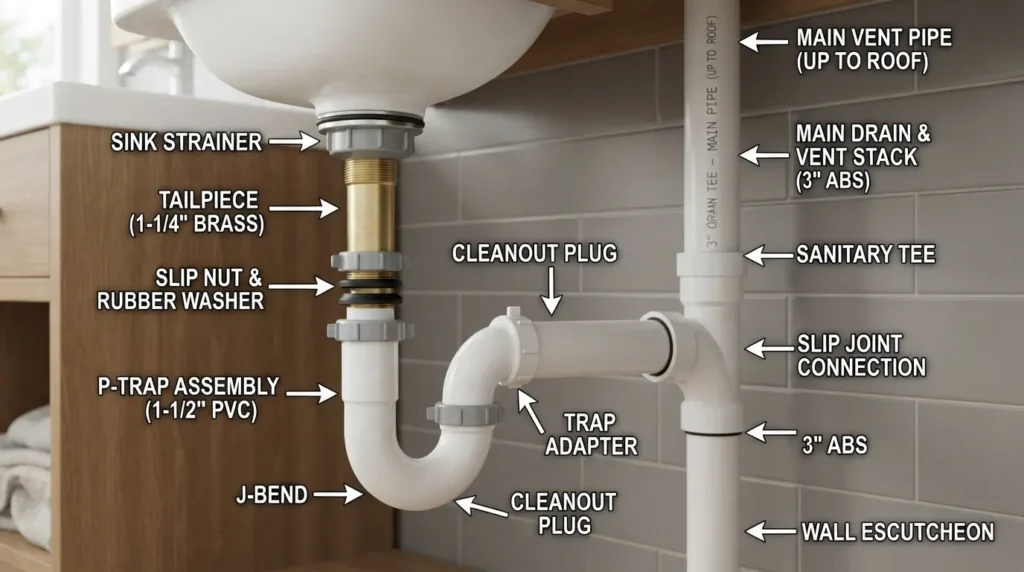
A floor drain may connect through a trap and branch piping into a larger drainage system. A cleanout provides service access to appropriate sections of that piping. If you want to understand how traps, fixture drains, branch drains, cleanouts, building drains, and the sewer side fit together, see this guide to how a home drainage system works.
Think of it this way:
Floor drain: receives water → Trap: maintains a water seal → Drain piping: carries discharge → Cleanout: provides service access to applicable piping.
Do Floor Drains Connect to the Sewer Line?
Many indoor floor drains ultimately connect to a building’s sanitary drainage system, but you should not assume every floor drain on every property has the same destination.
The connection can depend on the drain’s location, purpose, age, building design, and local plumbing arrangement. Some drainage systems may route water differently.
That is another reason a floor drain should not automatically be treated as a direct opening into the home’s “main sewer.” The floor drain is one component within a larger system.
How to Clean a Basement Floor Drain
Basement floor drain cleaning follows the same basic process—remove debris, scrub accessible surfaces, rinse, maintain the trap seal, and test drainage—but basement drains deserve extra attention because they can also reveal a problem elsewhere in the drainage system.
Before treating a basement floor drain as an isolated clog, ask:
- Does the water level change when someone flushes a toilet?
- Does the drain react when the washing machine empties?
- Are nearby sinks, tubs, or toilets draining slowly too?
- Is the backup clean water, dirty wastewater, or sewage?
- Has the same drain backed up before?
If another fixture causes water to rise from the basement floor drain, repeatedly cleaning the grate is unlikely to address the underlying problem.
Cleaning Concrete, Garage, and Utility-Room Floor Drains
The basic cleaning method is similar, but the type of debris can change by location.
Concrete or Garage Floor Drain
Remove grit, mud, leaves, and solid debris manually before flushing. Heavy sediment is better removed than pushed deeper into the pipe.
Laundry-Area Floor Drain
Look for lint and accumulated debris, and pay attention to whether the drain reacts when the washing machine discharges.
Rarely Used Basement Drain
Check both cleanliness and the trap seal. An unused drain can develop odor even when it is not physically clogged.
What Can You Pour Down a Floor Drain to Stop a Bad Smell?
If the drain is simply dry, clean water may be the most important thing to add because the trap needs a water seal to help block gases from the drainage system.
If the drain itself is dirty, clean the grate and accessible drain surfaces rather than trying to cover the odor with a stronger product.
Baking soda and vinegar are commonly suggested for light cleaning and deodorizing, but they should not be treated as a dependable way to clear a deep or solid clog. If odor remains after the drain is clean and the trap contains water, investigate the cause rather than repeatedly adding products.
Do not ignore a sewage-type odor accompanied by backups, gurgling, or multiple slow fixtures.
Those symptoms point beyond routine deodorizing and deserve proper drainage-system diagnosis.
When to Stop DIY Floor Drain Cleaning
DIY cleaning makes sense when the problem is accessible and clearly limited to ordinary debris or a minor localized restriction. It makes less sense when the symptoms indicate a deeper problem.
Stop and Get the Drain Diagnosed If:
- Raw sewage or contaminated wastewater is backing up.
- Several drains or fixtures are affected at the same time.
- Using another fixture causes the floor drain to rise or overflow.
- The same blockage keeps returning.
- A snake repeatedly stops at the same location and you cannot identify why.
- You suspect roots, damaged piping, or a deeper main-line obstruction.
- Chemical drain cleaner is standing in the blocked drain.
- The problem requires powered drain-cleaning equipment you are not trained to use safely.
At that point, a professional drain cleaning service can determine whether the problem requires mechanical cleaning, deeper line clearing, camera inspection, or another solution instead of continuing to treat the visible floor drain.
If you have never seen a floor drain mechanically snaked, this demonstration can help you understand what the process involves. Use it as an educational reference rather than a reason to force a cable through a drain you cannot identify.
How to Keep a Floor Drain Clean
Floor drain maintenance is simpler when you prevent debris from entering the drain in the first place.
- Keep the grate in place and replace a damaged cover.
- Pick up hair, lint, leaves, mud, and solid debris rather than washing everything into the drain.
- Clean visible buildup before it becomes a thick layer of sludge.
- Periodically test rarely used drains and make sure trapped drains have not dried out.
- Pay attention to changes in drainage speed instead of waiting for a complete blockage.
- Investigate recurring backups rather than repeatedly clearing the same symptom.
There is no single maintenance interval that fits every floor drain. A heavily used utility drain and a rarely used basement drain have different needs. Let the drain’s location, use, debris load, and trap condition determine how often you inspect it.
A Simple Floor Drain Decision Guide
Use the symptom—not just the keyword “clog”—to choose your next step.
Dirty + normal flow → clean the grate and accessible drain.
Slow flow → clean first, then investigate a localized restriction.
Odor + normal flow → clean the drain and check the trap seal.
No flow → avoid repeatedly adding liquids; investigate the obstruction.
Backup when another fixture runs → suspect a downstream/shared drainage problem.
Multiple fixtures + sewage backup → stop normal water use and move to professional diagnosis.
Floor Drain Cleaning FAQs
What is the best way to unclog a floor drain?
Start by removing visible debris and determining whether the blockage is local. If necessary, progress to a wet/dry vacuum, plunger, or suitable hand auger. If other fixtures are also affected or the floor drain backs up when another fixture is used, diagnose the shared drainage system instead of treating it as an isolated floor-drain clog.
What can I pour down a floor drain to stop it from smelling bad?
If the trap has dried out, clean water may restore its water seal. Also clean grime from the grate and drain opening. If the odor continues even though the drain is clean and the trap contains water, investigate the plumbing cause instead of repeatedly pouring deodorizing products into it.
How do I know if a floor drain is clogged?
Common warning signs include slow drainage, standing water, water that rises after you add more water, recurring backups, or water coming through the floor drain when another plumbing fixture is used. That last symptom can indicate a restriction beyond the floor drain itself.
What is the difference between a cleanout and a floor drain?
A floor drain receives water from a floor or surrounding area. A cleanout is an access point used to inspect or service drainage piping. They may be located near each other, but they perform different jobs.
Do floor drains need cleanouts?
A floor drain and a cleanout are separate components. A drainage system may include cleanout access at required or useful service locations, but that does not mean every individual floor drain has its own separate cleanout.
Are floor drains tied to the sewer line?
Many indoor floor drains ultimately discharge through sanitary drainage piping, but the exact connection depends on the building and the purpose of the drain. Do not assume every floor drain on every property connects to the same type of drainage system.
Does every drain need a cleanout?
Not every drain opening has an individual cleanout beside it. Cleanout locations depend on the drainage layout and applicable plumbing requirements. Their purpose is to provide access where the piping needs to be serviced.
Is a floor drain sanitary?
A properly installed, trapped, and maintained floor drain can be a normal part of a sanitary plumbing system. It still needs cleaning, and it should not be treated as a general-purpose disposal opening for grease, chemicals, trash, or solid debris.
How often should you pour water down a floor drain?
There is no universal schedule for every drain. For a rarely used trapped floor drain, check it periodically and add clean water when necessary to maintain the trap seal. How quickly water evaporates depends on the drain and its environment.
Do floor drains have a ball in them?
Some floor-drain assemblies or related backflow/trap-seal devices can contain a ball, float, or other moving component, but many floor drains do not. If you see an unfamiliar internal part, identify the drain design before removing or forcing it.
The best floor drain cleaning method starts with diagnosis.
If the drain is dirty but flowing normally, remove debris, scrub the accessible surfaces, rinse it, and maintain the trap seal. If it is slow, investigate a localized obstruction. If it smells, determine whether the problem is grime, a dry trap, or something deeper. And if water backs up when other fixtures are used, stop treating the floor drain as the whole problem—the restriction may be farther downstream.
That simple distinction helps you avoid wasting time on repeated remedies that cannot reach the actual blockage.
Still Dealing With a Slow or Backing-Up Floor Drain?
If cleaning the visible drain does not solve the problem, the next step is finding out where the restriction actually is. Our Miami plumbing team can help you determine the appropriate next step for the drainage problem.