 The best natural drain cleaner depends on what is actually causing the problem. Baking soda and vinegar may help with light residue and odors, dish soap with hot tap water can help with light greasy buildup, and enzyme cleaners can be useful for organic drain maintenance. But dense hair clogs, foreign objects, fully blocked drains, and deeper plumbing restrictions usually need physical removal or professional drain cleaning—not a stronger homemade liquid.
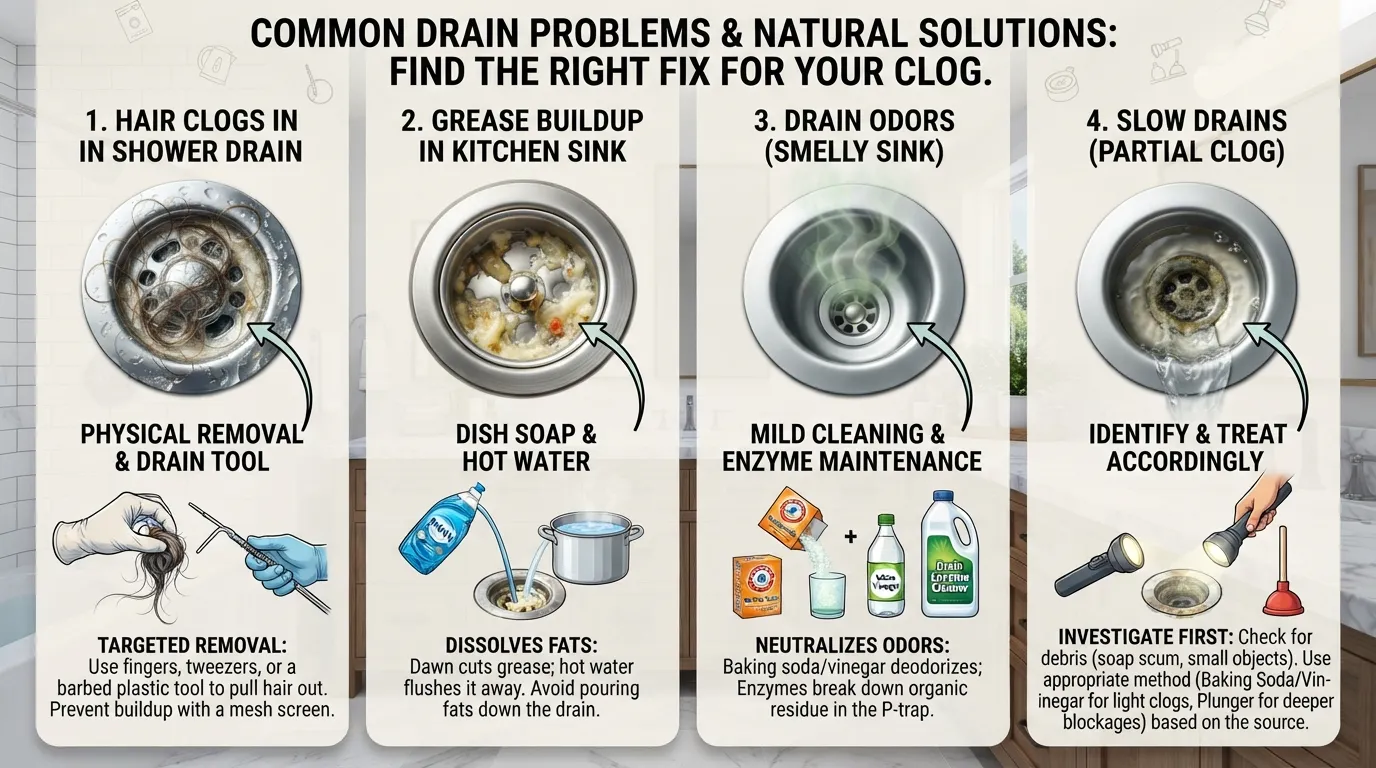
If your sink, shower, or tub is draining slowly, it is tempting to search for one homemade mixture that will fix everything. I would approach the problem differently: first identify what is probably inside the drain, then choose the least aggressive method that actually matches that clog.
That distinction matters because a greasy kitchen sink, a shower packed with hair, a smelly bathroom drain, and several slow drains throughout the house are not the same plumbing problem.
Below, I’ll show you how to choose a natural drain cleaner based on the symptoms you see, what baking soda and vinegar can realistically do, when mechanical removal works better, and when continuing with DIY treatments can waste time or make the situation harder to diagnose.
Start Here: What Is Probably Clogging Your Drain?
Before pouring anything into the drain, look at the fixture, how quickly the problem developed, and whether one or several drains are affected.
Kitchen Sink
Likely issues: grease, fats, food residue, soap film, or debris around the stopper or trap.
Shower or Tub
Likely issues: hair combined with soap residue, body-care products, or other organic buildup.
Bathroom Sink
Likely issues: hair around the stopper, soap, toothpaste residue, shaving debris, or biofilm.
Drain Smells but Flows
Likely issues: residue, organic slime, or an odor source rather than a true physical blockage.
Several Fixtures Are Slow
Possible issue: a restriction farther downstream that should not be treated like a simple sink clog.
Drain Is Completely Stopped
Possible issue: dense hair, a solid obstruction, heavy buildup, or a deeper blockage that liquid remedies may not reach.
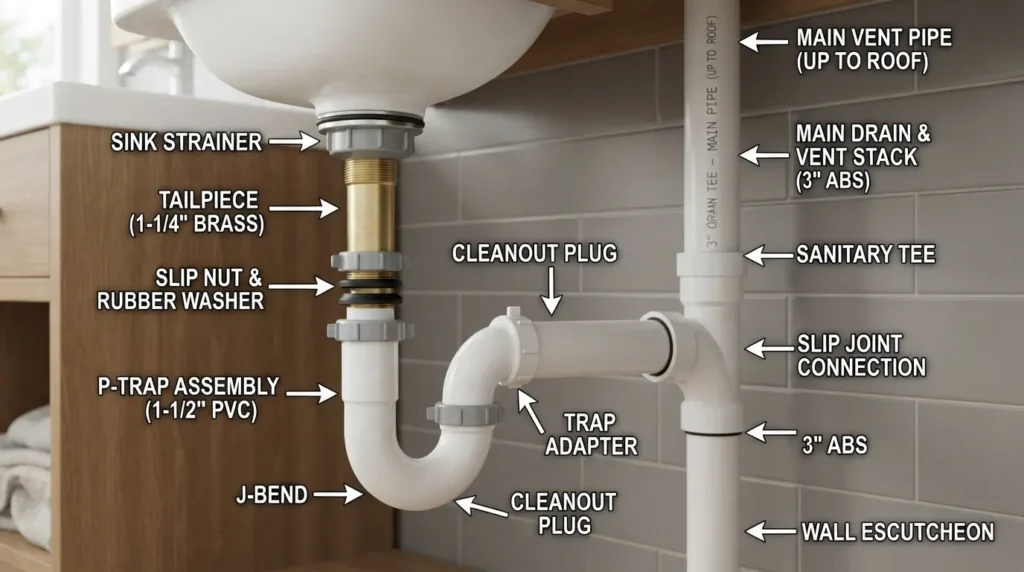
If you want to understand how individual fixtures connect to larger drain lines, this guide to your home drainage system explains why one slow sink can mean something very different from several fixtures backing up together.
The Best Natural Drain Cleaner Depends on the Clog
There is no single homemade drain cleaner that is best for hair, grease, odors, and solid blockages at the same time. A better way to decide is to match the remedy to the material you are trying to remove.
Baking Soda and Vinegar: What It Can and Cannot Do
Baking soda and white vinegar are probably the most common ingredients people associate with a homemade drain cleaner. When combined, they create a visible fizzing reaction.
That fizz can help disturb light residue near the drain opening, and the process can be useful when your goal is routine cleaning or dealing with mild buildup. What I would not do is treat the fizz as proof that the mixture can dissolve every type of clog deep inside a pipe.
Simple Baking Soda and Vinegar Method
- Remove any visible debris from the drain opening.
- Pour about 1/2 cup of baking soda into the drain.
- Follow it with about 1/2 cup of white vinegar.
- Cover the opening with a stopper or cloth so the reaction stays concentrated near the drain.
- Let it sit for about 15 minutes.
- Flush with hot tap water.
Use it for: light cleaning, mild organic residue, or odor-related maintenance—not as a guaranteed hair dissolver or solution for a completely blocked drain.
Important safety note: Never add vinegar, baking soda, bleach, or another homemade mixture to a drain that already contains a commercial chemical drain opener. If you do not know what chemical is already in the drain, do not add another product or mixture.
Does Baking Soda and Vinegar Really Clean Drains?
Yes, they can be useful for light drain cleaning, but “cleaning” and “unclogging” are not the same job.
- Cleaning means reducing light residue or buildup.
- Deodorizing means addressing an odor source.
- Unclogging means removing a restriction that is preventing water from flowing normally.
A drain can smell without being clogged, and it can be clogged even when a homemade cleaning mixture creates plenty of fizz.
If water is barely moving or standing in the fixture, the problem is more likely to require physical removal than another round of ingredients.
Natural Drain Cleaner for Hair: Remove the Hair First
If you are searching for a natural drain cleaner hair dissolver, this is where expectations matter most.
Hair tends to form a physical mass that catches soap residue and other debris. Instead of trying to chemically dissolve a dense hair clog, I would start by physically removing what you can reach.
For a Shower, Tub, or Bathroom Sink
- Remove the drain cover or stopper if it is designed to come off easily.
- Pull away visible hair and residue with gloves or a simple plastic hair-removal tool.
- If water still drains slowly, try a plunger or an appropriate hand drain snake.
- Flush the drain with hot tap water after the obstruction has been removed.
- Use a mild cleaning or enzyme-maintenance method afterward if needed.
Plumber’s decision rule: If you can physically see or pull out the material causing the blockage, removing it is usually more direct than pouring another liquid on top of it.
Natural Drain Cleaner for a Greasy Kitchen Sink
Kitchen drain problems are often different from bathroom clogs. Grease and oily residue can coat the inside of a pipe and trap additional debris.
For a mildly slow kitchen sink, start by removing food or debris around the strainer. A small amount of liquid dish soap followed by hot tap water may help loosen light greasy residue.
Dish Soap and Hot-Water Method
- Remove visible food particles and debris.
- Add a modest amount of liquid dish soap to the drain.
- Allow it to sit briefly on the greasy residue.
- Flush with hot tap water.
- Repeat only if drainage is clearly improving.
This method is better suited to light grease than to a drain that is already completely blocked.
Does Dawn Dish Soap Clog Drains?
Dish soap used normally does not typically create a drain clog by itself. The bigger problem is grease, fats, food debris, hair, or other material already accumulating in the pipe. Dish soap may help loosen light greasy residue, but it will not remove a dense solid obstruction.
The best long-term approach is still to avoid pouring cooking grease or fat down the sink in the first place.
Why I Prefer Hot Tap Water Over Boiling Water
Many homemade drain-cleaner recipes casually tell you to pour boiling water into the drain. I would use a more cautious rule:
If you are unsure what type of pipe, fittings, sealants, or drain components you have, use hot tap water rather than repeatedly pouring freshly boiling water into the plumbing.
Very hot water may be appropriate in some situations, but boiling water should not automatically be treated as safe for every plumbing system—especially when plastic piping or temperature-sensitive components may be present.
What About Enzyme Drain Cleaners?
An enzyme or bio-enzymatic drain cleaner is another option when you want to avoid a harsh chemical drain opener.
These products are designed around biological or enzymatic action on organic material. They are generally better thought of as maintenance or gradual buildup-control products rather than an instant solution for a completely blocked pipe.
If you choose one, follow the manufacturer’s label carefully. Do not combine it with other drain chemicals or DIY mixtures unless the product instructions explicitly say it is safe to do so.
Best Use
Routine maintenance, odor-producing organic residue, and light organic buildup.
Poor Use
Foreign objects, tree roots, dense hair plugs, collapsed piping, or a totally blocked main drain.
What Do Plumbers Use Instead of Drano?
When a clog is physical, plumbers do not have to rely on pouring a stronger liquid into the pipe. Depending on the symptoms and location, professional drain clearing can involve:
- Plunging
- Hand augers or drain snakes
- Motorized drain-cleaning equipment
- Camera inspection when the location or cause is unclear
- Hydro jetting when the condition of the line and type of buildup make it appropriate
The important difference is diagnosis. A good drain-clearing method is selected based on what is restricting the line and where the restriction is located.
What Is the Strongest Thing to Unclog a Drain?
If by “strongest” you mean the method most likely to remove a physical blockage, a stronger liquid is not always the answer.
For hair and solid debris, mechanical removal can be much more direct. A plunger, hair-removal tool, or drain snake physically moves or retrieves the obstruction rather than asking a liquid to dissolve it.
If those methods do not restore drainage, the correct next step is often diagnosis—not a more aggressive homemade mixture.
Can Vinegar Unclog a Drain by Itself?
Vinegar may help with light mineral or organic residue in certain cleaning situations, but you should not expect vinegar alone to remove every blockage.
It will not physically retrieve a wad of hair, a small object, heavy grease accumulation, roots, or a restriction farther down the drainage system.
If water is completely stopped, use the symptom to guide your next step rather than repeatedly adding vinegar.
How Long Should Baking Soda and Vinegar Sit in a Drain?
For the basic light-cleaning method described above, about 15 minutes is a reasonable starting point before flushing with hot tap water.
Leaving a mixture in the drain longer does not turn it into a guaranteed solution for a dense clog. If one careful attempt produces no meaningful improvement, reassess what is actually blocking the pipe.
Should You Pour Salt Down the Drain Every Night?
You do not need to pour salt down your drains every night as a routine plumbing practice.
Salt appears in some homemade cleaning recipes, but it should not be treated as a substitute for removing hair, preventing grease from entering the drain, cleaning strainers, or fixing an actual drainage restriction.
If a drain repeatedly needs nightly treatments to keep flowing, the more useful question is why the drain is repeatedly slowing down.
A Better DIY Decision Guide
If the drain smells but flows normally:
Clean the stopper and visible residue. A mild baking soda and vinegar treatment or enzyme-maintenance product may be appropriate.
If the kitchen sink is mildly slow and greasy:
Remove debris first, then try dish soap with hot tap water.
If a shower or tub is slow:
Check for hair first. Physical hair removal usually makes more sense than relying on a liquid hair dissolver.
If the drain is completely stopped:
Stop repeatedly adding homemade mixtures. Try appropriate mechanical clearing or arrange professional diagnosis.
If several drains are slow or gurgling:
Treat it as a possible shared drainage problem rather than a single-fixture clog.
When You Should Stop Using DIY Drain Cleaners
Natural drain-cleaning methods make the most sense for light buildup, routine maintenance, and minor single-fixture problems. Stop experimenting and consider professional help when you notice any of the following:
- Water is completely backed up.
- The same clog returns soon after you clear it.
- Several sinks, tubs, showers, or toilets are draining poorly at the same time.
- You hear repeated gurgling from multiple fixtures.
- Wastewater is backing up into another drain.
- A drain snake will not pass through the restriction.
- You suspect a foreign object is lodged in the pipe.
- You already poured a chemical drain opener into the drain.
- You notice leaking or damaged plumbing while working on the fixture.
For persistent problems, our professional drain cleaning service is designed to identify the restriction and match the clearing method to the actual problem.
How to Keep Drains Clear Naturally
The easiest clog to deal with is the one you prevent from forming. You do not need complicated weekly recipes to make a meaningful difference.
- Use a hair catcher in showers and tubs.
- Clean hair from bathroom sink stoppers before it moves deeper into the pipe.
- Keep cooking grease and fats out of the kitchen drain.
- Use sink strainers to catch food particles.
- Do not treat the toilet as a disposal for wipes or other non-flushable material.
- Pay attention when a drain begins slowing instead of waiting for a full backup.
- Use enzyme-maintenance products only as directed on their labels.
Watch a Natural Drain-Cleaning Demonstration
A video can make the basic DIY process easier to visualize. Use demonstrations as a supplement to the clog-specific guidance above, not as proof that one recipe works for every drain.
Frequently Asked Questions About Natural Drain Cleaners
The best natural drain cleaner is not necessarily the mixture with the most fizz, ingredients, or online recommendations. It is the method that fits the material actually restricting your drain.
For light residue and odor, a mild baking soda and vinegar treatment may be enough. For light kitchen grease, dish soap with hot tap water may help. For hair, physical removal should move to the top of your list. Enzyme cleaners may have a role in organic maintenance, while full, recurring, or multi-fixture blockages need a different level of diagnosis.
Still Dealing With a Slow or Blocked Drain?
If you have already tried the appropriate DIY step and the drain is still backing up, do not keep pouring different products into the pipe. A persistent clog may need to be located and cleared mechanically.
You can learn more about our Miami plumbing team, or call our plumbing team for help.