If you’ve ever stood ankle-deep in shower water wondering where it all went wrong, you already know that clogged drains rarely happen overnight. They build up slowly — a little grease here, a few strands of hair there — until one day your sink just won’t drain. The good news is that almost every clog is preventable once you know what’s actually causing it and what to do about it week to week. That’s exactly what we’ll walk through below.
To prevent clogged drains, keep grease, food scraps, and hair out of your pipes, use mesh strainers in every sink and tub, and flush your drains weekly with hot water. Once a month, follow up with a baking soda and vinegar treatment to break down buildup before it hardens into a full clog.
Why Drains Clog Faster in Miami Homes
Before we get into the routine itself, it helps to understand why South Florida homes tend to see drain issues sooner than homes in drier climates. Miami’s humidity keeps grease and soap scum softer for longer, which means they cling to pipe walls instead of hardening and washing away. Many neighborhoods also have older cast-iron or clay drainage lines that have narrowed over decades of mineral buildup, and our hard water only speeds that process up. Add in hurricane season, when heavy rain can push groundwater and debris back into municipal lines, and you’ve got a few extra reasons Miami homeowners need to be more consistent about prevention than the national average advice usually accounts for.
Myth vs. Fact: Baking Soda, Vinegar, and Salt
If you’ve searched for drain advice before, you’ve probably run into conflicting opinions — some sites swear by baking soda and vinegar, others warn you never to use it. Here’s the honest breakdown, because both sides are partly right depending on the situation.
| Remedy | Good For | Not Effective For |
|---|---|---|
| Baking soda + vinegar | Loosening light grease film and odor buildup as routine maintenance | Fully dissolving hair clogs or hardened grease clogs |
| Salt (poured nightly) | Mild abrasive action combined with hot water flushes | A standalone fix — it works best paired with hot water, not alone |
| Epsom salt | Occasional scouring action in slow-moving drains | Replacing a proper monthly cleaning routine |
The “never use baking soda and vinegar” warnings you’ll see online usually apply to one specific mistake: using it as a substitute for professional drain cleaning once a clog has already fully formed, rather than as a routine preventive step. Used monthly, before buildup hardens, it’s a genuinely useful habit. Used to try to unclog an already-blocked drain, it’s often too weak to do the job and just wastes time you could’ve spent calling a professional.
Kitchen Drain Care
Your kitchen sink handles more daily abuse than any other drain in the house, so a few small habits go a long way:
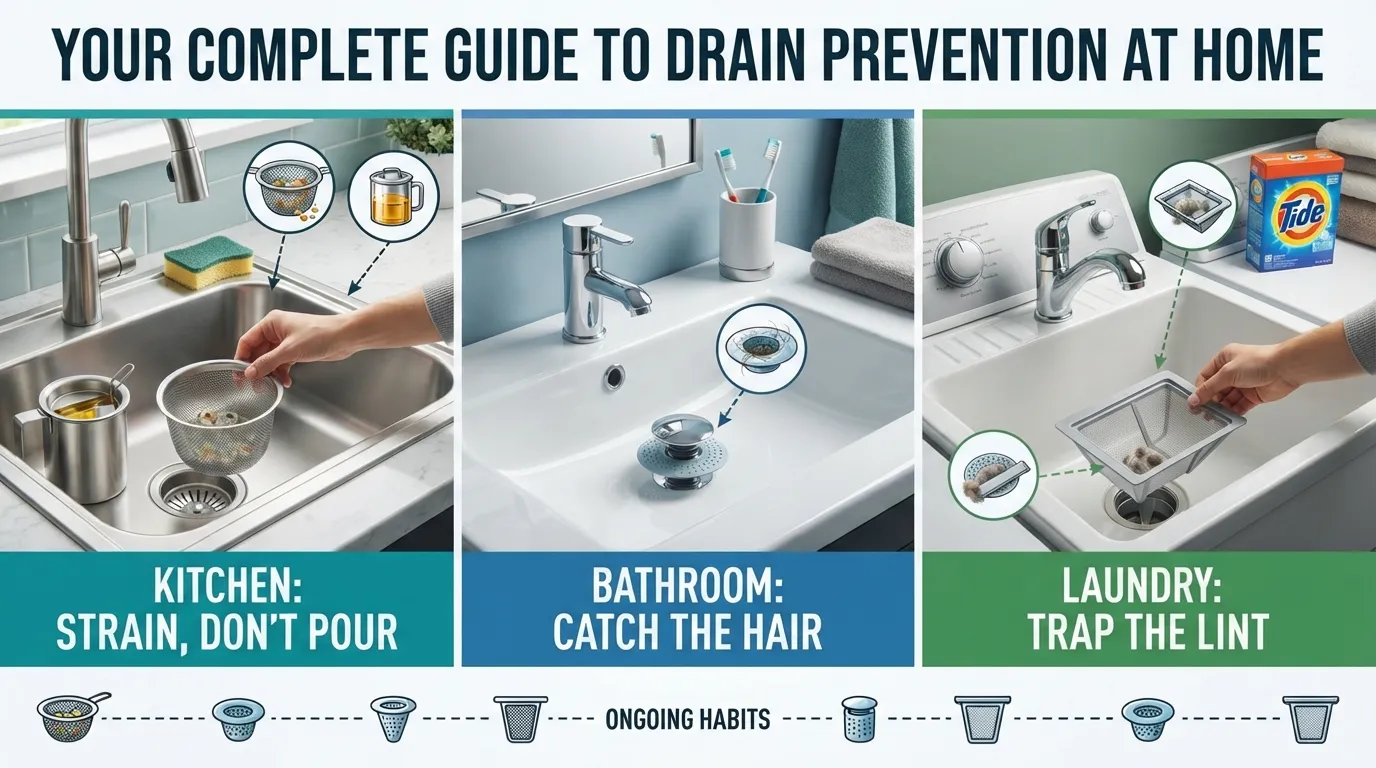
- Scrape food scraps into the trash or compost before you start washing dishes — don’t rely on the disposal to handle it.
- Pour fat and cooking grease into a heat-safe container, let it cool completely, then throw it out. Never pour it down the sink, even with hot water running.
- Keep coffee grounds and fibrous scraps like celery, potato peels, and onion skins out of the disposal — they tangle and compact instead of breaking down.
- Run cold water (not hot) while using your garbage disposal so grease stays solid and gets flushed through rather than sticking to the pipe walls.
- Fit your sink with a mesh drain strainer to catch anything that slips past these habits.
How to Keep Drains From Clogging in the Bathroom
Bathroom drains fail for a different reason than kitchen drains — it’s almost always hair and soap scum working together to form a dense mat inside the pipe. A few habits fix most of this:
- Fit a hair catcher over every shower and tub drain — this alone prevents the majority of bathroom clogs.
- Clean hair and soap scum out of stoppers and catchers weekly, not just when you notice slow drainage.
- Only flush toilet paper and human waste — wipes, cotton products, and “flushable” products are a leading cause of toilet and downstream drain clogs, even when the packaging says otherwise.
Your Weekly and Monthly Drain Maintenance Schedule
Most advice tells you what to use but not how often, so here’s a simple routine you can actually stick to:
| Frequency | What to Do |
|---|---|
| Weekly | Flush each drain with a kettle of near-boiling water mixed with a squeeze of dish soap to melt any grease film before it hardens. |
| Monthly | Pour ½ cup of baking soda down the drain, follow with ½ cup of vinegar, let it sit for 15–20 minutes, then flush with hot water. |
| Ongoing | Check and clean mesh strainers and hair catchers every time you notice water draining even slightly slower than usual. |
What Plumbers Actually Recommend
Key Takeaways
- Prevention beats cleanup — a five-minute weekly flush is far cheaper than a drain cleaning visit.
- DIY remedies like baking soda and vinegar are maintenance tools, not fixes for an existing clog.
- Older Miami homes with cast-iron or clay drain lines benefit from a professional camera inspection every couple of years to catch narrowing before it becomes a full blockage.
- If more than one drain in the house is slow at the same time, that’s usually a sign of a deeper issue in your home’s drainage system rather than a single clogged pipe.
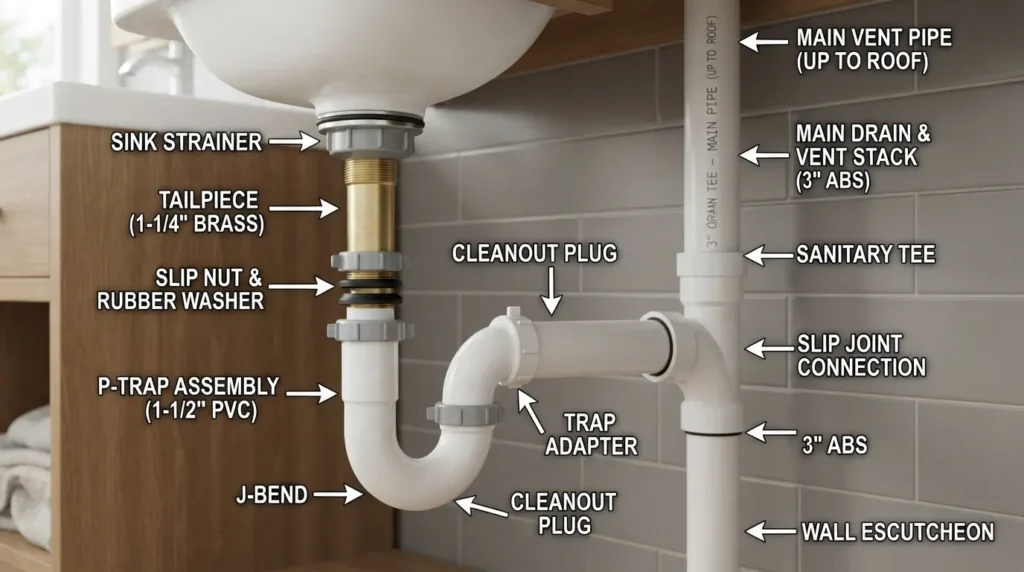
The habits above will handle the vast majority of everyday buildup. But drains are part of a larger system, and if your home already has slow drainage in more than one spot, it’s worth understanding how the pipes connect before you start troubleshooting room by room.
See the Routine in Action
If you’d rather watch the hot water and dish soap flush in action before trying it yourself, here’s a short walkthrough:
When DIY Isn’t Enough
When to Stop DIY and Call a Plumber
If a drain is still slow after a hot water and baking soda & vinegar treatment, if water backs up in a different fixture when you run another one, or if you notice gurgling sounds from your pipes, that usually points to a blockage further down the line that home remedies can’t reach. At that point, a proper drain cleaning service is the safer and more effective option — it clears the full length of the pipe instead of just the surface layer.
Preventive habits will keep most drains clear for years, but no routine can undo buildup that’s already narrowed a pipe. If that’s where you’re at, it’s worth getting it looked at before a slow drain turns into a backed-up one.
Frequently Asked Questions
What is the biggest cause of blocked drains?
In kitchens, it’s grease and food scraps. In bathrooms, it’s hair combined with soap scum. Both build up gradually rather than blocking a drain in one go.
Can Epsom salt unclog a drain?
Epsom salt can help scour light buildup as part of routine maintenance, but it isn’t strong enough to clear an existing clog on its own.
Why pour salt down the drain every night?
Salt has a mild abrasive effect that, combined with hot water, can help discourage grease from sticking to pipe walls. It works best as a nightly habit rather than a one-time fix.
Does salt and vinegar unblock drains?
Together they can loosen light residue as a preventive measure, but neither is strong enough to clear a drain that’s already fully blocked.
Why pour vinegar down the sink?
Vinegar’s acidity helps break down grease film and neutralize odors when paired with baking soda, making it a useful part of a monthly maintenance routine rather than an emergency fix.
What do plumbers recommend to keep drains clean?
A consistent routine: strainers on every drain, grease disposed of separately from the sink, weekly hot water flushes, and a monthly baking soda and vinegar treatment — paired with a professional look at your drainage system if slow drainage keeps returning.
Still Dealing With a Slow or Backed-Up Drain?
Our Miami-based team can clear it properly the first time and check your home’s drainage system while we’re there.
Browse our full range of Miami plumbing services for more ways we can help keep your home running smoothly.