If you are trying to choose a drainage pipe, the first question is not simply “PVC or corrugated?” You first need to know what kind of water the pipe must handle, where the pipe will be installed, and whether its job is to collect water or carry it somewhere else.
A pipe under a kitchen sink, a main sanitary drain, an underground downspout line, and a French drain may all be called “drainage pipes,” but they do very different jobs. Using the wrong type, diameter, fittings, or slope can contribute to poor flow, recurring clogs, standing water, leaks, or an underground line that is difficult to maintain later.
Short answer: A drainage pipe carries wastewater, rainwater, surface runoff, or unwanted groundwater toward an appropriate outlet or disposal point. Common residential options include PVC or other approved DWV pipe for sanitary drainage, smooth-wall sewer-and-drain pipe for exterior water conveyance, and solid or perforated corrugated pipe for certain yard and subsurface drainage applications. The right pipe depends on its purpose—not just its price or diameter.
What Is a Drainage Pipe?
A drainage pipe is part of a system that moves unwanted water away from a fixture, building, yard, landscaped area, or other collection point.
The broad term can refer to several very different systems:
- Sanitary drainage pipes carry wastewater from sinks, toilets, showers, tubs, laundry fixtures, and appliances toward a sanitary sewer or onsite wastewater system.
- Storm and surface drainage pipes move rainwater collected from roofs, catch basins, yards, patios, driveways, and landscaped areas.
- Subsurface drainage pipes collect excess water from saturated soil, such as the perforated pipe used in many French drain systems.
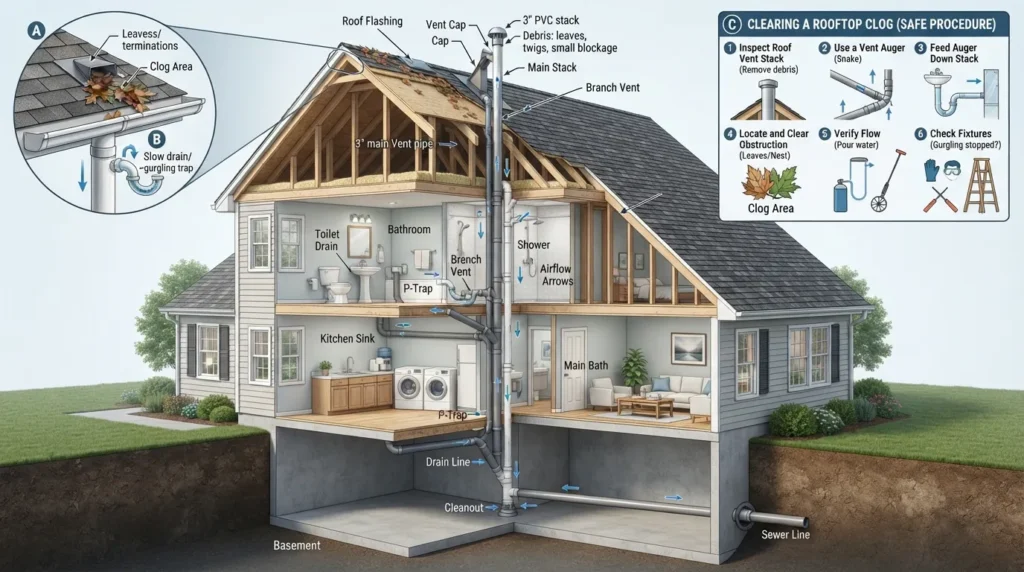
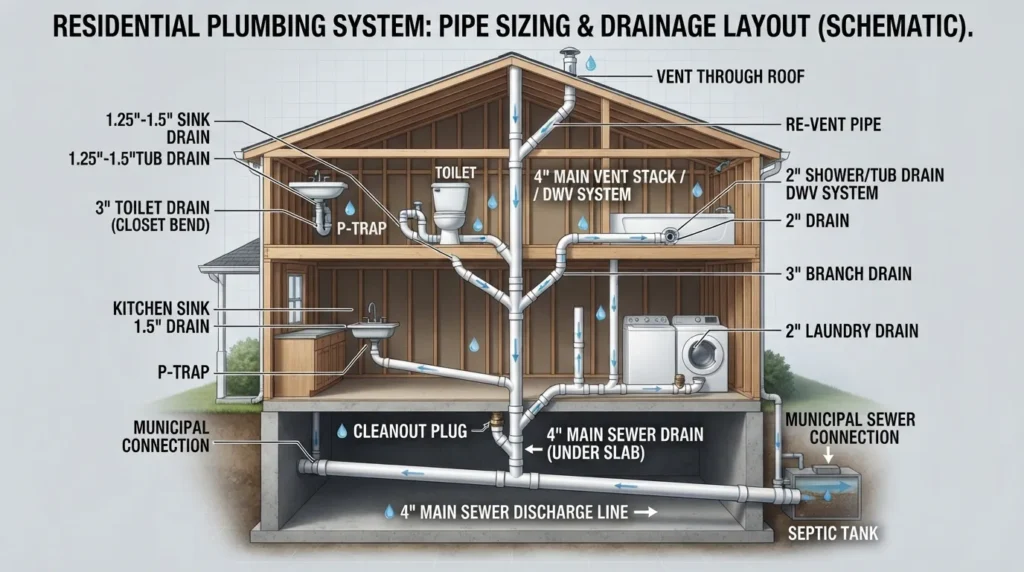
If you want to see how pipes, traps, branches, stacks, cleanouts, vents, and the building drain work together, start with our guide to the complete home drainage system. This guide stays focused on the pipe itself: materials, applications, selection, sizing, slope, fittings, installation issues, and common failures.
First, Identify What the Drainage Pipe Needs to Do
Before you compare materials, I recommend putting the project into one of these three buckets.
1. Carry Household Wastewater
Think sinks, showers, toilets, tubs, laundry fixtures, branch drains, building drains, and sewer piping. This belongs to the sanitary/DWV side of the plumbing system.
2. Carry Collected Rainwater
Think downspouts, catch basins, yard drains, landscape drains, rain drains, patio drains, and other surface-water collection points that need a route to an approved drainage outlet.
3. Collect Water From Soil
Think wet lawns, saturated planting areas, groundwater around a problem area, and French-style subsurface drainage. Perforated pipe is often used because water needs to enter the line along its length.
This distinction matters because a sanitary waste line is not interchangeable with an outdoor yard-drain pipe, and a perforated French drain pipe is not automatically the right choice for transporting roof runoff from a downspout.
Main Types of Drainage Pipes
One reason online answers become confusing is that “type of drainage pipe” can mean at least three things:
- the material, such as PVC, ABS, HDPE, or cast iron;
- the construction, such as smooth-wall or corrugated; or
- the function, such as solid or perforated.
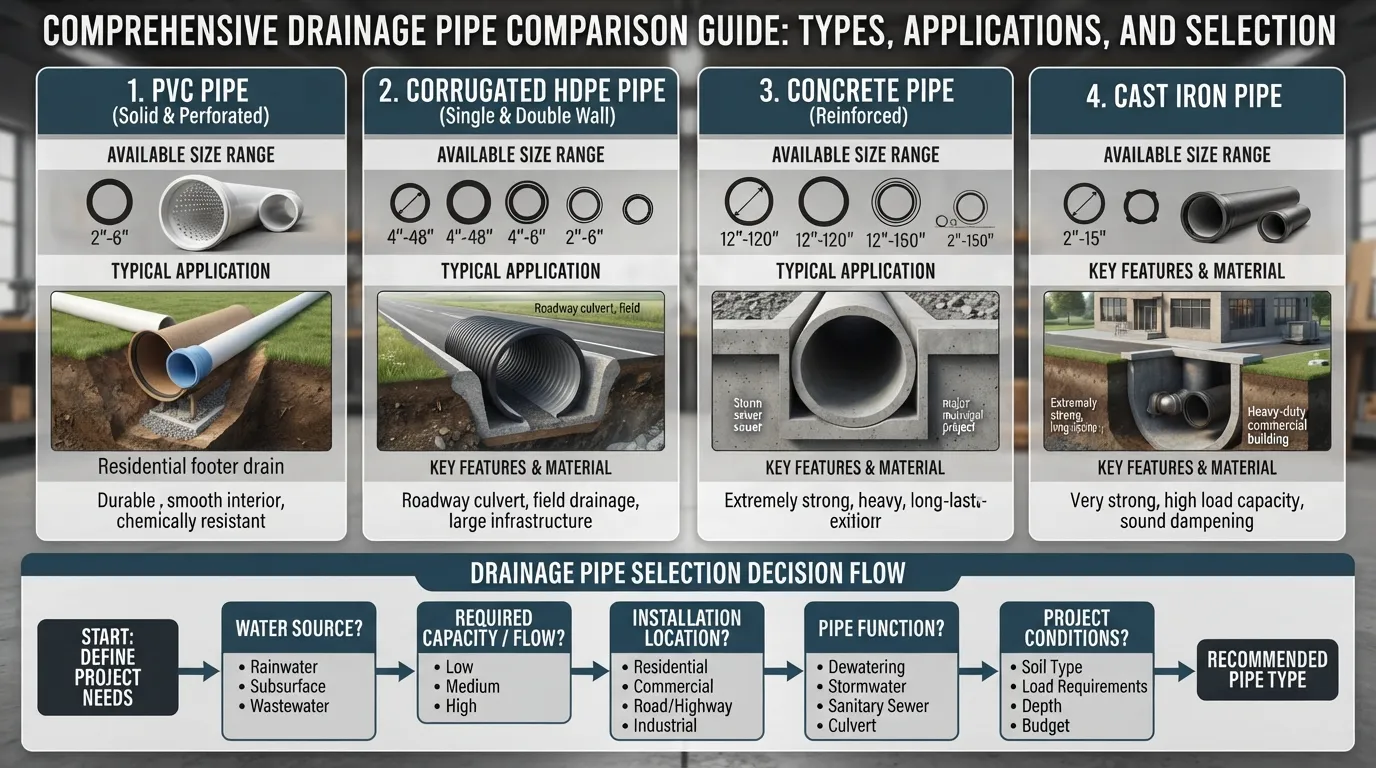
Instead of treating all of those categories as interchangeable, here is how the common options actually fit into residential drainage.
PVC Drainage Pipe
PVC is used extensively in drainage applications. Depending on the product and applicable standard, PVC may be used for indoor drain-waste-vent piping, building drainage, sewer piping, or exterior sewer-and-drain applications.
Its smooth interior can make it well suited to gravity flow and easier to service than a deeply ribbed single-wall pipe. Rigid PVC also makes it easier to establish a controlled route and consistent grade when the trench and installation are prepared correctly.
But “PVC” alone is not enough information to buy the right pipe. PVC products come in different standards, wall configurations, pressure ratings, and intended applications. A pipe approved for one job should not automatically be assumed suitable for another.
Corrugated HDPE Drainage Pipe
Corrugated drainage pipe is common in landscape drainage and other exterior water-management systems. Single-wall corrugated pipe is flexible, allowing it to follow changes in direction and work around some underground obstacles more easily than rigid smooth-wall pipe.
That flexibility comes with tradeoffs. A flexible pipe can follow an uneven trench bottom and develop high and low points if the bedding is poor. Its ribbed interior can also create different flow and maintenance characteristics than smooth-wall pipe.
Corrugated products are available in both solid and perforated configurations, which means you still need to decide whether the pipe is supposed to collect water or simply convey it.
Smooth-Wall Sewer and Drain Pipe
Smooth-wall exterior drainage pipe is useful when water needs to be conveyed along a defined route. The rigid wall can make consistent grading easier, while the smoother interior can help reduce resistance compared with some single-wall corrugated products.
This category is commonly associated with exterior yard drainage, downspout drainage, catch-basin connections, and similar non-pressure applications. The exact product still needs to match the installation and local requirements.
ABS Drain Pipe
ABS is another plastic material used in drain, waste, vent, and sewer applications where it is approved. You may encounter it in existing plumbing systems or available products.
Do not choose ABS, PVC, or another plastic solely because the outside diameter appears compatible. Approved materials, joining methods, transition fittings, system purpose, and applicable plumbing requirements all matter.
Cast-Iron Drain Pipe
Cast iron is used in sanitary drainage and is also found in many existing buildings. It is heavier than plastic piping and has different installation, joining, support, and repair requirements.
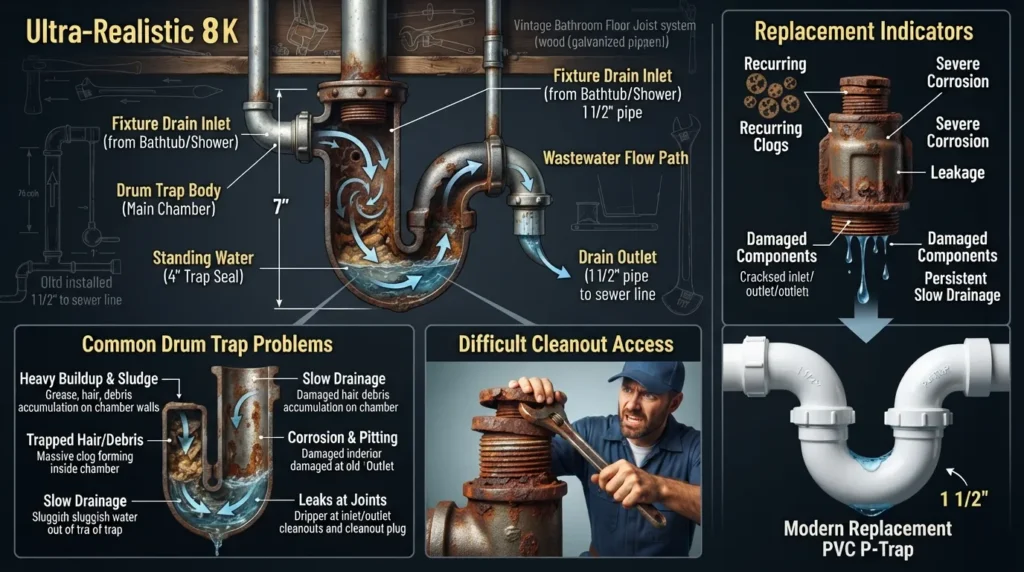
If an older cast-iron line develops recurring drainage problems, replacing it should not be your first assumption. A proper evaluation may show whether the issue is buildup, root intrusion, an offset, corrosion-related deterioration, a break, or another condition.
Concrete and Vitrified Clay Pipe
Concrete and vitrified clay are also associated with drainage and sewer infrastructure. Homeowners are less likely to use them for a simple sink or yard-drain project, but they matter when discussing existing sewer systems, larger underground infrastructure, and the broad category of drainage pipes.
Important: There is no universal list of exactly “five main drainage pipes.” A five-item list based on materials will look different from a list based on sanitary, stormwater, agricultural, or landscape applications. Choose by function first, then by an approved material and product.
Solid vs. Perforated Drainage Pipe: Which One Do You Need?
This is one of the most useful distinctions to understand before buying underground drainage pipe.
Solid Drainage Pipe
Primary job: Move water from one location to another.
- Downspout discharge lines
- Catch basin outlets
- Surface-drain conveyance
- Transporting collected yard water toward an approved outlet
- Applications where you do not want water entering or leaving along the pipe run
Perforated Drainage Pipe
Primary job: Collect unwanted water from the surrounding soil.
- French drains
- Subsurface yard drainage
- Some foundation or landscape drainage systems
- Saturated soil and groundwater collection applications
A simple way to remember the difference is:
Perforated pipe collects. Solid pipe conveys.
A complete yard drainage system may use both. For example, a perforated section may collect water from saturated soil and then connect to a solid pipe that carries the collected water toward a suitable discharge location.
Which Drainage Pipe Should You Use for Each Job?
Instead of choosing by material name alone, start with the application.
This is why the best drainage pipe is not one specific product. The best choice is the pipe that matches the water source, flow requirement, route, burial conditions, maintenance needs, discharge point, and applicable installation requirements.
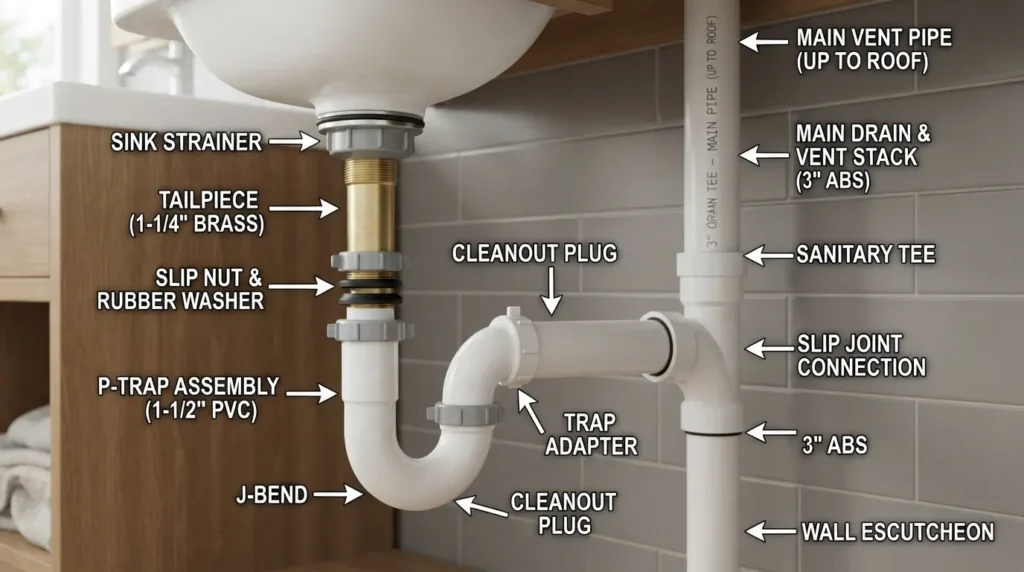
What About Kitchen Sink and Wash Basin Drain Pipes?
Search results for “drainage pipe” sometimes show flexible sink hoses, wash basin pipes, P-traps, and kitchen sink drain kits. These products belong to a much narrower part of the drainage system.
A pipe directly beneath a basin is not the same thing as:
- a branch drain inside a wall;
- a building drain below the structure;
- a sewer lateral;
- a yard drainage pipe; or
- a stormwater line.
If you are replacing an under-sink component, identify the fixture connection, trap, existing pipe material, diameter, configuration, and approved connection method before buying a flexible hose or fitting simply because it appears to fit.
Drainage Pipe Sizes: What Determines the Right Diameter?
There is no single “standard drainage pipe size” that works for every drain.
Pipe diameter depends on the job.
For sanitary plumbing
Drain sizing depends on factors such as the fixtures connected to the line, drainage load, pipe configuration, system design, and applicable plumbing requirements. A small fixture connection and a building sewer do not have the same capacity requirements.
For yard and stormwater drainage
Exterior pipe sizing can depend on the area contributing runoff, rainfall, surface characteristics, inlet capacity, pipe slope, pipe material/interior characteristics, route length, and where the water will discharge.
You will commonly encounter residential exterior drainage products in nominal sizes such as 3, 4, and 6 inches, but product availability is not a sizing formula. A 4-inch pipe is not automatically correct merely because it is commonly sold.
A Better Pipe-Sizing Checklist
Before choosing a diameter, ask:
- What type of water is entering the pipe?
- How much flow may reach it?
- How many fixtures, drains, basins, or downspouts feed it?
- What slope is available?
- Is the pipe smooth-wall or corrugated?
- Will more drainage points connect downstream?
- Where and how is the water allowed to discharge?
- Does plumbing or local drainage code govern the installation?
How Much Slope Does a Drainage Pipe Need?
Slope is important because many residential drainage systems rely on gravity. But one of the most common online mistakes is giving a single slope number for every kind and size of drainage pipe.
Sanitary drainage, storm drainage, French drains, and landscape systems do not all follow one universal rule.
For a useful example, the 2023 Florida Building Code: Plumbing, Eighth Edition lists the following minimum slopes for horizontal sanitary drainage piping in Table 704.1:
Notice why a blanket statement such as “all drain pipe needs a 1% slope” is unreliable. Even within sanitary drainage, the listed minimum changes with diameter.
Also, 1/4 inch per foot is approximately a 2% grade, while 1/8 inch per foot is approximately a 1% grade. Those measurements should not be treated as interchangeable.
Do not use this table as a universal yard-drain design chart. It is an example from the 2023 Florida plumbing code for horizontal sanitary drainage. Exterior stormwater and site-drainage design involves its own flow, grading, site, discharge, and regulatory considerations. Always verify the requirements that apply to the actual project.
Reference: 2023 Florida Building Code: Plumbing — Chapter 7.
Why Drainage Pipe Fittings Matter
Good drainage is not created by pipe diameter alone. The fittings between pipe sections influence direction, access, transitions, and how smoothly water and waste move through the system.
Depending on the application, a drainage system may use:
- couplings to join pipe sections;
- wyes or other drainage-pattern fittings to introduce branch flow;
- bends or sweeps for changes in direction;
- reducers or increasers where an approved size transition is needed;
- adapters between compatible drainage-pipe systems;
- cleanouts that provide future maintenance access;
- downspout adapters and catch-basin connections for exterior drainage; and
- specialized fittings required by the particular DWV or stormwater system.
A common mistake is choosing a fitting because two pieces physically connect. Drainage fittings need to match the pipe type, connection method, flow direction, purpose, and applicable requirements.
What Makes a Good Underground Drainage Pipe Installation?
Even a good pipe can perform poorly when the trench or routing is wrong.
Maintain a continuous drainage path
Water should not have to travel through unnecessary dips and rises. Low spots—sometimes called bellies—can hold water, sediment, or waste and contribute to repeated drainage trouble.
Prepare the trench properly
Flexible corrugated pipe can conform to an uneven trench bed, which makes trench preparation especially important when consistent drainage is required. Underground plastic piping also depends heavily on appropriate bedding, side support, and backfill rather than simply being dropped into a trench and covered.
Choose solid or perforated pipe intentionally
If the purpose is to collect groundwater, perforations may be necessary. If the goal is simply to transport collected water, a solid line may be more appropriate.
Control soil and sediment where needed
Subsurface drainage systems may require properly selected aggregate, filter fabric, pipe sock, or another design feature to help limit soil migration and clogging. A filter solution should match the soil and system rather than being added blindly.
Plan the outlet before digging
A drainage pipe does not solve a water problem merely by moving the water ten or twenty feet. You need an appropriate destination for the collected water and must avoid creating a new problem elsewhere on the property.
Think about future cleaning
A buried line may eventually collect leaves, sediment, roots, grease, sludge, or other debris depending on the system. Pipe layout and service access matter when that line eventually needs inspection or cleaning.
Video: See an Exterior Drainage Pipe Installation
If you learn better visually, this installation video provides a useful example of how exterior drainage pipe is routed as part of a yard water-management project. Treat it as a demonstration rather than a substitute for project-specific design, utility locating, permits, or local requirements.
French Drain Pipe: Why Perforations Matter
A French drain is a subsurface drainage system designed to intercept unwanted water in the soil. A typical concept uses a drainage zone around perforated pipe so groundwater can enter the system and travel toward a discharge point.
The important idea is that a French drain is more than a buried pipe.
Its performance can depend on:
- where the water is coming from;
- the elevation and available grade;
- the pipe type and perforation design;
- the surrounding aggregate or engineered drainage material;
- filter fabric or other soil-separation measures where appropriate;
- soil conditions;
- the outlet; and
- future sediment accumulation.
If the actual problem is large amounts of surface runoff, a surface inlet, catch basin, swale, grading correction, solid conveyance pipe, or combination system may make more sense than expecting a French drain to solve every water problem.
Surface Drainage vs. Subsurface Drainage
This distinction can save you from installing the wrong system.
Surface Drainage
Designed primarily to collect water that is already on the ground surface.
Examples: catch basins, yard drains, channel drains, landscape inlets, grading, swales, and connected solid drain pipe.
Subsurface Drainage
Designed primarily to intercept unwanted water within the soil.
Examples: French drains and other underground collection systems using perforated drainage pipe where appropriate.
If water ponds on the lawn only during intense rain, that is a different diagnostic situation from soil that remains saturated for long periods after the rain has stopped. The visible symptom “wet yard” does not automatically tell you which drainage solution is appropriate.
Why Drainage Pipe Selection Matters in Miami
Drainage decisions in Miami should not be copied blindly from a project in a completely different climate or soil environment.
Miami-Dade County actively plans around stormwater and flood-control conditions, including major rainfall events and future sea-level-rise scenarios. Groundwater conditions are also important locally, particularly when dealing with site drainage and properties served by onsite septic systems.
For a Miami property, that means I would pay close attention to:
- where water collects during heavy rain;
- whether the problem is sanitary wastewater or stormwater;
- the site’s available grade and drainage outlet;
- groundwater and soil conditions;
- roof, driveway, patio, and landscape runoff;
- whether the property uses public sewer or onsite wastewater treatment;
- existing underground utilities and piping; and
- local permitting and drainage requirements before major modifications.
Miami-Dade’s own water-control planning recognizes drainage facilities, flood conditions, groundwater-related concerns, and stormwater management as significant infrastructure issues. You can review the County’s Water Control Map and County Flood Criteria information for additional local context.
If your issue involves the sanitary side of the property rather than landscape drainage, a local Miami plumbing team can help determine whether the problem is a fixture drain, branch line, building drain, sewer lateral, or another part of the plumbing system.
Is Your Drainage Pipe Clogged or Actually Damaged?
A slow or backed-up drain does not automatically mean the pipe needs replacement. One of the most useful decisions is determining whether you are dealing with an obstruction, a structural problem, or both.
Signs Cleaning May Be Needed
- One or more drains are moving slowly.
- Water backs up but eventually recedes.
- A line has accumulated grease, hair, soap residue, sludge, sediment, or debris.
- Exterior drainage flow has gradually weakened because of sediment or organic material.
Signs More Diagnosis May Be Needed
- The same drain or sewer problem keeps returning after clearing.
- Several fixtures are affected at once.
- Roots repeatedly enter an underground line.
- A camera inspection shows a crack, offset, belly, collapse, or deteriorated section.
- Water appears where a buried pipe may be leaking.
When an indoor drain or sewer line is repeatedly blocked, professional drain cleaning in Miami can include the appropriate clearing method and, when needed, camera inspection to help distinguish a removable obstruction from a pipe condition that requires repair.
Common Drainage Pipe Mistakes to Avoid
1. Choosing perforated pipe when you only need to transport water
If a pipe’s only purpose is to move captured water to an outlet, letting water escape or enter along the route may work against the intended design.
2. Treating a yard drain like a sanitary sewer
Stormwater and household wastewater serve different systems and approved discharge paths. Do not improvise connections between them.
3. Choosing pipe by price alone
A cheaper pipe that is wrong for the application can create more excavation, replacement, maintenance, or water problems later.
4. Assuming a common diameter is automatically the right diameter
A pipe needs enough capacity for the actual drainage load and installation conditions. Common retail sizes are not universal design recommendations.
5. Installing flexible pipe over an uneven trench
Flexibility can be useful, but an uneven trench can allow a flexible line to develop unwanted dips and high points.
6. Ignoring fittings and cleanout access
A drainage line that works today but cannot be accessed for inspection or cleaning can become much harder to service later.
7. Sending water somewhere without confirming the outlet
Moving standing water from one side of a property to another is not the same as solving the drainage problem. Plan the full route before installing underground pipe.
8. Assuming every recurring clog needs a new pipe
Diagnosis comes first. Cleaning, camera inspection, repair, or replacement solve different problems.
Can You Install a Drainage Pipe Yourself?
Some small exterior drainage projects may be manageable for an experienced homeowner when local rules allow it. Major sanitary plumbing work is a different category.
Before digging or altering a drainage system, consider:
- underground utilities;
- the source of the water;
- pipe diameter and capacity;
- grade and trench preparation;
- approved pipe and fittings;
- sanitary versus stormwater separation;
- the legal discharge location;
- cleanout or maintenance access;
- building, plumbing, or drainage permits; and
- whether excavation could affect foundations, driveways, landscaping, or existing utilities.
DIY boundary: Cleaning leaves from an accessible yard-drain grate is very different from cutting into a building sewer, redesigning DWV piping, or excavating around an unknown underground line. When the project affects sanitary drainage or the correct route is uncertain, diagnosis before excavation can prevent an expensive wrong turn.
How to Choose a Drainage Pipe: 8-Step Decision Process
- Identify the water. Is it household wastewater, roof runoff, surface water, or groundwater?
- Identify the job. Does the pipe need to collect water, transport water, or do both in different sections?
- Choose the system category. Sanitary DWV, sewer, stormwater, surface drainage, or subsurface drainage.
- Determine required capacity. Consider fixture load or runoff volume rather than selecting a diameter by guesswork.
- Compare appropriate pipe products. PVC, ABS, corrugated HDPE, smooth-wall drain pipe, cast iron, or another approved material may make sense depending on the application.
- Plan slope, fittings, trench, and access. The pipe is only one part of a functioning drainage route.
- Confirm the outlet. Know where the water is going before you install the line.
- Verify local requirements. Especially before changing sanitary drainage, sewer piping, or major site drainage.
The Simplest Rule for Choosing Drainage Pipe
Do not begin with the pipe. Begin with the water problem. Once you know what water you are managing, how it needs to move, how much flow the system must handle, and where it can safely discharge, choosing the right pipe becomes much easier.
Frequently Asked Questions About Drainage Pipes
What are the three types of drainage?
There is no universal three-type list, because plumbing, landscaping, agriculture, and civil engineering classify drainage differently. For a homeowner, a useful three-part breakdown is sanitary drainage for household wastewater, surface/stormwater drainage for rainwater on the property, and subsurface drainage for unwanted water within the soil.
Is PVC pipe used for drainage?
Yes. PVC is used in many drainage applications, including approved drain-waste-vent, building sewer, and exterior drainage products. However, not every PVC pipe is intended for every drainage application, so check the product specification and requirements for the project.
What are the five main types of drainage pipes?
There is no single official five-type list. Common drainage-pipe materials and constructions include PVC, ABS, corrugated HDPE/polyethylene, cast iron, concrete, and vitrified clay. The relevant list changes depending on whether you are discussing indoor plumbing, sewer piping, yard drainage, French drains, or municipal stormwater systems.
What size drainage pipe do I need?
The correct diameter depends on the application and expected flow. Sanitary drains are sized according to plumbing-system requirements and connected drainage load, while exterior yard and storm drainage may depend on runoff area, rainfall, inlet capacity, slope, pipe characteristics, and discharge conditions. Do not choose a diameter only because it is a popular retail size.
Should a yard drainage pipe be perforated?
Only when the system is designed to collect water from the surrounding soil. A French drain commonly uses perforated pipe, while a line carrying water from a catch basin or downspout toward an outlet often uses solid pipe. Some systems use both in different sections.
Is corrugated or PVC pipe better for yard drainage?
Neither is automatically better. Corrugated pipe offers flexibility and can simplify routing around obstacles. Rigid smooth-wall pipe can make a controlled grade easier to maintain and has different flow and maintenance characteristics. The better option depends on the site, water source, burial conditions, route, required capacity, maintenance needs, and budget.
How much does drainage pipe cost?
There is no useful universal price because cost changes with material, diameter, wall type, pipe length, fittings, manufacturer, excavation, burial depth, access, permits, disposal, and whether you are buying pipe only or paying for a complete installed drainage solution. For a Miami project, compare the cost of the complete system rather than pipe price alone.
Can a clogged drainage pipe be cleaned instead of replaced?
Often, yes. A blockage caused by removable buildup or debris may be cleared without replacing the pipe. Replacement becomes a different conversation when inspection identifies structural damage, severe deterioration, collapse, problematic offsets, or another condition that cleaning cannot correct.
Drainage Pipe Buying & Technical Resources
If you are comparing drainage materials or planning a project, these resources can help you understand product categories and technical requirements before purchasing:
- NDS Drainage Pipe Guide — comparison of common exterior drainage pipe options and applications.
- Charlotte Pipe Technical Resources — technical and dimensional information for PVC, ABS, cast-iron, DWV, sewer, and related piping products.
- 2023 Florida Building Code: Plumbing — Sanitary Drainage — reference information for sanitary drainage materials, installation, and slope.
- Miami-Dade Water Control & Flood Criteria — local context for stormwater, drainage, and flood-control planning.
Final Takeaway
The phrase drainage pipe covers much more than one piece of plastic in the ground. The right solution depends on whether you are moving wastewater, collecting groundwater, carrying rainwater, connecting a fixture, draining a yard, building a French drain, or diagnosing an existing underground line.
For most projects, the safest decision sequence is:
identify the water → define the pipe’s job → calculate or verify capacity → choose the appropriate material → establish the correct route and grade → use compatible fittings → provide maintenance access → confirm the discharge point.
If you are dealing with recurring indoor backups, a suspected sewer-line problem, or a drainage pipe you cannot identify confidently, guessing at a replacement can cost more than diagnosing the problem correctly the first time.
Not Sure Whether the Problem Is the Pipe or the Clog?
If a drain keeps backing up or you suspect a damaged underground sanitary line in Miami-Dade, get the problem identified before replacing pipe unnecessarily.