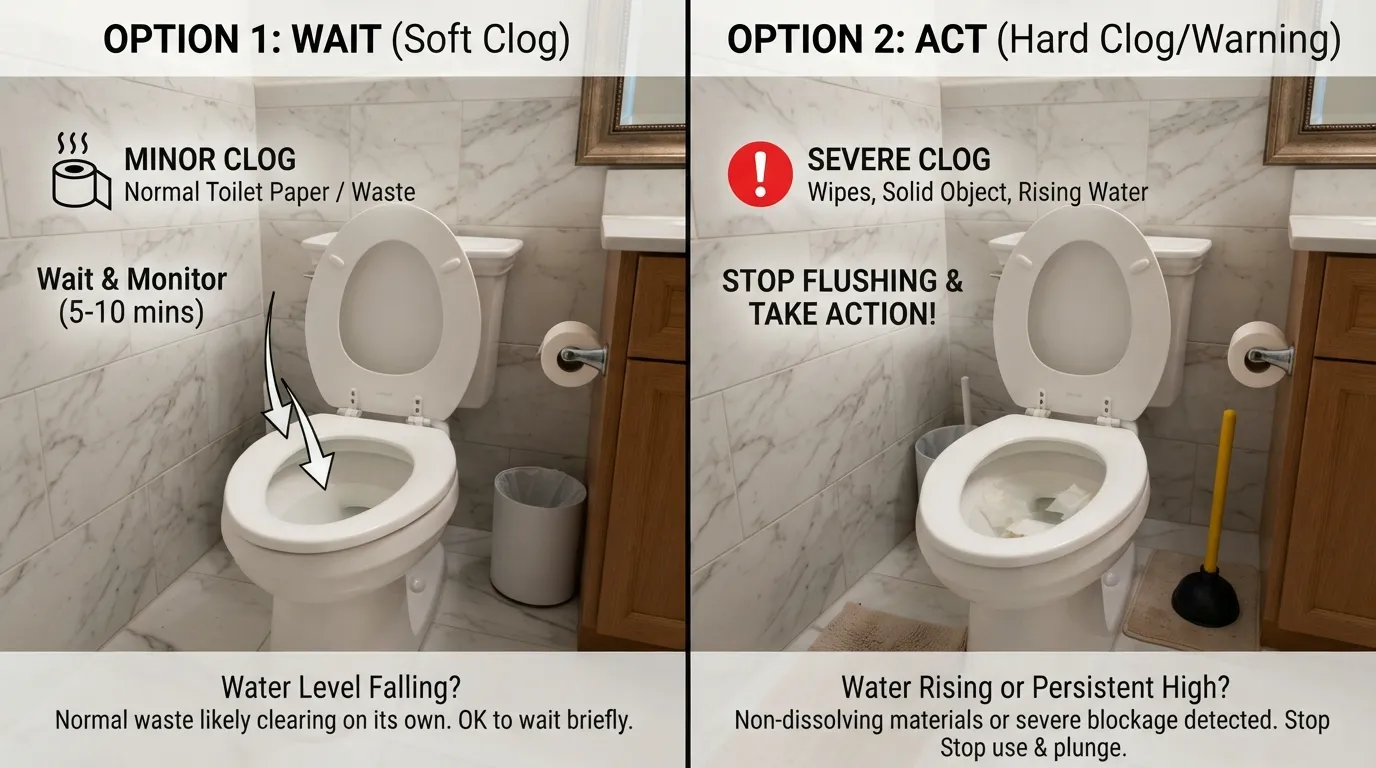
Yes, a toilet can sometimes unclog itself, but only when the blockage is made mostly of material that can soften or break apart in water, such as ordinary toilet paper or human waste. A clog caused by wipes, paper towels, feminine products, toys, or another solid object is much less likely to disappear simply because you wait.
You may be able to wait briefly if only normal waste or toilet paper caused the clog and the bowl water is slowly going down. Do not keep flushing if the water is high, barely moving, rising, or you suspect a non-dissolving object. In those situations, waiting can turn a manageable clog into an overflow.
The most useful question is not simply, “Will my toilet unclog itself?” It is:
“What caused the blockage, what is the water doing right now, and is this only one toilet or part of a bigger drainage problem?”
I’ll help you answer those questions so you can decide whether to wait, use a plunger, try another safe method, or call a plumber.
The 60-Second “Wait or Act?” Toilet Clog Check
Before you try anything, look at the toilet and run through these three checks.
1. What probably caused the clog?
If it was only toilet paper and normal waste, self-clearing is possible. If wipes, a paper towel, hygiene product, toy, or another object may have gone down, do not depend on it dissolving.
2. What is the bowl water doing?
Water that slowly drops suggests at least some flow past the blockage. Water that stays very high, does not move, or rises after flushing suggests the restriction is still significant.
3. Are other fixtures acting strangely?
If several drains are slow, another toilet is backing up, or you hear unusual gurgling elsewhere, the problem may extend beyond the toilet itself.
Your next move
When Can a Toilet Unclog Itself?
A self-clearing clog is most plausible when the obstruction is soft, water-soluble, and not tightly wedged in the toilet trapway or drain.
For example, a large amount of toilet paper can temporarily pack together inside the toilet. As it sits in water, the paper may soften enough for water and gravity to move the remaining blockage through.
A similar thing may happen with a minor clog made of normal human waste and toilet paper.
However, “possible” does not mean “guaranteed.” The same material can still create a stubborn blockage if there is too much of it, it is tightly compressed, or another restriction already exists farther down the drain.
Which Toilet Clogs May Clear on Their Own?
How Long Does a Toilet Take to Unclog Itself?
There is no universal self-unclog time. A minor toilet-paper clog may begin improving after it sits for a while, while another clog may remain blocked indefinitely.
Instead of watching the clock alone, watch the water level.
- If the water is steadily dropping, the blockage may be softening or allowing water to pass.
- If the water level does not change, waiting longer may not accomplish anything.
- If the bowl remains very high, do not test it with another flush.
- If you know a wipe, paper towel, hygiene product, or solid object caused the clog, waiting for it to “dissolve” is not a good strategy.
A better rule than “wait X minutes”: wait only when the suspected material can actually break down and you can see evidence that the water level is improving.
How to Know If Your Toilet Is Unclogging Itself
The bowl gives you useful clues. Here is what I would pay attention to before deciding what to do next.
Water rose, then slowly falls
This may indicate a partial passage through the blockage. A short monitored wait can make sense if only toilet paper or normal waste is involved.
Water stays high and barely moves
Treat the toilet as still clogged. Do not keep flushing just to “check.”
Bowl eventually empties but drains slowly
Some water is passing, but the restriction may still be present.
Clog returns on the next use
The original blockage may never have fully cleared, or another drain issue may be contributing.
Important: A lower bowl is not always the same as a cleared drain.
If the water eventually disappears but the next flush is slow, weak, or causes the bowl to rise again, the toilet may still have a partial blockage.
Should You Keep Flushing a Clogged Toilet?
No—not while the bowl is high or you are unsure the blockage has cleared.
Repeated flushing adds more water to a bowl that may not be able to drain fast enough. That is how a simple clog can become an unsanitary overflow onto the bathroom floor.
If the water is already approaching the rim, stop flushing. If necessary, turn off the toilet’s water supply valve while you work on the clog or wait for professional help.
Will a Toilet Unclog Itself Overnight?
It can happen when the clog consists only of soft material that continues breaking apart in water, but leaving a toilet overnight is not a universal fix.
Waiting is more reasonable when:
- the bowl water is stable rather than close to overflowing;
- the water level is gradually falling;
- you believe only normal toilet paper or waste caused the blockage; and
- no other drains or toilets are showing signs of a backup.
Do not assume overnight waiting is safe if the bowl remains high, the cause is unknown, someone may have flushed a foreign object, or other fixtures are also backing up.
Can a Toilet Unclog Itself From Poop or Toilet Paper?
Toilet paper
Yes, a minor toilet-paper clog has a reasonable chance of softening enough to move through on its own. That is especially true when the bowl water is already draining slowly.
But a very large, tightly packed wad can remain lodged and still require plunging.
Human waste
A minor blockage made of normal waste and toilet paper can sometimes break apart with time and water. Again, the key sign is whether water is actually moving past the obstruction.
If the toilet repeatedly clogs during normal use, I would not keep assuming each episode is simply “too much poop.” A recurring restriction deserves closer attention.
What Can You Do If the Toilet Does Not Unclog Itself?
If waiting is not working, move from the safest and simplest option toward more involved methods.
1. Use a flange toilet plunger
A flange plunger is designed to create a seal in a toilet drain opening. Make sure there is enough water to cover the plunger cup, create a good seal, and use controlled push-and-pull strokes rather than violent splashing.
2. Try dish soap and hot—not boiling—water for a soft clog
For a suspected toilet-paper or waste clog, some homeowners use a small amount of liquid dish soap followed by hot water to help lubricate and soften the obstruction.
Do not pour boiling water into the toilet. Very hot water can create unnecessary risk for the porcelain and fittings. Use hot water instead.
3. Use a toilet auger for a stubborn obstruction
If plunging does not work, a toilet auger can reach farther into the toilet trapway and help break up or retrieve certain obstructions. Use a tool made for toilets so you reduce the chance of damaging the porcelain.
4. Stop DIY attempts when the signs point deeper
If the clog repeatedly returns, multiple fixtures drain slowly, or you hear gurgling in other parts of the plumbing system, the issue may not be limited to the toilet.
You can learn more about how connected drains work in our guide to the home drainage system.
See a Toilet Unclogging Method in Action
If you prefer seeing the process before trying it yourself, this short demonstration can make the basic technique easier to understand.
Why Won’t My Toilet Unclog Even With a Plunger?
A plunger can struggle when the problem is not a simple soft clog near the toilet trap.
Possible reasons include:
- a foreign object is lodged in the toilet;
- the blockage is too compacted for plunging alone;
- the plunger is not creating a proper seal;
- a partial restriction sits farther down the drain line;
- the toilet keeps clogging because of a recurring drainage problem; or
- more than one fixture is affected, suggesting the issue extends beyond the toilet.
At that point, continuing to flush or repeatedly force the clog can create more mess without solving the cause.
Where Do Toilets Usually Clog?
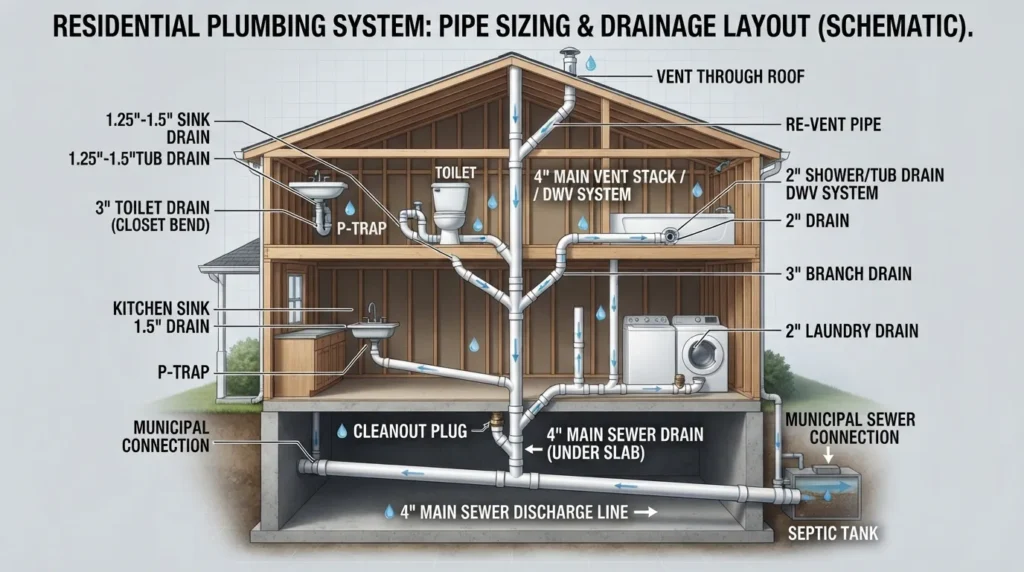
A toilet does not empty straight into a wide-open pipe. Waste first travels through the toilet’s curved internal trapway before entering the connected drain piping.
Toilet Bowl → Trapway → Toilet Drain → Branch Drain → Larger Home Drainage System
A clog can occur in or near the toilet trapway, but a blockage or restriction can also exist farther into the connected drainage system. That distinction matters because a deeper problem is less likely to be solved by simply letting the bowl sit.
When Should You Call a Plumber for a Clogged Toilet?
You do not need professional help for every ordinary toilet-paper clog. But I would stop relying on waiting or repeated DIY attempts when you notice any of the following:
- the bowl is close to overflowing;
- the toilet will not drain at all;
- a toy, wipe, hygiene product, paper towel, or other object may be stuck;
- the clog comes back repeatedly;
- several toilets or drains are slow at the same time;
- you hear repeated gurgling from connected fixtures;
- you notice sewer-like odors along with drainage problems; or
- plunging and appropriate basic methods have not restored normal flow.
For a stubborn or recurring blockage, professional drain cleaning service can address the obstruction rather than simply waiting for symptoms to disappear.
How to Reduce the Chance of Another Toilet Clog
Once the toilet is flowing normally again, a few habits can reduce the chance of repeating the same problem.
- Flush only human waste and toilet paper.
- Do not treat wipes like ordinary toilet paper, even when packaging describes them as flushable.
- Keep paper towels, hygiene products, cotton products, and small objects out of the bowl.
- If you need a large amount of toilet paper, consider flushing in stages rather than overloading the toilet at once.
- Pay attention to a toilet that regularly drains slowly instead of waiting for a complete clog.
- Take recurring clogs seriously, especially when other drains are also affected.
Frequently Asked Questions
A toilet can unclog itself when the blockage is minor and made of soft, water-soluble material such as ordinary toilet paper or human waste. But waiting is not the right response for every clog.
Use three clues to make the decision: what went down the toilet, whether the water level is actually falling, and whether other fixtures are showing drainage problems.
If the bowl stays high, a solid object may be involved, the clog keeps returning, or multiple drains are affected, stop treating it as something that will eventually disappear on its own.
Still dealing with a stubborn clogged toilet?
If waiting or basic unclogging methods are not restoring normal flow, Miami Florida Plumbing can help you determine whether the issue is limited to the toilet or connected to a deeper drain problem.