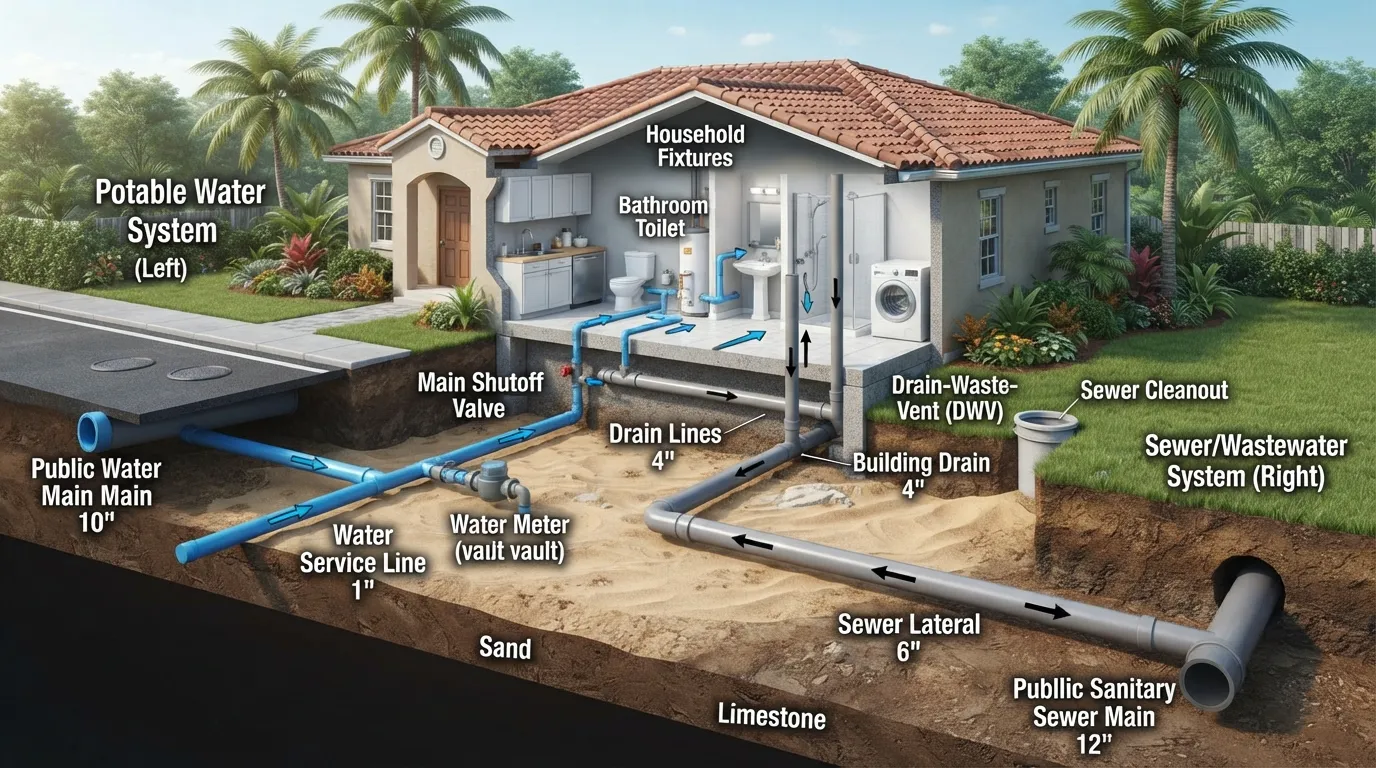
Direct answer: A water line and a sewer line are not the same thing. Your water line brings clean water into your home, normally under pressure. Your sewer line carries wastewater away from your home, normally using gravity and the proper pipe slope.
If you are trying to understand a plumbing problem, this distinction matters: low water pressure or an unexplained supply-side leak points you toward the water system, while multiple slow drains, backups, gurgling, or sewage odors can point toward the drainage or sewer system.
Water and sewer lines work together every day, but they do opposite jobs. One delivers water to your faucets, showers, toilets, and appliances. The other takes used water and waste away.
I’ll walk you through how the two systems connect, how a sewer line differs from an ordinary drain line, how to locate these pipes on your property, what common warning signs mean, and what Miami homeowners should know before assuming where a buried line runs.
Water Line vs. Sewer Line at a Glance
Water Line
- Brings clean water toward the home
- Operates as part of a pressurized supply system
- Connects the property to a water source or public water main
- Feeds fixtures and water-using appliances
- Problems can show up as leaks, pressure changes, or unexplained water use
Sewer Line
- Carries wastewater away from the home
- Usually depends on gravity and proper slope
- Receives flow from the home’s drain piping
- Connects toward a sanitary sewer system or, on some properties, a septic system
- Problems can show up as backups, slow drains, gurgling, or sewage odors
| Feature | Water Line | Sewer Line |
|---|---|---|
| Job | Supplies clean water | Removes wastewater |
| Flow direction | Toward the home and fixtures | Away from fixtures and the home |
| Movement | Pressure | Primarily gravity and slope |
| Typical access clue | Water meter and main shutoff | Drain piping and sewer cleanout where provided |
| Common warning signs | Low pressure, visible leaking, unexplained water use | Multiple slow drains, backup, gurgling, sewage odor |
How Water and Sewer Lines Connect Your Home to the Street
The easiest way to understand the system is to follow the direction of the water.
Clean Water Path
Public water source or main
↓
Water service line
↓
Meter and shutoff components
↓
Home water distribution → faucets, showers, toilets, appliances
Wastewater Path
Sinks, showers, toilets, and appliances
↓
Fixture and branch drain lines
↓
Building drain
↓
Building sewer / sewer lateral
↓
Public sanitary sewer main or an applicable private wastewater system
If you want to understand this wastewater side in more detail, see how your home drainage system works from individual fixtures to the main drainage path.
What Is a Water Line?
A water line is part of the system that delivers usable water to your property. The service line connects the property’s plumbing to its water source, while smaller distribution pipes inside the building carry water to individual fixtures.
Because the supply side is pressurized, a damaged water line behaves differently from a clogged sewer. Instead of wastewater having trouble escaping, clean water may be escaping where it should not.
Possible Signs of a Water-Line Problem
- A noticeable drop in water pressure across multiple fixtures
- Water appearing where no fixture is running
- An unexplained increase in water use
- Persistent wet areas that need professional investigation
- Water service that suddenly becomes inconsistent
One symptom alone does not prove that the buried service line is damaged. A pressure problem, for example, can have several causes. The useful question is whether the problem affects one fixture, one part of the house, or the water system more broadly.
What Is a Sewer Line?
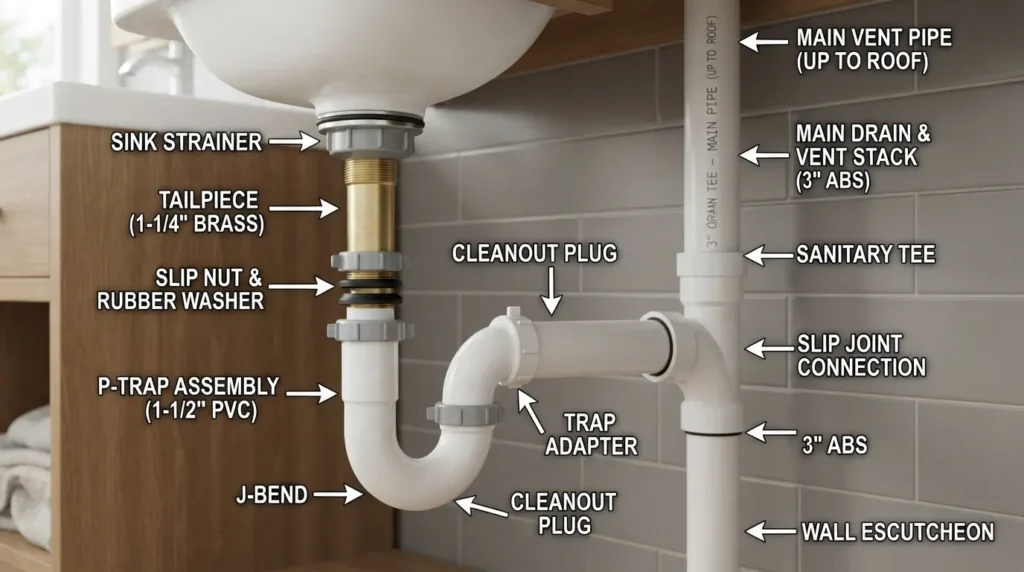
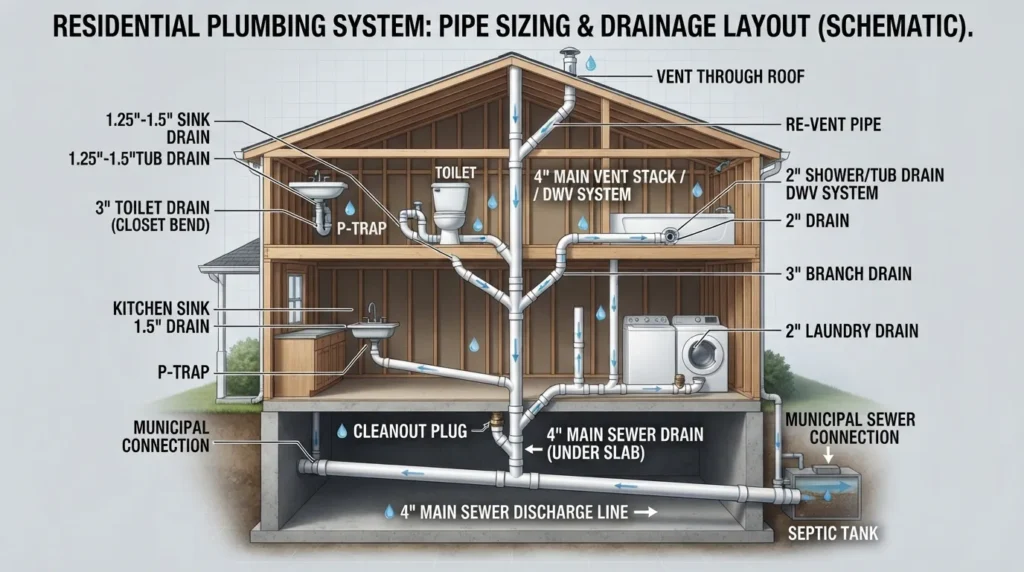
The sewer side of your plumbing begins with the drains connected to fixtures. Those smaller drain lines eventually combine into larger drainage piping that carries wastewater out of the building.
The section connecting the building drainage system toward the public sanitary sewer is commonly described as a building sewer or sewer lateral. Homeowners often use the broader phrase “main sewer line” for this part of the system.
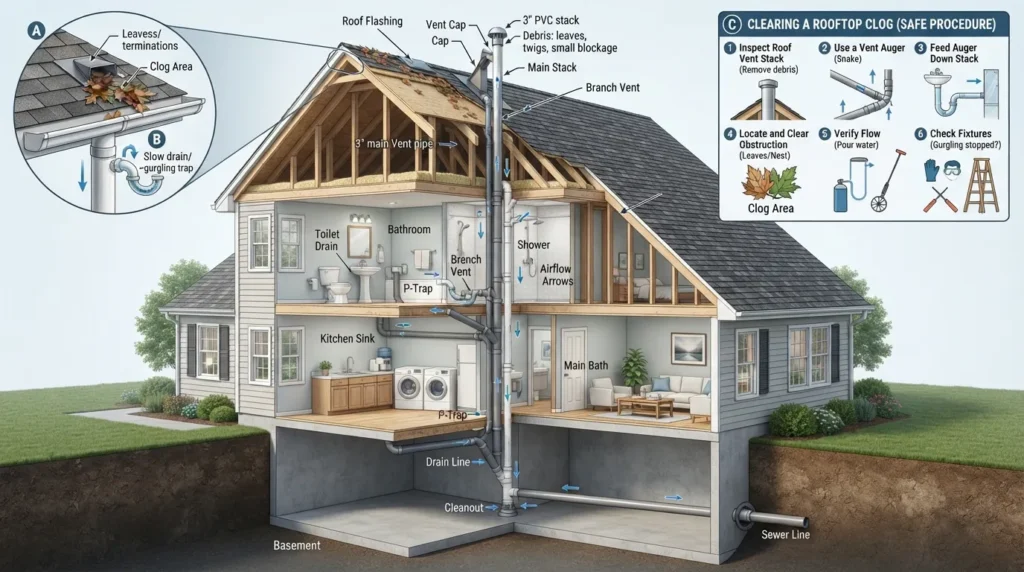
Unlike a pressurized water line, a typical gravity sewer depends heavily on proper pitch and an open flow path. Grease, debris, foreign objects, roots, pipe deterioration, displacement, or other defects can restrict that path.
Common Sewer-Line Warning Signs
- Several drains becoming slow at the same time
- A toilet, tub, or shower backing up when another fixture drains
- Repeated clogs that keep returning
- Gurgling sounds from plumbing fixtures
- Sewage or drain odors
- Wastewater backing up through a low drain
If multiple fixtures are affected, the problem may be farther downstream than a single sink or tub clog. In blockage-related situations, professional drain cleaning may be part of the solution, although recurring problems may also justify locating or inspecting the sewer line to determine why the blockage keeps happening.
Important:
A recurring sewer backup should not automatically be treated as “just another clog.” Cleaning can restore flow, but damaged, shifted, root-affected, or otherwise compromised piping may need a different repair strategy after proper diagnosis.
Drain Line vs. Sewer Line: What Is the Difference?
This terminology causes a lot of confusion because people sometimes use “drain” and “sewer” as if they mean exactly the same pipe.
A useful way to think about it is from small to large:
- Fixture drain: carries wastewater away from an individual fixture.
- Branch drain: receives flow from multiple fixture drains.
- Building drain: carries combined wastewater through the building toward the exit.
- Building sewer or sewer lateral: carries wastewater from the building toward the sewer connection.
- Public sanitary sewer main: receives wastewater from multiple properties within the public collection system.
So when somebody says, “My sewer line is clogged,” the actual blockage could be in different parts of the drainage path. The number and location of affected fixtures help narrow down where to investigate.
How Can You Tell Whether the Problem Is the Water Line or Sewer Line?
Instead of guessing from one symptom, look at the pattern across your property.
| What You Notice | Where to Investigate First |
|---|---|
| Only one sink drains slowly | Local fixture or branch drain |
| Several drains become slow together | Main drainage or sewer path |
| Toilet or shower backs up when another fixture drains | Downstream drain or sewer restriction |
| Low pressure throughout the home | Water supply side, while ruling out other pressure causes |
| Unexplained water use or an active clean-water leak | Water distribution or service line |
| Gurgling and sewage odor around multiple drains | Drainage, sewer, or venting system |
| Wet or unusually soft ground outside | Professional diagnosis is needed because several underground causes are possible |
This is a troubleshooting guide, not a substitute for inspection. Underground plumbing problems often produce overlapping symptoms.
How to Find Water and Sewer Lines on Your Property
Do not start by assuming the pipes run in a perfectly straight line from your house to the street. Property layouts, additions, past repairs, utility routing, and connection points can all affect the actual path.
1. Start With the Water Meter and Main Shutoff
Your water meter and the location where the water service enters the building can provide useful clues about the supply-side route. Inside the home, identifying the main shutoff helps you understand where the incoming water system begins to distribute through the property.
2. Look for a Sewer Cleanout
A sewer cleanout is an access point that allows the drainage or sewer line to be serviced. When present and accessible, its location can provide an important clue about the sewer path.
Not every cleanout will be obvious. It may be outside, near the building, in landscaping, or otherwise difficult to spot depending on the property.
3. Follow the Plumbing Layout, Not Guesswork
Inside the home, toilets, sinks, tubs, showers, and appliances connect into the drainage system. Understanding where those drains converge can help establish the likely direction of the building drain.
4. Check Utility and Property Records
For Miami-Dade properties, the Water and Sewer Department provides a Utilities Information Request process that can include Atlas information, As-Built information, and sewer lateral location information. That can be far more useful than relying on a generic online diagram.
You can review the county’s Miami-Dade Utilities Information Request for the types of infrastructure records that may be available.
5. Use Professional Locating or Camera Inspection When Needed
When records and visible access points do not answer the question, a professional may use locating equipment, sewer access, or camera inspection methods to learn more about the line’s path and condition.
Before you dig:
Do not treat a diagram, online map, assumed pipe depth, or visible cleanout as proof of the exact location of every buried utility. Existing field conditions can differ from plans and standard layouts. Have underground utilities properly identified before excavation.
How Deep Are Water and Sewer Lines Buried?
There is no single trustworthy depth that applies to every home.
Actual depth can vary according to the property’s grade, the required sewer slope, the elevation of the connection point, the type of system, applicable standards, previous construction, and site conditions.
This is especially important with sewer lines because a gravity system has to maintain an appropriate route toward its downstream connection. A generic statement such as “all sewer lines are X feet deep” can therefore be misleading.
Miami-Dade’s own water and sewer construction information cautions that actual existing facilities can differ in depth, location, and other details, which is another reason site-specific locating matters.
Can a Water Line Go Under or Cross a Sewer Line?
Water and sewer lines cannot simply be placed wherever it is convenient. Their separation and crossing arrangements are controlled by plumbing, utility, and public-health requirements designed to protect the water supply.
In practice, the acceptable arrangement depends on factors such as whether lines run parallel or cross, the type of pipe involved, vertical and horizontal separation, protective measures, and the rules that apply to that specific installation.
If you are installing, relocating, or exposing water and sewer piping in Miami-Dade, do not rely on a generic internet measurement. The current applicable requirements should be verified for the project before work proceeds.
Who Is Responsible for the Water or Sewer Line?
Do not assume that every pipe between your home and the street automatically belongs to the utility.
There is an important distinction between a public main serving many properties and the service connection or lateral serving an individual property. Responsibility for installation, maintenance, and repair can depend on the utility, municipality, type of line, exact pipe segment, and circumstances of the work.
For Miami-Dade Water and Sewer Department customers, county rules and connection procedures should be checked for the specific property rather than relying on a national rule of thumb.
What Materials Are Water and Sewer Lines Made From?
Pipe material depends on the age of the property, the part of the plumbing system, local requirements, and previous repairs or replacements.
Residential water systems may include materials such as copper and approved plastic piping. Sewer and drainage systems may include materials such as PVC, cast iron, and, in older systems, clay or other legacy piping.
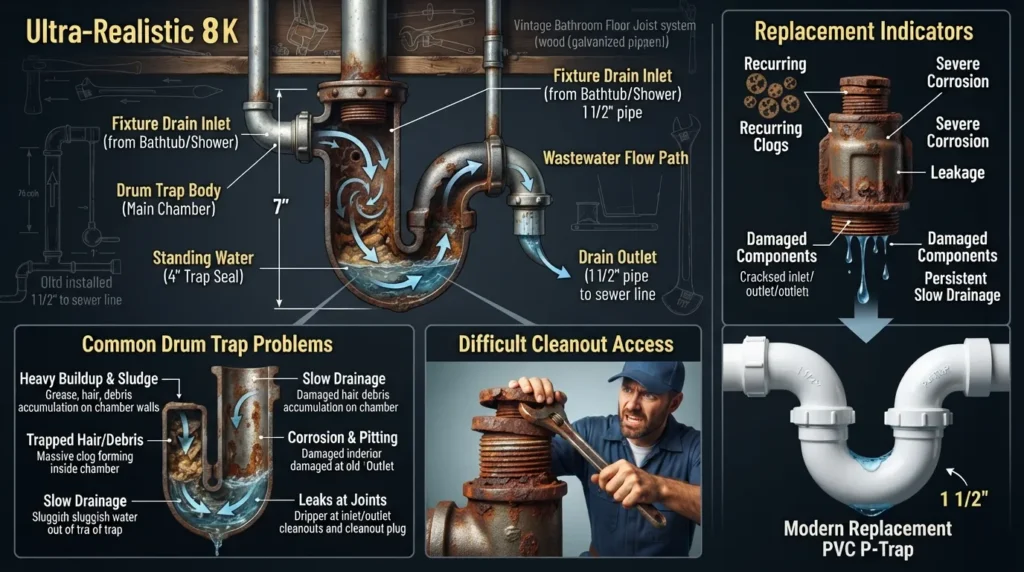
Material matters because different pipe types can fail in different ways. Corrosion, cracking, root intrusion at joints, movement, buildup, and physical damage are not equally likely in every type of pipe.
If the material is unknown, inspection is more useful than guessing based only on the age of the house.
How Long Does a Sewer Line Last?
There is no single lifespan that applies to every sewer line.
Its condition depends on the pipe material, installation quality, soil and site conditions, root exposure, movement, corrosion, previous repairs, what has been put down the drains, and whether the line has developed structural defects.
That is why age alone should not decide whether a sewer line needs repair or replacement. An older line may still be functioning, while a newer line can have a localized installation or damage problem. The condition of the actual pipe is the more useful question.
How Often Should a Main Sewer Line Be Cleaned?
I would not recommend choosing an arbitrary cleaning schedule just because you saw a number online.
Some properties may go a long time without a main-line blockage. Others may develop recurring problems because of roots, buildup, pipe defects, misuse, or an underlying drainage issue.
Cleaning or inspection becomes more relevant when you have:
- Repeated main-line clogs
- Multiple slow drains
- A previous history of root intrusion
- Recurring backups
- Known pipe defects
- A professional inspection that identifies accumulating obstruction
The goal should be to solve the cause of recurring trouble, not to keep clearing the same symptom indefinitely.
Sewer Line vs. Septic System
A sewer line does not always mean the property is connected to a public sewer main.
A property connected to a municipal sanitary sewer sends wastewater toward the public collection system. A property using a septic system routes wastewater to an onsite treatment system instead.
This distinction matters in Miami-Dade because some properties may be dealing with an existing septic system, an available sewer lateral, or a first-time sewer connection rather than a routine repair to an already connected public-sewer property.
Miami-Dade provides a specific process for properties making certain first-time sewer connections when an existing sewer lateral is available.
Are Water and Sewer on the Same Bill?
They may appear within the same utility-account relationship, but water service and wastewater service are different charges.
For example, Miami-Dade Water and Sewer Department publishes separate residential water and residential wastewater rate structures. Your exact bill depends on your service, account, usage, and applicable utility charges.
A Visual Water-and-Sewer Explainer
If you prefer seeing the plumbing path rather than only reading about it, this video provides an additional visual explanation related to residential water and wastewater piping.
When Should You Call a Plumber?
Many homeowners begin with the same question: “Is this a water problem, a drain problem, or a sewer problem?” You do not always need to know the exact diagnosis before asking for help.
Professional evaluation becomes especially useful when:
- Several fixtures are backing up
- You have recurring sewer clogs
- There is active leaking that you cannot safely isolate
- Water pressure changes throughout the property
- You cannot determine the location of the sewer line or cleanout
- You need a sewer camera inspection or accurate locating
- You suspect an underground pipe problem
- A previous drain cleaning did not stop the problem from returning
Not Sure Which Line Is Causing the Problem?
You do not have to diagnose an underground plumbing system by yourself. The first step is identifying whether the symptoms point toward the water supply, a local drain, or the main sewer path.
You can learn more about Miami Florida Plumbing or talk with a local plumber.
Frequently Asked Questions About Water and Sewer Lines
Is a water line and sewer line the same thing?
No. A water line supplies clean water to the property, while a sewer line removes wastewater from the property.
Can a water line go under a sewer line?
Water and sewer crossings are subject to separation and protection requirements. The acceptable configuration depends on the applicable plumbing and utility rules, so an installation should be verified against current local requirements rather than a generic online diagram.
How do I find water and sewer lines on my property?
Start with visible clues such as the water meter, main shutoff, and sewer cleanout. Then check available utility or as-built records. When the exact route matters, use appropriate locating or inspection methods instead of relying on assumptions.
What is the main sewer line called?
Homeowners often say “main sewer line,” but more specific terms can include the building drain, building sewer, sewer service line, or sewer lateral depending on which section of the system is being discussed. The public pipe serving multiple properties is the sanitary sewer main.
How many years does a sewer line last?
There is no universal number. Material, installation, soil conditions, roots, movement, corrosion, usage, and existing damage all affect service life. Actual pipe condition is more useful than age alone when making repair decisions.
What is the difference between a drain line and a sewer line?
Drain lines carry wastewater away from individual fixtures or groups of fixtures. Those drains eventually feed the building’s larger drainage system, which then connects to the building sewer or sewer lateral leading away from the property.
How often should the main sewer line be cleaned?
There is no cleaning interval that fits every property. Recurring clogs, known root problems, backups, or inspection findings are better reasons to clean or inspect a sewer line than following an arbitrary schedule.
How do I tell if my main sewer line is clogged?
Multiple slow drains, fixtures affecting one another, low-level backups, recurring gurgling, or wastewater returning through a drain can indicate a restriction farther down the drainage system. A single slow sink is more likely to be a local drain issue.
How do you know if a sewer line is broken?
Recurring blockages, persistent backups, unusual odors, drainage problems that return after cleaning, or other abnormal conditions can justify further investigation. Symptoms alone cannot confirm a break; locating and camera inspection may be needed to evaluate the pipe.
How deep is a main sewer line buried?
Depth varies by property. Grade, slope, connection elevation, site conditions, and applicable requirements all matter. Do not assume a generic online depth applies to your specific Miami property.
Your water and sewer lines are two separate systems with opposite jobs: the water side brings clean water in, and the sewer side carries wastewater out.
Once you understand that basic relationship, troubleshooting becomes much easier. Low pressure and supply-side leaking push the investigation toward the water system. Multiple slow drains, backups, gurgling, and recurring clogs push it toward the drainage and sewer system.
The most important thing not to do is guess about a buried pipe’s exact route, depth, ownership, or condition. Use the symptoms to narrow down the system, check reliable property and utility information where available, and use proper locating or inspection when the answer affects excavation or repair.