Looking for a commercial plumber near you?
Start with a plumber who works with commercial properties, can diagnose the specific system causing the problem, explains the scope before work begins, and understands any local permit, inspection, backflow, drainage, or grease-control requirements that may apply. If water is actively damaging the property, sewage is backing up, or multiple fixtures have suddenly stopped draining, treat the problem as urgent rather than waiting for it to get worse.
When you search for “commercial plumbers near me,” you usually are not looking for a plumbing definition. You need someone who can help protect your business, tenants, customers, equipment, or property from a plumbing problem that may already be interrupting normal operations.
The challenge is that not every plumber has the same commercial capabilities. A simple clogged sink in a small office is very different from a recurring restaurant drain backup, a multi-restroom sewer issue, a commercial water-heating problem, or plumbing work that may require permits and inspections.
This guide will help you understand what to look for, what questions to ask, what can affect the final cost, and how to choose the right commercial plumbing contractor in Miami without relying only on an advertisement, a star rating, or the phrase “best plumber near me.”
Need help now?
If you are dealing with an active business plumbing problem in Miami, you can speak with our plumbing team about the next step.
Comparing local providers?
Use the checklist below to compare scope, commercial experience, response expectations, pricing structure, and local compliance knowledge before approving work.
What Is a Commercial Plumber?
A commercial plumber works on plumbing systems serving businesses, commercial buildings, institutions, and other non-residential properties. The individual fixtures may sometimes look similar to residential plumbing, but the systems can be larger, more heavily used, more complex, and more sensitive to business interruption.
Commercial plumbing may involve offices, restaurants, retail stores, hotels, warehouses, medical facilities, schools, multi-unit properties, and other buildings where plumbing problems can affect employees, customers, tenants, inventory, food service, sanitation, or daily operations.
The right plumber should therefore look beyond the single fixture that is showing symptoms and determine whether the underlying issue involves a branch line, main drain, sewer line, water supply, water heater, backflow device, grease-control system, fixture, valve, pipe, or another part of the building’s plumbing system.
Commercial vs. Residential vs. Industrial Plumbing
Residential Plumbing
Primarily serves houses, apartments, and residential living spaces. The systems generally have fewer simultaneous users and different operational demands than many commercial properties.
Commercial Plumbing
Serves businesses and non-residential properties where heavier use, larger systems, public restrooms, business equipment, code requirements, and downtime may change the way a problem must be diagnosed and repaired.
Industrial Plumbing
Can involve manufacturing facilities, process piping, specialized equipment, higher-capacity systems, and operational requirements that go beyond typical commercial building plumbing.
If you searched for “industrial plumbers near me,” make sure the contractor you contact actually handles the type of industrial system involved. A company that is well suited to an office restroom repair may not necessarily be the right choice for specialized process piping or a manufacturing application.
When Should a Business Call a Commercial Plumber?
Some plumbing problems can be scheduled. Others should be addressed quickly because they can spread damage, create sanitation concerns, or interrupt normal business activity.
Call promptly when you notice:
- Sewage or wastewater backing up into a business.
- Multiple toilets, sinks, or floor drains backing up at the same time.
- An active pipe or fixture leak that is damaging the property.
- A recurring commercial kitchen or restaurant drain blockage.
- Water appearing where there is no obvious source.
- Persistent sewer odors.
- A major loss of water service or hot water affecting operations.
- Repeated clogs that return shortly after being cleared.
- Overflowing fixtures that cannot be isolated safely.
If water is near electrical equipment, keep people away from the affected area and follow your building’s safety procedures. The immediate goal should be protecting people and limiting damage before troubleshooting the plumbing system.
Do Not Diagnose a Commercial Plumbing Problem by the Symptom Alone
This is where many generic “near me” pages fall short. A symptom tells you where the problem became visible, but it does not always tell you where the actual failure is located.
One slow sink
The issue may be localized to that fixture or a nearby branch drain.
Several fixtures backing up
A shared branch, building drain, or downstream sewer problem may need to be investigated.
Recurring restaurant kitchen backup
The plumber may need to evaluate grease buildup, the drain line, grease-control equipment, or another recurring cause instead of repeatedly treating only the visible blockage.
No hot water throughout the property
The problem may involve the commercial water-heating system rather than an individual fixture.
A useful commercial plumber should be able to explain what was found, why the recommended work addresses the underlying problem, and whether further inspection is needed before you approve a larger repair.
Commercial Plumbing Services a Business May Need
The exact service depends on the building and the problem. Commercial plumbing contractors may work with a combination of the following systems and services:
- Commercial drain cleaning and recurring blockage diagnosis.
- Sewer-line cleaning and investigation.
- Drain or sewer camera inspections when appropriate.
- Pipe leak diagnosis and repair.
- Water-line and valve problems.
- Commercial toilets, faucets, flush valves, and restroom fixtures.
- Commercial water-heating systems.
- Backflow prevention devices and related plumbing work.
- Grease traps or grease interceptors where applicable.
- Floor drains and commercial kitchen drainage.
- Pipe replacement or repiping when damaged piping cannot be reliably repaired.
- Plumbing associated with remodels, tenant improvements, or building alterations.
Do not assume that every company offers every commercial service. If your property has a specialized system, describe it when you first contact the plumber and confirm that the company handles that type of work.
Commercial Drain Problems Deserve More Than Repeated Temporary Clearing
Commercial drain systems can receive much heavier use than a typical household drain. Restaurants may deal with food-related waste and grease-control requirements, while offices, retail spaces, hotels, and multi-unit properties may have many fixtures connected to shared drainage lines.
If a drain blockage keeps coming back, the useful question is not simply, “Can someone unclog it?” The better question is, “Why does it keep returning?”
Depending on the situation, a plumber may need to consider the location of the blockage, the condition of the line, buildup inside the pipe, a damaged section, drainage configuration, or another downstream restriction. If your current problem is drain-related, you can learn more about professional drain cleaning in Miami.
A Property-Type Guide: What Should You Tell the Plumber?
The more useful information you provide at the beginning, the easier it is for a plumbing company to understand the likely scope of the call.
Restaurants & Food-Service Businesses
Mention kitchen backups, floor drains, sinks, grease-control equipment, which fixtures are affected, whether the issue is recurring, and whether food-service operations are currently interrupted.
Office Buildings
Explain whether the problem affects one restroom, several floors, multiple fixtures, a break room, or the entire property.
Retail Stores
Tell the plumber whether the issue affects customer restrooms, employee areas, utility rooms, sales-floor operations, or any area where water could damage inventory.
Hotels & Multi-Unit Properties
Identify the affected rooms or floors and whether the symptoms appear isolated or are happening across multiple units.
Warehouses & Commercial Facilities
Describe the affected plumbing area, building use, drainage points, equipment nearby, access restrictions, and whether the problem is interfering with operations.
Property Managers
Have the affected unit or suite, tenant contact, access instructions, history of previous repairs, and any known building plumbing information ready before the appointment.
Miami-Dade Commercial Plumbing Can Involve Local Requirements
Commercial plumbing is not only about stopping leaks and clearing drains. Depending on the property type and scope of work, a project may involve permitting, inspections, approved plans, backflow protection, fixture requirements, drainage requirements, or grease-control equipment.
For example, commercial food-service properties may have grease-trap or grease-interceptor considerations, while other commercial plumbing work may involve backflow prevention or inspections before a project is considered complete.
Why this matters: Do not assume a repair, replacement, remodel, or new installation can be handled exactly like a residential service call. Ask whether your particular scope requires a permit, inspection, approved plan, or other local compliance step before work begins.
The exact requirement depends on the property and the work being performed, so confirm current requirements with the appropriate Miami-Dade authority and the plumbing professional handling the project.
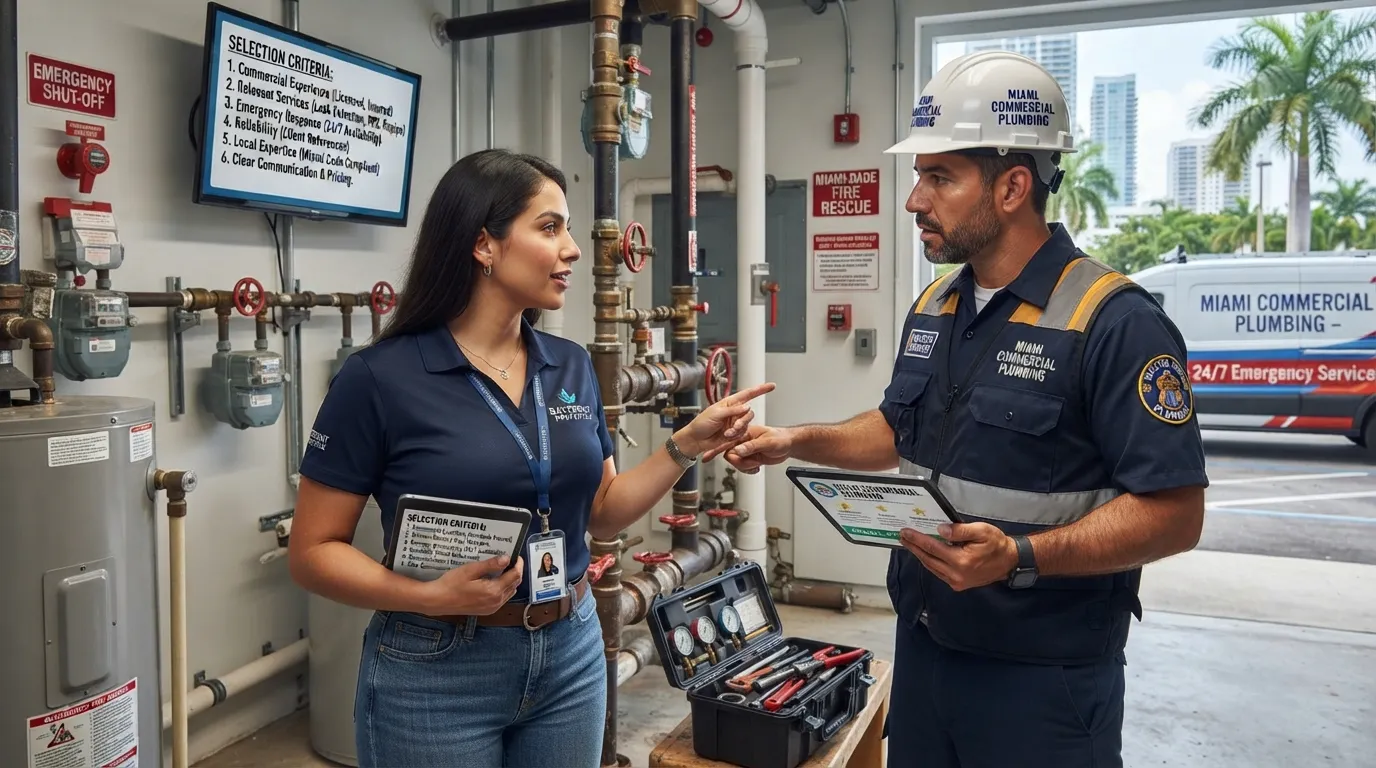
How to Find a Good Commercial Plumber Near You
If I were comparing commercial plumbing companies for a Miami business, I would not choose one based on the first search result alone. I would use the following checklist.
- Confirm commercial experience. Ask whether the company regularly works on businesses or properties similar to yours.
- Describe the exact problem. Mention the property type, affected fixtures, whether multiple areas are involved, and whether the issue is recurring.
- Confirm the service is within scope. Specialized systems should be discussed before dispatch.
- Ask how the problem will be diagnosed. A good recommendation should be based on the actual cause, not automatically on the most expensive repair.
- Ask what the estimate includes. Clarify labor, materials, diagnostic work, equipment, permits if applicable, and other possible charges.
- Ask about response expectations. If the property cannot operate normally, say that clearly when you call.
- Ask about permits or inspections when relevant. This is especially important for replacements, remodels, installations, and other work beyond a simple repair.
- Get the scope in writing for larger work. Make sure you understand what will be repaired or replaced and what is not included.
What Are the Signs of a Good Plumber?
A good commercial plumber should make the problem easier to understand, not more confusing. Look for practical signs such as:
- They ask questions about the property and symptoms before making assumptions.
- They explain what they found in plain language.
- They distinguish between a temporary fix and a longer-term repair.
- They explain what is included in the proposed scope.
- They do not pressure you to approve unrelated work without a clear reason.
- They can explain whether permits, inspections, or specialist work may be necessary.
- They communicate any important limitations or unknowns before work expands.
Reviews can still be useful, but read them for patterns. Comments about communication, repeat problems, commercial properties, scheduling, problem diagnosis, and whether the completed work matched the agreed scope can be more informative than a rating by itself.
How Much Does a Commercial Plumber Cost?
There is no single hourly rate or universal price that accurately predicts every commercial plumbing job. A basic accessible repair is not comparable to a recurring sewer blockage, after-hours emergency, large commercial water-heating problem, difficult pipe access, or work requiring permits and additional trades.
Commercial plumbing companies may price work using an hourly structure, a service or diagnostic charge, a flat price for a defined task, a project estimate, or a combination depending on the job.
Factors that can change the final price include:
- The type and severity of the plumbing problem.
- How long diagnosis takes.
- Accessibility of the pipe, fixture, valve, drain, or equipment.
- Labor required to complete the work.
- Materials and replacement parts.
- Specialized diagnostic or drain-cleaning equipment.
- Whether work is scheduled or urgent.
- Building size and plumbing-system complexity.
- Permits or inspections where required.
- Excavation, wall access, ceiling access, or restoration if the plumbing cannot be reached directly.
The better question to ask
Instead of asking only, “What is your hourly rate?” ask, “What is included in the price, what could change it after diagnosis, and will you explain any additional work before proceeding?” That makes two estimates much easier to compare.
What Are Common Hidden Plumbing Costs?
“Hidden” costs are often costs that were never discussed clearly at the beginning. They can include diagnostic work, difficult access, after-hours service, specialized equipment, permits, replacement materials, excavation, disposal, or restoring surfaces opened to reach plumbing.
You can reduce surprises by asking these questions before approving work:
- Is there a service or diagnostic charge?
- Is that charge included in the repair price or separate?
- What labor and materials are included?
- Could specialized equipment be needed?
- Could access require opening a wall, floor, ceiling, or exterior area?
- Are permits or inspections likely for this scope?
- Does the estimate include cleanup or restoration?
- Will I be contacted before any work outside the approved scope is performed?
How Do You Negotiate Plumber Rates?
For commercial work, I would focus less on trying to reduce a plumber’s labor rate and more on making the scope transparent enough to compare options fairly.
You can ask whether there are different repair options, whether non-urgent work can be scheduled instead of handled as an emergency, whether a repair or replacement makes more sense, and which parts of the estimate are necessary versus optional.
If you receive multiple quotes, compare the scope line by line. A lower number is not automatically a better deal if it excludes diagnosis, materials, permits, cleanup, or a part of the work included in another proposal.
How Much Does It Cost to Unclog a Commercial Drain?
There is no responsible single price that applies to every commercial drain blockage. The final cost depends on what is blocked, where the obstruction is located, how accessible the line is, whether the problem affects one fixture or a larger section of the building, and whether additional inspection or specialized cleaning is required.
A simple localized blockage and a recurring main-line problem are different jobs. If someone gives you a firm price without knowing what is clogged, where it is located, or how severe the problem is, ask what assumptions that price is based on.
What Information Should You Have Ready Before You Call?
You can make the first conversation much more useful by preparing a few details before contacting a commercial plumber.
- Business or property type.
- Miami or Miami-Dade location.
- Which fixture, room, floor, or unit is affected.
- Whether one or multiple fixtures are involved.
- When the problem started.
- Whether it has happened before.
- Whether water service is currently available.
- Whether there is active leaking, flooding, or sewage backup.
- Previous plumbing work related to the same problem, if known.
- Any access restrictions, tenant coordination, or building-management requirements.
- Photos or videos of visible symptoms if they can be taken safely.
This information helps distinguish a routine service call from a larger building-system problem before the plumber arrives.
What Should You Do While Waiting for a Commercial Plumber?
Your priority should be limiting damage and keeping people away from unsafe areas. What you can safely do depends on the situation.
- Stop using fixtures that are backing up.
- Keep customers, employees, or tenants away from contaminated water.
- If you know a fixture’s isolation valve and can operate it safely, shutting off the affected fixture may help limit water loss.
- If water is close to electrical equipment or wiring, keep clear and follow the property’s emergency procedures.
- Do not mix drain chemicals or continue adding products to a drain after a plumber has been called.
- Tell the plumber about any chemical product already used so the technician knows what may be inside the line.
- Document visible damage for property-management or insurance records where appropriate.
What About Buildings With Both Commercial and Residential Plumbing?
Mixed-use properties and property managers sometimes oversee both business spaces and residential units. The underlying drain-waste-vent principles are related, but the load, fixtures, access, code considerations, and operating demands may differ between the commercial and residential sides.
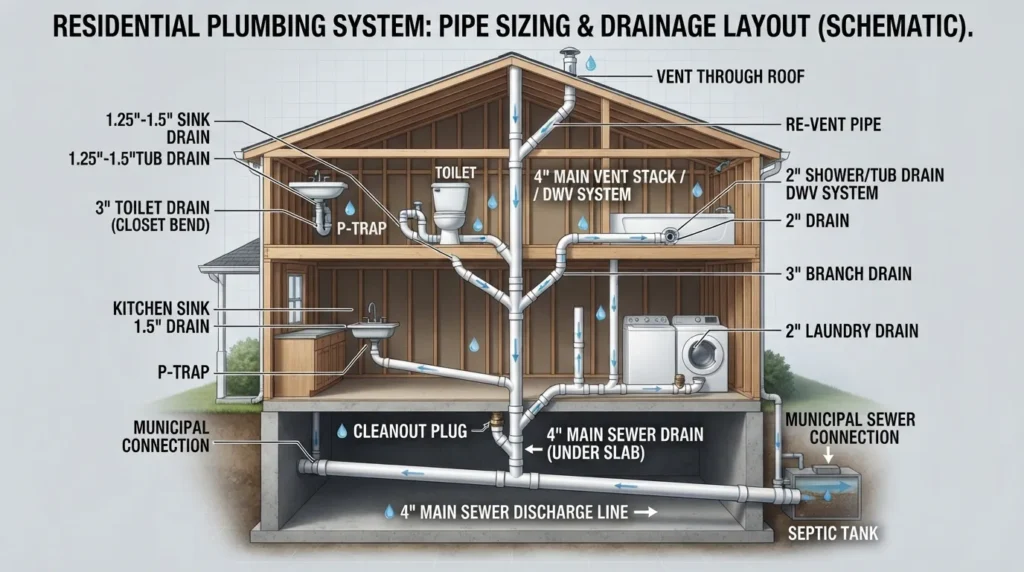
If you also manage homes or residential units and want a basic explanation of drainage components and flow, this guide to how a home drainage system works provides useful residential context.
Should You Search for a 24/7 Commercial Plumber or “Open Now”?
If you have an active leak, sewage backup, widespread drainage failure, or another problem that is stopping normal operations, current availability matters. Search results may show companies advertised as open now or offering emergency service, but always confirm availability directly because schedules and service areas can change.
For a non-urgent issue, you may have more time to compare companies, review the proposed scope, coordinate access, and schedule the work around business operations.
A Simple Commercial Plumber Hiring Decision
Emergency or active damage?
Prioritize current availability, safety, damage control, and the ability to handle your property type.
Recurring problem?
Prioritize diagnosis of the underlying cause instead of repeatedly clearing only the immediate symptom.
Large repair or replacement?
Prioritize a written scope, permit or inspection requirements, materials, access, exclusions, and how changes will be approved.
Specialized property?
Confirm experience with that building type and plumbing system before scheduling the job.
Frequently Asked Questions About Commercial Plumbers Near Me
What is a commercial plumber?
A commercial plumber works on plumbing systems in businesses and other non-residential properties. Commercial systems may serve more users, larger buildings, specialized equipment, public restrooms, commercial kitchens, and other environments where system capacity and business continuity matter.
What is the difference between commercial and industrial plumbing?
Commercial plumbing generally serves businesses and commercial buildings. Industrial plumbing can involve manufacturing, process systems, specialized piping, and operating requirements beyond typical building plumbing. Some contractors handle both, while others specialize.
How do I find a good commercial plumber near me?
Look for experience with your property type, confirm the required service is within scope, ask how the problem will be diagnosed, understand what the estimate includes, and verify whether permits or inspections may be involved in larger work.
How much an hour should a plumber charge?
There is no universal hourly rate that fits every plumber, location, or commercial job. Ask whether pricing is hourly, flat-rate, project-based, or includes a service or diagnostic charge, then compare what is included rather than comparing the hourly number alone.
What is the hourly rate for a plumber in my area?
Local rates can vary by company, job type, urgency, and required expertise. For an accurate Miami commercial plumbing price, describe the problem and ask the provider how its pricing is structured and what could change the final total.
How much does it cost to unclog a commercial drain?
Cost depends on the blockage location, severity, accessibility, whether one or several fixtures are affected, and whether further inspection or specialized drain-cleaning equipment is needed. A recurring main-line blockage should not be priced or treated like a simple localized clog.
Can I negotiate a commercial plumbing quote?
You can ask for clarification, alternative repair options, scheduling options for non-urgent work, and a breakdown of what is included. Comparing equivalent scopes is usually more useful than negotiating only the labor rate.
Do commercial plumbing jobs require permits?
Some work may require permits, inspections, plans, or other approvals depending on the scope and property. A basic service call and a major replacement or remodel are not necessarily treated the same way. Confirm requirements before larger work begins.
Do restaurants have different plumbing concerns?
Yes. Commercial kitchens can involve heavier drain use, floor drains, food-service plumbing, and grease-control requirements. Recurring kitchen backups should be evaluated for their underlying cause rather than treated as an ordinary household clog.
Looking for a Commercial Plumber in Miami?
The best commercial plumbing decision is not simply choosing the closest name on a search-results page. You want a provider that understands the property, identifies the real source of the problem, explains the scope clearly, and helps you understand what should happen next.
If you are comparing options, start by describing your business type, location, affected plumbing, whether the problem is recurring, and how urgently it is affecting operations. That gives the plumber useful context before anyone recommends a repair.
Get Help With a Plumbing Problem in Miami
If your business or property has a plumbing problem and you are not sure what type of service you need, start by explaining what is happening and where the issue is located.
You can learn more about our Miami plumbing team and the plumbing services available for local properties.
Useful Miami-Dade Commercial Plumbing Resources
For projects that may involve permits, plan review, inspections, backflow protection, commercial fixtures, or grease-control requirements, these official Miami-Dade resources can help you verify current local requirements:
Local requirements can change and may vary by property and project scope. Always verify the requirements that apply to your specific job before beginning regulated work.