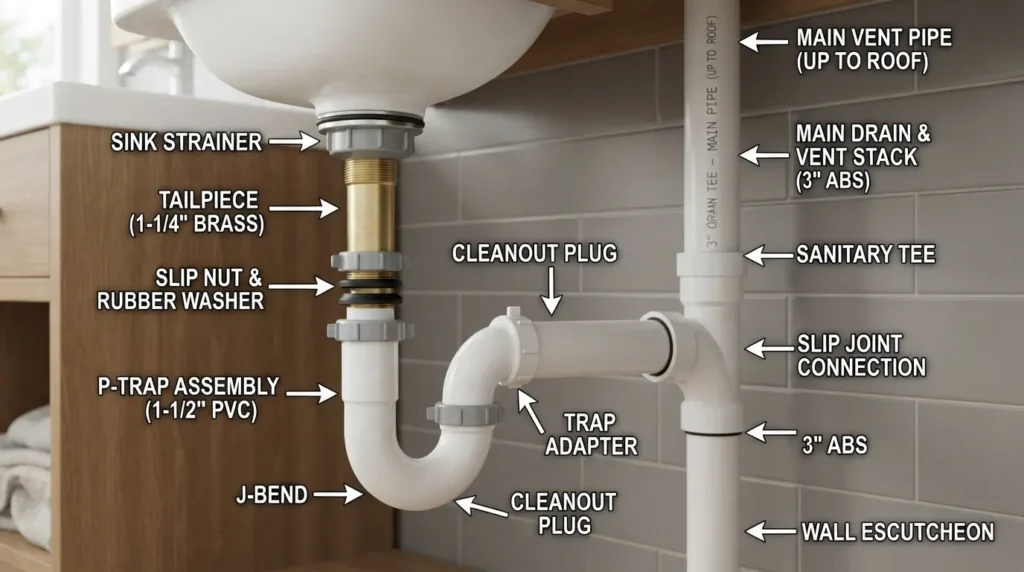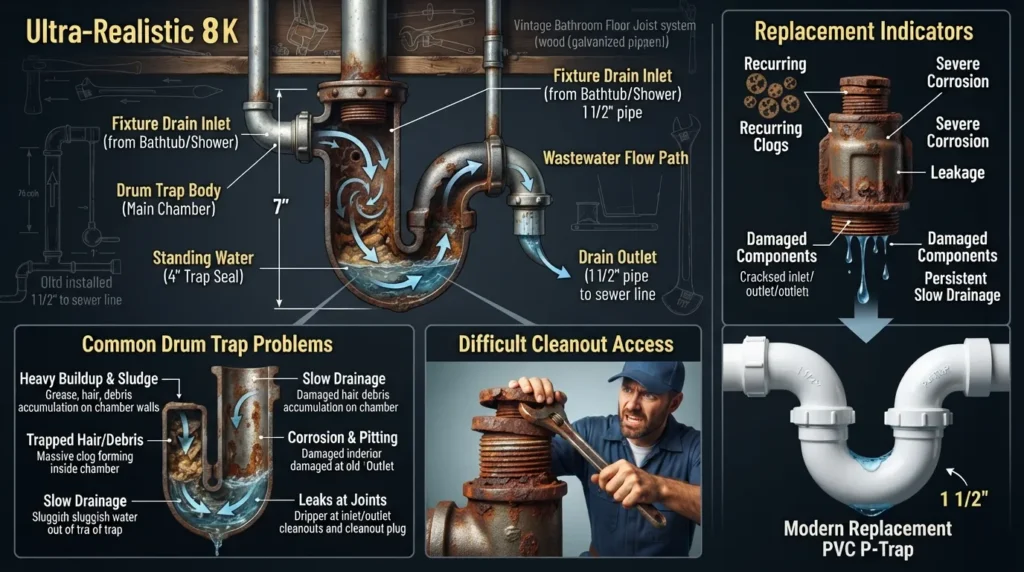
A drain plunger can clear many localized sink, bathtub, and shower clogs when you use a plunger that can form a tight seal over the drain. A flat-bottom cup plunger is usually the right starting point for flat drain openings, while a flange-style plunger is designed primarily for toilets.
The bigger question is not simply “Can I plunge this drain?” It is which plunger fits the fixture, whether the clog is actually within plunging range, and what the symptoms tell you if plunging does not work.
If you searched for a drain plunger, you may be trying to buy the right tool, clear a clogged sink or shower, or figure out why the plunger you already have is doing almost nothing.
I would start with the drain itself before worrying about brands. A powerful-looking plunger is not automatically the best one. The tool needs to fit the drain opening, hold a seal, and move water through the pipe without pressure escaping around the cup.
This guide walks you through that decision from start to finish: which drain plunger to choose, how to use it correctly, why plunging sometimes fails, what to try next, and when the problem may be deeper than a simple fixture clog.
What Is a Drain Plunger?
A drain plunger is a simple hand tool that uses pressure and suction to help loosen a blockage inside a drain line. Instead of relying only on downward force, effective plunging moves water back and forth against the obstruction.
That is why the seal between the plunger cup and the drain surface matters so much. If air or water escapes around the edge, much of your effort never reaches the clog.
For sinks, tubs, showers, and similar flat openings, a traditional rubber cup plunger is usually the most relevant design. Toilets have a different opening shape, so they normally work better with a flange plunger.
Which Drain Plunger Should You Use?
The best drain plunger is the one that matches the fixture and can create a reliable seal. Use this quick guide before you buy or start plunging.
Sink
Best starting point: Flat-bottom cup plunger. It works best when the rubber cup can sit flat around the drain opening.
Bathtub
Best starting point: Cup plunger, provided you can cover the drain and temporarily seal the overflow opening.
Shower
Best starting point: A cup-style drain plunger large enough to fully cover the drain area after any removable strainer is taken out.
Floor Drain
Best starting point: A wide cup that can seal around the drain opening. Drain shape and surrounding floor surface matter more than raw plunging force.
Toilet
Use instead: A toilet or flange plunger designed to fit the curved toilet outlet.
Cup Plunger vs. Flange Plunger vs. Bellows Plunger
Cup plunger: This is the classic flat rubber cup attached to a handle. It is generally the most useful design for sinks, tubs, showers, and other relatively flat drain surfaces.
Flange plunger: A flange plunger has an extended rubber section beneath the main cup. That extra section helps it fit into a toilet outlet and hold pressure more effectively.
Bellows or accordion plunger: These rigid accordion-style plungers can move a substantial amount of water, but more force does not compensate for a poor fit. The drain or fixture still needs to be compatible with the tool.
Before You Plunge: Is This Really a Simple Drain Clog?
This is the step many quick how-to guides skip.
Before you start pumping a plunger, look at how many fixtures are affected. That gives you a clue about whether the blockage may be close to one fixture or deeper in the drainage system.
15-Second Pre-Plunge Check
- Only one sink, shower, or tub is affected: A localized clog is more plausible, so plunging is a reasonable first step.
- Several nearby fixtures are slow: The restriction may be farther down a shared branch line.
- Multiple drains throughout the home are backing up: Treat it as a bigger drainage problem rather than repeatedly attacking one drain opening.
- Water appears in another fixture when one drains: That can point to a shared drainage restriction that deserves closer diagnosis.
- The same clog keeps returning: The underlying obstruction may not have been fully removed.
If you want to understand why symptoms can appear in more than one fixture, see this guide to how your home drainage system works.
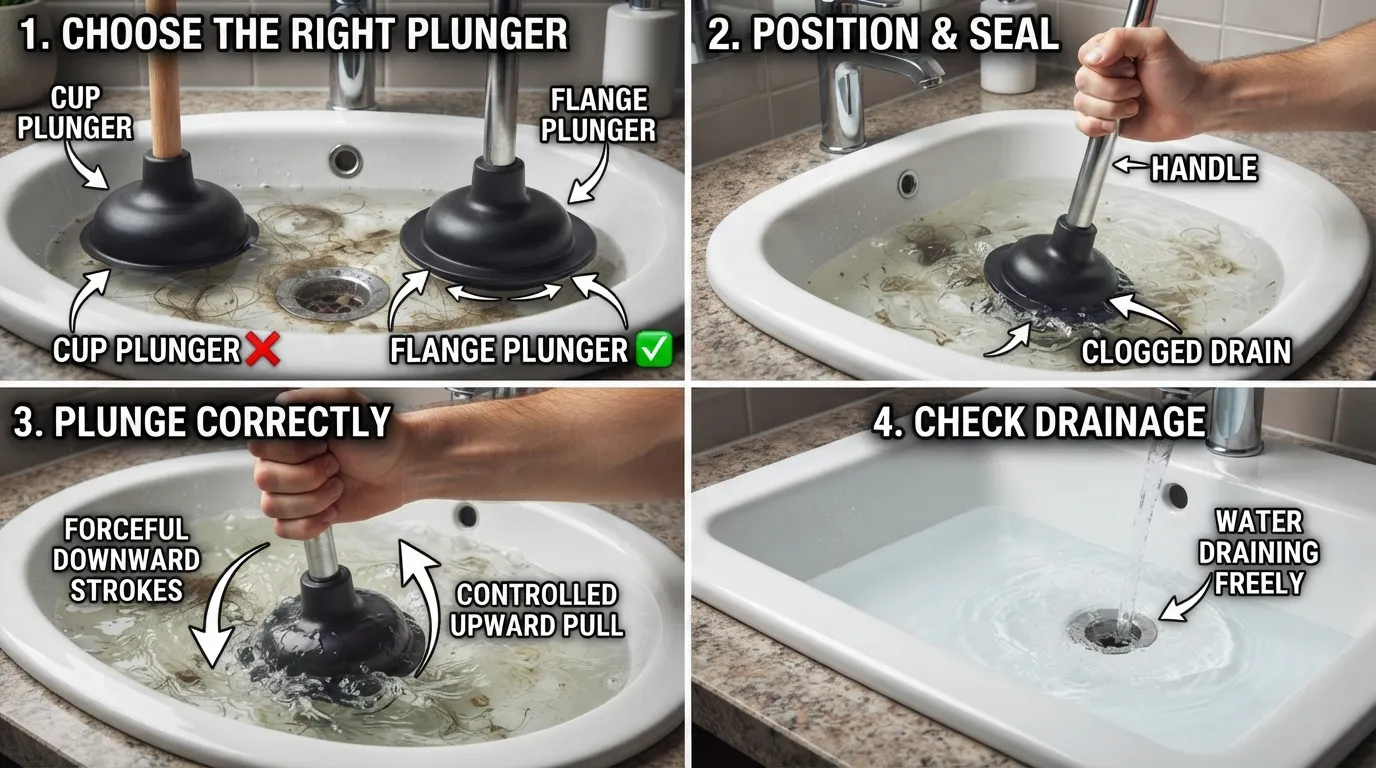
How to Unclog a Drain With a Plunger
If the problem appears limited to one fixture, use the following method.
- Remove visible debris. Take away loose hair, food particles, soap residue, or anything sitting directly over the drain opening.
- Remove or lift the stopper if possible. The plunger needs direct access to the drain opening and enough flat surface to form a seal.
- Seal the overflow opening. On sinks and bathtubs with an overflow opening, block it with a wet cloth or another temporary seal so pressure does not escape.
- Add enough water to cover the plunger cup. The cup works through water movement, so it should not be plunging against a mostly dry surface.
- Center the cup over the drain. Press down gently at first to push excess air out and establish the seal.
- Plunge with controlled strokes. Move the handle up and down while keeping the edge of the cup sealed to the surface.
- Finish with a firm upward pull. Then remove the plunger and see whether the water begins to drain.
- Test the fixture. Run water gradually rather than immediately filling the basin again.
How to Use a Drain Plunger on a Sink
A sink is one of the easiest places to use a cup plunger because the basin normally gives the rubber cup a relatively flat surface.
Remove the stopper if practical, block the overflow opening, add enough water to cover the rubber cup, and plunge directly over the drain.
If you have a double-basin kitchen sink, pressure can escape through the second drain. Temporarily sealing the other basin can help concentrate the plunging action on the clogged side.
How to Use a Drain Plunger on a Shower or Bathtub
For a shower drain, remove any loose or removable strainer that prevents the plunger from sitting flat. The cup should completely cover the drain opening.
For a bathtub, remember the overflow. If the overflow remains open, the pressure you create with each stroke may escape through it instead of acting on the clog.
Hair and soap buildup are common reasons these drains slow down. A plunger may loosen a nearby obstruction, but hair that is physically wrapped around a stopper or caught close to the opening may be easier to remove directly.
Can You Use a Drain Plunger on a Floor Drain?
You can try plunging a floor drain if the plunger cup can completely cover the opening and seal against the surrounding surface.
This is where size matters. A small sink plunger sitting partly inside a wide floor drain will move very little useful pressure into the line.
Also pay attention to the broader symptoms. If a floor drain is backing up while other fixtures are being used, the problem may be farther downstream than the drain opening itself.
Why Your Drain Plunger Is Not Working
If you have been plunging for several minutes and nothing changes, do not assume you simply need to push harder. Troubleshoot the setup.
The Cup Will Not Seal
The plunger may be too small, too rigid, or the drain area may be shaped in a way that prevents full contact.
The Overflow Is Open
Pressure can escape through a sink or tub overflow opening instead of reaching the obstruction.
There Is Too Little Water
A drain plunger works by moving water. Add enough water to keep the cup submerged.
The Stopper Is in the Way
A stopper, strainer, or drain cover can prevent the cup from sitting directly over the opening.
The Clog Is Too Deep
Plunging works best on relatively accessible obstructions. A restriction farther down the line may need a snake, auger, or another professional method.
It Is Not a Simple Local Clog
Recurring backups, several affected fixtures, or water moving between fixtures can point to a deeper drainage issue.
Drain Plunger Decision Guide: What Should You Do Next?
Yes → Try the correct plunger.
No → Check whether several fixtures are slow or backing up before continuing.
Yes → Continue with controlled plunging.
No → Change the plunger size/design or remove anything blocking the cup.
Yes → Run water gradually and monitor drainage.
No → Stop repeating the exact same method and identify why it failed.
If yes, the problem may need mechanical drain cleaning or deeper diagnosis rather than more plunging.
What Kind of Clogs Can a Plunger Actually Clear?
A plunger is most useful when the blockage is localized and pressure changes can disturb it. It is less useful when the restriction is far down the line, physically lodged in place, or caused by a broader drainage problem.
What Do Plumbers Use When a Plunger Does Not Work?
There is no single tool that replaces a plunger in every situation. The next method depends on where the blockage is and what is causing it.
Common professional approaches can include:
- Drain snakes or augers to reach obstructions farther into a line.
- Professional drain-cleaning machines for blockages that basic hand tools cannot reach effectively.
- Hydro jetting in situations where high-pressure water cleaning is appropriate for the line and the type of buildup.
- Camera inspection when the cause or exact location of a recurring drainage problem needs to be identified.
If your plunger fails repeatedly or several drains are involved, learn more about professional drain cleaning rather than continuing to treat the symptom at one fixture.
Should You Use Drano or Another Chemical Drain Cleaner After Plunging?
Do not automatically jump from a plunger to a chemical drain cleaner.
If the blockage needs mechanical removal later, having chemical cleaner sitting in backed-up water can make the situation more hazardous because the liquid may splash while the drain is being opened or serviced.
For many stubborn physical clogs, a mechanical solution such as a drain snake or professional cleaning is more targeted than repeatedly adding chemicals.
Does Pouring Boiling Water Down a Drain Help?
Very hot water may help loosen some soft greasy residue, but boiling water is not a universal drain-unclogging method and is not a substitute for physically clearing a blockage.
Pipe materials, joints, fixtures, and the type of obstruction all matter. If you are simply flushing a drain after a mild clog has cleared, ordinary hot tap water is a more conservative choice than treating boiling water as a cure-all.
Can Vinegar Unclog a Drain?
Vinegar may help with light residue or odor-related cleaning, but it should not be expected to remove a dense hair clog, a solid obstruction, or a blockage located farther down a drain line.
If water is already standing in the fixture, focus first on removing the actual obstruction rather than repeatedly pouring household mixtures into the drain.
Does Dawn Dish Soap Really Unclog Drains?
Dish soap can help loosen or lubricate some greasy residue, but it cannot reliably remove every drain clog. Hair, objects, compacted debris, and deeper line restrictions usually need a more direct approach.
If the drain is completely blocked, adding more liquid products can also leave you with a larger basin of standing water without solving the cause.
Why Is Baking Soda and Vinegar Not Always Enough?
Baking soda and vinegar create a visible fizzing reaction, which makes the method look powerful. But fizzing near the drain opening does not guarantee that a stubborn obstruction farther inside the pipe has been removed.
It may be useful for light cleaning in some situations, but it should not replace proper mechanical clearing when hair, grease, debris, or another physical blockage is preventing drainage.
Should You Pour Salt Down Your Drain Every Night?
There is no need to make nightly salt pouring a routine drain-maintenance strategy.
Preventing material from entering the drain in the first place is more useful. Use strainers where appropriate, remove collected hair and debris, avoid sending cooking grease down kitchen drains, and respond to slow drainage before it turns into a complete backup.
What to Look for When Buying a Drain Plunger
If your search is partly about buying a plunger, focus on fit and usability rather than choosing the tool that simply looks strongest.
- Cup shape: Choose a flat-bottom cup for relatively flat sink, shower, and tub surfaces.
- Cup width: It should fully cover the drain opening with room for the edge to seal.
- Rubber flexibility: The cup needs enough flexibility to conform to the surrounding surface.
- Handle control: A handle should let you maintain the seal through repeated strokes.
- Fixture compatibility: A toilet opening and a flat sink drain require different designs.
- Storage and hygiene: Keep sink and toilet tools separate.
How to Tell When You Should Stop Plunging
Repeated plunging is not useful if the symptoms are telling you the blockage is elsewhere.
Consider moving beyond DIY plunging when:
- Several drains are slow or blocked at the same time.
- A sink, tub, shower, or floor drain keeps clogging again after temporary improvement.
- Water backs up into another fixture.
- You cannot create a seal even with the correct style and size of plunger.
- The drain remains completely blocked after proper plunging.
- You suspect the obstruction is deeper in a branch or main drain line.
If you are in Miami and need broader plumbing help for a drain problem, moving from repeated DIY attempts to proper diagnosis can save you from treating the wrong part of the system.
Watch: How a Sink or Toilet Plunger Works
If you learn better by watching the seal and plunging motion, this short demonstration can help you visualize the technique before trying it yourself.
Frequently Asked Questions About Drain Plungers
A drain plunger is one of the simplest tools you can try for a localized clog, but success depends on more than pumping the handle.
Start by matching the plunger to the fixture. Create a complete seal. Block overflow openings where necessary. Use enough water to submerge the cup. Then pay attention to what happens.
If the drain clears, great. If it does not, the failure itself gives you useful information. A plunger that cannot seal needs a better fit. A clog that keeps returning may need physical removal. Multiple fixtures backing up can point to a problem beyond the individual drain.
The goal is not to keep plunging until something changes. It is to use the simplest appropriate method first and recognize when the symptoms tell you to move to the next level of diagnosis.
Still Dealing With a Stubborn Drain?
If the drain will not clear, keeps coming back, or multiple fixtures are affected, you may be dealing with more than a simple clog at the opening.
Related Drain Plunger Shopping Resources
If you are comparing drain plungers before buying, these retailer pages can help you see the types, sizes, designs, and product options currently available. Product selection, pricing, and availability can change, so use them as shopping references rather than as a substitute for choosing the correct plunger type for your drain.