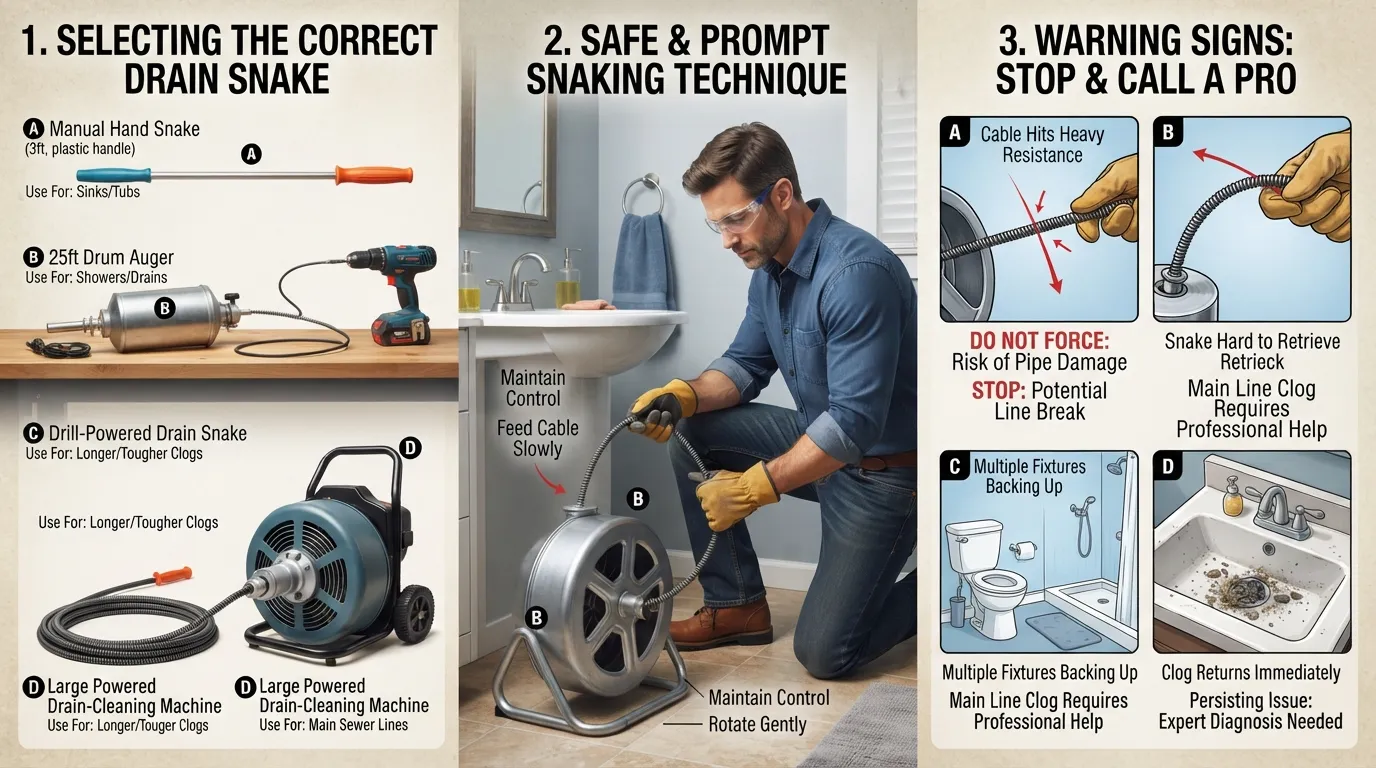
A snake drain cleaner, also called a drain snake, plumber’s snake, or drain auger, is a flexible mechanical tool used to reach into a drain and break through or retrieve certain clogs. The best type depends on where the blockage is, which fixture is affected, how deep the clog may be, and what is likely causing it. A small hand snake may work for a localized sink or shower clog, while deeper or recurring blockages may require longer powered equipment or professional drain cleaning. If several fixtures are backing up, the clog keeps returning, or the cable repeatedly hits the same resistance, stop treating it like a simple fixture clog and investigate the larger drainage system.
If your sink, shower, tub, or another drain is moving slowly, a drain snake can look like the obvious next step. But choosing the longest or most powerful snake is not always the smartest solution.
The better question is: What kind of blockage are you actually trying to reach?
In this guide, I’ll help you decide whether a snake makes sense, which type fits different situations, how to use one without common mistakes, why snaking sometimes fails, and when the problem is better handled by a plumber.
What Is a Snake Drain Cleaner?
A snake drain cleaner is a mechanical drain-cleaning tool built around a flexible cable that travels through a drain line. Depending on the tool, you may rotate the cable by hand, turn it with a drum, power it with a drill, or use a dedicated electric drain-cleaning machine.
You may see these tools sold under several closely related names:
- Drain snake
- Plumber’s snake
- Drain auger
- Hand auger
- Manual sewer snake
- Drill-powered drain snake
- Drill-powered drain auger
- Plumbing snake drill attachment
- Drain-cleaning machine
They all belong to the same general category, but they are not interchangeable for every fixture or clog.
Before You Buy a Drain Snake, Identify the Problem First
One of the easiest mistakes is shopping for a tool before deciding whether the blockage is actually a good match for that tool.
Start with the pattern of symptoms.
A clog may be relatively close to that fixture, making a small hand snake or drum auger worth considering.
The restriction may be farther down a shared branch line rather than directly below one drain.
This can point to a larger drainage or sewer-line problem. Repeatedly pushing a small snake into one fixture may not address the real blockage.
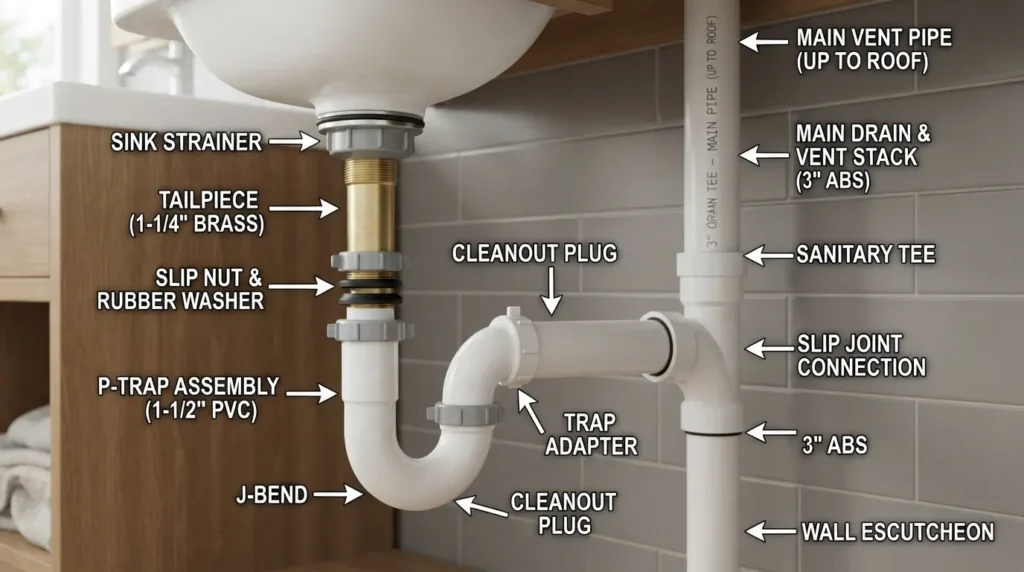
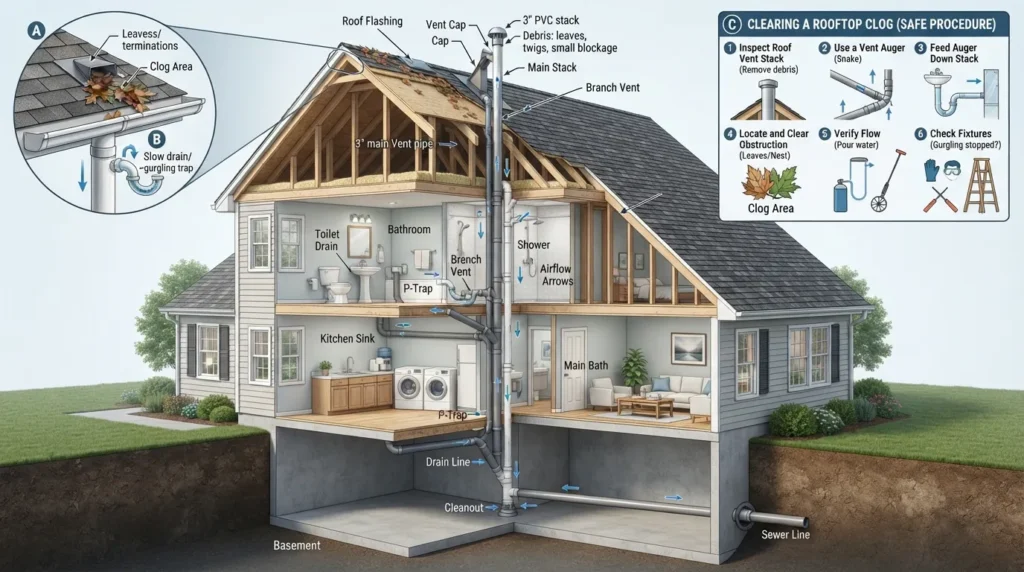
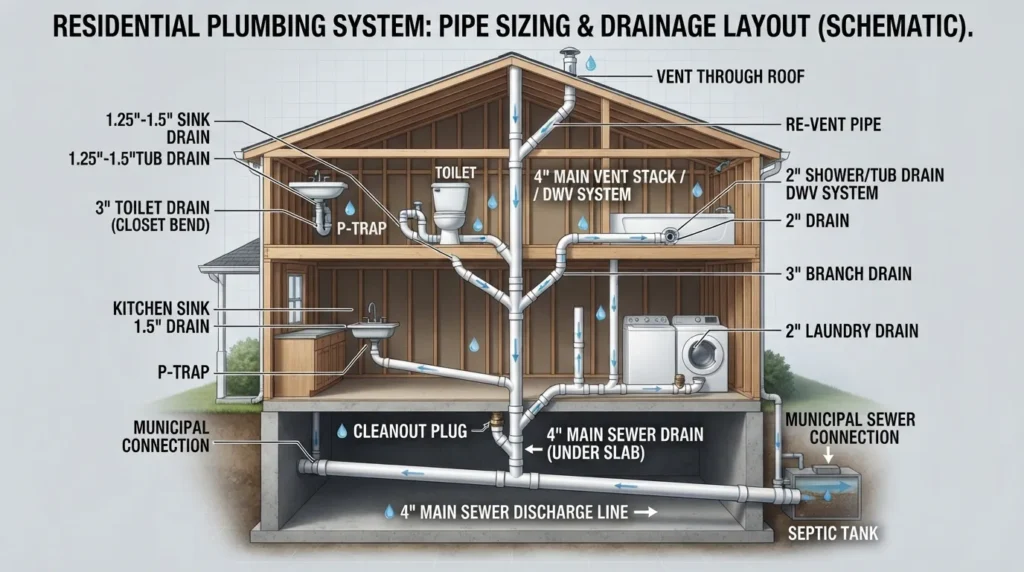
If you want to understand how fixture drains, branch lines, traps, vents, and larger drain lines work together, our guide to the home drainage system provides the broader picture.
Which Type of Drain Snake Should You Use?
There is no single “best snake drain clog remover” for every home. The right tool is the one that matches the fixture, likely blockage, access point, and distance.
A small manual hair-removal tool or light hand snake may be enough when the blockage is close to a sink, tub, or shower opening.
“`
A hand auger or small drum snake may work when the clog is beyond the immediate drain opening but still within a local fixture branch.
Use a tool designed for toilets rather than assuming a general sink snake is suitable. Toilet augers are shaped for this specific fixture.
A longer drum snake or powered machine may provide the reach needed, but tool choice becomes more important as distance and cable size increase.
Treat this as a drainage diagnosis problem first. A small fixture snake may not reach or correct the actual restriction.
Professional evaluation may be more useful than repeatedly trying longer or more aggressive DIY equipment.
“`
Manual vs Drill-Powered vs Electric Drain Snakes
Manual Drain Snake
A manual drain snake is typically the simplest option. You feed the cable into the drain and rotate it by hand or with a hand-cranked drum.
It may be appropriate when:
- The clog appears localized.
- The drain is reasonably accessible.
- You do not need long cable reach.
- The obstruction is relatively light.
Its main advantage is control. Its limitation is that longer or more stubborn blockages can be difficult to reach and work through manually.
Drill-Powered Drain Snake
A drill-powered drain snake or drain auger drill attachment lets a compatible drill rotate the cable rather than relying entirely on hand power.
That extra rotation can be useful, but it also means you need more control. More power does not automatically mean a better result. If the cable is binding, the tool feels wrong, or you do not know what you are hitting, forcing it harder can create a bigger problem.
Electric Drain-Cleaning Machine
Electric drum machines and other powered drain-cleaning equipment are commonly used for longer runs and more demanding blockages. They may accept different cable sizes and cutting heads depending on the machine and application.
At this level, equipment selection matters. A homeowner should not treat a heavy-duty machine as simply a longer version of a small sink snake.
If you keep moving to a larger, longer, or more powerful snake because the previous tool did not work, stop and reassess the blockage. The problem may be the clog location, pipe condition, access point, or type of obstruction—not the strength of the tool.
Does Drain Snake Length Matter?
Yes, but longer is not automatically better.
You will commonly find drain snakes sold in lengths such as 25 ft, 50 ft, 75 ft, and 100 ft. A 25 ft drain snake may provide enough reach for certain local household drain problems, while longer cables are intended for blockages located farther down the line.
The correct length depends on where the access point is in relation to the clog. If you cannot reasonably estimate where the blockage is, buying a 100 ft snake simply because it reaches farther may not solve the problem.
Cable diameter, stiffness, machine compatibility, pipe size, and the type of head or cutter can matter too. Follow the equipment manufacturer’s application guidance rather than choosing by cable length alone.
What Kind of Clogs Can a Drain Snake Help With?
A drain snake is often useful when a mechanical obstruction can be reached and disturbed, broken apart, or retrieved.
Depending on the fixture and situation, that may include buildup involving:
- Hair
- Soap residue
- Food debris
- Some accumulated material inside a local drain
- Certain foreign objects or obstructions that the cable can reach
Grease-heavy blockages, repeated buildup, deeper main-line restrictions, roots, or damaged piping can require a different approach. Opening a small path through a blockage is also not always the same as fully cleaning the line.
How to Use a Drain Snake Without Common Mistakes
Specific operating instructions vary by tool, so the manufacturer’s directions should always come first. But the basic decision process is similar.
- Confirm the affected fixture. Make sure you are not dealing with a wider drainage problem.
- Choose an appropriate access point. Do not force a cable through a fixture or opening the tool was not designed for.
- Feed the cable gradually. Let the snake travel through the drain instead of aggressively pushing it.
- Rotate according to the tool instructions. Hand snakes, drill-powered drums, and electric machines operate differently.
- Pay attention to resistance. Resistance may be a bend, a fitting, or a blockage. Do not assume every hard stop should be forced through.
- Work the obstruction carefully. If the cable engages debris, controlled movement is usually more useful than brute force.
- Retract the cable carefully. Material may come back with it.
- Test drainage. Restored flow is a good sign, but watch for slow drainage or an immediate return of symptoms.
Should You Run Water While Snaking a Drain?
It depends on the fixture, tool, and situation.
Some drain-cleaning procedures use limited water flow to help confirm whether the blockage is opening and to move loosened material. In other situations, running water while the line is still blocked can create overflow or make the work messier.
Follow the instructions for the tool you are using and avoid filling a fixture faster than it can drain. If the sink, tub, or floor drain is already backing up, adding more water is usually not the first thing to do.
What Are the Most Common Drain-Snake Mistakes?
A hard stop is not always the clog. You may be encountering a bend, fitting, or another condition that deserves caution.
A sink snake, toilet auger, and larger drain-cleaning machine are designed for different jobs.
Extra cable does not help if you are entering from the wrong location or diagnosing the wrong drain.
Moving from a hand snake to a drill or heavy-duty machine without understanding the obstruction increases the need for control.
If several fixtures are affected, the problem may be farther downstream than the fixture you are snaking.
A small opening through buildup can restore some drainage without fully removing the material causing the restriction.
Why Is My Sink Still Clogged After I Snaked It?
If snaking did not restore normal drainage, several things may have happened.
- The snake was too short. The cable may never have reached the blockage.
- The blockage is in a different section of the drain. The problem may be in a branch or larger line.
- The cable passed through without removing enough material. This can happen with soft or accumulated buildup.
- You used the wrong type of tool. Different fixtures and drain sizes can require different equipment.
- The obstruction is too solid or complex for the tool.
- The pipe itself may have a condition that needs inspection.
If the drain improves briefly and then slows again, that is useful information. It suggests you should stop repeating the exact same process and determine why the restriction is returning.
Why Did Snaking My Drain Make It Worse?
A drain may seem worse after snaking if loosened material moves and settles somewhere else, the cable fails to remove the original obstruction, or the blockage was never located where you thought it was.
Problems can also occur when excessive force is used, a cable becomes stuck, or an inappropriate tool is used for the fixture.
- The cable repeatedly stops at the same point.
- The cable becomes difficult to retrieve.
- More than one fixture begins backing up.
- The clog immediately returns.
- You hear or see symptoms elsewhere in the drainage system.
- You are unsure whether you are contacting a blockage, fitting, or pipe problem.
Drain Snake vs Chemical Drain Cleaner
A drain snake and a liquid drain cleaner solve problems in very different ways.
Mechanical method that physically reaches into the drain.
- Can engage certain clogs directly
- Available in manual and powered forms
- Requires correct tool choice and technique
Chemical product intended to react with or break down certain materials.
- Does not mechanically retrieve a blockage
- Suitability depends on the product and plumbing situation
- Must be used exactly as the label directs
If chemicals have already been added to a blocked drain, be especially careful before opening traps or using mechanical tools around standing liquid. Follow the product label, protect yourself from contact and splashing, and never mix different drain-cleaning chemicals.
What Do Plumbers Recommend to Unclog Drains?
There is no single method that fits every clog. A sensible sequence is to identify the affected fixture, determine whether the blockage appears local or system-wide, and then use the least aggressive method appropriate for the problem.
Depending on the situation, that may include a plunger, manual auger, powered snake, another mechanical cleaning method, or professional drain-cleaning equipment.
The most important part is diagnosis. If you are treating a shared branch or main drain problem like a simple sink clog, changing tools may not fix it.
Can Vinegar, Baking Soda, or Dish Soap Unclog a Drain?
Home remedies are popular because they are inexpensive and easy to try, but they are not substitutes for diagnosing a physical obstruction.
Vinegar
Vinegar may help with light residue in some cleaning situations, but you should not expect it to retrieve hair, remove a solid obstruction, or correct a deeper drain-line blockage.
Baking Soda and Vinegar
The visible fizzing can make this combination look powerful, but bubbling at the drain opening does not tell you that a deeper clog has been removed.
Dish Soap
Dish soap may help loosen some greasy residue in limited situations, but it is not a universal solution for hair, foreign objects, compacted buildup, or deeper plumbing restrictions.
If water is standing, several drains are slow, or the problem repeatedly returns, move from experimenting with household ingredients to identifying the actual blockage.
When You Should Not Keep Using a Drain Snake
A drain snake is a tool, not a diagnosis.
Consider professional help when:
- Several fixtures are backing up at the same time.
- A clog keeps returning after you clear it.
- The snake repeatedly stops at the same location.
- You cannot retrieve the cable normally.
- The blockage appears too deep for the equipment you have.
- You suspect a larger branch or sewer-line restriction.
- You need to know why the drain is repeatedly clogging rather than simply reopening it again.
Professional drain service can involve different mechanical methods depending on what is blocking the line and where the obstruction is located. For recurring or deeper problems, inspection may also be useful before deciding on the next cleaning method.
If DIY snaking is not solving the problem, learn more about our professional drain cleaning service.
A Better Way to Choose a Snake Drain Cleaner
Instead of asking, “What is the strongest drain snake I can buy?” use this five-question checklist:
- Which fixture is clogged?
- Is only one fixture affected or several?
- What material is most likely causing the blockage?
- How far from the access point might the clog be?
- Do the symptoms suggest a simple local clog or a larger drainage problem?
Once you answer those questions, choosing between a manual snake, drill-powered drain auger, longer drum snake, toilet auger, or professional service becomes much easier.
See a Drain Snake in Action
If you have never used a drain auger before, seeing how the cable is fed and controlled can make the written instructions easier to understand. The videos below are third-party demonstrations provided as additional learning resources. Always follow the instructions supplied with your own tool.
Frequently Asked Questions About Snake Drain Cleaners
What is the best snake drain clog remover?
There is no universal best model. Choose by fixture, likely clog type, access point, required reach, and whether the tool is designed for that drain. A small hand auger may be more appropriate for one local clog than a powerful 100 ft machine.
Should you run water when you snake a drain?
Not automatically. Limited water can sometimes help test flow, but adding water to an already backed-up fixture can cause overflow. Follow the instructions for your particular tool and situation.
Why do plumbers say not to use drain cleaner?
Chemical products are not appropriate for every clog or plumbing condition, and they do not physically retrieve a blockage. If you use one, follow the label exactly and never mix drain-cleaning chemicals.
Why is my sink still clogged even after I snake it?
The snake may not have reached the clog, may have passed through without fully removing it, or the restriction may be farther down the drainage system. A recurring clog is a reason to reassess rather than simply repeat the same attempt.
Why did snaking my drain make it worse?
Loosened material may have shifted, the cable may not have removed the blockage, or the problem may be located somewhere else. Stop if the tool binds, repeatedly hits the same resistance, or other fixtures begin backing up.
Can I pour vinegar down the drain to unclog it?
Vinegar may help with light cleaning residue, but it should not be expected to remove a solid or deeper mechanical blockage.
Why shouldn’t I rely on baking soda and vinegar for a clog?
The fizzing reaction does not confirm that material deeper inside the drain has been removed. Persistent clogs need diagnosis and, when appropriate, mechanical cleaning.
Does dish soap really unclog drains?
Dish soap may help with limited greasy residue, but it is not a reliable solution for hair, solid objects, compacted buildup, or deeper drain-line restrictions.
Where to Compare Drain Snakes and Drain Augers
If your goal is to compare tool types before buying, the retailers below can help you see the range of manual snakes, drill-powered models, electric machines, cable lengths, and accessories currently sold. Availability and product details can change, so confirm the manufacturer’s specifications before choosing a tool.
Browse drain snakes at Home DepotCompare augers at Lowe’s
See drain snake options on Amazon
These links are provided as shopping and research resources, not as endorsements of a specific drain snake. The best choice still depends on your fixture and blockage.
Final Takeaway: Diagnose First, Snake Second
A snake drain cleaner can be an excellent tool when the blockage, drain, and equipment are a good match. But the most useful question is not, “Which snake is strongest?” It is, “Where is the clog, what is causing it, and what tool makes sense for that exact situation?”
For a simple localized clog, a manual or small drum auger may be all you need. For deeper blockages, longer or powered equipment may be appropriate. But if several fixtures are affected, the blockage keeps returning, or the snake repeatedly fails, the smarter next step is diagnosis rather than more force.
If the clog keeps coming back, affects more than one fixture, or is beyond the reach of a basic drain snake, our Miami plumbing team can help identify the problem and choose an appropriate drain-cleaning method.