 Drain clearance means removing or breaking through a blockage so wastewater can move freely through a drain pipe again. For a minor clog in one sink or shower, you can often start with removing visible debris, plunging, or carefully using a drain snake. If several fixtures are backing up, wastewater returns through another drain, the blockage keeps coming back, or basic methods fail, the problem may be deeper in the drainage system and professional diagnosis is usually the safer next step.
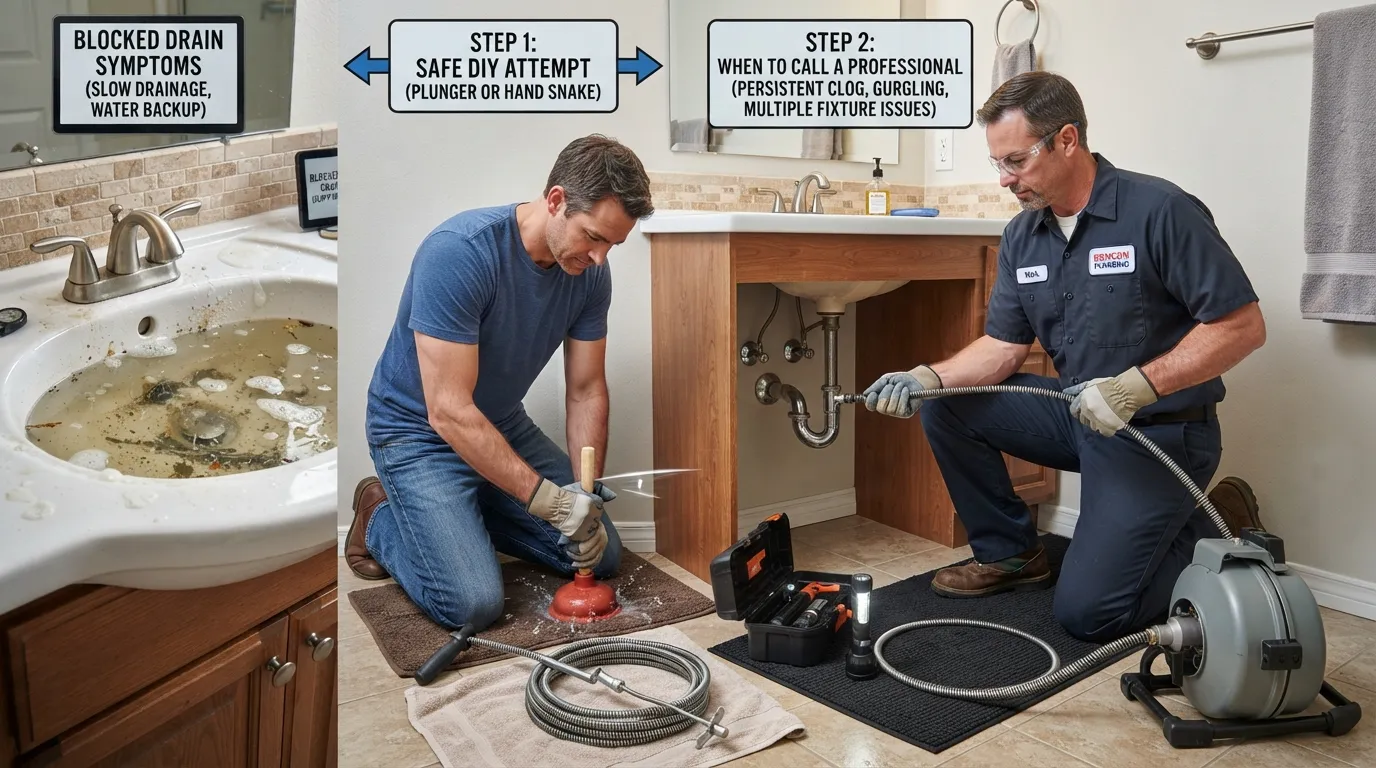
A blocked drain can look simple at first: water drains slowly, a shower begins to pool, or a sink suddenly refuses to empty. The difficult part is not finding another drain-unblocking trick. It is working out where the blockage is, how serious it may be, and which clearing method makes sense for that specific situation.
That is the approach I recommend in this guide. Instead of throwing every possible remedy at the pipe, you will first identify the symptoms, narrow down the likely location of the clog, choose a sensible first action, and recognize the point where DIY drain clearance should stop.
What Is Drain Clearance?
Drain clearance is the process of restoring flow through a partially or completely blocked drain. The blockage may consist of hair, soap residue, grease, food debris, mineral buildup, a foreign object, accumulated waste, or a deeper obstruction elsewhere in the drainage line.
It helps to separate three different plumbing outcomes:
Restore an open path so water can move through the pipe again.
Remove more of the buildup coating or restricting the inside of the pipe.
Correct an underlying pipe problem when clearing alone cannot solve the cause.
That distinction matters because a drain that flows after snaking is not automatically a drain whose underlying problem has been permanently solved. A recurring blockage may need further cleaning, inspection, or repair rather than repeated temporary clearing.
Diagnose the Blockage Before You Try to Clear It
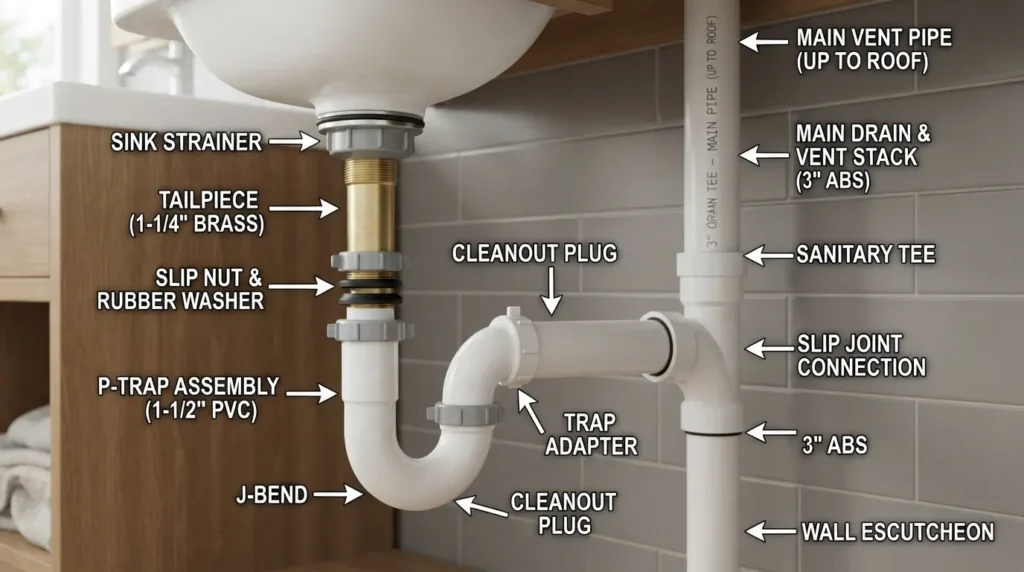
Before choosing a plunger, snake, chemical cleaner, or plumber, look at what the drainage system is telling you. The pattern of symptoms can help you decide whether you are dealing with a localized fixture clog or something farther downstream.
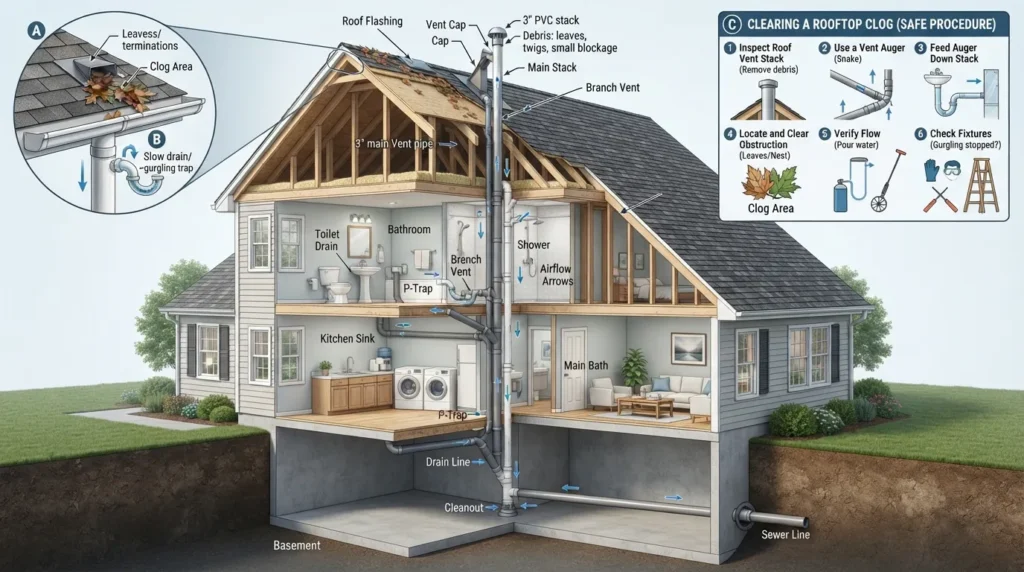
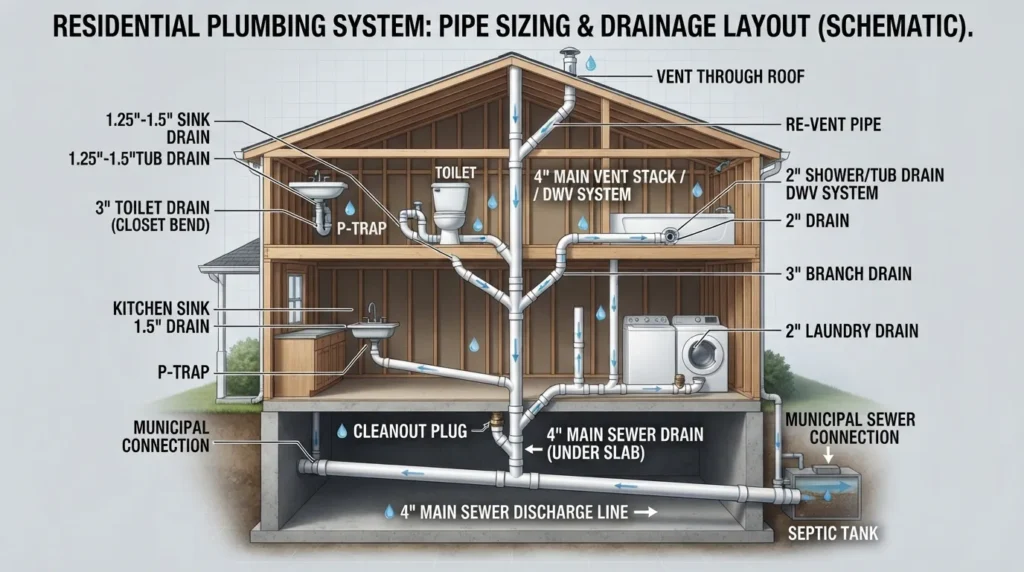
If you want to understand how fixture drains, branch lines, exterior drainage, and other parts of a property fit together, our guide to the home drainage system provides the broader picture.
Common Causes of Blocked Drains
The best drain-clearance method depends heavily on what is restricting the pipe. Some of the most common categories include:
- Hair and soap residue: frequently associated with bathroom sinks, showers, and tubs.
- Grease and food debris: common contributors to kitchen drain restrictions.
- Foreign objects: solid items can create blockages that chemical products cannot dissolve.
- Mineral or hardened buildup: deposits inside a pipe can gradually narrow the available passage.
- Accumulated sludge or waste: material can collect over time and repeatedly restrict flow.
- Tree-root intrusion or deeper line problems: these require diagnosis rather than another household drain remedy.
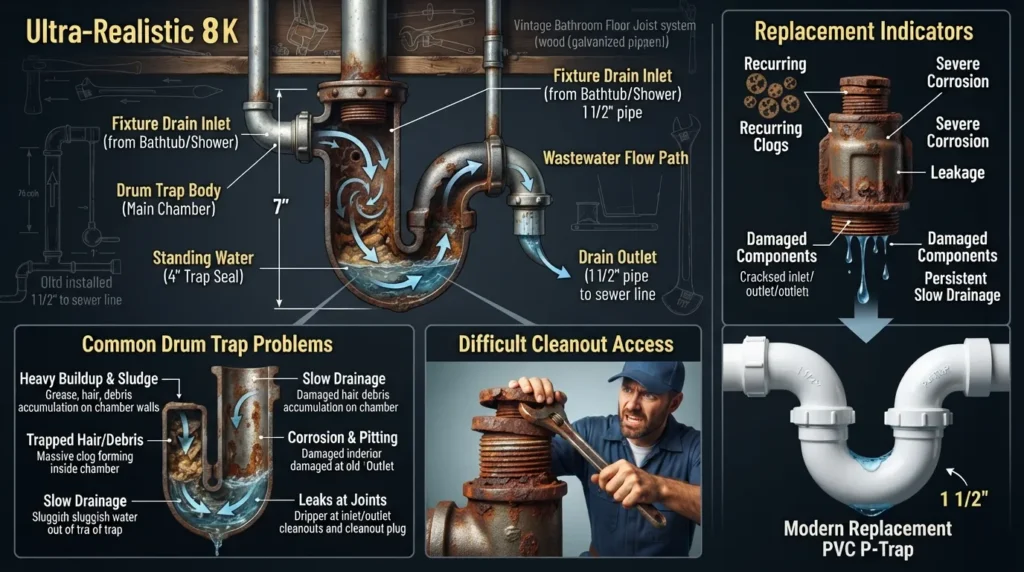
- Damaged or compromised piping: a structural problem may need repair instead of repeated clearing.
A symptom can suggest where to look, but it does not prove the exact cause. For example, a recurring slow drain could be caused by repeated buildup, an obstruction farther down the line, or another pipe condition. Treat symptoms as diagnostic clues rather than guaranteed answers.
How to Clear a Clogged Drain: Start With the Least Aggressive Method
For a straightforward clog affecting one fixture, it usually makes sense to move from simple mechanical steps toward more involved methods instead of immediately reaching for the strongest chemical product available.
1. Remove Visible Debris
If hair, soap residue, food material, or another obstruction is visible near the drain opening, physically removing it may solve the problem without pushing anything farther into the pipe.
Wear appropriate gloves and avoid reaching blindly into a drain where sharp objects or chemicals may be present.
2. Use a Plunger
A plunger can help move a localized blockage by creating pressure changes inside the drain. Make sure you are using a plunger suited to the fixture and that you can create a useful seal around the opening.
If plunging causes water to appear in another fixture or produces signs that the obstruction is farther down the drainage system, stop treating the problem as a simple local clog.
3. Try a Drain Snake or Hand Auger
A drain snake can physically reach farther into a pipe and may break through or retrieve a clog that sits beyond the drain opening. It is especially useful where the obstruction cannot simply be pulled out by hand.
Use the tool carefully. Forcing the wrong equipment through a plumbing system can create additional problems. If you repeatedly hit an obstruction, cannot retrieve it, or the drain clears only temporarily, further investigation may be more useful than continuing to push the cable.
4. Decide Whether the Drain Needs More Than Basic Clearing
If normal flow does not return, or returns only briefly, a professional may use equipment intended for the type, depth, and severity of the obstruction. Depending on the situation, professional drain work can include mechanical cabling, more thorough drain cleaning, water-based jetting, or video inspection to find the real cause.
How to Clear a Drain With Standing Water
Standing water tells you that flow through the drain is severely restricted or stopped. The practical first step is to avoid adding more water and remove enough standing water to access the drain safely.
- Stop using the affected fixture.
- Remove accessible debris from the drain opening.
- If appropriate for the fixture, try a properly sealed plunger.
- If the blockage remains localized, use a suitable hand snake carefully.
- If multiple fixtures are affected, water returns elsewhere, or basic methods fail, treat it as a possible deeper drainage issue.
If you have already poured a drain-opening chemical into the fixture, do not blindly add another cleaner or mixture. Different products may contain incompatible ingredients, and standing liquid can splash during later mechanical work.
What Is the Best Way to Clear a Drain Pipe?
There is no single method that is best for every drain pipe. The right method depends on the location, material, cause, and severity of the blockage.
Physical removal is usually more direct than trying to dissolve something you can already reach.
Plunging may be a reasonable first mechanical approach.
A correctly used drain snake or auger may reach material that cannot be removed from the opening.
Diagnosis and professional cleaning may be more useful than repeating the same temporary fix.
What Is the Most Effective Tool for Clearing Drains?
The most effective tool is the one matched to the obstruction. A tool that works brilliantly on hair close to a shower drain may do very little for a deeper main-line blockage.
- Drain removal tool or hook: useful for reachable hair and surface debris.
- Plunger: useful for some localized blockages where pressure can move the obstruction.
- Hand auger or drain snake: reaches farther into the pipe to break through or retrieve material.
- Professional cable equipment: suited to deeper or more resistant obstructions.
- Hydro jetting equipment: may be used by professionals where thorough cleaning with pressurized water is appropriate for the pipe and blockage.
- Drain camera: does not clear the blockage itself but can help identify the location or underlying reason when the problem is unclear or keeps returning.
This is why choosing a tool before diagnosing the problem can waste time. The better sequence is identify, locate, clear, verify.
The 4-step drain clearance rule
Which fixtures are affected?
Local drain or deeper line?
Use the least aggressive suitable method.
Confirm normal flow and watch for recurrence.
Should You Use Chemical Drain Cleaners?
Chemical drain openers are heavily searched because they appear convenient, but convenience does not mean they are the right answer for every blockage.
Before using any drain-cleaning product, check its label carefully for:
- the types of clogs it is intended to address;
- which fixtures it can and cannot be used in;
- pipe and septic-system compatibility where relevant;
- required protective equipment and ventilation;
- specific warnings about other products or chemicals;
- the manufacturer’s use and disposal instructions.
A chemical product is also unlikely to be the logical solution for every physical obstruction. If a drain contains an object, serious root intrusion, a damaged pipe, or another mechanical problem, pouring in a stronger cleaner does not diagnose or repair that condition.
Never mix drain cleaners with one another or combine them with household chemicals unless a product manufacturer explicitly instructs you to do so. If a plumber will work on the drain afterward, tell them what product has already been used.
Can Dawn Dish Soap Unclog a Drain?
Dish soap may help loosen some greasy residue, but it is not a universal drain-clearance method. It will not mechanically remove hair, retrieve a foreign object, repair a damaged pipe, or solve a deeper sewer-line obstruction.
If grease is only part of a larger or hardened blockage, relying on soap alone may delay the diagnosis you actually need.
Is Zep or Green Gobbler Better?
There is no responsible one-word answer without knowing the exact product formulas, the clog type, the fixture, and the pipe system involved. Both brands sell multiple products, so comparing brand names alone can be misleading. Compare the specific product labels for the blockage you have and follow the manufacturer’s instructions.
Which Works Better, Green Gobbler or Drano?
Again, compare individual products rather than assuming one brand is always stronger or safer. A product marketed for organic buildup may not be appropriate for the same problem as another formula. If you do not know what is blocking the drain, diagnosis is more useful than simply choosing the strongest-sounding cleaner.
What Is the Strongest Drain Unblocker You Can Buy?
The strongest chemical is not automatically the best drain-unblocking choice. A more aggressive product may bring more handling risk while still failing to remove a solid object, tree roots, or a structural pipe problem. Choose based on the clog and the manufacturer’s compatibility instructions, not strength alone.
What About Baking Soda, Vinegar, and Other Home Remedies?
Home remedies are popular because the ingredients are easy to find, but expectations should be realistic. A mild household mixture may help with light residue in some situations; it is not a substitute for physically removing a dense hair clog, retrieving an object, clearing a serious downstream obstruction, or diagnosing a repeatedly blocked line.
If a home remedy does not improve flow, avoid repeating different mixtures indefinitely. Move back to the diagnosis: What is likely blocking the pipe, and where is the blockage?
How to Unblock a Badly Blocked Drain
A badly blocked drain changes the decision. When water cannot pass at all, basic remedies may not reach the obstruction or may create additional mess without solving the cause.
Use this decision sequence:
- Stop adding water. Prevent the fixture from overflowing or feeding more water into a backed-up line.
- Check whether the problem affects one fixture or several.
- Remove any blockage you can safely see and reach.
- Use a suitable plunger or hand auger only if the problem still appears localized.
- Escalate if the obstruction is deep, repeated, affects several fixtures, or produces wastewater backup.
How to Clear an Outdoor Drain
An outdoor drain should not automatically be approached like a bathroom sink. Exterior drains can collect leaves, soil, sediment, landscaping debris, or other material, and they may connect to different parts of a property’s drainage system.
Start with what you can safely inspect:
- remove leaves and loose debris from the grate or opening;
- check whether water is pooling only at that drain or elsewhere too;
- avoid pushing surface debris farther into the pipe;
- identify whether the drain is part of a plumbing waste system, yard drainage, or another exterior drainage setup before applying an indoor-drain remedy.
If the drain remains blocked after surface debris is removed, or if the obstruction appears deep underground, professional assessment can prevent guesswork.
When Drain Clearance Becomes a Professional Plumbing Job
You do not need a plumber for every slow sink. But certain patterns suggest that continuing with household remedies is unlikely to give you the complete answer.
Consider professional drain diagnosis when:
- several drains are slow or blocked at the same time;
- wastewater backs up through another fixture;
- the clog returns shortly after being cleared;
- a snake repeatedly stops at the same location;
- you suspect roots, pipe damage, or a deeper obstruction;
- you have already used a chemical opener and the drain is still blocked;
- standing or overflowing wastewater creates a sanitation concern;
- you cannot identify what is blocking the line.
A professional can choose equipment according to the symptoms and the plumbing system instead of treating every blockage the same way. If your problem has moved beyond a basic household clog, our professional drain cleaning service explains the options available for clearing and cleaning blocked drainage lines.
Drain Snaking vs. Hydro Jetting vs. Camera Inspection
These methods solve different parts of the problem, so it is useful to understand what each one is intended to do.
Uses a cable or auger to reach, break through, or retrieve certain obstructions. It can restore flow without necessarily removing every deposit from the pipe wall.
Uses pressurized water for more thorough pipe cleaning where the plumbing condition and type of blockage make the method appropriate.
Helps locate and understand a problem that cannot be confidently diagnosed from surface symptoms alone.
A camera does not unclog the pipe. Hydro jetting is not automatically appropriate for every drainage line. Snaking is not automatically a permanent fix. The value comes from selecting the method after understanding the problem.
How Much Does It Cost to Have a Drain Cleared?
There is no responsible universal price for drain clearance because the cost can vary with the location of the blockage, accessibility, severity, required equipment, whether inspection is needed, and whether the job turns out to involve cleaning or repair rather than simple clearing.
When comparing a drain-clearance quote, ask what the service includes instead of looking only at the headline price:
- Is the quote for basic snaking or a more thorough cleaning?
- Is diagnostic work included?
- Would camera inspection be additional if needed?
- What happens if the obstruction cannot be cleared with the initial method?
- Does the plumber believe the blockage is local, main-line, or structural?
That gives you a more useful comparison than choosing a provider based on an unqualified price number.
How to Prevent Drains From Blocking Again
Prevention depends on the drain, but the general goal is simple: keep material out of the pipe that the drainage system was not intended to carry, and investigate recurring symptoms before they become a complete backup.
- Use suitable drain screens where hair and debris regularly enter.
- Keep cooking grease and food solids out of kitchen drains.
- Remove buildup around accessible drain openings before it accumulates farther inside.
- Pay attention when drainage becomes progressively slower.
- Do not treat a recurring blockage as a new unrelated clog every time.
- If several fixtures begin showing symptoms together, investigate the shared drainage line.
A Helpful Drain-Unclogging
If you prefer to see common drain-clearing techniques demonstrated, this video from Ask This Old House provides a useful visual overview. Use it as general education rather than assuming every method shown is appropriate for every plumbing system.
The Best Drain Clearance Strategy in One Minute
- Check how many fixtures are affected.
- Identify the symptom: slow flow, standing water, complete blockage, cross-fixture backup, or recurring clog.
- Remove visible material first.
- Use the least aggressive suitable mechanical method.
- Do not mix drain chemicals.
- Stop DIY attempts if the problem appears deeper than one fixture.
- Verify that normal drainage remains restored.
- Investigate recurring blockages instead of repeatedly reopening them.
Frequently Asked Questions About Drain Clearance
How much does it cost to have your drain cleared?
Cost depends on the blockage location, severity, accessibility, equipment required, and whether the problem needs simple clearing, more thorough cleaning, inspection, or repair. Ask what is included in the quote rather than relying on a generic price.
What is the best way to clear a drain pipe?
Start by identifying whether the clog is visible, localized, deep, or affecting several fixtures. Remove accessible debris first, then use an appropriate plunger or snake where suitable. Repeated or system-wide problems should be diagnosed professionally.
How can I clear my outdoor drain?
Remove surface leaves and debris first and identify what type of outdoor drainage system you are dealing with. If the obstruction lies farther underground or water continues pooling, further inspection may be needed.
What is the most effective tool for clearing drains?
There is no universal best tool. Hooks or removal tools work for reachable debris, plungers may move some local clogs, snakes reach farther into a pipe, and professional equipment is used for deeper or more persistent restrictions.
Can Dawn dish soap unclog drains?
Dish soap may help loosen some greasy residue, but it cannot solve every clog and will not remove solid objects, dense hair, roots, damaged piping, or many deeper obstructions.
Is Zep or Green Gobbler better?
Compare the exact products and their labels rather than the brands alone. The right choice depends on the type of clog, fixture, plumbing materials, and manufacturer instructions.
Which works better, Green Gobbler or Drano?
Neither brand is automatically best for every blocked drain. Compare specific formulas, intended clog types, pipe compatibility, and safety instructions before deciding whether a chemical product is appropriate at all.
What is the strongest drain unblocker you can buy?
The strongest chemical is not necessarily the most effective or appropriate solution. A drain may need physical removal, mechanical clearing, professional cleaning, inspection, or repair depending on the cause.
Need Help With a Drain That Will Not Clear?
If you have worked through the basic checks and the blockage still returns, affects several fixtures, or appears to sit deeper in the drainage system, the next useful step is diagnosis rather than another random remedy.
Get the blockage properly assessed
You can learn more about our plumbing team through Miami Florida plumbing services, or speak with someone about a drain problem that needs professional attention.
The key takeaway: good drain clearance starts with diagnosis. Find out whether you have a local clog or a wider drainage problem, use the least aggressive method that fits the situation, and escalate when the symptoms tell you the blockage is deeper, recurring, or more complicated than a simple fixture obstruction.