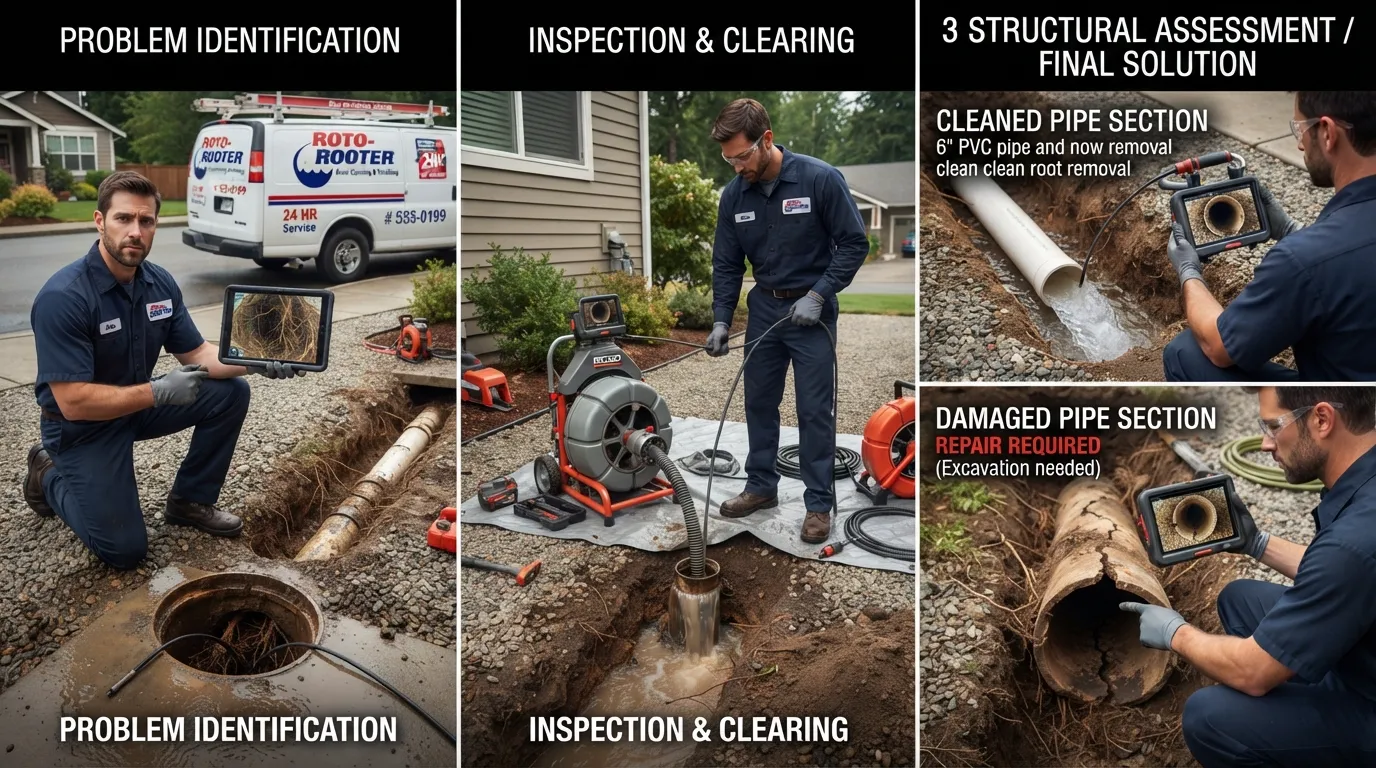
If a downspout disappears into the ground and water starts backing up, overflowing, or collecting around your property, the problem may be inside the buried drain line rather than the visible gutter. An underground drain cleaning service is used to locate and clear blockages in buried exterior drainage lines so rainwater can move away from the property as intended.
If your underground downspout, yard drain, catch basin, or other private exterior drain is clogged, you usually need a plumbing or drain-cleaning professional who works with buried exterior drain lines. The right solution may involve mechanical snaking, hydro jetting, inspection, or repair depending on what is actually blocking the pipe. If the pipe is collapsed, disconnected, badly damaged, or incorrectly installed, cleaning alone may not solve the problem.
The important part is not simply finding someone who can put a machine into a pipe. You first need to identify which drain is failing, where the blockage is likely located, and whether the problem is really a clog at all.
Below, I’ll walk you through that decision so you know what to check, who to call, what professional drain cleaning may involve, and when a different repair is likely to make more sense.
What Is an Underground Drain?
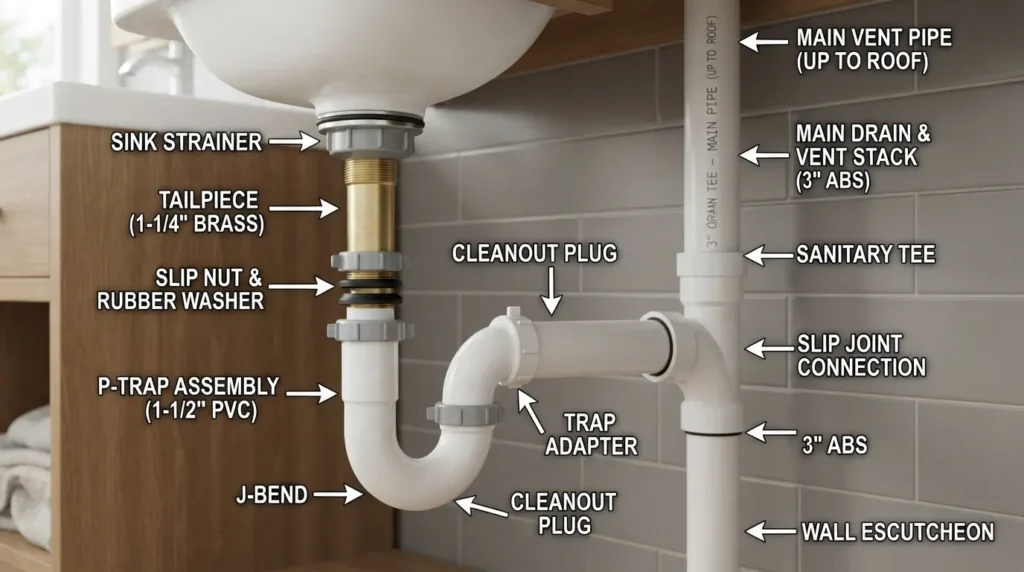
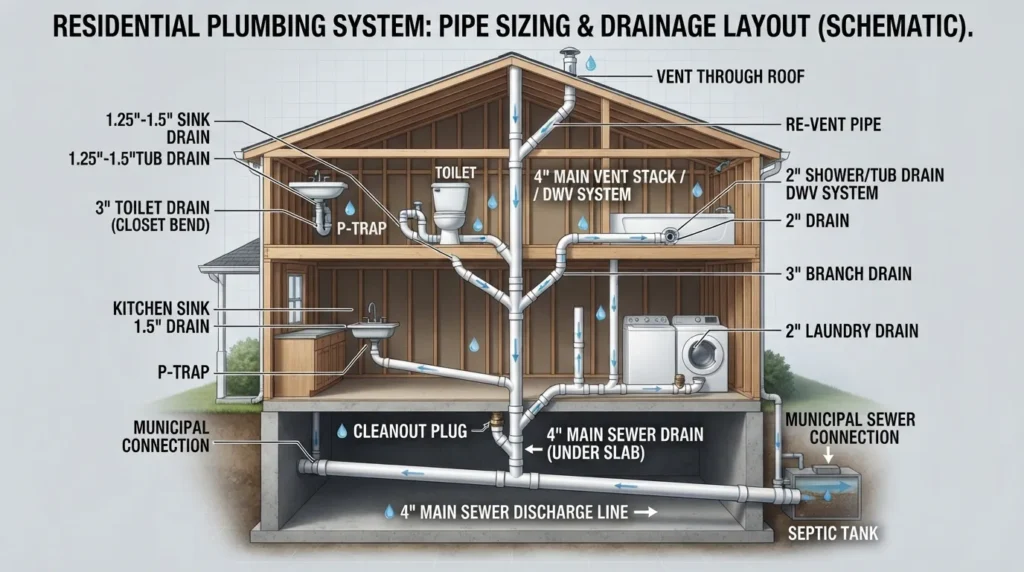
An underground drain is a buried pipe or drainage path that carries water from one location to another. Around a home, the term may refer to several different systems, which is why identifying the line matters before choosing a service.
Common examples include:
- Underground downspout drains that carry roof runoff away after a downspout enters the ground.
- Yard or landscape drains that collect surface water through grates or catch basins.
- Channel or patio drains connected to buried drainage piping.
- Pop-up emitter systems that release collected water at a lower or more suitable location.
- French or subsurface drainage systems designed to manage water in soil rather than only roof runoff.
- Sanitary drain and sewer lines that carry wastewater and are separate from normal roof and yard drainage.
If you want a broader explanation of how these systems fit together, our guide to a home drainage system explains the difference between household wastewater drainage and stormwater drainage in more detail.
How to Tell If the Blockage Is Actually Underground
A gutter overflow does not automatically mean the buried pipe is clogged. The obstruction could still be in the gutter, downspout, underground line, discharge point, or another part of the drainage system.
Look at where the water stops moving normally.
Gutter Problem
Water spills over the gutter before it reaches the downspout. Leaves or debris may be preventing water from entering the drainage path at all.
Downspout Problem
The gutter is flowing, but water backs up within the visible vertical downspout before reaching the buried connection.
Underground Drain Problem
Water reaches the point where the downspout enters the ground but then backs up, drains very slowly, or fails to appear at the expected outlet.
Outlet Problem
The buried line may be open, but its discharge point, pop-up emitter, grate, or outlet is blocked by debris, soil, vegetation, or another obstruction.
Other warning signs can include standing water around a drain, water returning toward the house, slow drainage after rainfall, repeated overflow at the same downspout, erosion around the drainage area, or a drain that improves temporarily and then quickly clogs again.
Who Do You Call for a Clogged Underground Downspout or Drain?
This is one of the most common points of confusion. A buried drainage problem can involve plumbing, gutters, landscaping, or even public drainage infrastructure depending on where the obstruction is located.
Use This Contractor Decision Guide
If the blockage is in the visible gutter or exposed downspout:
A gutter service may be able to clear it before underground drain work is necessary.
If a private downspout or yard drain disappears underground and is clogged below the surface:
A plumber or drain-cleaning professional equipped to work on exterior buried drain lines is generally the more appropriate starting point.
If the pipe is open but the property still does not drain correctly:
The issue may involve grading, drainage design, or where the water is being discharged. A landscape-drainage contractor may need to be involved.
If the problem is clearly within a public street or municipal storm-drain system:
The appropriate local authority may be responsible rather than a private contractor.
The key is to avoid assuming every water problem needs the same contractor. A professional should first determine which part of the system is responsible.
What Usually Clogs Underground Drains?
Buried exterior drains can collect material from both above and below ground. What is blocking the line often determines which cleaning method is appropriate.
- Leaves and small organic debris entering from gutters
- Twigs and roof debris
- Soil, sand, silt, and sediment
- Grass clippings and landscape debris
- Mulch or material entering open yard drains
- Roots growing into vulnerable sections of pipe
- Debris collected around an underground fitting or bend
- A blocked discharge outlet
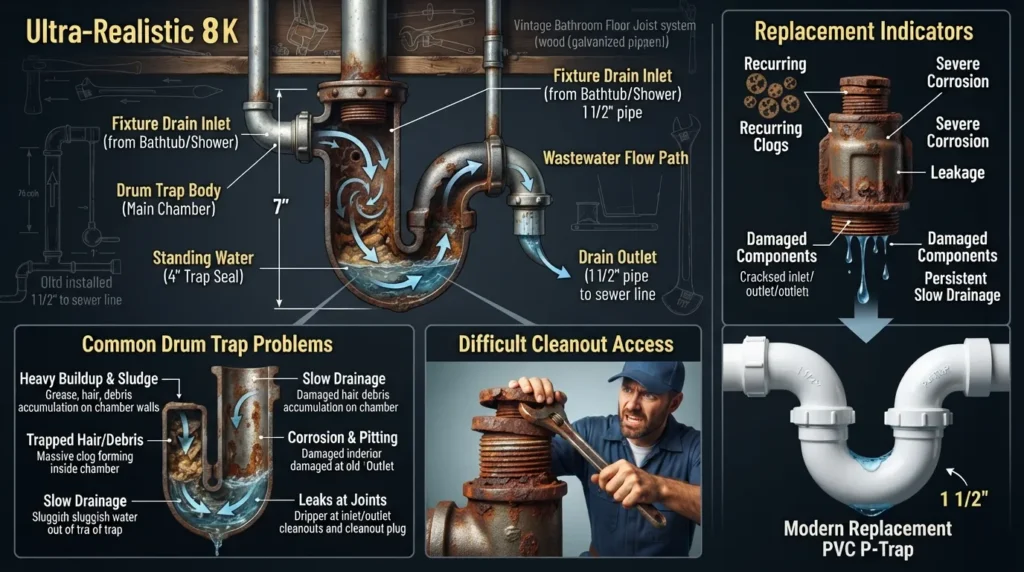
Sometimes the symptoms look like a clog even when the real issue is structural. A buried pipe may be damaged, separated, crushed, incorrectly pitched, obstructed by significant root intrusion, or otherwise unable to move water correctly.
What Happens During Professional Underground Drain Cleaning?
A good service process should be based on diagnosis rather than automatically using the same machine for every drain.
- Identify the drainage system. The technician determines whether the line serves a downspout, yard drain, catch basin, sanitary drain, or another drainage component.
- Find usable access points. This may include a downspout connection, cleanout, catch basin, inlet, or accessible outlet.
- Evaluate the symptoms. Where the water backs up and how the system behaves can help narrow down the likely obstruction.
- Choose an appropriate clearing method. Mechanical equipment, water-based cleaning, or another technique may be used depending on the line and blockage.
- Inspect further when needed. If the blockage is recurring, the line cannot be cleared, or damage is suspected, inspection may help determine what is happening below ground.
- Test drainage after the work. Restoring movement is only part of the job; the line should also be checked to see whether water is reaching the expected discharge point.
- Recommend repair instead of repeated cleaning when appropriate. A structurally failed pipe needs a different solution from a normal debris clog.
If your line needs professional attention, you can learn more about our drain cleaning service and the methods that may be considered after the problem is evaluated.
Drain Snake vs. Hydro Jetting vs. Camera Inspection
These services are related, but they do not do the same job. One of the easiest ways to waste money is to assume the most powerful-sounding method is automatically the correct one.
Mechanical Snaking
What it does: Uses a cable or cutting/clearing attachment to work through an obstruction.
May make sense when: There is an accessible line with a localized blockage that can be mechanically cleared.
Hydro Jetting
What it does: Uses pressurized water to move and flush material through a drain line.
May make sense when: The pipe and access are suitable and the problem involves material that benefits from a more thorough flushing approach.
Camera Inspection
What it does: Helps look inside an accessible pipe instead of relying only on symptoms.
May make sense when: A clog keeps returning, the pipe will not clear, the route is uncertain, or structural damage is suspected.
Important: Cleaning Method Comes After Diagnosis
Hydro jetting is not automatically better than snaking, and a camera does not itself clear a clog. The correct combination depends on the drain type, access, pipe condition, and what is causing the blockage.
When Underground Drain Cleaning May Not Fix the Problem
This is where a useful diagnosis matters most. Repeatedly cleaning a line that has a structural problem may only delay the real repair.
Cleaning alone may not solve the issue when:
- The buried pipe is crushed or collapsed.
- A section of pipe has separated or become disconnected.
- Roots have significantly damaged or obstructed the line.
- The discharge point itself is no longer functional.
- The drainage layout cannot move water effectively even when the pipe is open.
- The property has a broader grading or water-management problem.
- A previous repair created a restriction or improper connection.
A major clue is recurrence. If the same buried line repeatedly clogs after being cleared, the next useful step may be to understand why rather than simply repeating the same cleaning procedure.
What If You Do Not Know Where the Underground Drain Goes?
You are not alone. Many homeowners can see a downspout enter the ground but have no idea where the buried pipe ends.
Possible discharge points can include:
- A visible opening farther from the house
- A pop-up emitter
- A yard or landscape drainage outlet
- Another approved private drainage location
If you cannot find the outlet, do not assume the line is broken. It may simply terminate somewhere that is difficult to see, has become covered, or is blocked at the discharge point.
A professional may need to evaluate the route and available access before deciding how to clear or inspect the line.
Clearing and Locating an Underground Landscape Drain
The video below provides a useful visual example of a buried landscape drain being flushed and the discharge route being investigated. The exact method needed at your property can differ based on the pipe and blockage.
A Simple Underground Drain Problem Decision Matrix
Instead of guessing, match what you are seeing to the next logical step.
Downspout overflows before water reaches the ground
Think first: visible gutter or downspout blockage.
Water reaches the buried connection and quickly backs up
Think first: obstruction inside the underground line or near its outlet.
Drain clears but repeatedly clogs again
Think first: recurring debris source, roots, pipe condition, or another underlying problem that deserves further diagnosis.
No one knows where the buried pipe exits
Think first: locating the drainage path and discharge point before assuming excavation is necessary.
Line cannot be cleared or appears damaged
Think first: inspection and possible repair rather than more aggressive repeated cleaning.
Problem is in a public street drain rather than your private line
Think first: determine whether the appropriate municipal authority is responsible.
Can You Clear an Underground Gutter Drain Yourself?
There are a few basic checks you can make before calling for service, especially if the problem is limited to visible debris.
- Remove leaves and debris from the gutter opening.
- Check the accessible downspout for an obvious obstruction.
- Inspect any visible yard-drain grate, catch basin, pop-up emitter, or discharge opening.
- Remove loose surface debris that can be reached safely without forcing tools into the buried pipe.
- Observe whether water can move through the line after the visible obstruction is removed.
If water still backs up inside the underground line, the outlet cannot be found, or you suspect roots or damaged piping, professional diagnosis is usually more useful than repeatedly forcing tools into a pipe whose route and condition you do not know.
Do Not Confuse an Exterior Drain Backup With a Sewer Backup
If toilets, floor drains, tubs, or other indoor plumbing fixtures are backing up, you may be dealing with a sanitary drain or sewer problem rather than an underground gutter line. Avoid treating the two systems as if they are the same problem.
How Much Does Underground Drain Cleaning Cost?
There is no responsible one-price answer without knowing what type of drain you have and what is wrong with it.
The cost can be affected by:
- How accessible the underground line is
- The length and route of the drain
- The type and severity of the blockage
- Whether mechanical clearing or water-based cleaning is appropriate
- Whether inspection is needed
- Whether roots or structural damage are present
- Whether the problem can be solved by cleaning or requires repair
This is also why a very low advertised drain-cleaning price does not tell you what your final job will require. For a buried exterior drain, the more useful question is: What is causing the problem, and what work is actually needed to restore drainage?
Is Hydro Jetting Worth the Cost for an Underground Drain?
It can be, but only when the pipe and blockage make it an appropriate method.
Hydro jetting can provide value when the goal is to flush material through a suitable drain line rather than only create a small path through a blockage. But it should not be treated as a universal upgrade.
If the real problem is a collapsed pipe, disconnected section, unsuitable access, or another structural defect, cleaning harder will not correct the underlying failure.
That is why the better sequence is:
Identify the drain → diagnose the problem → choose the method → confirm flow
How Often Should Underground Drains Be Cleaned?
There is no single cleaning interval that makes sense for every property.
A line receiving roof runoff from an area with frequent debris can behave differently from a relatively protected yard drain. Instead of cleaning on an arbitrary calendar alone, pay attention to how the system performs.
It is worth investigating when you notice:
- Drainage becoming slower over time
- Repeated downspout overflow
- Standing water around an inlet
- A discharge outlet that no longer flows normally
- A clog that keeps returning
Preventing leaves and landscape debris from entering the system can also reduce avoidable buildup.
Why Underground Drain Problems Matter During Heavy Rain in Miami
A partially restricted buried drain may seem manageable in light conditions and become much more obvious when a large amount of roof or surface runoff reaches it quickly.
For a Miami property, that makes it especially useful to address repeated downspout backups, slow yard drains, and unexplained standing water before the next period of heavy rainfall exposes the restriction again.
The goal is not simply to remove whatever happens to be near the drain opening. You want to know that water has a functioning path from the inlet to the correct discharge point.
How to Reduce the Chance of Another Underground Drain Clog
Not every blockage can be prevented, but a few habits can reduce unnecessary debris entering buried drainage lines.
- Keep gutters reasonably free of leaves and loose debris.
- Check downspout openings before debris is washed underground.
- Keep yard-drain grates and catch basins clear.
- Do not allow mulch, soil, or landscape material to cover drain openings.
- Keep visible discharge points unobstructed.
- Investigate recurring backups instead of treating each one as an unrelated clog.
The last point is particularly important. A line that needs to be cleared over and over may be telling you there is an underlying condition that routine cleaning cannot permanently correct.
Frequently Asked Questions About Underground Drain Cleaning
My underground gutter drain is clogged. How can I clear it?
Start by removing visible debris from the gutter, downspout entrance, drain inlet, and accessible outlet. If water still backs up below ground, the buried line may need professional mechanical cleaning, flushing, inspection, or another method based on what is obstructing it.
Who should I call for a clogged underground downspout?
If the obstruction is below ground in a private buried drain line, a plumber or drain-cleaning professional experienced with exterior drains is a sensible starting point. If the problem is only in the exposed gutter, a gutter service may be sufficient. Drainage-design and grading problems may require a landscape-drainage specialist.
How much does it usually cost to clear a drain?
The price depends on the drain type, access, blockage, required equipment, inspection needs, and whether the pipe is damaged. An underground exterior drain should be evaluated before assuming a generic advertised drain-cleaning price applies.
Is hydro jetting worth the cost?
It may be worthwhile when hydro jetting is appropriate for the pipe and the material causing the blockage. It is not automatically the best option for every underground drain, especially if the pipe has structural damage.
How do I know if an underground drain pipe is collapsed?
You generally cannot confirm a collapsed buried pipe from surface symptoms alone. A line that cannot be cleared, repeatedly fails, or shows other signs of structural trouble may need further inspection before repair decisions are made.
What if I cannot find where my underground downspout drains?
Check the property for visible outlets, pop-up emitters, yard drainage points, or other discharge locations. If the destination remains unclear, a professional can evaluate the system before anyone assumes excavation or replacement is necessary.
Is an underground gutter drain the same as a sewer line?
No. A typical underground downspout drain carries rainwater from the roof, while a sanitary sewer line carries wastewater from plumbing fixtures. Correctly identifying the system is important because the diagnosis, risks, and service methods can differ.
What should I do if my sewer is backing up?
Treat an indoor sewer backup as a different problem from a clogged roof or landscape drain. Reduce unnecessary water use and contact a plumbing professional to diagnose the sanitary drainage system rather than attempting to solve it as an underground gutter clog.
If your downspout or exterior drain disappears underground and water is backing up, the most useful question is not simply, “Who can snake this pipe?” It is:
Where is the water supposed to go, what is stopping it, and is cleaning actually the right fix?
A straightforward debris blockage may be cleared through professional drain cleaning. A recurring obstruction may justify further inspection. A collapsed, disconnected, or poorly functioning drainage line may need repair rather than repeated cleaning.
That distinction can save you from treating every underground drainage problem the same way.
Need Help With a Clogged Underground Drain in Miami?
If water is backing up at a buried downspout or exterior drain, our Miami plumbing team can help you determine whether the problem calls for drain cleaning, further diagnosis, or another solution.