A drain that keeps slowing down or backing up does not automatically mean you need a new pipe. Sometimes the line is structurally sound and only needs cleaning. Other times a crack, root intrusion, offset joint, corrosion, belly, or collapsed section makes an actual drain line repair necessary.
The important question is not simply, “How do I fix a drain line?” It is: What is actually wrong with the line, and which repair solves that specific problem without doing unnecessary work?
In this guide, I’ll help you work through that decision. You’ll learn how to distinguish a blockage from structural damage, what a sewer camera can reveal, when trenchless repair makes sense, when excavation may still be necessary, what affects cost, and what Miami homeowners should know before approving a repair.
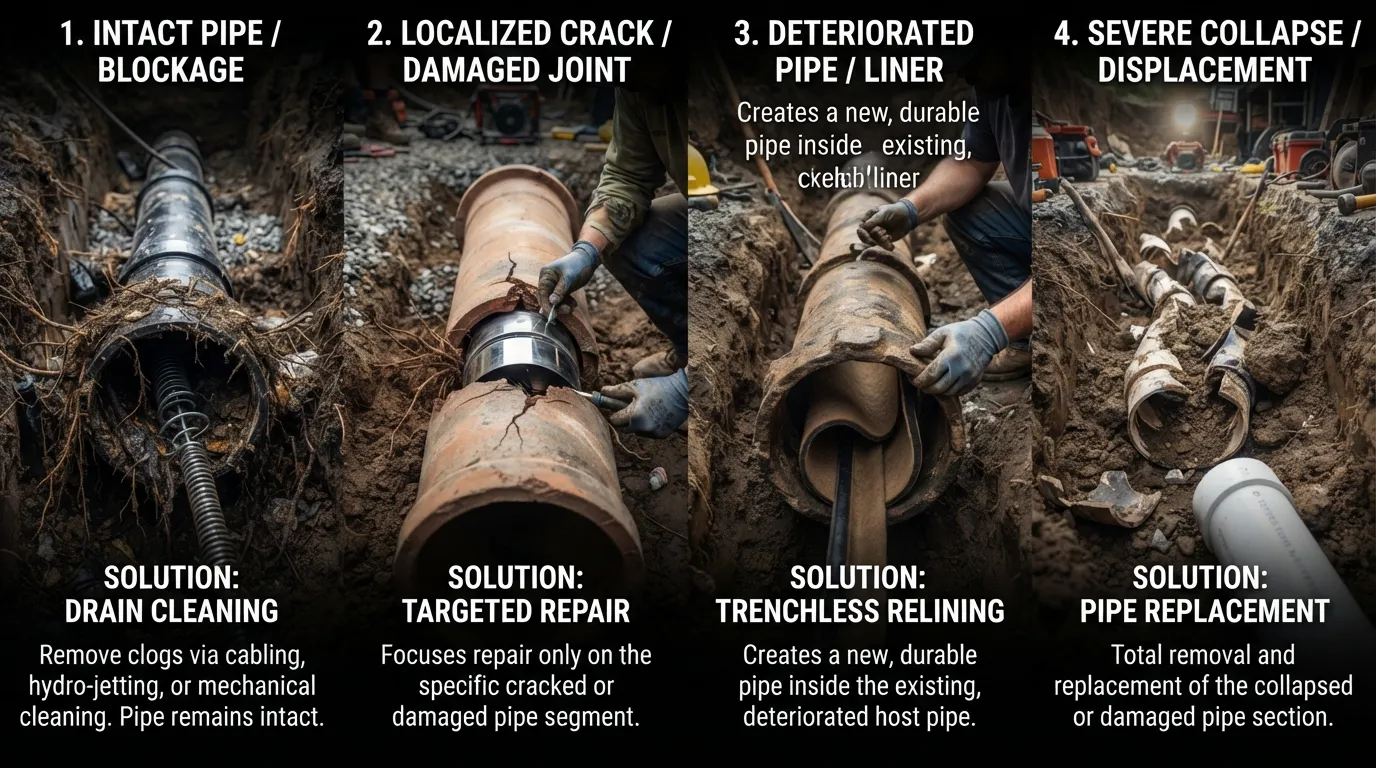
Direct answer: If a drain line is intact but obstructed, cleaning may be enough. If inspection finds a localized crack, failed joint, root-damaged section, or similar structural defect, a targeted repair or lining may be appropriate. Widespread deterioration, severe misalignment, an incorrect grade, or major collapse can make replacement the better option. The repair method should follow the diagnosis—not the other way around.
First, Is This Really a Drain Line Repair Problem?
Before comparing repair methods, determine whether you are dealing with a local fixture problem, a shared drain obstruction, or damage farther downstream.
A single slow sink or shower can point to a localized restriction near that fixture. When several fixtures begin draining poorly at the same time—especially toilets, tubs, showers, or lower-level drains—the problem may be farther down a shared branch, building drain, or sewer connection.
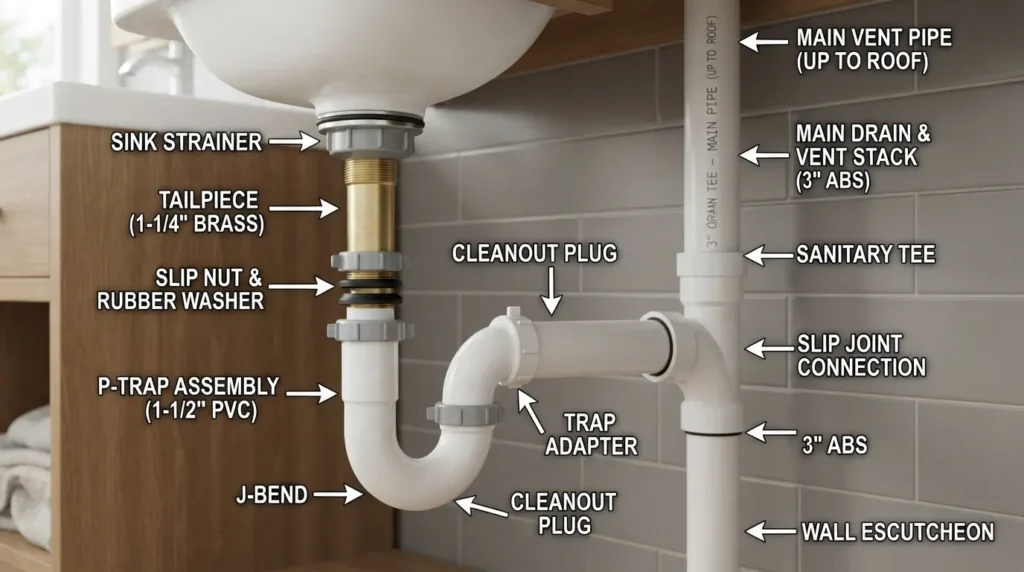
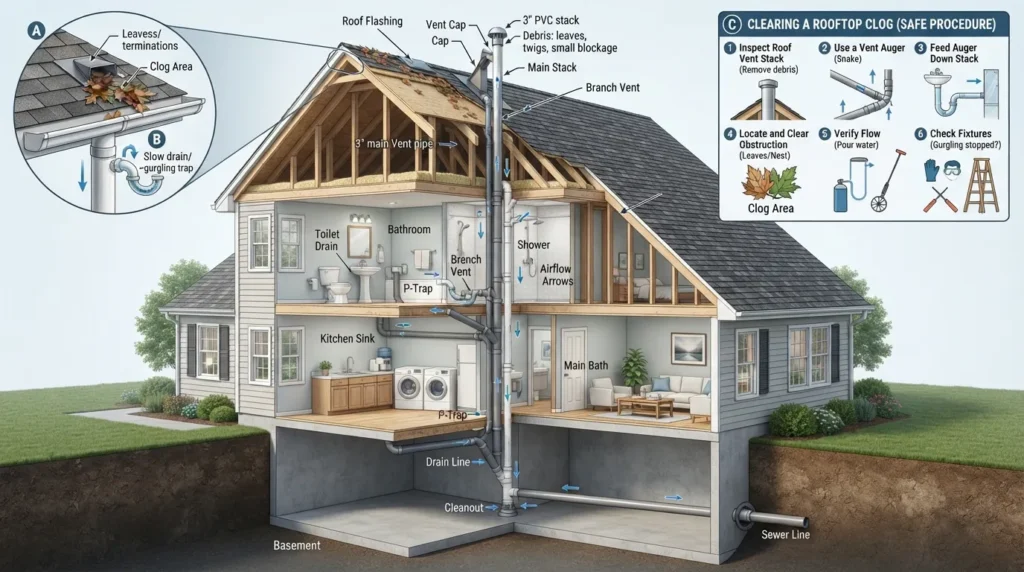
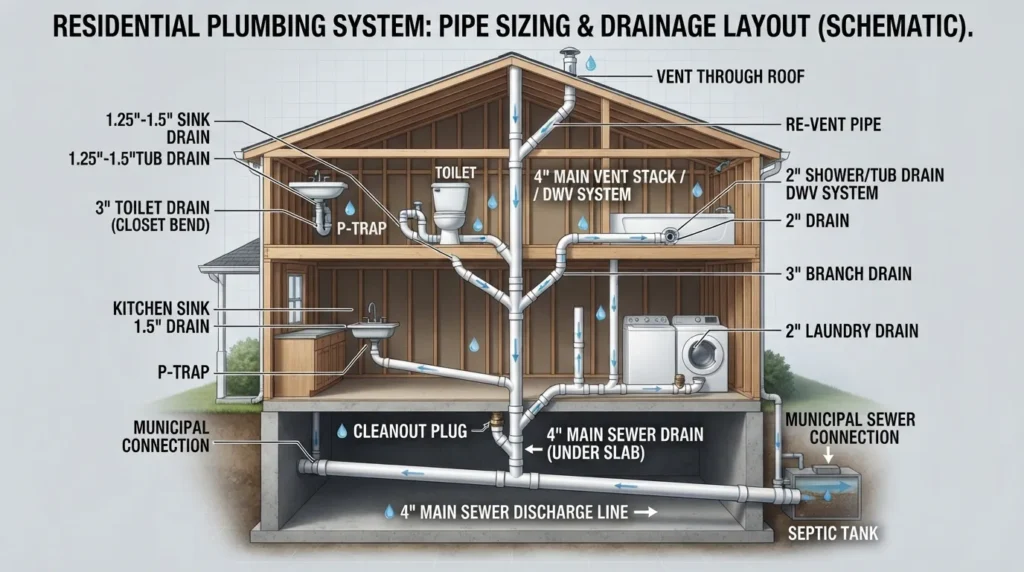
If you want to see how fixture drains, branch pipes, stacks, building drains, vents, and the sewer connection fit together, our guide to how a home drainage system works provides the broader system-level explanation.
More likely a blockage
- Drain becomes progressively slower
- Previous cleaning provided long-term relief
- Inspection shows buildup but an intact pipe wall
- No structural defect is found
More likely structural damage
- Blockages repeatedly return
- Several fixtures are affected together
- Roots repeatedly enter the same location
- Camera inspection reveals cracks, corrosion, displacement, a belly, or collapse
If the pipe itself is sound and the real problem is grease, scale, roots, or another removable obstruction, professional drain cleaning may be more appropriate than structural repair.
Warning Signs a Drain or Sewer Line Needs More Than Routine Cleaning
No symptom by itself proves that a buried pipe is broken. Look for patterns, especially when the same problem keeps returning.
- Recurring clogs: A line that repeatedly blocks after being cleared deserves further investigation.
- Several drains backing up together: This can indicate a restriction farther downstream in shared piping.
- Gurgling from multiple fixtures: Abnormal air and wastewater movement can accompany a partial obstruction or other drainage problem.
- Sewer odors: Persistent odor can indicate a drainage, trap, venting, or sewer-related issue that needs diagnosis.
- Wastewater backing up: Sewage appearing through a tub, shower, toilet, or floor drain is a higher-priority problem.
- Wet or unusually soft areas near a buried line: A leaking underground line is one possible cause and should be investigated rather than assumed.
- A problem that returns in exactly the same location: Repeated root cutting or clog clearing at one defect can indicate that the underlying pipe condition still needs correction.
Important:
A slow drain is a symptom, not a diagnosis. Avoid approving a major repair based only on symptoms when the affected line can reasonably be inspected first.
What Can Damage a Drain Line?
Different materials fail in different ways, but the common causes of drain and sewer line problems fall into a few broad groups.
Tree Root Intrusion
Roots can enter through an existing joint, gap, or defect where moisture is available. Removing the roots may restore flow temporarily, but recurring intrusion can mean the entry point itself needs attention.
Aging or Deteriorated Pipe
Older metallic piping can corrode, while other legacy pipe materials may crack, deform, separate at joints, or deteriorate over time. The appropriate repair depends on how much usable pipe remains.
Cracks and Broken Sections
A localized break may sometimes be repaired without replacing an entire run. The key questions are where the defect is, how long it is, whether the surrounding pipe is still sound, and whether the line retains the correct alignment and flow path.
Offset or Separated Joints
Pipe sections that move out of alignment can create an obstruction point, allow root entry, interfere with flow, or make some trenchless repair methods unsuitable.
Bellied or Poorly Graded Pipe
A low section can retain wastewater and solids instead of allowing them to continue downstream. A liner follows the route of the existing pipe, so a serious grade problem may require a different correction than simply adding a new interior surface.
Grease and Debris Buildup
Not every recurring drain problem is broken pipe. Fats, oils, grease, scale, foreign material, and other buildup can restrict flow. Miami-Dade County specifically warns that fats, oils, and grease can clog sanitary sewer piping and contribute to backups.
The Most Useful Step: Diagnose the Line Before Choosing the Repair
A good drain line repair decision starts with evidence. The exact diagnostic process varies with the property and symptoms, but it may include testing fixtures, accessing cleanouts, clearing an obstruction enough to inspect the pipe, locating the line, and running a sewer camera through the affected section.
Professional sewer and drain inspection standards exist specifically to help identify and classify conditions inside building sewers and drains. A camera is useful because it can show visible defects and their location instead of forcing you to guess from symptoms alone.
What should you ask to see?
- The affected section of camera footage
- The approximate location of the defect
- Whether the problem is an obstruction, structural defect, or both
- Whether the pipe is still continuous through the damaged area
- Whether standing water or displacement suggests a grade/alignment problem
- Why the recommended method is preferable to the alternatives
Camera Finding to Repair Decision: What the Evidence May Mean
This is the connection many generic drain repair guides miss: the repair method should correspond to the condition actually found inside the pipe.
Buildup + structurally intact pipe
This points toward cleaning rather than structural repair. The cleaning method should match the material and obstruction.
Roots entering one location
The roots can be removed, but the joint, crack, or opening that allowed intrusion should also be evaluated.
Localized crack or broken section
A spot repair, sectional replacement, or suitable rehabilitation method may be considered depending on access and surrounding pipe condition.
Widespread deterioration
Repeated small repairs may not make sense if a substantial portion of the line has lost integrity. Rehabilitation or replacement should be compared.
Severe belly or bad grade
A repair that simply follows the existing path may not correct the drainage geometry. Excavation and regrading may need to be considered.
Major offset or complete collapse
The line may require replacement, pipe bursting where conditions allow, or targeted/open excavation to restore a continuous path.
Drain Cleaning vs. Drain Line Repair vs. Replacement
| Option | Best Fit | Key Limitation |
|---|---|---|
| Cleaning | Obstruction inside an otherwise serviceable pipe | Does not repair cracks, collapse, bad grade, or failed pipe walls |
| Spot Repair | Localized defect with sound pipe around it | Not enough for widespread deterioration |
| CIPP / Lining | Suitable deteriorated pipe that can be rehabilitated internally | Not a universal fix for severe alignment or grade problems |
| Pipe Bursting | Replacing an existing buried run with limited continuous trenching | Suitability depends on the existing pipe, site, access, utilities, and project conditions |
| Excavation / Replacement | Severe collapse, poor grade, major displacement, inaccessible defects, or unsuitable trenchless conditions | More surface disruption may be required |
What Are the Main Drain Line Repair Methods?
1. Targeted Open Repair
If the damage is confined to a short, accessible section, the damaged pipe can be exposed, removed, and replaced with compatible piping and fittings. This can be a sensible approach when the rest of the line remains in acceptable condition.
For underground PVC, the repair is not simply a matter of smearing adhesive over a crack. A damaged section may need to be cut out and reconnected correctly using compatible pipe, fittings, couplings, and the connection method intended for that system.
2. Cured-in-Place Pipe Lining (CIPP)
CIPP is a trenchless rehabilitation method in which a resin-impregnated liner is installed inside an existing pipe and cured to form a continuous new lining within the original line. The U.S. Environmental Protection Agency identifies cured-in-place pipe as one of the established trenchless sewer rehabilitation methods.
Lining can reduce the amount of excavation required, but it is not automatically the right answer for every damaged drain. Inspection still needs to establish whether the line’s condition, continuity, geometry, and access are suitable for the selected system.
3. Pipe Bursting
Pipe bursting is a trenchless replacement method. A bursting tool moves through the old line, displacing or breaking the existing pipe outward while a new pipe is pulled into its place. EPA guidance lists pipe bursting, also called in-line expansion, among established trenchless sewer rehabilitation and replacement approaches.
Unlike lining, pipe bursting replaces the old pipe rather than forming a liner within it. It can reduce continuous trench excavation, although access points and site-specific planning are still required.
4. Traditional Excavation and Replacement
Open excavation remains important because some problems are fundamentally geometric or structural. If a section has severely shifted, lost grade, collapsed in a way that prevents rehabilitation, or needs to be physically repositioned, exposing and replacing the affected line may provide the most direct correction.
The useful question is not “Is trenchless better than digging?”
Ask instead: Which method actually corrects the defect shown by the inspection with the least unnecessary disruption? Sometimes that is lining. Sometimes it is bursting. Sometimes a small excavation is more appropriate than trying to avoid digging at all costs.
Can a Sewer Line Be Repaired Without Digging It Up?
Yes, in suitable cases. CIPP lining and pipe bursting are two established trenchless approaches that can reduce the need for a continuous open trench. However, “no-dig” does not mean “no access,” and it does not mean every damaged pipe qualifies.
The decision depends on factors such as:
- The type and severity of damage
- Whether the pipe remains continuous enough for the proposed method
- Alignment and grade
- Pipe size and material
- Available access
- Location of other buried utilities
- The repair system being proposed
Video: What a Trenchless Patch Repair Can Look Like
The following video is a useful visual example of a localized patch repair on a damaged sewer drain. It is educational only; the correct method for your line still depends on inspection and site conditions.
When Trenchless Repair May Not Be the Right Choice
Trenchless technology is valuable, but presenting it as the solution to every drain failure can create bad decisions. A plumber or contractor should be able to explain why the proposed system fits the actual condition found.
Situations that can require another approach include:
- A seriously bellied line that needs its grade corrected
- A badly displaced or misaligned section
- A condition that prevents the proposed equipment or liner from passing through the pipe
- A section that must be physically repositioned
- A defect where direct access is simpler or more appropriate
- Project conditions that make a particular trenchless system unsuitable
EPA material on wastewater collection-system renewal describes CIPP, pipe bursting, point repairs, and open-cut replacement as different options to be selected according to project conditions—not as one universal repair method.
How Much Does Main Sewer or Drain Line Repair Cost?
There is no responsible single price for every main drain or sewer line repair. A short accessible spot repair and a long buried replacement are fundamentally different projects.
As a broad national reference—not a Miami quote—Angi’s 2026 consumer cost guide reports an average of about $3,319 for sewer line replacement/repair, with a very wide reported range of approximately $225 to $10,000. That range is so broad precisely because the scope of these projects varies dramatically.
What actually changes your estimate?
- Length of damaged pipe
- Depth and accessibility
- Pipe material and diameter
- Localized versus widespread damage
- Whether the line runs under a slab, driveway, landscaping, or other finished area
- Cleaning and camera work needed before repair
- Lining, bursting, spot repair, or excavation method
- Access-pit or trench requirements
- Permit and inspection requirements
- Surface restoration after the plumbing work
The most useful estimate is therefore one tied to a specific diagnosis. Ask the contractor to identify the defect, show where it is, explain the recommended method, and separate optional work from work necessary to restore the line.
Repair or Replace? Use This Decision Framework
Think in this order
- Is the pipe simply obstructed? If yes, clean it and verify condition.
- Is there one localized structural defect? Compare spot repair and appropriate rehabilitation options.
- Is deterioration widespread? Compare rehabilitation against replacement instead of repeatedly patching individual symptoms.
- Is alignment or grade the real problem? Choose a method capable of correcting geometry, not just sealing the interior.
- Is the line severely collapsed? Determine whether a trenchless replacement path remains feasible or direct excavation is required.
This framework prevents a common mistake: assuming the most technologically impressive repair is automatically the best one.
What Miami Homeowners Should Know About Private Sewer Problems
For Miami-Dade homeowners, it is helpful to distinguish a problem inside the property’s sewer piping from a problem in the public system.
Miami-Dade County states that when a clog occurs within a home’s sewer pipes and causes a backup, repair is the homeowner’s responsibility. For problems involving public sewer infrastructure, overflowing manholes, or certain Water and Sewer Department facilities, the County provides separate reporting channels.
Sanitary line replacement may require a plumbing permit
Miami-Dade’s permitting information specifically lists Sanitary Line Replacement under Plumbing Permit Category 0025. Permit requirements can depend on the exact project and jurisdiction, so they should be checked for the property before replacement work begins.
Before approving a Miami drain line replacement:
Ask whether the proposed scope requires a permit, who will obtain it, what inspections apply, and whether any work extends beyond private property or into a right-of-way. Do not assume every project follows exactly the same permitting path.
When Is a Drain Line Problem an Emergency?
A single slow drain usually gives you more time to investigate than active sewage entering the home. If wastewater is backing up through multiple fixtures, sewage is surfacing where people can contact it, or the drainage system cannot be used without causing another backup, the situation deserves prompt professional attention.
In that situation, avoid repeatedly sending more wastewater into the affected system until the cause is understood. If you need immediate help, you can get urgent plumbing help without waiting for the problem to become more disruptive.
Can You Repair a Drain Line Yourself?
That depends on what “drain line” means in your situation.
Cleaning an accessible trap or replacing a straightforward exposed component is very different from repairing a buried sanitary sewer line. Once you are dealing with an underground pipe, wastewater exposure, uncertain pipe condition, excavation, slope, structural failure, or permitting, a casual patch can create a false sense of security while leaving the actual defect in place.
A better DIY role is often to observe and document:
- Which fixtures are affected?
- Did they fail at the same time?
- How quickly does the backup return?
- Has the line been cleaned before?
- Do you have previous camera footage or repair records?
- Does using one fixture cause another fixture to react?
Those details help narrow the problem before repair decisions are made.
PVC, Cast Iron, and Other Drain Materials: Why Material Matters
The pipe material affects how damage appears and how repairs are connected, but material alone should not determine the repair.
PVC Drain Pipe
PVC DWV piping commonly uses primer and solvent cement with compatible fittings. Charlotte Pipe’s current PVC Schedule 40 DWV installation information specifies primer and solvent cement for that piping system.
That does not mean every drain pipe connection is “glued.” Different pipe systems use different joining methods, including gaskets, mechanical couplings, bell-and-spigot joints, and other manufacturer-specified connections.
Cast Iron and Older Materials
Existing homes can contain cast iron and other legacy drain materials. An inspection may reveal corrosion, scaling, joint problems, cracking, or other deterioration. The important question is whether the defect is localized or whether the surrounding line also needs rehabilitation or replacement.
Before You Approve a Repair, Ask These Questions
- Can you show me the damaged area on the camera footage?
- Where is the defect located and approximately how deep is it?
- Is the line blocked, structurally damaged, or both?
- Is the problem localized or present across a longer section?
- Why would cleaning alone not solve it?
- Why are you recommending this repair method?
- What alternative repair methods are reasonable here?
- Does the line have a belly, displacement, or grade problem?
- How much excavation or property disruption should I expect?
- Does this scope require a permit or inspection?
- Will the repaired line be inspected again after the work?
- What part of the repair and restoration is included in the estimate?
A clear professional recommendation should connect the evidence to the proposed solution. “Your sewer is old” is not nearly as useful as, “Here is the defect, here is where it is, and here is why this method corrects it.”
How to Reduce the Chance of Another Drain Problem
Not every drain failure is preventable, but you can reduce avoidable blockages and catch developing problems earlier.
- Do not pour fats, oils, or grease down kitchen drains. Miami-Dade County advises allowing grease to cool, sealing it in a container, and placing it in household trash instead.
- Pay attention when the same drain problem repeatedly returns after cleaning.
- Keep previous inspection footage and repair records when available.
- If roots are repeatedly removed from the same location, investigate the pipe defect that allows them to return.
- Do not treat recurring backups as a reason to continually use stronger chemicals without understanding the cause.
- After significant structural work, ask how the completed line will be verified.
A Note About Corrugated Drain Pipe
Several related searches for “drain line repair” refer to corrugated exterior drainage pipe. That is an important distinction because a corrugated yard, foundation, or stormwater drain is not automatically the same system as the sanitary drain carrying wastewater from toilets, sinks, tubs, and showers.
Corrugated HDPE drainage products can be manufactured in solid or perforated configurations, and joining methods vary by product. Manufacturers such as Advanced Drainage Systems offer couplers, bell-and-spigot connections, gaskets, and other application-specific fittings.
If your problem is a corrugated yard drain rather than a sanitary sewer line, identify the pipe product and application before copying a repair method intended for PVC DWV or sewer piping.
Frequently Asked Questions About Drain Line Repair
How much does it cost to repair a main sewer line?
Cost varies widely because a short accessible repair, trenchless rehabilitation, and full buried replacement are different scopes. A 2026 national Angi guide reports an average around $3,319 and a broad $225–$10,000 range for sewer line repair/replacement, but that is not a Miami-specific quote. Your actual estimate should be based on the defect, length, depth, accessibility, material, repair method, permits, and restoration required.
Can you repair a sewer line without digging it up?
Often, yes. CIPP lining and pipe bursting are established trenchless methods that can reduce continuous excavation. Whether either method is appropriate depends on the pipe’s condition, alignment, access, and the type of damage found during inspection.
Do drain lines have to be glued?
No. The connection method depends on the pipe system. PVC DWV commonly uses primer and solvent cement with compatible fittings, while other drain and sewer products may use gaskets, mechanical couplings, bell-and-spigot joints, or other manufacturer-approved connections.
How do you patch a corrugated drainage pipe?
First identify the exact corrugated pipe product and whether it is used for stormwater, foundation drainage, another exterior application, or something else. A damaged section is generally repaired using a compatible replacement section, coupling, fitting, gasket, wrap, or repair system specified for that product—not a universal patch that works on every corrugated pipe.
How do I join two pieces of corrugated drain pipe?
Use the joining system designed for the specific pipe. Corrugated drainage manufacturers offer couplers, bell-and-spigot joints, gaskets, and specialty fittings. Match the fitting to the pipe type, diameter, and required joint performance instead of assuming PVC glue is appropriate.
Does corrugated drain pipe have holes in it?
Some does and some does not. Corrugated HDPE drainage pipe is available in solid and perforated configurations. Perforated versions are used where the system is intended to collect or manage water from surrounding soil.
How do you seal corrugated drain pipe connections?
Follow the connection system specified for that product. Depending on the pipe, this can involve a gasketed joint, compatible coupler, bell wrap, or another manufacturer-designed connection. There is no single sealant or glue that should be assumed correct for every corrugated drain.
What is corrugated pipe with holes in it called?
It is generally described as perforated corrugated drain pipe or perforated corrugated HDPE when made from high-density polyethylene. It is commonly used in subsurface, foundation, agricultural, and other water-management applications rather than as a direct substitute for every sanitary plumbing drain.
The smartest drain line repair is not automatically the biggest repair, the cheapest repair, or the repair that avoids the most digging. It is the repair that matches the condition actually found inside the line.
If the pipe is intact and clogged, clean it. If damage is localized, compare targeted repair options. If the existing line is a suitable candidate for rehabilitation, trenchless lining may reduce excavation. If the old line needs replacement, pipe bursting may be an option. And if the pipe has a serious grade, alignment, access, or collapse problem, excavation may still be the most appropriate way to correct it.
Most importantly, ask to see the evidence before deciding. A camera finding, defect location, pipe condition, and clear explanation of alternatives give you far more useful information than a repair recommendation by itself.
Not Sure Whether Your Line Needs Cleaning or Repair?
If repeated clogs, backups, odors, or suspected pipe damage are making the next step unclear, our Miami plumbing team can help identify the cause and explain the appropriate next step based on the condition found.
Related Resources
- Miami-Dade County — Sanitary Line Replacement Permit Information
- Miami-Dade County — Residential Fats, Oils and Grease Guidance
- U.S. EPA — Trenchless Sewer Rehabilitation Methods
- Charlotte Pipe — PVC Schedule 40 DWV Installation Information
- Advanced Drainage Systems — Corrugated HDPE Drainage Pipe Information