When water keeps pooling beside your foundation, sitting in the yard, crossing your driveway, or turning a side yard into a soggy mess, the right fix depends on more than choosing a popular drain. You first need to understand where the water is coming from, where it collects, how it moves across or through the soil, and where it can safely go next.
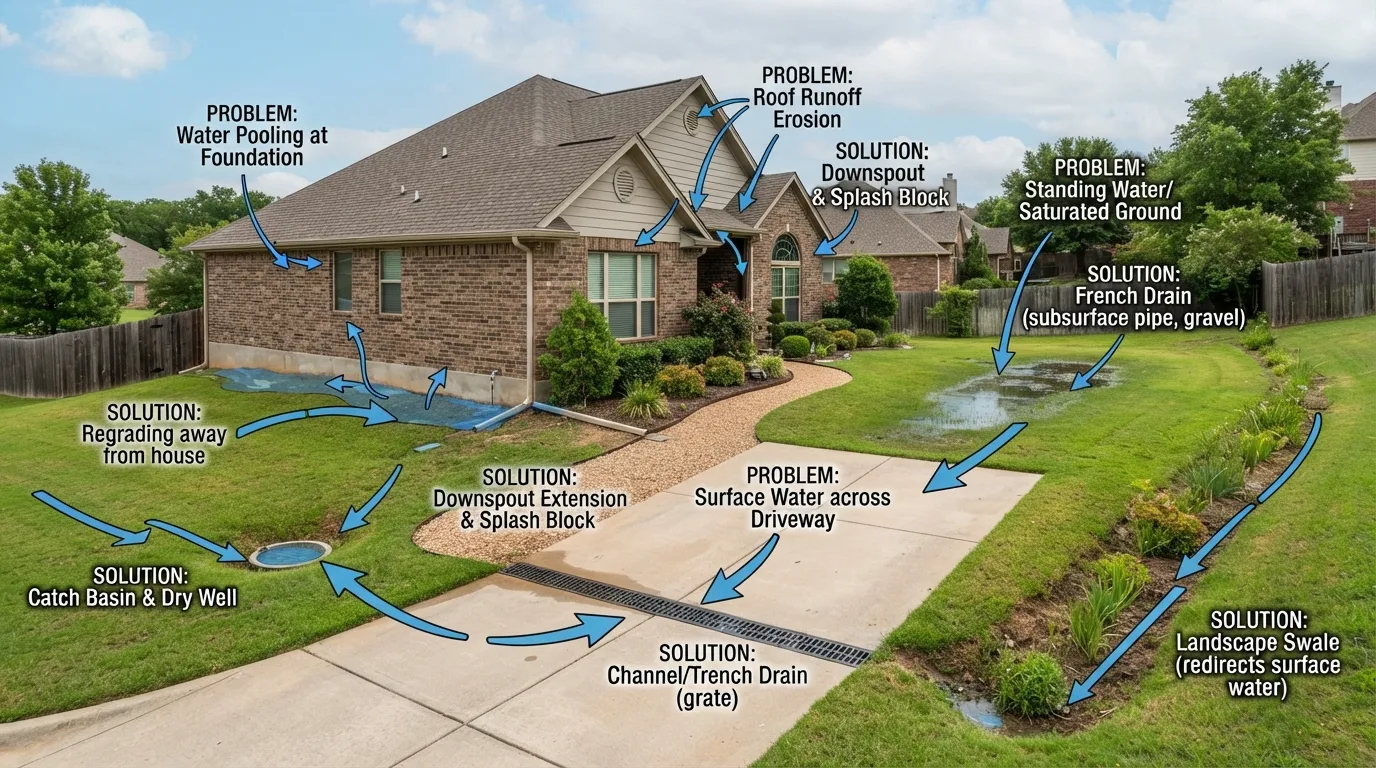
The best residential drainage solution is the one matched to the actual water problem. Downspout corrections and grading can help when runoff is being sent toward the house. Catch basins collect surface water at low points. Channel drains intercept runoff across driveways and patios. French drains address certain subsurface water problems. Swales redirect water using the landscape, while dry wells and other infiltration systems manage water on-site when soil, groundwater, space, and local requirements make infiltration appropriate.
If you are trying to choose between these options, I recommend diagnosing the problem first instead of starting with a product or assuming every wet yard needs a French drain.
Start Here: Diagnose the Water Before Choosing a Drain
A useful drainage plan starts with four questions. If you can answer them, the list of realistic solutions usually becomes much shorter.
- Where does the water collect? Beside the foundation, in the middle of the lawn, along a side yard, on a patio, or across a driveway?
- Where is it coming from? Roof runoff, a downspout, rainfall flowing over the ground, a neighboring elevation, or saturated soil?
- Is it mainly surface water or subsurface water? Water flowing visibly across the ground requires a different strategy from soil that remains saturated below the surface.
- Where can the water safely go? A drainage system needs an acceptable outlet, storage area, or infiltration strategy. Moving water from Point A to Point B is not a complete solution if Point B creates another problem.
The Drainage Decision Rule
Source → Collection → Conveyance → Destination.
Identify where the water starts, determine whether it needs to be collected, decide how it will be carried, and confirm where it can safely end up.
Which Residential Drainage Solution Fits Your Problem?
Water From a Downspout
Consider: downspout correction, extension, underground solid drainage pipe, or another approved discharge approach.
Water Slopes Toward the House
Consider: grading or regrading, sometimes combined with a collection or conveyance system.
One Low Spot Keeps Pooling
Consider: a catch basin, area drain, grading correction, or another solution based on the cause.
Runoff Crosses a Driveway or Patio
Consider: a channel or trench drain positioned to intercept surface flow.
Soil Stays Saturated
Consider: whether a properly designed subsurface drainage solution such as a French drain fits the site.
Water Needs a Natural Flow Path
Consider: a swale or landscape-based drainage route where elevations and available space allow it.
No Simple Gravity Outlet
Consider: whether on-site infiltration or retention is appropriate after evaluating site and local conditions.
Sinks or Showers Are Backing Up
Different problem: this may involve your sanitary plumbing system rather than outdoor stormwater drainage.
Catch basins are commonly used to collect surface water at a specific low point, while channel or trench drains are designed to intercept runoff across hard surfaces such as driveways and patios.
9 Common Residential Drainage Solutions and When They Make Sense
1. Correct the Downspout Discharge
If the wet area is close to a roof downspout, start there. A drainage installation will not perform well if a large amount of roof runoff continues to discharge into the wrong place.
The solution may involve redirecting the downspout, extending its discharge farther from the house, or connecting it to an appropriately designed solid underground line. The important point is that the water must be carried to a suitable destination rather than simply released a few feet away where it flows back toward the structure.
Best for: concentrated roof runoff near foundations, patios, walkways, and low areas.
2. Improve the Grade Around the Property
Sometimes the problem is not a missing drain. It is the direction the ground sends water.
If the surrounding surface pitches toward the house or creates a bowl-shaped low area, thoughtful grading may improve drainage by using gravity before additional components are added. Small low spots may need a relatively straightforward correction, while larger elevation problems can require more careful planning.
Best for: visible surface runoff traveling in the wrong direction or collecting in depressions.
3. Use a Swale to Redirect Surface Water
A swale is a shallow landscape channel that guides runoff along a planned route. Rather than collecting water in a box or buried pipe immediately, it uses surface grading to move water across the property.
Swales can be useful when there is enough space and a practical route for gravity drainage. They also need to be designed so that water does not simply move toward a neighboring property or another vulnerable part of your home.
Best for: broad surface runoff that can be redirected through the landscape.
4. Install a Catch Basin or Area Drain
A catch basin collects surface water through a grated inlet and connects that water to a drainage line. It is particularly useful where runoff naturally converges at a defined low point.
Placement matters. Installing a basin a few feet away from the actual lowest point can leave much of the original pooling problem unchanged.
Best for: low spots, landscape areas, patios, and other locations with concentrated surface pooling.
5. Use a Channel or Trench Drain Across Hard Surfaces
Channel drains use a long grated opening to intercept water as it flows across a surface. You often see this approach where a single small inlet would not capture moving runoff effectively.
They can be useful at garage approaches, driveways, pool-area hardscape, patios, and other paved surfaces where water travels across a wider line.
Best for: moving surface runoff across concrete, pavers, driveways, or patios.
6. Consider a French Drain for Subsurface Water
A French drain typically uses a perforated pipe surrounded by drainage aggregate to collect water within saturated soil and redirect it along a controlled path.
The key word is subsurface. If your main problem is a sheet of water racing across a driveway during a storm, a surface interceptor may be more logical. If water is moving through saturated ground and remaining beneath the surface, a subsurface drainage approach may be more relevant.
Do Not Default to a French Drain
A French drain is useful for the right problem, but it is not a universal cure for every wet yard. Always identify whether you are dealing with surface runoff, concentrated roof water, poor grading, or actual subsurface saturation first.
7. Evaluate a Dry Well or Other Infiltration Solution
A dry well manages collected runoff by temporarily holding it and allowing water to infiltrate into the surrounding ground rather than relying entirely on a distant surface outlet.
This approach is highly site-dependent. Available space, soil conditions, groundwater, the amount of runoff, surrounding structures, and local requirements all matter. If water cannot infiltrate effectively, simply putting it underground does not solve the underlying drainage problem.
Best for: suitable sites where on-property infiltration is practical and permitted.
8. Create a Rain Garden or Planned Retention Area
A rain garden or landscape retention area can receive runoff and temporarily hold water while vegetation and soil help manage it. This may work as part of a broader drainage strategy where the property has suitable space and conditions.
It is not the same as allowing a random part of your lawn to remain flooded. A useful retention feature needs deliberate grading, plant selection, and a realistic understanding of how much water reaches it.
Best for: landscape-integrated stormwater management on appropriate sites.
9. Reduce Runoff With Permeable Areas Where Practical
Roofs, concrete, pavers, parking areas, and other impervious surfaces generate runoff because rainfall cannot soak directly into those surfaces. Miami-Dade County’s Stormwater Utility likewise bases runoff considerations on impervious areas such as rooftops and parking surfaces.
Where an appropriate design allows it, permeable landscape areas can form part of a broader runoff strategy. This does not replace a needed drainage system, but it can reduce the amount of water that must be collected and moved elsewhere.
What Is the Cheapest Residential Drainage Method?
There is no single cheapest method for every property because the correct fix depends on the cause. However, it usually makes sense to investigate simple source and surface corrections before installing a more complex buried system.
For example, a homeowner may need to address:
- a downspout releasing water into a bad location;
- leaves or debris blocking an existing surface inlet;
- a small depression that traps runoff;
- compact or poorly draining surface soil;
- minor grading that sends rainwater toward the house.
Guidance for simple yard-drainage problems commonly includes correcting low areas and surface conditions before or alongside installed drains.
The wrong “cheap” solution becomes expensive when you have to replace it. Instead of asking only, “What costs the least?” ask, “What is the simplest solution that actually addresses the cause?”
How to Fix Drainage Away From Your House
If water is collecting close to your home, use this sequence before deciding what to install:
- Watch the property during rain. Notice where water first appears and the direction it travels.
- Check gutters and downspouts. Confirm that roof runoff is not being concentrated beside the structure.
- Look at the grade. Identify low spots and areas sloping toward the house.
- Decide whether the water is on the surface or inside saturated soil.
- Choose the right collection method. A catch basin, channel drain, French drain, or landscape approach solves different problems.
- Plan the conveyance path. Water needs an appropriate slope and route once collected.
- Confirm the destination. Do not create a new flooding, erosion, neighbor, roadway, or compliance problem downstream.
Instead of choosing an arbitrary distance from your house, determine where water can actually be managed safely. The correct destination is just as important as the drain that carries it there.
Residential Drainage in Miami Requires a Local Approach
Generic drainage advice can miss important local conditions. Miami-Dade County notes that heavy rain can quickly overwhelm drainage and flood streets, while coastal and low-lying areas can also experience King Tide flooding that may become more severe when high tides coincide with heavy rain or other adverse weather.
That means a homeowner should distinguish between a property-level drainage problem and flooding driven partly by broader neighborhood, groundwater, tidal, or regional conditions. A new catch basin cannot eliminate a regional flooding event if the downstream system or surrounding area is already overwhelmed.
Pay Attention to These Miami-Specific Factors
- Heavy rainfall: drainage needs to work when runoff is arriving quickly, not only during light rain.
- Low-lying or coastal locations: tidal and regional flooding can affect how easily water leaves a property.
- Driveways, roofs, patios, and other impervious areas: these surfaces increase the amount of runoff that must be managed.
- Where the system discharges: an outlet cannot be treated as an afterthought.
- Permits and local requirements: certain drainage work or discharges can require County review or environmental permits depending on the project and destination.
Important
Do not assume you can send collected water anywhere that appears convenient. If a project involves a public right-of-way, surface water, substantial drainage alteration, or another regulated condition, verify the applicable Miami-Dade County and municipal requirements before construction. Miami-Dade specifically requires a Class II environmental permit for certain outfall or overflow systems discharging to County water bodies.
Outdoor Drainage vs. Your Home’s Plumbing Drains
The word “drainage” can describe two different systems, and mixing them together leads to the wrong diagnosis.
Exterior stormwater drainage manages rainfall, roof runoff, yard water, driveways, patios, and other water outside the home.
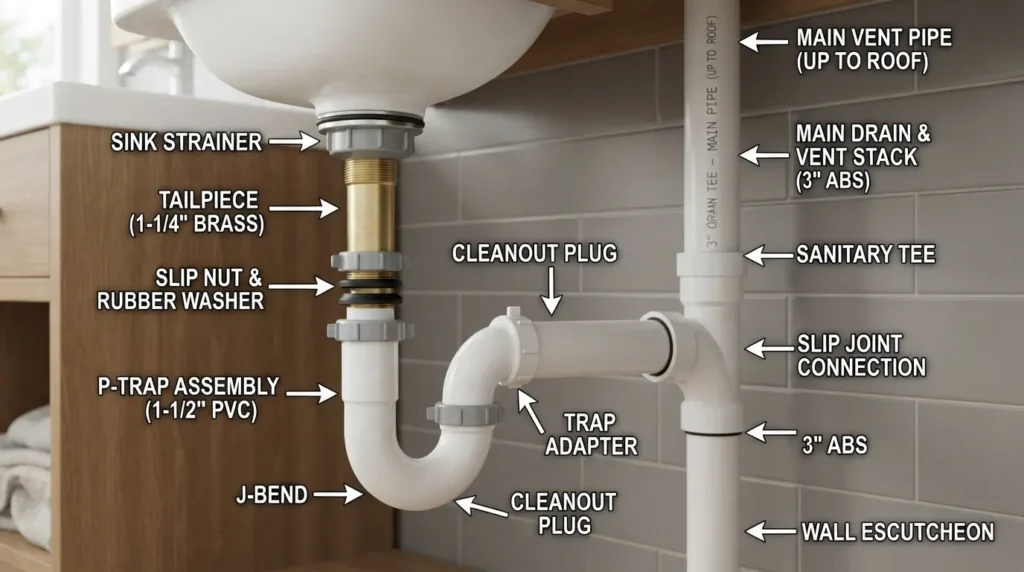
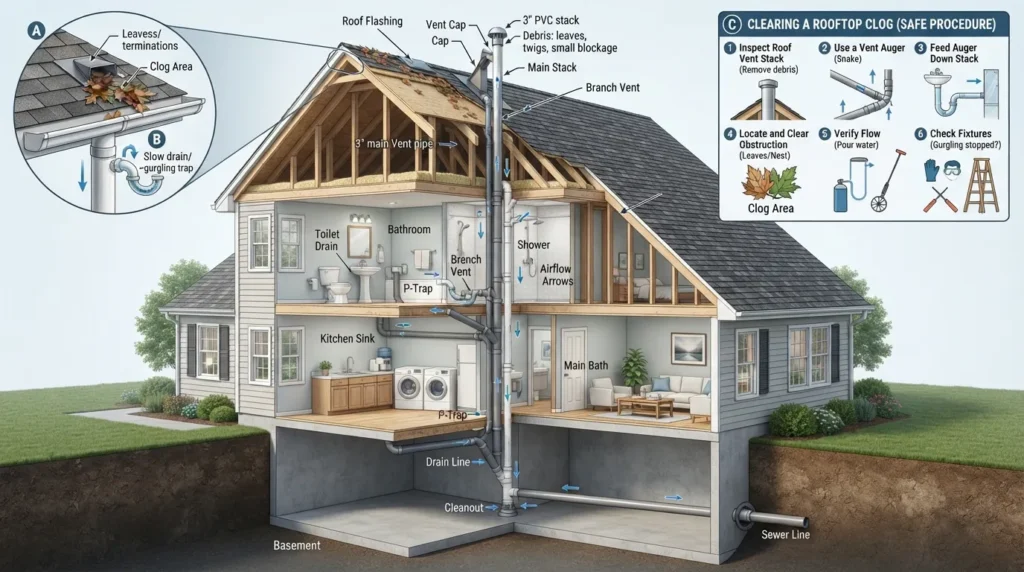
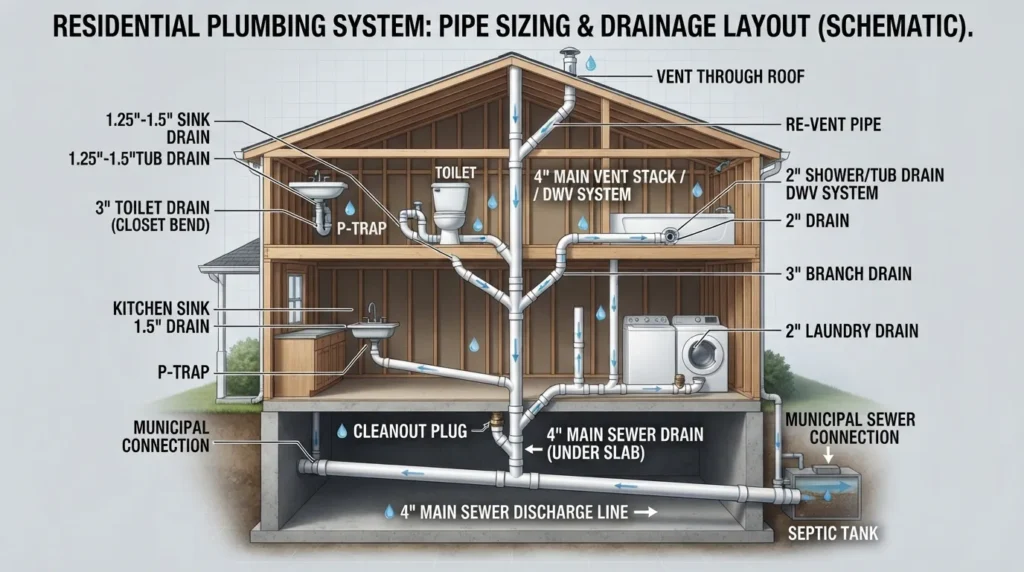
Sanitary plumbing drainage carries wastewater from sinks, toilets, showers, tubs, and other plumbing fixtures toward the building drain and sewer or septic connection.
If you want to understand the plumbing side in more detail, our guide to how a home drainage system works explains the major components and how wastewater moves through the house.
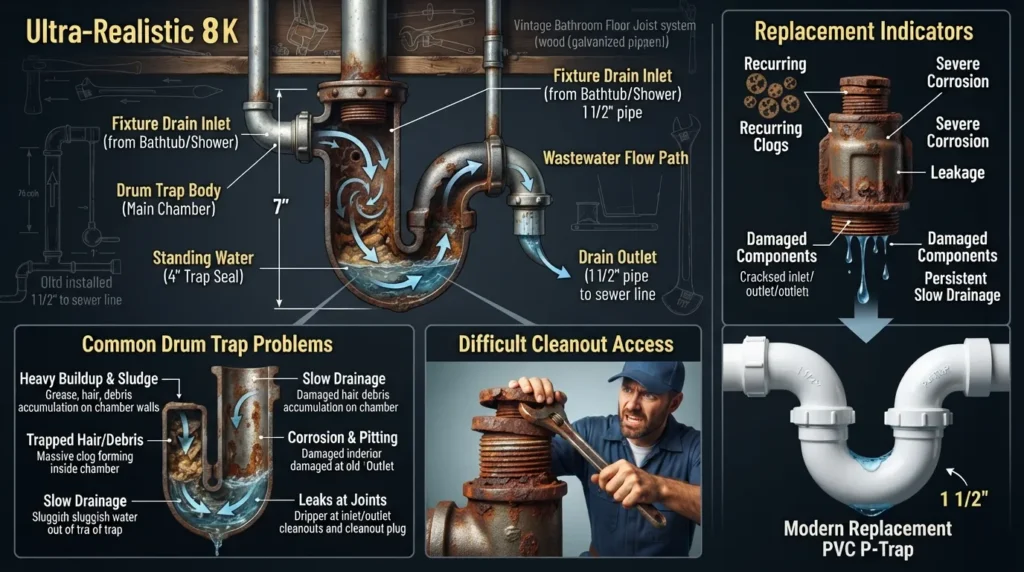
If your real symptom is a slow sink, gurgling fixture, recurring backup, or clogged household drain rather than rainwater pooling outdoors, you may need professional drain cleaning instead of a yard-drainage installation.
DIY or Professional Drainage Work?
Some drainage improvements are reasonable homeowner maintenance projects. Others require excavation, elevation planning, underground utility awareness, or decisions about where substantial amounts of stormwater will go.
A DIY Inspection May Be Reasonable When…
- you are clearing leaves or debris from an accessible grate;
- you are observing runoff during rain;
- you are checking where a downspout currently releases;
- you are identifying obvious low spots;
- you are performing basic routine maintenance.
Professional Evaluation Makes More Sense When…
- flooding repeatedly reaches the house;
- a large area remains saturated after storms;
- significant excavation or regrading is required;
- the correct discharge point is unclear;
- buried drainage lines or utilities are involved;
- multiple drainage systems need to work together;
- the original problem keeps returning after simple fixes.
Common Drainage Mistakes to Avoid
- Installing a drain before identifying the water source.
- Assuming every wet area needs a French drain.
- Collecting water without planning where it will discharge.
- Ignoring slope inside buried drainage piping.
- Using a surface drain for a problem caused primarily by subsurface saturation.
- Trying to solve regional or tidal flooding with a small property-level drain.
- Sending water toward a neighboring property or another vulnerable location.
- Burying a system without practical access for future maintenance.
Plan for Maintenance Before You Install Anything
Every drainage system eventually encounters leaves, sediment, roots, landscape debris, or other material. A good design considers maintenance from the beginning.
Depending on the system, useful maintenance planning can include:
- accessible grates and catch basins;
- cleanout or inspection points where appropriate;
- keeping gutter and downspout pathways clear;
- checking surface inlets before periods of heavy rain;
- watching for erosion around discharge areas;
- making sure landscaping has not changed the intended flow path.
A drainage system that works perfectly on installation day but cannot be inspected or maintained may become a future problem.
Watch a Residential Drainage Installation Example
If you prefer seeing drainage concepts in action, this video provides a practical visual demonstration of an exterior drainage project. Use it as educational context rather than assuming the exact design shown is correct for every property.
Residential Drainage Solutions FAQ
What is the cheapest drainage method?
The cheapest effective method depends on the cause. Start by checking simple issues such as downspout discharge, blocked inlets, small low spots, and minor grading problems before assuming you need a buried drainage system. The cheapest option is only worthwhile if it actually solves the water source and flow problem.
How do you solve drainage problems around a house?
Identify where the water originates, check gutters and downspouts, inspect the surrounding grade, determine whether the problem is surface or subsurface water, choose an appropriate collection method, and plan a safe destination for the water. Persistent or complex flooding should be evaluated professionally.
How can I improve drainage away from my house?
Start by preventing roof runoff and surface grading from directing water toward the foundation. Depending on the property, the final solution may use downspout drainage, regrading, a swale, catch basin, channel drain, French drain, or another system that carries water to an appropriate destination.
What are the main methods of home drainage?
Common exterior methods include grading, swales, downspout drainage, catch basins, area drains, channel or trench drains, French drains, dry wells, rain gardens, and other infiltration or retention systems. Inside the house, sanitary plumbing drainage is a separate system that carries wastewater from fixtures to the sewer or septic system.
Is a French drain the best residential drainage solution?
Not automatically. French drains are useful for certain subsurface water conditions, but surface runoff may be better addressed by grading, swales, catch basins, channel drains, or downspout corrections. The right system depends on the source and movement of the water.
What is best for standing water in a yard?
First find out why that spot remains wet. A surface low point may benefit from regrading or a catch basin. Saturated soil may require a subsurface solution. Roof runoff may simply need to be redirected. Choosing based on the cause is more reliable than selecting a drainage product based only on the symptom.
Choose a Solution That Solves the Whole Water Path
Effective residential drainage is not about installing as many drains as possible. It is about understanding the complete water path.
Where does the water start? Where does it collect? How should it be captured? How will it move? And where can it safely go?
Once those questions are answered, you can make a much better decision between grading, a catch basin, French drain, channel drain, swale, dry well, downspout system, or another drainage approach.
For Miami homeowners, local rainfall, site elevations, impervious surfaces, flood conditions, and discharge requirements make that diagnosis especially important.
Not Sure Whether You Have a Drainage or Plumbing Problem?
If you are dealing with recurring water or drain problems at your Miami home, start with the cause rather than guessing at the fix. You can learn more about our Miami plumbing and drainage team or speak with our team about your drainage concern.
The goal is simple: identify the right problem first, then choose a solution that manages the water without creating another one.
Helpful Residential Drainage Resources
For property-specific flood information, stormwater guidance, or projects that may involve regulated drainage work in Miami-Dade County, these official resources are useful starting points:
- Miami-Dade County Flooding Information — local information on heavy rain, flooding, flood zones, and drainage concerns.
- Miami-Dade Stormwater Utility — information about local stormwater runoff and impervious surfaces.
- Miami-Dade Class II Environmental Permit Information — relevant when certain drainage outfalls or overflow systems discharge into County water bodies.