If you own or manage a home, you do not need to become a professional plumber. But you should understand the basic parts of your plumbing system, know which tools and supplies are useful to keep around, recognize common warning signs, and know when a problem has moved beyond a safe DIY fix.
In this guide, I’ll walk you through the most important general plumbing needs in a practical way—from how water enters your home to how wastewater leaves it, what common plumbing components do, which basic tools are worth keeping, and when professional help makes more sense.
What Are the Basic Plumbing Needs of a Home?
A functional home plumbing system needs a reliable water supply, pipes and fittings, shutoff valves, fixtures, hot-water equipment, drains, traps, vents, and a safe way to carry wastewater to the sewer or septic system. Homeowners also benefit from a small set of basic tools and repair supplies for simple maintenance, while recurring clogs, hidden leaks, sewer problems, major pipe work, and code-sensitive repairs usually require a plumber.
What Do “General Plumbing Needs” Actually Include?
The phrase can mean several things depending on why you are searching. You might be trying to understand how the plumbing in your house works, build a basic plumbing tool kit, identify a leaking or clogged component, or decide whether a repair needs professional attention.
For most homeowners, general plumbing needs fall into five practical categories:
- Water delivery: bringing clean water into the home and distributing it to fixtures.
- Fixtures and controls: faucets, sinks, toilets, showers, tubs, valves, and other points where you use or control water.
- Drainage and venting: carrying wastewater away while helping the drain system operate correctly.
- Maintenance and basic repairs: handling minor clogs, worn washers, simple fixture issues, and routine inspections.
- Professional plumbing work: diagnosing and repairing problems that involve concealed pipes, main drains, significant leaks, major installations, or code requirements.
Understanding these categories is more useful than memorizing a long list of plumbing parts because it helps you identify where a problem is happening and what your next step should be.
The Home Plumbing Needs Map
A simple way to understand your plumbing system is to follow the path of water through the house.
Municipal supply or private well
Controls water entering the home
Carry water to fixtures
Faucets, toilets, showers and appliances
Receive and move wastewater
Carries wastewater away
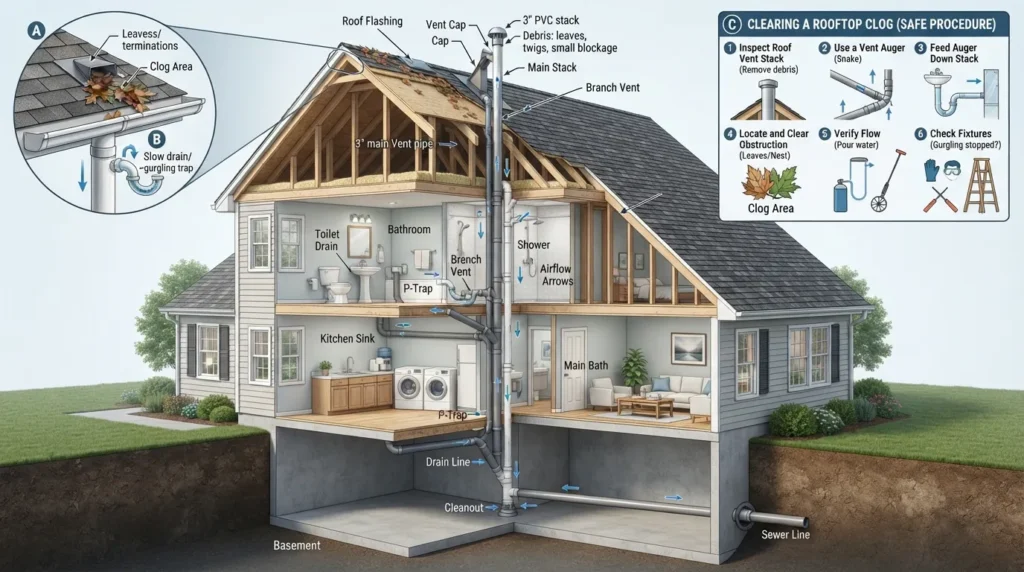
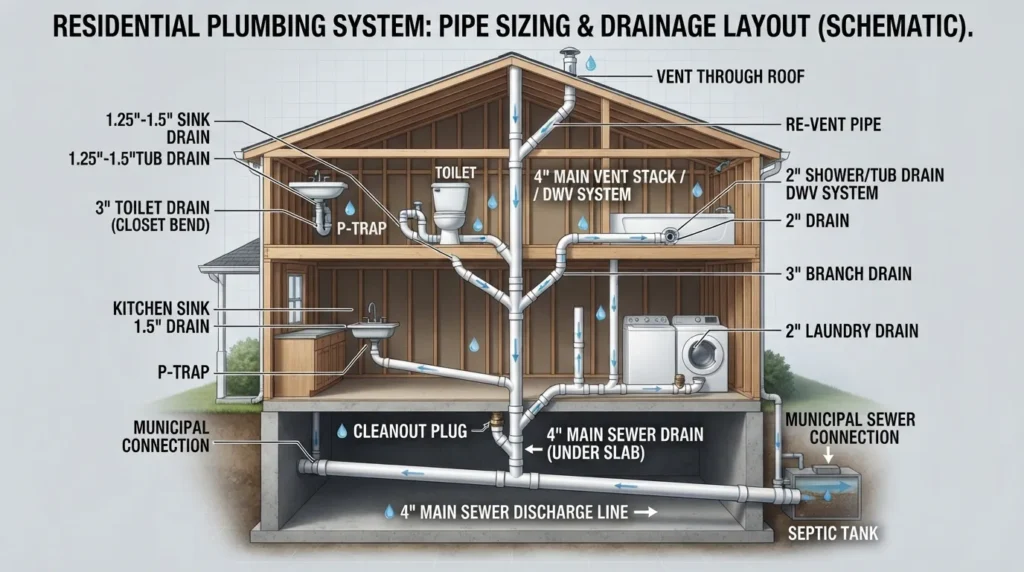
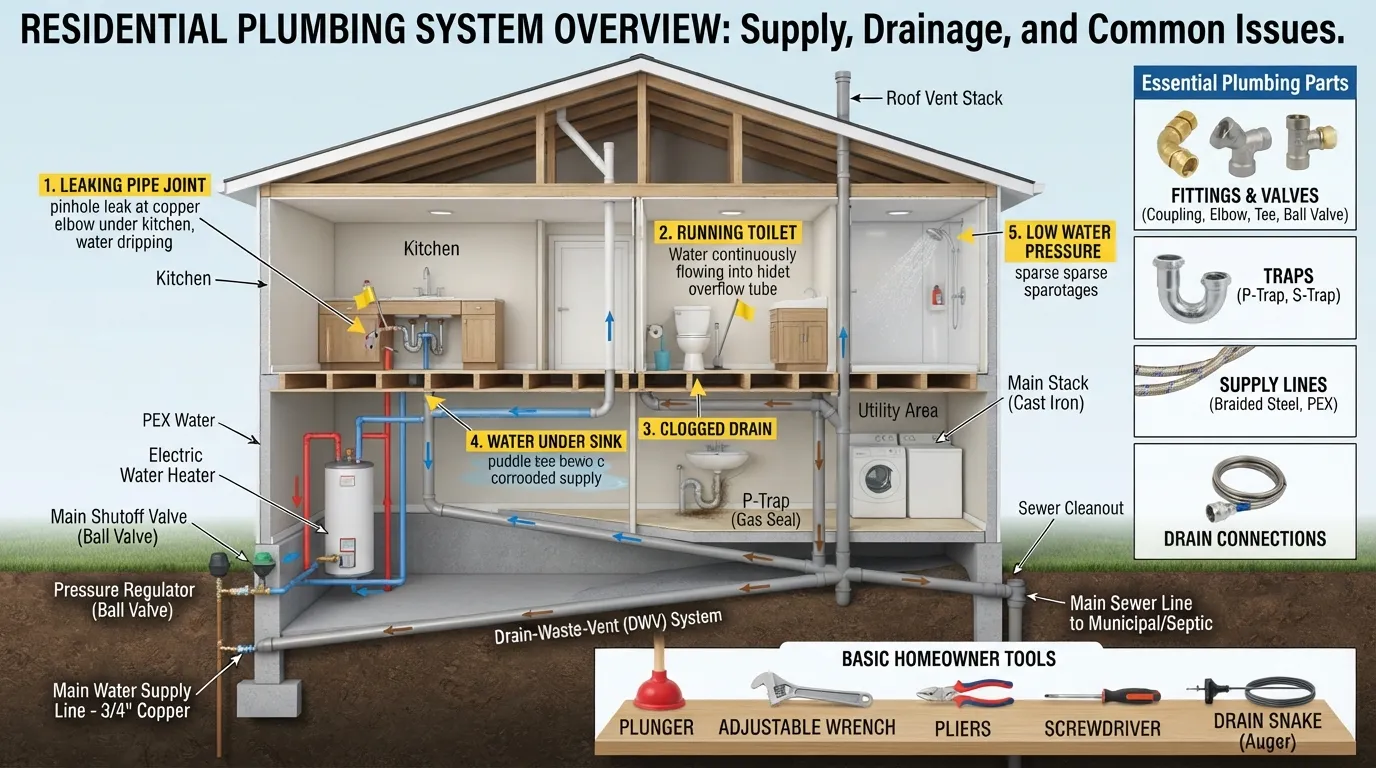
Behind this basic path is another important system: drain-waste-vent, or DWV, plumbing. Its pipes, traps, vents, cleanouts, and drainage fittings help wastewater leave the property while supporting proper drainage.
If you want to understand those components in more detail, this guide to plumbing drain parts and how they work explains the major pieces of a residential drainage system.
How Does a House Plumbing System Work?
Although a complete plumbing system can look complicated on a diagram, the basic concept is straightforward: one side delivers usable water, and another side removes wastewater.
1. The Water Supply System
The water supply side brings pressurized water into the property and distributes it through supply piping. Branch lines then serve fixtures such as sinks, toilets, showers, washing machines, dishwashers, and the water heater.
Important supply-side components include:
- Main water shutoff valve
- Individual fixture shutoff valves
- Cold-water supply piping
- Hot-water distribution piping
- Pipe fittings and connectors
- Faucet and fixture supply lines
- Water heater
One of the most useful things any homeowner can do is learn where the main shutoff valve is located and how to operate it. If a supply pipe or fixture line fails, shutting off the water quickly can limit additional damage while the problem is assessed.
2. Fixtures and Water-Using Equipment
Fixtures are the points where you actually use water. Common examples include toilets, bathroom sinks, kitchen sinks, showers, bathtubs, outdoor faucets, and utility sinks.
Appliances and equipment can also connect to the plumbing system, including water heaters, washing machines, dishwashers, and refrigerators with water lines.
Each connection creates potential maintenance points, so flexible supply lines, valves, seals, fittings, and drains deserve periodic attention.
3. The Drainage System
Once water has been used, the drainage system carries it away. Fixture drains connect to larger branch drains, which eventually feed into the building drain and then the property’s sewer or septic connection.
Drainage relies on correctly installed pipe slopes, fittings, traps, vents, and cleanouts. A problem in one of these areas can show up as a slow drain, bad odor, gurgling fixture, recurring clog, or backup.
4. Traps and Vents
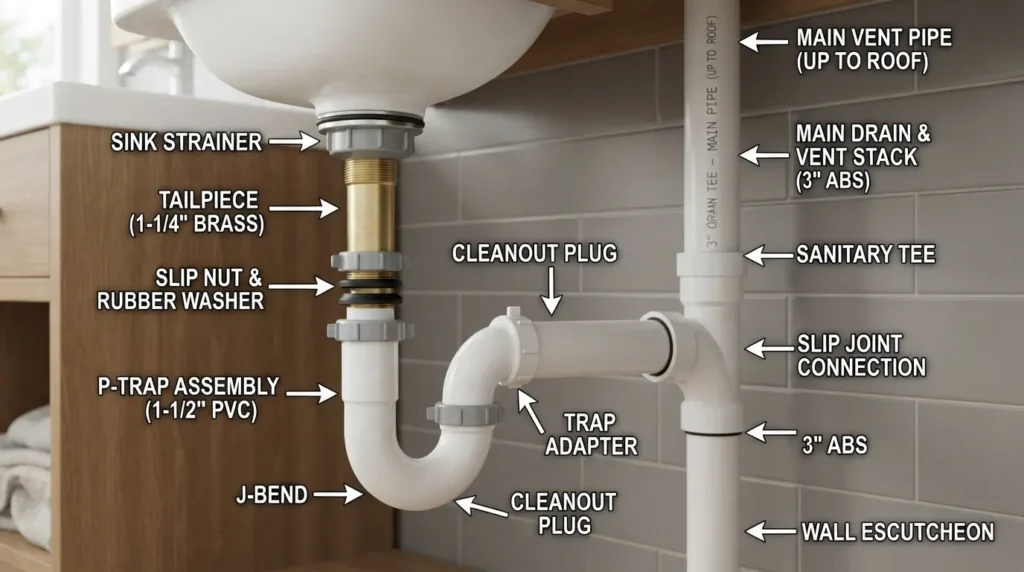
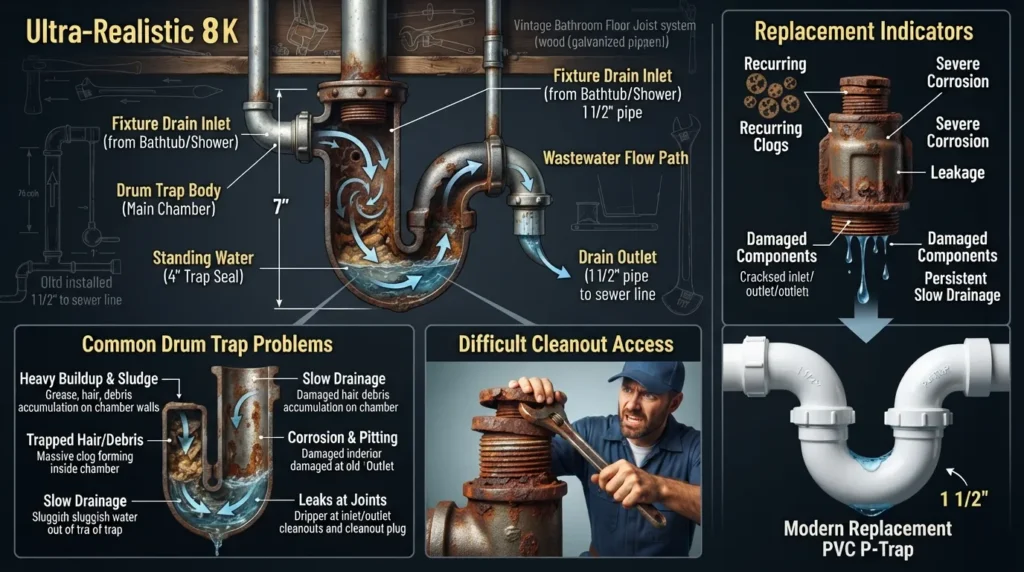
The curved pipe beneath many sinks is a trap. Its water seal helps prevent sewer gases from freely entering the living space.
Plumbing vents serve a different purpose. They help the drainage system manage air as wastewater moves through the pipes. Problems involving drainage or venting can sometimes produce symptoms such as slow flow, gurgling, or unusual drain behavior, although those symptoms can have more than one cause.
Essential Plumbing Components Every Homeowner Should Recognize
What Do You Need for Basic Home Plumbing?
You do not need a truck full of professional equipment to deal with ordinary household plumbing needs. A small, carefully chosen kit can help with basic maintenance and simple repairs.
Useful Tools for Many Homeowners
- Plunger: useful for certain toilet and fixture clogs.
- Adjustable wrench: useful for accessible nuts and plumbing connections.
- Tongue-and-groove pliers: provide an adjustable grip for many household plumbing tasks.
- Basic hand auger or drain snake: can help with some accessible local clogs when used appropriately.
- Screwdriver set: useful for fixture hardware and simple repairs.
- Bucket: useful when opening traps or working below a leaking fixture.
- Flashlight: essential when inspecting under sinks, cabinets, or other dark areas.
- Work gloves: useful when handling dirty drains and plumbing components.
Common Repair Supplies
Depending on your fixtures and piping, basic plumbing supplies may include compatible washers, seals, O-rings, approved thread-sealing products, replacement supply lines, and other manufacturer-appropriate parts.
Do not buy parts only because they “look close.”
Plumbing fittings, threads, pipe materials, fixture components, and connection methods are not universally interchangeable. Match replacement components to the existing system and manufacturer requirements whenever possible.
Tools Most Homeowners Do Not Need to Own
Professional plumbers may use equipment such as drain-cleaning machines, inspection cameras, hydro-jetting systems, specialty pipe cutters, press tools, threading equipment, and test instruments.
Those tools make sense for trained professionals who use them regularly. Buying specialized equipment for one household problem can be unnecessary—and using the wrong equipment incorrectly may damage plumbing or make diagnosis more difficult.
Common Plumbing Problems and What They May Be Telling You
A plumbing symptom is not always a diagnosis. Still, learning to connect symptoms with the correct part of the plumbing system can help you decide what to inspect first.
Slow Single DrainArea to consider: Fixture drain, stopper, trap, or nearby branch drain.
First step: Check for an accessible localized obstruction.
Escalate when: The problem repeatedly returns or cannot be cleared safely.
Several Slow DrainsArea to consider: A larger shared drain or main drainage issue.
First step: Note which fixtures are affected and avoid repeatedly forcing water through a backup.
Escalate when: Multiple fixtures are backing up or symptoms are spreading.
Running ToiletArea to consider: Components inside the toilet tank or sealing mechanism.
First step: Inspect the tank for an obvious component that is not closing or operating correctly.
Escalate when: Replacement does not solve the issue or the toilet itself has another defect.
Water Under a SinkArea to consider: Supply lines, shutoff valves, faucet connections, trap, drain fittings, or seals.
First step: Dry the area and identify whether the leak appears while water is running, draining, or continuously.
Escalate when: The source is concealed, the valve will not stop the leak, or damage is increasing.
Low Water PressureArea to consider: A fixture-specific restriction, valve position, supply issue, or broader plumbing problem.
First step: Determine whether one fixture or the entire home is affected.
Escalate when: Pressure drops throughout the property or changes suddenly without an obvious cause.
Gurgling or Drain OdorArea to consider: Drainage, trap, blockage, or venting conditions.
First step: Identify which fixture is affected and whether other drainage symptoms are present.
Escalate when: Odors persist, several fixtures are involved, or backups occur.
What Is the Most Common Plumbing Repair?
There is no single repair that is most common in every home or plumbing business. However, homeowners frequently deal with problems such as dripping faucets, leaking connections, running toilets, clogged drains, worn fixture components, and water-supply issues.
The important question is not simply which problem is common. It is whether the issue is isolated and accessible or whether it suggests a larger plumbing-system problem.
For example, a single slow bathroom sink may involve a local obstruction. Several fixtures draining slowly at the same time can point to a deeper drainage issue that deserves a different response.
A Simple Plumbing Decision Framework: DIY, Diagnose, or Call a Plumber?
Usually Basic Homeowner Territory
- Using a plunger correctly
- Cleaning an accessible drain stopper
- Checking a visible connection for a leak
- Replacing certain simple fixture components when you know the correct part
- Learning and labeling shutoff valves
Diagnose Before Going Further
- A clog that keeps returning
- Water pressure that changes suddenly
- A leak with no obvious visible source
- Repeated fixture failures
- Gurgling combined with slow drainage
Usually Professional Territory
- Multiple fixtures backing up
- Main drain or sewer problems
- Concealed or difficult-to-access leaks
- Major pipe replacement or rerouting
- Code- or permit-sensitive plumbing work
- Problems involving specialized diagnostic or cleaning equipment
When a Drain Problem Is More Than a Simple Clog
Drain issues are one of the most common reasons homeowners start researching their plumbing system. The key is to look at the pattern, not just the clogged fixture.
A single fixture that drains slowly may have a local restriction. A problem affecting multiple fixtures, a recurring clog, wastewater backing up into another fixture, or a drain that repeatedly needs clearing can indicate a more significant problem within the drainage system.
A Useful Rule of Thumb
One fixture affected: start by considering the fixture and nearby drain. Several fixtures affected: start thinking about a shared branch or larger drainage problem and avoid assuming that every clog is local.
If a blockage keeps returning or appears to involve more of the drainage system, professional drain cleaning and blockage diagnosis can help determine what is actually happening instead of repeatedly treating the symptom.
What Basic Plumbing Skills Should a Homeowner Learn?
You do not need trade-level plumbing training to become more capable around your home. A few basic skills can help you respond faster and communicate more clearly when a professional is needed.
- Know where the main water shutoff is.
- Know which valves isolate individual fixtures.
- Learn the difference between a supply leak and a drain leak.
- Understand how a trap fits into a fixture drain.
- Recognize when more than one fixture is affected.
- Know how to use a basic plunger without damaging a fixture.
- Learn to identify common pipe and fitting types before buying replacement parts.
- Know when to stop. A repair becomes riskier when it involves concealed piping, main drainage, significant water damage, specialized equipment, or code requirements.
The Three Plumbing Concepts That Make Everything Easier to Understand
If you are completely new to plumbing, start with these three ideas:
1. Clean Water Has to Get In
The supply system must bring water to each fixture through correctly sized and connected piping while allowing the flow to be controlled with valves.
2. Wastewater Has to Get Out
Used water must move through fixture drains, traps, branch piping, and the larger drainage system toward the property’s sewer or septic connection.
3. Plumbing Has to Be Installed Safely
Plumbing is not only about making a pipe connection stop leaking. Materials, fittings, venting, drainage, access, equipment, and installation methods can be governed by plumbing and building requirements. Major changes should therefore be planned with the applicable local rules in mind.
What Is the 135-Degree Rule in Plumbing?
People sometimes use the term “135-degree rule” when discussing cleanout requirements and changes in direction within horizontal drainage piping.
The general idea is that a drainage run with substantial accumulated changes in direction may require additional cleanout access. However, the exact wording and requirement can depend on the plumbing code adopted in your jurisdiction and the specific installation.
Important:
Do not use a search-result definition of the “135 rule” as a substitute for the plumbing code that applies to your project. If you are modifying drainage piping, confirm the current local requirement before installation.
Basic Plumbing Maintenance Checklist for Homeowners
You can prevent some plumbing problems—or at least notice them earlier—by making a few checks part of ordinary home maintenance.
- Know where your main water shutoff is and keep access to it clear.
- Look beneath sinks periodically for moisture, staining, corrosion, or dripping connections.
- Check toilet bases and supply connections for signs of water.
- Pay attention to changes in water pressure.
- Do not ignore drains that repeatedly become slow.
- Investigate unexplained water stains rather than only repainting the surface.
- Listen for toilets that continue running after flushing.
- Watch for gurgling or backups affecting more than one fixture.
- Keep inappropriate grease, wipes, and other problem materials out of household drains.
- Use replacement plumbing parts that are compatible with the existing fixture or piping system.
How to Think About Plumbing Materials
Residential plumbing systems may contain different piping materials depending on the age of the home, the type of system, previous repairs, and local installation practices.
You may encounter materials such as copper, PEX, PVC, CPVC, cast iron, or other approved plumbing products in different parts of a property.
What matters most for a homeowner is understanding that materials have different intended uses and connection methods. A fitting designed for one system should not automatically be assumed compatible with another.
If you are repairing or extending existing plumbing, identify what you already have before buying parts.
General Plumbing Needs for Miami Homeowners
The basic principles of residential plumbing do not change because a home is in Miami, but the actual plumbing materials, system age, previous renovations, building type, drainage configuration, and local requirements can vary significantly from one property to another.
That is why a useful plumbing decision starts with the actual home rather than a generic diagram from the internet.
If you are dealing with a plumbing problem in the Miami area, you can learn more about our Miami residential plumbing services and plumbing resources before deciding whether the issue is something you can safely handle yourself.
What Should You Check Before Calling a Plumber?
You do not need to diagnose the entire problem before calling. But a few observations can make your description much more useful:
- Which fixture or area is affected?
- Is the problem constant or intermittent?
- Does it happen when water is supplied, when water drains, or both?
- Is one fixture affected or several?
- Can you see the source of a leak?
- Has the same problem happened before?
- Have you already used a plunger, snake, cleaner, or attempted a repair?
- Can the water be safely shut off if necessary?
This information helps separate an isolated fixture problem from something that may involve a larger part of the plumbing system.
Common Mistakes to Avoid
- Treating every slow drain the same way. One slow sink and several backing-up fixtures can be very different problems.
- Buying a replacement part before identifying the original part.
- Overtightening plumbing connections. More force does not always create a better seal.
- Ignoring a small leak because it is not causing visible damage yet.
- Repeatedly treating a recurring symptom without investigating the cause.
- Starting a repair without knowing how to shut off the water.
- Assuming an online plumbing tutorial applies to every pipe material or installation.
- Attempting main-line, concealed, or code-sensitive plumbing work without the right experience and equipment.
Frequently Asked Questions About General Plumbing Needs
What are the basics of plumbing?
The basics are the water-supply system that delivers clean water, fixtures that use the water, and the drain-waste-vent system that carries wastewater away. Valves, pipes, fittings, traps, vents, drains, and the water heater are among the major components a homeowner should recognize.
What all do you need for plumbing at home?
For basic household maintenance, useful items include a plunger, adjustable wrench, tongue-and-groove pliers, screwdriver set, flashlight, bucket, gloves, and a suitable hand auger for appropriate drain problems. Replacement parts should always be matched to the existing fixture or piping system.
What are some basic plumbing skills?
Useful homeowner skills include locating shutoff valves, recognizing supply versus drain leaks, using a plunger, identifying basic fixture components, checking visible connections, and recognizing when a problem affects more than one fixture.
What is the most common plumbing repair?
There is no single repair that is most common everywhere, but clogged drains, running toilets, leaking fixtures, worn seals, dripping faucets, and leaking connections are problems many homeowners eventually encounter.
How does plumbing work in a house?
Pressurized supply pipes deliver water to fixtures and appliances. After the water is used, gravity-assisted drainage piping carries wastewater through traps, branch drains, and larger drain lines toward the property’s sewer or septic system. Venting supports proper drainage operation.
What are the main components of a drainage system?
A residential drainage system can include fixture drains, traps, branch drains, fittings, vent piping, cleanouts, stacks, the building drain, and the connection leading toward the sewer or septic system.
When should I stop trying to fix a plumbing problem myself?
Stop when the source is unclear, a leak is concealed, several fixtures are backing up, the problem involves the main drain, a repair requires specialized equipment, the water cannot be controlled safely, or the work may involve plumbing-code or permit requirements.
Your general plumbing needs are easier to understand when you stop thinking of plumbing as hundreds of separate parts and instead look at the complete journey of water through your home.
Water comes in through the supply system, reaches fixtures through pipes and valves, and leaves through traps, drains, vents, and larger wastewater piping. Once you understand that flow, common problems become easier to describe and your next decision becomes clearer.
Keep a small set of useful tools, learn where your shutoff valves are, pay attention to changes in drainage and water pressure, and avoid turning a recurring or system-wide plumbing problem into a series of temporary fixes.
Not Sure Whether Your Plumbing Problem Is Simple or System-Wide?
If a clog keeps returning, several fixtures are affected, you cannot identify the source of a leak, or you are unsure whether a repair is safe to handle yourself, getting the problem properly assessed can prevent unnecessary guesswork.