When a drain problem affects a business, the real issue is rarely just inconvenience. A slow kitchen line can interrupt food preparation, a restroom backup can affect customers and employees, and a blocked main drain can interfere with an entire property.
Commercial drain cleaning services are designed to find the restriction, choose an appropriate cleaning method, restore drainage, and help you understand why the problem happened in the first place.
If your Miami business has recurring slow drains, grease buildup, foul odors, gurgling, wastewater backups, overflowing floor drains, or several fixtures clogging together, professional commercial drain cleaning can help determine whether the restriction needs mechanical snaking, hydro jetting, camera inspection, or a different plumbing solution.
The right method depends on where the blockage is, what is causing it, how the drainage system is configured, and the condition of the pipe—not simply on which machine is the most powerful.
I’ll walk you through the symptoms that matter, how different commercial properties develop different drainage problems, how plumbers choose between snaking and hydro jetting, when camera inspection makes sense, what Miami businesses should know about grease, and how to decide when a clog has become an urgent service issue.
When Does a Commercial Drain Problem Need Professional Attention?
You do not need to wait until wastewater is on the floor before taking a drain problem seriously. In a high-use commercial plumbing system, smaller symptoms can provide useful clues about what is happening farther down the line.
- One fixture drains slowly: the restriction may be close to that fixture or within a nearby branch line.
- Several nearby drains are slow: they may share a restricted downstream branch.
- Multiple fixtures back up together: the problem may be deeper in a building drain, shared line, or sewer connection.
- A clog keeps returning: simply reopening a small path through the obstruction may not have addressed grease, scale, roots, pipe damage, or another underlying cause.
- Floor drains overflow: wastewater may be unable to move through a downstream line quickly enough.
- Drains gurgle: abnormal movement of air and wastewater can accompany partial restrictions or other drainage problems.
- Foul drain odors keep returning: accumulated organic material or another drainage issue may need investigation.
Treat it as urgent: If sewage is rising through a floor drain, restroom fixture, sink, or other opening—or multiple fixtures are backing up at the same time—reduce unnecessary water use and arrange professional evaluation. Keep employees, customers, and visitors away from wastewater-contaminated areas.
Commercial Drain Cleaning Is Different From Janitorial Cleaning
The word “commercial cleaning” can refer to several completely different services. Commercial drain cleaning is plumbing and drainage work. It is not office janitorial cleaning, floor cleaning, housekeeping, or a general building-cleaning service.
A commercial drain cleaning company works on the piping that carries wastewater away from fixtures and drainage points. Depending on the property, that can include:
- Commercial kitchen drains
- Restroom drain lines
- Floor drains
- Branch drainage lines
- Building drains
- Commercial sewer lines
- Grease-related drain restrictions
- Shared drainage serving multiple fixtures or units
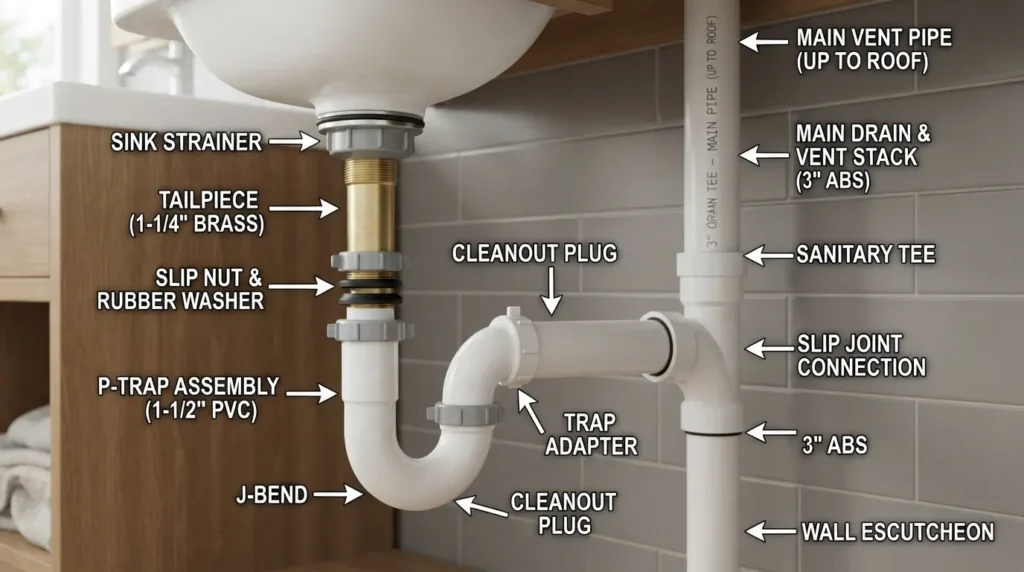
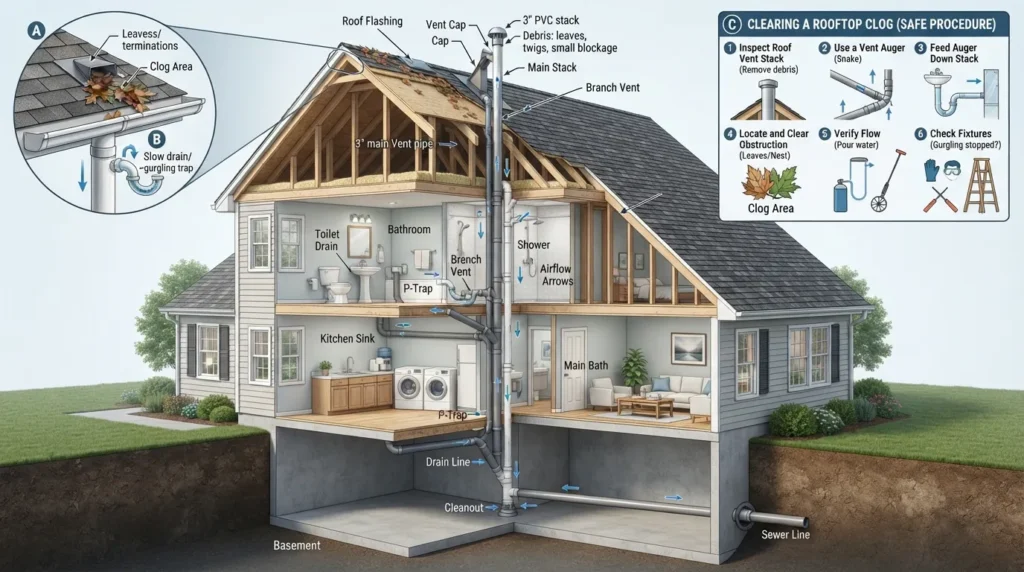
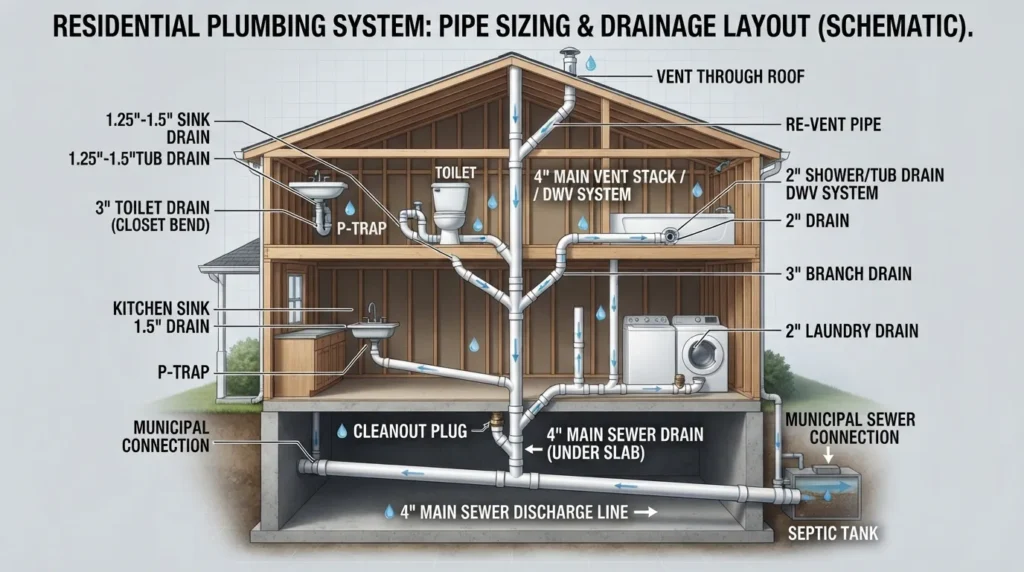
If you want to understand how individual fixtures connect into branches, larger building drains, and eventually the sewer system, our guide to how a drainage system carries wastewater through a property explains the basic flow path in more detail.
The Most Useful Question Is Not “Which Machine Is Best?”
It is easy to market one drain-cleaning method as the answer to every clog. Real drainage problems are more specific than that.
The better question is:
What is blocking the line, where is the restriction, and what condition is the pipe in?
That information helps determine whether mechanical drain cleaning, hydro jetting, inspection, or another response is appropriate.
Drain Snaking vs. Hydro Jetting vs. Camera Inspection
Mechanical Snaking
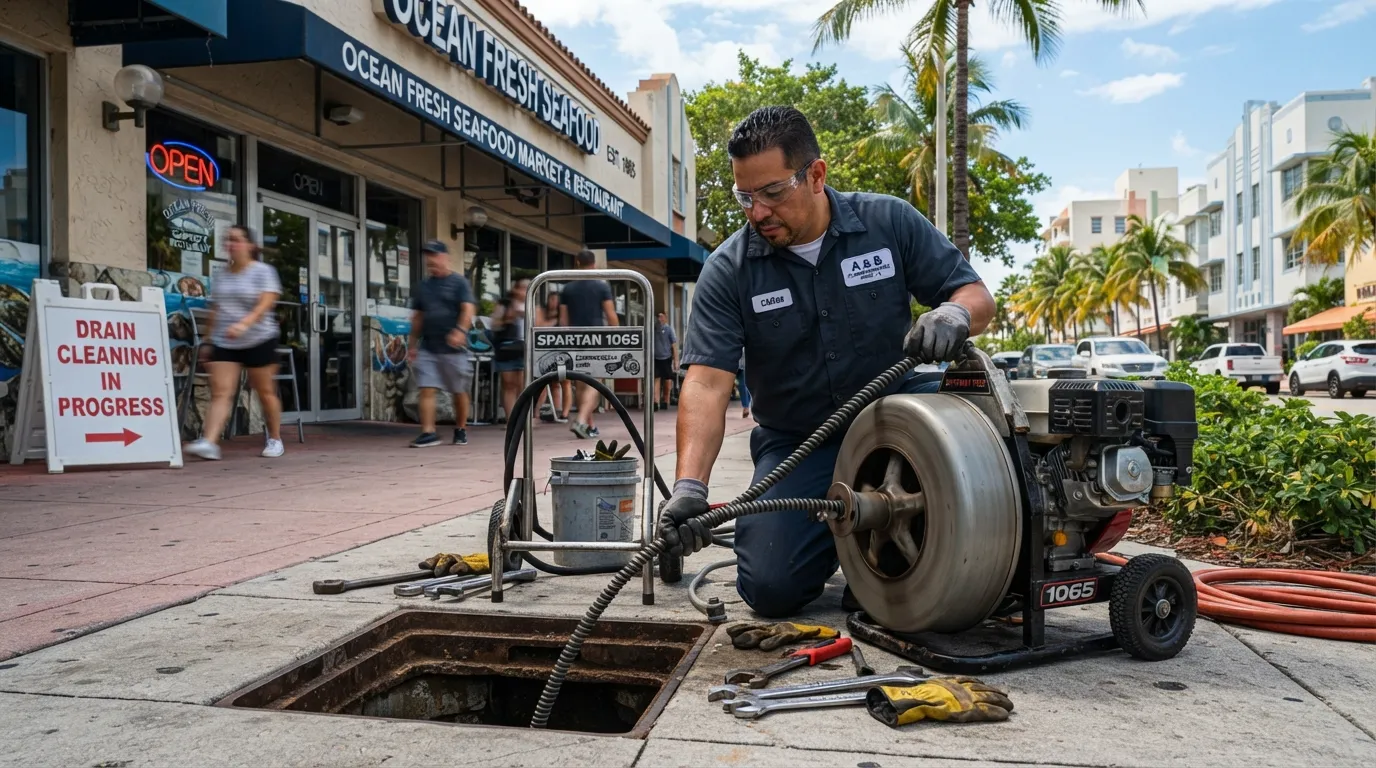
A professional cable, auger, or appropriate cutting head can break through or retrieve many localized obstructions.
Often useful when:
- A clog is relatively localized
- A physical obstruction needs to be opened or retrieved
- A suitable access point is available
Important limitation: opening a path through a blockage does not necessarily remove buildup coating the full inside surface of a pipe.
Hydro Jetting
Hydro jetting uses high-pressure water to remove heavier material from a suitable drainage line.
Often considered for:
- Grease accumulation
- Sludge and residue
- Broader pipe-wall buildup
- Some recurring restrictions
Important limitation: pipe condition matters. High pressure should not be treated as an automatic solution for every line.
Camera Inspection
A sewer or drain camera can provide visual information when the cause, location, or recurrence of a problem is not clear.
Especially useful when:
- The blockage keeps returning
- Several fixtures are affected
- Roots or pipe defects are suspected
- Repeated cleaning has not solved the problem
Important distinction: a camera diagnoses conditions; it does not itself remove a blockage.
Use the Symptom to Choose the Next Step
This is where commercial drain service becomes more useful than simply selling a cleaning machine. Different symptom patterns point toward different parts of the drainage system.
Why Different Businesses Develop Different Drain Problems
A useful commercial sewer drain cleaning service should consider how the property is actually used. A restaurant, hotel, office, warehouse, and multi-unit property can all have clogged drains, but the loads placed on those drains are not the same.
Restaurants, Cafes, and Commercial Kitchens
Food-service drainage is exposed to frequent washing, food residue, soaps, fats, oils, and grease. Over time, grease that enters drain piping can cool and adhere to pipe surfaces, reducing the available flow path.
That is why repeated kitchen drain problems should not automatically be treated as unrelated clogs. A recurring pattern may justify looking at the broader line condition and the way grease is being managed.
Hotels and Hospitality Properties
Hotels combine high-use guest bathrooms with housekeeping activity, laundry demands, kitchens or food-service areas, and multiple floors or branches. The location and number of affected fixtures become especially useful diagnostic clues.
A single slow sink and several rooms backing up at once are two very different service situations.
Office Buildings
Office drainage problems commonly affect restrooms, break rooms, sinks, and shared drainage lines. High restroom traffic can also increase the chance that materials not intended for drainage or flushing enter the system.
If repeated problems affect multiple fixtures, it is usually more useful to investigate the shared drainage path than to keep treating each fixture as an isolated clog.
Retail Centers and Multi-Tenant Properties
Public restrooms, employee areas, food tenants, and shared building drainage can make troubleshooting more complex. Property managers benefit from documenting which tenants or fixtures are affected, when symptoms began, and whether the problem changes when nearby fixtures are used.
HOAs, Condominiums, and Multi-Unit Buildings
Shared piping changes the diagnostic picture. A blockage affecting one unit may be local, while similar symptoms appearing across several units or floors can point toward a larger shared branch, stack, or building drain.
Warehouses and Industrial Facilities
Industrial drain cleaning services can involve larger piping, floor drainage, sediment, wash-down areas, or facility-specific waste streams. The correct approach depends on the actual material entering the drainage system, pipe configuration, access, and site requirements.
Industrial or process drainage should not be treated as interchangeable with an ordinary restroom or kitchen drain. If chemicals or specialized waste are involved, that information should be disclosed before service so the line can be evaluated appropriately.
A Miami-Specific Drain Problem: Fats, Oils, and Grease
Grease deserves special attention for commercial kitchens in Miami-Dade because this is not just a housekeeping issue. Miami-Dade County explains that fats, oils, and grease—commonly called FOG—can stick to sewer pipe walls, harden, restrict wastewater flow, and contribute to sewer blockages and overflows.
For Miami-Dade Food Businesses
Miami-Dade County currently identifies qualifying non-residential facilities that handle, prepare, or process food and can discharge FOG as FOG generators. County guidance includes requirements involving an operating permit and an approved FOG-control device for facilities that fall within its rules.
Because regulatory requirements can change and depend on the facility, use the County’s current guidance rather than relying on a plumbing article as a compliance determination.
From a drainage-maintenance perspective, the practical lesson is simpler: keeping grease and food waste out of drain lines helps reduce the material available to accumulate inside the piping. If a commercial kitchen already has a history of recurring grease-related restrictions, the maintenance strategy should be based on actual usage and blockage history rather than waiting for every line to fail again.
Commercial Drain Cleaning Should Start With Diagnosis, Not Guessing
A strong service process follows the drainage problem from symptom to cause instead of immediately assuming every clog needs the same treatment.
- Identify what is happening. Note slow drainage, odors, gurgling, overflow, recurring blockages, or several affected fixtures.
- Map the affected area. Knowing whether one fixture, one department, one floor, or the whole property is affected helps narrow the likely location.
- Find usable access. Cleanouts and other access points can affect which equipment can be used effectively.
- Evaluate the likely restriction. Grease, debris, scale, roots, foreign objects, and structural pipe problems do not behave the same way.
- Select the appropriate method. The goal is to use a method suited to the obstruction and pipe—not simply the most aggressive method available.
- Restore and test flow. Drainage should be tested after cleaning rather than assuming the problem is solved because the cable or jet passed through.
- Address recurrence. If the same problem has happened repeatedly, ask why. Inspection or a maintenance change may be more valuable than another identical clearing.
For broader information on the equipment and drain-clearing options available through EZ Plumbing, see our professional drain cleaning service in Miami.
Emergency Drain Cleaning vs. Preventive Drain Maintenance
Commercial drain work generally falls into three practical situations.
1. Active Emergency
- Sewage or wastewater rising
- Floor drain overflow
- Several fixtures backing up
- Restrooms becoming unusable
- Drainage failure interrupting operations
Priority: reduce further discharge, locate the blockage, and restore safe drainage.
2. Recurring Problem
- Same drain keeps clogging
- Persistent slow drainage
- Recurring odors
- Repeated gurgling
- Frequent need for snaking
Priority: understand why the restriction keeps returning instead of repeatedly treating the same symptom.
3. Preventive Maintenance
- High-use kitchen drainage
- Known grease history
- High-traffic facility
- Previous main-line backups
- Property with recurring drainage patterns
Priority: schedule service based on actual operating conditions and drainage history before a predictable restriction becomes an emergency.
How Often Should a Commercial Drain Be Cleaned?
There is no responsible universal answer such as “every three months” for every commercial building.
A restaurant with heavy grease exposure does not place the same load on its drainage system as a small office. A property that has experienced repeated main-line backups also deserves a different plan from a building with no history of drainage trouble.
A practical maintenance interval should consider:
- Property and business type
- Drain usage volume
- Grease or food exposure
- Previous blockage frequency
- Which lines repeatedly cause problems
- Pipe condition
- Results of previous cleaning or inspections
- Operational consequences if a drain fails
The goal is not to clean pipes according to an arbitrary calendar. The goal is to learn the pattern of the property and intervene before a known problem becomes disruptive.
How Much Does Commercial Drain Cleaning Cost?
Commercial drain-cleaning prices can vary too much by job conditions for one generic number to be accurate for every business.
The final scope can depend on:
- Whether one drain or several lines are affected
- The location and depth of the restriction
- Available cleanout and equipment access
- Pipe diameter and configuration
- What appears to be causing the blockage
- Whether mechanical cleaning or hydro jetting is appropriate
- Whether camera inspection is needed
- Whether the main sewer line is involved
- Pipe condition
- Urgency and site conditions
Better pricing question: Instead of asking only, “How much does it cost to clear a drain?” ask what the proposed service includes, why that method is being recommended, and what could change the scope after the line is evaluated.
Is Professional Drain Cleaning Worth It?
For a minor, one-time fixture issue, professional service may not always be the first step. But the value changes quickly when a commercial property has recurring problems, several affected fixtures, sewage backup, significant grease accumulation, or a drainage failure that can interrupt business operations.
Professional cleaning becomes especially valuable when it helps answer questions that a temporary DIY fix cannot:
- Is the clog local or farther downstream?
- Why does it keep returning?
- Is buildup coating the pipe wall?
- Are roots or pipe defects involved?
- Does the line need cleaning or a different plumbing repair?
- Can the problem be reduced with a better maintenance plan?
That difference matters. Restoring flow for today and understanding why the drain keeps failing are not always the same job.
What Should You Do Before the Plumber Arrives?
If your business has an active backup, a few simple actions can make the situation easier to evaluate and help prevent additional wastewater from entering the affected line.
- Reduce unnecessary water use when several drains are backing up.
- Keep employees and customers away from sewage-contaminated areas.
- Note exactly which fixtures are affected.
- Write down when the problem started and whether it has happened before.
- Tell the plumber if chemical drain products have already been added.
- Identify accessible cleanouts if you know where they are.
- For multi-tenant properties, check whether neighboring units are experiencing the same symptoms.
Avoid adding more drain chemicals to a fully backed-up line. They may remain in standing wastewater and create an additional exposure concern when the line is opened or mechanically serviced.
How to Choose a Commercial Drain Cleaning Company
For a business property, the cheapest promise or the biggest machine is not necessarily the best decision. I would look for a company that can explain the problem and the proposed solution in plain language.
Useful questions include:
- Are you licensed and insured for the plumbing work you perform?
- Do you work with commercial properties?
- How will you determine where the blockage is?
- Why are you recommending snaking, jetting, or inspection?
- Will pipe condition be considered before hydro jetting?
- How will you verify drainage after cleaning?
- What might explain a recurring blockage?
- Will you explain if the problem appears to need repair rather than additional cleaning?
- Can the service plan account for the operational needs of the property where practical?
EZ Plumbing Repair Services is a Miami plumbing company serving residential and commercial properties in Miami-Dade. The company publishes its Florida State plumbing contractor license CFC1432859, Miami business address, service information, and project work online. You can learn more about the local Miami plumbing team and its broader plumbing services.
Commercial Drain Cleaning Across Miami-Dade
Commercial drainage problems are not limited to one type of property or one part of Miami. Restaurants, offices, hotels, retail properties, HOAs, multi-unit buildings, and other businesses throughout Miami-Dade can experience localized clogs, grease restrictions, shared-line backups, or deeper sewer problems.
For a local service provider, geographic relevance should mean more than inserting city names into a page. The technician still has to understand the symptom pattern, identify the affected section of drainage, use appropriate equipment, and explain what should happen next.
EZ Plumbing serves businesses and property owners in Miami and surrounding Miami-Dade communities, including areas such as Miami Beach, Hialeah, North Miami, Coral Gables, Doral, Kendall, and nearby locations.
A Better Commercial Drain Maintenance Strategy
If your building has repeated drainage problems, I would avoid treating every service call as a completely new event. Start keeping a simple drain history.
Track These Five Things
- Location: Which fixture, room, tenant, or branch was affected?
- Symptom: Slow flow, full blockage, odor, gurgling, or overflow?
- Timing: Did it happen during peak usage, after kitchen cleanup, during heavy occupancy, or seemingly at random?
- Service performed: Was the line snaked, jetted, inspected, or repaired?
- Recurrence: How long did normal drainage last before symptoms returned?
Over time, that history can help distinguish an occasional obstruction from a repeatable system problem. It also gives the plumber better information before the next service visit.
Commercial Drain Cleaning FAQs
What is included in commercial drain cleaning?
The exact scope depends on the problem, but professional service generally begins by evaluating the affected drains and likely blockage location. The plumber then chooses an appropriate clearing method, restores flow, tests drainage, and explains any signs that point to recurring buildup or a deeper pipe issue. Camera inspection or hydro jetting may be recommended when the symptoms and pipe condition justify them.
What is the difference between drain cleaning and sewer cleaning?
A fixture or branch drain serves a smaller part of the plumbing system. Larger building drains and sewer lines receive wastewater from multiple downstream connections. If several fixtures are backing up together, the restriction may be deeper than a single fixture drain.
Can hydro jetting remove commercial kitchen grease?
Hydro jetting can be useful for grease, sludge, and accumulated residue when the line is suitable for high-pressure cleaning. It should not automatically be used on every pipe without considering pipe condition, access, and the nature of the restriction.
When is a sewer camera inspection worth doing?
Camera inspection becomes particularly useful when a blockage repeatedly returns, the location is uncertain, roots or structural problems are suspected, or repeated cleaning has not explained why the system keeps failing.
Why does my commercial drain keep clogging after snaking?
A cable may successfully create a path through an obstruction without removing every type of buildup from the pipe wall. Recurrence can also be associated with grease, scale, roots, pipe offsets, damaged piping, or another condition farther down the system. The repeat pattern is a reason to diagnose rather than simply repeat the same treatment indefinitely.
How do I know if the main sewer line is clogged?
One important clue is the number of affected fixtures. A single slow drain can be local, while several fixtures backing up or reacting to each other can indicate a downstream restriction in shared drainage. A plumber still needs to evaluate the property before confirming the location.
Should businesses use chemical drain cleaners?
A chemical product does not diagnose why a commercial line keeps clogging and may remain in standing wastewater when a drain is fully blocked. For significant or recurring commercial problems, mechanical evaluation is generally more useful than repeatedly adding chemicals without knowing the condition of the line.
How often should restaurant drains be professionally cleaned?
There is no single interval that fits every restaurant. Usage volume, grease exposure, pipe condition, previous blockage history, grease-control practices, and the operational consequences of a backup should determine the maintenance plan.
Can a commercial drain problem shut down a business?
A serious wastewater backup can make restrooms, kitchens, floor drains, or other plumbing areas unusable and can create sanitation concerns. That is why sewage rising through fixtures or several drains backing up together should be treated more urgently than a single mildly slow sink.
Need Commercial Drain Cleaning in Miami?
If you are managing an active backup, recurring clog, slow commercial drain, grease-related restriction, or a drainage problem affecting several fixtures, the next step is to identify where the restriction is and choose the method that fits the actual condition.
Get the Drain Problem Diagnosed Before It Disrupts More of Your Business
Tell EZ Plumbing which drains are affected, whether wastewater is backing up, whether the problem has happened before, and what type of commercial property you operate. That information gives the technician a better starting point for choosing the appropriate service.
Helpful Miami-Dade & U.S. Resources
For business owners who want to go beyond plumbing service information, these official resources provide useful background on fats, oils, grease, and wastewater systems:
- Miami-Dade County: Fats, Oils and Grease (FOG) — County guidance for residential and non-residential FOG management, including information for food-handling facilities.
- U.S. EPA: Fats, Oils and Grease Resources — additional information about managing FOG impacts on wastewater collection systems.
The best commercial drain cleaning strategy is not to use the strongest tool on every blockage. Start with the symptom pattern, identify the likely location and cause, consider pipe condition, select an appropriate cleaning or diagnostic method, verify flow afterward, and investigate recurring problems instead of repeatedly treating the same symptom.