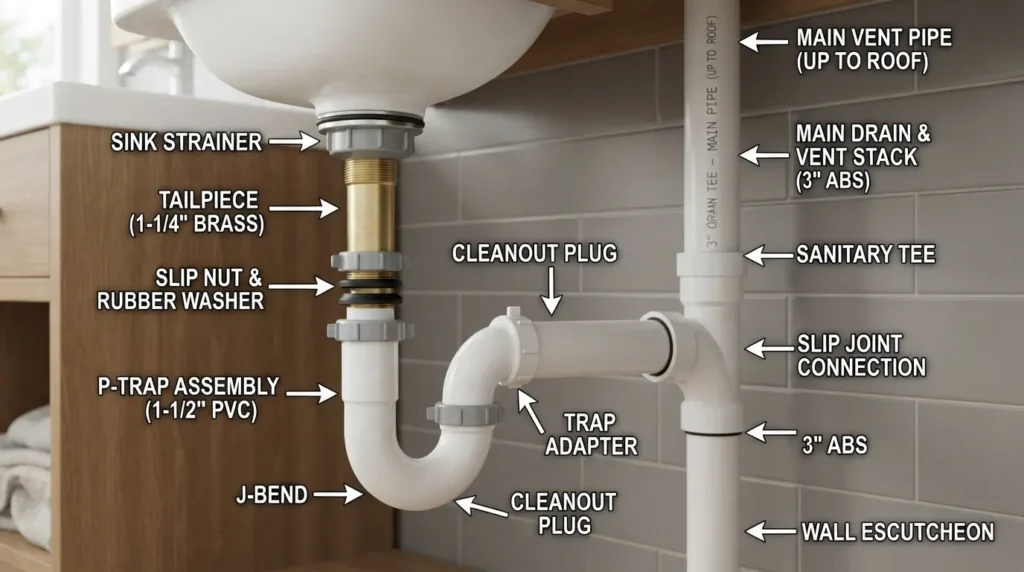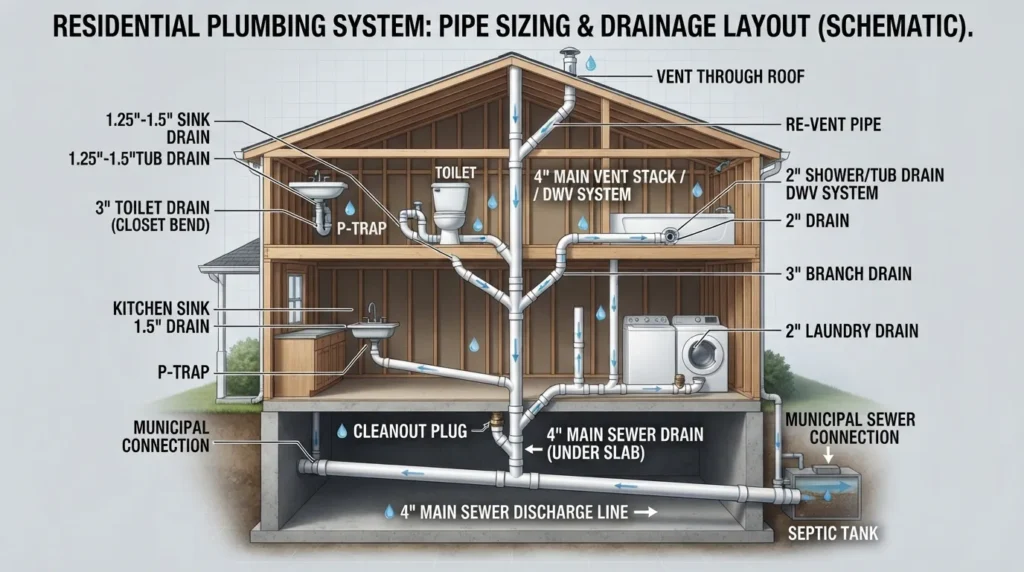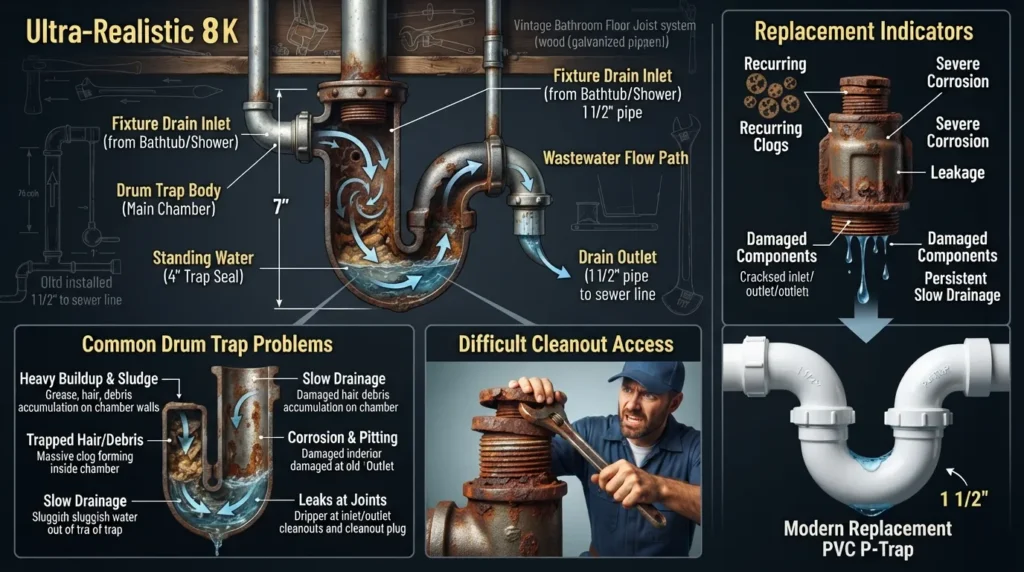
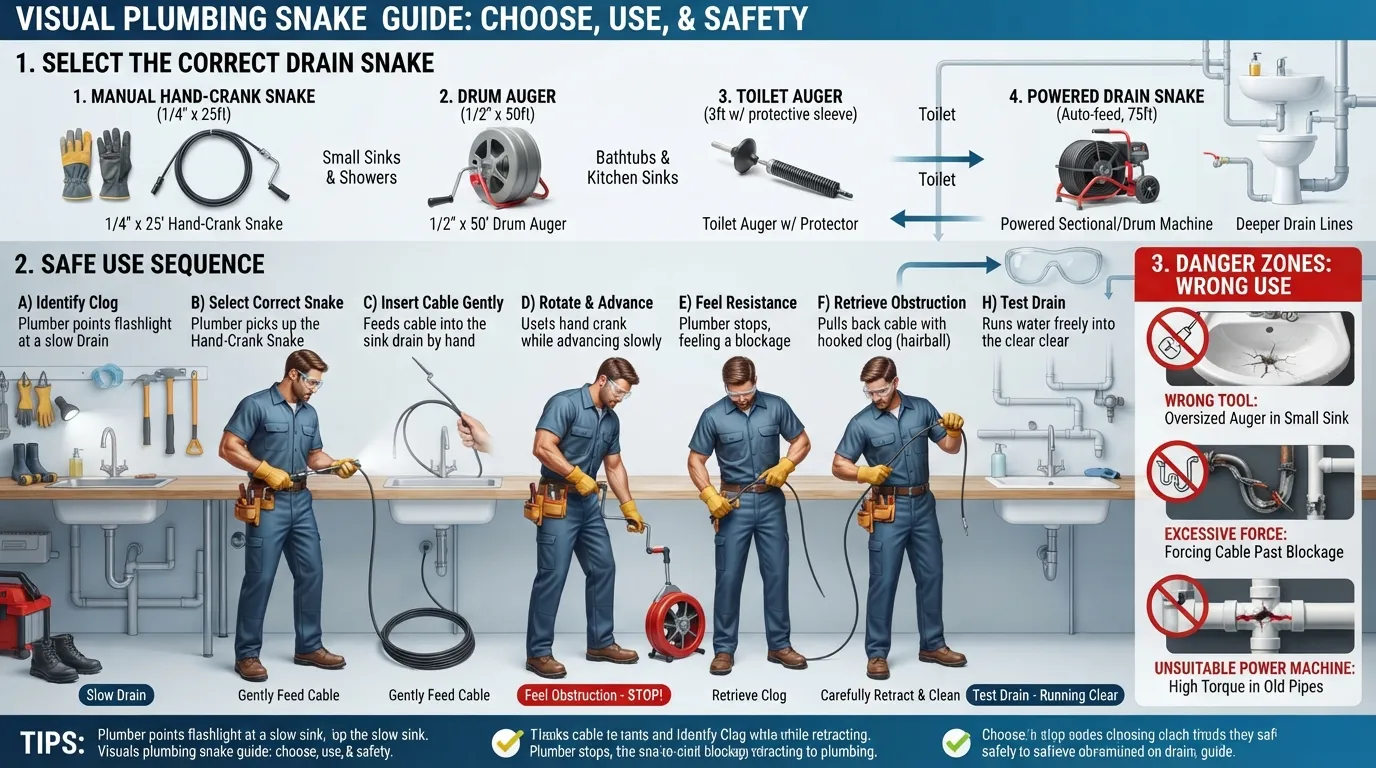
A clogged sink, shower, tub, or toilet can make a drain snake look like the obvious solution. But before you buy the longest plumbing snake you can find or start forcing a cable into the drain, it helps to know something more important: the right drain snake depends on the fixture, the likely location of the clog, the pipe size, and what is actually blocking the line.
In this guide, I’ll help you decide whether you need a simple hand snake, a toilet auger, a powered drain auger, a longer drain-cleaning machine, or professional diagnosis instead. You’ll also learn how to use a drain snake safely, when plunging should come first, whether buying or renting makes sense, and how to tell if snaking actually solved the problem.
A drain snake—also called a plumber’s snake, plumbing snake, or drain auger—is a flexible mechanical tool used to break through, loosen, or retrieve a clog inside drain piping. For a localized sink, tub, or shower clog, a small hand or drum auger may be appropriate. For a toilet, use a toilet or closet auger designed to protect the porcelain. If several fixtures are backing up together, stop treating it like a single-drain clog because the restriction may be farther downstream in a shared drain or sewer line.
Before You Grab a Drain Snake, Find Out Where the Clog Probably Is
The most useful question is not, “Which drain snake should I buy?” It is:
“Where is the blockage likely located?”
A drain snake works best when the tool, cable, access point, and blockage are reasonably matched. If you start with the wrong diagnosis, a 50-foot or 100-foot cable does not automatically make the job easier.
Only One Fixture Is Slow
A slow bathroom sink, shower, tub, or kitchen sink can point to a localized obstruction around the fixture drain, stopper, trap, trap arm, or nearby branch line.
Nearby Fixtures Are Both Slow
If a sink and nearby shower are affected together, the restriction may be in piping shared by those fixtures rather than directly under one drain opening.
Several Drains Are Backing Up
Multiple affected fixtures, wastewater rising in a tub or shower, or one fixture reacting when another is used can point to a deeper shared drain or sewer problem. This is not the time to blindly force a household snake farther into the system.
If you want to understand how a fixture drain connects to branch piping, stacks, the building drain, and the sewer lateral, see our guide to how your home drainage system works.
Drain Snake Selector: Match the Tool to the Problem
Instead of choosing a snake by price or cable length alone, use the fixture and symptoms to narrow your options.
Shower or Bathtub
Start by checking: the strainer, stopper, and visible hair near the drain opening.
Possible tool: A simple hair-removal tool may be enough for a shallow hair clog. For a blockage farther into an appropriate small drain line, a hand-crank or compact drum auger may make more sense.
Bathroom or Kitchen Sink
Start by checking: the stopper or pop-up assembly and accessible trap area before assuming the clog is several feet down the pipe.
Possible tool: Hand spinners, drum augers, and sink machines are commonly designed for smaller sink, tub, and shower drain lines. Always match the cable to the manufacturer’s approved line-size range. RIDGID, for example, specifies different cable diameters for different drain-line sizes on its K-45 sink machine.
Clogged Toilet
Use a toilet or closet auger rather than treating the toilet like an ordinary sink drain. Toilet augers are built to travel through the toilet trap and commonly include a protective guard or tube to reduce the chance of scratching porcelain.
Floor Drain or Deeper Branch Clog
A larger cable machine may be appropriate, but pipe diameter, cable diameter, access, depth, and blockage type all matter. A “longer” snake is not automatically the correct snake.
Multiple Drains or Suspected Main-Line Clog
Treat this as a diagnostic problem first. Professional drain machines can use much larger and more aggressive cables and cutters than ordinary household augers. If the restriction is recurring, structural, root-related, or in a larger sewer line, inspection or another clearing method may be more appropriate.
What Are the Main Types of Drain Snakes?
Manual Drain Snake
A manual snake uses hand force to feed and rotate a cable. Simple hand-crank models are compact and useful for many localized household drain clogs. Because you control the cable manually, you may also have a better feel for resistance than with an aggressive powered machine.
Hand-Crank Drum Auger
A drum auger stores the cable inside a housing. You feed cable from the drum while rotating it with a handle. Some models can also connect to a drill, but that does not mean every drain should be cleared with powered rotation.
Electric or Cordless Drain Snake
Powered drain snakes rotate and feed cable with much less manual effort. They can be useful for tougher or deeper blockages, but additional power also means you need better cable control and closer attention to the manufacturer’s approved pipe and cable sizes. Professional drain-cleaning equipment ranges from small sink machines to heavy drum and sectional machines intended for larger drain and sewer lines.
Toilet or Closet Auger
This is the tool I would look for when the clog is actually inside a toilet. The curved tube helps guide the cable through the toilet trap, while protective material around the tube helps reduce scratching of the porcelain.
Drain Snake With Changeable Heads
Professional cable systems may accept different heads or cutters because not every obstruction behaves the same way. Depending on the equipment, manufacturers offer straight augers, bulb augers, retrieving tools, spade cutters, grease cutters, root cutters, and other specialized attachments.
Important:
Changeable cutting heads are not an invitation to experiment inside an unknown pipe. A cutter that makes sense for one obstruction and pipe size can be unnecessarily aggressive for another. Match the head, cable, and machine to the line and follow the equipment manufacturer’s instructions.
How Long of a Drain Snake Do You Need: 25, 50, 75, or 100 Feet?
Search results make cable length look like the main buying decision. It is not.
Cable length tells you how far the machine can potentially reach. It does not tell you whether the cable is appropriate for your pipe.
Around 25 ft.
Common on compact household sink, tub, and shower drain snakes. Manufacturer specifications still determine which drain-line diameters the cable can serve.
Around 50 ft.
Found on larger hand and powered machines for deeper drain work. Some rental equipment is designed for 2- to 4-inch lines up to 50 feet, but specifications vary by machine.
75–100 ft.+
These lengths are common on heavier drain and sewer machines. Professional systems may support different cable diameters and lengths depending on the drain-line range being serviced.
So if you are deciding between a 50-foot plumbing snake and a 100-foot drain auger, do not ask only, “How far does it reach?” Ask:
- What fixture is clogged?
- Is one drain affected or several?
- What is the approximate drain-line diameter?
- Where is the access point?
- How far away is the suspected obstruction?
- What cable diameter does the machine manufacturer approve?
- What kind of head or cutter is intended for the obstruction?
- Am I dealing with a simple clog or a recurring system problem?
Is It Better to Plunge or Snake a Drain?
Try a Plunger First When…
- The blockage appears localized.
- The fixture allows you to create an effective seal.
- You suspect a relatively simple obstruction.
- You have not yet tried the least-invasive mechanical option.
Move to a Snake When…
- Correct plunging does not clear the clog.
- The obstruction appears to be farther into the drain.
- You can access the line with the correct type of snake.
- You have a cable and tool approved for that fixture and pipe size.
For a clogged toilet, I would normally start with an appropriate toilet plunger. If that does not work and the obstruction still appears to be in the toilet or immediately beyond its trap, a closet auger is the more specialized next tool.
How to Use a Drain Snake Safely
The exact procedure depends on your snake or drain-cleaning machine, so the manufacturer’s manual comes first. For a basic hand-operated sink, tub, or shower auger, the general process looks like this:
- Confirm you are using the correct tool. Do not send an exposed general-purpose cable through a toilet when a toilet auger is the appropriate tool.
- Protect yourself and the work area. Wear appropriate eye and hand protection and expect the cable to come back dirty. Powered drain-cleaning manuals warn about rotating cables, bacteria, chemical exposure, and cable damage.
- Remove the easiest obstruction first. Take out an accessible stopper, strainer, or visible hair buildup before feeding several feet of cable into the line.
- Feed the cable gently into the drain. Do not use brute force to make the cable negotiate a bend.
- Rotate while advancing gradually. On a manual auger, lock the cable as required by the tool design and turn the handle while applying controlled forward pressure.
- Pay attention when you feel resistance. Resistance may be the clog, but it can also be a bend or fitting. Work the cable rather than violently forcing it.
- Break through or retrieve the obstruction. Depending on the snake head and clog, the cable may bore through material, snag it, or loosen it enough to restore flow.
- Retract the cable slowly. A slow retrieval gives the head a better chance to bring debris back instead of dropping it immediately.
- Test the drain. Run water and watch how the fixture behaves. Do not assume one successful drain cycle proves a recurring problem is permanently fixed.
- Clean and dry the equipment. Follow the manufacturer’s cleaning and storage instructions, especially for metal cable.
Chemical cleaner already in the drain?
Be especially careful. Drain-cleaning equipment manuals warn about chemical-burn exposure during drain work. Read the chemical product label and the tool instructions before inserting a cable into standing liquid, and avoid creating splashback. If you do not know what was poured into the drain, professional help is the safer choice.
Watch: How to Properly Use a Drain Auger
This practical video shows the basic process of working a drain auger through tubs, showers, and sinks.
Can a Drain Snake Damage Pipes?
Yes, a drain snake can cause damage when the wrong tool is used, a cable is forced, the machine is too aggressive for the line, or the piping is already deteriorated.
Professional drain-machine manuals make an important distinction: correctly selected equipment can be used on drains that are in suitable condition, but improper use can damage both the cable and the drainage system. Pipe condition matters, too.
Risk increases when you:
- Use a general drain cable inside a toilet and scratch the porcelain.
- Force a cable when it will not pass a bend.
- Use an oversized cable in a small drain line.
- Use a powerful machine without controlling the rotating cable correctly.
- Choose an aggressive cutter without knowing the obstruction or pipe condition.
- Continue snaking damaged or deteriorated piping without first understanding its condition.
Manual vs. Electric Drain Snake: Which Is Better?
Choose a Manual Drain Snake When:
- You are dealing with a relatively simple localized clog.
- You want more direct feel and control.
- The drain line falls within the tool’s approved range.
- You do not need a heavy-duty cutter or long main-line machine.
Consider Powered Equipment When:
- The obstruction is deeper or more difficult.
- The machine and cable are specifically rated for the line.
- You understand how to safely control a rotating drain cable.
- The equipment is actually suitable for the access point and blockage.
Do not equate more power with a better result. The best drain snake is the one matched to the job—not the largest motor or longest cable you can rent.
Should You Buy a Drain Snake, Rent One, or Call a Plumber?
This is where many buying guides stop too early. Whether a drain snake is “worth buying” depends on the kind of drain problem you actually have.
Buy
A basic snake can make sense if you regularly handle simple localized sink, tub, or shower clogs and are comfortable using the correct tool.
Rent
Rental may make sense for a one-time deeper clog when you know the correct machine and line size and can safely operate the equipment. Home Depot currently lists drain-cleaning machines among its rental equipment.
Call a Plumber
Professional diagnosis is the stronger choice when several drains are affected, sewage is backing up, the clog keeps returning, you suspect roots or damaged piping, you cannot identify a safe access point, or DIY attempts are not restoring normal flow.
Did the Drain Snake Fix the Problem—or Just Punch a Hole Through It?
This is one of the most important questions after snaking.
A mechanical cable can be very effective on a localized obstruction, but restoring flow once does not always mean the inside of the drain is fully clean or that the cause has been corrected. A cable can sometimes open a pathway through buildup while residue remains on the pipe wall. Recurring backups can also be caused by conditions that a simple snake cannot diagnose.
After snaking, ask yourself:
- Does the fixture now drain quickly and consistently?
- Does it stay clear after several normal uses?
- Are nearby fixtures behaving normally?
- Has gurgling or backup stopped?
- Does the clog return within a short period?
- Is this the same drain you have already cleared more than once?
When a blockage keeps coming back, the next step may be different from simply running the same snake again. Mechanical snaking, hydro jetting, and camera inspection solve different problems. A cable can break through many localized obstructions; hydro jetting can remove broader grease, sludge, or residue when the pipe condition allows it; and camera inspection can help identify roots, cracks, offsets, bellies, and other deeper causes. You can learn more about these options on our professional drain cleaning in Miami page.
Drain Snake Mistakes to Avoid
- Buying by cable length alone. A 100-foot snake is useless if the cable and machine are wrong for your drain line.
- Using a sink snake in a toilet. Use a closet or toilet auger designed for the fixture.
- Forcing the cable through resistance. A bend can feel like a clog.
- Ignoring visible hair or debris. Remove what you can reach before sending a cable deeper.
- Running aggressive cutters blindly. Different heads have different purposes.
- Assuming every slow drain is a clog in that fixture. Multiple affected fixtures can point farther downstream.
- Repeatedly snaking a recurring blockage without diagnosis. A recurring problem may need inspection rather than another temporary opening.
- Using powered equipment without reading its manual. Cable control, line size, gloves, rotation, and operating procedures matter.
Drain Snake FAQs
When Should You Stop DIY Drain Snaking?
Stop and Get the Drain Diagnosed If:
- Several fixtures are backing up at the same time.
- Sewage or dirty wastewater is rising through another fixture.
- The same clog keeps returning.
- You suspect roots, a broken pipe, an offset, or another structural issue.
- The snake repeatedly stops at the same location and you cannot identify why.
- You cannot safely control the machine or cable.
- You are unsure which cable or cutter is appropriate.
- A chemical drain opener is present and you cannot safely manage the exposure risk.
One practical lesson from real drain-cleaning work is that the tool should follow the diagnosis. EZ Plumbing’s published project gallery includes a bathtub drain cleared with a professional plumbing snake, along with heavier drain-cleaning equipment and sewer-camera equipment used when the problem requires a different level of access or diagnosis.
A Simple Drain Snake Decision Checklist
- Identify the affected fixture.
- Check whether other drains are affected.
- Remove accessible hair, debris, or stopper buildup first.
- Try the least-invasive appropriate method.
- Choose a snake specifically suited to the fixture.
- Match cable diameter and machine capacity to the pipe—not just cable length.
- Use a toilet auger for toilet-specific clogs.
- Do not force a cable that will not advance normally.
- Test the drain after clearing.
- If the problem returns, diagnose the cause instead of repeating the same temporary fix.
Need Help With a Stubborn Drain in Miami?
If you are dealing with a clog that keeps returning, multiple drains backing up, or a blockage that your household drain snake cannot safely reach, EZ Plumbing Repair Services in Miami can help determine whether the problem needs targeted snaking, a different clearing method, or deeper diagnosis.
Drain Snake Shopping & Reference Resources
If your clog is appropriate for DIY drain snaking, these are useful places to compare tool types, cable lengths, toilet augers, hand snakes, powered machines, and manufacturer specifications. Product availability, specifications, rental inventory, and pricing can change, so confirm the exact tool requirements before buying or renting.
Compare Drain Snakes and Augers
- Home Depot Drain Snakes — manual, drill-powered, electric, toilet, sink, tub, shower, and heavier drain-cleaning equipment.
- Amazon Drain Snake Listings — broad marketplace comparison for household drain snakes and accessories.
- Lowe’s Augers, Plungers & Drain Openers — hand augers, drain snakes, plungers, and machine augers.
- Harbor Freight Drain Cleaners & Augers — household and commercial drain-cleaning equipment.
- Walmart Drain Snakes — consumer drain snakes, augers, hair-removal tools, and related equipment.
Technical & Educational References
- RIDGID K-45 Sink Machine Specifications — useful example of how cable diameter and drain-line size are matched.
- RIDGID Toilet Auger Reference — toilet-specific auger design and porcelain protection.
- Plumber’s Snake Reference — terminology and overview of hand, toilet, and drum augers.
- How to Use a Drain Snake — additional step-by-step educational reading.
- Drain Auger Demonstration Video — practical video showing basic auger use for common household drains.
Do not choose a drain snake because it is the longest, cheapest, or most powerful. Start with the symptom, identify the likely clog location, choose a tool designed for that fixture and pipe size, use it with controlled technique, and judge the result afterward. If the blockage is recurring, affecting multiple drains, or beyond a safe DIY fix, the best next tool may be professional diagnosis rather than another pass with the same cable.