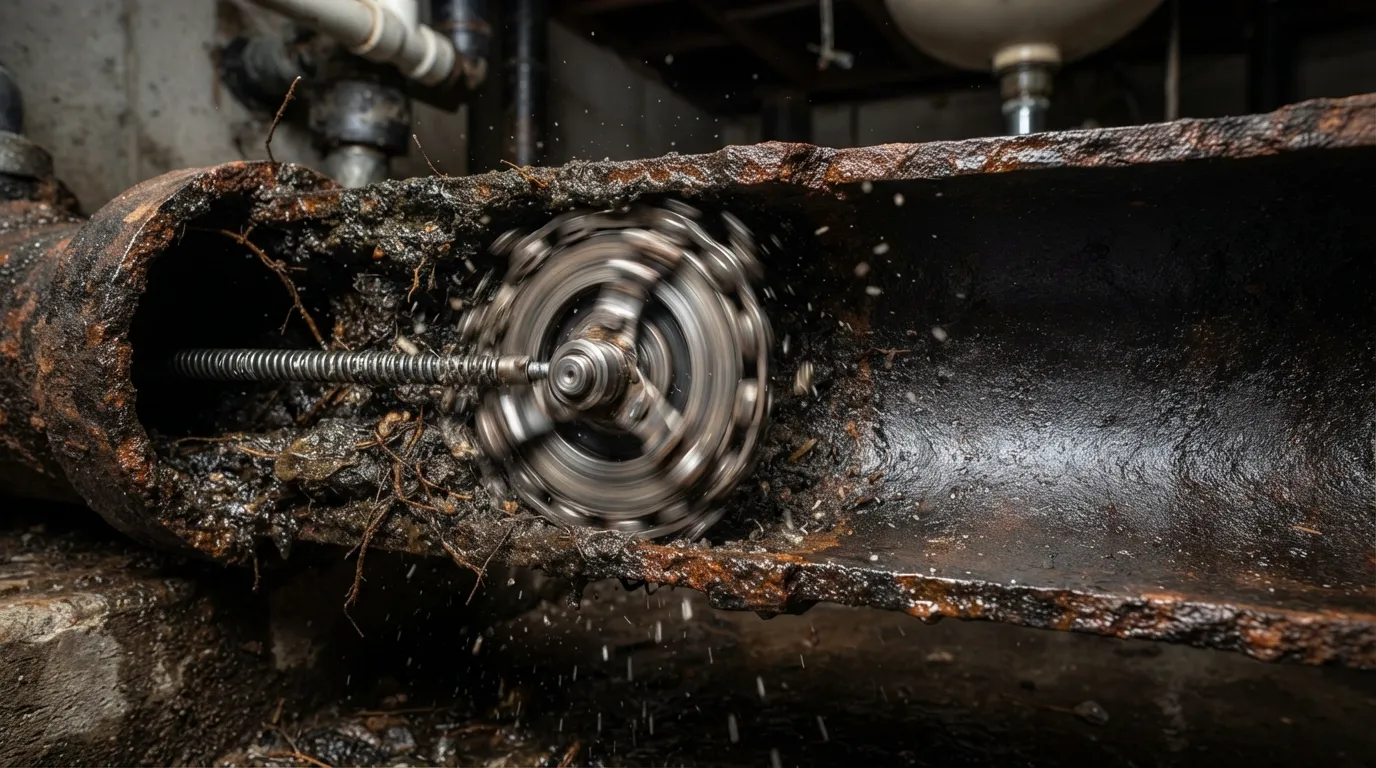
A chain knocker drain cleaner is a mechanical drain-cleaning attachment designed to rotate inside a pipe and break away material such as grease, scale, rust, sludge, and other buildup from the pipe wall. It is commonly used with a flex-shaft drain-cleaning machine rather than as a stand-alone hand tool.
A chain knocker is useful when the goal is not simply to punch through a clog but to mechanically remove buildup from the inside walls of a drain pipe. The right chain depends on the pipe material, pipe diameter, blockage, pipe condition, machine, and manufacturer-approved configuration.
That last point matters. There is no single chain knocker that is automatically right for every drain. A setup that works well for scaling in a cast-iron line may not be appropriate for a softer pipe, a fragile line, or a different machine.
If you are trying to decide whether you need a chain knocker, a standard drain snake, hydro jetting, or professional drain cleaning, this guide will help you make that decision based on the actual condition inside the pipe—not simply on which tool sounds the most powerful.
What Does a Chain Knocker Do?
A chain knocker rotates chains or cutting elements inside the pipe so they contact buildup along the internal pipe wall. Depending on the specific attachment, machine, and application, this mechanical action can help remove deposits that a basic cable may only penetrate rather than fully clean away.
Think of the difference this way:
- Opening a clog means creating enough space for water to pass again.
- Cleaning the pipe wall means removing material that is coating or narrowing the inside of the line.
A conventional drain snake can be excellent for many localized clogs. A chain knocker becomes more relevant when material is attached to or built up along a larger section of pipe wall.
You may also see phrases such as drain cleaning chain, chain knocker head, flex-shaft chain, or even the informal phrase chain snake plumbing. These terms can describe related tools, but compatibility and intended use can differ considerably between products.
How a Chain Knocker Drain Cleaner Works
The basic process is easier to understand when you look at the whole system rather than the chain by itself.
The drain-cleaning machine provides rotational power.
A flexible shaft or cable transfers that rotation through the drain line.
The compatible chain attachment rotates at the working end of the system.
The rotating chain contacts appropriate deposits and mechanically disrupts buildup.
As the attachment rotates, centrifugal force can cause the chains to move outward toward the pipe wall. This is why properly selected chain systems can provide more complete wall contact than a basic cable head.
However, more contact and more aggressive cutting are not always better. The tool still has to match the pipe.
What Can a Chain Knocker Remove?
What a chain knocker can remove depends heavily on the attachment. Different manufacturers offer smooth chains, carbide-equipped chains, penetrating heads, root-oriented attachments, and other configurations.
Depending on the approved application, chain knockers may be used against materials such as:
- Grease buildup
- Sludge and accumulated debris
- Mineral scale
- Rust and corrosion deposits
- Hardened material on pipe walls
- Some soft obstructions
- Certain root intrusions when a suitable root-cutting configuration is used
Important: Do not assume that every chain knocker is designed for every item on this list. A smooth cleaning chain, carbide chain, and root-cutting attachment can have very different applications.
The Most Important Rule: Match the Chain to the Pipe and Blockage
One of the biggest mistakes you can make is choosing a chain based only on how aggressive it looks.
I would make the decision in this order:
- Identify the pipe material.
- Confirm the pipe diameter.
- Understand what is inside the pipe.
- Assess the condition of the pipe itself.
- Select an attachment that is approved for the machine and application.
Chain Knocker Selection Framework
Start by identifying the pipe material and use a cleaning configuration specifically intended for that pipe and machine.
A more aggressive descaling attachment may be appropriate, but the pipe condition and manufacturer guidance still matter.
Do not assume a heavy-duty or carbide configuration is safe. Use only an attachment explicitly suitable for that pipe material and application.
Use a system and attachment specifically designed for root-related work rather than assuming a standard chain will handle them.
Diagnosis or camera inspection should come before selecting an aggressive cleaning attachment.
Can You Use a Chain Knocker on PVC?
Sometimes—but not every chain knocker is appropriate for PVC.
This is exactly why a simple yes-or-no answer can be misleading.
Some drain-cleaning systems offer chain configurations intended for suitable plastic-pipe applications, while heavy-duty or carbide-style chains may be designed primarily for harder materials or specific descaling jobs.
Before using one on PVC, confirm:
- The attachment is approved for the pipe material.
- The chain size matches the pipe diameter.
- The attachment is compatible with the machine and cable.
- The pipe is in suitable structural condition.
- The blockage actually calls for that type of cleaning.
If the pipe is old, damaged, deformed, improperly installed, or its condition is unknown, increasing the aggressiveness of the tool without first understanding the line can create unnecessary risk.
Chain Knocker vs. Drain Snake vs. Hydro Jetting
There is no universally “strongest” drain-cleaning method. The most effective method is the one that matches the blockage and the condition of the plumbing system.
Drain Snake
Often useful for: Localized clogs and obstructions that can be penetrated, hooked, broken apart, or retrieved.
Main advantage: Simple and effective for many common drain blockages.
Limitation: Opening a passage through a clog does not necessarily remove buildup coating the full pipe wall.
Chain Knocker
Often useful for: Compatible applications involving grease, scale, rust, sludge, or other wall buildup.
Main advantage: Can mechanically clean material from more of the inner pipe surface.
Limitation: Correct chain, machine, pipe material, diameter, and pipe condition are critical.
Hydro Jetting
Often useful for: Broader grease, sludge, debris, and pipe-wall cleaning where the plumbing is suitable for high-pressure water cleaning.
Main advantage: Cleans with high-pressure water rather than a rotating chain.
Limitation: Pipe condition, access, blockage type, and equipment setup still have to be evaluated.
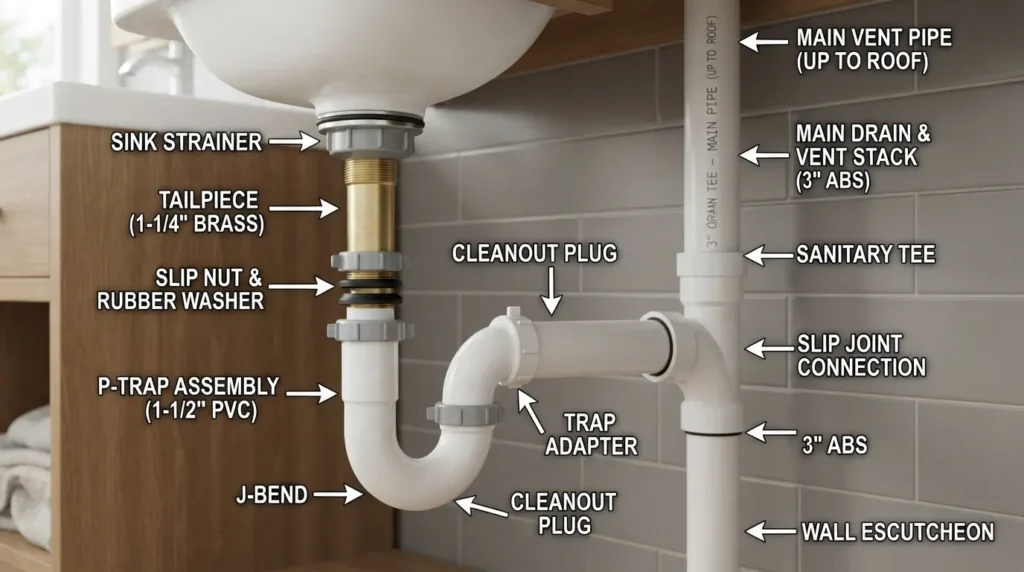
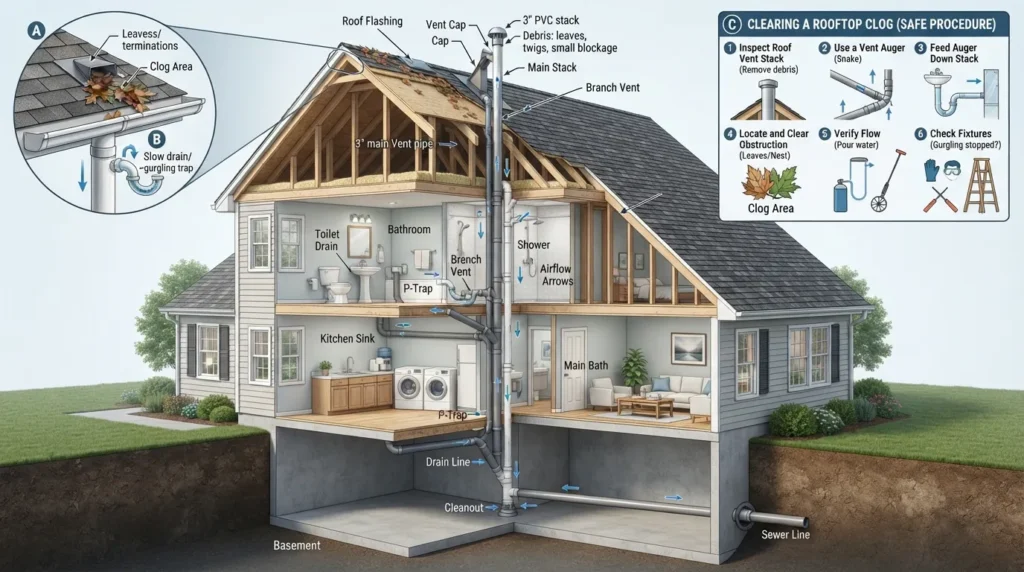
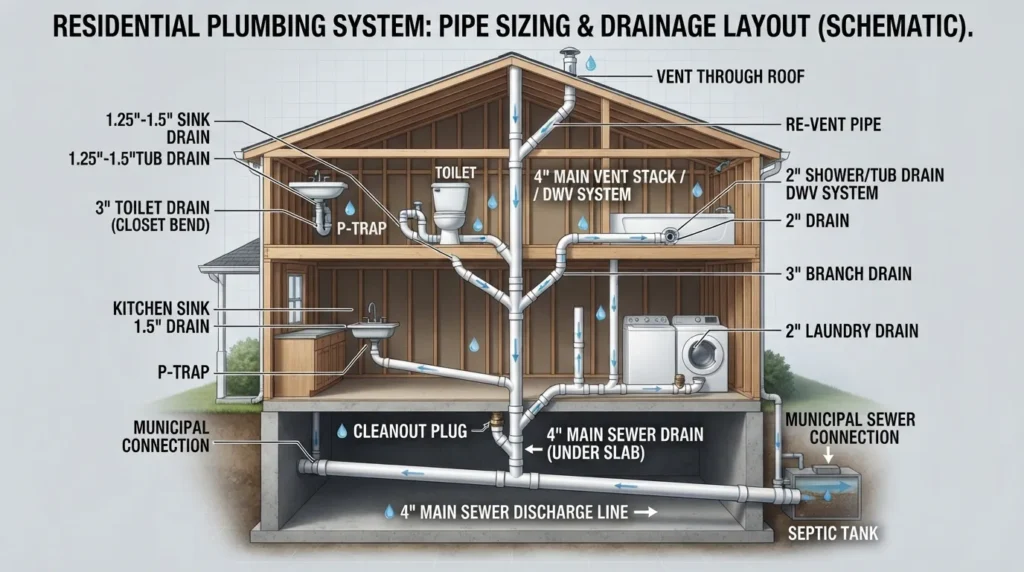
The right choice becomes much easier when you first understand where the clog is located. If you want a clearer picture of fixture drains, branch lines, building drains, and the sewer lateral, see this guide to how your home drainage system works.
Chain Knocker vs. Chemical Drain Cleaner
A chain knocker is not a chemical drain cleaner.
That distinction matters because someone searching for “drain cleaner” may be comparing a mechanical tool with products such as liquid or gel drain openers. They work in completely different ways.
- Chain knocker: mechanically removes compatible deposits using a rotating attachment.
- Chemical drain cleaner: uses a chemical reaction intended to break down certain materials.
Chemical products also do not diagnose why a clog keeps returning. They cannot tell you whether the real problem is scale, a damaged pipe, root intrusion, poor drainage geometry, or a deeper sewer-line issue.
Residual chemicals can also complicate later drain service, which is another reason to tell a plumber what has already been poured into the line.
What Types of Chain Knockers Are Available?
There are many variations, and manufacturers may use different naming systems. The most useful way to understand them is by what the attachment is designed to accomplish.
Smooth or Standard Cleaning Chains
These are commonly used for wall-cleaning applications where the goal is to mechanically disturb compatible deposits without automatically choosing the most aggressive available cutter.
Carbide-Equipped Chains
Carbide elements can make an attachment more aggressive against hard deposits such as certain types of scale or corrosion buildup. That does not make carbide the automatic “best” option. A more aggressive attachment also makes compatibility and pipe condition more important.
One-, Two-, and Three-Chain Configurations
Some systems use different numbers of chain sections to balance flexibility, contact, and cleaning action. More chains do not automatically mean a better result in every pipe.
Penetrating or Root-Oriented Attachments
Some systems offer specialized heads for breaking into harder obstructions or working on root intrusion. These should be selected for the intended application rather than treated as interchangeable with a standard cleaning chain.
What Is the Best Chain Knocker Drain Cleaner?
The best chain knocker is not simply the product with the most chains, the hardest cutting material, or the most aggressive-looking head.
The best chain knocker is the one that is correctly matched to your pipe material, pipe diameter, blockage, machine, cable, and pipe condition.
Before buying a chain knocker head, confirm at least these six points:
- What machine will drive it?
- What cable or flex shaft does the machine use?
- What pipe diameter are you cleaning?
- What is the pipe made from?
- What material are you trying to remove?
- Is the line structurally sound enough for the planned method?
This is especially important with systems such as RIDGID FlexShaft equipment, where particular chain knockers are designed for specific machines and line sizes.
When a Chain Knocker May Be the Wrong Tool
A useful drain-cleaning guide should also tell you when not to reach for a chain knocker.
Do not blindly use a chain knocker when:
- You do not know what the pipe is made from.
- The pipe’s structural condition is uncertain.
- You have not confirmed the correct attachment size.
- The chain is not approved for your machine or cable.
- You are dealing with a blockage that has not been identified.
- The tool has to be forced aggressively to move forward.
- Multiple drains are backing up and the actual problem may be deeper in the system.
When a blockage keeps returning, the better next step may be inspection rather than simply using a stronger tool.
A Better Way to Choose: Diagnose First
Before deciding on any drain-cleaning equipment, ask these questions:
1. Is One Fixture Clogged or Are Several Fixtures Affected?
A single slow sink may point to a relatively local issue. Several fixtures backing up at the same time can suggest a problem farther downstream.
2. Is the Blockage New or Recurring?
A recurring clog deserves more investigation. Repeatedly opening the same restriction without identifying why it returns can leave the underlying problem unresolved.
3. What Is the Pipe Made From?
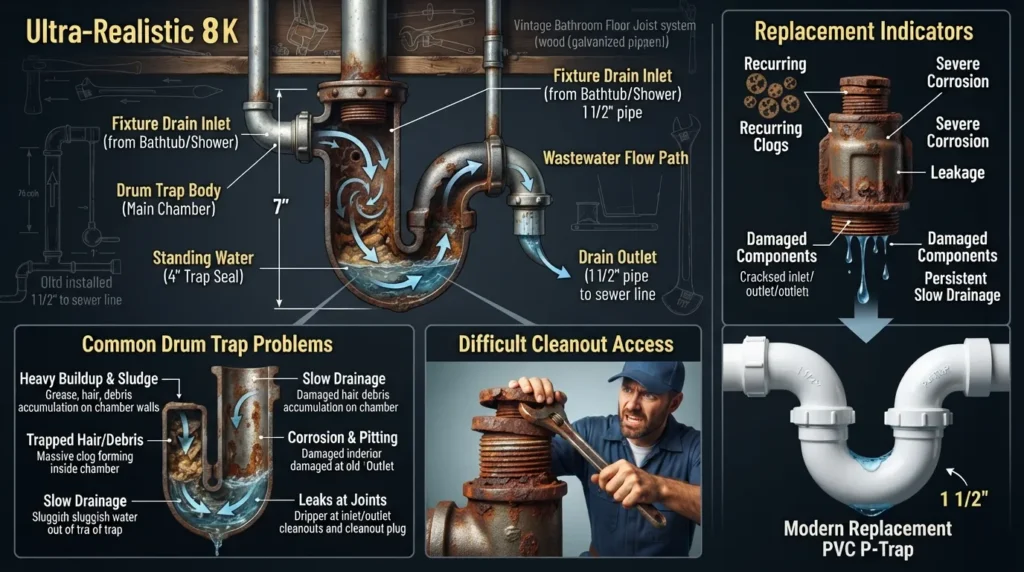
Cast iron, PVC, clay, and other piping materials do not automatically call for the same cleaning attachment.
4. What Is Actually Blocking the Line?
Hair, grease, scale, sludge, roots, wipes, and structural pipe problems are different problems. The most effective response can therefore be different too.
5. Does the Pipe Need Cleaning—or Repair?
A cleaning tool cannot repair a cracked, collapsed, badly offset, or otherwise structurally failed drain line. If pipe condition is uncertain, a camera inspection can provide information before more aggressive cleaning is attempted.
Practical rule: Do not choose the chain before you understand the pipe.
How to Use a Chain Knocker Drain Cleaner Safely
The exact operating procedure depends on the machine and attachment, so the manufacturer’s instructions should always control the setup and use.
At a high level, professional use normally involves:
- Identifying the drain size, pipe material, and likely obstruction.
- Selecting a machine, cable, and chain that are designed to work together.
- Accessing the line from an appropriate cleanout or drain opening.
- Advancing the tool carefully rather than forcing it through resistance.
- Using controlled rotational cleaning passes.
- Removing loosened material as appropriate for the system.
- Testing drainage after cleaning.
- Inspecting the line when the condition or result needs confirmation.
Protective equipment, machine-specific safety procedures, control of the rotating cable, and correct attachment sizing should never be treated as optional.
Watch Chain-Knocker and Flex-Shaft Drain Cleaning Demonstrations
If you want to understand the equipment visually, these demonstration videos from the research set can help you see how this category of drain-cleaning equipment is used.
Should You Buy, Rent, or Call a Plumber?
The search for a chain knocker often starts with a tool and ends with a more important question: Do you actually need to own or operate this equipment?
Buy
This makes more sense for trained users or professionals who regularly work with compatible drain-cleaning systems and understand attachment selection.
Rent
Rental may reduce equipment cost, but it does not remove the need to understand the pipe, choose the correct attachment, and operate the machine safely.
Call a Plumber
This becomes more sensible when the clog is recurring, several drains are affected, pipe condition is unknown, or diagnosis is needed before choosing the cleaning method.
What Do Professional Plumbers Use Instead of Drano?
Professional drain cleaning is usually based on diagnosis rather than automatically replacing one chemical with one particular tool.
Depending on the problem, a plumber may consider:
- A plunger for certain fixture clogs
- A hand or powered drain snake
- A flex-shaft machine and suitable chain attachment
- Hydro jetting
- A sewer or drain camera
- Specialized cutters or retrieval heads
- Pipe repair when cleaning cannot solve the underlying defect
The important principle is that the tool follows the problem.
When Professional Drain Cleaning Makes More Sense
If you are dealing with a recurring blockage, heavy buildup, several backed-up fixtures, or a drain line whose condition is unknown, professional diagnosis can save you from repeatedly treating the wrong problem.
Miami Florida Plumbing works with homeowners who need to identify and resolve drainage problems rather than simply guess which tool to use.
For problems that require method selection, line clearing, or a closer look at what is causing repeated drainage trouble, learn more about our professional drain cleaning service in Miami.
Not Sure Which Drain-Cleaning Method You Need?
You do not have to choose between a snake, chain knocker, or another method before the problem has been diagnosed.
Frequently Asked Questions
Related Chain Knocker Resources and Product Research
If you are comparing chain knocker heads, machines, sizes, or specific product configurations, review manufacturer specifications before purchasing. These resources can help you compare the types of products currently associated with this category:
- RIDGID FlexShaft drain-cleaning systems
- Gator Drain Tools chain knockers
- RIDGID FlexShaft chain knocker example at Home Depot
- Pipemade heavy-duty chain knocker collection
- Apex CIPP guide to drain-cleaning chains and Picote chain knockers
- Chain knocker drain cleaner listings on Amazon
Always compare the product specification with the exact machine, cable size, pipe diameter, pipe material, and intended application before buying or using an attachment.
Final Takeaway
A chain knocker drain cleaner can be an effective professional tool when the goal is to remove compatible buildup from inside a drain pipe. But the important question is not simply, “How powerful is the chain?”
The better question is:
Which drain-cleaning method is right for this pipe, this blockage, and this condition?
Once you answer that, it becomes much easier to decide whether the right solution is a standard snake, a compatible chain knocker, hydro jetting, camera inspection, or professional repair.