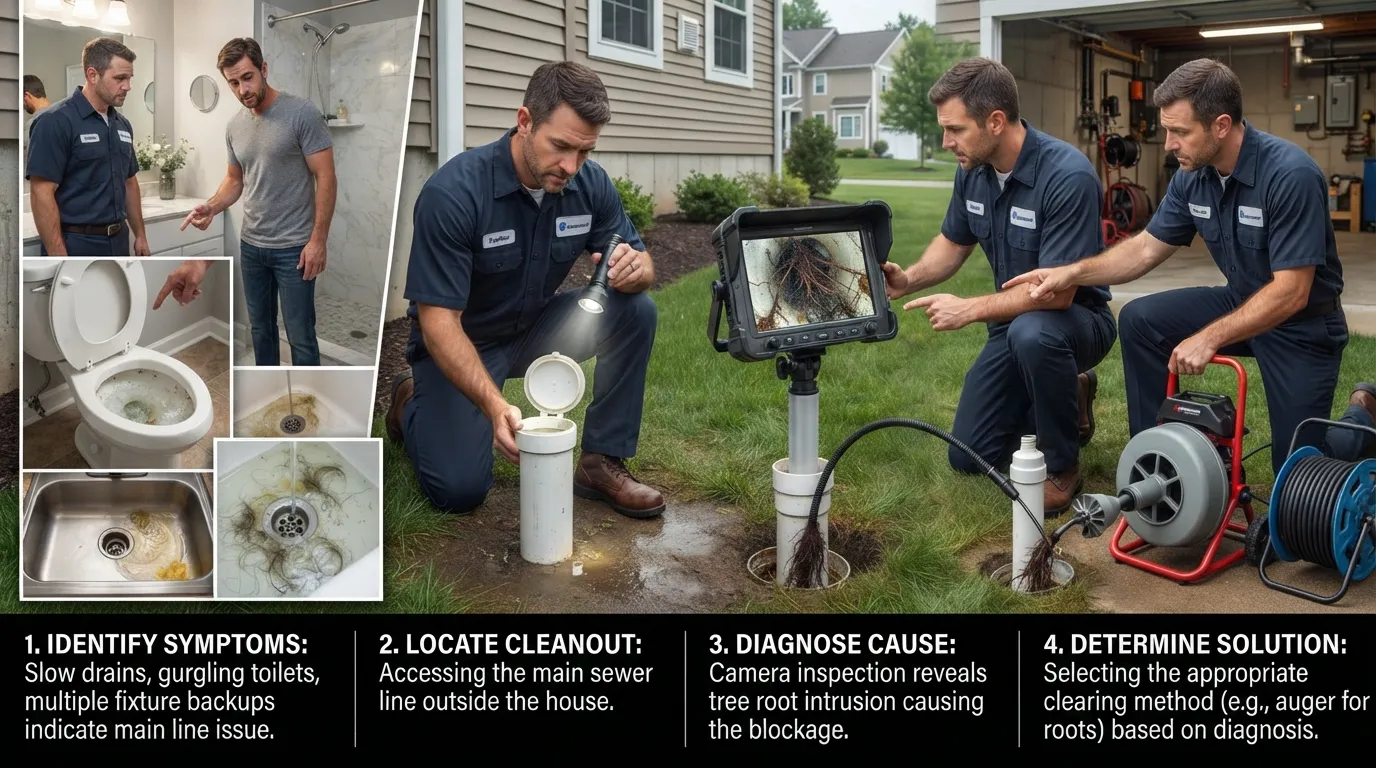
If several drains are slow, your toilet gurgles when another fixture runs, or wastewater starts rising into a shower or tub, you may be dealing with a main sewer line clog rather than an ordinary fixture blockage.
The biggest mistake is jumping straight to a chemical, snake, or home remedy before figuring out where the clog is and what may be causing it. A grease-heavy line, tree-root intrusion, wipes, a foreign object, and a damaged sewer pipe do not need the same solution.
The right sewer unclogging method depends on the blockage. A sewer auger or drain cable may clear many physical obstructions. Professional hydro jetting can remove heavier grease and pipe-wall buildup. A sewer camera can help diagnose recurring clogs, roots, or damaged piping. If sewage is actively backing up, several fixtures are affected, or the problem keeps returning, stop adding water and move from “unclogging” to proper diagnosis.
Step 1: Make Sure It Is Really a Main Sewer Line Clog
Before you try to unclog anything, identify how much of the drainage system is affected.
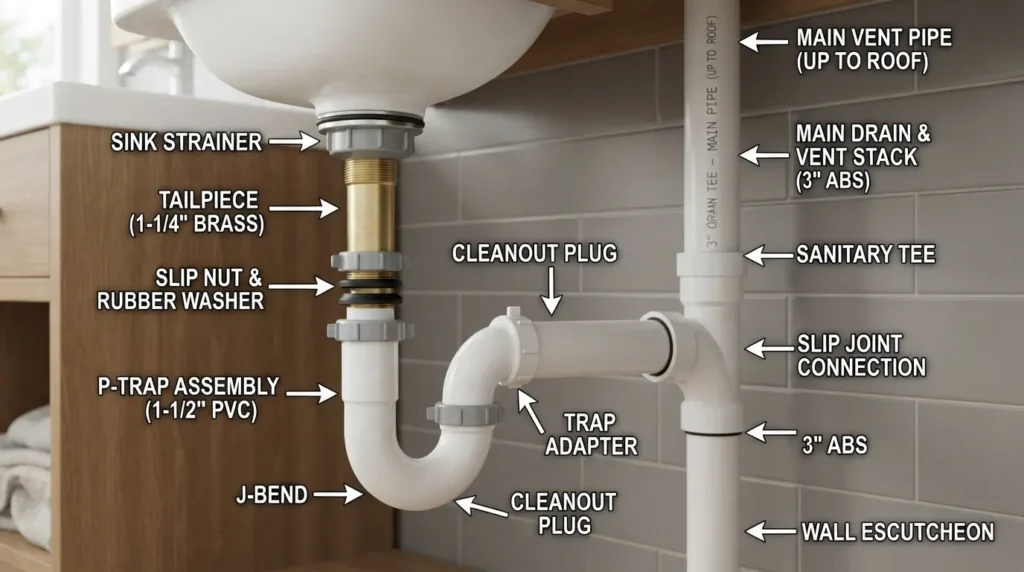
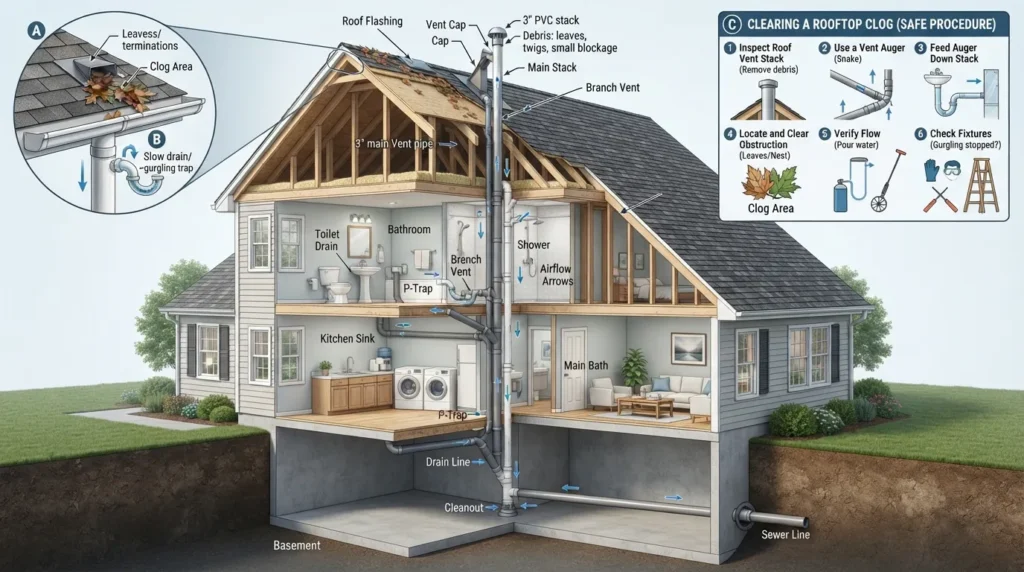
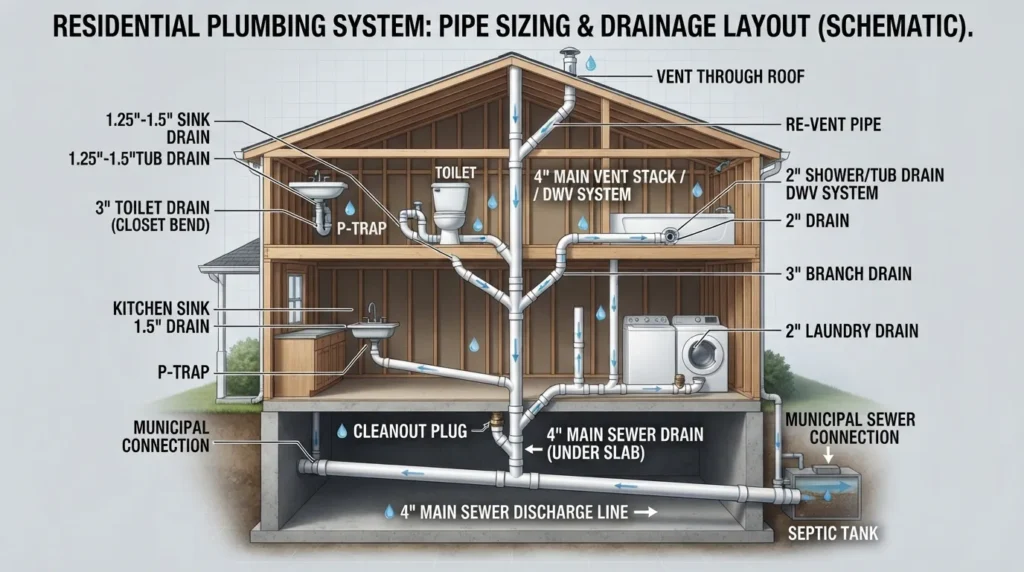
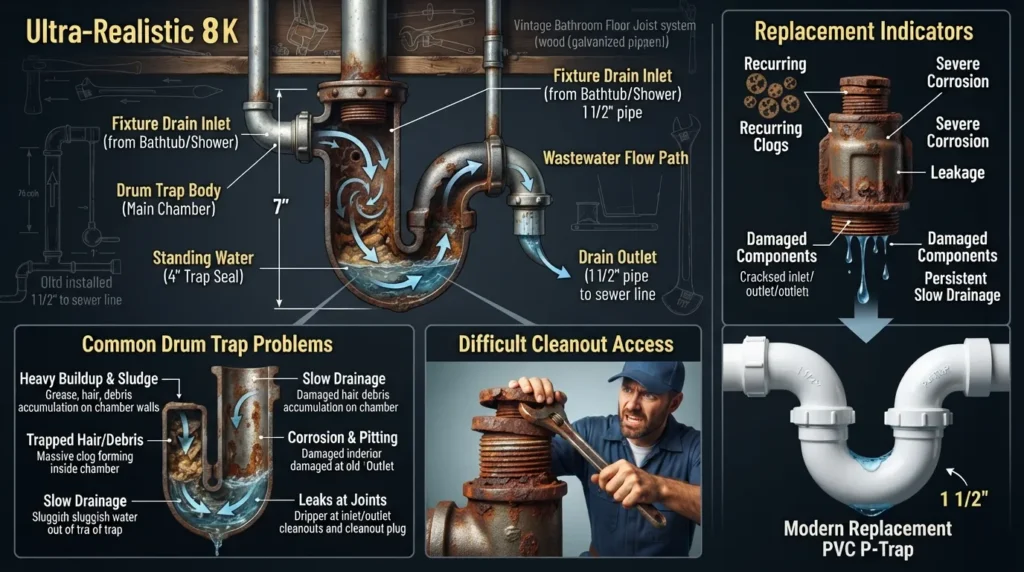
Your plumbing system includes fixture drains, traps, branch lines, larger building drains, and the sewer connection. If you want a deeper explanation of how these components connect, see our guide to how a home drainage system works.
Signs the clog may be limited to one fixture
- Only one sink, shower, tub, or toilet drains slowly.
- Other fixtures around the home work normally.
- The problem appears immediately after one fixture is used.
- Clearing the trap or nearby branch restores normal drainage.
Signs the problem may be deeper in the drain or sewer line
- Several fixtures become slow around the same time.
- A toilet gurgles when a sink, washing machine, or shower drains.
- Flushing a toilet causes water to rise in a shower or tub.
- A lower-level drain backs up when water is used elsewhere.
- Sewage or dirty wastewater returns through a fixture.
- The same whole-house drainage problem keeps coming back.
One fixture affected usually points toward a local problem. Several fixtures affected together point farther downstream. That distinction should guide everything you do next.
Use This Sewer Unclog Decision Guide First
Instead of trying random treatments, compare what you see with the likely next step.
Start with the fixture, trap, or nearby branch drain rather than treating the whole sewer line.
A shared drain or main-line restriction becomes more likely. Reduce unnecessary water use while you investigate.
The restriction is likely downstream of both fixtures. Repeated flushing can push more wastewater toward the backup point.
Treat recurrence as a diagnosis problem. Roots, buildup, a pipe defect, or another unresolved cause may remain.
Stop adding water to the system. Do not keep experimenting with chemicals or repeated flushing.
Do not force large sewer equipment through a fixture. A safe alternative access point may be needed.
What Commonly Causes a Main Sewer Line Clog?
Choosing the correct method becomes easier once you understand the major types of sewer obstruction.
Grease and pipe-wall buildup
Fats, oils, grease, soap residue, and other material can accumulate inside drain piping. A cable may open a passage through buildup without necessarily removing everything attached to the pipe wall.
Wipes, paper, and foreign objects
Materials that do not break down readily can collect in the drainage system, particularly where grease, scale, roots, or rough pipe surfaces already catch debris.
Tree-root intrusion
Roots can enter underground sewer piping through openings, defects, or joints and then collect passing material. Cutting through the roots may restore flow, but recurring root intrusion can require further diagnosis.
Scale and hardened deposits
Some older piping develops internal deposits that reduce the usable diameter and create rough surfaces where debris can accumulate.
Damaged or misaligned sewer piping
A blockage is not always the entire problem. Cracked, displaced, sagging, or collapsed piping can produce repeated drainage trouble even after flow is temporarily restored.
Match the Clog to the Correct Sewer-Cleaning Method
“`
Physical Obstruction
A properly sized cable or sewer auger may break through or retrieve certain obstructions.
Heavy Grease or Buildup
Professional hydro jetting can clean more of the pipe wall when the pipe condition and access make it appropriate.
Tree Roots
Mechanical root-cutting may reopen the line, but repeated root intrusion can point to an underlying pipe condition.
Recurring Unknown Clog
Camera inspection can help determine whether roots, buildup, an obstruction, or visible pipe damage is involved.
Broken or Collapsed Pipe
No chemical or snake can permanently repair a failed pipe. The damaged section needs appropriate repair.
“`
How to Unclog a Main Sewer Line Step by Step
1. Stop unnecessary water use
Do not keep flushing toilets, taking showers, or running appliances just to test whether the blockage will clear itself. If the sewer cannot carry the flow away, extra water can worsen the backup.
2. Identify which fixtures are affected
Check cautiously. A single affected fixture points you toward a local drain. Multiple fixtures affected together point toward a shared drain or the main line.
3. Find the sewer cleanout if one is available
A cleanout provides a direct access point to the drain or sewer line. If you suspect wastewater is standing behind the cap, approach it carefully.
A backed-up sewer line may contain wastewater under the cleanout cap. Do not stand directly over it and remove it aggressively. If sewage is already present or you are unsure what you are opening, professional help is the safer option.
4. Use a sewer cable only when you have proper access and understand the equipment
A sewer snake or power auger can be effective for many physical blockages. However, a heavy-duty main-line machine is very different from a small hand snake. Cables can bind, whip, or become stuck if handled incorrectly.
If you rent drain-cleaning equipment, use the correct machine for the pipe and follow the equipment manufacturer’s operating and safety instructions.
Use videos as demonstrations, not as a substitute for equipment instructions or safe access. Your plumbing layout, obstruction, and pipe condition may be different.
5. Restore flow gradually
Once the obstruction appears clear, do not immediately run every fixture at full flow. Test the system progressively and watch the lowest fixtures for bubbling or rising water.
6. Decide whether you cleared the clog or actually solved the problem
If normal drainage returns and stays normal, the obstruction may have been successfully cleared. If the same symptoms return soon afterward, the original cause may still be present.
Flow Restored Does Not Always Mean the Sewer Is Fixed
Creating an opening through a blockage can restore drainage without removing all buildup or correcting the condition that caused the clog. If the same sewer line repeatedly backs up, the recurrence itself is valuable diagnostic information.
A recurring clog may justify investigation for:
- Root intrusion
- Heavy grease or pipe-wall buildup
- A lodged foreign object
- Cracked, offset, or separated piping
- A sagging section of drain
- Another obstruction that was only partially cleared
Can You Unclog a Main Sewer Line Without a Cleanout?
It may be possible to access a sewer line from another suitable location, but the lack of an accessible cleanout changes the job.
A professional plumber may use another approved access point or, in some circumstances, remove a toilet to reach the downstream drain opening. That is very different from forcing a large sewer cable through the toilet bowl itself.
If multiple fixtures are backing up and you cannot safely access the main line, this is a reasonable point to move toward professional drain cleaning rather than risking damage to a fixture or pipe.
Can You Unclog a Sewer Line From the Toilet?
You first need to distinguish between a toilet clog and a main sewer line clog.
If the obstruction is inside the toilet trap or immediately beyond it, a toilet auger may be appropriate. If several fixtures are affected or flushing the toilet makes water rise in a shower or tub, the blockage is probably farther downstream.
A plumber may sometimes remove the toilet and use the exposed drain opening as an access point. That does not mean a heavy-duty sewer machine should simply be pushed through the porcelain toilet.
What Is the Best Thing to Unclog a Sewer Line?
The best solution depends on what is blocking the pipe.
- For a physical obstruction: an appropriate sewer cable or auger may help.
- For substantial grease or internal buildup: more thorough cleaning such as hydro jetting may be considered when appropriate for the piping.
- For recurring clogs: camera inspection can help identify the underlying cause.
- For roots: mechanical cutting or cleaning may restore flow, followed by diagnosis of the affected sewer line.
- For a failed pipe: the pipe condition must be repaired rather than repeatedly unclogged.
That is why I would not choose a “best sewer unclogger” based only on a product label or brand name.
What Chemical Can Unclog a Main Sewer Line?
There is no chemical that solves every main sewer line clog.
Some drain-opening products are designed to break down certain types of organic material, grease, hair, or buildup. But a sewer line can also be obstructed by roots, wipes, foreign objects, heavy deposits, or structural pipe damage.
- Read the current product label completely.
- Confirm that the product is intended for the type of drain and piping you have.
- Never mix drain cleaners with one another.
- Never mix drain-opening chemicals with household cleaning products.
- Do not keep adding chemicals to a completely backed-up line.
- If a plumber becomes necessary, tell them what was already poured into the drain.
Will Drano Unclog a Main Sewer Line?
A standard household chemical drain opener should not automatically be your first choice for a suspected main sewer blockage.
The more useful question is: what is actually blocking the line?
If the obstruction is caused by roots, a solid object, a major accumulation, or damaged piping, a household drain opener may not address the actual cause. If you use any chemical drain product, follow the current manufacturer instructions and use it only for applications specifically permitted on the label.
Does Boiling Water Help Unclog a Sewer Line?
Boiling water is not a dependable treatment for a blocked main sewer line.
Hot water may help soften small amounts of grease in some local drain situations, but a main sewer blockage is often deeper and more substantial. Tree roots, wipes, solid objects, and pipe defects will not be corrected by pouring boiling water into a fixture.
Can Vinegar Unclog a Main Sewer Line?
Vinegar is not a reliable way to clear a serious main sewer blockage. The familiar vinegar-and-baking-soda reaction may fizz, but fizzing is not the same as mechanically removing a deep sewer obstruction.
Never add vinegar or another household product to a drain that already contains a chemical drain cleaner.
Does Dawn Dish Soap Really Unclog Drains?
Dish soap may help loosen light grease in some local kitchen-drain situations, but it is not a dependable solution for a clogged main sewer line.
If toilets, tubs, showers, or multiple drains are backing up together, focus on diagnosing the drainage system rather than treating the issue like a small kitchen-sink clog.
Which Is Better for a Sewer Clog: Zep or Green Gobbler?
I would not choose between Zep, Green Gobbler, or any other drain-cleaner brand before identifying the blockage.
Different products have different formulations, intended uses, and compatibility requirements. Those details can change, so check the current label for the exact product you are considering.
For a suspected main sewer line clog, determining whether you have grease, roots, wipes, a physical object, or a pipe defect is more valuable than choosing a brand first.
How Do You Unblock a Badly Blocked Sewer Pipe?
For a severe blockage, use a controlled sequence:
- Stop unnecessary water use.
- Keep people and pets away from sewage-contaminated areas.
- Determine whether one or several fixtures are affected.
- Use a proper cleanout only if it can be accessed safely.
- Avoid adding multiple chemical treatments.
- Use appropriate mechanical cleaning when the line and access allow it.
- Move to professional diagnosis if the blockage is severe, recurring, inaccessible, or associated with suspected pipe damage.
When Should You Stop Trying to Unclog the Sewer Yourself?
- Sewage is actively backing up into the home.
- Several fixtures are backing up at the same time.
- You cannot safely access the line.
- The drain cable repeatedly binds or cannot pass the obstruction.
- The clog comes back soon after clearing.
- You suspect roots or damaged underground piping.
- A strong drain chemical is already sitting in the backed-up line.
- You are not comfortable operating powered sewer-cleaning equipment.
When a Sewer Camera Makes More Sense Than Another Round of Snaking
If the same main line keeps clogging, another blind attempt at snaking may restore flow without answering the most important question: why does the blockage keep returning?
A sewer camera can help inspect visible conditions inside accessible piping and may help identify:
- Root intrusion
- Heavy deposits
- A foreign object
- Visible cracking or separation
- Areas where the pipe appears displaced or otherwise abnormal
A camera inspection is particularly useful when the same obstruction keeps returning or when mechanical cleaning repeatedly encounters trouble at the same location.
Drain Clearing and Drain Cleaning Are Not Always the Same Thing
The immediate goal is to create enough opening for wastewater to flow again.
The goal is broader removal of buildup from the inside of the pipe when the pipe condition and cleaning method allow it.
If your sewer repeatedly clogs, ask yourself whether the obstruction was simply opened or whether the condition causing it was actually addressed.
How to Check Whether the Sewer Unclog Actually Worked
Once drainage returns, verify the result gradually.
- Start with a modest amount of water.
- Watch the lowest fixture for bubbling or rising water.
- Flush a toilet once and listen for gurgling elsewhere.
- Run another fixture and confirm that drainage remains normal.
- Gradually test additional fixtures.
- Watch for slow drainage returning over the next several uses.
If the same symptoms return, do not automatically repeat the same treatment. A recurring clog may be telling you that the underlying cause still needs attention.
How to Reduce the Chance of Another Main Sewer Clog
- Keep fats, oils, and grease out of the drain system.
- Avoid flushing wipes, hygiene products, and other materials that do not break down readily.
- Do not ignore recurring gurgling or slow drainage.
- Investigate repeated root intrusion rather than treating every backup as an unrelated event.
- Have a recurring sewer problem diagnosed before it becomes another major backup.
What Affects the Cost of Sewer Unclogging or Repair?
There is no single meaningful price for every sewer clog because the required work depends on the problem.
Factors that can change the scope of the job include:
- Where the blockage is located
- Whether a usable cleanout is available
- The depth and severity of the obstruction
- Whether cabling, hydro jetting, or another cleaning method is needed
- Whether camera inspection is required
- Whether roots are involved
- The condition of the existing pipe
- Whether the problem is only a blockage or an actual pipe defect
This is another reason diagnosis matters: the cost of clearing an obstruction is a different question from the cost of repairing damaged sewer piping.
The Sewer-Unclog Framework I Would Use
“`
Which fixtures are affected?
Fixture, branch, or main line?
What may be causing it?
Use the appropriate method.
Confirm normal drainage.
Address recurring causes.
“`
Diagnose first, unclog second. That approach is more useful than asking what product to pour into the drain before you know what is actually blocking it.
Need Help With a Recurring Sewer or Main Drain Clog?
If your main line keeps backing up, multiple fixtures are affected, or safe access is not available, professional diagnosis can help determine whether the next step is mechanical clearing, more thorough cleaning, camera inspection, or repair.
For local help, you can learn more about Miami Florida Plumbing and the plumbing services available for residential drainage problems.
Stop sending more water into the system and have the blockage assessed before another backup occurs.
Frequently Asked Questions About Sewer Unclogging
What is the best thing to unclog a sewer line?
There is no universal best method. A sewer cable may clear physical obstructions, hydro jetting may be appropriate for heavier buildup, camera inspection can help diagnose recurring clogs, and damaged piping may require repair.
Does pouring boiling water down a drain help unclog it?
Hot water may help with small amounts of grease in some local drains, but it is not a reliable solution for a main sewer line clogged by roots, wipes, objects, major buildup, or pipe damage.
How do you unblock a badly blocked sewer pipe?
Stop unnecessary water use, determine whether multiple fixtures are affected, access the line safely if possible, and use the correct mechanical cleaning method. Severe or recurring blockages should be professionally diagnosed.
What chemical can unclog a main sewer line?
No chemical works for every main-line clog. Sewer lines can be blocked by grease, roots, wipes, objects, heavy deposits, or damaged piping. Check the exact product label before use and never mix drain chemicals.
Which is better, Zep or Green Gobbler?
Choose based on the exact product, current label, approved application, pipe compatibility, and type of obstruction rather than the brand name alone.
Can I pour vinegar down the drain to unclog it?
Vinegar is not a dependable way to clear a serious main sewer blockage. Never combine vinegar with a drain that already contains chemical cleaner.
Does Dawn really unclog drains?
Dish soap may help loosen light grease in some local kitchen-drain situations, but it is not a dependable way to unclog a main sewer line.
How can I clear a main sewer line clog myself with no cleanout?
Without an accessible cleanout, another suitable access point may be required. Avoid forcing large sewer-cleaning equipment through a fixture that was not designed for it.
Will Drano unclog a main sewer line?
A household drain opener should not automatically be your first solution for a suspected main sewer clog. Roots, solid objects, major buildup, and pipe defects often require another approach.
Related Sewer-Unclogging Resources
If you are researching products or tools before deciding what to use, compare the product’s intended application with the type of blockage you actually have. Do not assume a product marketed as a main-line cleaner can solve roots, solid foreign objects, or structural pipe damage.
- Main-line drain cleaner product information at The Home Depot
- Main sewer line clog overview from SERVPRO
- Professional drain-cleaning methods overview from Roto-Rooter
Final Takeaway
A successful sewer unclog starts with diagnosis, not guesswork. First determine whether the blockage is local or in the main line. Then consider what is most likely causing it, choose the appropriate clearing method, and verify that drainage remains normal after the line opens.
If the clog repeatedly returns, do not treat every backup as a completely new problem. Recurrence may mean the original cause was never fully removed or that the sewer line itself needs further inspection.
Identify. Locate. Diagnose. Match the method. Verify the result. Fix the cause if it comes back.