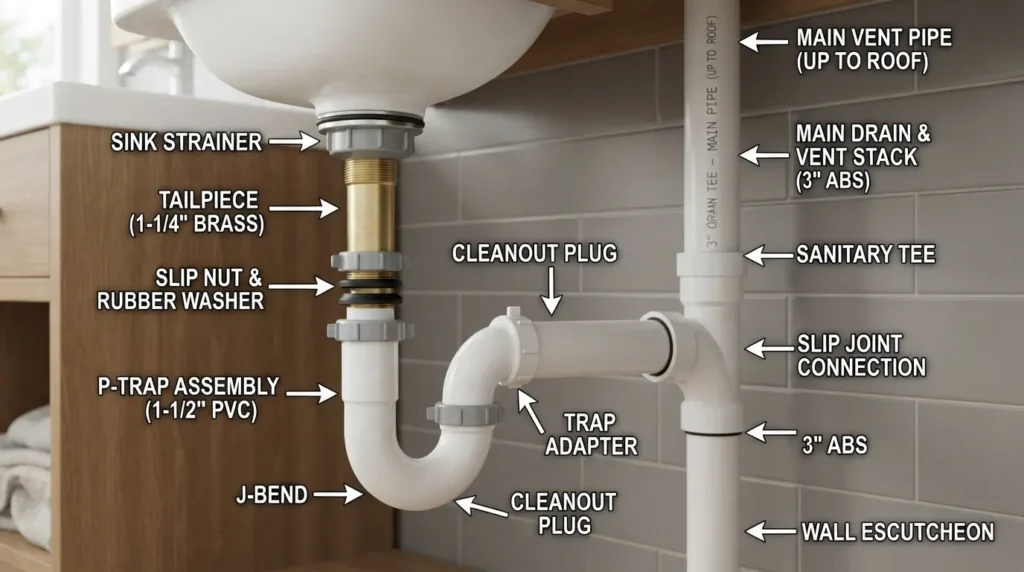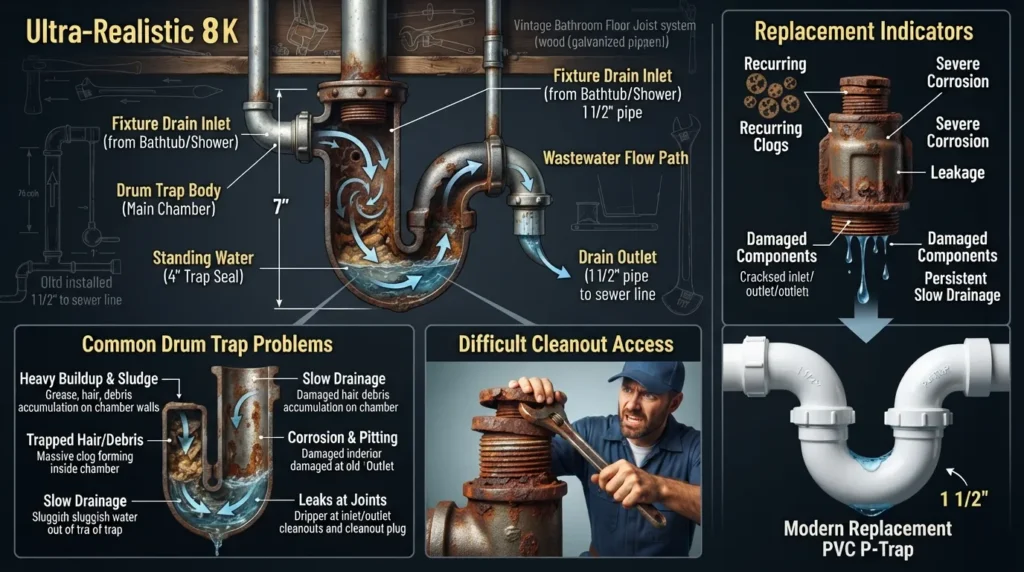
 If only one sink, tub, or shower is backed up, start with the fixture itself: remove visible debris, use the correct plunger, try a small drain snake, and clean the P-trap if it is an accessible sink drain. If several fixtures are backing up, a toilet makes another drain gurgle, or dirty water is rising through a floor drain, stop using water in the home and treat the problem as a possible shared drain or main sewer blockage rather than a simple sink clog.
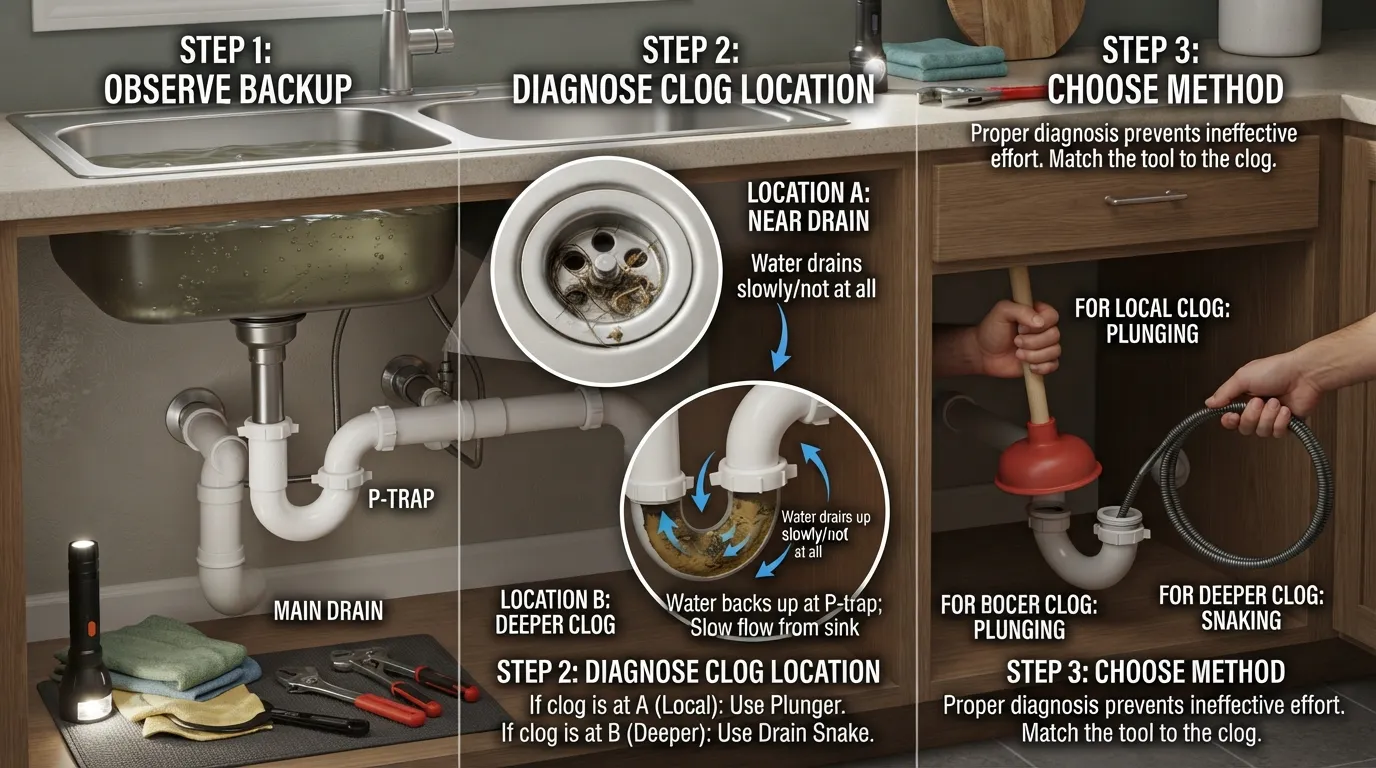
A backed-up drain is frustrating, but the fastest fix is not always pouring something down the pipe. The better first question is: where is the blockage?
A hair clog near a bathroom sink needs a very different response from a restriction deep in a branch drain or main sewer line. If you diagnose the pattern first, you can choose a safer fix, avoid wasting time on remedies that do not match the problem, and recognize when DIY work should stop.
What to Do in the First Few Minutes of a Drain Backup
- Stop adding water. Turn off the faucet and avoid running nearby fixtures until you know whether the problem is isolated or affecting a larger part of the drainage system.
- Check other fixtures. Test nearby sinks, tubs, showers, and toilets cautiously. Do not repeatedly flush or run large amounts of water.
- Look for cross-fixture symptoms. Pay attention to gurgling, water appearing in another fixture, or a low floor drain beginning to rise.
- Identify whether the backup is local or widespread. One fixture usually points toward a nearby clog. Several fixtures can point toward a shared branch or main drain restriction.
- Choose the least aggressive appropriate fix first. Mechanical removal is usually more useful than randomly combining household products.
Important: If sewage or dirty wastewater is coming up through a tub, shower, toilet, or floor drain, minimize contact with the water and stop using plumbing fixtures until the cause is identified. A widespread wastewater backup is not the time to keep testing DIY drain remedies.
Is It One Clogged Drain or a Main Drain Problem?
This is the most useful distinction you can make before reaching for a plunger or snake. Your home is not made of isolated drains; individual fixtures connect into larger branch drains and eventually into the main building drain and sewer connection. If you want a deeper explanation of that path, see how a home drainage system works from individual fixtures to the main sewer line.
Probably a Local Fixture Clog
- Only one sink, shower, or tub is affected.
- Nearby fixtures drain normally.
- You can see hair, soap, food debris, or buildup near the opening.
- The drain improved after removing the stopper or visible debris.
- There is no sewage coming up elsewhere.
Possible Shared or Main Drain Blockage
- Several fixtures are slow or backed up at the same time.
- A toilet flush makes a tub, shower, or floor drain gurgle.
- Running one fixture causes water to rise in another.
- The lowest drain in the home is backing up.
- The problem repeatedly returns after temporary clearing.
How to Fix a Backed Up Drain Step by Step
If the symptoms point to one fixture rather than a whole-house drainage problem, work through these steps in order. You usually do not need to try every method.
1. Remove Standing Water and Visible Debris
If possible, scoop excess standing water into a bucket so you can work around the drain opening. Then remove the stopper, strainer, or cover if it comes off normally.
Look for material you can safely remove by hand with gloves or with a simple plastic hair-removal tool. Bathroom drains often collect hair and soap residue close to the opening, so this simple step can sometimes restore flow without deeper work.
Do not force a stuck drain assembly. If the stopper or drain hardware does not release normally, avoid damaging the fixture just to reach the clog.
2. Use a Plunger Correctly
A plunger can work well when the obstruction is close enough for pressure changes to loosen it.
- Remove the stopper or drain cover if appropriate.
- Add enough water to cover the rubber cup of the plunger.
- Seal the overflow opening on a sink or tub with a wet cloth when possible.
- Center the plunger over the drain and create a firm seal.
- Use several controlled pushes and pulls rather than wildly splashing water.
- Remove the plunger and see whether the water drains normally.
If the drain opens only slightly or immediately slows again, the obstruction may still be present farther inside the pipe.
3. Try a Plastic Hair Tool for Bathroom Drains
For a bathroom sink, tub, or shower, a small barbed plastic drain tool can be useful when hair is packed just below the opening.
Insert it gently, twist or move it as designed, then pull it back out slowly. Remove the collected material and repeat only as needed. Do not force a lightweight tool deep into a pipe where it could become stuck.
4. Use a Drain Snake or Hand Auger for a Deeper Local Clog
If the opening is clear but water still backs up, the blockage may be deeper in the fixture drain or branch line. A hand-operated drain snake can reach farther than a plastic hair tool.
Feed the cable slowly while maintaining control. When you meet resistance, work the cable gently rather than forcing it. Resistance can be a clog, but it can also be a bend or fitting in the drainage line.
Once you retrieve debris or feel the obstruction release, withdraw the cable carefully and test the drain with a modest amount of water.
Diagnostic clue: If snaking restores flow for only a short time and the same drain repeatedly backs up, do not assume you simply need to snake it harder. A recurring restriction can be farther downstream or involve buildup, roots, damaged piping, or another condition that needs a clearer diagnosis.
5. Clean the P-Trap if an Accessible Sink Is Still Clogged
The curved pipe directly below many sinks is the P-trap. It holds water to block sewer gases, but it can also collect debris.
- Place a bucket beneath the trap.
- Do not begin if the drain contains a chemical cleaner that could spill or splash.
- Loosen removable slip-joint connections carefully if the plumbing is designed for service access.
- Lower the trap into the bucket and remove any buildup.
- Clean the trap and inspect the nearby pipe opening.
- Reassemble the fittings correctly.
- Run water and check both drainage and the joints for leaks.
Helpful video: sink drain and P-trap troubleshooting
6. Test Whether the Drain Is Actually Fixed
Do not stop the moment standing water disappears. A partially opened clog can make a drain look fixed while the restriction is still there.
After reassembling everything:
- Run a moderate stream of water for a short period.
- Watch whether the fixture drains at a normal rate.
- Listen for unusual gurgling.
- Check under the sink for leaks if you removed the trap.
- Watch nearby fixtures for unexpected water movement.
If the drain slows again immediately, the blockage probably was not fully removed.
What Your Symptoms Can Tell You About the Clog
One bathroom drain
Hair, soap buildup, stopper debris, or a nearby fixture-drain clog is more likely than a main sewer problem.
One kitchen sink
Food residue, grease, soap buildup, or a trap/branch restriction may be involved.
Several nearby fixtures
The blockage may be beyond one fixture in a shared branch drain.
Multiple rooms or low floor drain
A larger building drain or sewer-line restriction becomes more likely and deserves prompt attention.
How to Fix a Backed Up Bathroom Drain
Bathroom drains are commonly affected by hair, soap residue, personal-care products, and material caught around the stopper.
Start at the opening. Remove accessible hair and debris, then use a plunger or a small hair tool. If the sink remains blocked, inspect the P-trap where appropriate. A hand auger may help if the obstruction is deeper.
If both the bathroom sink and tub or shower are backing up, the clog may be in a shared branch rather than in the individual fixture. That is a reason to stop repeatedly treating only the drain opening.
How to Fix a Backed Up Kitchen Drain
A kitchen backup often needs a different approach because greasy residue and food debris can accumulate inside the drainage path.
Remove standing water and inspect the strainer or disposal area first. If a garbage disposal is installed, disconnect power before attempting any hands-on inspection and never place your hand inside the disposal chamber.
Try plunging the sink and clean an accessible P-trap if needed. If a double-bowl sink is involved, pressure can escape through the second drain, so sealing the other opening can improve plunging effectiveness.
A drain that repeatedly slows after temporary clearing may have buildup farther down the line and can require mechanical cleaning rather than another household remedy.
What If a Basement or Floor Drain Is Backing Up?
A basement or floor drain deserves extra attention because it is often one of the lower drainage openings in a building.
If dirty wastewater rises from the floor drain when a toilet is flushed, a washing machine drains, or another fixture is used, stop using water unnecessarily. That pattern can indicate a blockage downstream from multiple fixtures.
Do not keep “testing” a suspected main-line backup by flushing toilets or running more water. Every additional gallon has to go somewhere, and a blocked drainage path can send it back through a lower fixture.
What About an Outside Drain?
An outside drain can serve a different purpose from a kitchen or bathroom drain, so first identify what the drain is connected to. Outdoor drains may collect leaves, soil, sediment, or other debris near the grate, while some exterior cleanouts provide access to a building sewer rather than acting as surface drains.
Remove only accessible surface debris unless you clearly understand the drainage setup. Do not open or manipulate an unfamiliar sewer cleanout while wastewater is actively backed up unless you know how to do so safely.
Do Boiling Water, Vinegar, Baking Soda, or Dish Soap Really Unclog a Drain?
Household remedies are popular because they are easy to try, but they are not interchangeable with mechanical clog removal.
Hot Water
Warm or hot tap water can help move light soap or greasy residue, but it will not mechanically remove hair, roots, foreign objects, or a major blockage. Avoid pouring aggressively boiling water into plumbing materials or fixtures that may be heat-sensitive.
Baking Soda and Vinegar
The fizzing reaction can loosen light residue, but it should not be treated as a dependable fix for a solid or deep obstruction. If the drain is fully backed up, mechanical removal usually tells you much more about what is actually blocking the pipe.
Dish Soap or Dawn
Dish soap may help with some greasy residue, but it is not a universal drain opener. It will not remove hair masses, tree roots, damaged piping, or a lodged object.
Why Can Baking Soda and Vinegar Be a Poor Choice for a Badly Blocked Drain?
The main issue is not that the mixture can never be used. The problem is relying on it when the clog needs physical removal. A fizzing reaction near the opening may do little to a compacted obstruction farther down the pipe.
It can also waste time when the symptoms already suggest a shared drain or sewer problem.
Why Shouldn’t You Pour Boiling Water Down Every Clogged Drain?
Very hot water is sometimes recommended for greasy buildup, but boiling water is not appropriate for every piping material, fitting, sink, or clogged condition. It also does nothing to remove many common physical obstructions.
If you use water as part of a simple cleaning attempt, hot tap water is a more cautious choice than repeatedly dumping boiling water into an unknown plumbing setup.
Before You Pour Any Chemical Down a Backed Up Drain
- Never mix drain-cleaning chemicals with each other.
- Never mix bleach with acids such as vinegar. Dangerous gases can be produced.
- If a chemical drain opener is already sitting in standing water, avoid plunging or dismantling the trap where the liquid could splash onto you.
- Tell a plumber what product was used before they work on the drain.
- Do not keep adding products when the first one fails.
Professional plumbers generally rely on diagnosis and mechanical methods such as augers, drain-cleaning machines, camera inspection, and—in suitable cases—high-pressure water cleaning rather than treating every backup as a chemical problem.
What If the Drain Is Badly Blocked or the Clog Is Deep in the Pipe?
A deep clog often reveals itself through failed surface-level fixes. For example:
- The stopper and P-trap are clean, but the sink still fills.
- A small hair tool reaches nothing.
- Plunging produces little or no improvement.
- A snake improves drainage only temporarily.
- Several fixtures begin showing symptoms.
- The same backup returns again and again.
At this point, the next question is no longer “what else can I pour down the drain?” It is what is happening farther downstream?
A deeper restriction may involve accumulated grease or sludge, roots entering a sewer line, mineral buildup, a foreign object, or a structural drainage problem. The correct remedy depends on the actual cause.
Why Does My Drain Keep Backing Up After I Unclog It?
A recurring drain backup is useful diagnostic information. It often means the first attempt restored an opening without solving the underlying restriction.
Possible explanations include:
- Part of the clog remains attached to the pipe wall.
- Grease or sludge has narrowed the line beyond the fixture.
- Roots are entering an underground sewer line.
- An object is still lodged in the drainage path.
- The pipe has a structural condition that allows debris or wastewater to collect.
- The actual obstruction is in a shared drain rather than the fixture you cleared.
If the same drain needs repeated clearing, identifying the cause is usually more valuable than repeating the same temporary method.
What a Failed DIY Method Can Tell You
Hair tool finds nothing:
The obstruction may be beyond the drain opening.
P-trap is clear:
The clog may be in the wall-side branch drain rather than beneath the sink.
Plunger does not improve flow:
The obstruction may be too far downstream, too solid, or the fixture may not be creating an effective pressure seal.
Snake works, but only briefly:
The line may still contain significant buildup or another recurring obstruction.
Several fixtures begin backing up:
Stop treating the issue as a single-fixture clog and investigate the shared drainage path.
When Should You Stop DIY and Call a Plumber?
It is reasonable to try simple fixture-level methods when one drain is affected and there are no warning signs of a larger problem. Professional diagnosis becomes much more important when:
- Multiple drains are backed up at the same time.
- Sewage or dirty wastewater is coming through a floor drain, shower, tub, or other fixture.
- A toilet flush causes another drain to rise or gurgle.
- The blockage keeps returning after you clear it.
- The clog is beyond the reach of safe homeowner tools.
- A drain snake repeatedly meets an obstruction you cannot identify.
- You suspect roots, a damaged sewer line, or a deeper main-line blockage.
- A chemical cleaner is trapped in the drain and hands-on work would expose you to it.
At that stage, professional drain cleaning and diagnostic service can determine whether the line needs mechanical clearing, camera inspection, hydro jetting, or another repair approach based on the actual condition of the pipe.
How to Help Prevent Another Drain Backup
- Keep hair and large debris out of bathroom drains with an appropriate strainer.
- Do not intentionally wash grease, fats, or heavy food residue down a kitchen drain.
- Keep wipes and other non-flushable materials out of toilets and drains.
- Address slow drainage before it becomes a complete backup.
- Pay attention when more than one fixture begins draining slowly.
- Do not rely on repeated temporary unclogging when the same problem keeps returning.
Understanding how fixtures connect through the drainage system also makes it easier to recognize when a “sink problem” is actually happening farther downstream.
Frequently Asked Questions
What can I do if my drain is backing up?
Stop adding water, check whether other fixtures are affected, remove visible debris, and use a fixture-appropriate mechanical method such as a plunger or small drain snake. If multiple drains are backing up or wastewater is coming through another fixture, stop treating it as a simple local clog.
How do you unclog a backed up drain with standing water?
Remove enough standing water to work safely, clear visible debris, and use a plunger or appropriate drain tool. If a chemical drain cleaner is already in the standing water, avoid plunging or dismantling the plumbing where it could splash.
Does pouring boiling water down a drain help unclog it?
Heat may help with some light greasy or soapy residue, but boiling water will not remove many physical clogs and may not be suitable for every plumbing material or fixture. It should not be treated as a universal drain-clearing method.
Can I pour vinegar down the drain to unclog it?
Vinegar is commonly used as part of household drain-cleaning routines, but it is not a reliable solution for hair masses, foreign objects, deep restrictions, roots, or main sewer blockages. Never combine vinegar with bleach or unknown drain-cleaning chemicals.
Does Dawn really unclog drains?
Dish soap may help loosen some greasy residue, but it does not physically remove most serious clogs. If the drain is fully blocked, repeatedly adding soap is unlikely to solve the actual obstruction.
What do plumbers use instead of Drano?
The method depends on the cause. Plumbing professionals may use hand or powered augers, drain-cleaning machines, sewer cameras, or high-pressure water cleaning when appropriate. The advantage is that the method can be matched to the location and type of blockage instead of treating every clog the same way.
Why should you not keep using baking soda and vinegar on a badly blocked drain?
Because a severe or deep blockage usually needs physical removal or professional diagnosis. A surface-level reaction does not tell you whether the obstruction is hair, grease, roots, a foreign object, or a problem farther down the drainage system.
How do I know if a clogged drain is deep in the pipe?
If the opening, stopper, and accessible P-trap are clear but the drain still backs up, the obstruction is likely farther downstream. Repeated backups, several affected fixtures, or water appearing in another drain are stronger signs that the problem extends beyond the fixture itself.
Why does my bathroom floor drain back up?
A floor drain can back up because of a local blockage, but if it rises when other fixtures are used, the restriction may be in a shared building drain or sewer line. Because floor drains are often low points, they can be where a larger backup becomes visible first.
The best way to fix a backed up drain is to diagnose before you unclog. One slow bathroom sink may need nothing more than hair removal, plunging, or a cleaned P-trap. Several fixtures backing up together can signal a much deeper drainage problem.
Start with the least aggressive method that matches the symptoms. Then test the drain properly. If the fix is temporary, use that failure as a clue instead of repeating the same remedy indefinitely.
Still Dealing With a Backed Up Drain?
If the backup affects multiple fixtures, keeps returning, or appears to be deeper than a simple fixture clog, a professional inspection can help identify the actual restriction before more water backs up into the home.
You can learn more about the local plumbing team at Miami Florida Plumbing, or call for plumbing help if the drain problem needs prompt professional attention.