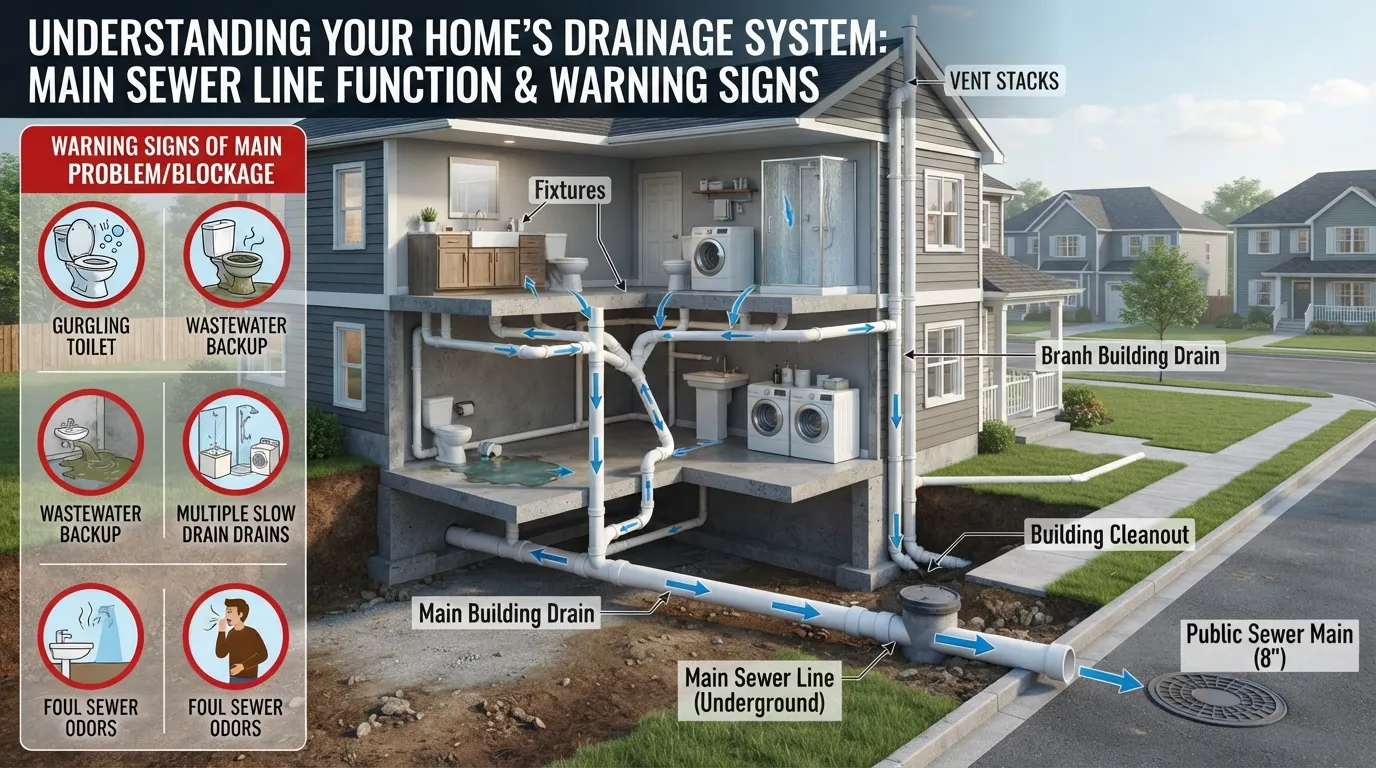
A sewer drain is the part of a home’s drainage system that carries wastewater away from sinks, toilets, showers, tubs, and other plumbing fixtures toward a municipal sanitary sewer or, on some properties, a septic system. Homeowners often use the terms sewer drain, main drain, and sewer line interchangeably, but plumbing terminology separates the building drain inside or beneath the building from the building sewer that continues toward the final disposal point.
If you searched for “sewer drain,” you may be trying to answer more than one question. You might want to know what the pipe is called, where it is located, how it differs from a regular drain, what a sewer cleanout does, or whether several slow drains mean your main sewer line is clogged.
I’ll walk you through the system in that same order so you can understand where wastewater goes, recognize the difference between a small drain problem and a larger sewer problem, and know when professional diagnosis makes sense.
What Is a Sewer Drain?
In everyday conversation, “sewer drain” usually means the larger drainage piping that receives wastewater from the smaller drains in a home and carries it toward the sewer system.
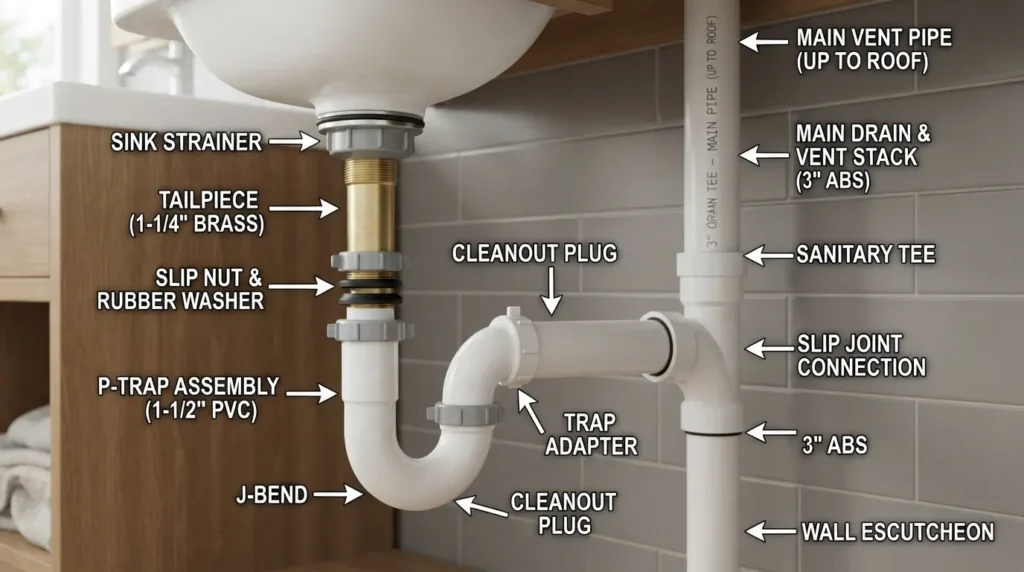
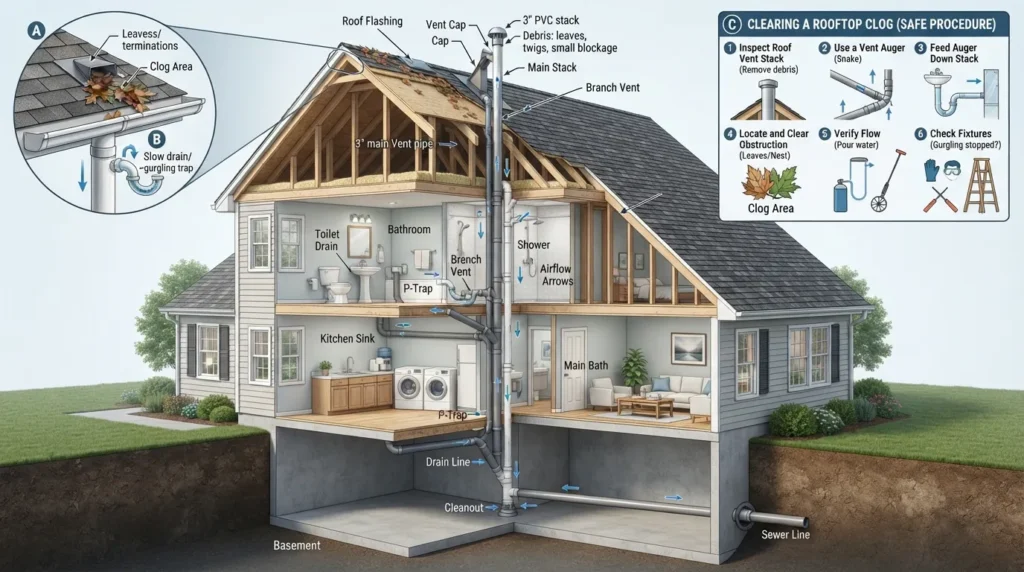
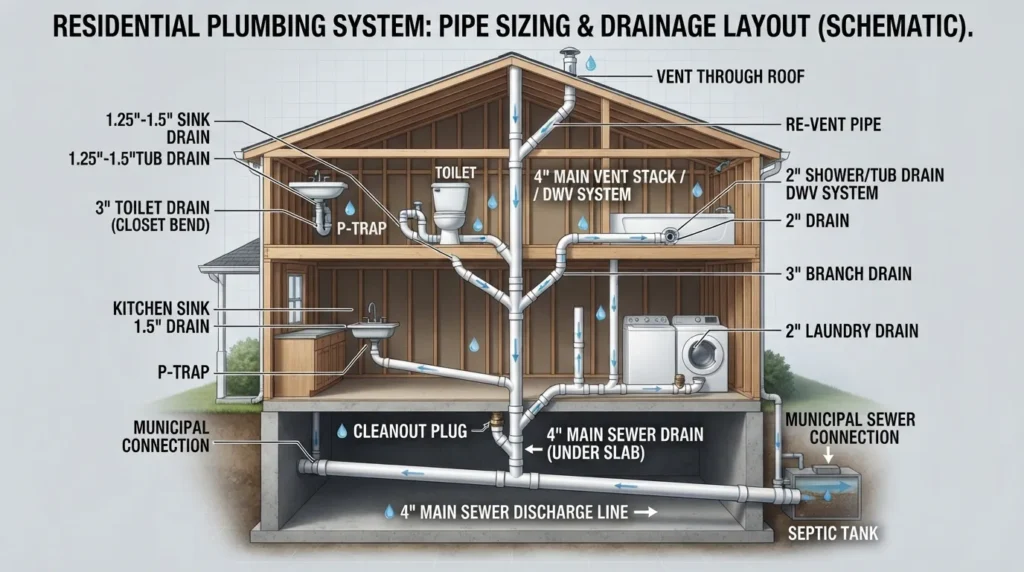
The important point is that your sink drain, shower drain, toilet connection, building drain, and sewer line are not all separate systems. They are connected parts of one wastewater pathway.
You can learn more about how those parts work together in our guide to the home drainage system.
Think of wastewater flow like this
Sink, toilet, shower, tub
Moves wastewater away from individual fixtures
Collects flow from connected drainage piping
Carries wastewater away from the building
Public sanitary sewer or septic system
This relationship matters because the location of a blockage often determines how many fixtures are affected. A clog close to one sink can create a very different set of symptoms from a blockage farther downstream in the building drain or sewer line.
Building Drain vs. Building Sewer: What Is the Difference?
This is one of the most useful distinctions to understand because homeowners often call both pipes the “main drain.”
In plumbing-code terminology, the building drain is the lowest part of the drainage system that receives discharge from soil, waste, and other drainage pipes inside the building and conveys that wastewater toward the building sewer.
The building sewer continues from the end of the building drain toward a public sewer, private sewer, septic system, or another approved disposal point.
Building Drain
- Part of the building’s drainage piping
- Receives wastewater from connected branch drains and stacks
- Located inside or beneath the building
- Feeds wastewater toward the building sewer
Building Sewer
- Continues downstream from the building drain
- Usually runs underground outside the building
- May also be called a private sewer lateral in everyday use
- Connects toward a public sewer or private disposal system
That is why “building drain vs. building sewer” is more precise than simply calling every large wastewater pipe a sewer drain.
Drain vs. Sewer: What Is the Difference?
A drain generally carries wastewater away from a fixture or an area of the home. A sewer receives wastewater farther downstream and carries it toward its final collection or treatment system.
For example, the pipe leaving your kitchen sink is a drain. That drain eventually joins larger drainage piping. Once wastewater has moved through the building drainage system and into the pipe leading away from the building, you are dealing with the sewer side of the system.
A simple way to remember it
Small drains collect wastewater locally. Larger drains combine that flow. The building sewer carries it away from the property toward the wastewater system.
Is a Main Drain the Same as a Sewer Line?
Not exactly, although the terms are often used as if they mean the same thing.
“Main drain” is commonly used to describe the primary drainage pipe receiving wastewater from multiple fixtures inside a home. “Sewer line” usually describes the pipe carrying that combined wastewater away from the building.
The exact terminology matters less to a homeowner than understanding where the problem is located. If only one fixture is affected, the blockage may be in a fixture or branch drain. If several fixtures begin acting up together, the problem may be farther downstream.
What a Sewer Drain Is — and What It Is Not
Several plumbing components can look or sound similar. Keeping them separate makes troubleshooting much easier.
Sewer Line
The buried pipe that carries wastewater away from the building toward the sewer system or another approved disposal point.
Sewer Cleanout
A capped access opening that allows a plumber to reach the drainage or sewer line. The cleanout is an access point, not the sewer line itself.
Floor Drain
A drain located in a floor to collect water from that area. Depending on the plumbing design, it connects into the building drainage system.
Storm Drain
A system designed primarily to collect rainwater and stormwater. It should not be confused with a sanitary sewer carrying household wastewater.
Where Is the Sewer Drain in a House?
You normally will not see the entire sewer line because much of it is beneath the building or underground.
Wastewater begins at fixtures inside the home and moves through branch drains and larger drainage piping. The building sewer then travels away from the structure toward the property’s wastewater connection.
You may, however, be able to see a sewer cleanout. Depending on the home, cleanouts may be located outside near the building, in a garage, basement, crawlspace, utility area, or another accessible location. Plumbing layouts vary, so the visible capped pipe should not be assumed to be in the same location at every property.
Important distinction:
A cleanout gives access to the sewer or drainage piping. It is not itself the “sewer drain.” If you are unsure which pipe you are looking at, identification should come before opening or working on it.
What Does a Sewer Drain Pipe Look Like?
The actual sewer pipe is usually a larger pipe than the small branches serving individual sinks or other fixtures, and much of it may be hidden beneath floors, foundations, yards, or other finished surfaces.
Materials can vary by the age and design of the property. Depending on the installation, sewer piping may include materials such as PVC, cast iron, or older clay piping.
You may also see products described as “4-inch sewer and drain pipe.” That does not mean every home has the same pipe size. Pipe diameter should match the drainage design and applicable plumbing requirements rather than a product label found online.
How Do You Know if a Sewer Line Is Clogged?
The most useful clue is not simply whether a drain is slow. It is how many fixtures are affected and how they react to each other.
A single slow sink may indicate a localized blockage. When multiple fixtures begin draining slowly, gurgling, backing up, or affecting one another, the blockage may be farther downstream in the building drain or sewer line.
Sewer Drain Problem Decision Guide
Only one sink is slow
A localized fixture or branch-drain clog is more likely than a whole-house sewer blockage.
One toilet is clogged
The obstruction may be limited to that toilet or its nearby drain connection.
Several drains slow together
A blockage farther downstream in the building drain or sewer line becomes more likely.
A toilet gurgles when another fixture drains
Cross-fixture symptoms can point to a drainage restriction or venting issue that needs further diagnosis.
Wastewater backs up at a low drain
A downstream blockage or backflow problem may be preventing wastewater from leaving the home normally.
Recurring main-line symptoms
Repeated backups can justify a closer inspection for roots, buildup, pipe damage, or another underlying condition.
Common Warning Signs of a Main Sewer Problem
- Several fixtures drain slowly at the same time
- Toilets gurgle when sinks, tubs, or washing fixtures drain
- Water or wastewater appears in another drain when a fixture is used
- Recurring sewage or sewer odors are present
- A low-level floor drain begins backing up
- Toilets or drains repeatedly clog after temporary clearing
- Wastewater cannot leave the home normally
No single symptom proves that the buried sewer line is damaged. The pattern of symptoms helps narrow the problem, and further inspection may be needed to identify the actual cause.
What Causes Sewer Drain Clogs?
A sewer blockage can develop because of material entering the drainage system, buildup inside the pipe, physical intrusion, or deterioration of the pipe itself.
Common causes include:
- Grease and fats: Grease can cool and accumulate inside drainage piping, trapping additional debris.
- Improperly flushed items: Materials that do not break down like toilet paper can contribute to blockages.
- Hair, soap residue, and debris: These are more common in smaller fixture and branch drains but can contribute to downstream buildup.
- Tree roots: Roots may enter vulnerable underground sewer piping through openings, cracks, or failed joints.
- Pipe deterioration: Older piping can crack, corrode, deform, separate, or otherwise lose proper flow.
- Foreign objects: Objects accidentally entering a drain can become lodged and catch additional material.
- Structural or slope problems: A pipe that is damaged or no longer draining correctly may develop recurring symptoms even after a temporary clog is removed.
What Should You Do if You Think the Main Sewer Drain Is Clogged?
If several fixtures are backing up, continuing to run water can add more wastewater to a drainage system that may already be unable to discharge properly.
A practical first-response checklist
- Reduce water use. Avoid unnecessary flushing, showers, laundry, or other high-volume drainage until you understand the problem.
- Check the pattern. Determine whether one fixture or several fixtures are affected.
- Look for cross-fixture symptoms. Notice whether using one fixture causes gurgling or backup somewhere else.
- Avoid guessing at the pipe condition. A clog, root intrusion, damaged pipe, and drainage-layout problem can produce similar symptoms.
- Arrange diagnosis if the issue appears to be downstream. A plumber can determine whether cleaning, inspection, or another repair approach is appropriate.
Avoid turning a suspected main-line blockage into a bigger mess.
Repeatedly running fixtures or adding drain chemicals does not identify why a main sewer line is blocked. If wastewater is already backing up, reducing flow and identifying the obstruction is generally more useful than continuing to push material into the system.
How Professionals Diagnose and Clear Sewer Drain Problems
The right method depends on what is blocking the line and what condition the pipe is in.
Professional sewer and drain cleaning services may involve one or more diagnostic or cleaning methods.
Drain Snake or Auger
A cable machine can be used to reach and break through certain blockages. The appropriate equipment depends on the size and location of the affected drainage line.
Sewer Camera Inspection
A camera can help inspect the inside of accessible sewer piping and may reveal conditions such as heavy buildup, roots, damaged sections, offsets, or other visible defects.
Hydro Jetting
High-pressure water cleaning can remove certain types of buildup from drainage piping. It is not automatically the correct method for every line, so pipe condition and the cause of the blockage should be considered first.
Cleaning solves the obstruction. Diagnosis explains why it happened.
That distinction is especially important when the same sewer problem keeps coming back. A recurring blockage may require more than repeatedly reopening the pipe.
How Do You Know if a Sewer Pipe Is Bad, Not Just Clogged?
A clogged sewer line and a damaged sewer line can create overlapping symptoms, so you cannot reliably diagnose pipe condition from a slow drain alone.
Situations that may justify closer inspection include:
- Repeated main-line backups after prior cleaning
- Frequent root-related blockages
- Visible defects found during a sewer camera inspection
- Recurring wastewater problems without a clear fixture-level cause
- Suspected movement, separation, cracking, corrosion, or deterioration in older piping
- Persistent symptoms that return soon after the line has been opened
The goal is to distinguish an obstruction that can be cleared from a physical defect that may need repair or replacement.
How Long Does a Sewer Line Last?
There is no single lifespan that accurately applies to every sewer line.
Service life can be affected by:
- Pipe material
- Installation quality
- Soil and ground movement
- Root activity
- Corrosion or chemical exposure
- Joint condition
- Previous repairs
- How the drainage system has been used and maintained
For that reason, the age of a sewer line can be useful context, but its actual condition is more important than choosing a universal number of years from a chart.
Do All House Drains Go Into the Sewer?
If a property is connected to a municipal sanitary sewer, wastewater from normal indoor plumbing fixtures eventually combines within the building drainage system and travels toward that sanitary sewer connection.
But not every property is connected to a municipal sewer. Some homes use septic systems, in which case household wastewater flows toward a septic tank and the associated onsite treatment system instead.
Stormwater is another separate consideration. Roof runoff, street drains, and other stormwater systems should not automatically be treated as part of the same sanitary plumbing system. How stormwater and sanitary wastewater are managed depends on the local infrastructure.
Sewer Drain vs. Storm Drain
Sanitary Sewer Drainage
Carries household wastewater from toilets, sinks, showers, and other sanitary fixtures toward wastewater collection and treatment or an onsite septic system.
Storm Drainage
Handles rainwater and storm runoff from surfaces such as streets, parking areas, roofs, or other drainage locations, depending on the local system.
This distinction is important because dumping household waste, grease, or sewage into a storm drain can send contaminants into a system that was never intended to receive sanitary wastewater.
A Miami Homeowner’s Sewer Drain Checklist
Miami-area homeowners have the same basic sewer-drain concerns as homeowners elsewhere, but local conditions make a few points especially worth remembering.
Keep Fats, Oils, Grease, and Improperly Flushed Items Out of Drains
Miami-Dade Water and Sewer has repeatedly warned residents that fats, oils, grease, wipes, and other inappropriate materials can contribute to wastewater blockages. Keeping those materials out of the drainage system is easier than dealing with a preventable sewer backup later.
Know Whether Your Property Uses Sewer or Septic
Not every Miami-Dade property has historically used the same wastewater arrangement. The county continues to work on septic-to-sewer initiatives in eligible areas, so knowing whether your home currently connects to a public sewer or an onsite septic system matters when you are tracing where your drains go.
Understand the Private Side of the Connection
A wastewater problem on the private plumbing or sewer line serving a property is different from a problem in public sewer infrastructure. If the symptoms appear limited to your property, the first step is usually determining whether the blockage is within the home’s drainage system or private sewer connection.
How to Reduce the Risk of Sewer Drain Problems
No maintenance routine can prevent every pipe failure, but several habits can reduce avoidable blockages.
- Do not pour cooking fats, oils, or grease down drains.
- Flush only materials intended for toilet disposal.
- Use strainers where appropriate to keep hair and debris out of fixture drains.
- Pay attention when multiple drains begin slowing at the same time.
- Do not ignore recurring sewer odors, gurgling, or backups.
- If roots or structural pipe issues have previously been identified, follow an appropriate inspection or maintenance plan rather than waiting for another emergency.
- Know where accessible cleanouts are located before a drainage emergency occurs.
When Should You Call a Plumber for a Sewer Drain?
A simple fixture clog and a main sewer blockage do not require the same response. Professional help becomes more important when the symptoms suggest the problem is affecting the shared drainage system rather than one isolated fixture.
Consider getting the line checked when:
- Multiple drains are clogged or slow at once
- Sewage is backing up into the home
- A toilet gurgles when another fixture drains
- The same main-line problem repeatedly returns
- You suspect roots or damaged underground piping
- You cannot determine whether the problem is in a fixture drain, building drain, or sewer line
Need Help With a Sewer or Drain Problem in Miami?
If several fixtures are backing up or you suspect the problem is farther down the drainage system, our Miami plumbing team can help you determine the next step.
Frequently Asked Questions About Sewer Drains
What is a sewer drain called?
Homeowners may call it a sewer drain, main drain, main sewer drain, or sewer line. More precise plumbing terminology separates the building drain from the building sewer that carries wastewater away from the building.
What is the difference between a drain and a sewer?
A drain carries wastewater away from a fixture or part of the building. The sewer side of the system carries combined wastewater farther downstream toward a municipal sewer or another approved disposal system.
How do I know if my sewer line is clogged?
Multiple slow drains, cross-fixture gurgling, wastewater backing up at a low drain, and several fixtures becoming affected at the same time are stronger clues of a downstream sewer blockage than one isolated slow sink.
What is the difference between a main drain and a sewer line?
“Main drain” commonly refers to the larger drainage piping collecting wastewater inside or beneath the home. The sewer line continues away from the building toward the public sewer or private disposal system.
What does a sewer drain pipe look like?
It is generally larger than individual fixture drain branches and may be made from materials such as PVC, cast iron, or older clay piping. Most of the line may be buried, so the component you actually see may be a capped sewer cleanout rather than the sewer pipe itself.
How many years does a sewer line last?
There is no single accurate lifespan for every sewer line. Material, installation, soil movement, roots, corrosion, joint condition, and other factors all affect how long a line remains serviceable.
Do all house drains go into the sewer?
On a home connected to a municipal sanitary sewer, normal household wastewater drains eventually combine and flow toward that sewer connection. Homes using septic systems send wastewater to the septic system instead.
How do I know if a sewage pipe is bad?
Recurring backups, repeated root problems, known pipe defects, and symptoms that quickly return after cleaning can justify a sewer camera inspection or other professional diagnosis. Symptoms alone cannot confirm the condition of a buried pipe.
Is a sewer cleanout the same as a sewer drain?
No. A sewer cleanout is an access opening into the drainage or sewer piping. It allows the line to be inspected or cleaned without making the cleanout itself the wastewater-carrying sewer line.
Is a sewer drain the same as a storm drain?
No. Sanitary sewer drainage carries household wastewater. Storm drainage primarily carries rainfall and runoff. The exact local infrastructure can vary, but the two should not be treated as interchangeable systems.
The Bottom Line
A sewer drain is best understood as part of a connected wastewater system rather than one isolated pipe. Your fixture drains feed larger branch and building drains, and that wastewater eventually moves through the building sewer toward a municipal sanitary sewer or septic system.
The most useful troubleshooting rule is simple: one affected fixture often points to a local drain problem, while several fixtures acting up together can indicate a blockage farther downstream.
If you know that distinction, understand what a cleanout is, and pay attention to how fixtures interact, you are in a much better position to recognize whether you are dealing with an ordinary drain clog or a potential main sewer problem.