If water keeps pooling in your yard, running across the driveway, collecting near the foundation, or leaving the ground soggy long after a storm, you do not simply need “a drain.” You need the right drainage method for the way water is behaving on your property.
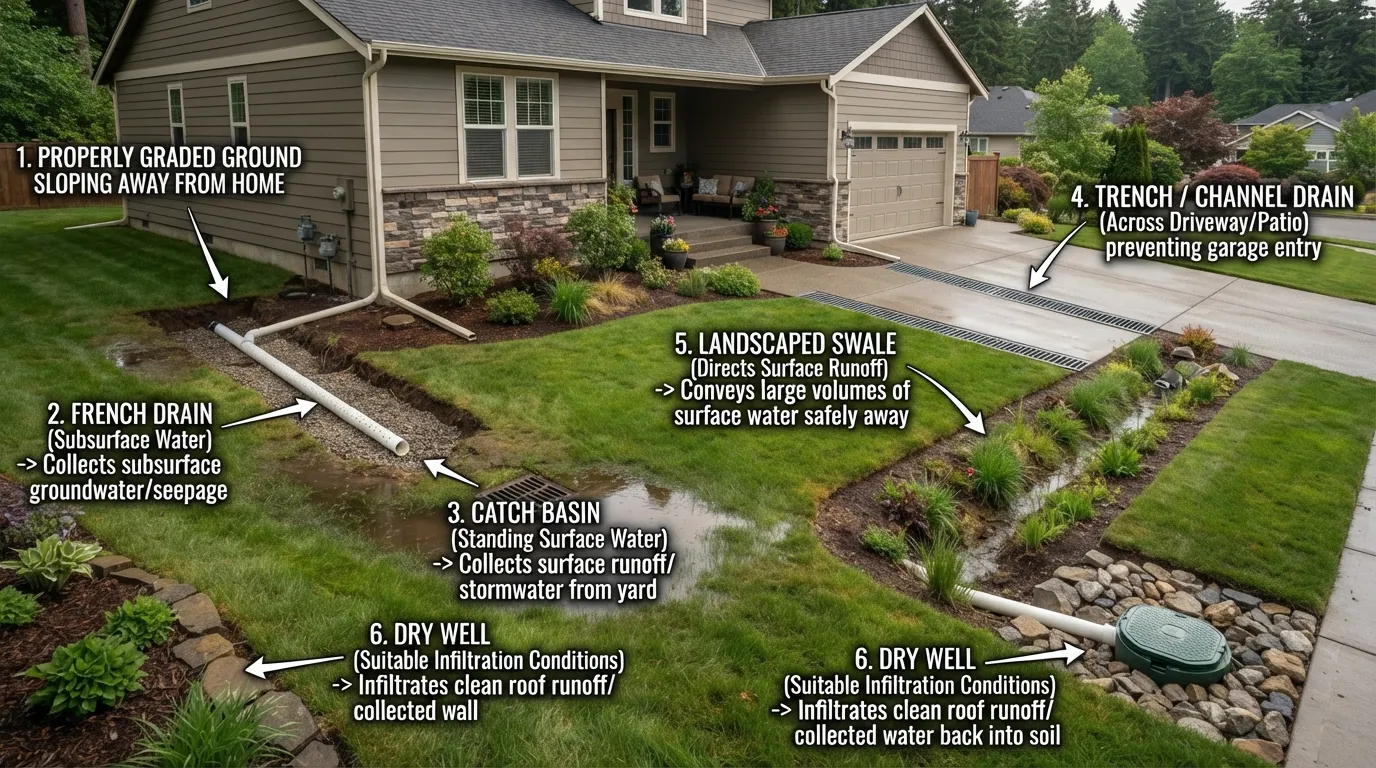
The best home drainage option depends on where the water comes from, where it collects, whether the problem is on the surface or below ground, how your property slopes, and where the collected water can safely go. French drains work well for persistently soggy soil, catch basins collect water from low spots, trench drains intercept runoff across driveways and patios, swales and grading redirect surface flow, and dry wells can provide an infiltration point where site conditions allow.
I recommend choosing by the water problem first and the drain type second. That simple change can prevent you from installing a drainage system that looks appropriate but does not solve the actual cause.
Which Home Drainage Option Fits Your Problem?
Start with what you can observe. You do not need to know every drainage term yet. Look at where the water appears, when it appears, how it moves, and how long it remains after rain stops.
Water Pools in a Low Yard Spot
Consider: Catch basin, grading, swale, or sometimes a French drain depending on whether the water is primarily surface runoff or saturated soil.
Ground Stays Soggy After Rain
Consider: A French drain or another subsurface drainage approach after confirming where the water can discharge.
Driveway or Patio Takes Runoff
Consider: A trench or channel drain positioned to intercept water before it reaches the area you want to protect.
Water Collects Near the House
Consider: Correct grading, downspout management, catch basins, or a combination system based on the source of the water.
Water Runs Down a Sloped Yard
Consider: A swale, strategic grading, catch basin, or another surface system that controls the direction of runoff.
An Existing Drain Suddenly Backs Up
Consider: Inspection and cleaning first. A blockage or sediment buildup may be the problem rather than inadequate drainage design.
First Decide: Is It a Surface or Subsurface Water Problem?
This is one of the most useful distinctions you can make before choosing a drainage system.
Surface drainage problems
Surface drainage deals with water moving over the ground or across hard surfaces. You may see water flowing across a driveway, collecting in a visible low spot, pouring from a downspout, or moving downhill during a storm.
Common surface drainage options include:
- Grading and sloping
- Swales
- Catch basins
- Trench or channel drains
- Gutter and downspout drainage
Subsurface drainage problems
Subsurface drainage deals with water held within or moving through the soil. A typical clue is ground that remains soft, saturated, or soggy after the visible surface runoff has already disappeared.
Common subsurface approaches include:
- French drains
- Subsurface perforated drainage pipe
- Dry wells or soakaway-style systems where site conditions are suitable
- Foundation drainage systems in appropriate applications
A common mistake to avoid
Do not automatically choose a French drain just because you see standing water. If most of the water is rapidly flowing across the surface from a driveway, roof, or slope, intercepting and redirecting that runoff may be more appropriate than trying to collect it underground.
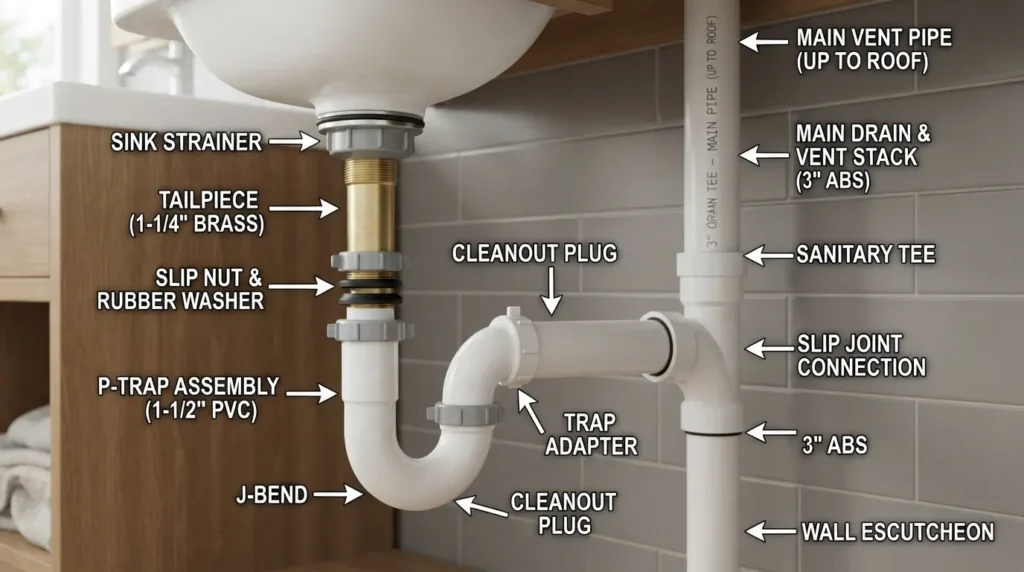
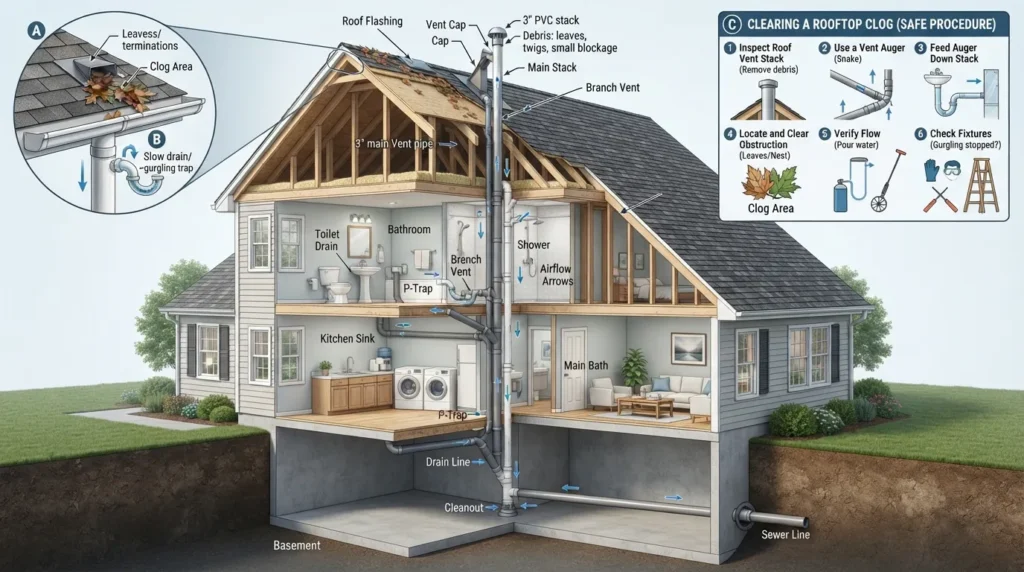
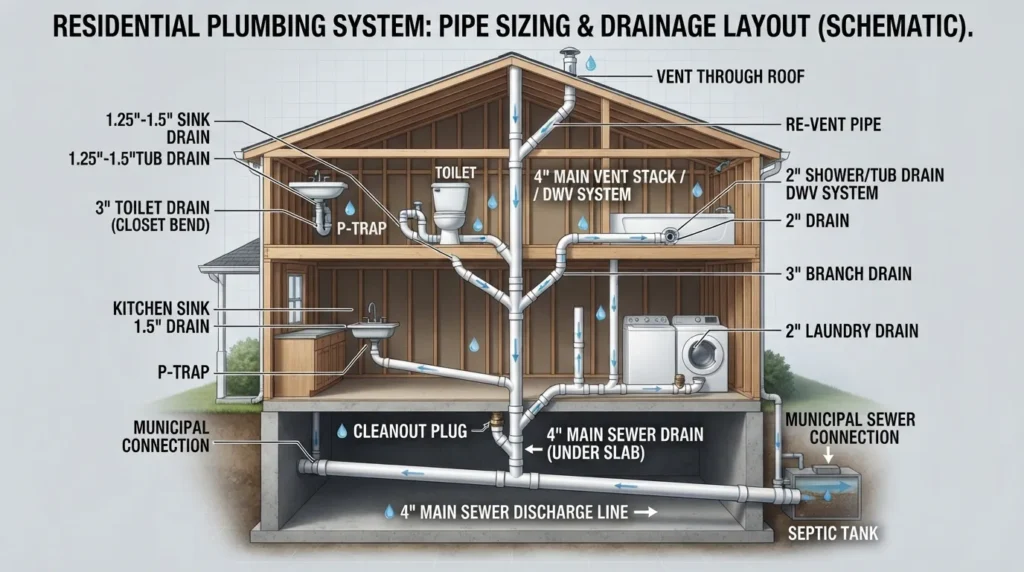
If you want a broader explanation of sanitary, stormwater, and other residential drainage components, see our guide to the home drainage system and how its major parts work together.
7 Practical Home Drainage Options and When Each Makes Sense
1. Grading and Sloping
Sometimes the most effective drainage improvement is not adding a drain at all. Grading means shaping the ground so surface water naturally moves toward an appropriate drainage path instead of collecting next to the house or in unwanted low spots.
Best for: General surface runoff, shallow pooling caused by poor slope, and water consistently moving toward rather than away from a structure.
Why it can be cost-effective: If the real problem is simply that the ground directs water the wrong way, correcting that slope may address the cause without installing a complicated underground network.
When it may not be enough: Grading alone may not solve persistent subsurface saturation, very concentrated runoff, or situations where there is no practical place for water to move.
2. Swales
A swale is a shallow, broad depression designed to guide surface runoff along a controlled route. It may be grassed or incorporated into landscaping.
Best for: Yards where water naturally needs to move across a larger area rather than enter a single drain immediately.
Why homeowners consider it: A swale can move water using the existing landscape and may blend into the property more naturally than a line of visible drains.
When it may not be ideal: Small properties, flat sites without a useful drainage route, or locations where changing surface elevations would create another problem downstream.
3. Catch Basins
A catch basin is installed at a low point where surface water naturally collects. Water enters through a grate and is carried away through connected drainage pipe.
Best for: Concentrated standing water, low yard areas, downspout discharge points, and locations where runoff can be collected at one identifiable spot.
What makes it different from a French drain: A catch basin captures visible surface water at an inlet. A French drain primarily collects water from within surrounding soil through a gravel-and-perforated-pipe system.
Maintenance matters: Leaves, soil, mulch, and other debris can obstruct the grate or accumulate inside the basin, so accessible components should be checked periodically.
4. Trench and Channel Drains
An in-ground drainage channel, often called a trench drain or channel drain, is a long narrow collection system installed across or alongside a hard surface. A grate at the top allows runoff to enter while vehicles or foot traffic can continue over an appropriately designed installation.
Best for: Driveways, patios, pool-deck areas, garage approaches, walkways, and other hard surfaces where water needs to be intercepted across a wider line.
Why it works: Instead of waiting for water to reach a single low-point basin, a channel drain can collect runoff along a longer section of pavement.
When it may not solve the problem: A trench drain is designed primarily for surface runoff. It will not automatically correct saturated soil elsewhere in the yard.
5. French Drains
A French drain typically uses a perforated pipe surrounded by drainage aggregate, with filter fabric often incorporated to help separate surrounding soil from the drainage material. Water within saturated soil moves toward the trench, enters the system, and is conveyed toward an appropriate outlet.
Best for: Soggy areas, recurring subsurface moisture, and locations where water needs to be intercepted below the ground surface.
What a French drain is not: It is not automatically the best solution for every puddle. If the main source is concentrated roof or driveway runoff, a surface collection system may address the water more directly.
Think about maintenance before installation: Filter material, surrounding soil, roots, sediment, pipe layout, and outlet conditions all affect how a buried drainage system performs over time.
6. Dry Wells or Infiltration Pits
A dry well receives collected runoff and allows water to disperse gradually into suitable surrounding soil rather than simply carrying it through a pipe to a distant surface outlet.
Best for: Selected sites where soil, groundwater conditions, available space, runoff volume, and local requirements make infiltration appropriate.
Important limitation: A dry well is not automatically a solution whenever there is nowhere obvious to send water. If the surrounding ground is already saturated or local site conditions do not support adequate infiltration, performance can be limited.
7. Gutters, Downspout Extensions, and Underground Downspout Drainage
Roof runoff is easy to overlook because the drainage problem may appear several feet away from the actual source. Gutters collect roof water, while downspouts bring it to ground level. The next question is what happens after that.
Best for: Water concentrating near the foundation or repeatedly eroding the same area beneath a downspout.
Depending on the property, the solution may be as simple as directing the downspout toward an appropriate area or may involve a catch basin or solid underground drainage pipe.
Do not forget the outlet
Every drainage plan needs two answers: How will I collect the water? and where will that water go? A basin, French drain, or channel can collect water efficiently and still perform poorly if the downstream route is blocked, improperly positioned, or has no suitable discharge or infiltration point.
Which Drainage Is Best?
There is no single drainage method that is best for every house. The best system is the one that matches the source, location, movement, and final destination of the water.
French drain or another properly designed subsurface system.
Catch basin, grading, or a combination depending on the source.
Trench or channel drain where the flow needs to be intercepted.
Swale or strategic grading, sometimes combined with collection points.
Proper gutter and downspout routing, with additional drainage where needed.
Inspect for obstruction or damage before installing another system.
What Is the Cheapest Drainage Method?
The cheapest drainage method depends on what is actually causing the problem. This is why comparing drain prices before diagnosing the water source can be misleading.
If a minor grading issue or poorly directed downspout is causing water to collect, correcting that condition can be simpler than excavating for a French drain. If water is crossing a driveway, however, spending less on an unrelated yard drain does not make it cost-effective.
The most cost-effective drain is not necessarily the cheapest drain to install. It is the least complicated solution that correctly addresses the source of the water without simply moving the problem somewhere else.
When comparing cost-effective drains, consider the full picture:
- Excavation required
- Pipe, basin, aggregate, fabric, and grate requirements
- Whether existing landscaping or pavement must be disturbed
- Where the drainage system will discharge
- Future cleaning and maintenance access
- Whether multiple drainage methods need to work together
Sometimes the Best Answer Is a Combination System
A property does not always need to choose between a catch basin, French drain, swale, and channel drain as if only one can exist.
Different components can perform different jobs in the same drainage path.
Example drainage paths
Roof runoff: Gutter → downspout → surface or underground conveyance → suitable drainage destination
Low yard: Grading → catch basin → solid pipe → suitable destination
Saturated area: French drain → conveyance pipe → suitable destination
Sloped property: Swale or grading → controlled collection point → suitable destination
This is why I would think of drainage as a water-management path, not just a product buried in the yard.
How to Make Better Drainage at Home
If you are trying to understand how to make drainage at home, start with diagnosis rather than excavation.
- Observe the property during rain. Note where the water originates, where it travels, and where it stops.
- Check the area again after rain ends. Fast-disappearing surface water and soil that stays saturated can indicate different drainage needs.
- Inspect gutters and downspouts. Determine whether roof runoff is being concentrated in the problem area.
- Identify high and low areas. Water follows elevation, so even a well-built drain still needs a workable drainage path.
- Separate soft-landscape problems from hardscape problems. A driveway may need interception, while a saturated lawn may need subsurface drainage.
- Determine the destination before installing the collection system. Know where collected water can appropriately go.
- Check existing drains before adding new ones. A clogged basin or pipe can create symptoms that look like inadequate drainage.
- Verify underground utilities and applicable local requirements before digging.
When a New Drain May Not Be the Answer
Not every drainage complaint requires another pipe or basin.
If an area drained normally in the past and suddenly begins holding water, inspect what already exists. Leaves, sediment, roots, debris, damaged piping, or another obstruction may be restricting the flow.
That distinction matters because installing another drain does not fix a blocked existing drainage path.
If you suspect an obstruction rather than a design problem, our professional drain cleaning and drainage inspection services cover drain clearing as well as storm-drain and catch-basin maintenance.
Drainage Planning in Miami and South Florida
Local conditions matter when choosing a home drainage option. Miami-Dade County explains that hard, impervious surfaces such as rooftops and parking areas generate runoff that stormwater systems must manage because the water cannot simply soak into those surfaces. The county maintains stormwater infrastructure to improve drainage and help address areas susceptible to flooding. You can read more from the Miami-Dade County Stormwater Utility.
South Florida also has unusual interactions between surface water and shallow groundwater. University of Florida IFAS explains that highly permeable limestone and shallow soils connect surface and groundwater, and that large storm events can raise groundwater closer to the surface and reduce the soil’s available capacity to store additional rainwater. See the UF/IFAS discussion of flooding and groundwater conditions in South Florida.
What this means for your property
Do not assume an infiltration-based system, French drain, surface basin, or grading correction will perform the same way on every lot. The property’s elevation, soil and groundwater conditions, amount of runoff, existing drainage infrastructure, and available outlet all need to be considered together.
If you need local plumbing help rather than a general drainage explanation, our Miami plumbing team serves homeowners and businesses across Miami-Dade.
DIY or Professional Drainage Help?
Some basic drainage improvements can be straightforward, particularly when the cause is visible and the correction is limited. Others require more diagnosis because the water source, elevation, underground utilities, existing pipe routing, or discharge path is unclear.
A simpler DIY correction may be reasonable when:
- You clearly understand where the runoff comes from.
- The problem involves a minor downspout or surface-flow issue.
- No significant excavation or connection to other drainage infrastructure is required.
- You know where the redirected water can appropriately go.
Professional evaluation becomes more useful when:
- Water repeatedly collects against the building.
- The source of the water is unclear.
- The ground remains saturated for extended periods.
- Several drainage symptoms occur at the same time.
- An existing catch basin or drain backs up repeatedly.
- The work requires significant excavation or underground piping.
- You are unsure where collected water can safely discharge.
Video: See How Different Landscape Drainage Systems Work
If you learn better visually, this drainage-system overview is useful for seeing how different surface and landscape drainage components can be used to manage runoff.
Frequently Asked Questions About Home Drainage Options
Final Takeaway: Choose by the Water Problem, Not the Drain Name
The easiest way to make a poor drainage decision is to start with a product: “I need a French drain” or “I need a catch basin.” Start with the water instead.
Ask these five questions:
- Where is the water coming from?
- Where is it collecting?
- Is it surface runoff or subsurface saturation?
- How does the property slope?
- Where can the collected water appropriately go?
Once those answers are clear, comparing home drainage options becomes much easier. You may find that one straightforward correction is enough, or that a combination of grading, collection, conveyance, and discharge provides the more complete solution.
Not Sure Whether You Need a New Drain or an Existing One Cleared?
If water is repeatedly pooling, backing up, or failing to move through an existing drainage path, getting the cause identified first can help you avoid spending money on the wrong solution.