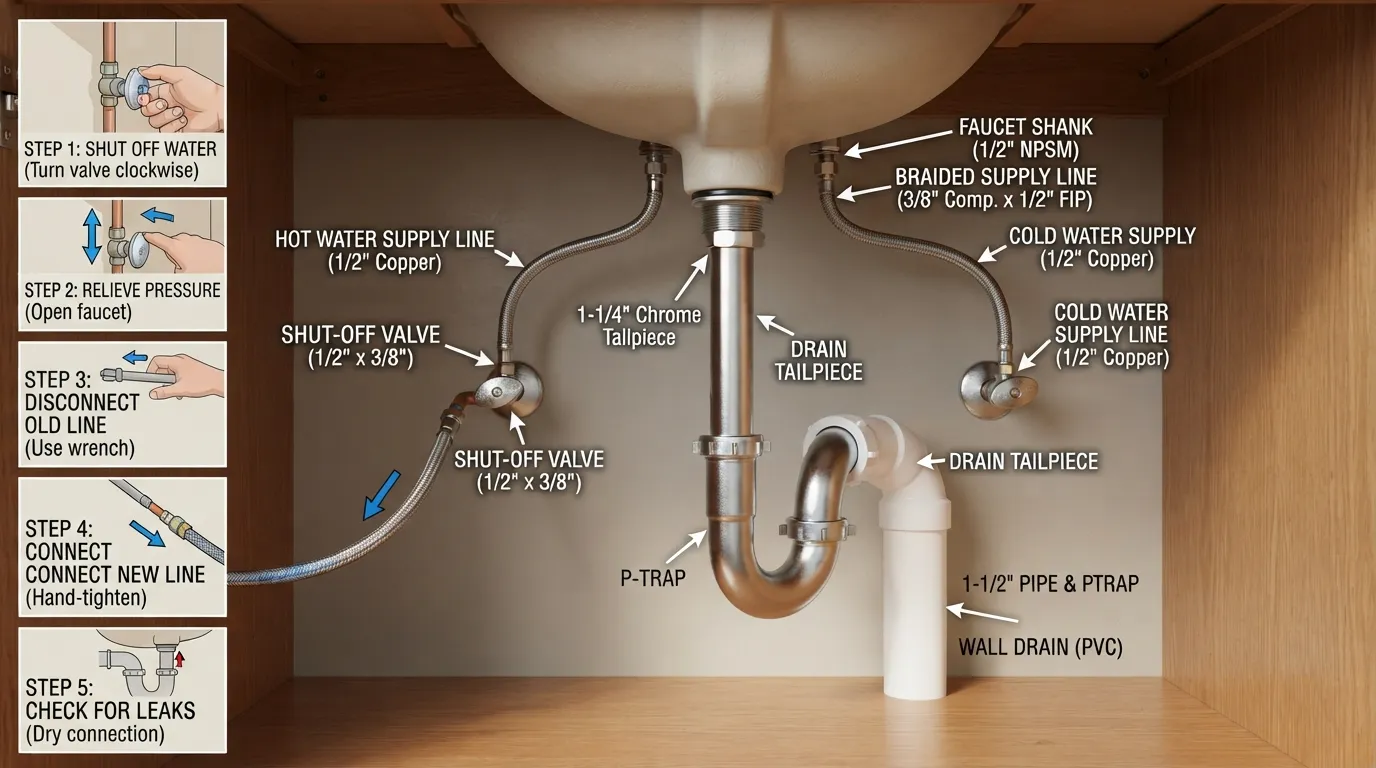
If you are looking at the plumbing under your kitchen or bathroom sink and wondering which pipes are the water lines, you are looking for the water supply lines. They connect the shut-off valves to your faucet and carry hot and cold water to the faucet.
What are the water lines under a sink called?
The flexible pipes that run from the shut-off valves to your faucet are called water supply lines, faucet supply lines, or simply sink water supply lines.
A typical sink has separate hot- and cold-water supply lines. Do not confuse these with the drain pipe or the U-shaped P-trap; those components carry wastewater away from the sink rather than supplying fresh water.
If you searched for water lines under sink because you need to identify a pipe, replace a leaking line, install a faucet, or choose the correct replacement hose, this guide will help you work through the plumbing from the valve to the faucet.
What Are the Pipes Under a Sink?
There is more than one type of pipe or tube underneath a sink, which is why the terminology can be confusing. Some components bring clean water into the faucet, while others carry used water away.
This distinction matters when you are troubleshooting a leak. A wet P-trap is a drain-plumbing problem, while water dripping from a flexible hose between the shut-off valve and faucet points toward the water-supply side.
The main components you may see
- Shut-off valve: Controls water flowing to the faucet.
- Water supply line: Connects the shut-off valve to the faucet.
- Faucet: Receives the hot and cold water through its supply connections.
- Drain pipe: Carries wastewater away from the sink.
- P-trap: The curved section of drain plumbing beneath the sink that maintains a water seal and is part of the drainage system.
What Are Flexible Water Lines Under a Sink Called?
Flexible water lines are usually called flexible faucet supply lines or flexible water supply lines. They are designed to connect the fixed plumbing at the shut-off valve to the faucet without requiring a rigid pipe connection directly between the two.
Braided stainless-steel supply lines are a common choice because the flexible construction makes installation easier than working with rigid tubing in the confined cabinet space beneath a sink.
However, the appearance of a supply line is not enough to determine whether it will fit your sink. You need to check the connections at both ends and choose an appropriate length.
Important:
Do not assume that every sink uses exactly the same supply-line connection. Faucet designs, shut-off valves, adapters, and manufacturers can use different connection configurations.
What Size Are Water Lines Under a Sink?
There is no single universal size for every sink water line. A common configuration uses a 3/8-inch compression connection at the shut-off valve, while the faucet end can use a different connection depending on the faucet design.
Common connection terminology you may encounter includes 3/8-inch compression, 1/2-inch connections, FIP (female iron pipe), and manufacturer-specific faucet connections such as M10. Quick-connect systems may also be used on some faucets.
Does 3/8 inch mean the hose itself is 3/8 inch?
Not necessarily. When a supply line is described as having a 3/8-inch compression connection, that description refers to the connection standard rather than meaning that every dimension of the flexible hose is exactly 3/8 inch.
This is one reason it is better to identify the existing fittings or check the faucet and valve specifications before buying a replacement.
How Do I Know Which Water Line Is Hot and Which Is Cold?
A typical two-handle or standard kitchen or bathroom faucet has one supply line for hot water and one for cold water. The connections usually correspond to the hot and cold inlets on the faucet and the respective shut-off valves.
Color markings can help, but do not rely on color alone when working on an unfamiliar installation. Follow the faucet’s markings and identify which shut-off valve controls each side before disconnecting anything.
A simple identification check
- Look for the two shut-off valves below the sink.
- Trace each flexible supply line from the valve toward the faucet.
- Look for hot/cold markings on the faucet or supply connections.
- If the installation is unusual or the valves are not clearly identifiable, verify the plumbing before disconnecting a line.
How Long Should a Sink Water Supply Line Be?
Supply lines are available in different lengths, with common residential options often falling around the 12- to 24-inch range. The correct length depends on the distance between your shut-off valve and faucet connection and the path the line needs to take inside the cabinet.
You want enough length to make the connection without pulling the line tight, but you also do not want an unnecessarily long hose creating large loops or interfering with other plumbing.
Choose the length using these checks
- Measure the approximate route from the shut-off valve to the faucet connection.
- Allow enough length for a natural bend without stretching the line.
- Avoid sharp bends or kinks.
- Make sure the installed line will not be crushed by cabinet contents.
- Check the manufacturer’s instructions if the faucet uses an unusual connection or integrated supply hose.
How to Choose the Right Water Supply Line for Your Sink
If you are replacing an old line, the easiest mistake to make is buying a hose that looks similar but has the wrong connection. Instead, work through the following process.
1. Identify the shut-off valve connection
Look at the outlet where the supply line connects. Do not guess the size from the appearance of the hose.
2. Identify the faucet-side connection
Check the faucet inlet or the existing supply-line connection. The faucet end may use a different connection from the valve end.
3. Determine the required length
Choose enough length for a relaxed route without creating unnecessary loops.
4. Confirm compatibility before installation
Compare the replacement line with the old line and verify the manufacturer’s specifications before making the final connection.
How to Replace a Water Line Under a Sink
If the flexible supply line is visibly damaged or leaking and the shut-off valve and faucet connections are accessible, replacement can be a straightforward plumbing repair. Work carefully, because even a small amount of trapped water can spill when the line is disconnected.
Before you start
- Have a bucket or container ready.
- Keep a towel available for residual water.
- Make sure you have the correct replacement line.
- Know how to shut off the water supply.
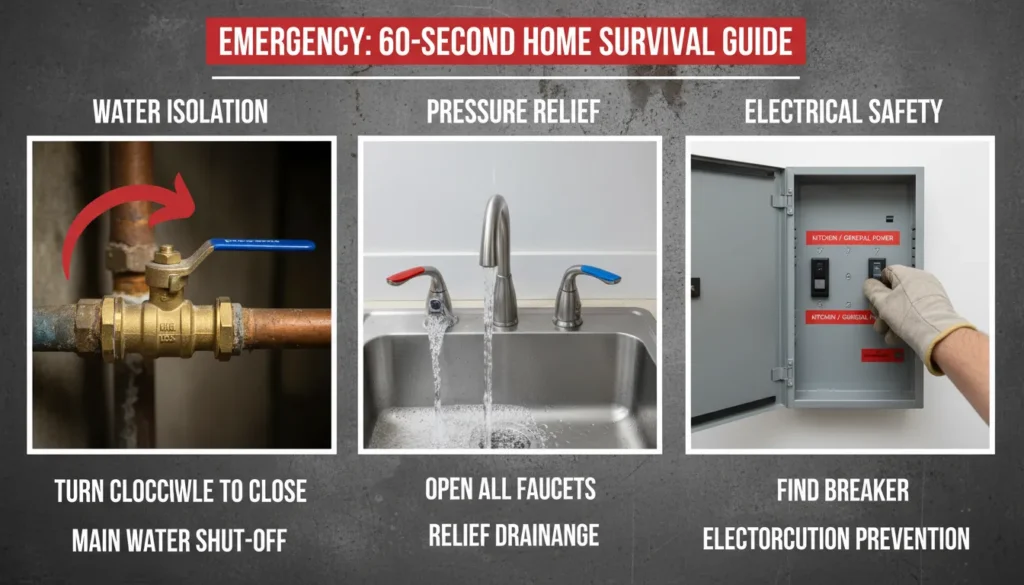
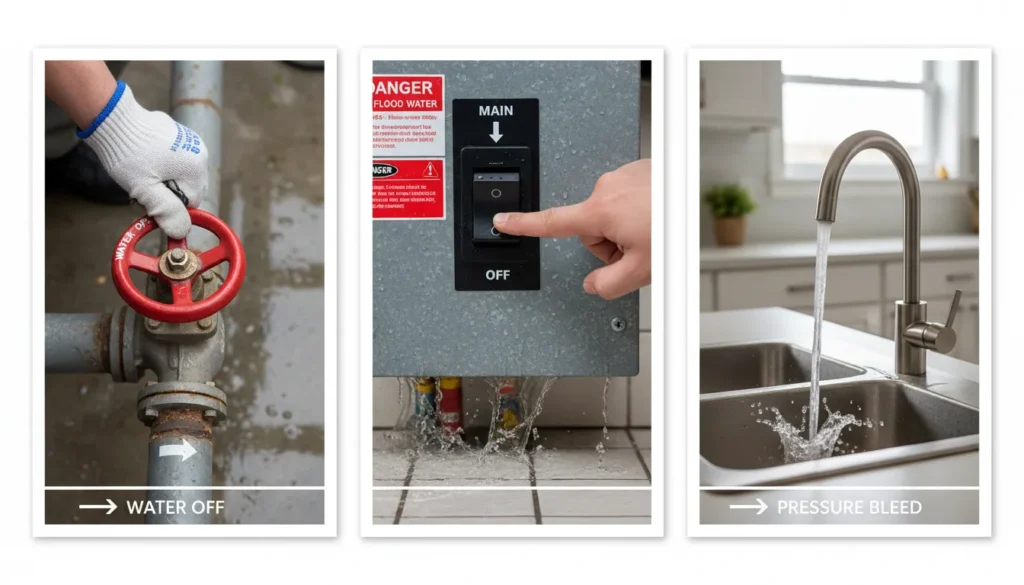
Step 1: Shut off the water
Turn the appropriate shut-off valve clockwise to close it. Quarter-turn ball valves generally close by turning the handle so it is perpendicular to the pipe or outlet. If the local shut-off does not work properly, you may need to use the home’s main water shut-off.
Step 2: Relieve pressure
Open the faucet briefly after shutting off the water. This helps release pressure in the supply line and allows remaining water to drain into your container or towel.
Step 3: Disconnect the old supply line
Place your container underneath the connection. Use an appropriate wrench to loosen the connection at the shut-off valve and then disconnect the faucet-side connection. Work carefully so you do not damage the valve or faucet connection.
Step 4: Inspect the connections
Before installing the new line, inspect the valve, faucet connection, threads, washers, and sealing surfaces. If the valve itself is corroded, damaged, or leaking, replacing only the flexible supply line may not solve the problem.
Step 5: Install the new line
Connect the new supply line according to its fitting type and the manufacturer’s instructions. Keep the line naturally routed and avoid twisting, kinking, or sharply bending it.
Connections that seal with a rubber gasket should not be overtightened. The goal is a secure connection without damaging the fitting or gasket.
Step 6: Turn the water back on and check for leaks
Open the shut-off valve gradually while watching both connections. Run the faucet and inspect the supply line and fittings for leaks. Dry the connections and check them again so a slow drip is easier to detect.
Leak-check rule
Never assume a connection is leak-free simply because no water appeared immediately. After restoring the water supply, inspect the fittings carefully and monitor them for a short period.
Why Is the Water Line Under My Sink Leaking?
A leaking sink water line can come from several locations. Finding the exact source before replacing parts can save you from fixing the wrong component.
Common Mistakes When Replacing Sink Water Lines
- Buying by length alone: A line can be the correct length but have the wrong connection.
- Assuming all faucets use the same fitting: Faucet connection designs vary.
- Confusing supply lines with drain pipes: The flexible lines supply clean water; the P-trap and drain carry wastewater.
- Forcing a mismatched fitting: Connections should match rather than being forced together.
- Overtightening: Excessive force can damage fittings, threads, or sealing components.
- Kinking the new line: A tight bend can interfere with proper water flow and put unnecessary stress on the line.
- Skipping the leak test: Always inspect both ends after restoring the water supply.
- Ignoring a failing shut-off valve: If the valve itself is damaged or leaking, a new supply line may not fix the underlying problem.
Water Supply Line vs. Drain Pipe vs. P-Trap
If you are searching for a “sink water pipe,” this is the distinction that can save you the most confusion.
Kitchen Sink vs. Bathroom Sink Water Lines
The basic supply-line concept is similar for kitchen and bathroom sinks: the faucet needs a connection to the hot and cold water supply, and those connections are normally made through shut-off valves and supply lines.
What changes is the faucet design, available cabinet space, connection configuration, and the way the existing plumbing was installed. A kitchen faucet may also have additional connections or a manufacturer-specific setup, so always inspect the actual faucet rather than relying only on what is typical.
When Should You Replace a Sink Water Supply Line?
Replacement is worth considering when the supply line is leaking, visibly damaged, corroded, swollen, kinked, or otherwise no longer in good condition. If the connection is the actual source of the leak, inspect the fitting and valve before assuming the hose is defective.
If water is coming from inside the wall, the shut-off valve itself is failing, the connection cannot be safely removed, or you cannot stop the water, professional plumbing help is the safer option.
A simple replace-or-call decision
Consider a supply-line replacement: The flexible hose is clearly leaking or damaged, the shut-off works, the connections are accessible, and you have a correctly matched replacement.
Consider professional help: The valve is damaged, the wall connection is leaking, the shut-off will not stop the water, fittings are seized or badly corroded, or the plumbing configuration is unclear.
Frequently Asked Questions About Water Lines Under a Sink
What are the water lines under a sink called?
They are generally called water supply lines, faucet supply lines, or sink water supply lines. They connect the shut-off valves to the faucet.
What size are water lines under a sink?
A common shut-off-valve connection is 3/8-inch compression, but sink supply-line configurations vary. The faucet end can use a different connection, so check both ends before buying a replacement.
Why are there two water lines under my sink?
A typical faucet uses separate hot- and cold-water supplies. Some faucet designs can have additional or different connections, so the actual configuration should be checked at the faucet.
What is the PVC pipe under a sink called?
If you are referring to the larger pipe connected to the sink drain, it is part of the drain system rather than a water supply line. The exact component may be a drain pipe, tailpiece, or another part of the sink’s drainage assembly.
What is the J-shaped or U-shaped pipe under a sink called?
The curved section is commonly called the P-trap. It belongs to the drain system, not the incoming water supply.
What is a flexible water line called?
It is commonly called a flexible water supply line, flexible faucet supply line, or faucet connector.
Can I replace a flexible pipe under the sink myself?
A straightforward supply-line replacement may be manageable when the shut-off valve works correctly, the connections are accessible, and the replacement line matches the existing connections. If the valve or wall plumbing is damaged, professional assistance is safer.
Should I replace both sink water supply lines at the same time?
Not every situation requires replacing both. However, if both lines are the same age and show deterioration, replacing them together can be a practical maintenance decision. Inspect each line and follow the faucet and plumbing manufacturer’s recommendations.
Key Takeaway: Identify Before You Replace
The water lines under your sink are usually the supply lines connecting the shut-off valves to the faucet.
Before replacing one, identify the valve-side connection, faucet-side connection, required length, and exact location of any leak. Also make sure you are working on the supply plumbing rather than the drain and P-trap.
Related Plumbing Resources
If you are researching a replacement supply line or comparing available connection types, these resources can help you review product categories and installation information:
- Home Depot supply-line selection — useful for reviewing common supply-line styles and connection options.
- Lowe’s faucet supply lines — useful for comparing available supply-line lengths and configurations.
- Signature Hardware sink water supplies — another reference for sink supply components.
- iFixit sink faucet water supply line replacement guide — a useful additional reference when reviewing the replacement process.
- Amazon sink water supply lines — useful for seeing the range of supply-line configurations available for purchase.
Need Help With a Sink Plumbing Problem?
If the supply line, shut-off valve, faucet connection, or other plumbing under your sink is leaking and you are not sure where the problem starts, professional plumbing help can make the diagnosis and repair safer.
Explore Plumbing Services
Get Plumbing Help
For direct assistance, you can speak with a plumbing professional.