Need to identify a sink drain pipe, choose a replacement, or figure out why the drain under your sink is leaking? I’ll walk you through the parts, common sizes, materials, measurement tips, replacement options, and the signs that it is time to call a plumber.
What Is a Sink Drain Pipe?
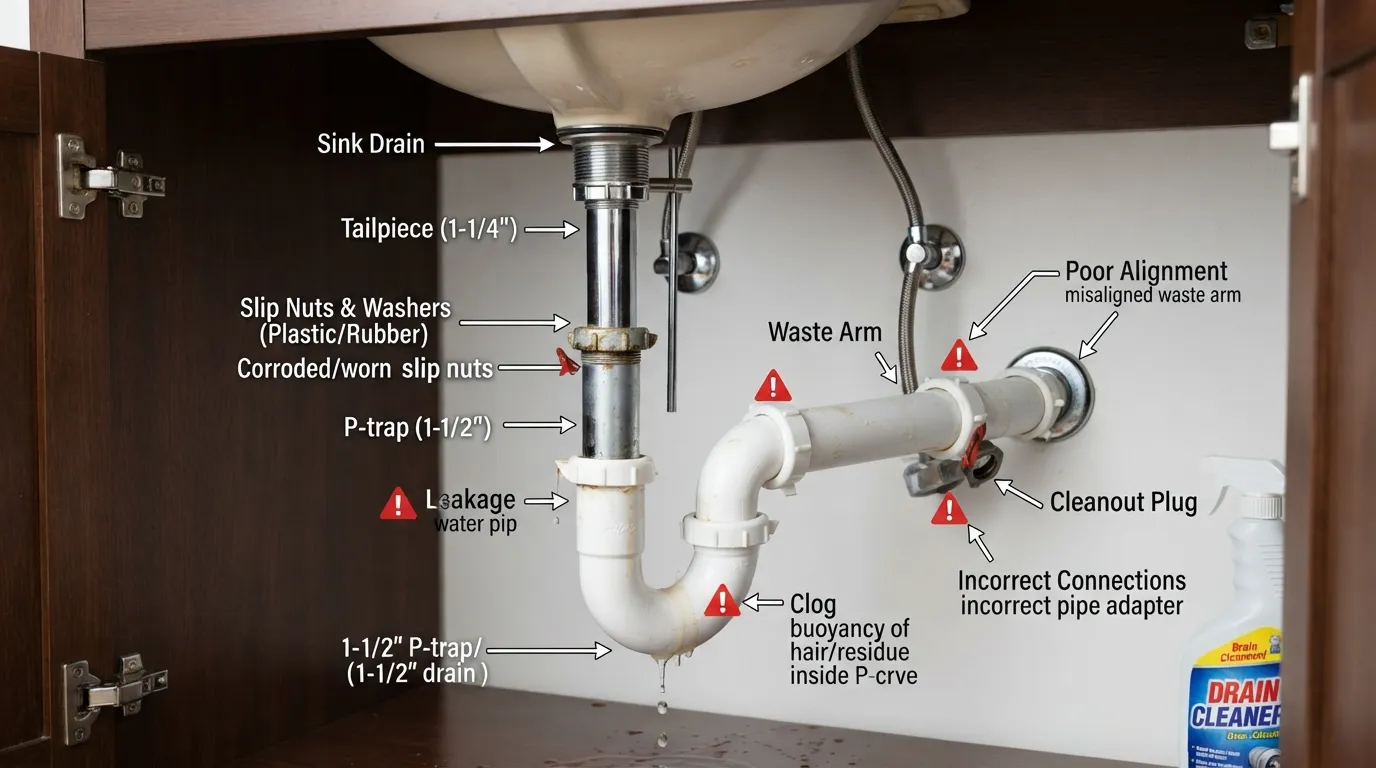
A sink drain pipe is the piping that carries wastewater from the sink drain into the home’s drainage system. Under a typical sink, the drain assembly can include the tailpiece, P-trap, waste arm, slip nuts, washers, and the connection to the wall drain. The exact components and sizes vary by sink type and existing plumbing configuration.
If you are searching for a sink drain pipe because something is leaking, clogged, corroded, or simply needs replacement, the first thing to know is that there usually is not just one universal pipe underneath the sink. Several connected parts work together to move wastewater away from the basin while the P-trap helps prevent sewer gases from entering your home.
That distinction matters when you are buying a replacement. You may only need a new tailpiece, P-trap, waste arm, washer, or another section rather than replacing the entire sink or every part of the drain assembly.
Sink Drain Pipe Anatomy: Know the Parts Before You Replace Anything
Before ordering a replacement, look underneath the sink and identify how the existing drain is assembled. A common configuration follows this basic path:
Tailpiece
The tailpiece is the relatively straight section that extends downward from the sink drain strainer. It connects the sink to the P-trap. If this section is cracked, corroded, or leaking around its connection, it may be possible to replace the tailpiece without replacing the sink itself.
P-Trap or J-Bend
The P-trap is the curved section beneath the sink. It holds a small amount of water that helps block sewer gases from traveling back through the drain and into the room. The trap is also a common location for buildup, leaks, worn washers, and corrosion.
Waste Arm
The waste arm is the horizontal section that connects the trap to the drain connection in the wall. If the existing wall connection is positioned differently from the trap, the waste arm configuration may need to be adjusted rather than simply replacing a straight piece of pipe.
Slip Nuts and Washers
Tubular sink drain connections commonly use slip nuts and washers to create sealed connections between components. A leak does not automatically mean the pipe itself has failed. A worn washer, loose connection, damaged sealing surface, or misalignment can also be responsible.
What Size Pipe Do I Need for a Sink Drain?
There is no single size that fits every sink drain. A commonly encountered size for bathroom sink drain piping is 1-1/4 inch, while 1-1/2 inch is commonly used for kitchen sink drain piping. However, you should verify the existing drain components and connection dimensions before buying a replacement.
Important: Don’t Choose a Pipe by Sink Type Alone
A kitchen sink does not mean you should automatically purchase any 1-1/2-inch part, and a bathroom sink does not guarantee that every component will be 1-1/4 inch. Existing plumbing, drain components, connection style, and the actual configuration all matter.
Common Sink Drain Size Guide
1-1/4 inch is a commonly encountered drain size.
1-1/2 inch is a commonly encountered drain size.
Verify the existing components and connections rather than assuming a standard size.
How to Measure a Sink Drain Pipe Before Buying a Replacement
If you are replacing a kitchen sink drain pipe or bathroom sink drain component, measurement is one of the easiest ways to avoid buying the wrong part.
- Identify the part you are replacing. Decide whether the problem is with the tailpiece, P-trap, waste arm, or another connection.
- Look at the existing connection. Check whether it uses slip nuts and washers, threaded connections, glued connections, or another fitting arrangement.
- Measure the relevant diameter. Be careful not to confuse a nominal pipe size with the actual outside diameter you measure.
- Check the length and configuration. A replacement can have the correct diameter but still fail to fit if the length or connection position is wrong.
- Check the wall connection. The position of the drain opening in the wall affects how the waste arm and trap need to align.
- Compare the replacement part with the existing assembly. If you are uncertain, take the old component or clear measurements with you when selecting the replacement.
A Common Buying Mistake
Don’t search only for “sink drain pipe replacement” and buy the first kit that looks similar. Identify the component, measure the connection, and compare the configuration first.
Are Sink Drain Pipes Universal?
No, sink drain pipes and drain components are not universally interchangeable. Two sinks can look similar but have different drain sizes, materials, connection styles, or under-sink layouts.
Compatibility can depend on:
- Sink type and drain opening
- Existing drain pipe diameter
- Tailpiece size
- P-trap size and configuration
- Material of the existing plumbing
- Connection method
- Available space below the sink
- Position of the wall drain
- Whether the sink is single-bowl or double-bowl
- Whether other fixtures, such as a dishwasher drain or garbage disposal, connect to the system
Kitchen Sink Drain Pipe vs. Bathroom Sink Drain Pipe
The basic drainage principle is the same, but kitchen and bathroom sink installations can have different sizes and configurations.
Bathroom Sink
- 1-1/4-inch drain piping is commonly encountered.
- Often has a relatively compact under-vanity layout.
- Space around the trap can be limited by the vanity.
Kitchen Sink
- 1-1/2-inch drain piping is commonly encountered.
- Double-bowl sinks can have more complex drain configurations.
- Dishwasher connections or garbage disposals can affect the layout.
These are common configurations, not a substitute for measuring your existing plumbing. If you are replacing a specific component, verify its dimensions and connections before purchasing.
What Materials Are Used for Sink Drain Pipes?
Sink drain components are available in several materials. The right choice depends on the existing installation, the component being replaced, compatibility, appearance, and applicable plumbing requirements.
Tubular Plastic: PVC or Polypropylene
Tubular plastic components are common under sinks because they are lightweight and convenient for many accessible drain connections. They are also available in a variety of configurations for replacement work.
ABS
ABS is a rigid black plastic commonly encountered in drain, waste, and vent installations. Unlike many tubular slip-joint components, ABS installations may use solvent-welded connections, so the replacement method can be different.
Chrome-Plated Brass
Chrome-plated brass can provide a durable and finished appearance when drain piping is visible beneath a sink. It is commonly selected where appearance is important, but the replacement still needs to match the existing configuration and connection requirements.
Sink Drain Pipe Leaking? Find the Likely Problem First
A puddle under the sink does not automatically mean the entire sink drain pipe needs to be replaced. Start by identifying exactly where the water appears.
Inspect the slip nut, washer, alignment, and sealing surfaces.
The damaged component may need replacement.
Replacing the affected section may be more appropriate than repeatedly tightening a deteriorated connection.
The issue may extend beyond the easily accessible tubular section and may require closer inspection.
Sink Drain Pipe Repair or Replacement: Which Do You Need?
The right solution depends on the failed component and the condition of the surrounding plumbing.
A repair or small part replacement may be enough when:
- A connection is loose.
- A washer is worn.
- A removable tubular component has a minor issue.
- The surrounding drain assembly is otherwise in good condition.
Replacement is more appropriate when:
- The pipe is cracked or badly damaged.
- Corrosion has significantly weakened the component.
- Threads or sealing surfaces are damaged.
- The same connection continues to leak after proper correction.
- The existing configuration is incorrectly fitted or no longer suitable.
Can You Replace a Sink Drain Without Replacing the Whole Sink?
In many situations, yes. A sink itself does not normally need to be replaced simply because an accessible drain component has failed. Depending on the problem, you may be able to replace the tailpiece, P-trap, waste arm, drain assembly, or another compatible component.
The important question is whether the sink drain opening, surrounding sink material, and existing plumbing are still in usable condition. If the sink is damaged around the drain opening or the problem extends into concealed plumbing, the scope of work can be different.
Think component-first: identify the failed part before deciding that the entire drain system—or the sink itself—needs replacement.
How to Replace a Sink Drain Pipe: Basic Process
The exact procedure depends on the type of drain assembly and connection. For an accessible tubular drain component, the general process often involves these steps:
- Clear the cabinet. Remove stored items and place a container underneath the drain to catch residual water.
- Identify the leaking or damaged component. Do not remove parts until you understand how the existing assembly is connected.
- Disconnect the affected section. For slip-joint components, this may involve loosening the appropriate nuts and separating the connections.
- Compare the replacement. Confirm diameter, length, connection type, and configuration before installation.
- Install the new component correctly. Make sure washers are positioned correctly and connections are aligned rather than forced into place.
- Check the complete assembly. Make sure the trap and waste arm are properly aligned and that the drain is supported as needed.
- Test for leaks. Run water through the sink and inspect every connection rather than checking only the point that originally leaked.
Don’t Force a Misaligned Connection
If the replacement component does not naturally line up with the existing drain, forcing it into position can create stress and future leaks. Recheck the dimensions and configuration before tightening anything.
Sink Drain Pipe Problems and What to Check First
What Should You Buy for a Sink Drain Pipe Replacement?
Before buying a sink waste pipe or replacement drain kit, make a short compatibility checklist.
- Is this a kitchen or bathroom sink?
- What component is actually damaged?
- What is the existing drain diameter?
- What is the length needed?
- Is the connection slip-joint, threaded, solvent-welded, or another type?
- What material is already installed?
- Where is the wall drain positioned?
- Is there a second sink bowl?
- Does a garbage disposal or dishwasher connection affect the configuration?
- Will the replacement fit within the available cabinet space?
Product listings can be useful for comparing available components, but product names alone do not guarantee compatibility. Always compare the manufacturer’s dimensions and connection specifications with your existing installation.
How Much Does It Cost to Replace a Sink Drain Pipe?
There is no single reliable price for every sink drain pipe replacement. A simple accessible tubular component can involve a very different scope of work from a corroded or incorrectly configured drain that requires work at the wall connection.
The final cost can depend on:
- Which component needs replacement
- Cost of the replacement parts
- Accessibility underneath the sink
- Extent of corrosion or damage
- Condition of surrounding connections
- Whether the wall-side drain connection is involved
- Complexity of the sink configuration
- Local plumbing labor rates
- Whether service is needed outside normal hours
If you are comparing a DIY repair with professional service, compare the scope of the work, not just the price of one replacement part. A cheap component will not solve the problem if the underlying issue is incorrect alignment or damaged plumbing beyond that component.
When Should You Call a Plumber?
Some sink drain repairs are straightforward when the affected component is accessible and the connections are clearly understood. Other situations are better handled by a professional.
- Water is leaking into the wall, floor, or surrounding structure.
- The leak appears to come from concealed plumbing.
- The wall-side drain connection is damaged or difficult to access.
- The existing plumbing is heavily corroded.
- You cannot identify the correct replacement size or configuration.
- The drain has been repeatedly repaired but continues to leak.
- The installation has multiple connected fixtures or an unusual configuration.
- You are uncomfortable disconnecting or reconfiguring the drain assembly.
For broader plumbing problems, you can also explore our plumbing services to see which type of professional help may fit your situation.
Common Sink Drain Pipe Replacement Mistakes to Avoid
- Buying by appearance alone. A replacement can look identical while having a different size or connection.
- Assuming every kitchen sink uses exactly the same configuration. Double bowls, disposals, and dishwasher connections can change the layout.
- Confusing nominal size with measured diameter. Pipe sizing terminology can make a simple measurement confusing.
- Replacing the whole assembly when only one part has failed. Identify the actual problem first.
- Forcing pipes into alignment. Poor alignment can create stress and recurring leaks.
- Overlooking the washer. A failed seal can be mistaken for a damaged pipe.
- Testing only one connection. After replacement, run water and inspect the complete drain assembly.
Sink Drain Pipe Buying Resources
If you already know the component and dimensions you need, major home-improvement and plumbing retailers can be useful for comparing sink drain parts, P-traps, tailpieces, connectors, and replacement kits. Always verify the product dimensions and connection specifications before purchasing.
- Home Depot drain parts — useful for comparing common sink drain components and replacement parts.
- Lowe’s under-sink plumbing parts — useful for reviewing traps, tailpieces, extensions, and other sink plumbing components.
- PlumbersStock sink drain pipe parts — another source for comparing sink drain components.
- Amazon sink plumbing listings — useful for browsing replacement kits and individual components after confirming compatibility.
Frequently Asked Questions About Sink Drain Pipes
What is the sink drain pipe called?
The term can refer to several parts of the under-sink drainage system. Common components include the tailpiece, P-trap, waste arm, and the pipe connecting the assembly to the wall drain.
Are all sink drains 1-1/4 inches?
No. 1-1/4 inches is commonly encountered with bathroom sinks, while 1-1/2 inches is commonly encountered with kitchen sinks. Your existing drain should still be measured and checked before replacement.
Are sink drain pipes standard sizes?
There are common sizes, but sink drain components are not universally identical. The sink, drain opening, existing pipe, connection type, and configuration all affect compatibility.
How do I tell what size sink drain pipe I have?
Identify the component you need to replace, measure the relevant diameter, check the connection type, and compare the measurement with the replacement manufacturer’s specifications. Do not assume the measured outside diameter will equal the nominal pipe size.
Can you replace a sink drain without replacing the sink?
Yes, in many cases. Accessible drain components can often be replaced independently if the sink, drain opening, and surrounding plumbing are still in suitable condition.
What is the difference between a sink drain pipe and a P-trap?
The sink drain system contains several components. The P-trap is the curved section that holds water to help block sewer gases, while other drain pipes carry wastewater between the sink, trap, and wall connection.
Can I replace only the leaking section of a sink drain?
Often, yes. If the failed section is an accessible, replaceable component, you may not need to replace the entire drain assembly. The condition and compatibility of the surrounding components should be checked first.
What should I do if my sink drain pipe keeps leaking?
Find the exact source of the leak and inspect the connection, washer, alignment, and condition of the affected component. If the leak continues after correction or appears to involve concealed or wall-side plumbing, professional inspection is a safer next step.
What size PVC pipe is used for a sink drain?
Sink drain systems can use different sizes depending on the fixture and configuration. 1-1/4-inch and 1-1/2-inch sizes are commonly encountered, but the existing installation should be verified before selecting a replacement PVC component.
When should I call a plumber for a sink drain problem?
Consider professional help when the leak involves concealed plumbing, the wall connection, extensive corrosion, complicated multi-fixture configurations, repeated failed repairs, or any situation where you cannot confidently identify the correct component and connection.
Need Help With a Sink Drain Problem?
If your sink drain is leaking, damaged, repeatedly backing up, or difficult to identify, getting the problem assessed can help you avoid replacing the wrong component or creating another leak.
A sink drain pipe is part of a complete drainage assembly, not always a single universal pipe. Before you replace anything, identify the failed component, check the size and connection, understand the P-trap and waste-arm configuration, and confirm that the replacement matches the existing system. When the problem extends beyond an accessible drain component, professional plumbing help can prevent a small leak from becoming a larger plumbing problem.