Pressure fittings are used to connect plumbing pipes and tubing while keeping a pressurized system secure and leak-resistant. The right fitting depends on more than pipe size: you also need to consider the pipe material, connection method, pressure and temperature ratings, application, and manufacturer requirements.
What Are Pressure Fittings in Plumbing?
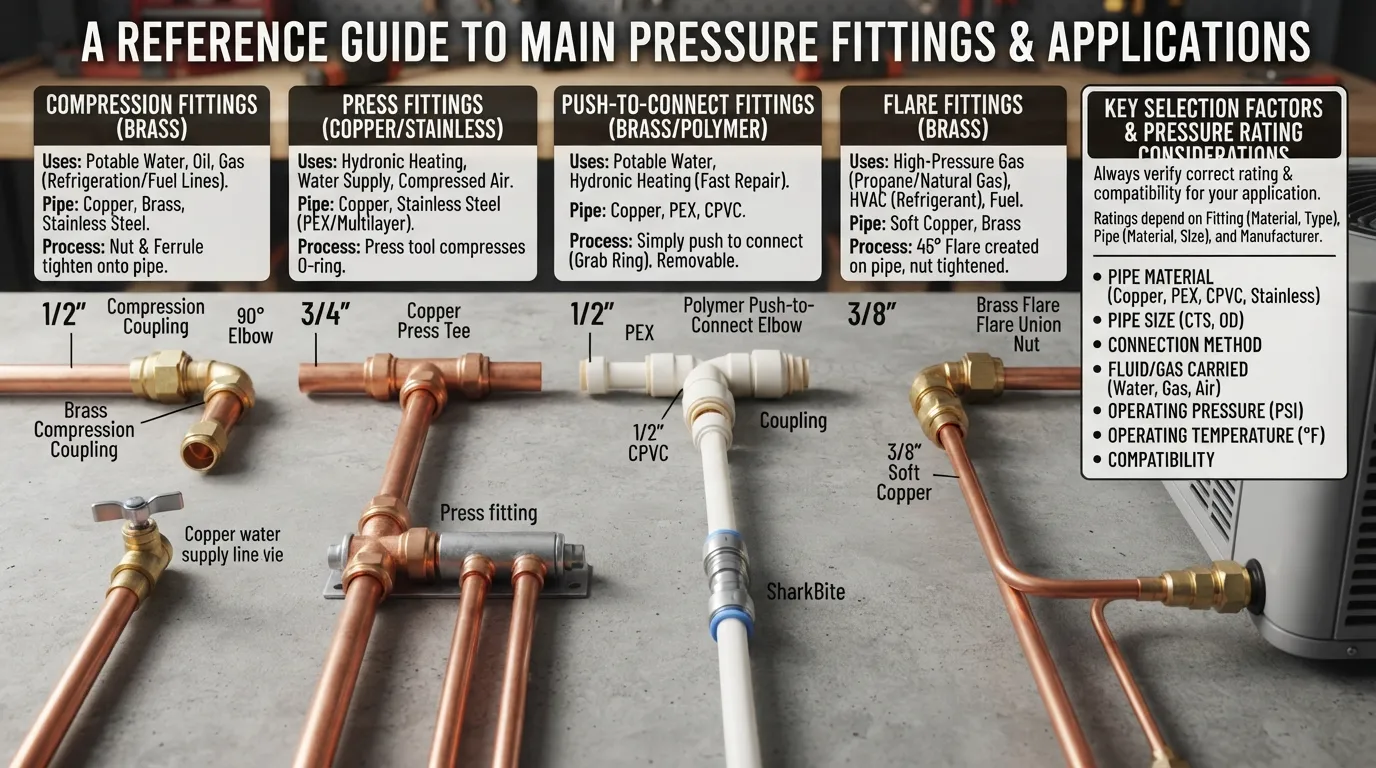
In plumbing, pressure fittings are fittings designed to join pipes or tubing in systems where the connection must safely contain internal fluid pressure. The term can describe a broad range of pressure-rated connections rather than one single fitting design. Common connection methods include compression, press, push-to-connect, flare, and threaded connections.
If you are choosing one, don’t start with the fitting name alone. Start with the pipe or tubing material, actual size, application, pressure, temperature, and connection method, then verify that the specific fitting is approved and rated for that use.
What Are Pressure Fittings?
Pressure fittings are mechanical or permanent connectors used to join sections of pipe or tubing in a pressurized plumbing system. Their job is not simply to hold two pieces together. The complete connection has to maintain a reliable seal while the system is under pressure and, depending on the application, temperature changes, vibration, and other operating conditions.
One reason the term can be confusing is that pressure fitting is not necessarily the name of one particular connection style. Compression fittings, press fittings, push-to-connect fittings, flare fittings, and threaded fittings can all serve pressure-bearing applications when the specific products are designed, rated, and approved for that use.
That distinction matters when you shop for a fitting. A fitting that physically fits your pipe is not automatically suitable for the system.
Pressure Fittings vs. Compression Fittings: Are They the Same?
No. Compression fittings are one type of connection used in plumbing, while “pressure fitting” can be used more broadly to describe fittings intended for pressurized systems.
A compression fitting normally uses a fitting body, compression nut, and ferrule or olive. Tightening the nut compresses the ferrule around the tube to create the connection. No soldering is required.
Other pressure-rated connections use completely different mechanisms. A press fitting is permanently formed onto compatible tubing with a press tool, while a push-to-connect fitting uses an internal gripping mechanism and seal to connect compatible pipe or tubing.
Main Types of Pressure Fittings Used in Plumbing
1. Compression Fittings
Compression fittings connect compatible tubing by tightening a nut against a ferrule. The ferrule is compressed between the fitting and tubing, creating the sealing connection.
They are useful when you need a mechanical connection without soldering, but the exact fitting must match the tubing and application. Proper tube preparation, alignment, and tightening matter because an incorrectly installed compression connection can leak.
A common mistake is assuming that every threaded-looking part of a compression fitting should receive thread sealant. The compression sealing surfaces do the sealing; always follow the fitting manufacturer’s instructions rather than treating every connection as a threaded pipe joint.
2. Press Fittings
Press fittings use a specialized press tool to form the fitting onto compatible tubing. Many systems use an internal sealing element, such as an O-ring, to create the seal.
Press systems can be useful when a permanent, tool-made connection is preferred and the installer has the correct equipment. You need the correct fitting system, compatible tubing, press tool, and required press profile. Do not assume that a fitting and tool from different systems are interchangeable.
3. Push-to-Connect Fittings
Push-to-connect fittings are designed so compatible tubing can be inserted into the fitting without soldering or conventional threaded assembly. Internal gripping components hold the tube while a sealing element creates the connection.
They can be convenient for accessible repairs and installations, but convenience does not remove the need to check compatibility. The fitting must be approved for the exact pipe or tubing material, size, pressure, temperature, and intended application.
4. Flare Fittings
Flare fittings use a prepared, flared end of compatible metal tubing. A nut secures the flared tube against the fitting’s sealing surface.
Flared connections are used in applications where that connection method and fitting system are appropriate. Because flare geometry and standards matter, you should use the correct flare type and tool rather than assuming that any flared tube will seal against any flare fitting.
5. Threaded and High-Pressure Connections
Threaded fittings connect through matching threads and an appropriate sealing method. Specialized high-pressure fittings can use engineered connection systems designed for substantially higher operating pressures than ordinary residential plumbing components.
This is where guessing becomes especially risky. For a high-pressure system, use the manufacturer’s exact pressure and temperature specifications and confirm that the complete connection system—not just the fitting—is suitable for the application.
How to Choose the Right Pressure Fitting
If you’re standing in a hardware store or looking at fittings online, don’t choose one simply because the diameter appears correct. Use this sequence instead.
The 7-Point Pressure Fitting Checklist
- Identify the pipe or tubing material. Determine whether you’re working with copper, PEX, CPVC, PVC, stainless steel, or another material.
- Confirm the actual size. Don’t confuse nominal pipe size with the actual outside diameter used by a particular fitting system.
- Choose the connection method. Decide whether the application calls for compression, press, push-to-connect, flare, threaded, or another approved connection.
- Check pressure rating. Verify the manufacturer’s rating for the exact fitting and application.
- Check temperature rating. Pressure capability can change with operating temperature, so don’t evaluate PSI in isolation.
- Confirm fluid/application compatibility. A component suitable for one application isn’t automatically suitable for another.
- Check required approvals and installation instructions. Where codes, listings, or manufacturer requirements apply, follow them before installation.
Pressure Fittings by Pipe Material
The pipe material is one of the first things I would identify before choosing a fitting. Similar-looking fittings can have very different compatibility requirements.
This table is a starting point, not a substitute for the fitting manufacturer’s compatibility chart. Product families can have different limitations even when the connection style looks similar.
How to Check a Pressure Fitting’s Rating
One of the most important things you can do before installing a pressure fitting is verify its rating from the manufacturer’s documentation. Avoid selecting a fitting based on a generic PSI number found in a search result.
Don’t Choose a Fitting by PSI Alone
The appropriate pressure rating depends on the exact fitting, pipe or tubing, operating temperature, connection system, and application. A fitting that can handle a certain pressure under one set of conditions is not automatically suitable for every system.
Before you install the fitting, look for the manufacturer’s stated:
- Maximum or working pressure rating
- Temperature range
- Compatible pipe or tubing materials
- Compatible sizes
- Approved fluid or application
- Required installation procedure
- Any applicable product approvals or limitations
How to Identify an Existing Plumbing Fitting
If you’re replacing a fitting and don’t know what you have, identification should come before shopping. You don’t need to guess from appearance alone.
- Identify the pipe material. Look at the tubing itself and determine whether it is copper, PEX, PVC, CPVC, stainless steel, or another material.
- Measure the appropriate dimension. For tubing-based fittings, the outside diameter may be critical. For threaded pipe, nominal size and thread specification can matter.
- Inspect both ends of the fitting. Look for compression nuts, ferrules, threads, press sleeves, push-fit openings, or a flare.
- Look for markings. Manufacturer names, model numbers, size markings, or ratings can make identification much easier.
- Determine the connection standard. Similar-looking threads and fitting ends are not necessarily interchangeable.
- Verify the replacement. Match material, size, connection type, pressure, temperature, and application before purchasing.
Compression vs. Push-to-Connect: Which Is Better?
Neither is universally better. The right choice depends on the application, pipe material, access, fitting specifications, and installation requirements.
So if you’re choosing between the two, don’t ask only, “Which one is stronger?” Ask: Which connection is approved for my pipe, application, pressure, temperature, and installation conditions?
Common Pressure Fitting Installation Mistakes
Many fitting problems are caused not by the concept of the fitting, but by choosing the wrong component or installing a compatible component incorrectly.
- Choosing by size alone: A fitting can have the correct apparent diameter and still be wrong for the material or application.
- Ignoring pressure and temperature: The fitting must be rated for the actual operating conditions.
- Mixing incompatible systems: Similar-looking fittings and tools are not necessarily interchangeable.
- Damaging the tubing: Scratches, deformation, burrs, or an improperly prepared tube can compromise a connection.
- Misalignment: A connection that is forced or installed at an improper angle can create sealing problems.
- Over-tightening: More force does not automatically produce a better seal and can damage components.
- Using the wrong sealing method: Compression sealing surfaces, tapered threads, and other connection designs work differently.
- Ignoring manufacturer instructions: Installation requirements vary between fitting systems.
Why Is a Pressure Fitting Leaking?
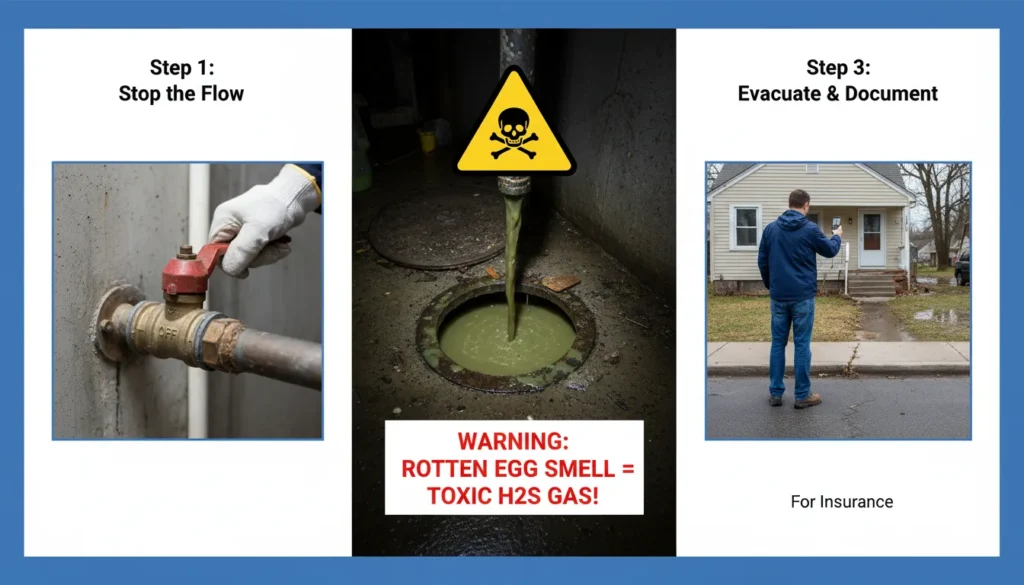
If a newly installed pressure fitting leaks, start by stopping the water or other flow safely and inspecting the connection rather than simply tightening everything harder.
Potential causes include:
- Incorrect fitting size
- Wrong fitting type for the pipe material
- Damaged or poorly prepared tubing
- Incorrect ferrule, O-ring, or sealing component
- Improper insertion depth
- Misalignment
- Incorrect tightening or installation procedure
- Incompatible components
- Operating conditions beyond the fitting’s rating
- Movement, vibration, or other system conditions that the connection was not designed to handle
If the fitting is on a concealed line, a high-pressure system, or an application where a failure could cause significant damage, professional diagnosis is usually the safer approach.
What Pressure Fitting Should You Use for Common Plumbing Situations?
Copper Water Line
Start by confirming tube outside diameter and then choose an approved connection system that matches the copper and operating conditions.
PEX Connection
Verify the exact PEX type and use a fitting system specifically approved for that tubing and application.
PVC Piping
Don’t assume a metal compression or press fitting is automatically appropriate. Use a joining method designed and approved for the PVC system.
High-Pressure Application
Use the exact manufacturer’s specifications for pressure, temperature, fluid compatibility, connection standard, and installation.
Can You Use Pressure Fittings for Water, Heating, Air, or Gas?
Pressure fittings can be used in different applications, but the same fitting should not automatically be assumed suitable for every fluid or system.
Depending on the product, pressure-rated fittings may be designed for applications such as potable water, hydronic heating, compressed air, or specialized high-pressure systems. Gas applications require particular attention to product approval, material compatibility, codes, and installation requirements.
Important Safety Rule
Never assume that a fitting approved for water is automatically approved for gas, compressed air, chemicals, or another fluid. Verify the exact product’s intended application and applicable requirements before installation.
When Should You Call a Plumber?
A simple, accessible fitting replacement may be manageable when you know the pipe material, fitting type, size, and manufacturer’s requirements. But some situations deserve professional attention.
- The pipe material or fitting type is uncertain.
- The line is concealed behind a wall, ceiling, or finished surface.
- The fitting repeatedly leaks after a correct replacement.
- The system operates at high pressure or temperature.
- The installation involves gas or another application with specific safety requirements.
- You suspect the existing piping or connection is damaged.
- The repair could cause significant water damage if it fails.
If you need help with a larger plumbing issue, you can review our full range of plumbing services and choose the service that best matches the problem.
Pressure Fittings Plumbing: Frequently Asked Questions
“`
What are the four types of fittings in plumbing?
There isn’t one universal four-type classification. Common plumbing connection types include compression, press, push-to-connect, flare, and threaded fittings, along with many fitting shapes and specialized systems. The exact classification depends on whether you’re describing connection methods, fitting shapes, or application-specific fittings.
What do plumbers put on compression fittings?
A typical compression connection uses a compression nut and ferrule or olive around compatible tubing. The ferrule creates the compression seal as the nut is tightened. Don’t automatically add thread sealant to the compression sealing surfaces; follow the fitting manufacturer’s instructions for the particular connection.
Which is better: push-to-connect or compression?
Neither is universally better. Compare the exact fitting’s compatibility, pressure and temperature ratings, installation requirements, accessibility, and intended application. The correct choice is the one designed and approved for your specific system.
How do I identify a specific plumbing fitting?
Identify the pipe material, measure the appropriate size, inspect the connection ends, look for manufacturer or size markings, determine the connection standard, and verify the replacement against the manufacturer’s specifications.
What are the best fittings for home plumbing?
There is no single best fitting for every home. The right choice depends on the pipe material, application, accessibility, connection method, pressure, temperature, and applicable requirements. A fitting that works well for one plumbing system may be unsuitable for another.
Can compression fittings be used on PVC?
Some products are specifically designed for particular plastic pipe applications, but you should not assume that a standard compression fitting is suitable for every PVC system. Check the exact fitting manufacturer’s compatibility information, pipe size, pressure rating, and intended application.
What are the five main types of plumbing pipes?
Common plumbing pipe materials include copper, PEX, PVC, CPVC, and stainless steel, although other materials are also used depending on the building, application, age of the system, and local requirements. Pipe material is important because fitting compatibility depends on it.
Do pressure fittings work with every pipe size?
No. The fitting must match the required size and connection specification. For tubing connections, the actual outside diameter can be important, while threaded pipe connections may use nominal sizing and specific thread standards.
“`
Pressure Fitting Selection: The Simple Decision Path
Before you buy, ask these questions:
- What pipe or tubing material am I connecting?
- What is the actual size and connection specification?
- Which connection method is appropriate?
- What pressure will the system operate at?
- What temperature will it reach?
- What fluid or application will it carry?
- Is the exact fitting approved and rated for that use?
- What installation method does the manufacturer require?
Key Takeaway
The best pressure fitting is not simply the one that fits the pipe. It is the fitting whose material, size, connection method, pressure rating, temperature rating, and application compatibility all match the plumbing system.
If you’re unsure what fitting you need, identify the pipe material and size first, then verify the exact fitting specifications before making the connection.
Helpful Plumbing Resources
If you’re researching a fitting because of a broader plumbing problem, these resources can help you evaluate the next step:
- Learn more about our plumbing team and services for general plumbing needs.
- Explore plumbing services if the fitting issue is part of a larger repair or installation.
Not Sure Which Plumbing Fitting You Need?
If you can’t confidently identify the pipe, fitting, or cause of a leak, getting professional guidance can help you avoid the wrong part and a repeat repair.