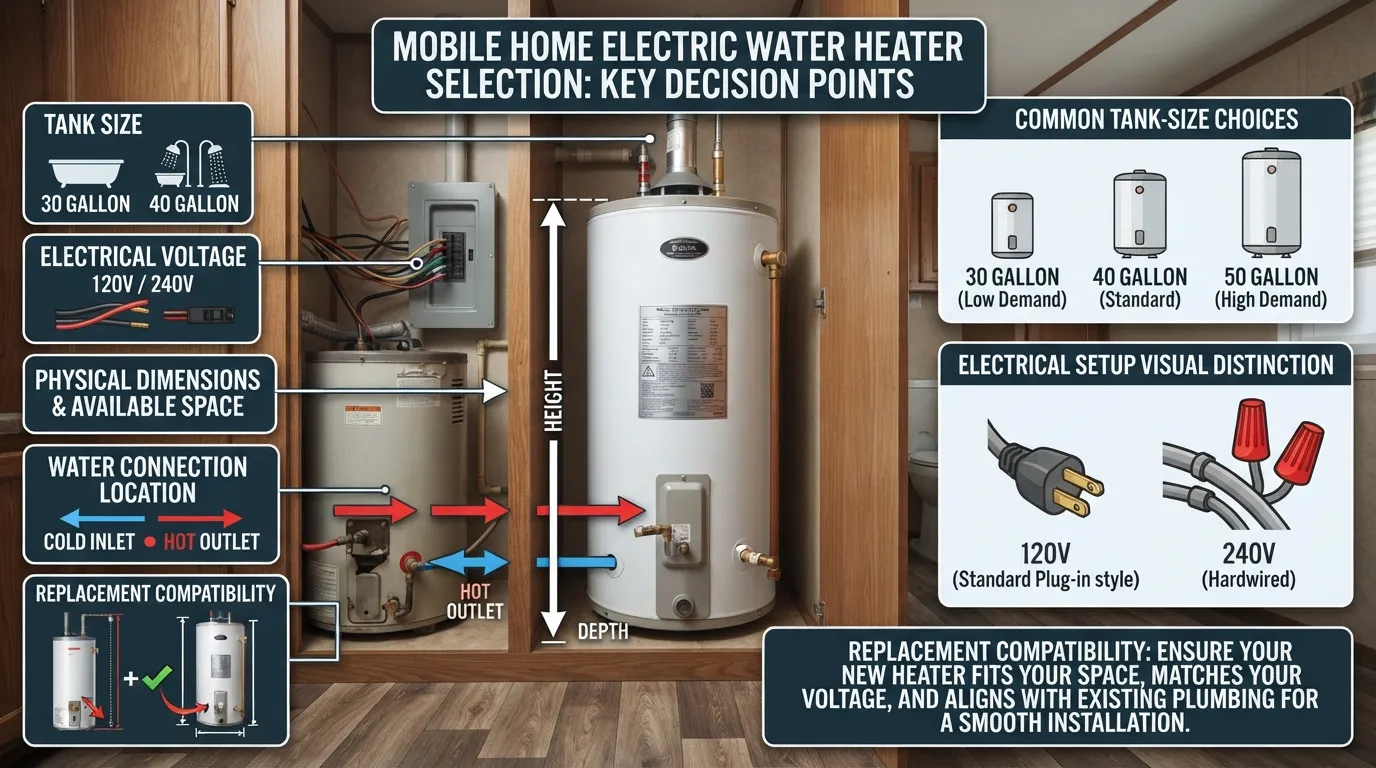
If you need a mobile home electric water heater, don’t choose a tank based only on gallon capacity or price. You need a unit that is appropriate for manufactured housing and that matches your existing space, water connections, electrical supply, and installation requirements. Before ordering a replacement, check your current heater’s model, capacity, dimensions, connection locations, voltage, wattage, and available clearance.
Replacing a water heater in a mobile or manufactured home can be more complicated than simply buying the same-size electric tank you would use in a conventional house. The available space may be tight, the water connections may be arranged differently, and the electrical requirements need to match the existing installation.
The good news is that you can make the decision much easier by checking a few important specifications before you buy. In this guide, I’ll walk you through what to look for, how to compare 30- and 40-gallon options, what 120V and 240V mean for your replacement, how to measure the existing heater, and what can affect the cost of a mobile home water heater replacement.
What Is a Mobile Home Electric Water Heater?
A mobile home electric water heater is an electric storage water heater designed or listed for use in mobile or manufactured housing. Unlike a generic residential water heater, a manufactured-home model may have specifications intended for the home’s available space and installation configuration, including side water connections on many models.
HUD’s manufactured housing program establishes federal construction and safety standards covering systems such as plumbing and electrical systems in manufactured homes built under the HUD program. HUD also notes that appliances and equipment installed in manufactured homes need to follow applicable requirements and manufacturer instructions.
Important: Don’t assume that every standard residential electric water heater is automatically a suitable replacement for a manufactured home. Check the specific model’s listing, manufacturer instructions, applicable code requirements, and your existing installation before purchasing.
Mobile Home Water Heater vs. Standard Residential Electric Water Heater
One of the easiest mistakes to make is searching for an inexpensive 30- or 40-gallon electric water heater and assuming that any model with the same capacity will work.
Capacity is only one part of the match. When comparing a mobile-home water heater with a standard residential unit, pay attention to the following:
What Size Electric Water Heater Do You Need in a Mobile Home?
The most common sizes you’ll encounter include approximately 28, 30, and 40 gallons, but the right choice depends on more than the number of people living in the home.
Think about your actual hot-water demand. How many people shower in the morning? Do you regularly run a washing machine or dishwasher while someone is showering? Does your household have periods of heavy simultaneous hot-water use?
30-Gallon: A Common Choice for Smaller Households
A 30-gallon manufactured-housing electric heater can be a practical choice for a smaller household when the existing installation and hot-water demand support that capacity. Some current 30-gallon mobile-home models are marketed for one- to two-person households.
Don’t use household size as the only deciding factor, though. First-hour rating and recovery performance also affect how much hot water you can actually use over a busy period.
40-Gallon: More Stored Hot Water
A 40-gallon mobile-home electric water heater provides more stored water and may make sense when household demand is higher or when the existing installation already uses that capacity.
The tradeoff is that a larger tank can require more physical space, so you still need to compare the manufacturer’s dimensions with your existing compartment.
Don’t Ignore the First-Hour Rating
Tank capacity tells you how much water the tank stores. The first-hour rating (FHR) is useful because it considers the hot water the heater can deliver during the first hour of use, including the recovery capability of the unit.
For example, current mobile-home models from manufacturers such as A. O. Smith and Rheem publish first-hour ratings alongside capacity, voltage, wattage, and other specifications. That makes FHR a better comparison point than gallon capacity alone.
120V vs. 240V: Which Voltage Does a Mobile Home Water Heater Need?
This is one of the most important things to verify before you order a replacement.
Electric water heaters are available in different electrical configurations. Current manufactured-housing models can be found with different voltage and wattage combinations, so you should never choose a replacement based on appearance or tank size alone.
Never Guess the Voltage
Check the existing heater’s rating plate, installation documentation, electrical circuit, and the replacement manufacturer’s specifications. If you’re unsure about the electrical setup, have a qualified professional verify it before buying or connecting the new heater.
How to Measure Your Existing Mobile Home Water Heater Before Buying a Replacement
If you remember only one section from this guide, make it this one.
A replacement water heater needs to fit the available space and connect correctly. Before you shop, collect the following information:
- Model number: Photograph the existing rating plate and write down the complete model number.
- Tank capacity: Record the current gallon capacity.
- Height: Measure the heater from the floor to the top of the tank or relevant enclosure point.
- Width or diameter: Measure the tank itself and account for the available compartment space.
- Depth: Check how far the heater can extend into the surrounding space.
- Water connections: Note where the hot and cold connections are located and their size.
- Electrical rating: Record the voltage and wattage shown on the existing unit.
- Clearance and access: Make sure the replacement can be installed and serviced safely.
Before You Buy: Your 8-Point Check
- Model number
- Gallon capacity
- Height
- Width or diameter
- Depth
- Water-connection layout and size
- Voltage and wattage
- Available installation and service space
For example, Whirlpool currently lists a 30-gallon mobile-home electric model with side water connections and 3/4-inch water connections, along with specific height, width, depth, energy-factor, warranty, and recovery specifications. The exact measurements and specifications vary by model, which is why matching the model data matters.
Why Side Water Connections Matter
Many mobile-home electric water heaters use side water connections. This can be particularly useful where the heater sits in a compact utility closet or compartment and the existing plumbing is arranged around the side of the tank.
But don’t assume that a side-connected model will automatically be a drop-in replacement. Connection height, spacing, tank dimensions, valve arrangement, and the condition of the existing plumbing can all affect the installation.
Important Specifications to Compare
When comparing mobile home water heaters electric models, I recommend looking beyond the product title. Open the manufacturer’s specification sheet and compare the actual numbers.
How Much Does Mobile Home Water Heater Replacement Cost?
The cost of replacing a mobile home water heater can vary significantly because the total project is not necessarily just the price of the tank.
Your final replacement cost may include:
- The new electric water heater
- Professional installation labor
- Removal and disposal of the old unit
- Replacement valves or connectors when needed
- Plumbing modifications if the new connections don’t match
- Electrical work if the existing circuit is not suitable
- Required permits or inspections where applicable
- Repairs to damaged or deteriorated surrounding plumbing
Why Online Prices Don’t Tell the Whole Story
Retail prices can help you compare equipment, but they don’t necessarily represent your installed replacement cost. A heater that looks inexpensive online may require different connections, additional electrical work, or modifications to fit the existing installation.
If you’re in Miami and need help determining what your existing setup requires, a professional inspection can help identify the right replacement before you purchase the wrong unit. You can also explore our water heater replacement service for help with the replacement process.
Common Mobile Home Water Heater Replacement Mistakes
1. Buying by Gallon Size Alone
Two 30-gallon heaters can have very different dimensions, electrical requirements, connection layouts, and performance specifications. Always compare the complete model specifications.
2. Assuming a Standard Residential Model Will Fit
A standard residential heater may not match the requirements or physical configuration of your manufactured home. Verify the model’s application and installation instructions before buying.
3. Guessing the Voltage
Never select 120V or 240V based on a guess. Check the existing heater and electrical installation, then verify the replacement manufacturer’s requirements.
4. Forgetting About Physical Clearance
Measure the actual compartment. A heater can have the correct gallon capacity and still be the wrong height, width, or depth for the available space.
5. Focusing Only on the Purchase Price
The cheapest tank isn’t necessarily the lowest-cost replacement once labor, connectors, modifications, electrical requirements, and other installation factors are considered.
Safety and Installation: What You Should Know
Water heaters combine water, electricity, heat, pressure, and plumbing connections. That’s why installation should follow the manufacturer’s instructions and applicable requirements rather than relying on a generic installation video or assumption about how the old heater was connected.
HUD’s manufactured-home resources emphasize manufacturer installation instructions and applicable state or local requirements. The federal manufactured-housing standards also address listed water heaters and installation requirements.
A Critical Electrical Safety Rule
An electric storage water heater should not be energized before the tank has been properly filled according to the manufacturer’s instructions. Energizing an empty tank can damage heating elements. If you’re replacing the unit and are not completely comfortable verifying the plumbing and electrical connections, use a qualified professional.
Should You Buy a Tankless Electric Water Heater Instead?
Tankless technology can sound attractive because it doesn’t store a large tank of hot water, but it should not be treated as an automatic drop-in replacement for an existing mobile-home storage heater.
A tankless system may require different electrical capacity, water-flow considerations, installation requirements, and equipment configuration. Manufactured-home requirements also need to be considered for the specific installation.
HUD has published specific guidance concerning tankless water heaters in manufactured housing, and HUD’s regulations and guidance have evolved over time. For that reason, don’t rely on an old article or a generic tankless installation guide. Verify the current requirements and the specific equipment before changing system type.
What About Heat Pump Water Heaters?
Heat pump water heaters are another technology worth knowing about because they can offer different efficiency characteristics from conventional electric-resistance storage heaters.
However, don’t choose one simply because its efficiency rating looks attractive. You still need to verify that the particular model is suitable for your manufactured-home application, available space, electrical setup, climate and installation requirements.
A Simple Mobile Home Electric Water Heater Buying Checklist
Before You Order
- Confirm that the model is suitable for your manufactured-home application.
- Record the existing tank capacity.
- Measure height, width/diameter, and depth.
- Check the location and size of the water connections.
- Verify the existing voltage and wattage.
- Compare the replacement’s dimensions with the available compartment.
- Compare first-hour rating rather than relying only on tank capacity.
- Review the manufacturer’s installation instructions.
- Check warranty information.
- Confirm any applicable local installation or permit requirements.
When Should You Call a Plumber?
If your water heater is leaking, you’re unsure which replacement model fits, the electrical rating is unclear, the connections don’t match, or the heater compartment has signs of water damage, getting professional help before purchasing can save you from buying the wrong unit.
For homeowners in Miami, our team can help evaluate the existing setup and determine what the replacement installation requires. If you need broader plumbing assistance, you can also view our plumbing services to see the other plumbing solutions we provide.
Need Help Replacing a Mobile Home Water Heater?
If you’re not sure which electric water heater will work with your existing mobile-home setup, let a professional check the space, connections, and installation requirements before you order the replacement.
Frequently Asked Questions
Can I use a regular electric water heater in a mobile home?
Don’t assume that a standard residential model is interchangeable with a manufactured-home model. The correct choice depends on the specific heater, its listing and installation instructions, the manufactured home’s requirements, and applicable state and local requirements. A model specifically identified for manufactured housing can make the compatibility question much clearer.
What is the best size electric water heater for a mobile home?
There isn’t one universal best size. Common manufactured-home electric models include approximately 28-, 30-, and 40-gallon options. Your household’s hot-water demand, first-hour rating, existing installation, and available space should all be considered.
Are mobile home water heaters different from regular water heaters?
They can be. Manufactured-home models may have features and listings intended for the application, such as side water connections and configurations designed around tighter installation spaces. Always compare the complete specifications rather than assuming two tanks with the same gallon capacity are interchangeable.
How do I know whether I need a 120V or 240V water heater?
Check the existing heater’s rating information and electrical installation, then compare it with the replacement manufacturer’s specifications. If you’re uncertain, have the electrical requirements verified by a qualified professional rather than guessing.
What should I measure before buying a mobile home water heater?
Record the existing model number, tank capacity, height, width or diameter, depth, water-connection locations and sizes, voltage, wattage, and available clearance. Taking photos of the rating plate and connections can also make model matching easier.
Why do mobile home water heaters often have side connections?
Side connections can help accommodate the compact utility spaces commonly found in manufactured homes. However, the exact connection layout varies by model, so you should compare the replacement with the existing plumbing before ordering.
How much does it cost to replace a mobile home electric water heater?
The total cost depends on the heater, labor, removal, plumbing connections, electrical requirements, possible modifications, and any applicable permit or inspection requirements. An online tank price alone does not represent the complete installed replacement cost.
Where can I find the manual for my mobile home water heater?
Start with the manufacturer’s support page and search by the exact model number shown on your heater’s rating plate. Manufacturer support pages commonly provide installation manuals, user guides, warranty information, troubleshooting resources, and energy guides.
Should I replace a leaking mobile home water heater myself?
A leaking tank or replacement involving electrical and plumbing connections can create safety and property-damage risks. If you’re not fully comfortable verifying the water, electrical, pressure-relief, and installation requirements, professional replacement is the safer option.
Key Takeaway
The right mobile home electric water heater isn’t necessarily the cheapest 30- or 40-gallon tank you can find. The best replacement is the one that matches your home’s application, available space, plumbing connections, electrical requirements, hot-water demand, and applicable installation requirements. Measure first, verify the specifications, and get professional help when you’re unsure.
Related Water Heater & Plumbing Resources
If you’re comparing water heater options or planning a replacement, these resources can help you verify product specifications and installation information:
- HUD Manufactured Housing Homeowner Resources — official information about manufactured-home standards, installation, care, and homeowner resources.
- A. O. Smith ProLine Mobile Home Electric Water Heater — useful for checking an example of capacity, first-hour rating, voltage, dimensions, side connections, and manufactured-housing specifications.
- Whirlpool Mobile Home Electric Water Heater Support — includes product specifications, dimensions, warranty information, manuals, troubleshooting, and installation resources.
- Rheem Manufactured Housing Electric Water Heater — a current retail example showing how capacity, voltage, wattage, dimensions, FHR, and manufactured-housing application are presented together.
Local help: If you’re replacing a mobile-home electric water heater in Miami and want to confirm the right replacement before purchasing, our plumbing team can help you evaluate the existing setup and replacement requirements.